
All the Montessori Activities
Each activity is written like an activity sheet: everyday materials, the demonstration to give, the steps in order, the parent's role, and safety precautions. Start by choosing your child's age.
The four age groups follow how American parents typically think about early childhood: toddler from 18 months, then preschool age from 2 to 6 years old. Every activity happens at home and prints on Letter size paper.
18 to 24 months : First independent moves
At this age, your child wants to do everything you do, with their own hands. Activities are short, very concrete, and happily repeated ten times in a row. That's normal, and it's actually the whole point. You're looking for a movement done well, not a perfect result.
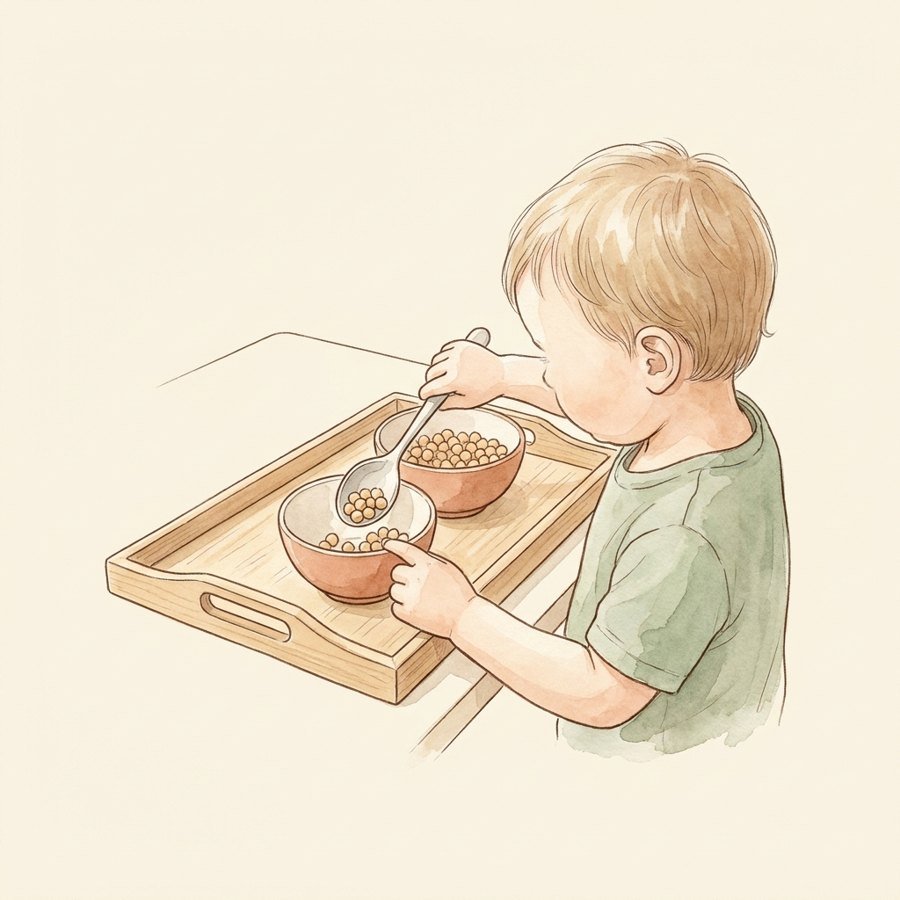
Spoon Transfer
Two bowls, a spoon, and dried chickpeas: the first big independence project.
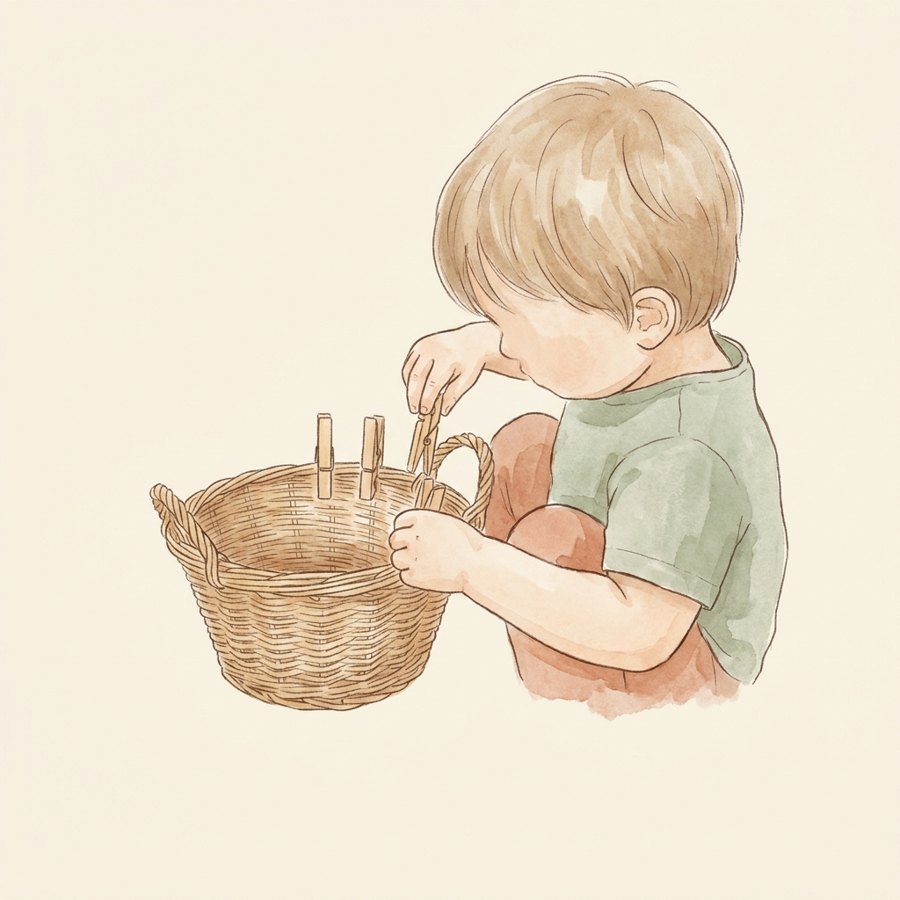
Clothespins on a Basket
Pinch, clip, unclip: three fingers building the grip they will use to hold a pencil.
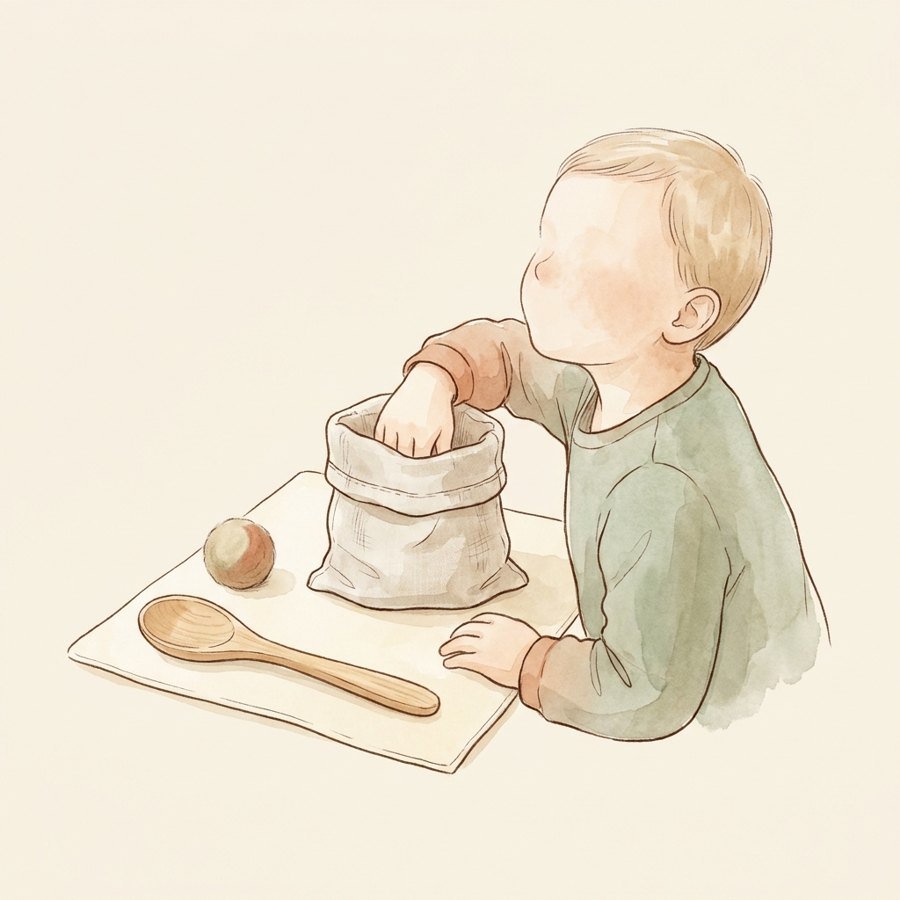
The Mystery Bag
Recognizing an object by touch alone, without seeing it. A small magic trick for the hands.
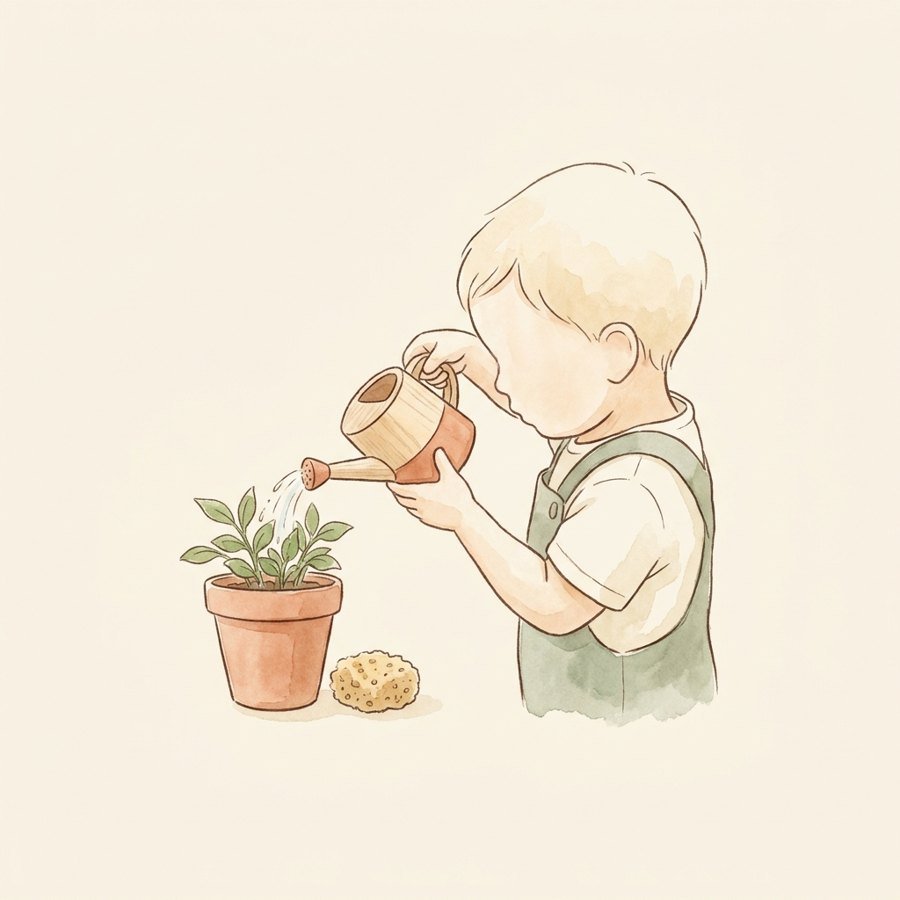
Watering a Plant
A real responsibility, well within reach of an 18-month-old.
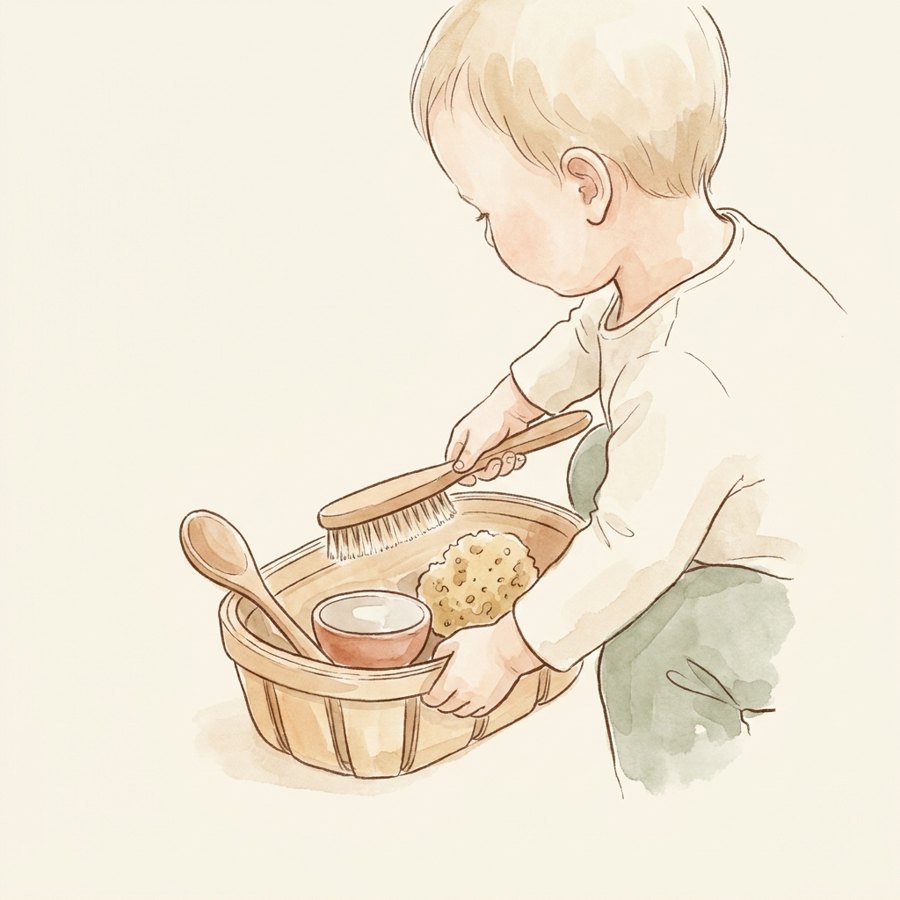
The Real Objects Basket
Five household objects in a basket, and one exact word set on each.
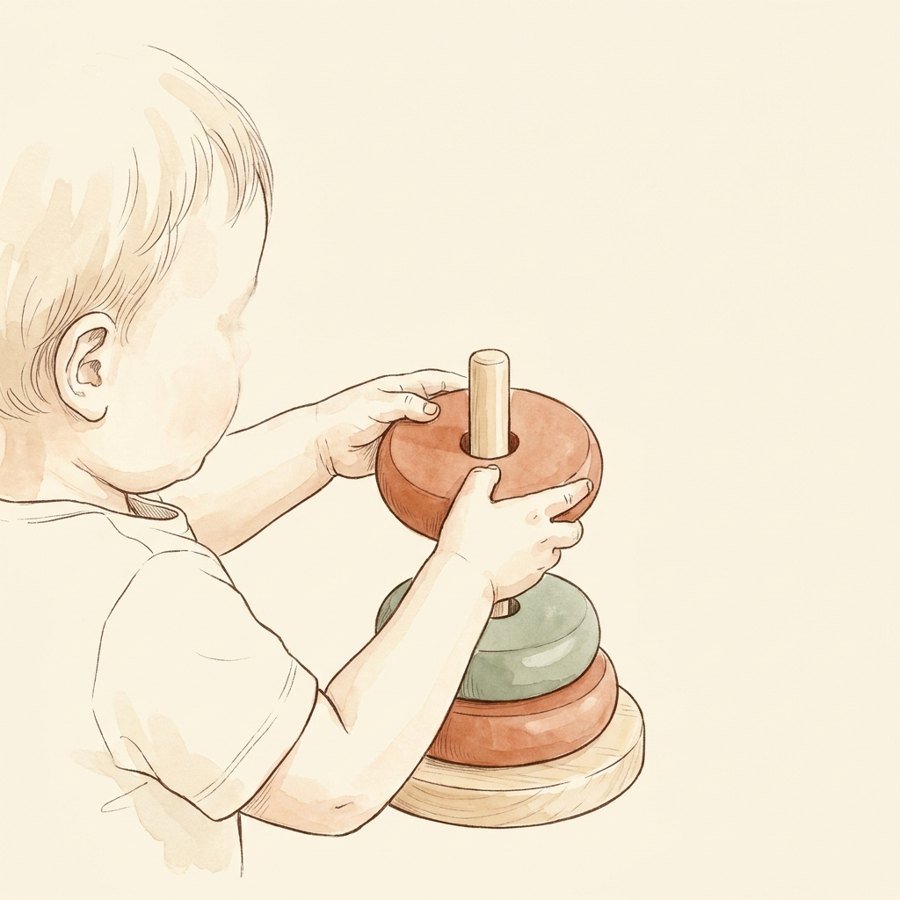
Ring Stacking
Aim, slide, let go: the first precision movement, with a satisfying sound at the end.
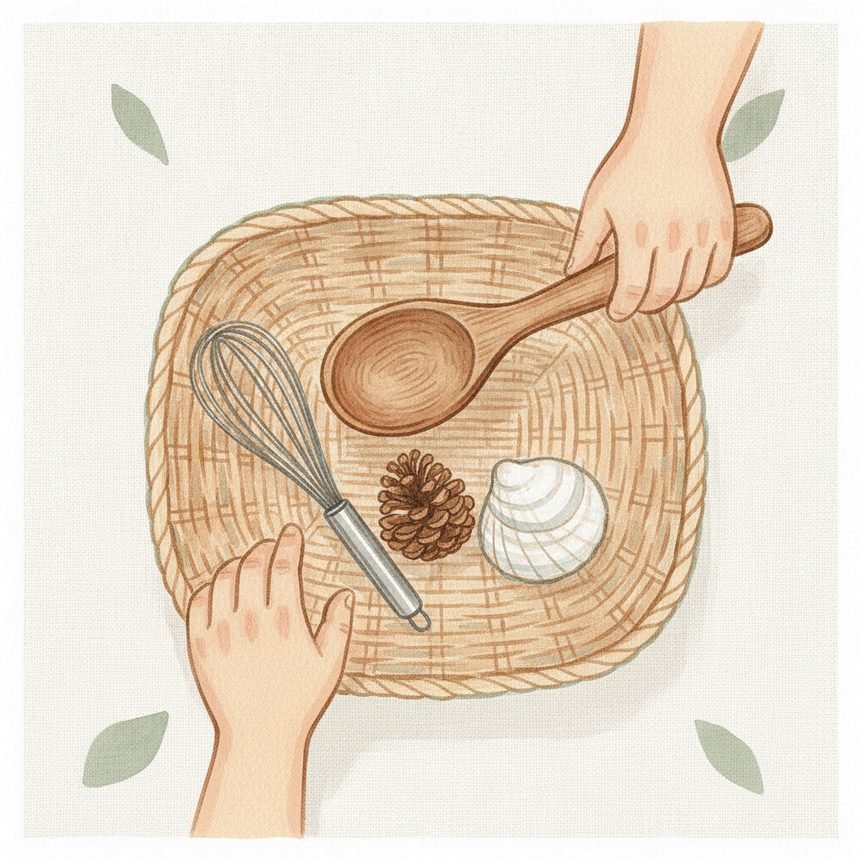
The Treasure Basket
A basket of real objects to freely explore with hands and mouth: the first sensory discovery.
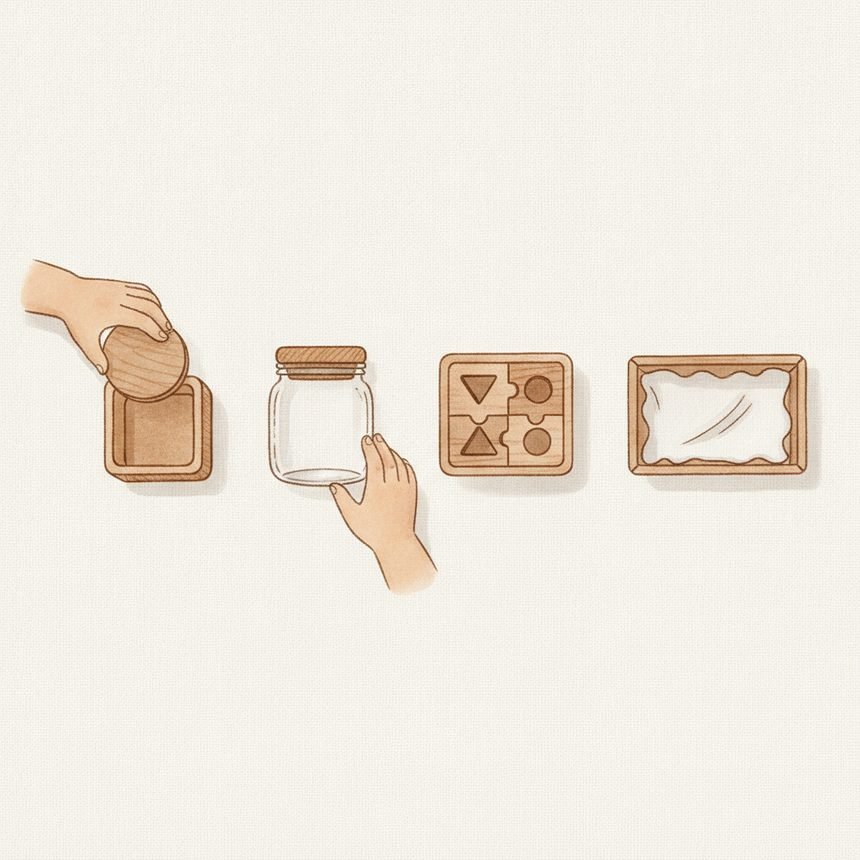
Opening and Closing Containers
Containers of every kind, to open and close again: each lid asks for a different move.
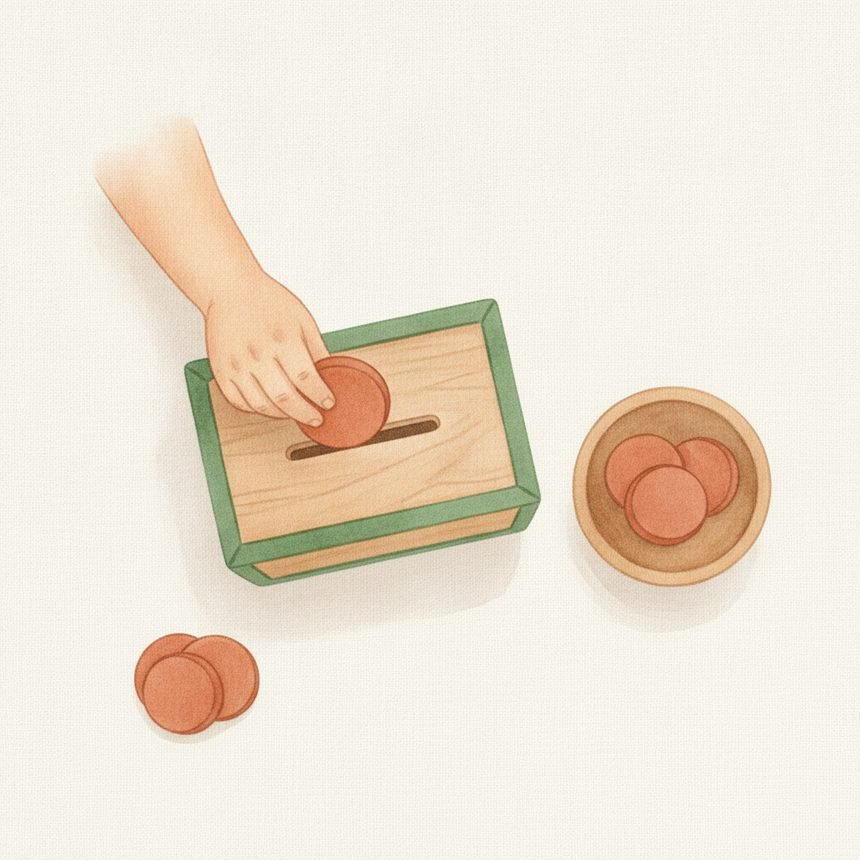
The Coin Box
Sliding big coins through a slot, then opening the box back up to find them: a classic that never fails to captivate.
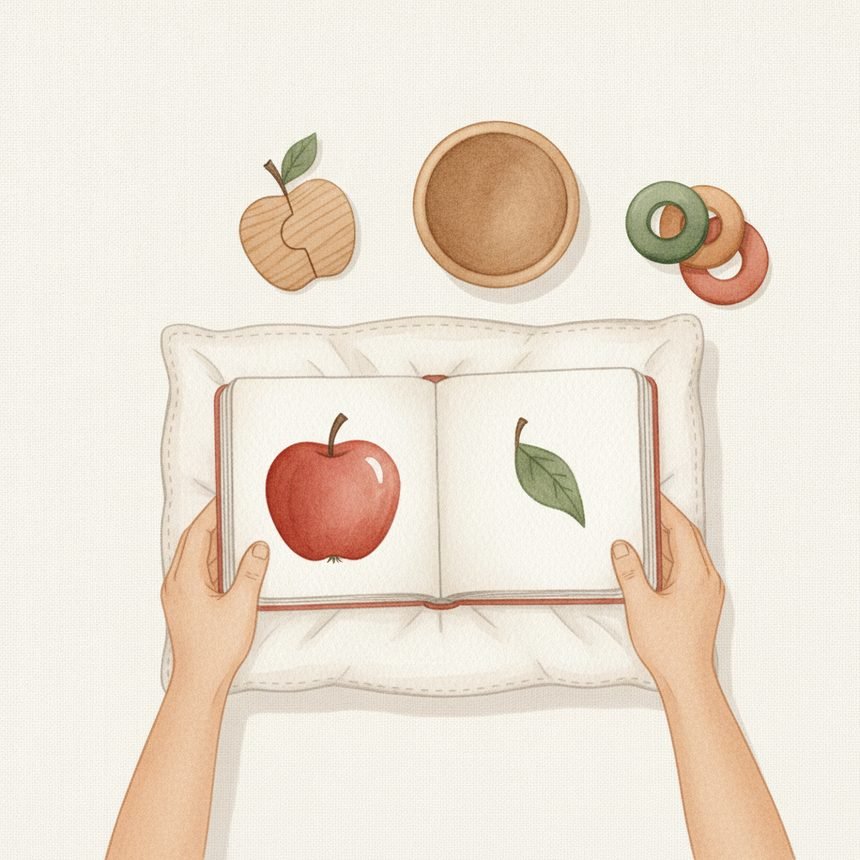
Real Picture Books
A book of real photographs, an adult fully present: words arrive through the lap.
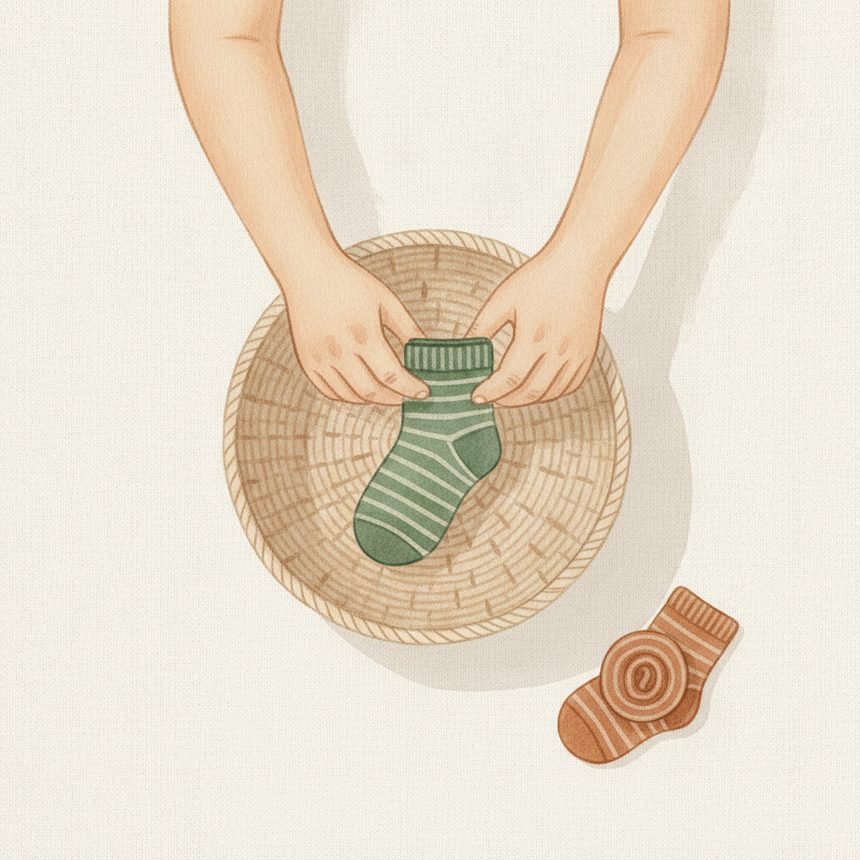
The Laundry Basket
Socks in the basket, every evening: the first real responsibility, at kid height.
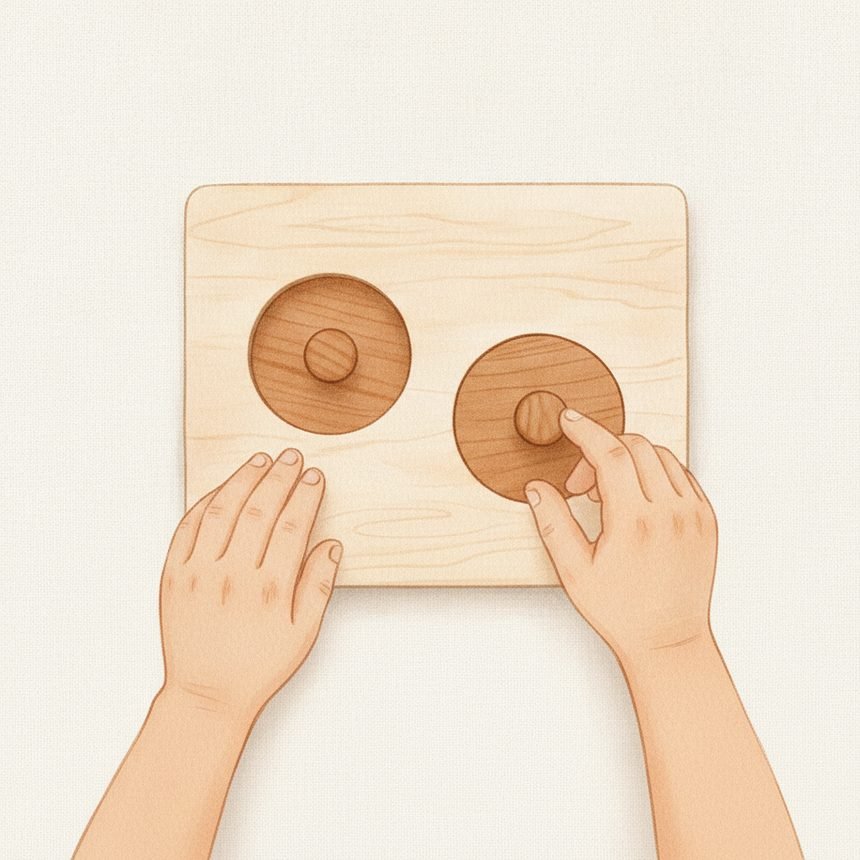
The First Shape Puzzle
A one-piece round puzzle with a big fat knob: the circle fits, or it doesn't.
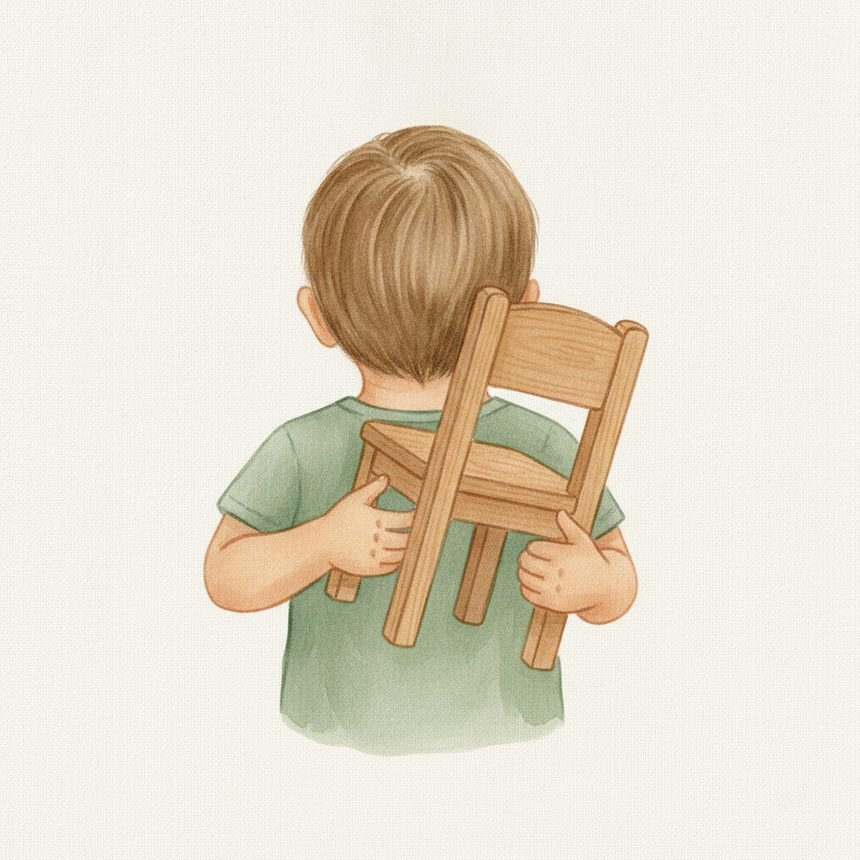
Carrying a Chair
Carrying a small chair with both hands and setting it down without a sound: the whole body learns control.
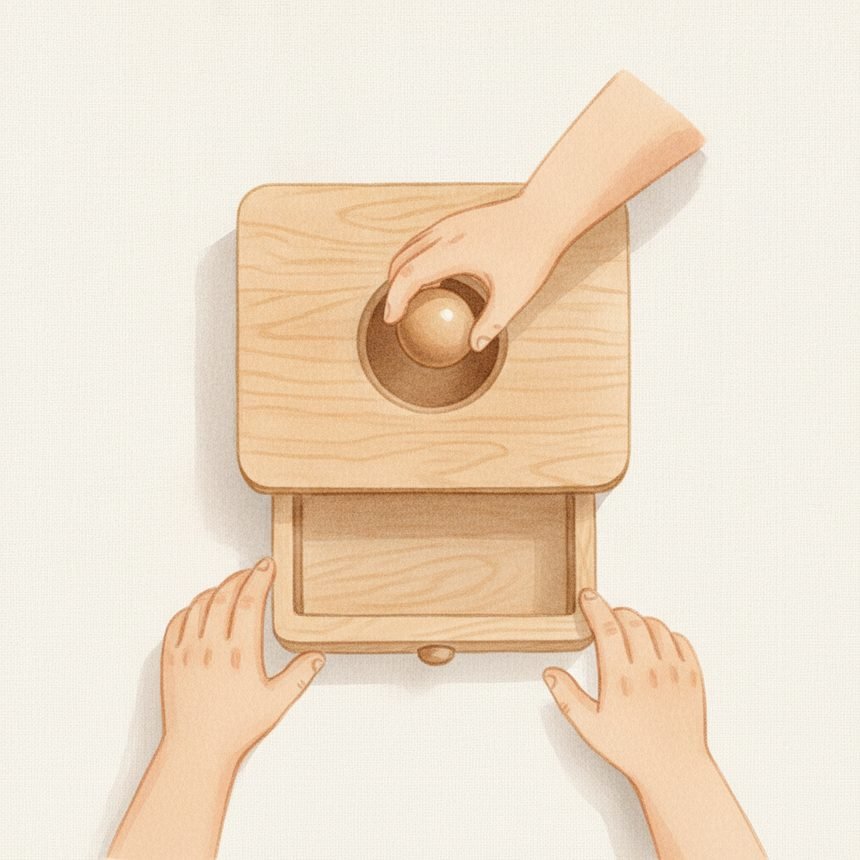
The Object Permanence Box
The ball disappears into the hole, then reappears in the drawer: the great mystery of objects that come back.
Action Songs
The same songs, the same motions, every day: music that plants the words.
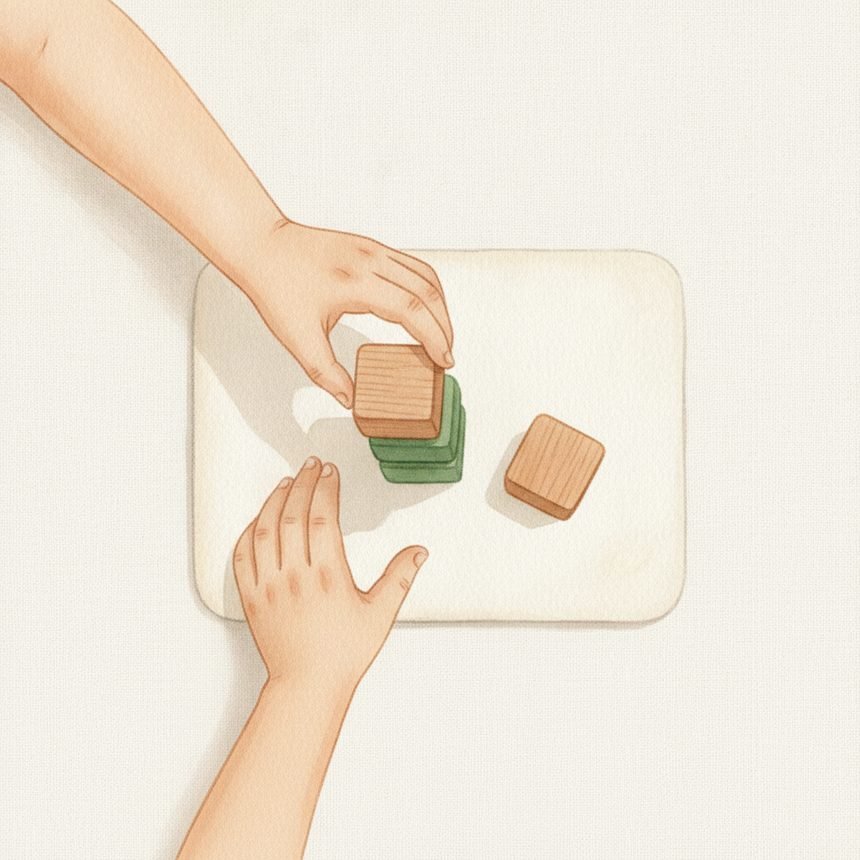
Stacking Blocks
Setting one block on another, letting go without knocking it over: the hand learns gentleness.
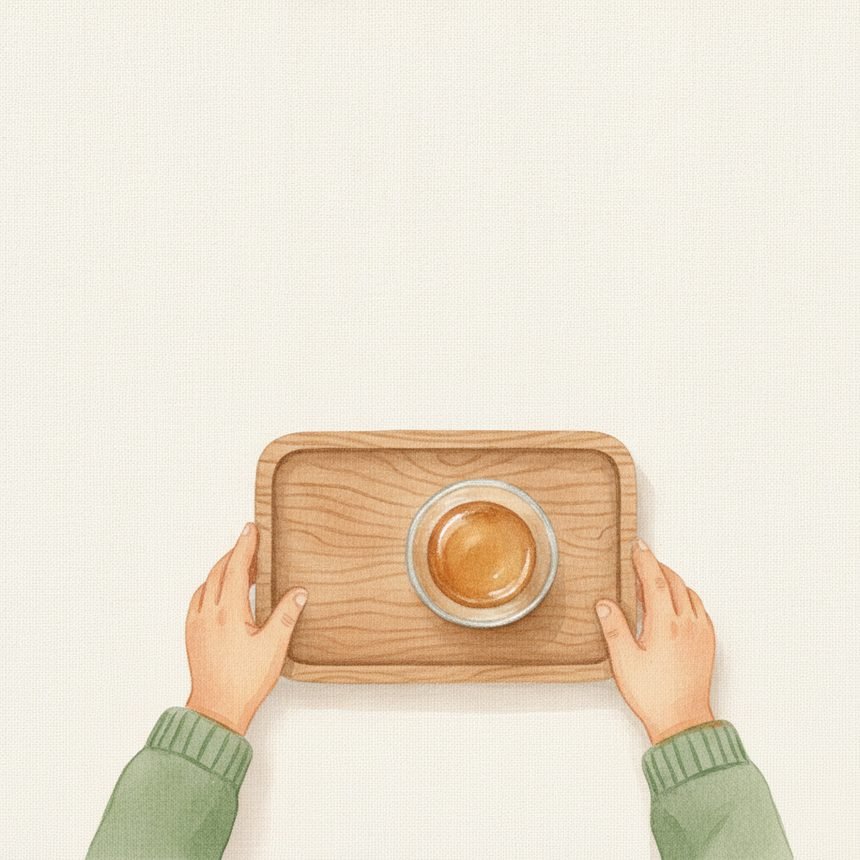
Carrying a Tray
A tray in both hands, a short trip, and a cup that must not spill: the signature movement of independence.
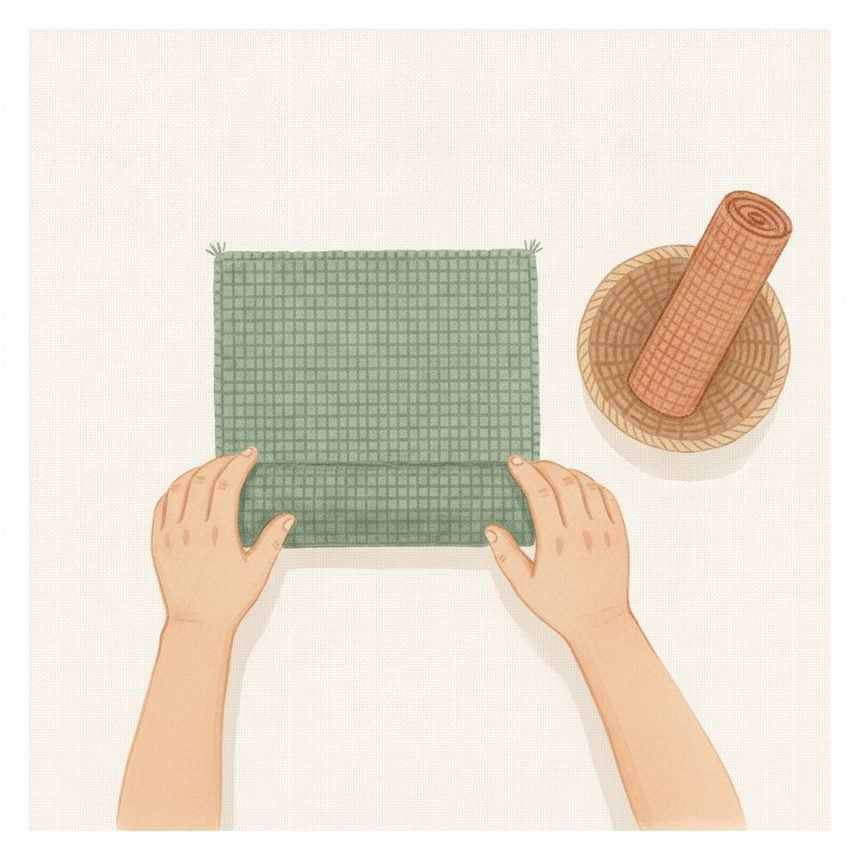
Rolling Out a Work Mat
Rolling out a small mat, working on it, then rolling it back up and putting it away: the frame for everything else.
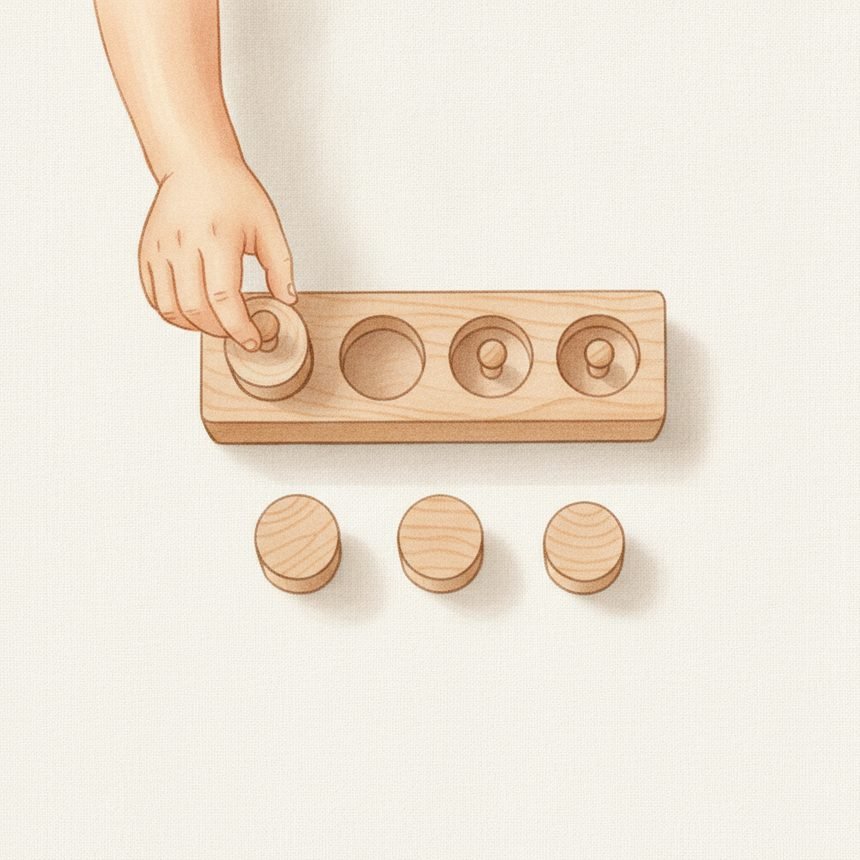
Knobbed Cylinders
Cylinders of different sizes, only one hole that fits each one: the wood doesn't lie.
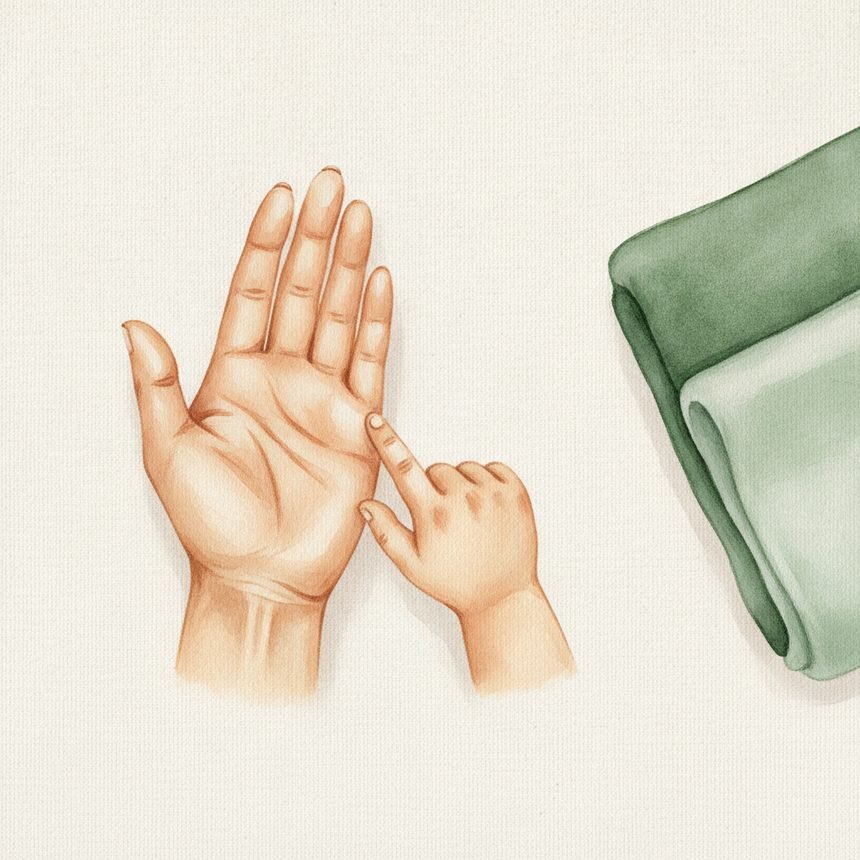
Naming Body Parts
Where's your nose, where's your elbow: the words for the body arrive through the pointing finger.
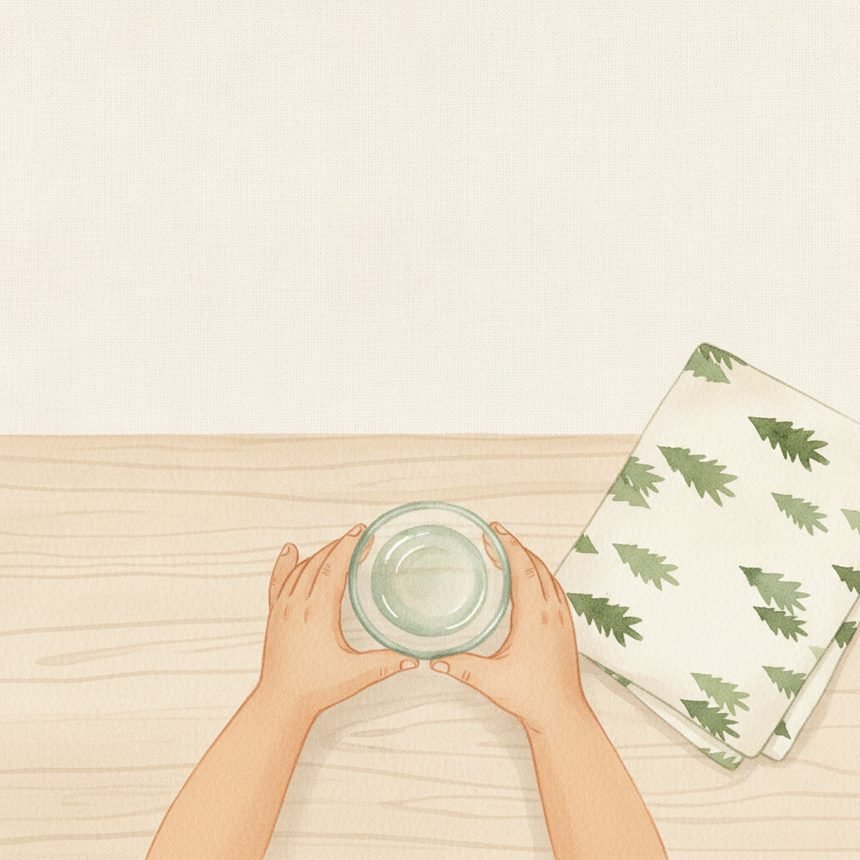
Drinking From an Open Cup
A real little glass, filled just at the bottom, and the pride of drinking like the big kids.
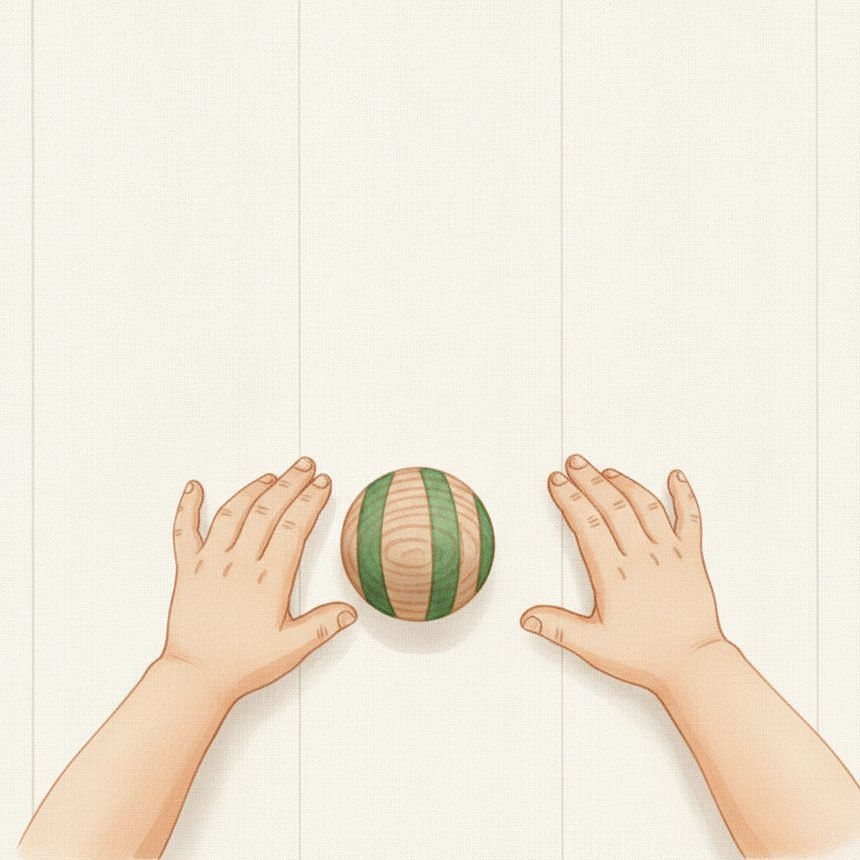
Rolling a Ball
A ball that leaves, rolls, and comes back: the first back-and-forth with another person, no words needed.
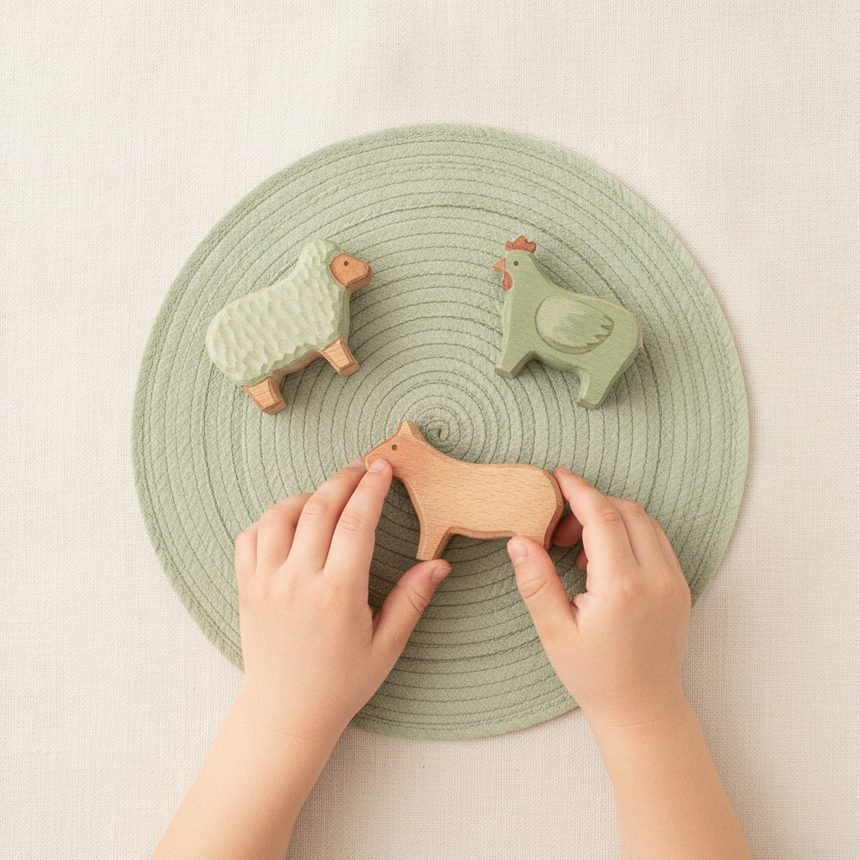
Animal Sounds
The cow says moo, the cat says meow: first words often start right here.
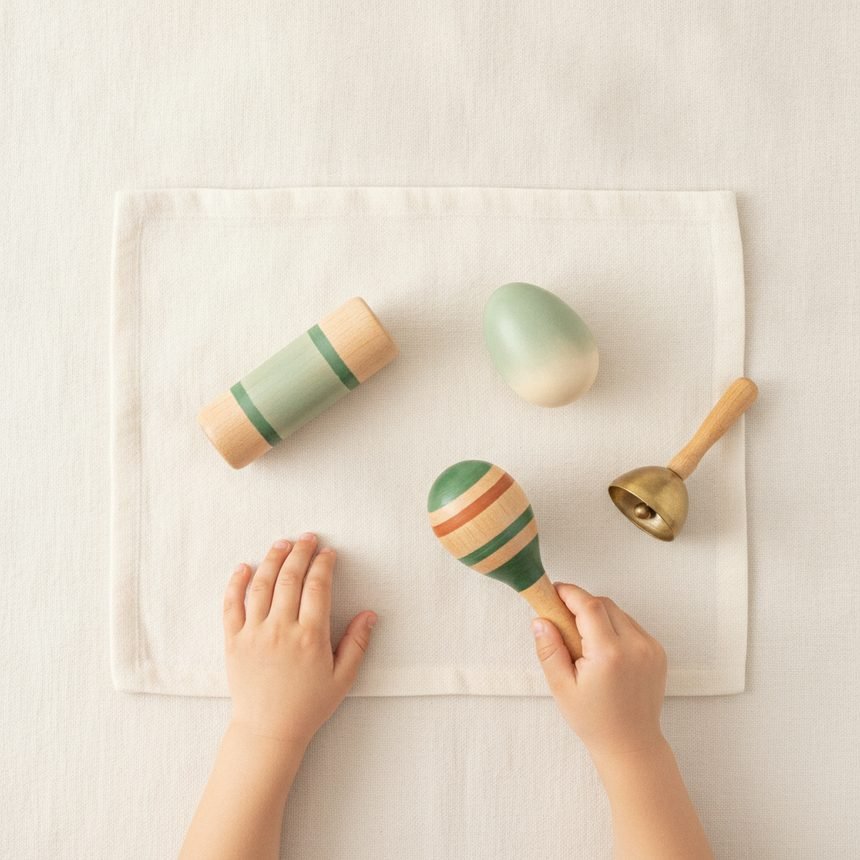
Shaking Instruments
A bell, maracas, a small tambourine: discovering that a motion makes a sound.
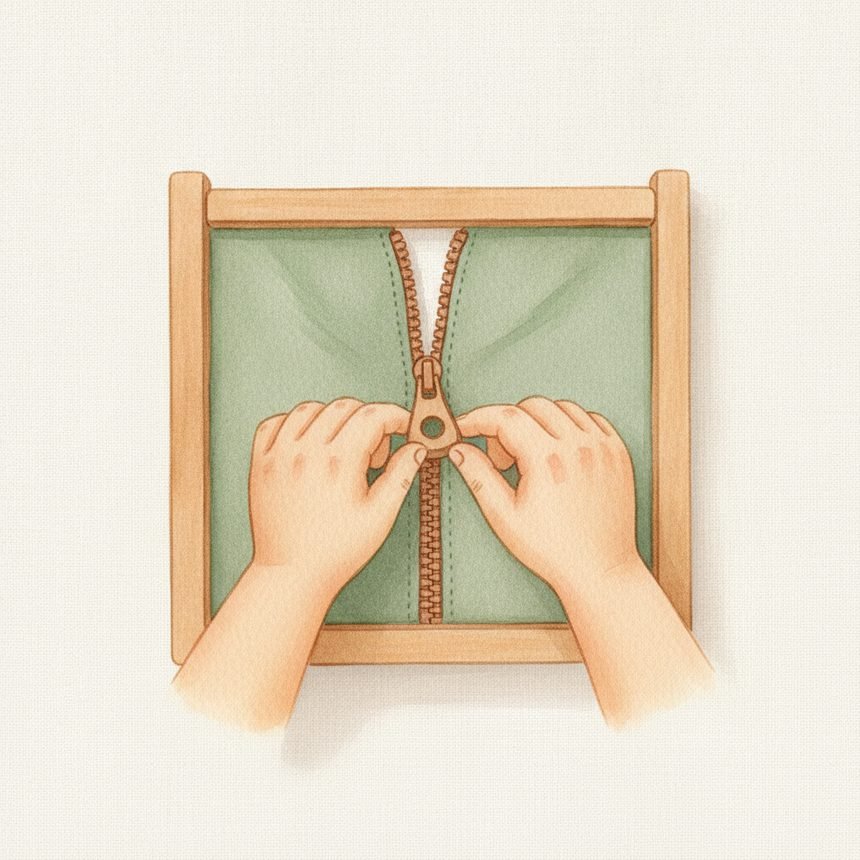
Zipper Practice
Pinching the zipper pull and tugging in one clean motion: a movement that opens coats and pencil cases.
2 to 3 years : "I do it myself"
This is the age of "I do it myself." Your child has little patience for being helped, and starts chaining several movements together in the right order. Practical life activities become their favorite place to play.
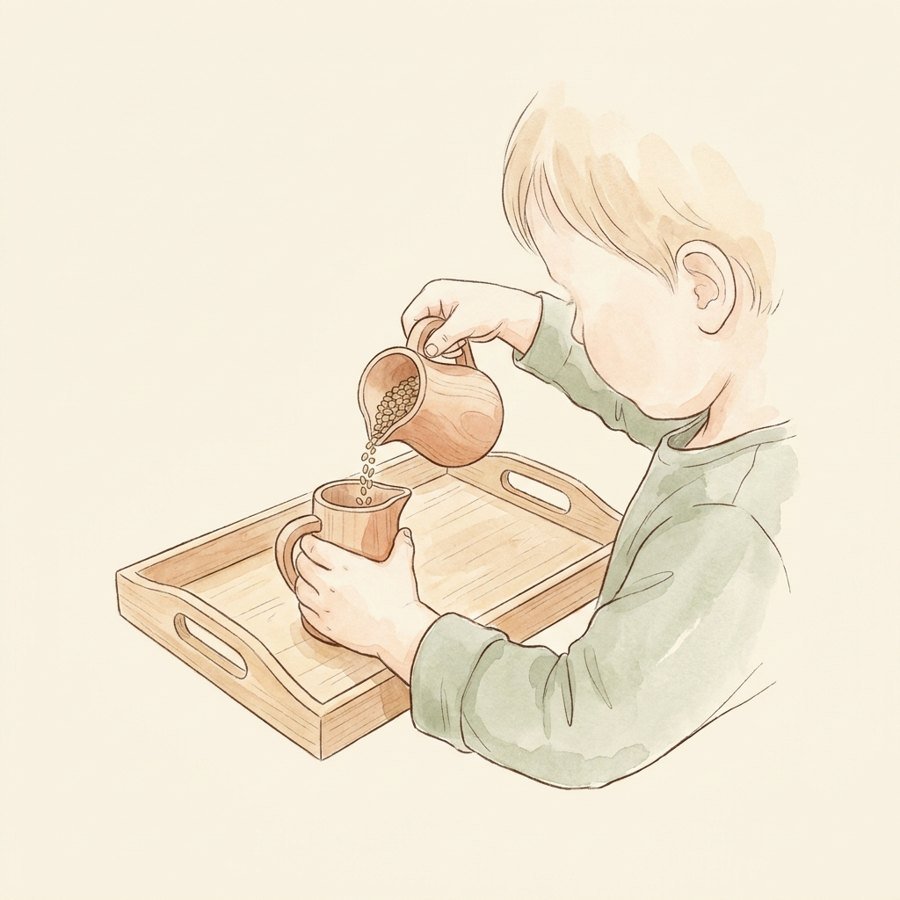
Pouring Dry Ingredients
The signature activity: two pitchers, dry beans, and a motion your child will repeat a hundred times.
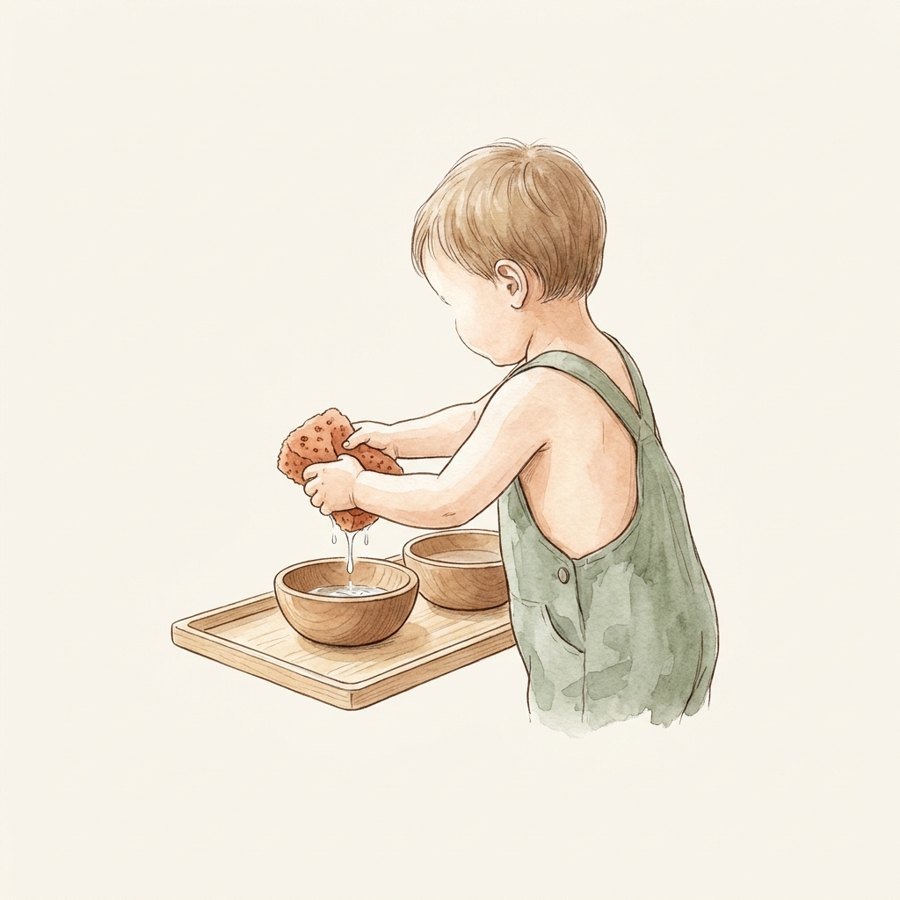
Sponge Squeezing
Moving water from one bowl to another by squeezing a sponge. Simple, wet, irresistible.
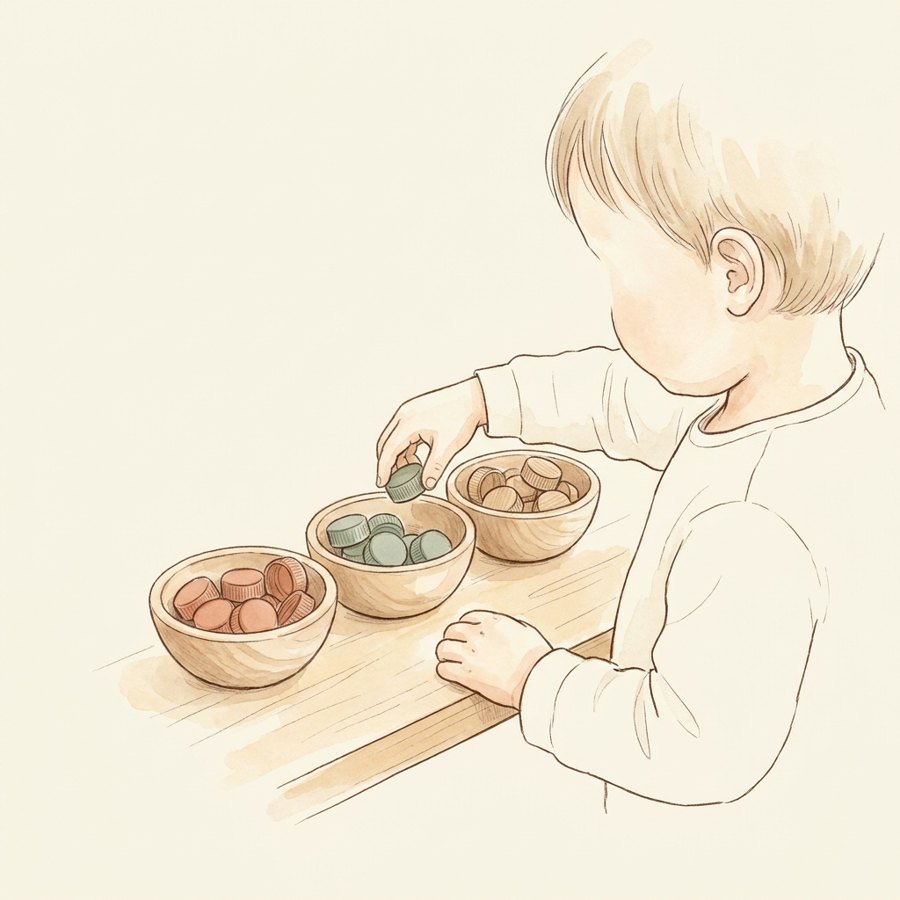
Color Sorting
Each bottle cap finds its family. The first real sorting work.
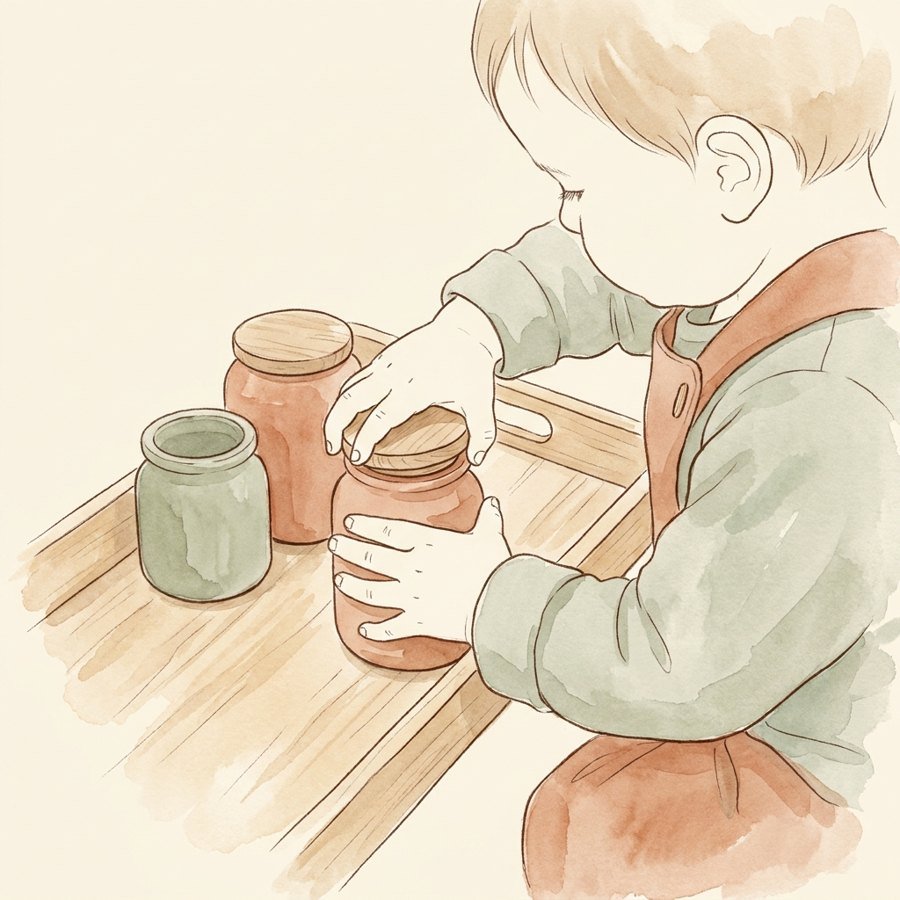
Screwing and Unscrewing
Three jars, three lids, and a wrist rotation to master.
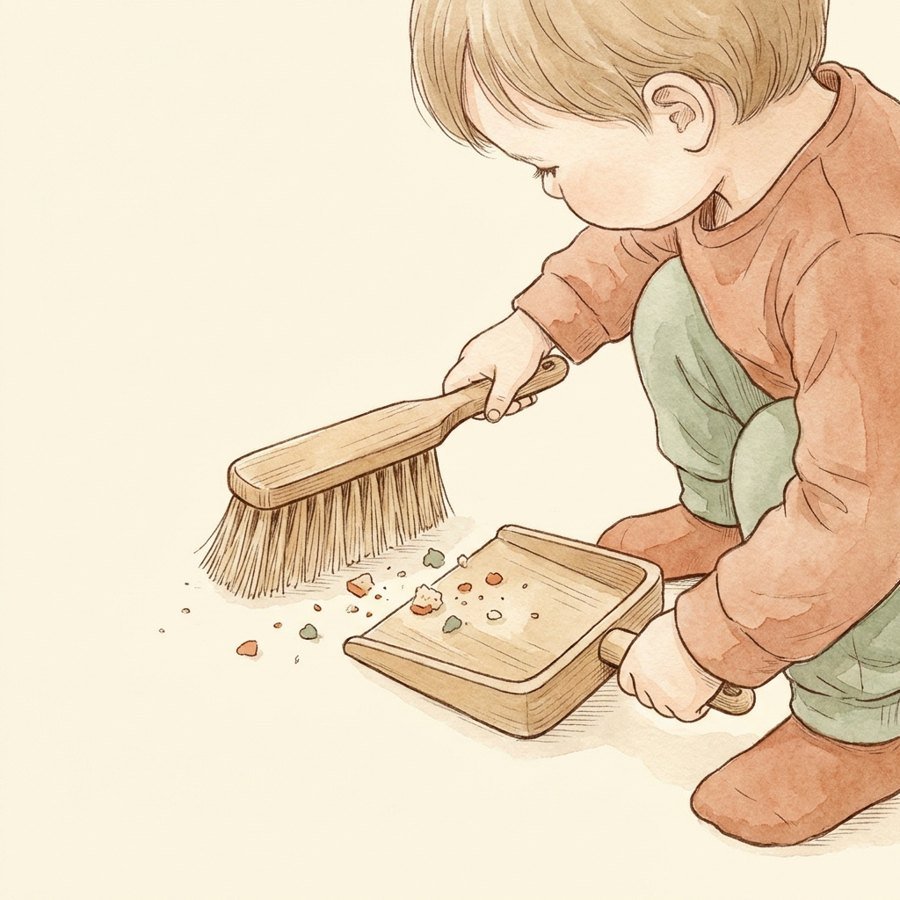
Sweeping Crumbs
A small broom, a dustpan, and the pride of fixing your own spill.
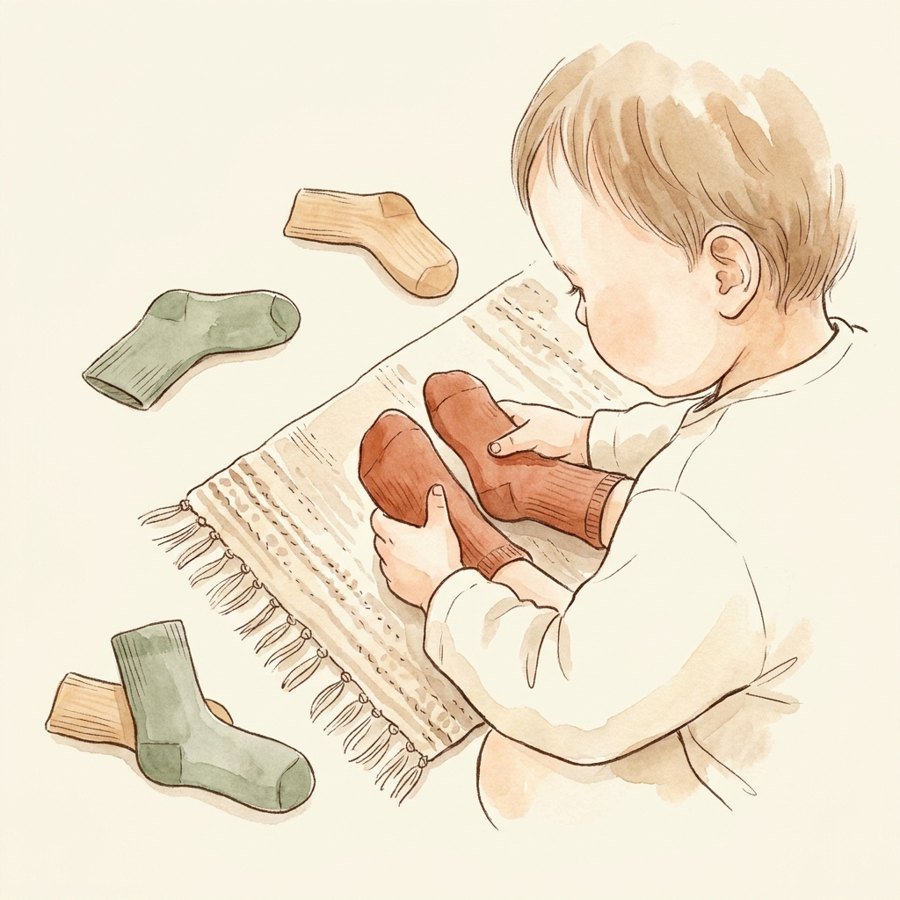
Matching Socks
The laundry basket becomes an observation game, and you get sorted laundry out of it.
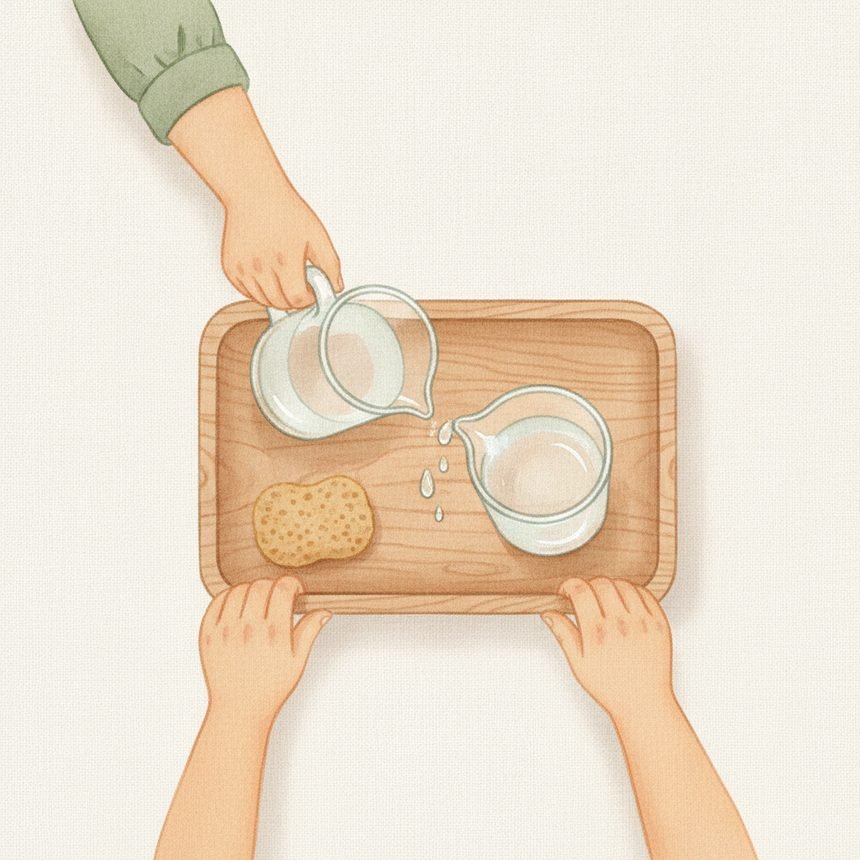
Pouring Water
Two small pitchers, a little water, and the motion that makes a child proud: pouring without spilling over.
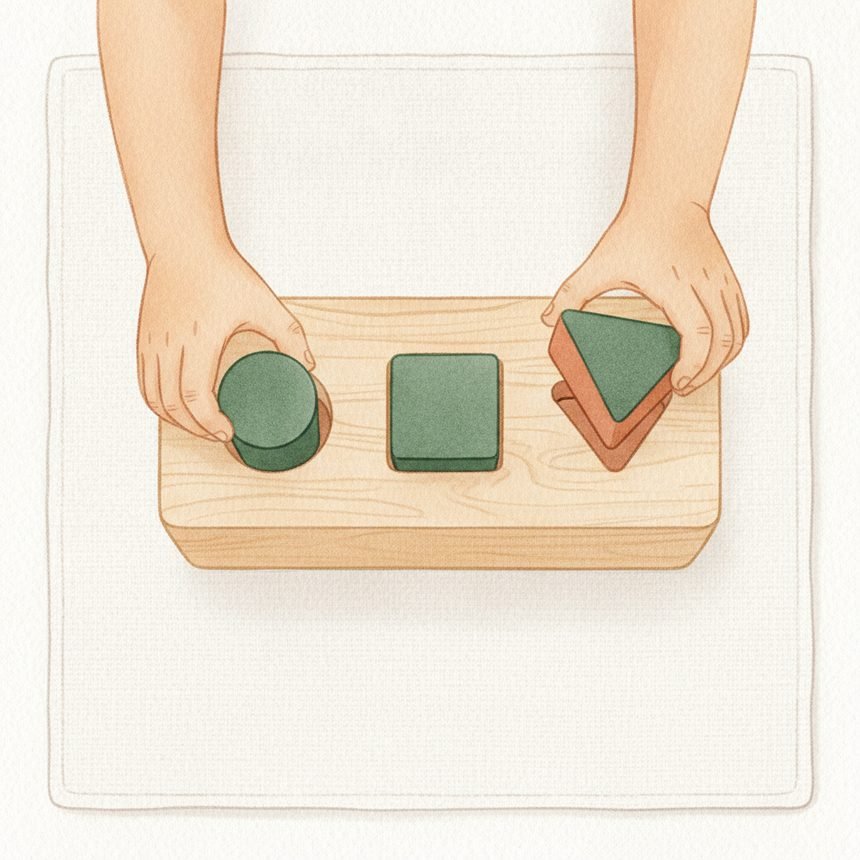
The Shape Sorting Box
A circle, a square, a triangle, and three slots: each shape fits only its own.
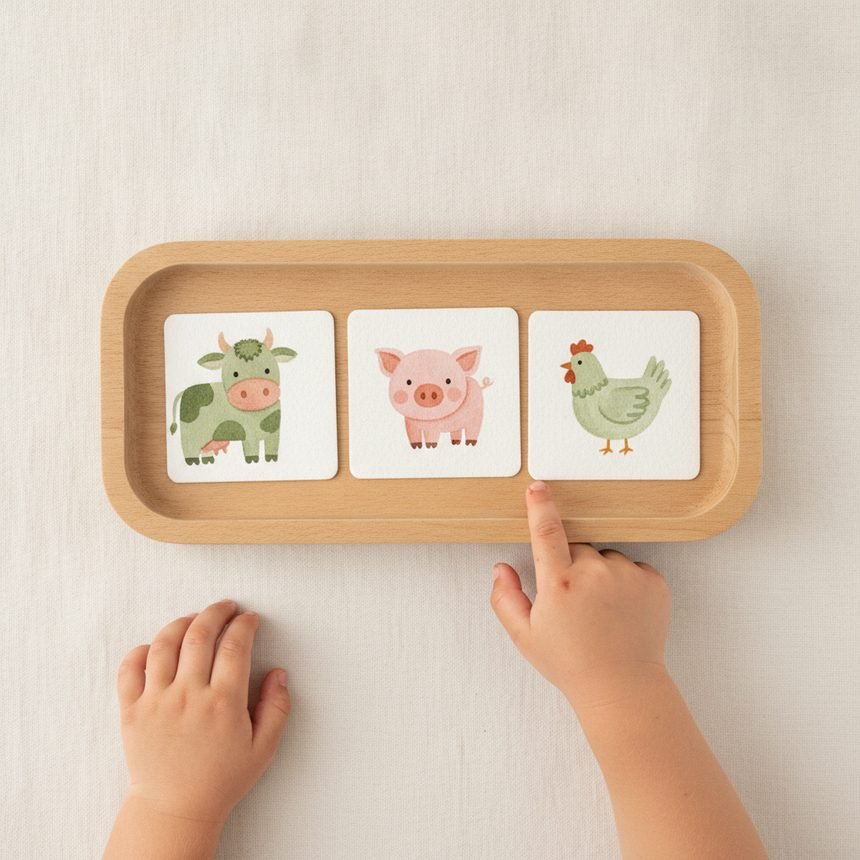
Naming Pictures
A handful of animal or object cards, and the three-period lesson that makes words stick for good.
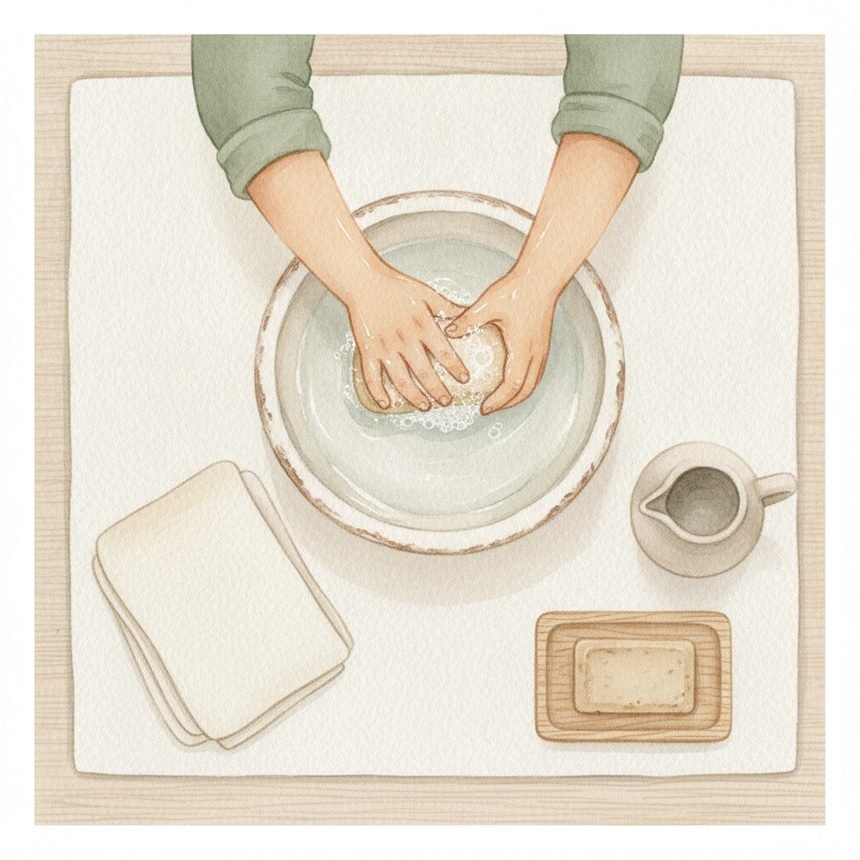
Washing Hands
A whole ritual with a basin, soap, and a towel: the first big, complete cycle your child carries out start to finish.
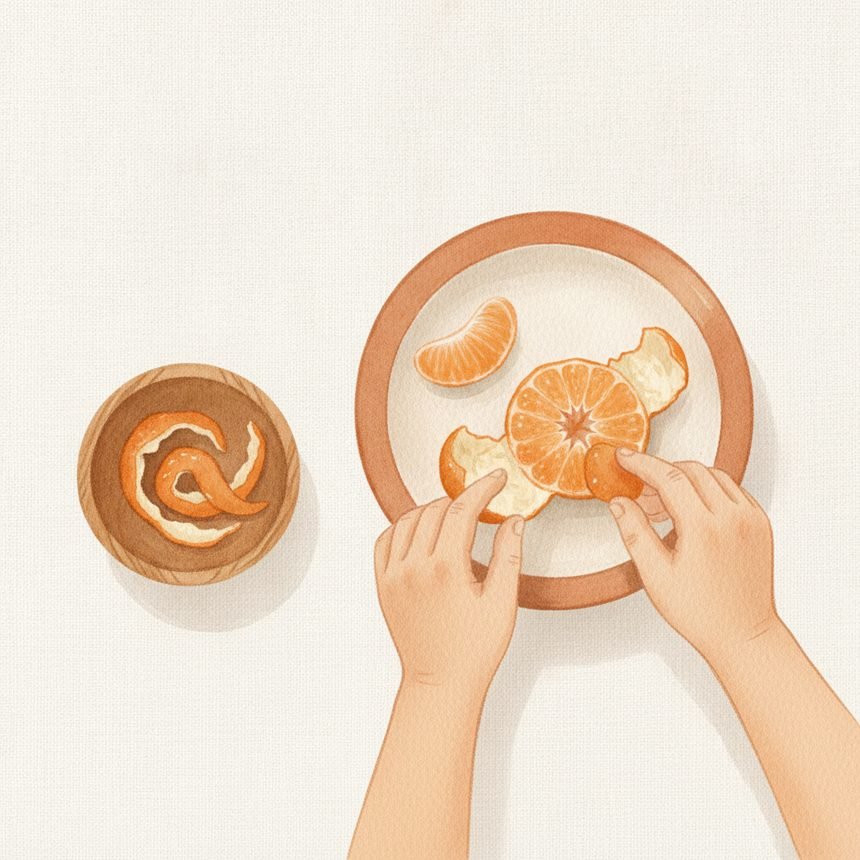
Peeling a Clementine
Piercing, pulling, separating the segments, and eating what you made yourself: practical life that tastes good.
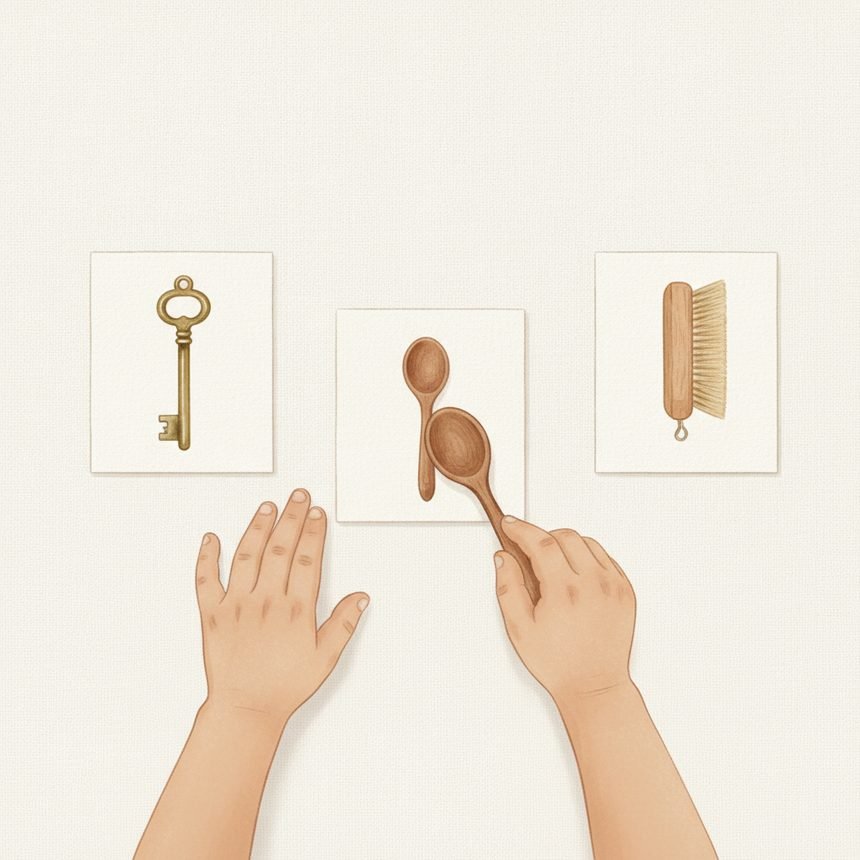
Object and Picture Matching
Setting the real spoon on the photo of a spoon: the bridge between the world and its images.
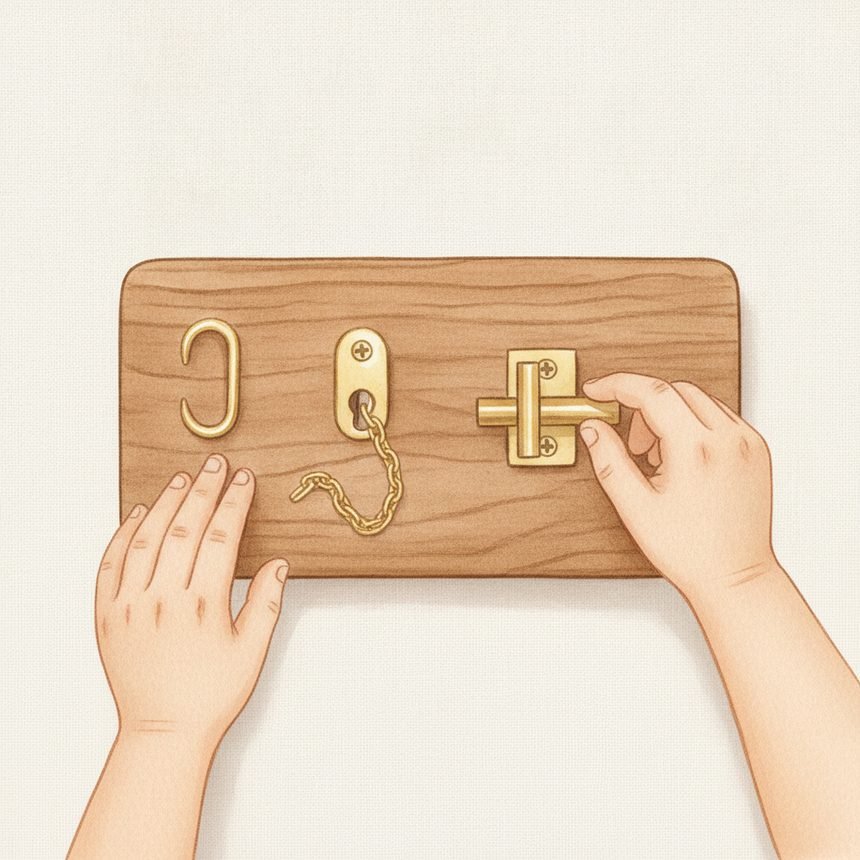
Locks and Latches
A slide bolt, a hook, a chain, a padlock: every closure in the house, gathered on one board to explore.
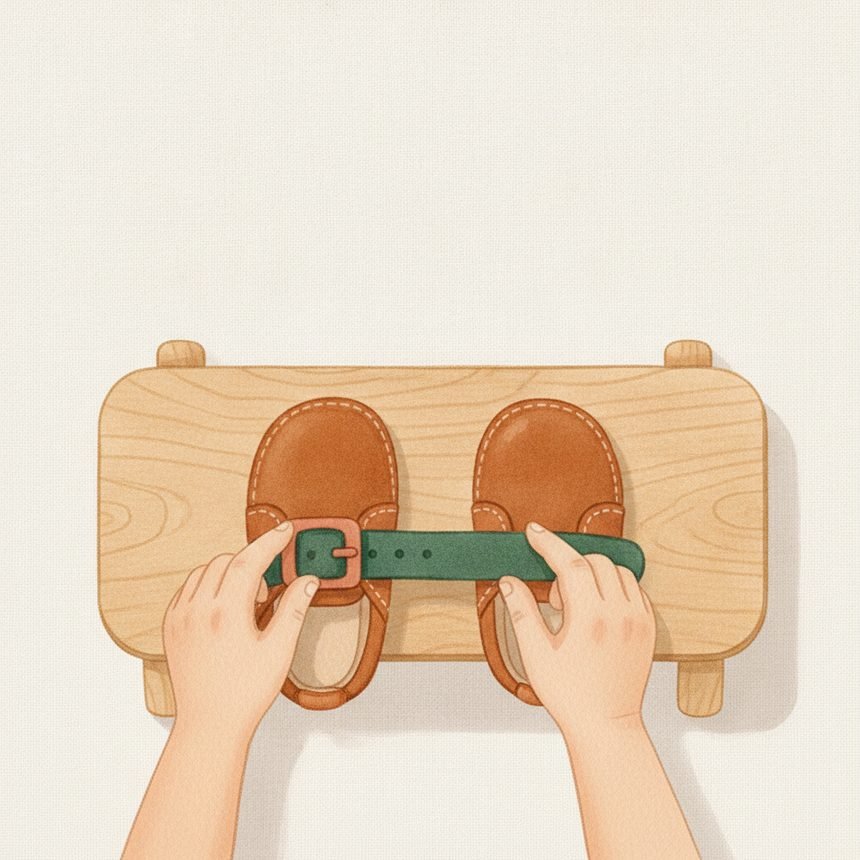
Putting On Shoes
Sit down, aim, push the heel, fasten: heading out the door under their own power.
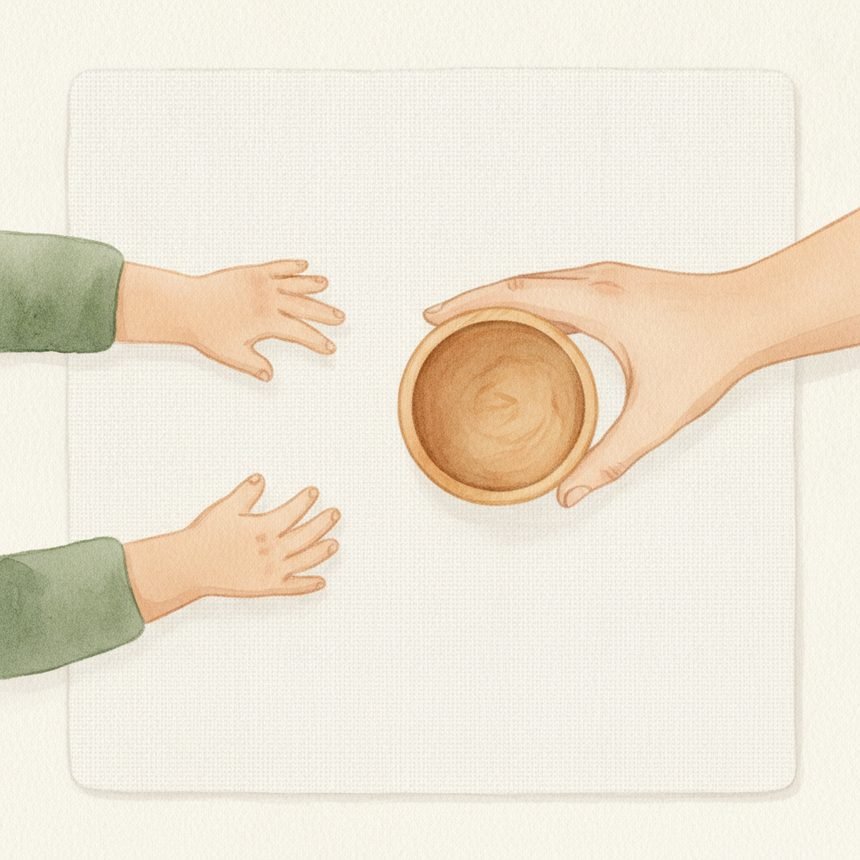
Grace and Courtesy
Greeting, thanking, asking, in a two-person role-play: courtesy gets rehearsed before it gets lived.
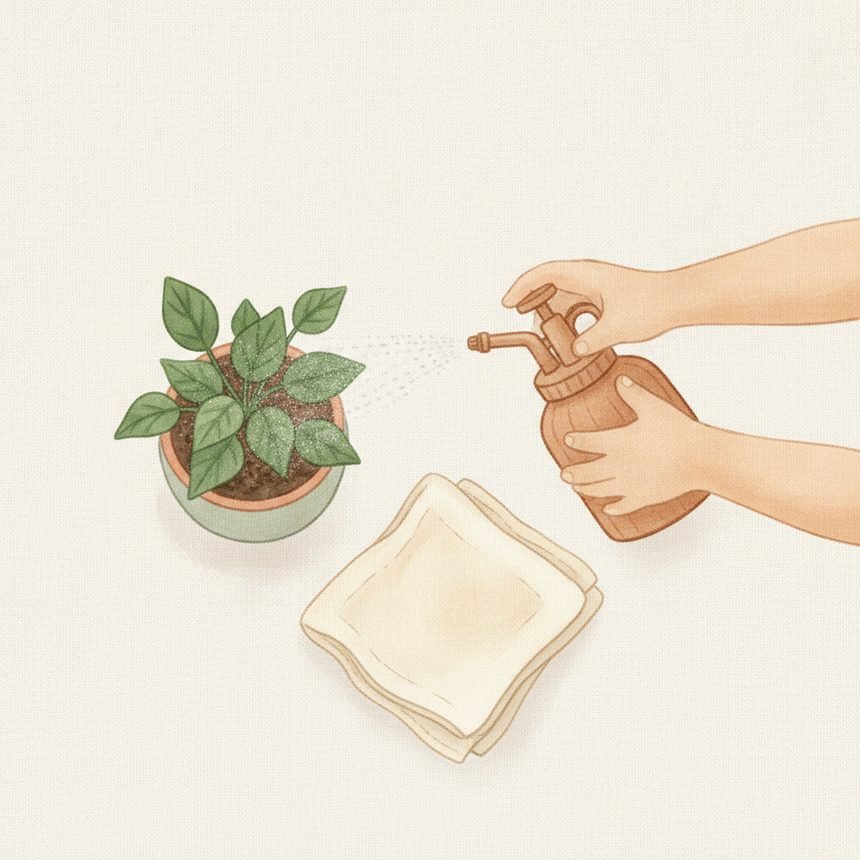
The Spray Bottle
Squeezing a spray bottle trigger to mist the plants: a hand building strength for writing.
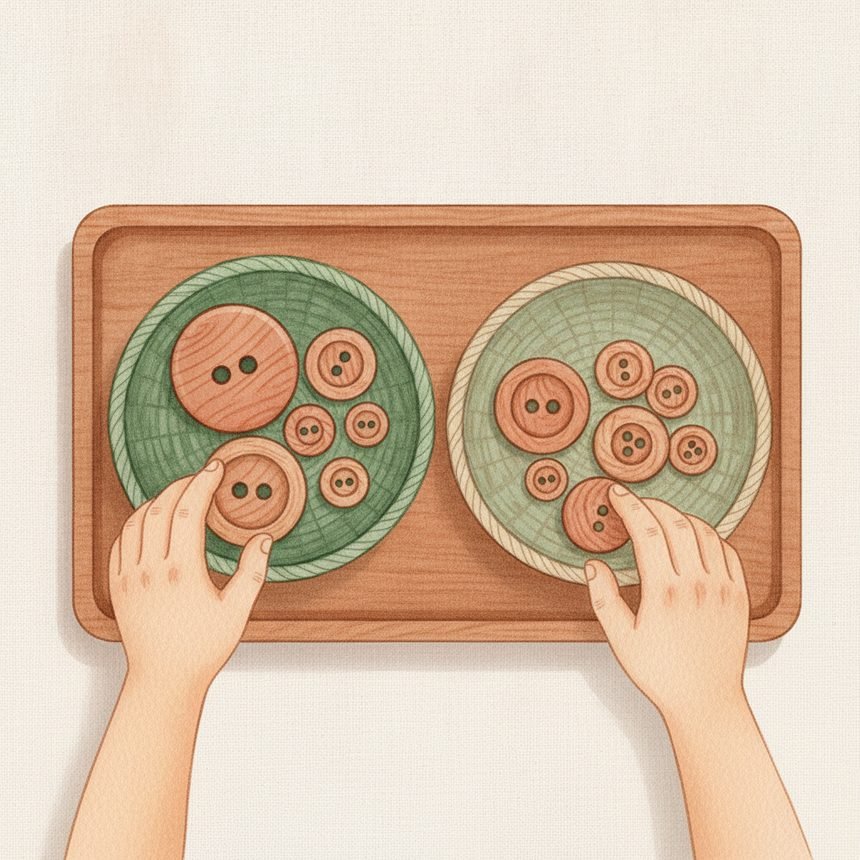
Big and Small
Two baskets, a pile of objects, one question: is it big or small?
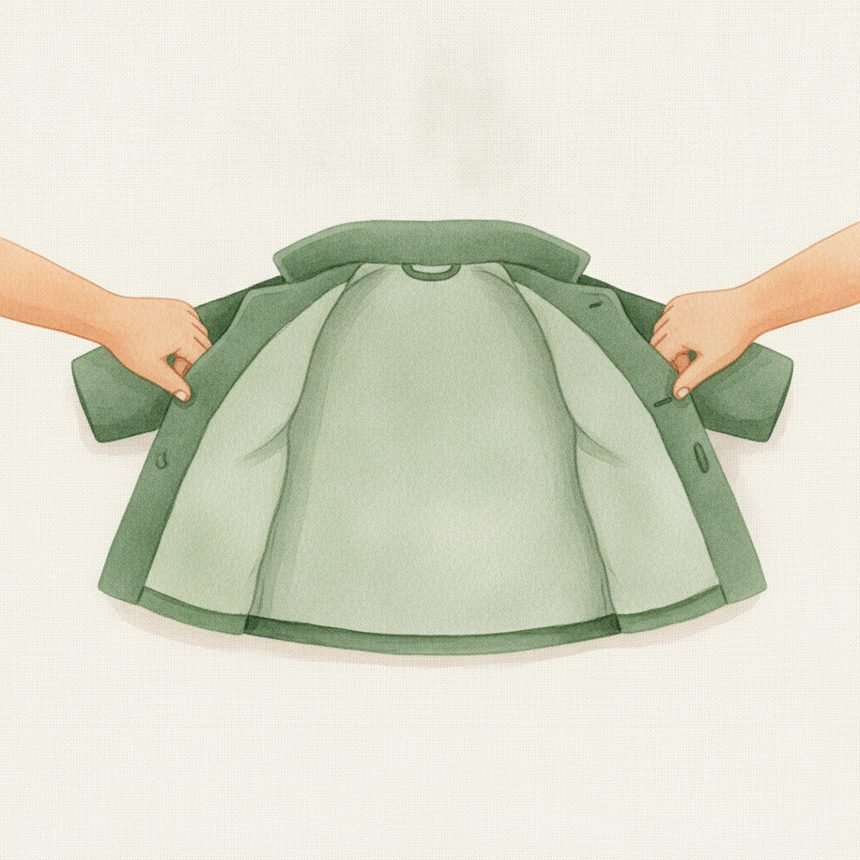
Putting On a Coat
The coat laid inside-out on the floor, arms in the sleeves, and flip, it comes right over the head.
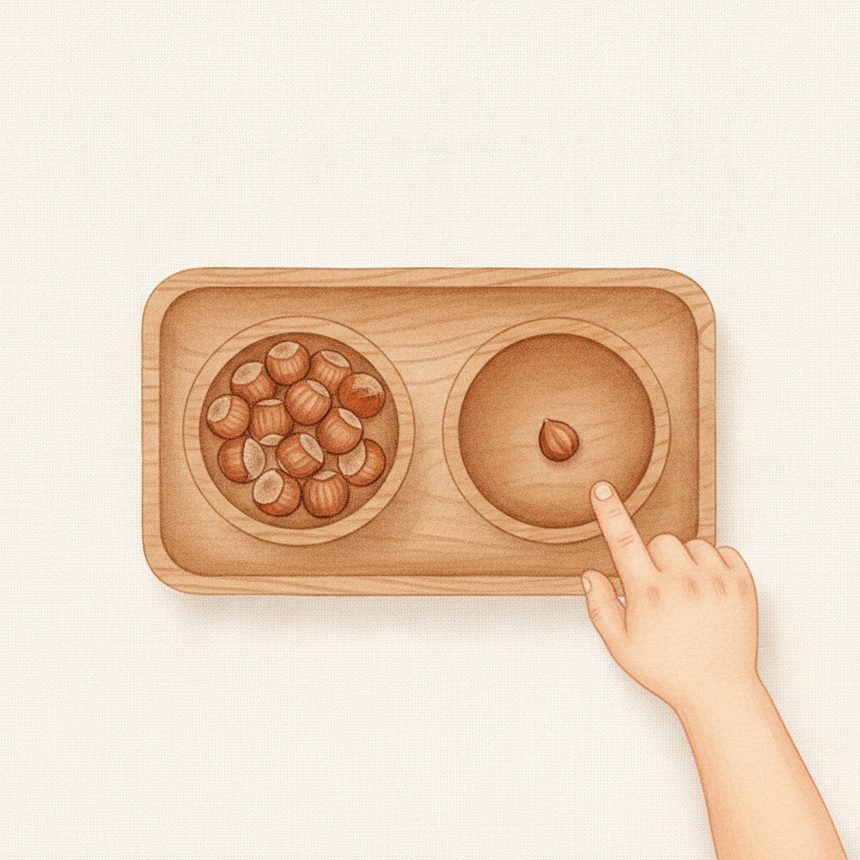
Many and One
A full bowl, a bowl with just one acorn: the very first idea of quantity.
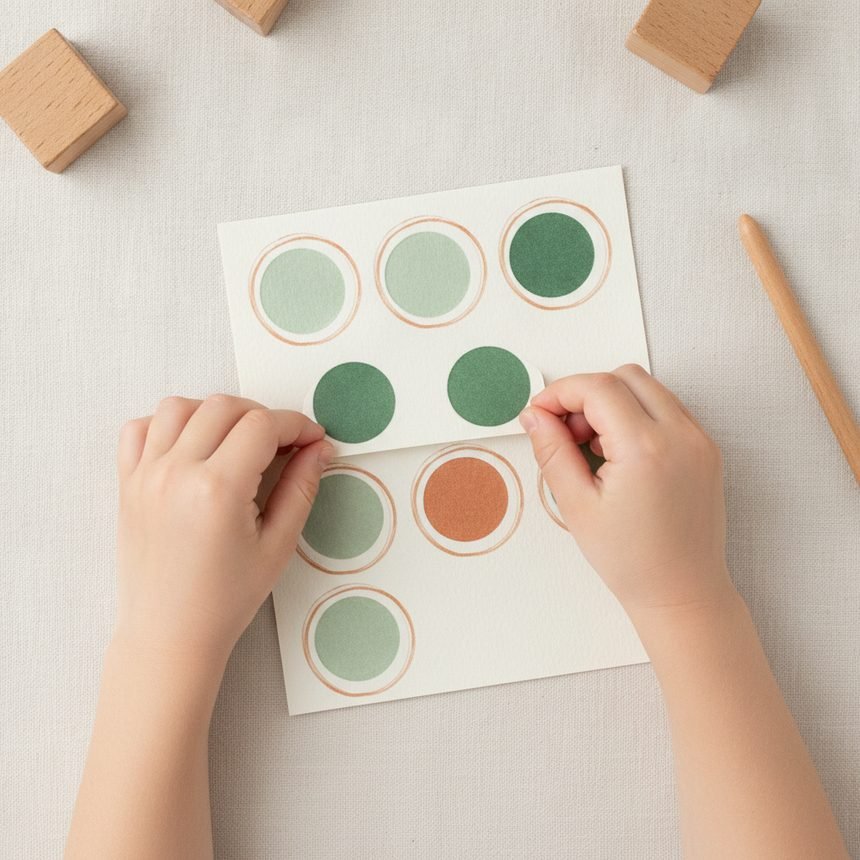
Sticker Play
Peeling a sticker off with the tips of your fingers and sticking it on a drawn circle: the pincer grip takes shape.
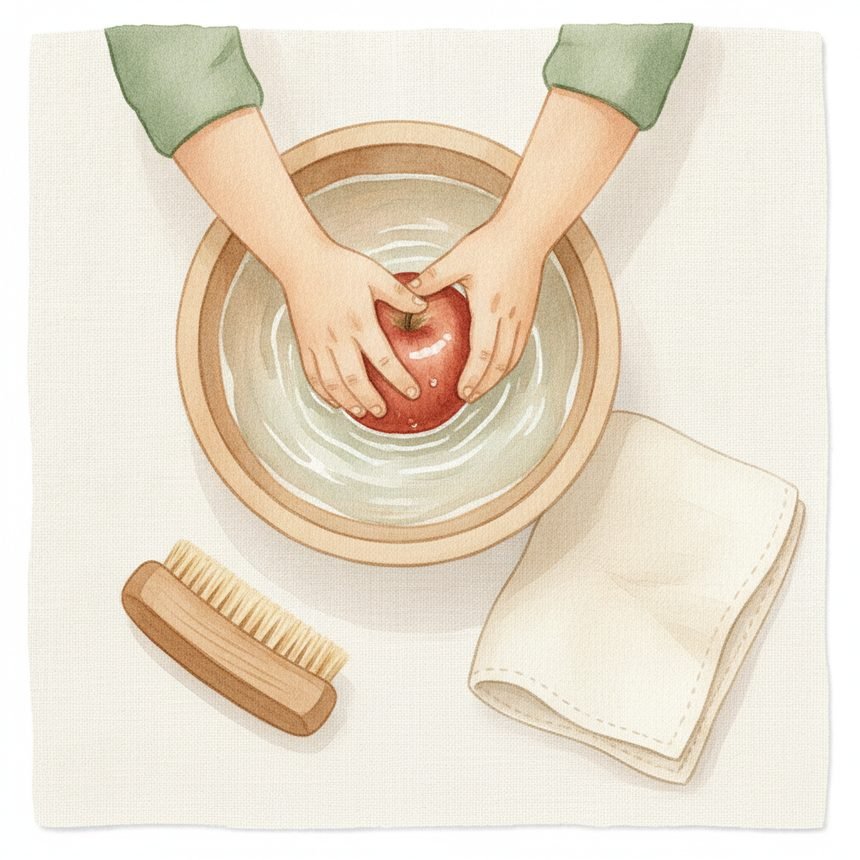
Washing Fruit
Scrubbing an apple under water, drying it, setting it in the bowl: preparing something for others.
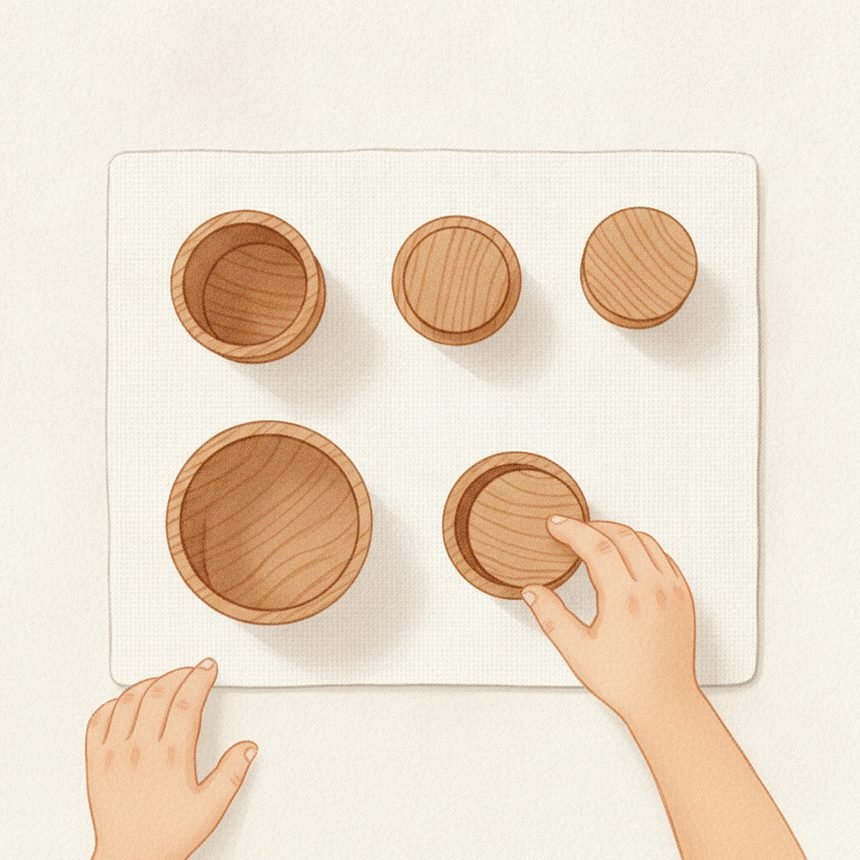
Matching Lids
Five boxes, five lids all mixed up: each one only fits its own.
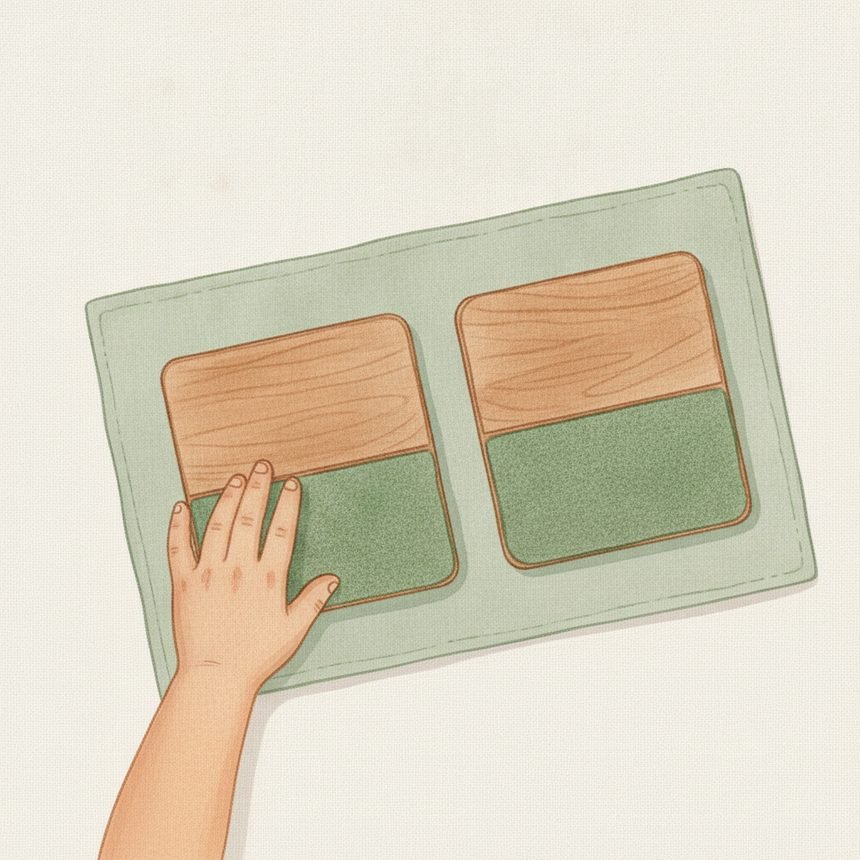
Soft and Rough
Two boards to stroke with fingertips: touch learns to compare.
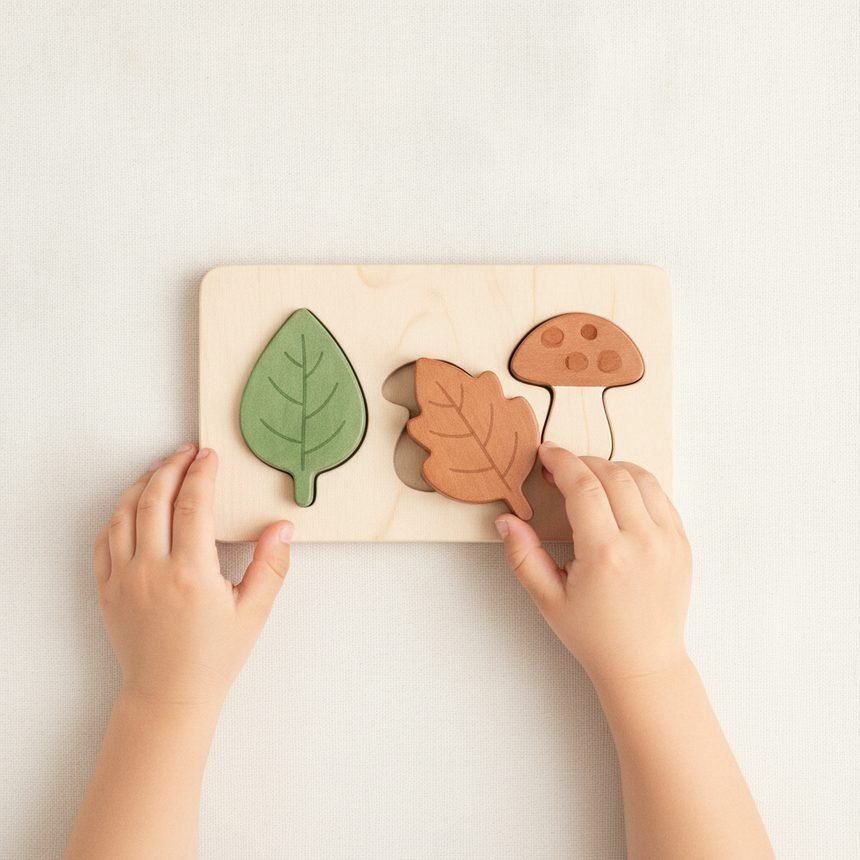
The Three-Piece Puzzle
Three shapes to fit back in their wells: turn, aim, set down.
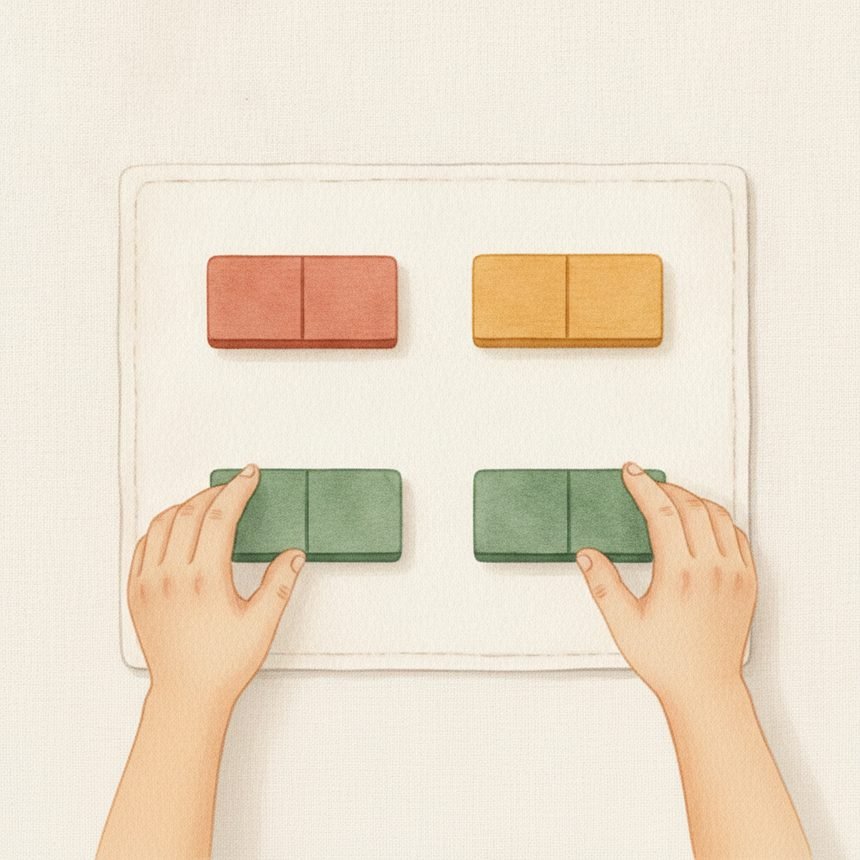
Learning Colors
Red, blue, yellow: three tablets, three words, and the three-period lesson.
3 to 4 years : Small, capable hands
Their hand becomes precise: your child can hold tongs, thread beads, fold, and cut. They also love naming the world and playing with the sounds of words. Activities can now involve several steps and a real purpose.
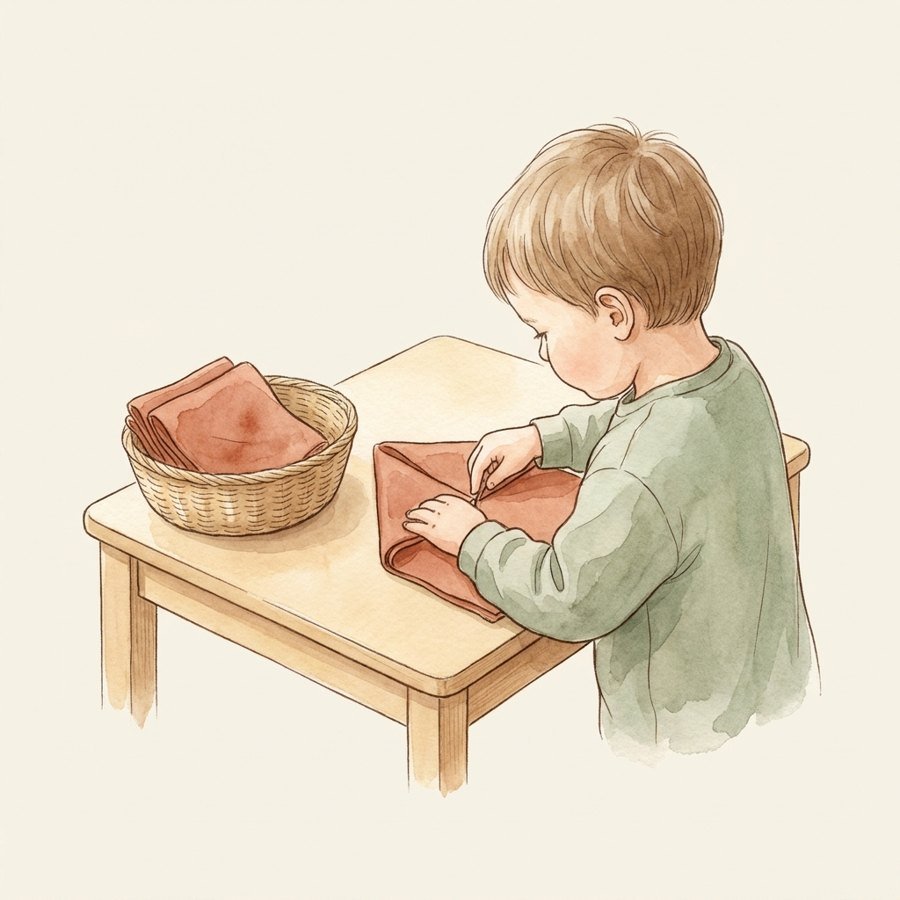
Folding Napkins
Matching corner to corner, then two more. Geometry that smells like fresh laundry.
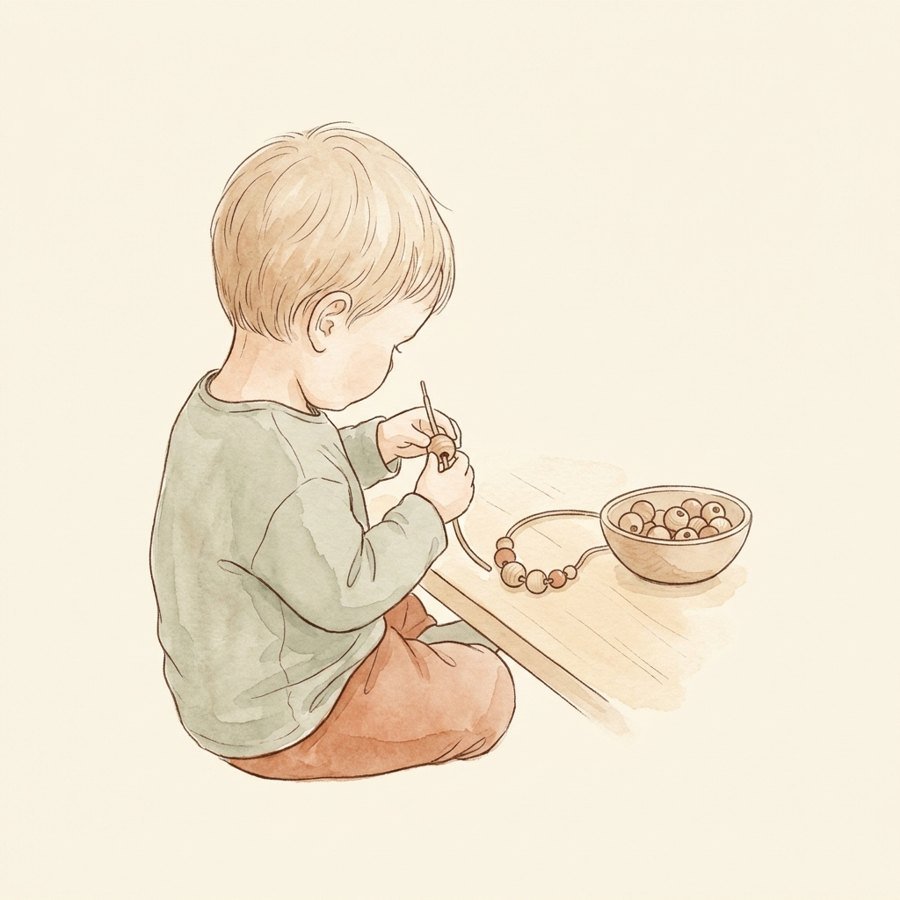
Stringing Beads
Aiming a shoelace at a hole a few millimeters wide. Guaranteed concentration.
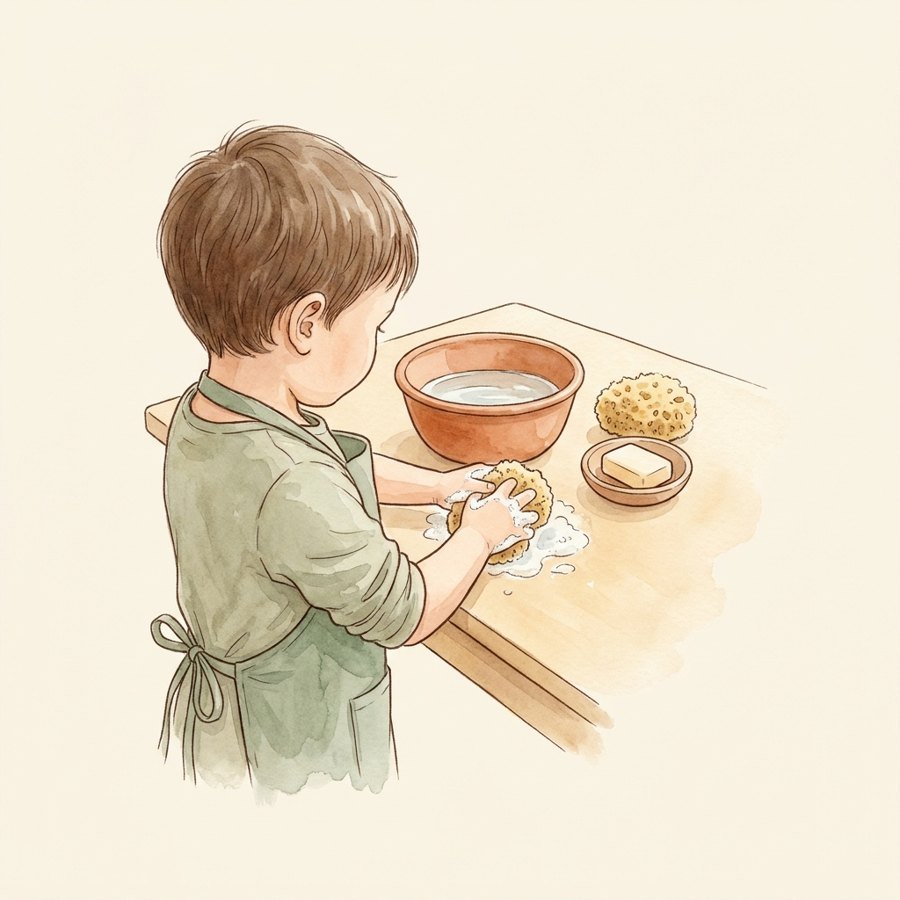
Washing a Table
A real household chore, start to finish, cleanup included. Children love it because it's useful.
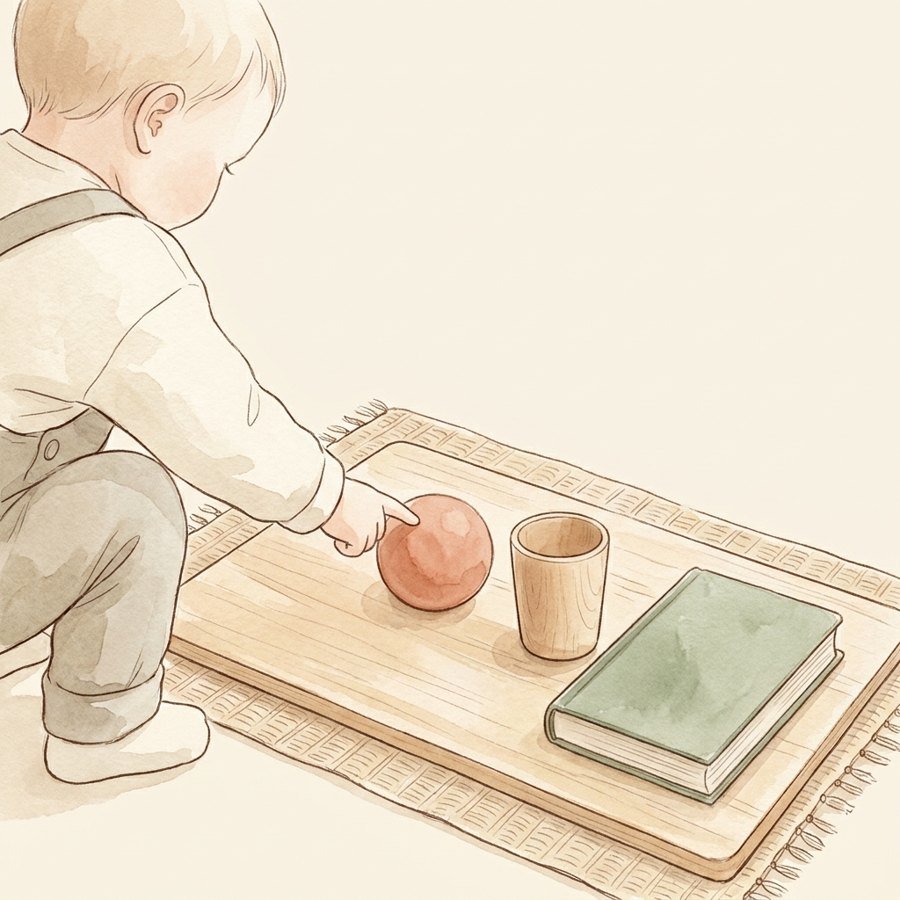
Beginning Sounds
"I see something that starts with mmm..." The very first step toward reading.
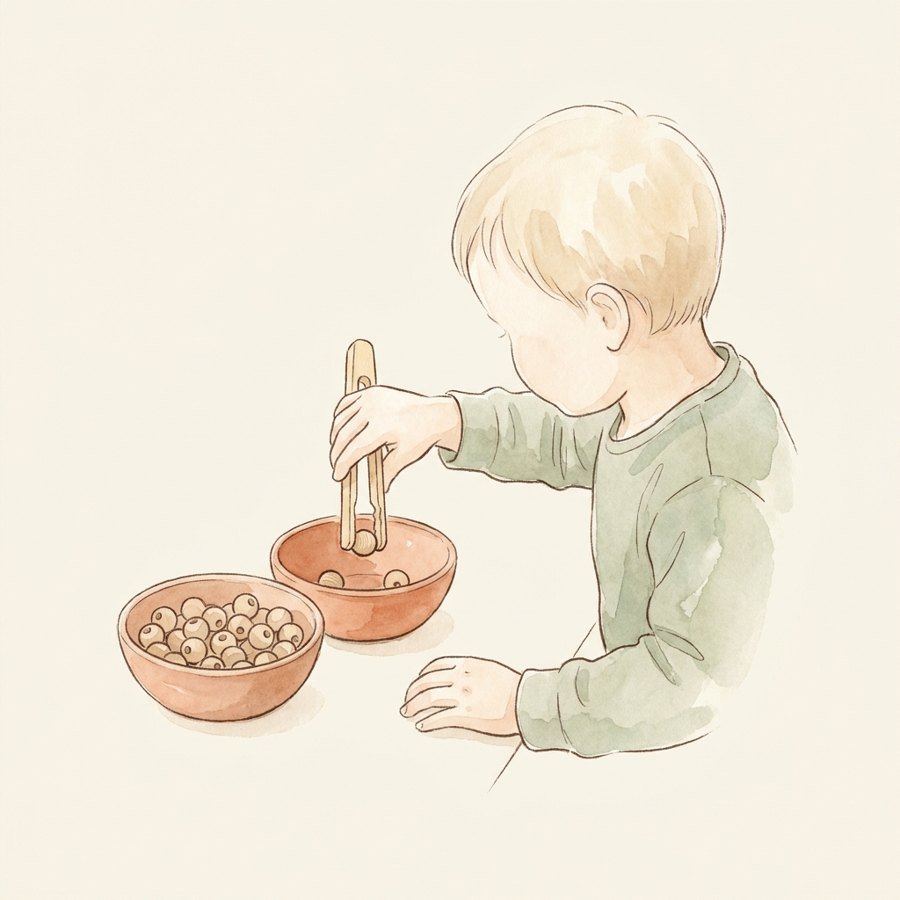
Tong Transfer
A pair of tongs, an empty compartment to fill, and three fingers working in silence.
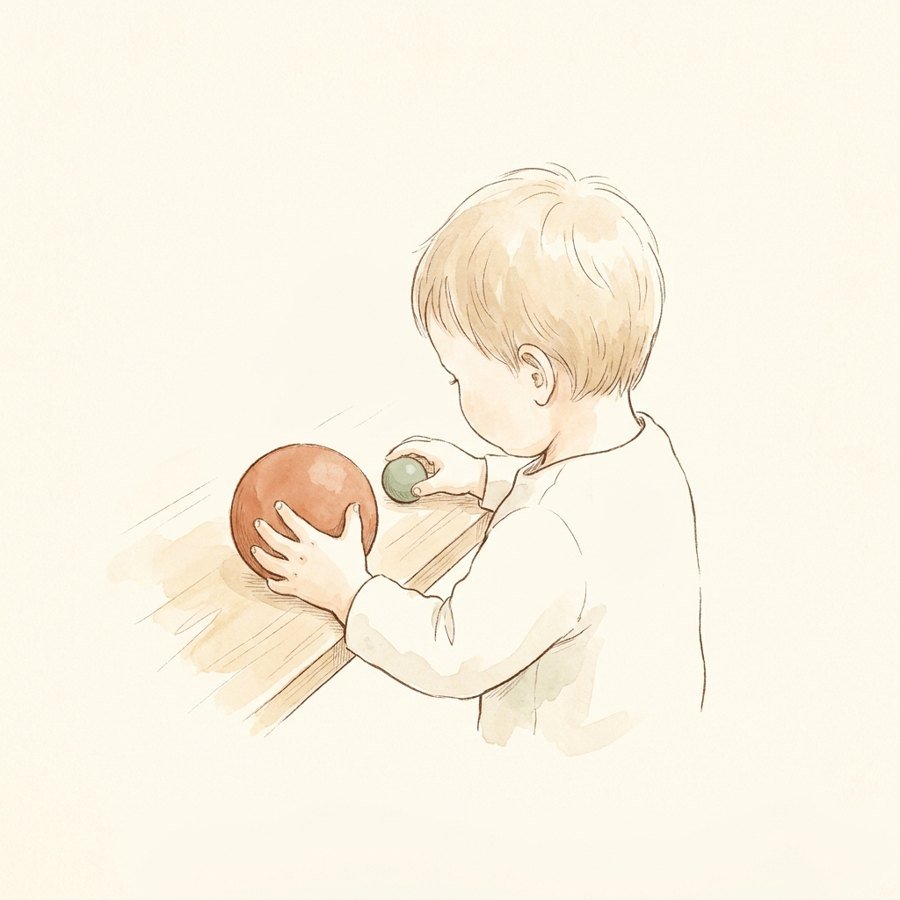
Opposites
Heavy and light, rough and soft: words the hands understand before the mouth can say them.
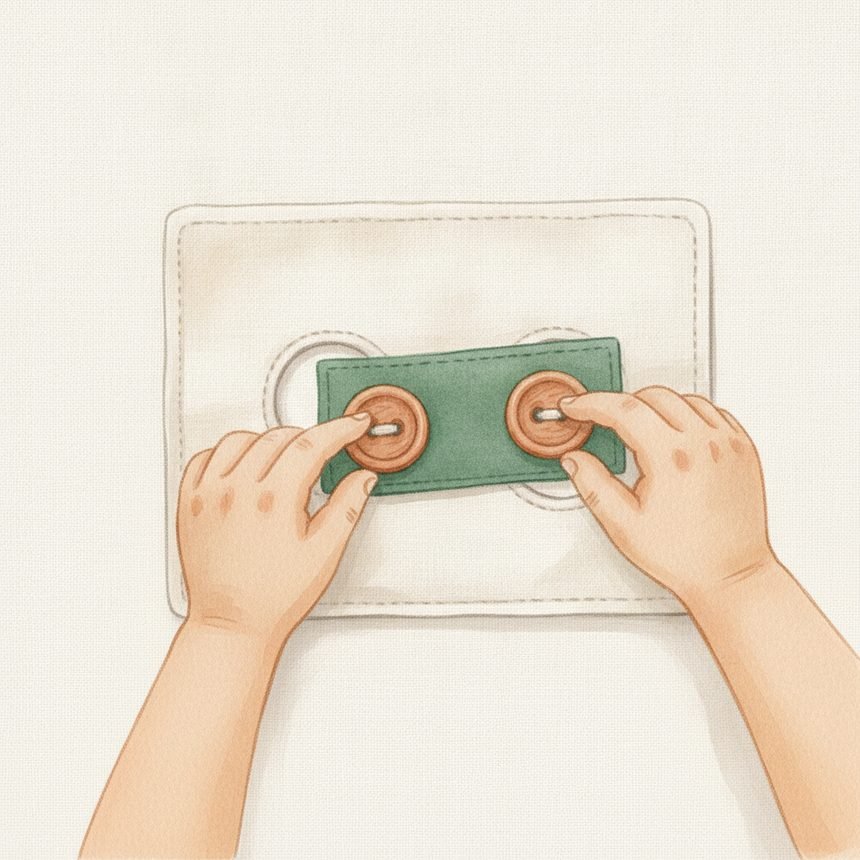
Buttoning and Unbuttoning
A strip of fabric with big buttons, and the patient motion that leads to dressing solo.
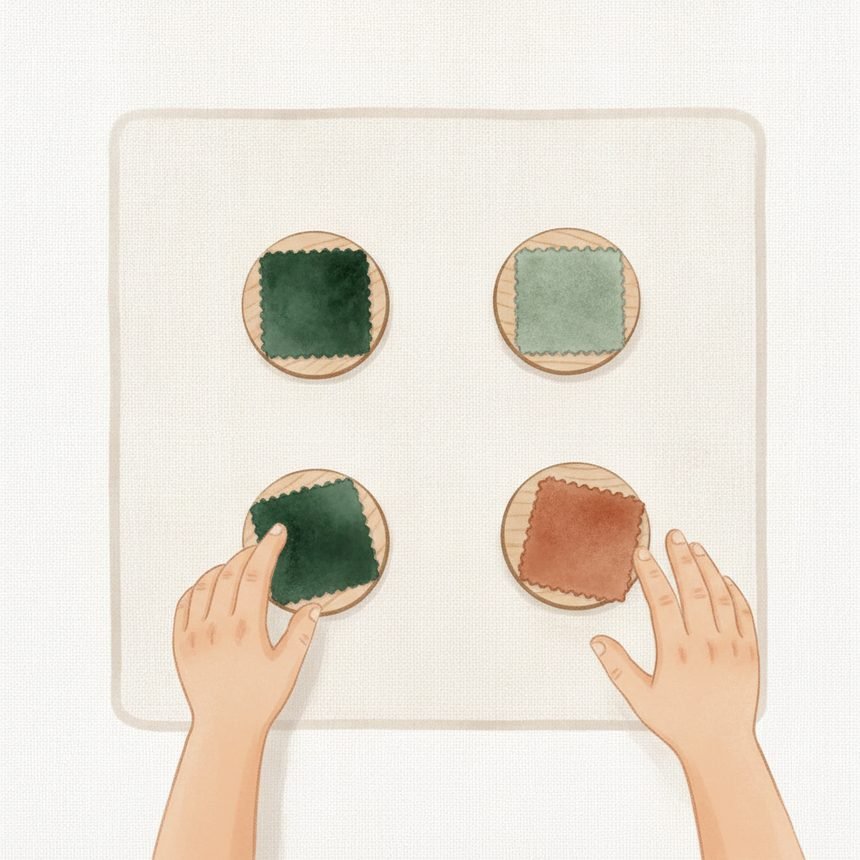
Matching Textures
Pairs of fabric found by touch alone, eyes closed: the sense of touch getting sharper.
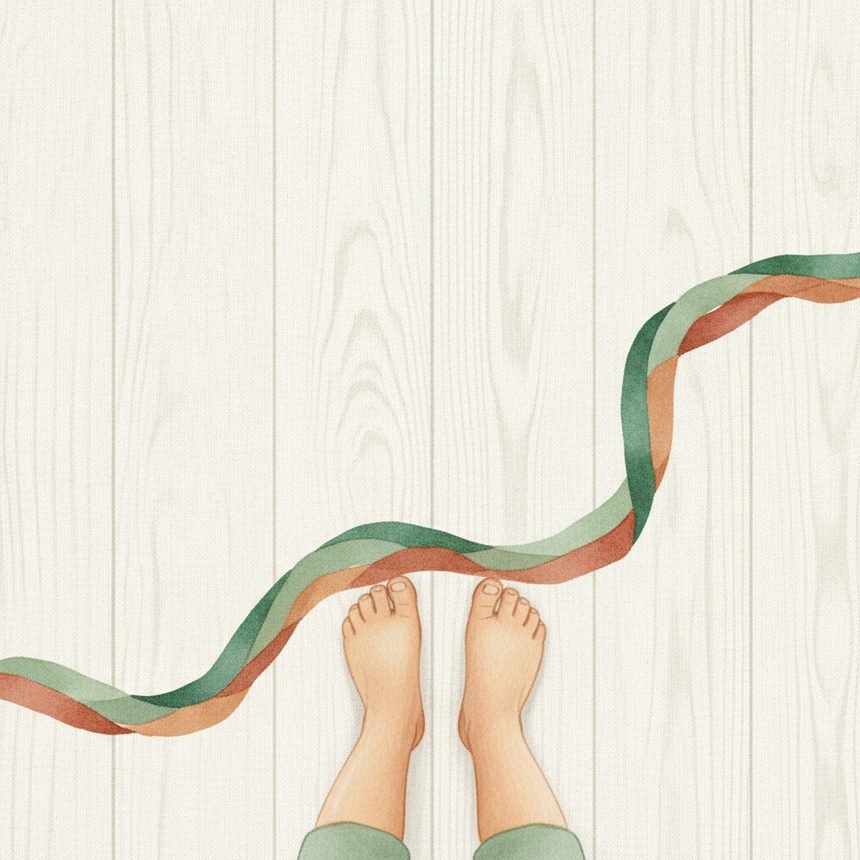
Walking the Line
A ribbon on the floor, and the whole body learning balance and calm, one step at a time.
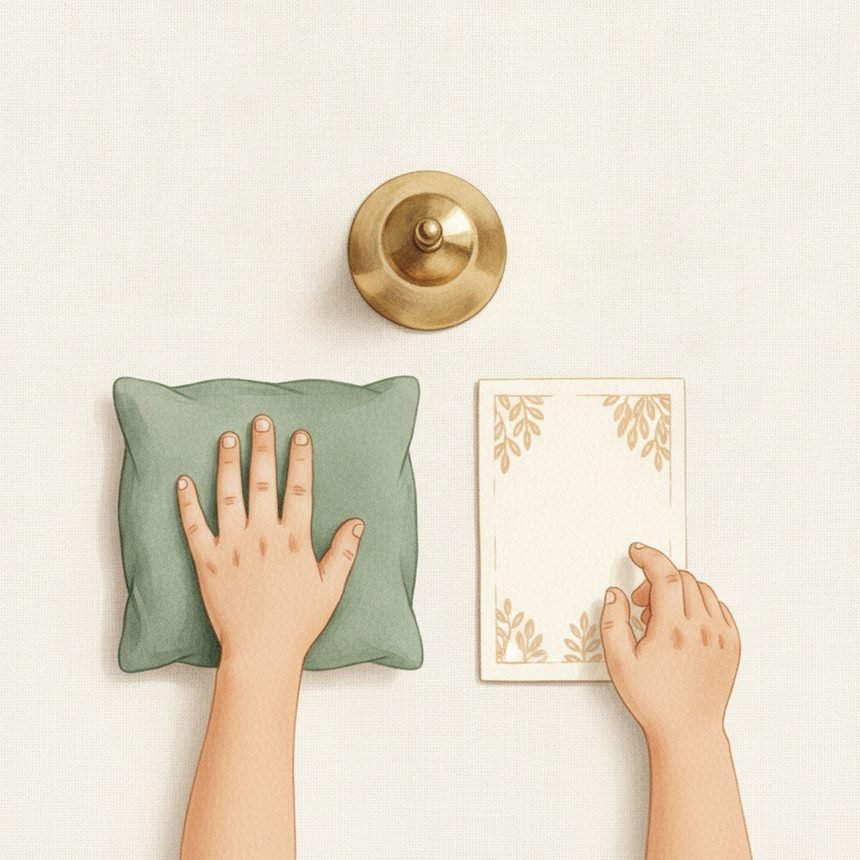
The Silence Game
Making silence together, listening to it, then hearing your own name whispered: the calmest game there is.
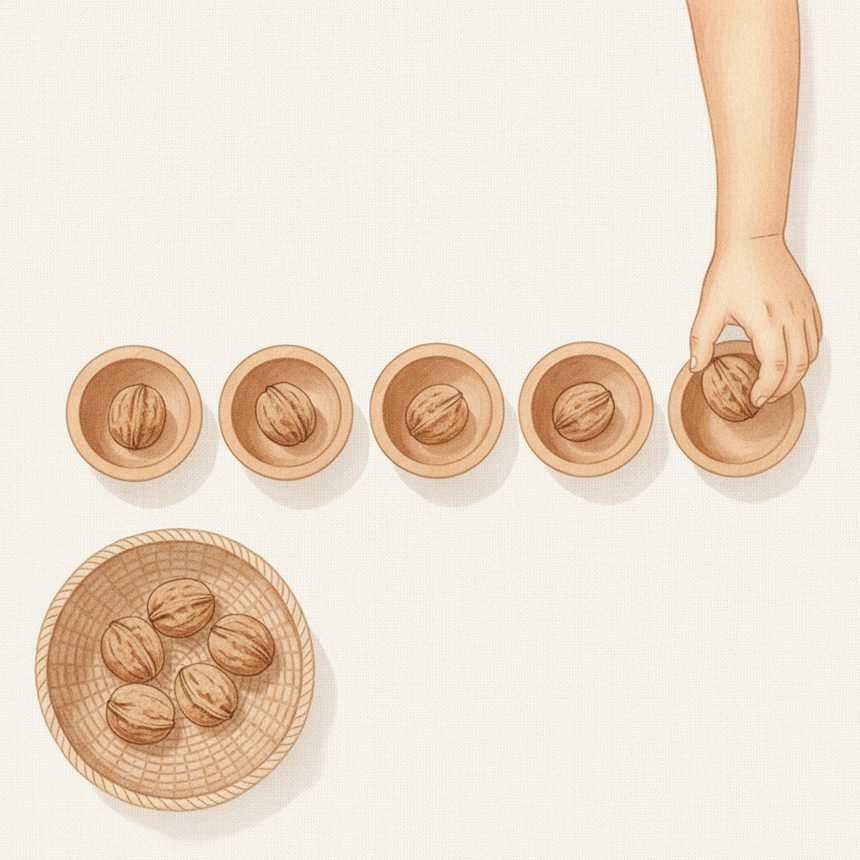
One for Each
One walnut per bowl, not two, not zero: one-to-one correspondence, the foundation of all math.
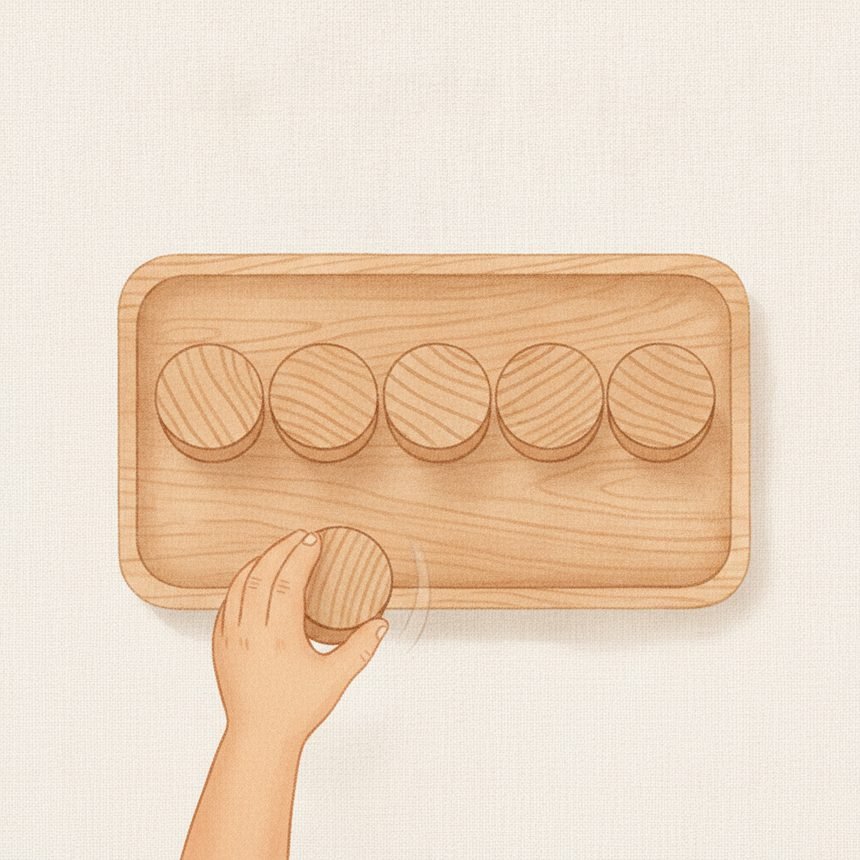
Sound Boxes
Sealed boxes that whisper or rattle: finding the matching pairs by ear alone.
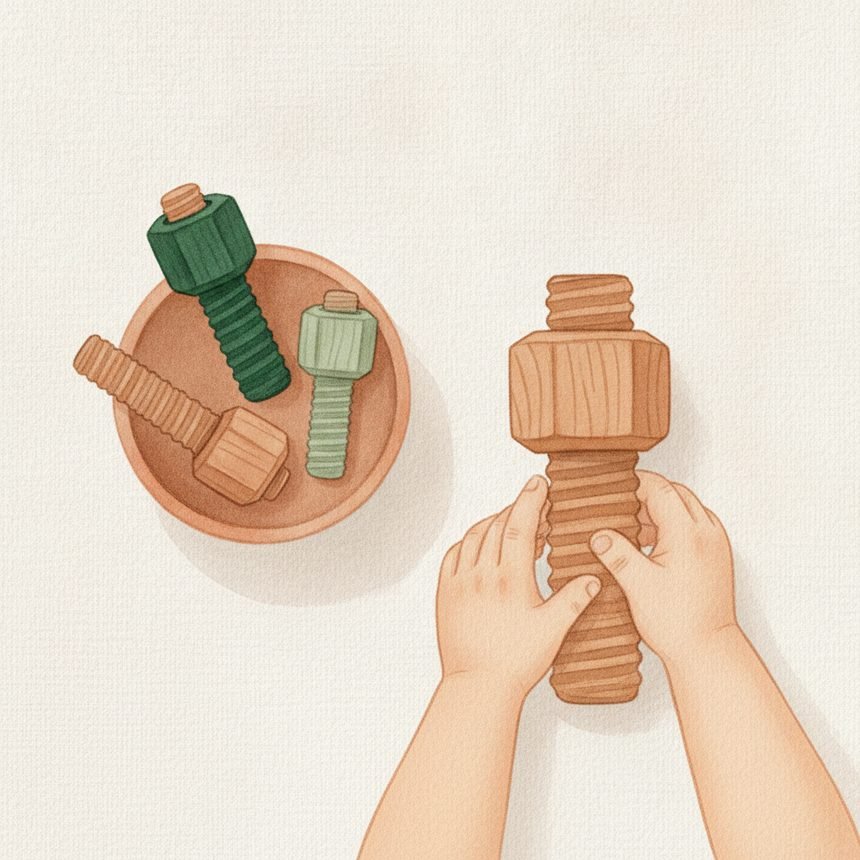
Nuts and Bolts
Real bolts, real nuts, and sizes that must never be mixed up: a workshop at your child's fingertips.
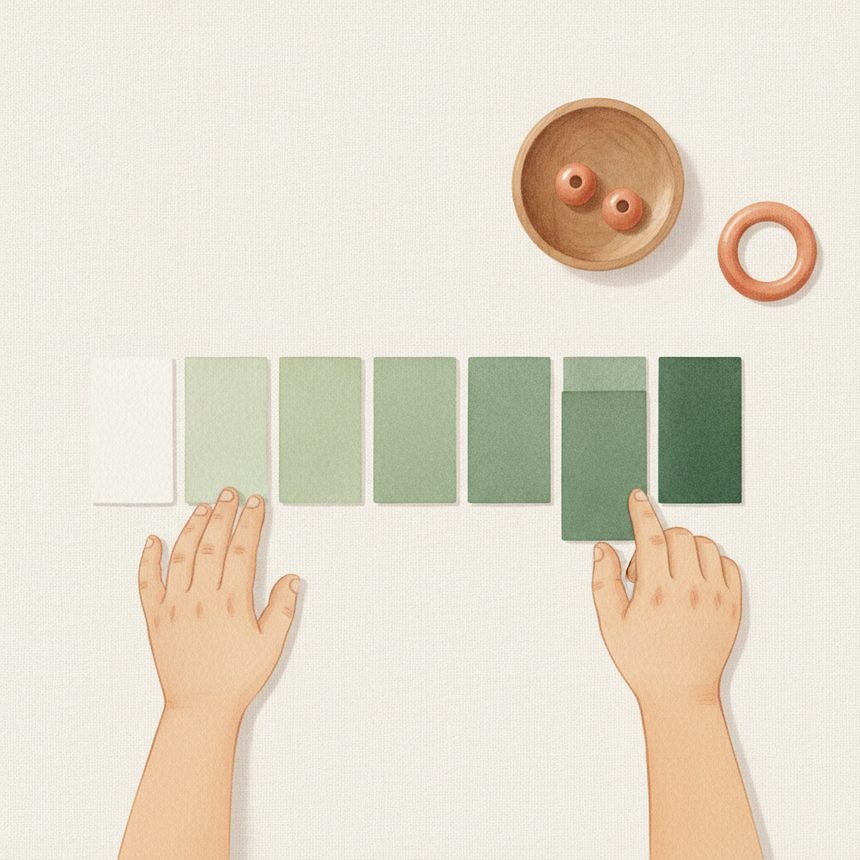
Light to Dark
Seven shades of a single color to put back in order: the eye learning to see finely.
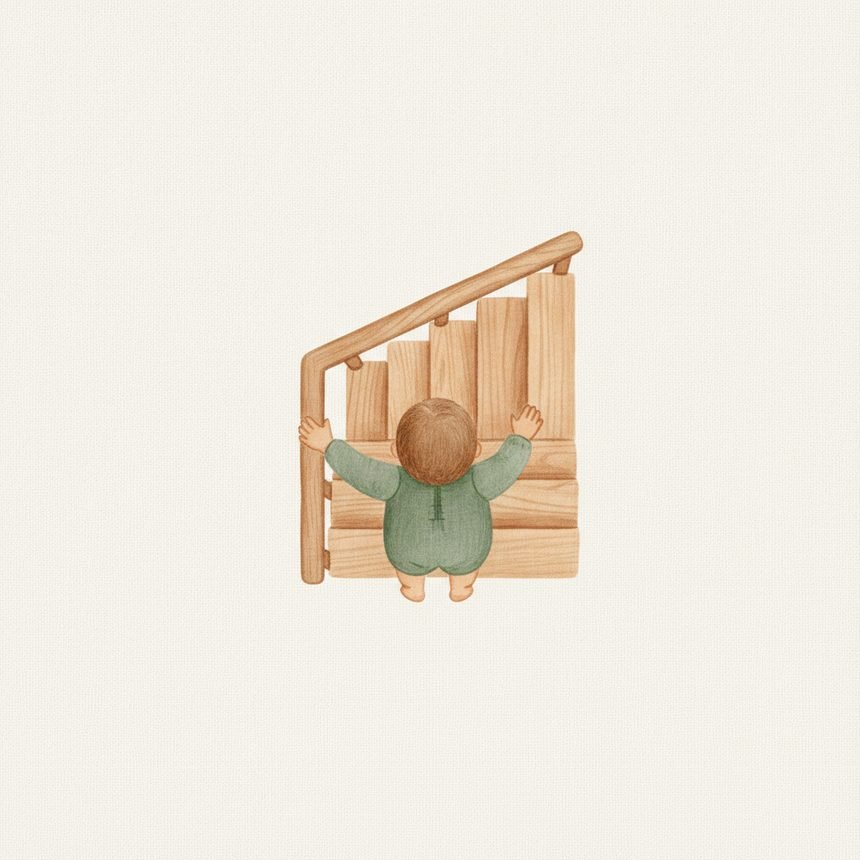
Counting the Stairs
One number per step, one word per stride: the number sequence enters the body.
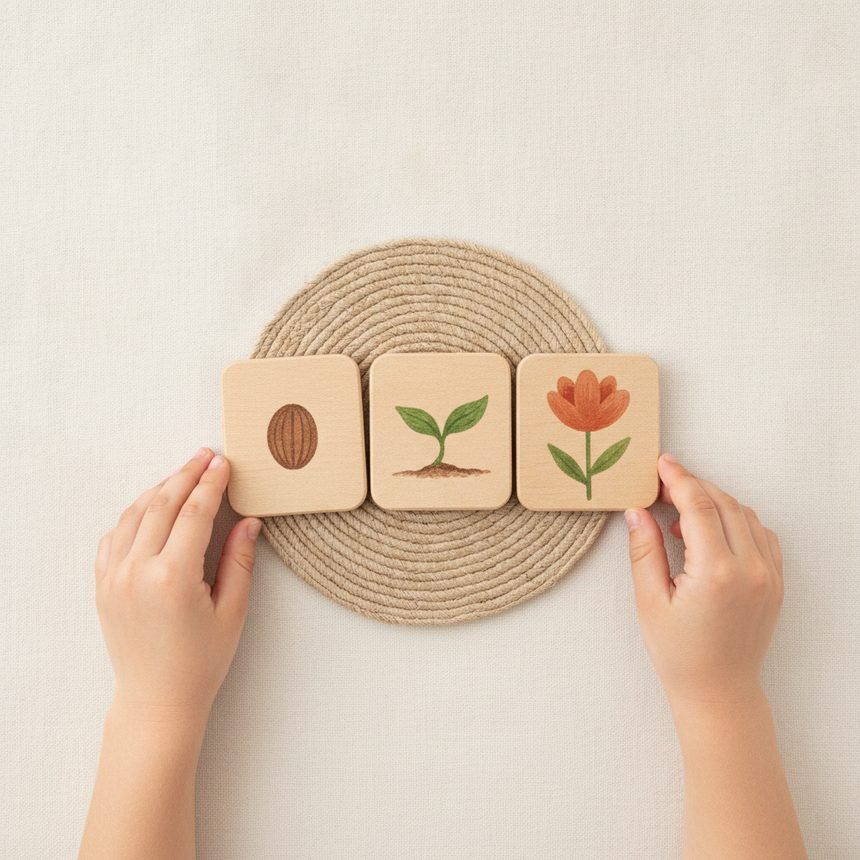
Sequencing Pictures
Three pictures from the same story to put in order, then tell: the story starts to take shape.
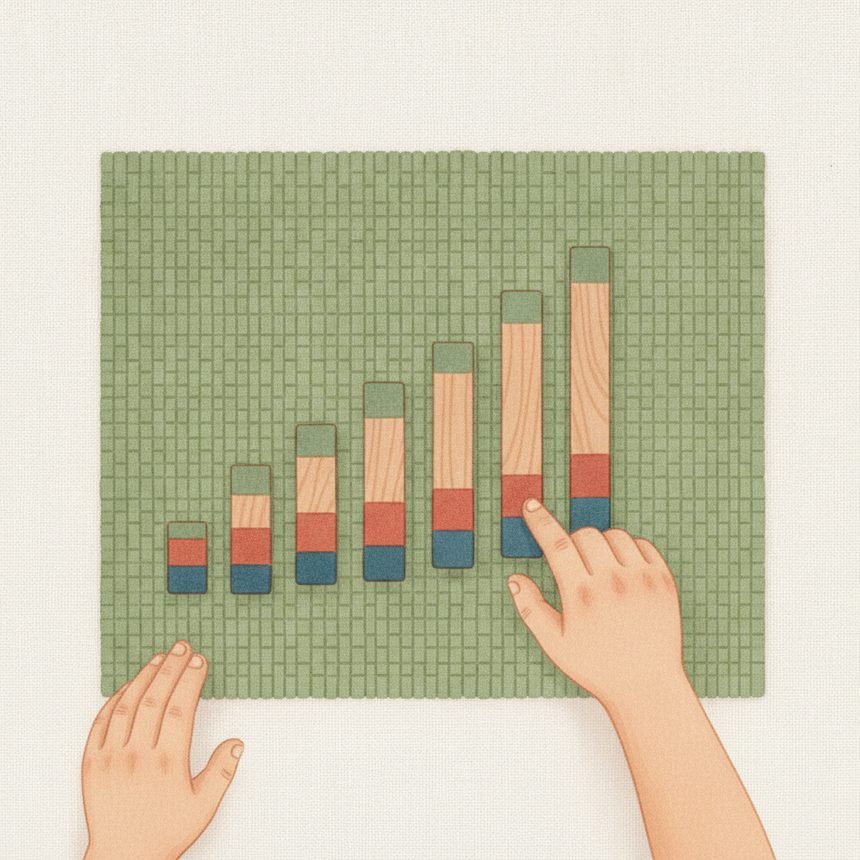
Number Rods
Rods of growing length: quantity becomes something you can see and weigh in your hands.
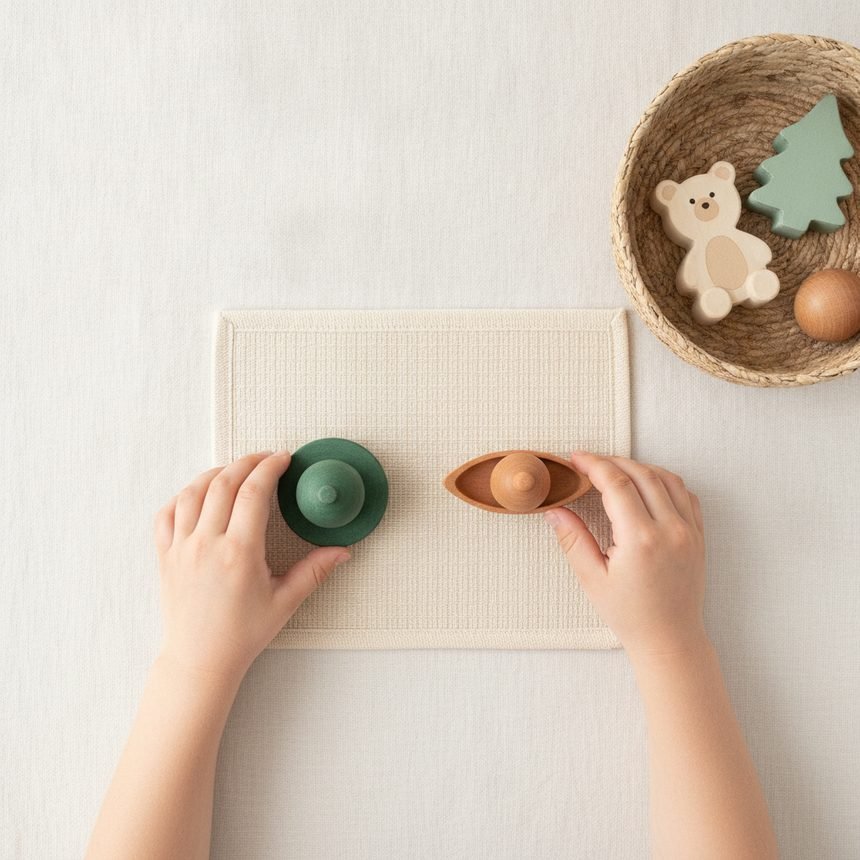
The Rhyming Game
Cat and hat sound the same at the end: the ear getting ready to read before a book is even opened.
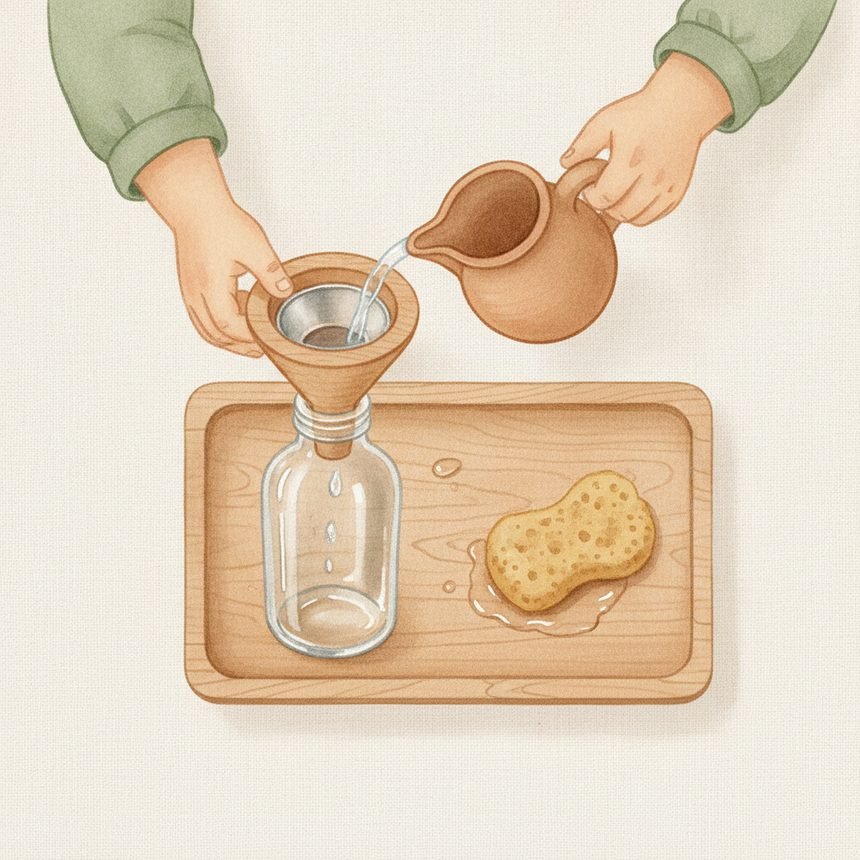
Pouring with a Funnel
A funnel, a narrow-necked bottle, and water that only makes it through if the hand stays steady.
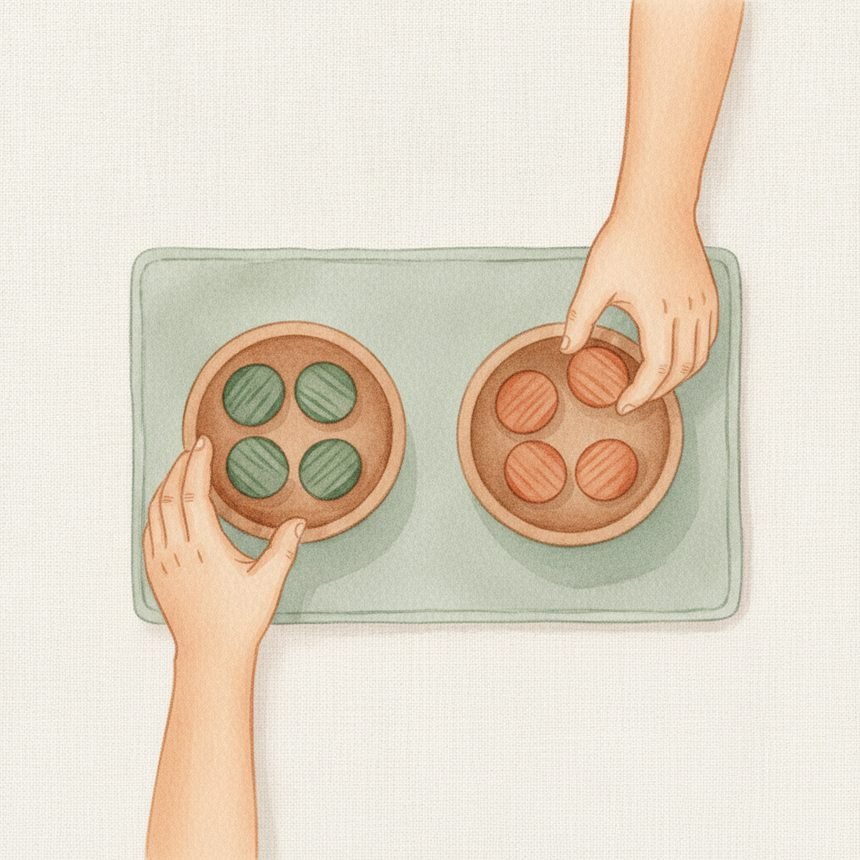
How Many Are There?
Counting real little collections by moving each object: one word, one motion, never more.
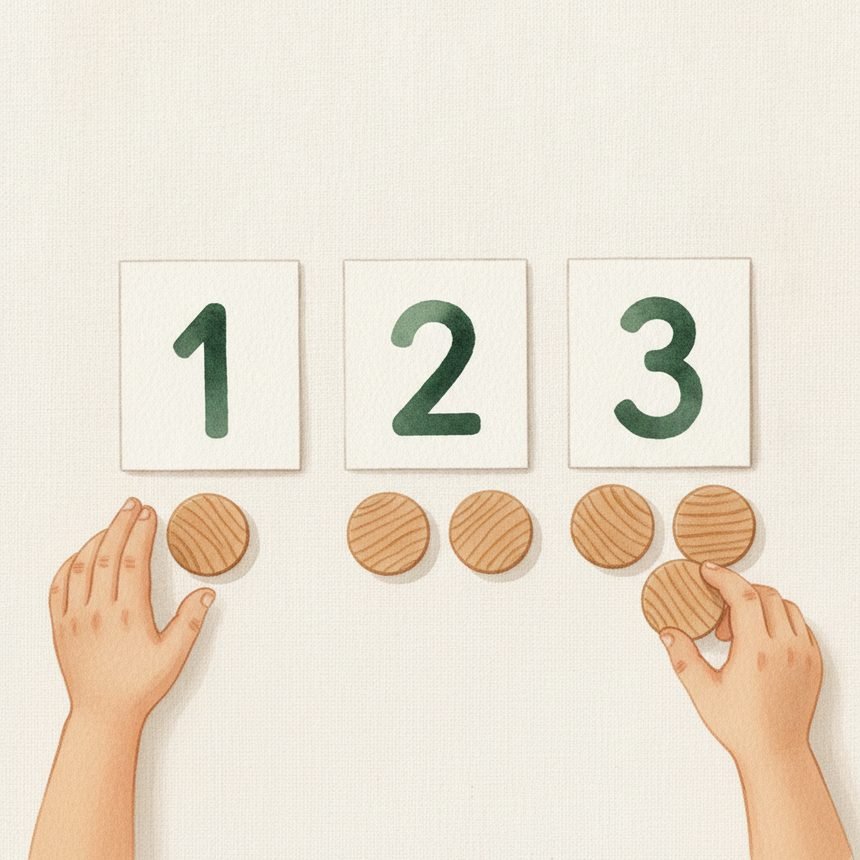
Matching Number and Quantity
The written numeral finally meets the quantity it stands for, counter by counter.
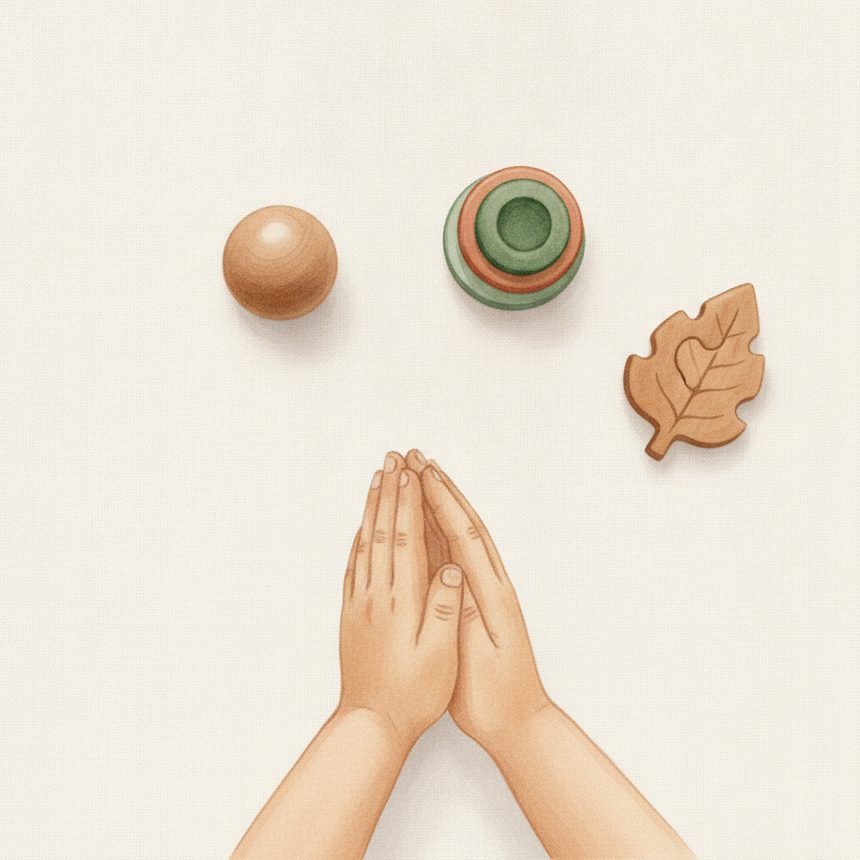
Clapping Syllables
A word, a few claps: your child hears that words are made of pieces.
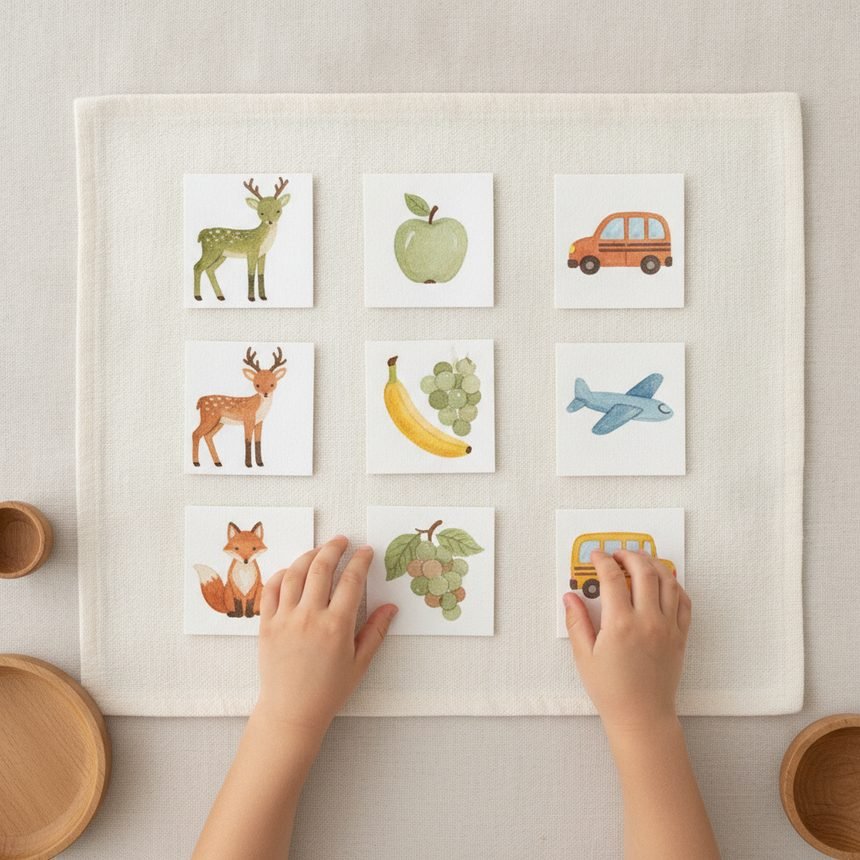
Sorting Pictures into Categories
Animals on one side, fruit on the other: vocabulary finds its own drawers.
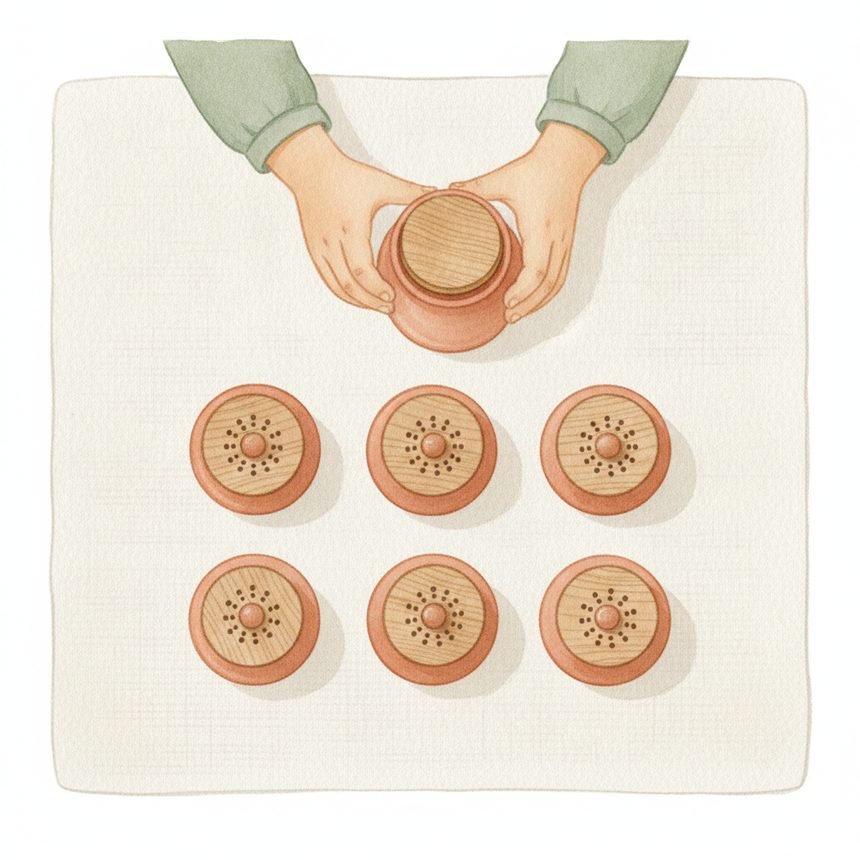
Smelling and Matching
Two rows of small jars, and a sense we almost never train: smell.
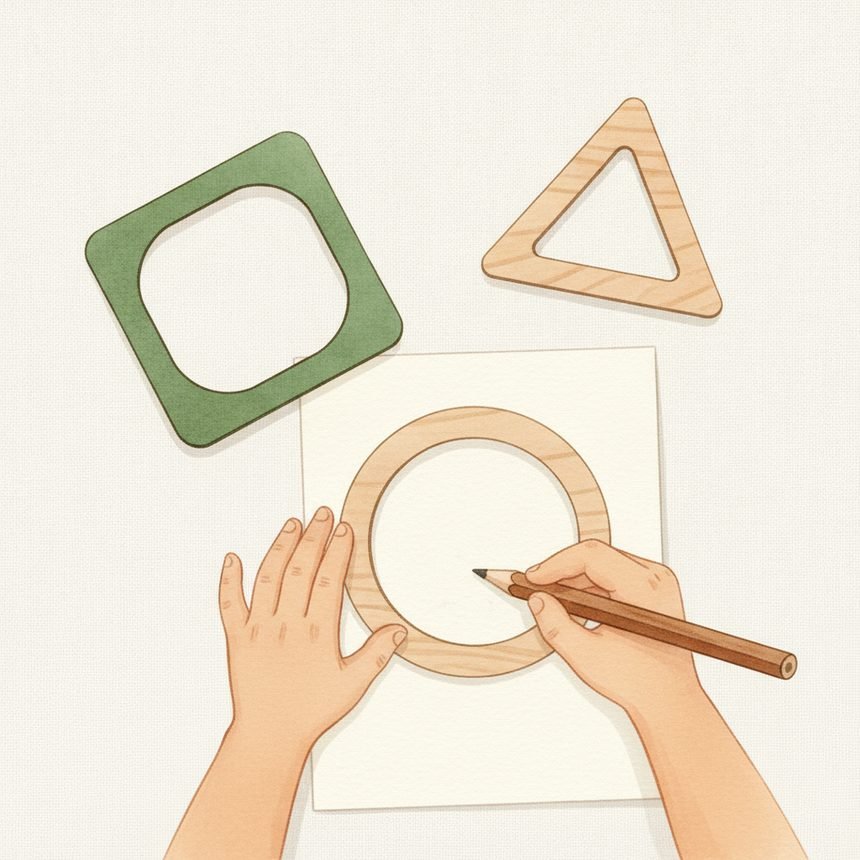
Tracing Shapes with Stencils
The crayon follows the edge of the shape: the hand learns where to stop.
4 to 6 years : Big discoveries
Your child wants to understand how the world works, count for real, write their name, get their own snack ready. Activities grow longer and take on a real project: prepare, do, put away.
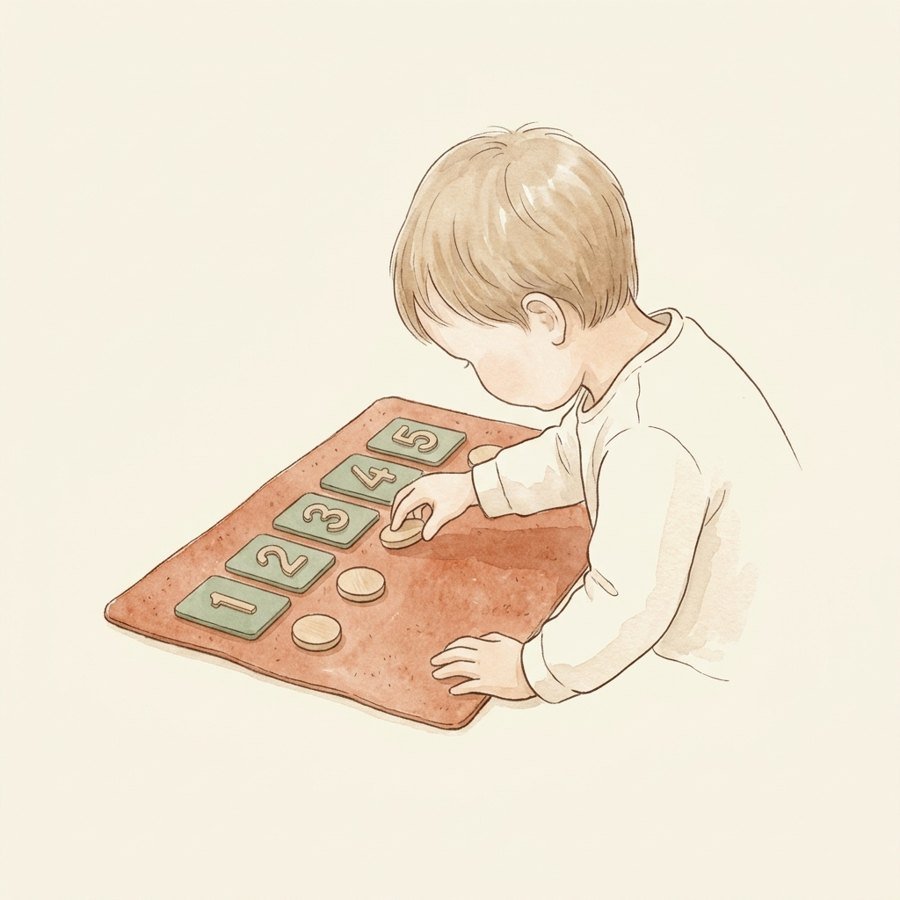
Counting with Counters
Place a counter, say a number. Number becomes something you can touch.
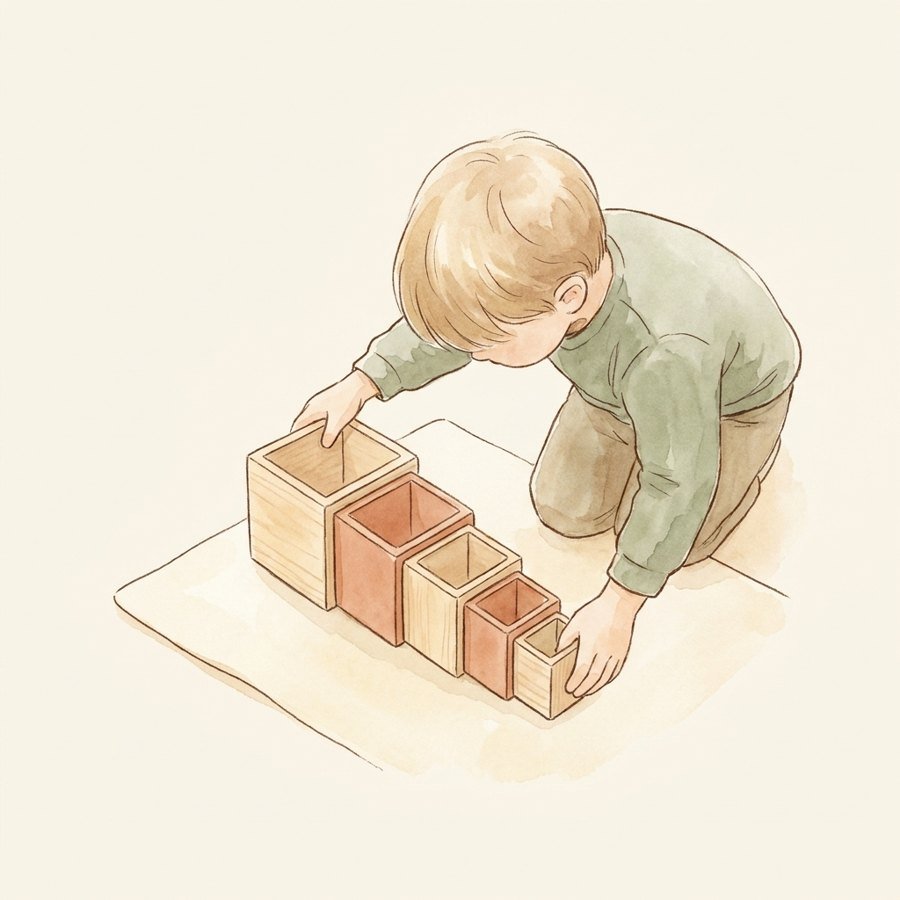
Biggest to Smallest
Arranging five objects by size, with no ruler and no measuring: just the eye and the hand.
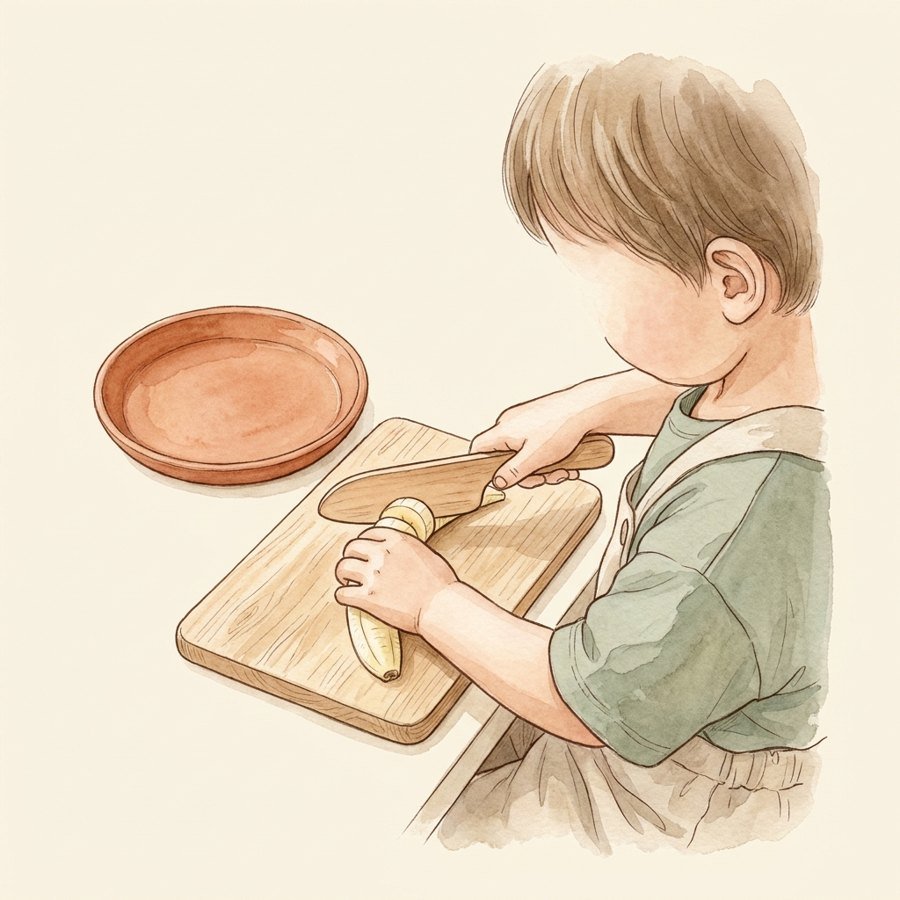
Preparing a Snack
Peel, slice, plate, serve. A real snack made start to finish by a five-year-old.
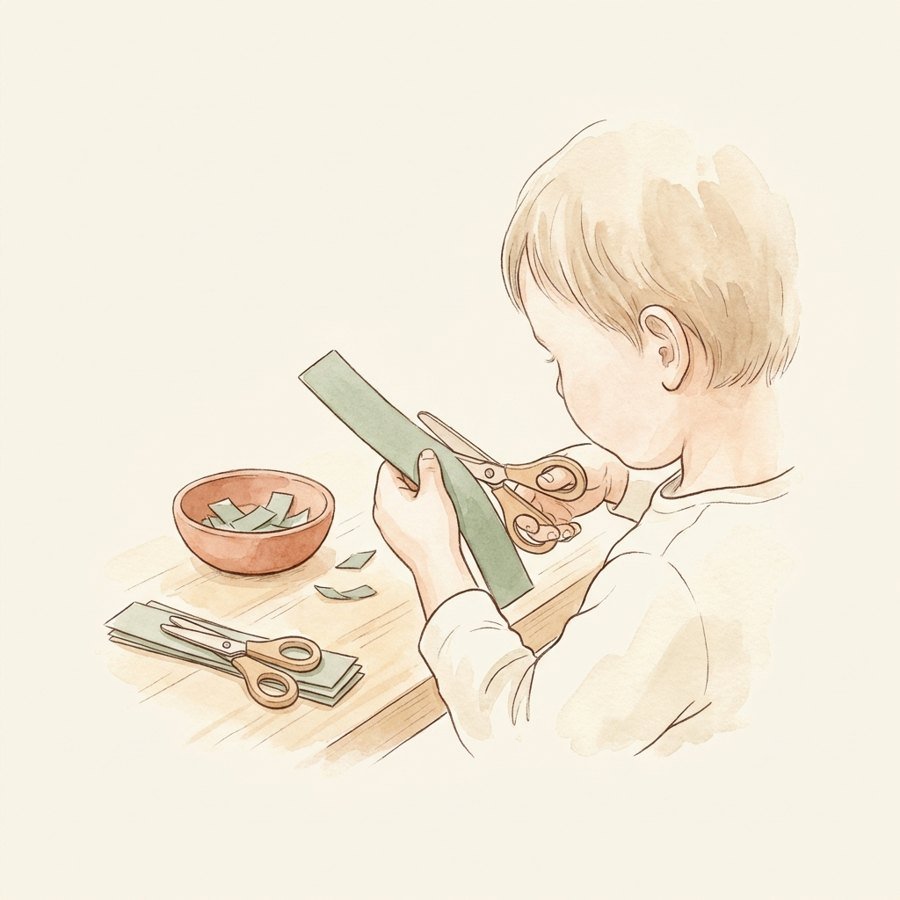
Cutting Paper Strips
Open, close, advance. Scissors get tamed in just a few sessions.
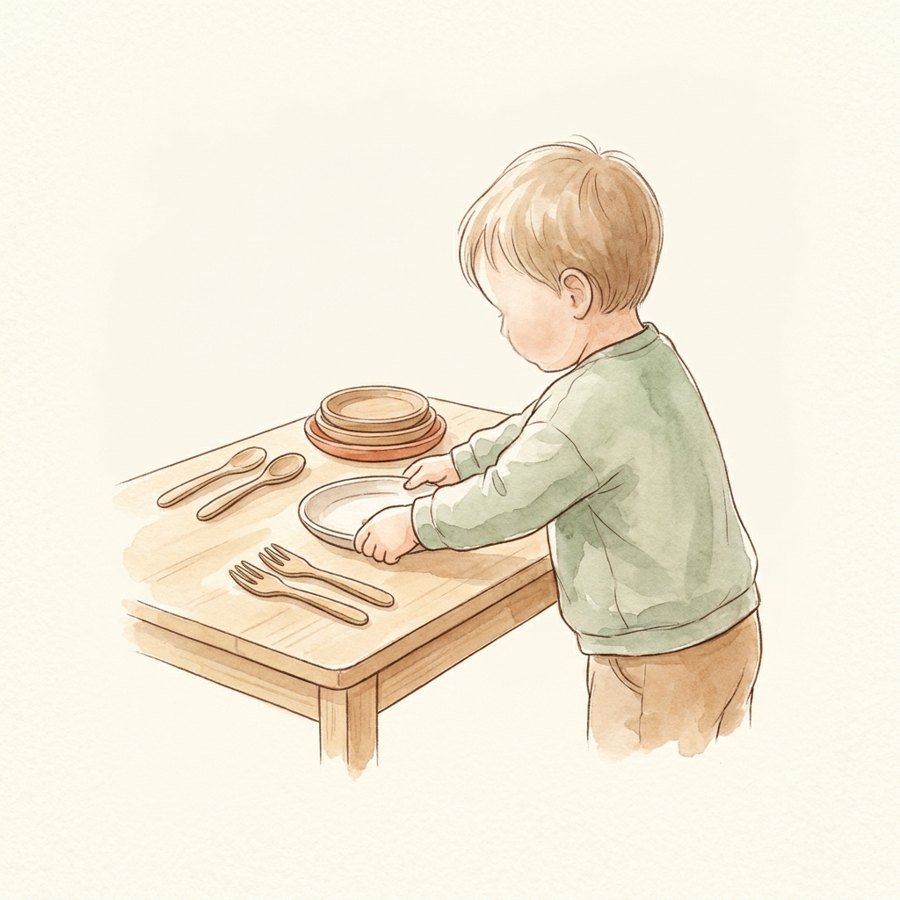
Setting the Table by Counting
Four plates, four cups, four forks: real counting, because it's put to real use.
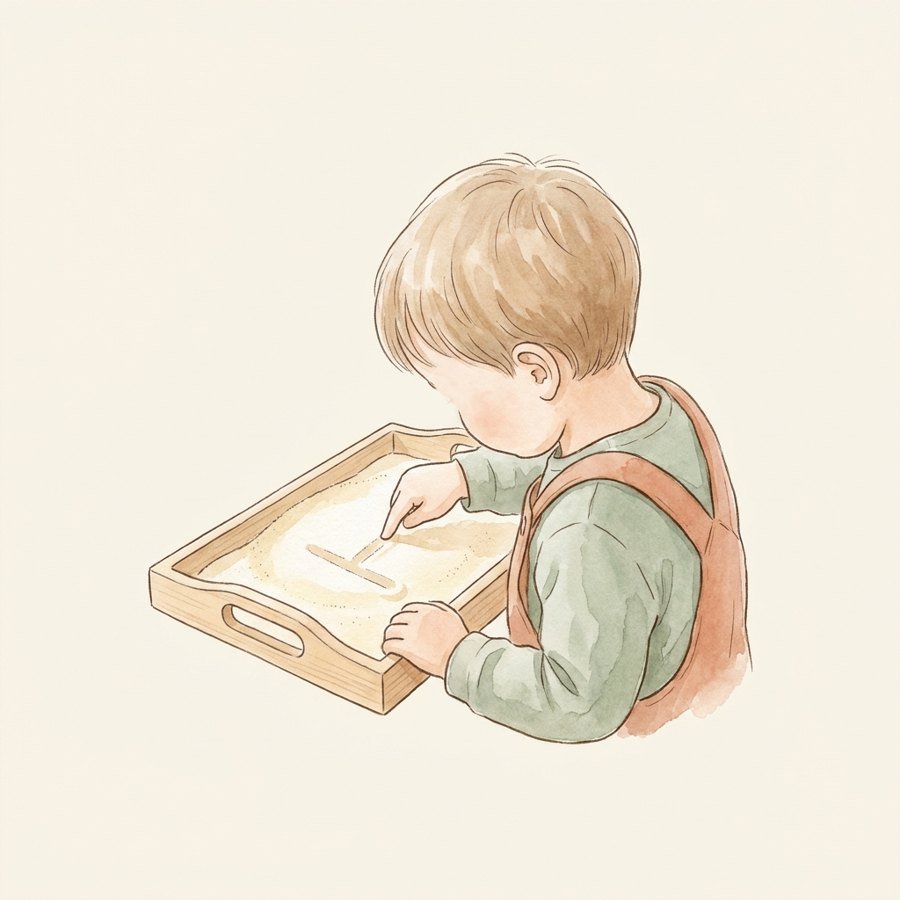
Name Writing in a Rice Tray
A tray of rice, one finger, and a name you can erase with a swipe to start again.
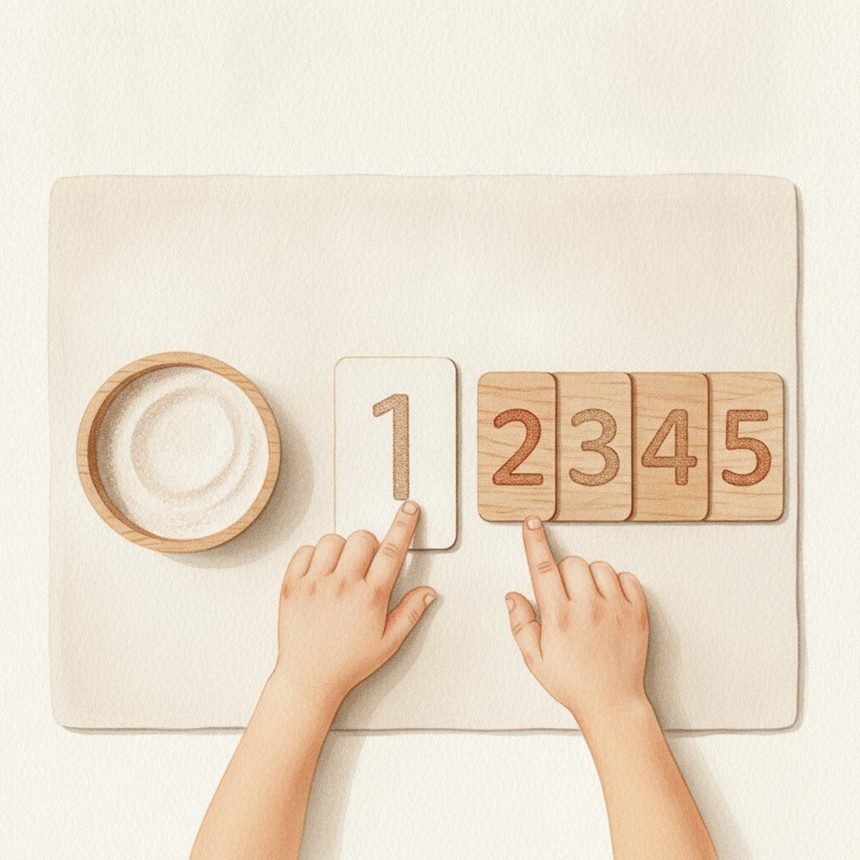
Sandpaper Numbers
Numerals to trace with a finger, in writing order, so the hand knows them before it draws them.
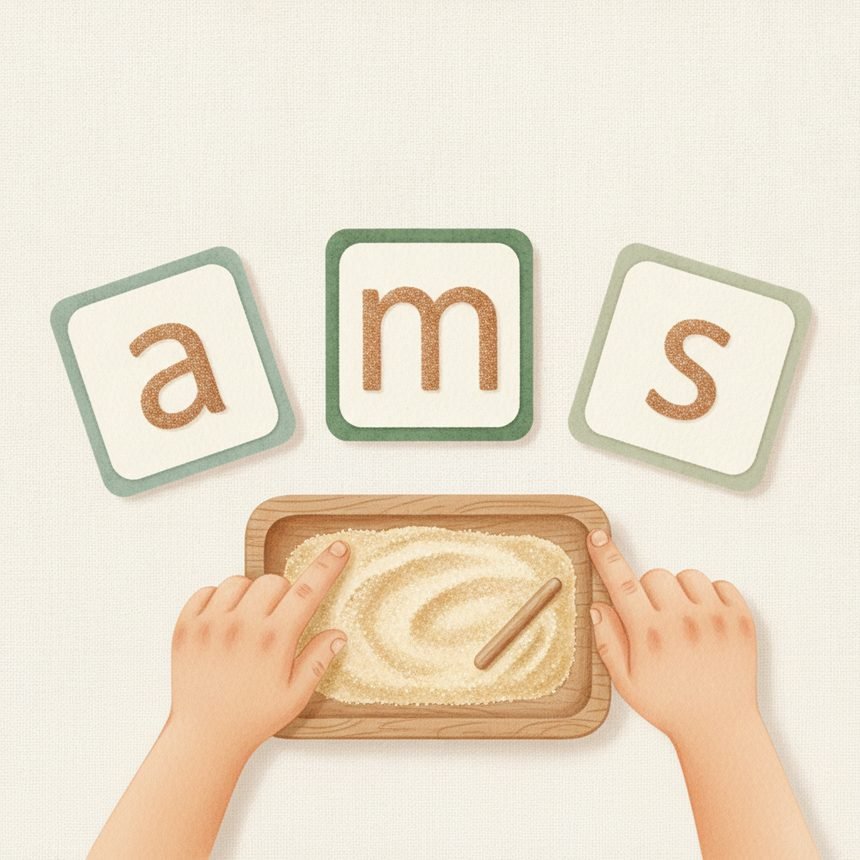
Sandpaper Letters
Letters to trace with fingertips, saying their sound: the hand learns to write before the crayon does.
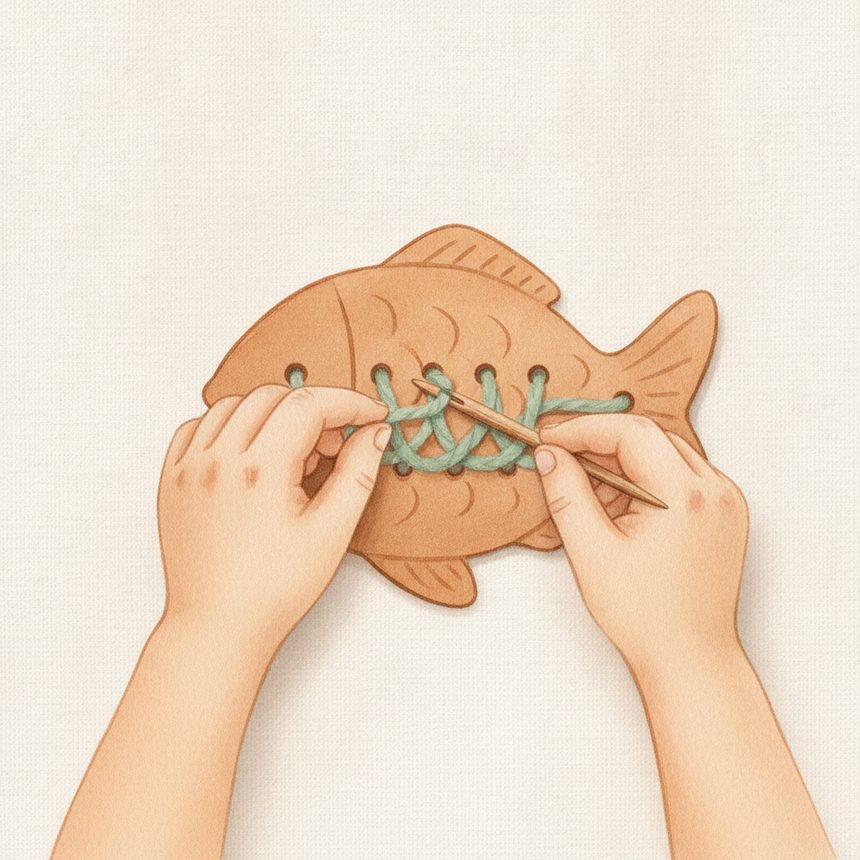
Sewing Cards
A round-tipped needle, yarn, a punched card: over, under, over, and the pride of having sewn.
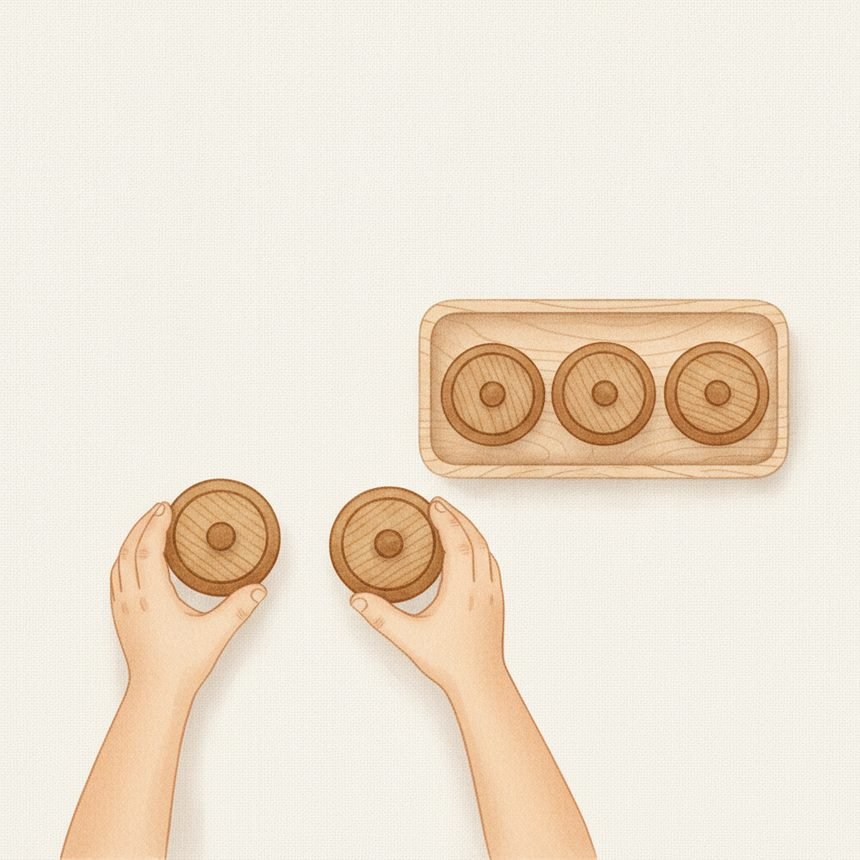
Light and Heavy
Identical jars, different contents: hands weigh better than eyes.
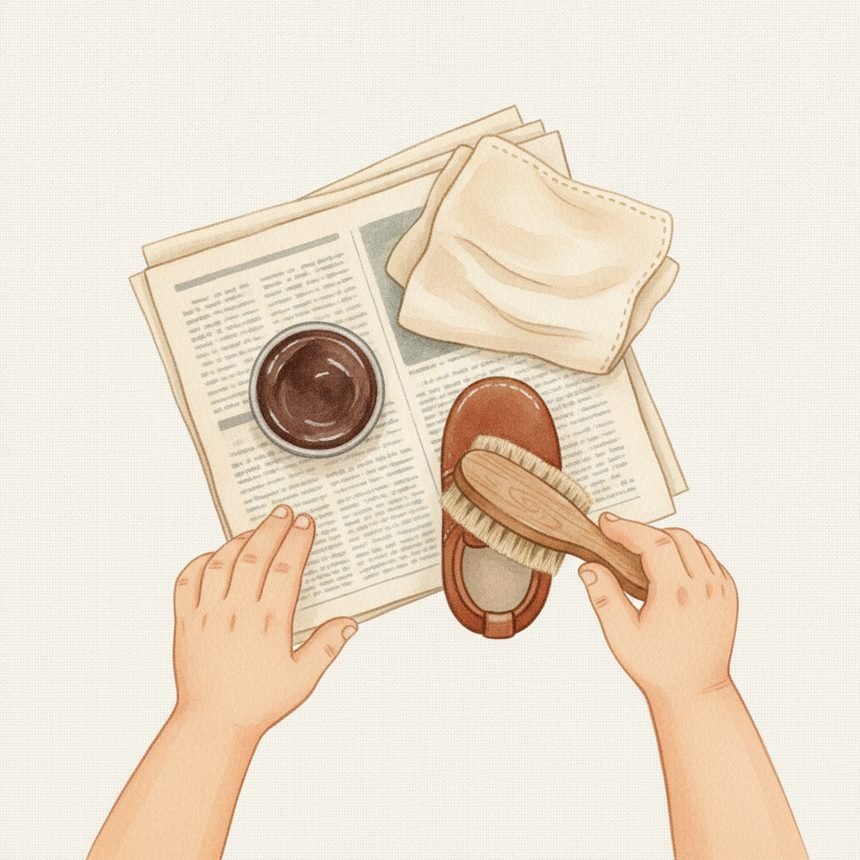
Polishing Shoes
Brushing, polishing, buffing your own shoes until they shine: the great cycle of caring for objects.
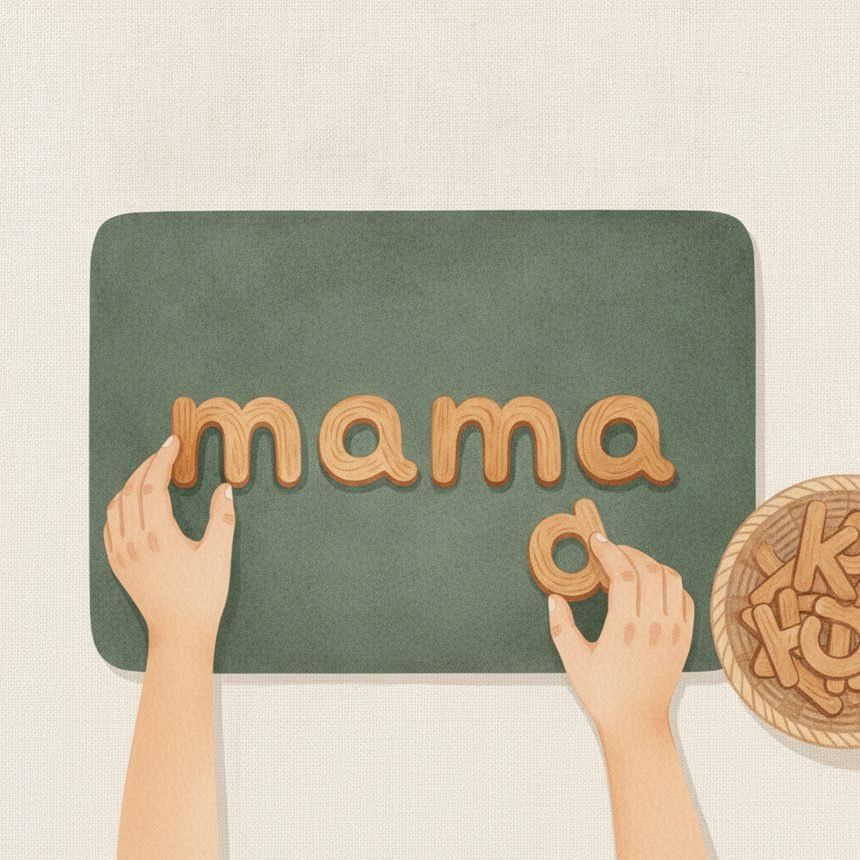
First Words with the Movable Alphabet
Spelling out "mom" with letters you place, long before you can hold a crayon: the magic of the movable alphabet.
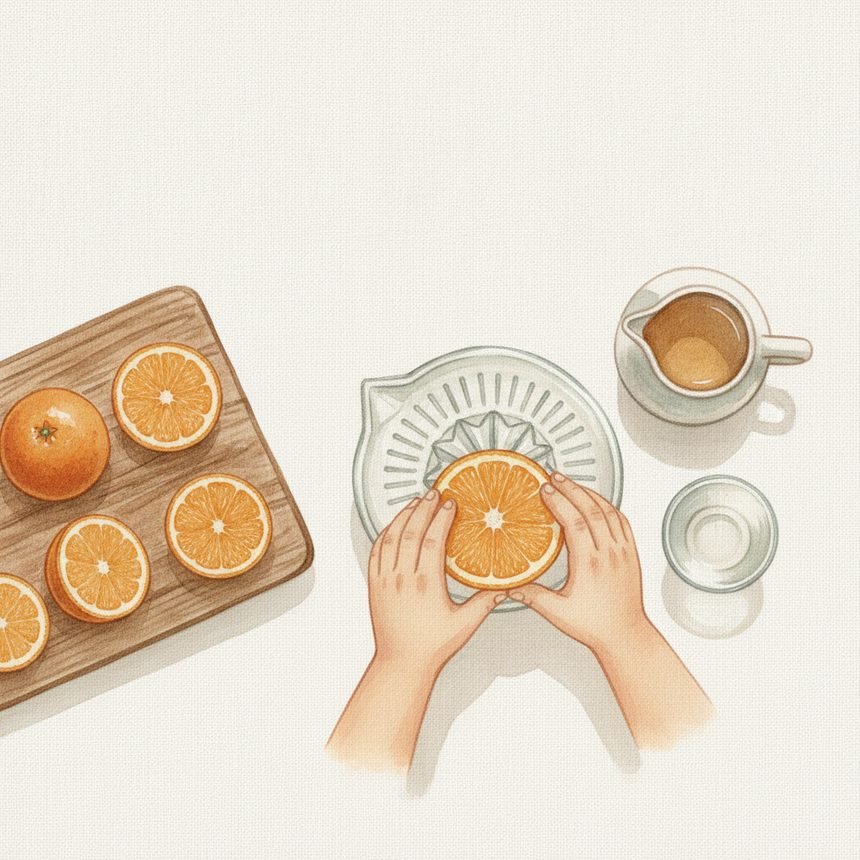
Squeezing Orange Juice
Cut, press, pour, serve: real juice made start to finish, and given to someone.
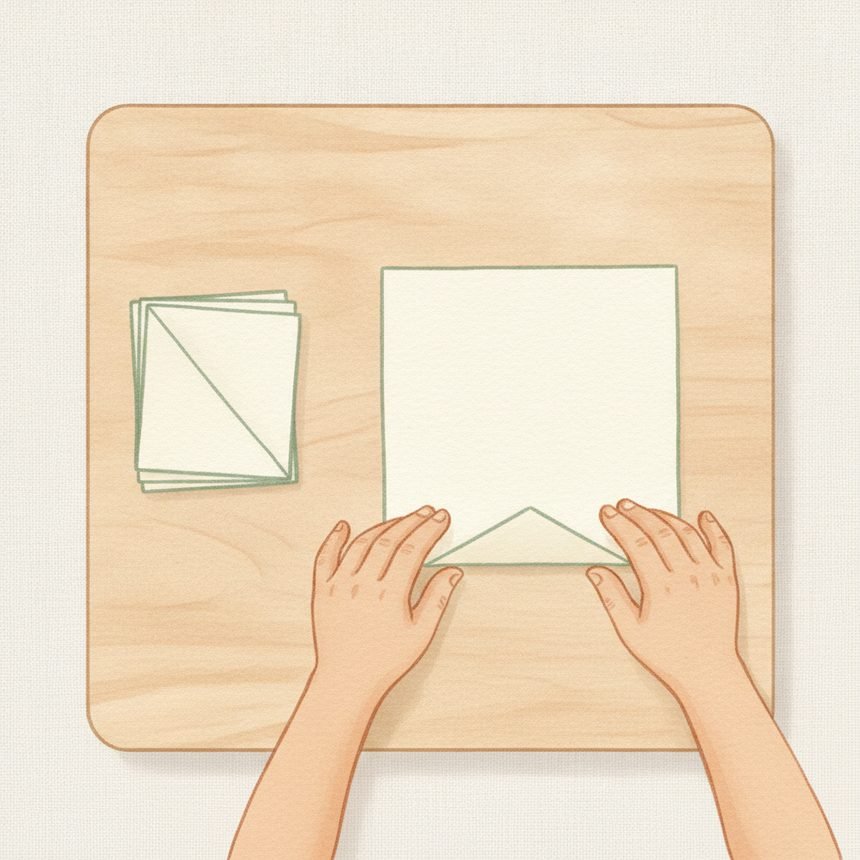
Folding Paper on the Line
Bringing corner to corner, pressing the crease with a steady finger: the precision that prepares geometry.
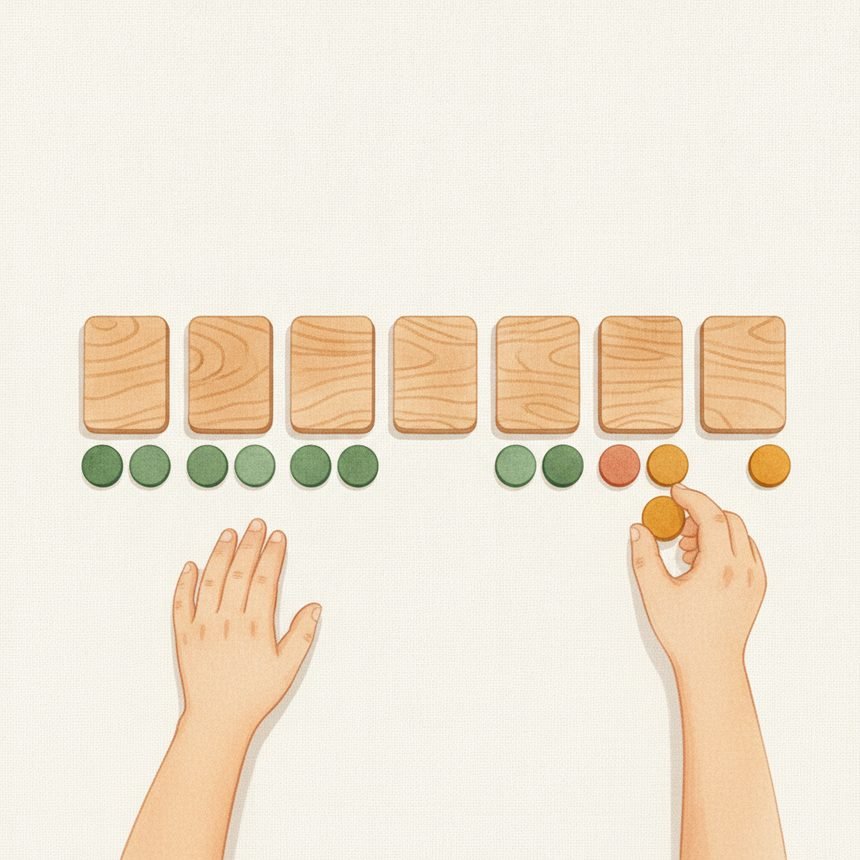
Odd and Even
Lining counters up two by two under each numeral: numbers give up their secret.
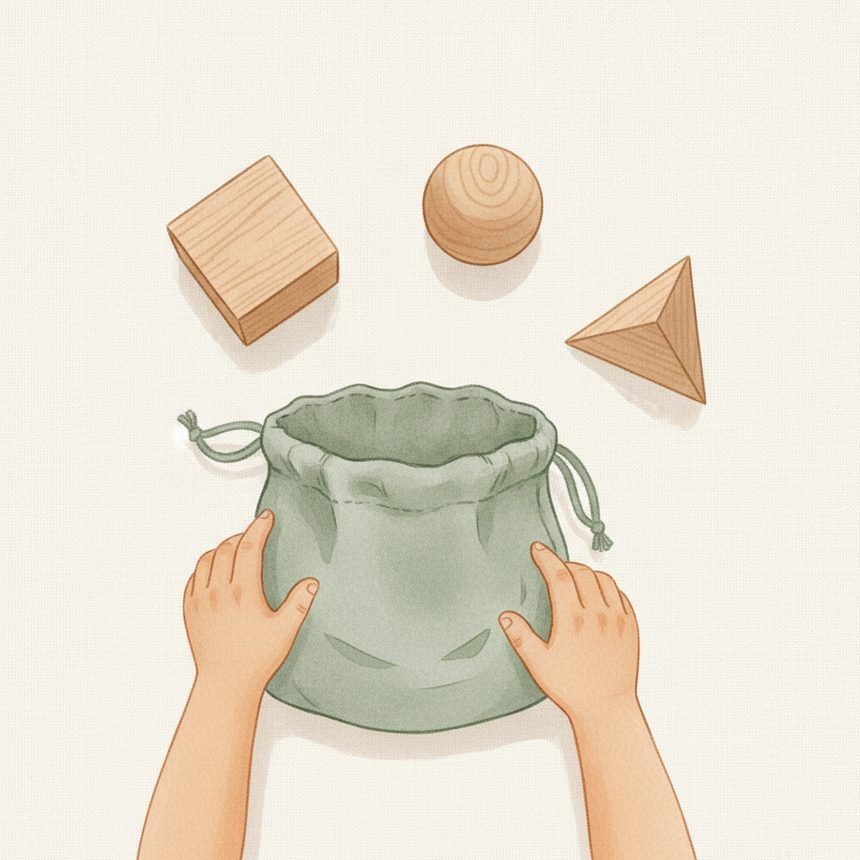
The Mystery Shape Bag
Recognizing a cube, a ball, a pyramid, just by feeling them at the bottom of a bag.
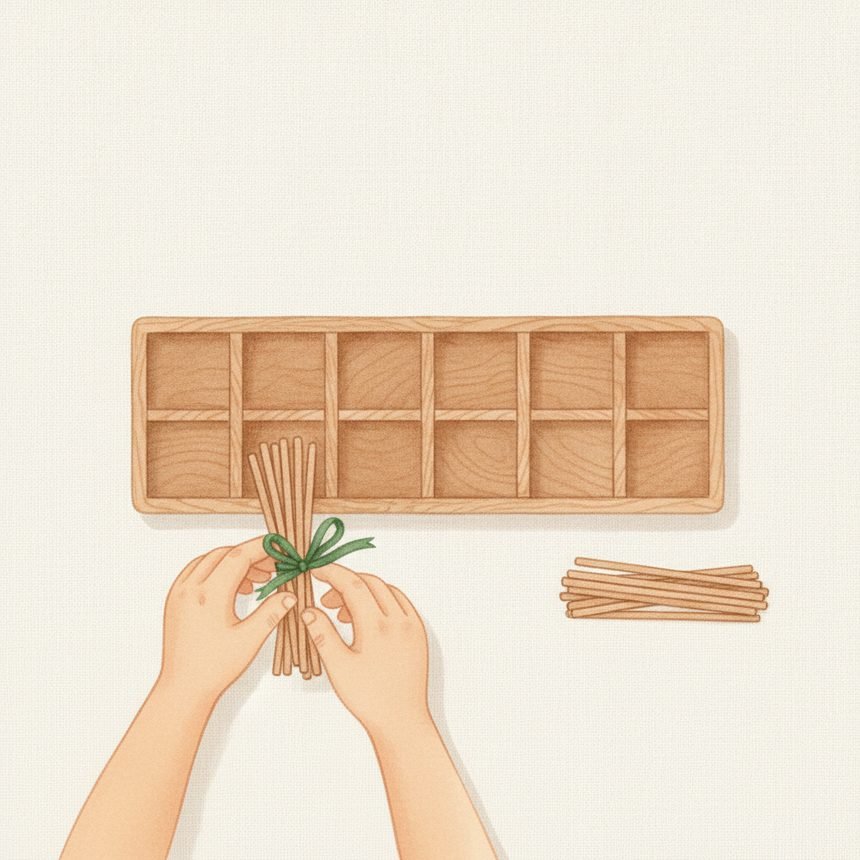
Spindle Boxes and Zero
Sticks to sort from 0 to 9 into the right compartments, and the discovery that zero means nothing.
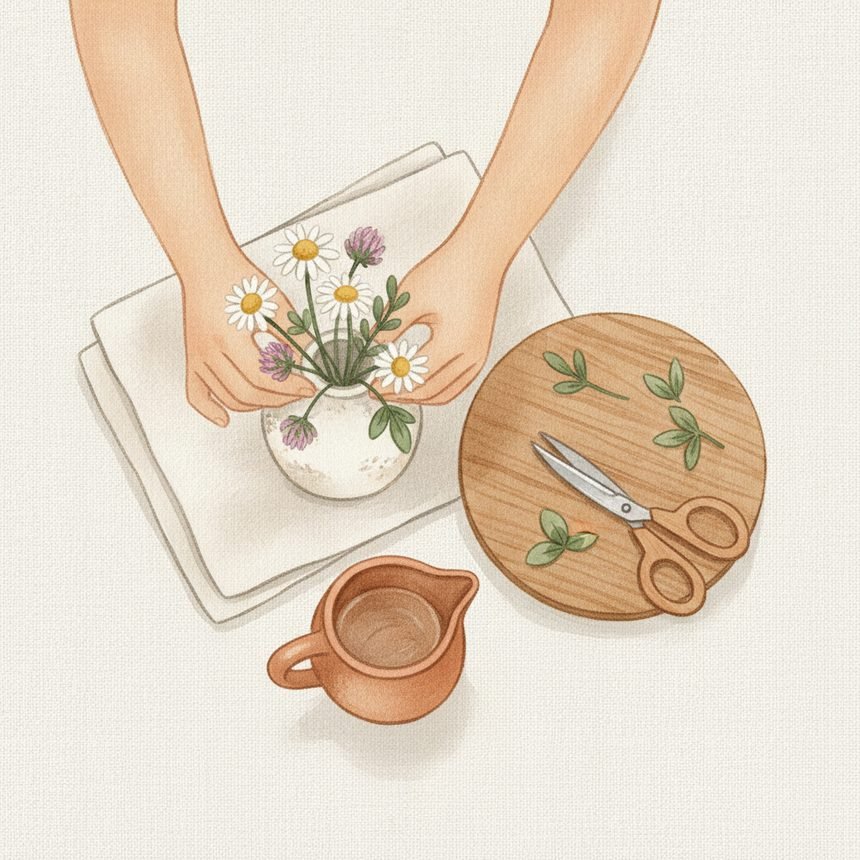
Arranging Flowers
Cutting the stems, filling the vase, arranging the flowers, and setting the bouquet on the family table.
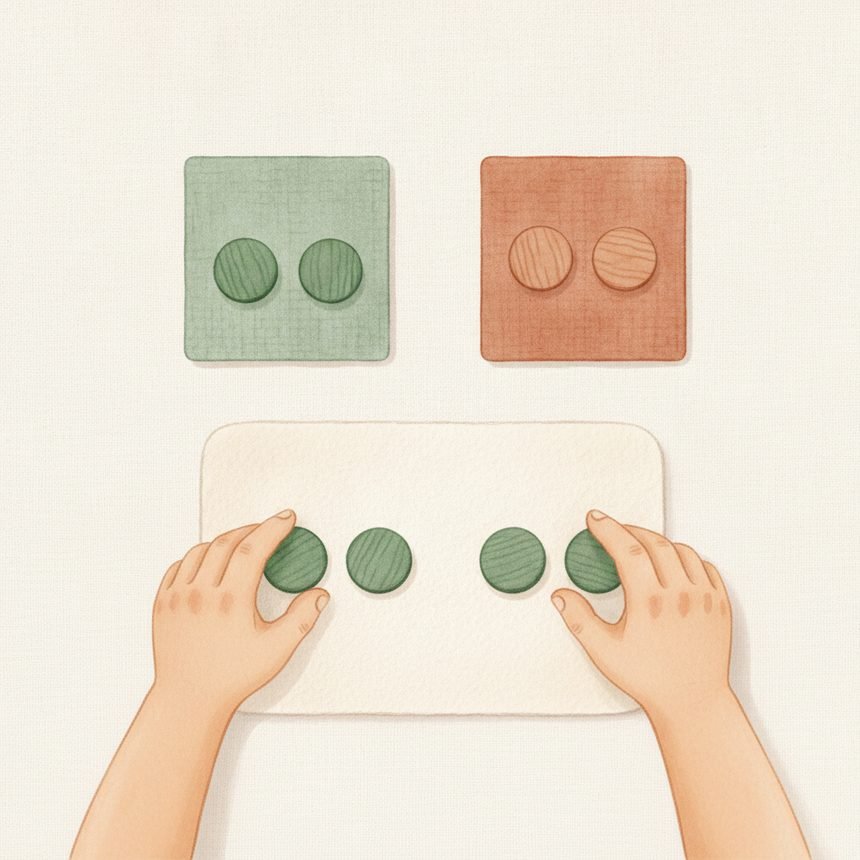
Addition with Counters
Three counters and two counters brought together: the first addition, seen and done with your own hands.
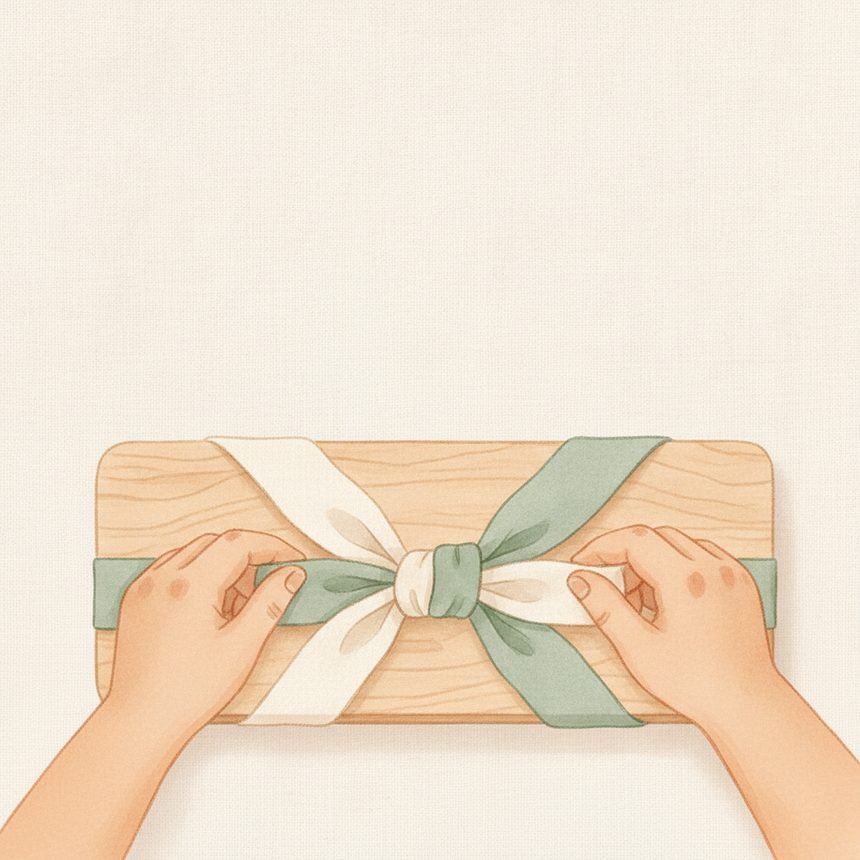
Tying and Untying Knots
Two ribbons, a simple knot, then a loop: fingers learn what shoelaces will one day demand.
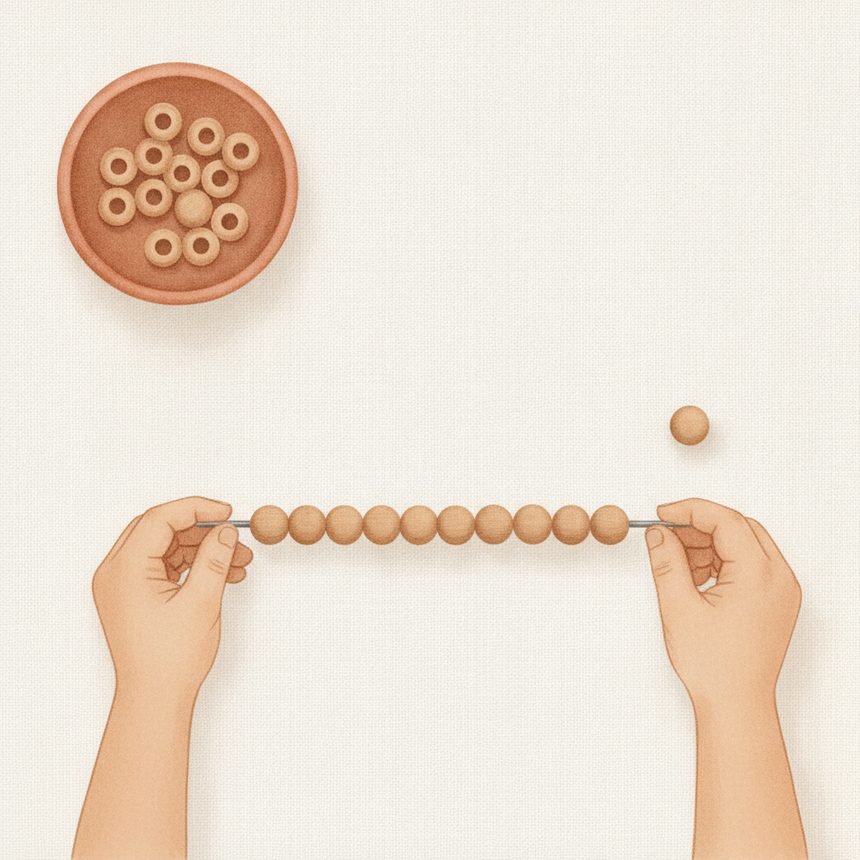
Discovering Tens
Ten beads strung on a wire become a single object: that's what ten really is.
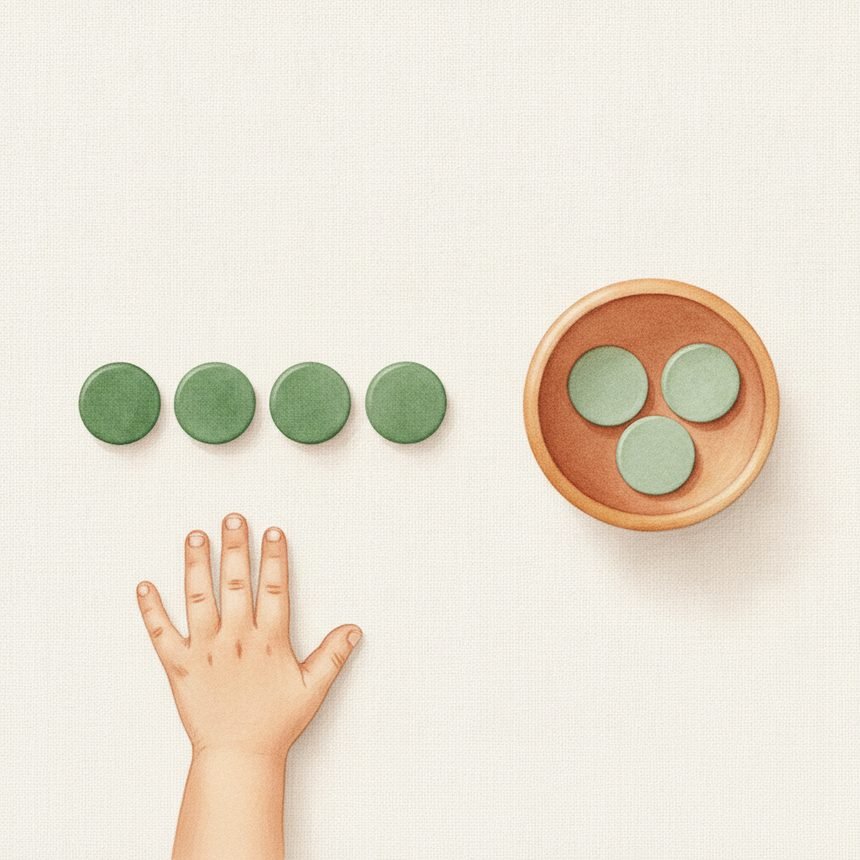
Subtraction with Counters
Take counters away and look at what's left: subtraction becomes a motion.
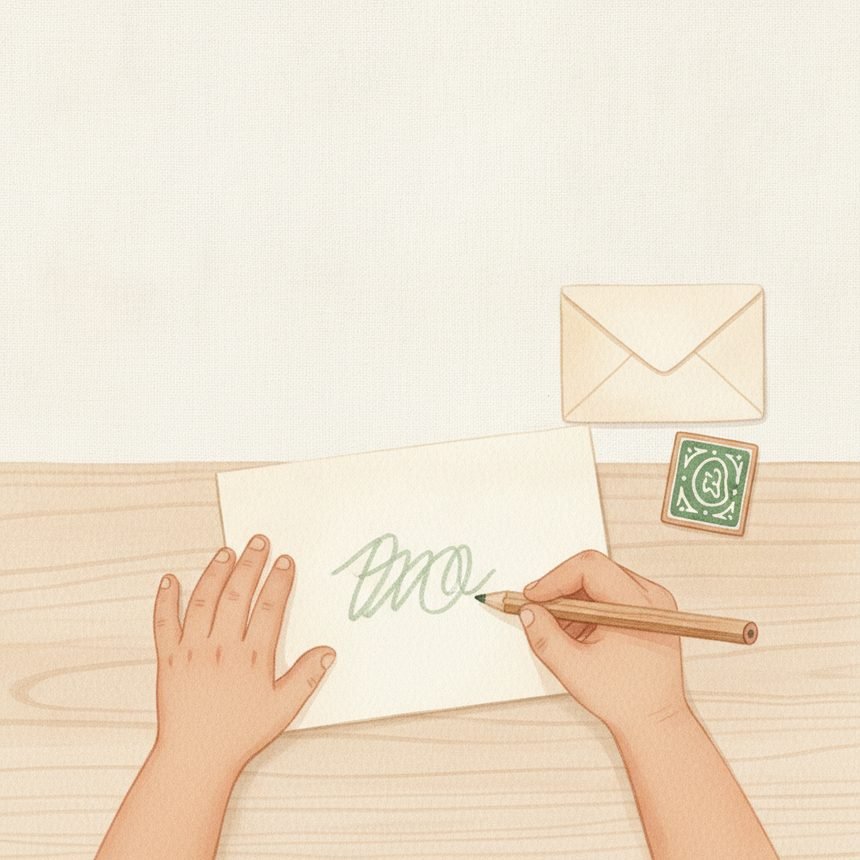
Writing a Real Letter
Writing to someone who will write back: writing finally serves a purpose.
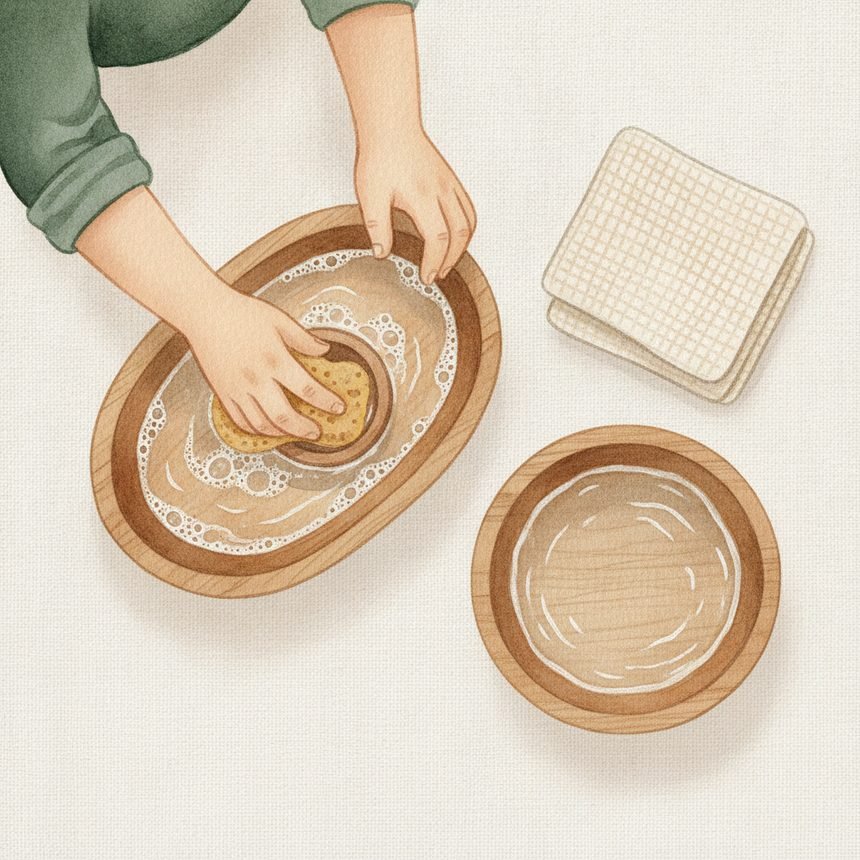
Washing a Bowl
Two basins, a sponge, and their own bowl turning clean again between their hands.
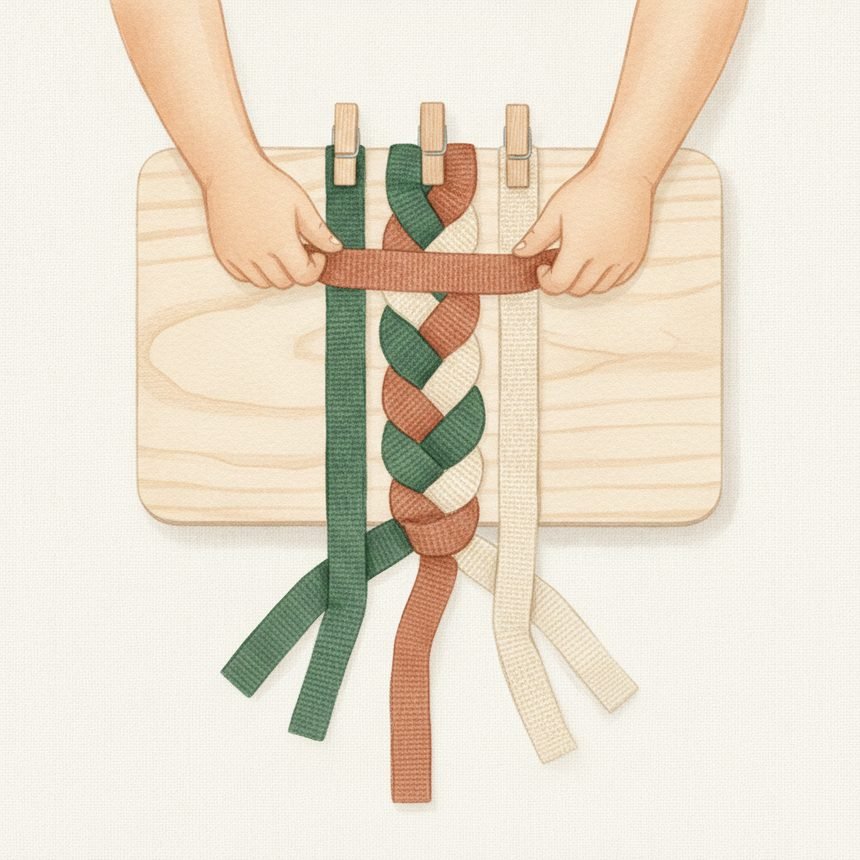
Three-Strand Braiding
Three ribbons crossing over one another, always in the same order.
The materials, printed at home
These activities call for letters, numbers, and strips to cut out. {S} free printables give them to you, ready to print and cut out.