
Sweeping Crumbs
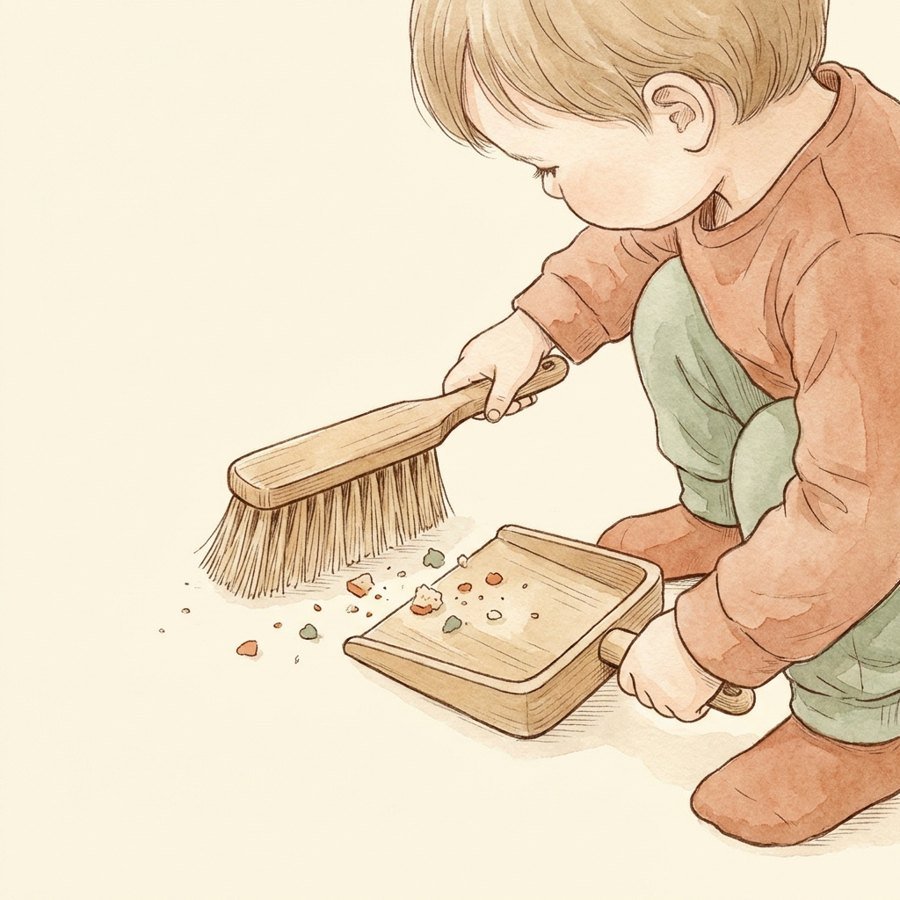
A small broom, a dustpan, and the pride of fixing your own spill.
Sweeping Crumbs is a Montessori activity for a child aged 2 to 3 years. Area: Practical Life. Time: 10-15 min.
What the activity builds
Chain three motions together in the right order, and discover that a mess can be fixed without drama.
The materials
- A small broom and dustpan sized to your child, stored at their height
- A marker taped to the floor: a square of painter's tape, or an upside-down plate
- A reachable trash can
How to do it, step by step
- Drop a few bread crumbs on the floor on purpose, in front of them.
- Sweep slowly toward the taped square, in small motions, until everything is gathered in one spot.
- Set the dustpan against the pile, push the crumbs in, and empty it into the trash.
- Drop more crumbs and hand them the broom.
- Let them sweep their own way, even if the pile scatters three times over.
The parent's role
Show once, then step back, and never re-sweep behind them while they're watching. A floor that's still a little messy but swept by them beats a spotless floor that teaches them their work doesn't count. Finish up later, out of their sight.
Safety
A soft-bristled broom with a short handle. No cleaning products. If glass ever breaks, you clean it up, no exceptions: this activity is only for dry crumbs.
You remain the sole judge of what is right for your child. These activities are offered for educational and recreational purposes: they do not replace medical advice or the guidance of an early childhood professional.
Ways to adapt the activity
- Easier: bigger pieces, oats instead of fine crumbs.
- Harder: sweeping under the table, or on a low-pile rug.
- Extension: getting the broom out on their own after snack time, without being asked.
Up next
More activities for a 2 to 3 years child.
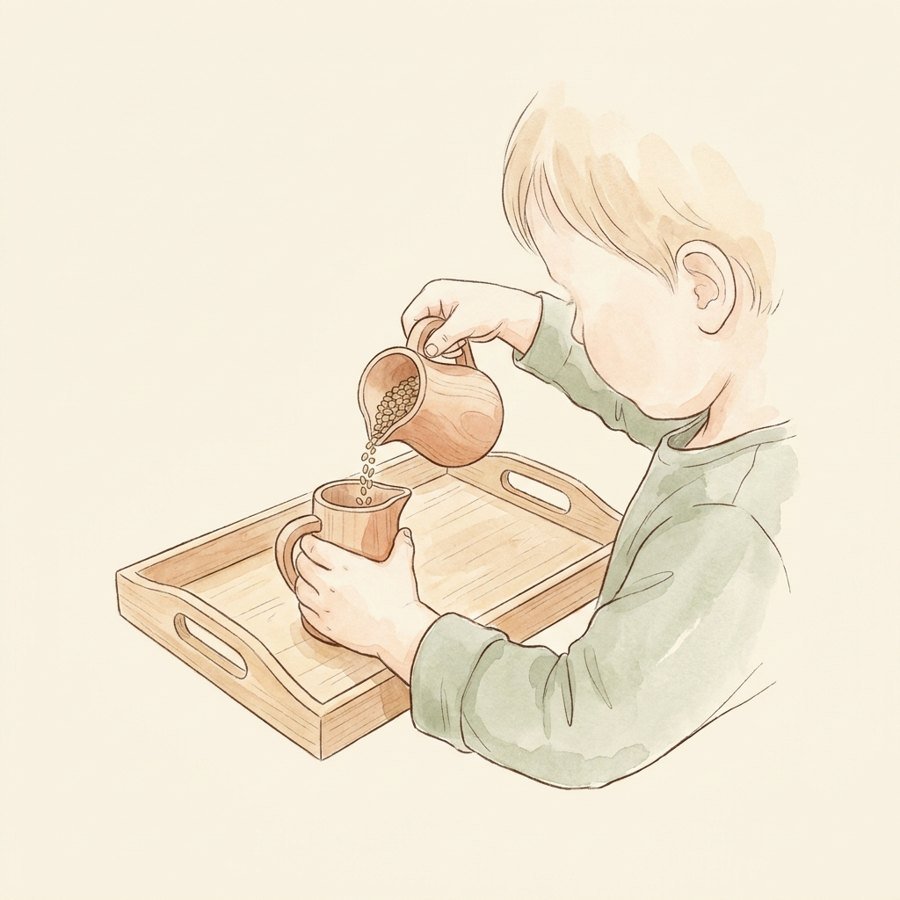
Pouring Dry Ingredients
The signature activity: two pitchers, dry beans, and a motion your child will repeat a hundred times.
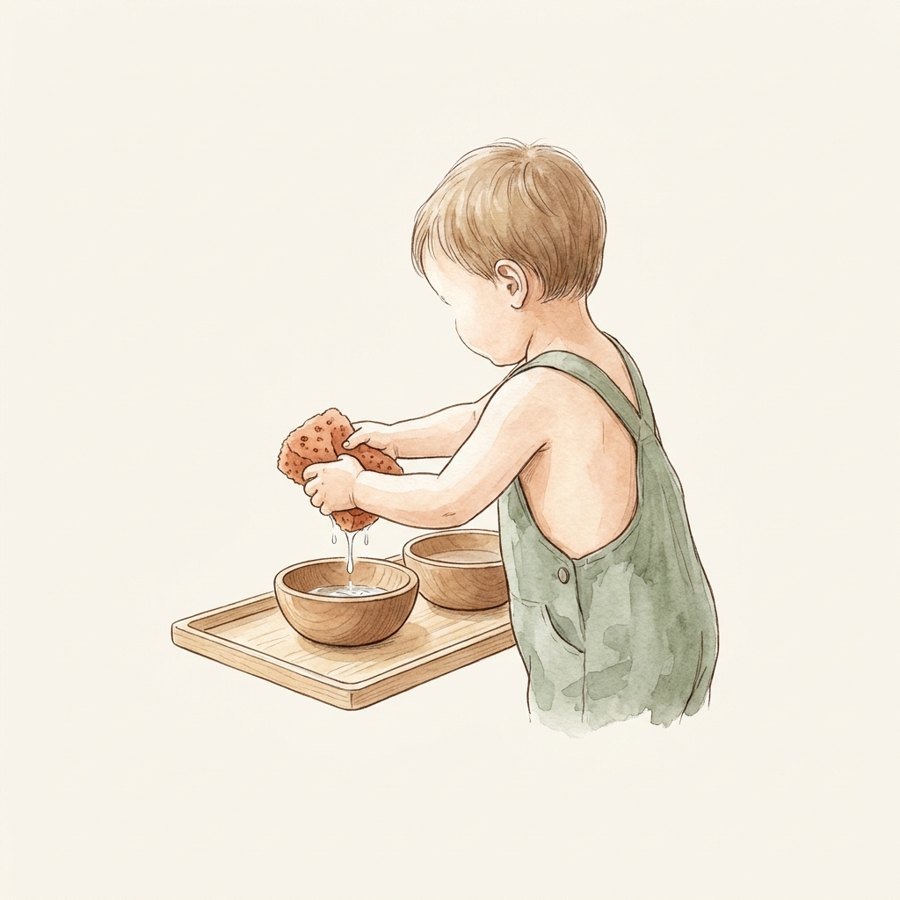
Sponge Squeezing
Moving water from one bowl to another by squeezing a sponge. Simple, wet, irresistible.
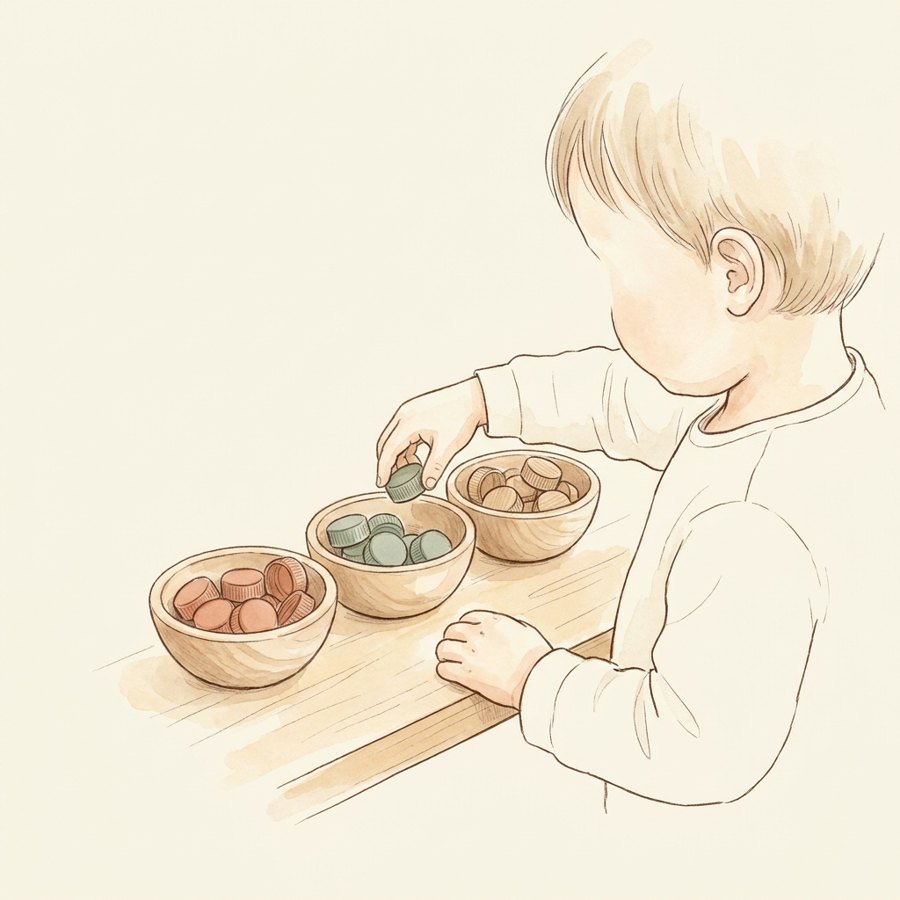
Color Sorting
Each bottle cap finds its family. The first real sorting work.
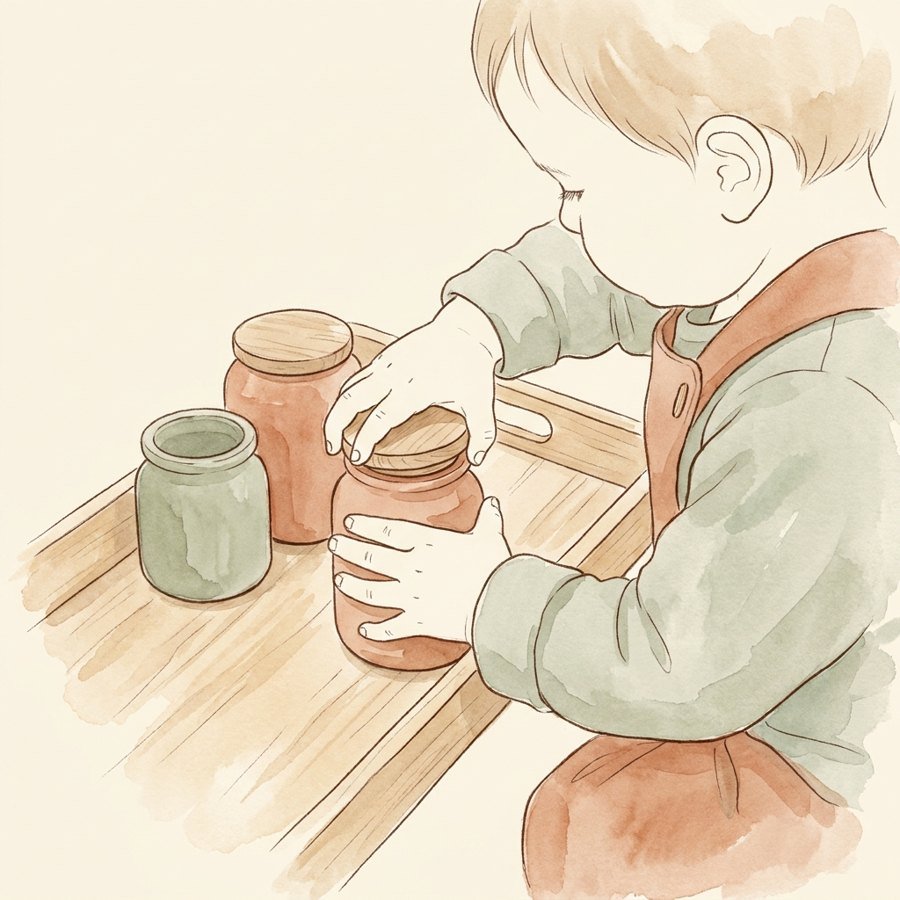
Screwing and Unscrewing
Three jars, three lids, and a wrist rotation to master.
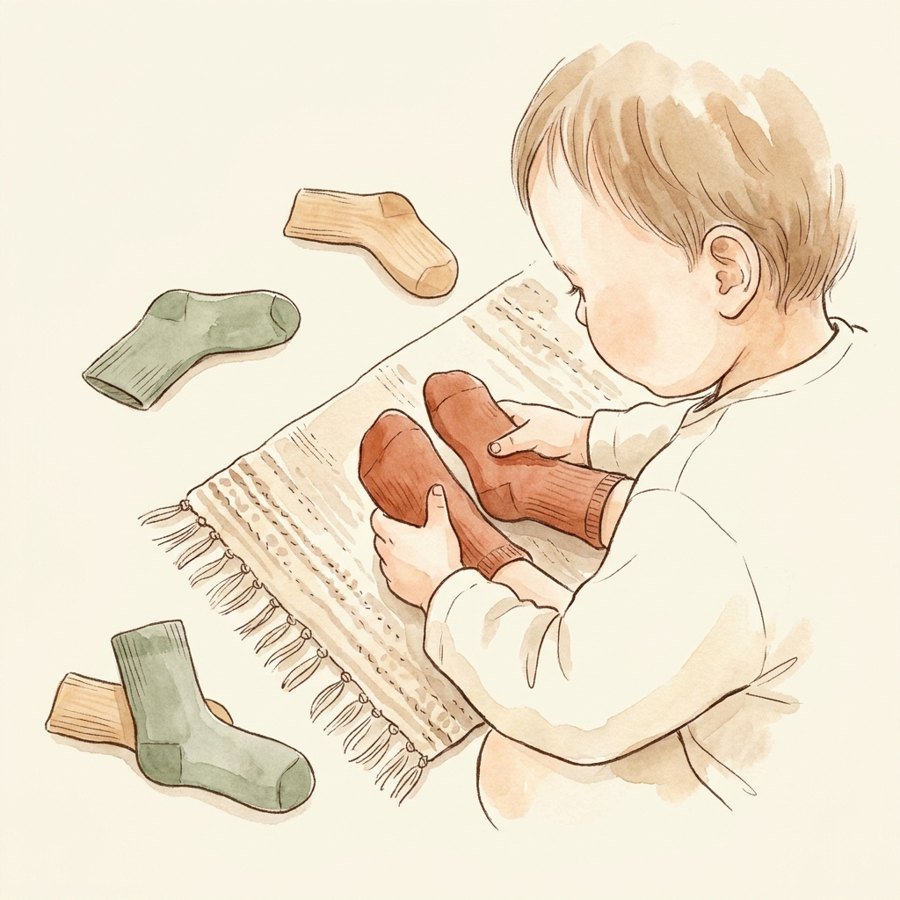
Matching Socks
The laundry basket becomes an observation game, and you get sorted laundry out of it.
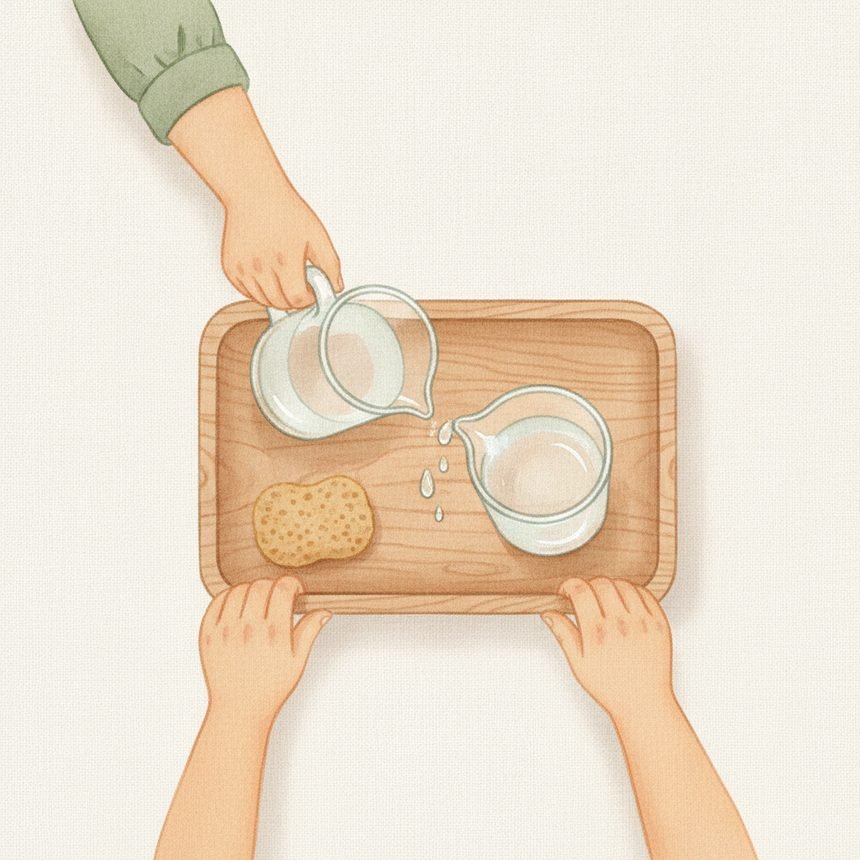
Pouring Water
Two small pitchers, a little water, and the motion that makes a child proud: pouring without spilling over.
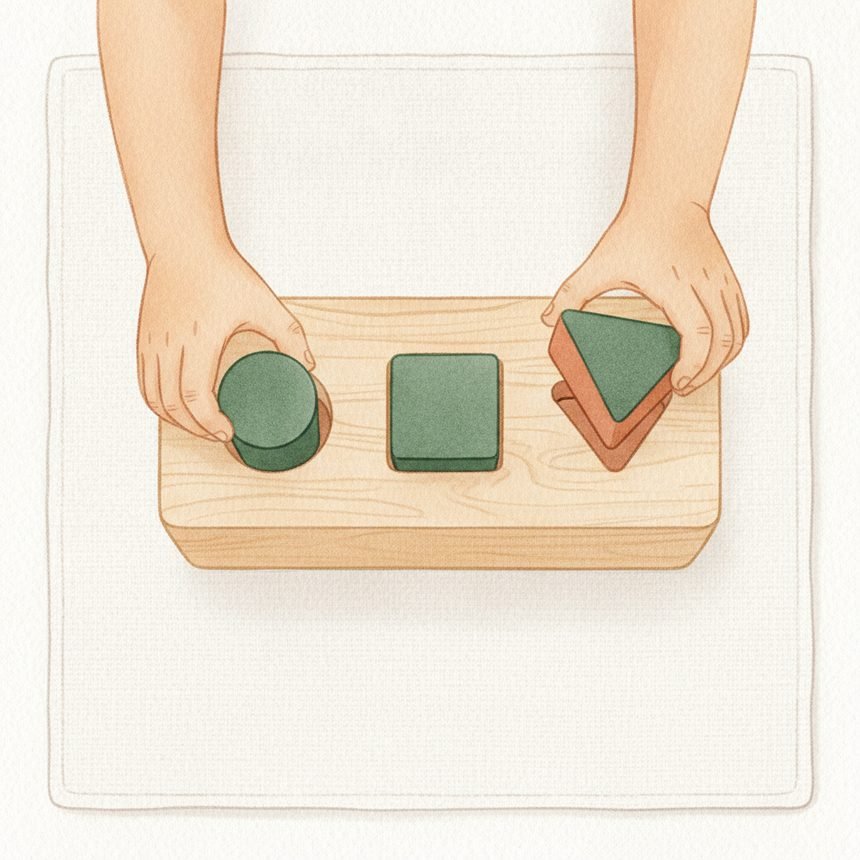
The Shape Sorting Box
A circle, a square, a triangle, and three slots: each shape fits only its own.
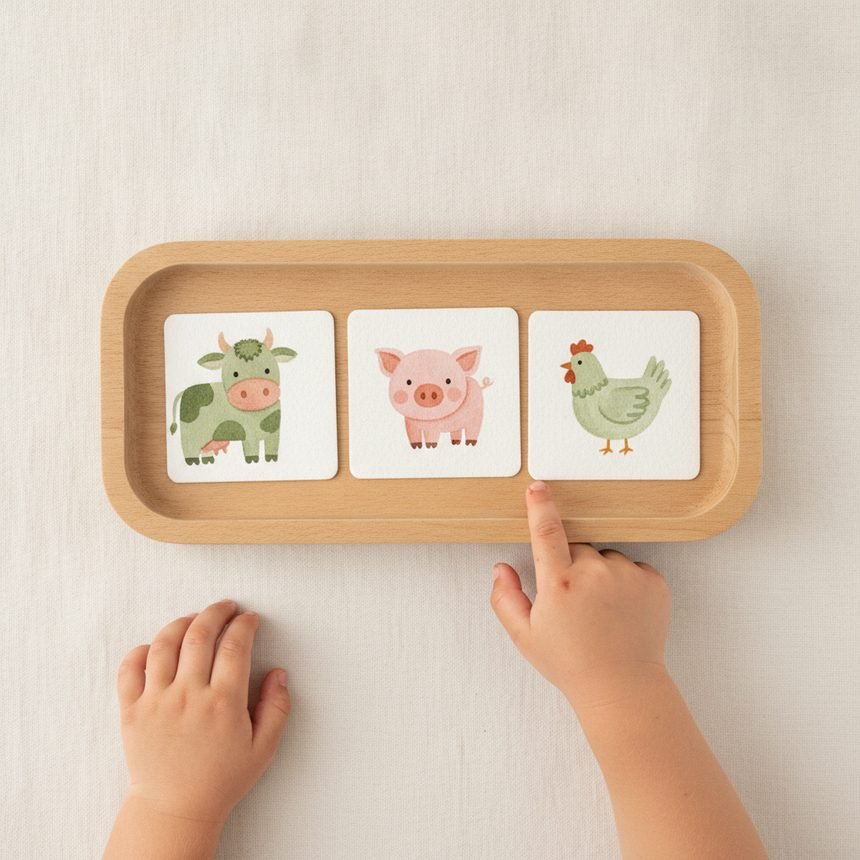
Naming Pictures
A handful of animal or object cards, and the three-period lesson that makes words stick for good.
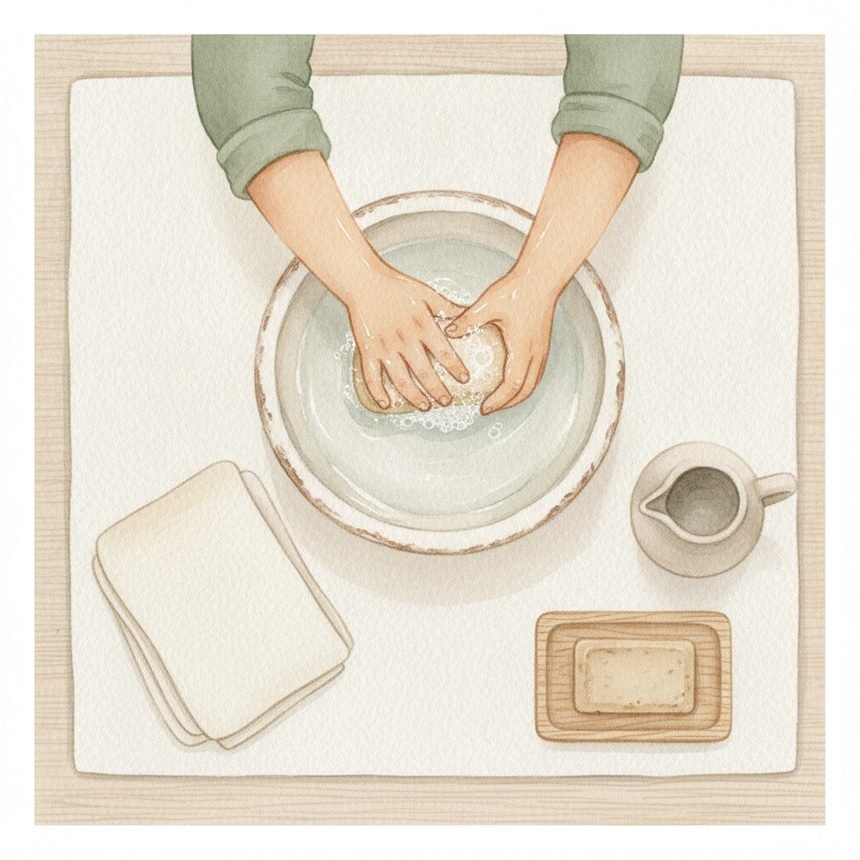
Washing Hands
A whole ritual with a basin, soap, and a towel: the first big, complete cycle your child carries out start to finish.
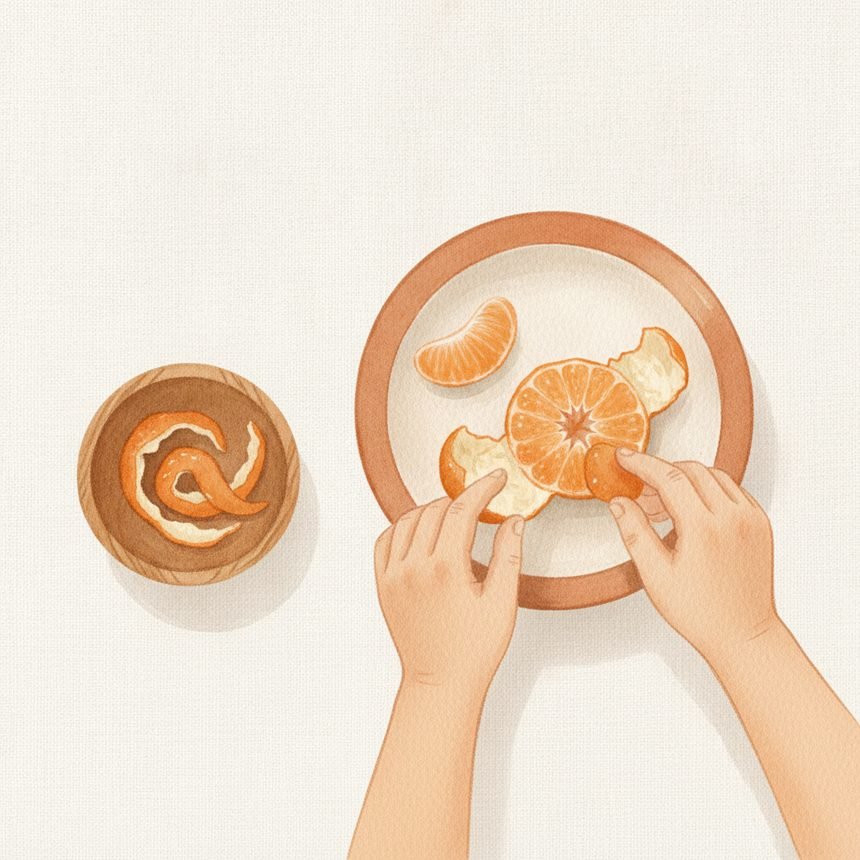
Peeling a Clementine
Piercing, pulling, separating the segments, and eating what you made yourself: practical life that tastes good.
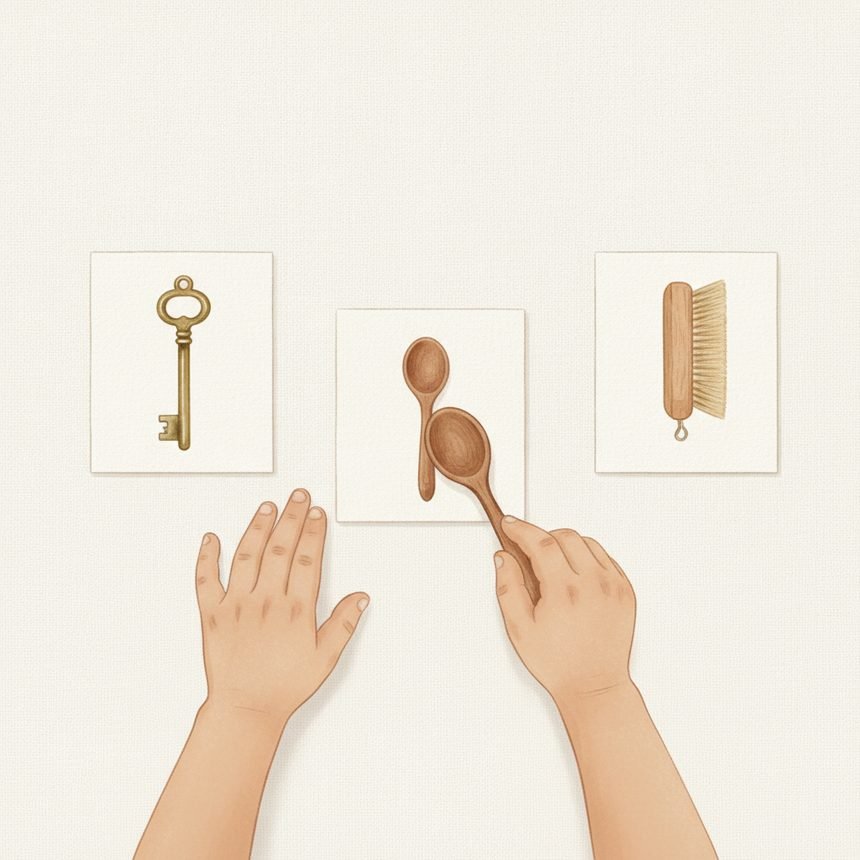
Object and Picture Matching
Setting the real spoon on the photo of a spoon: the bridge between the world and its images.
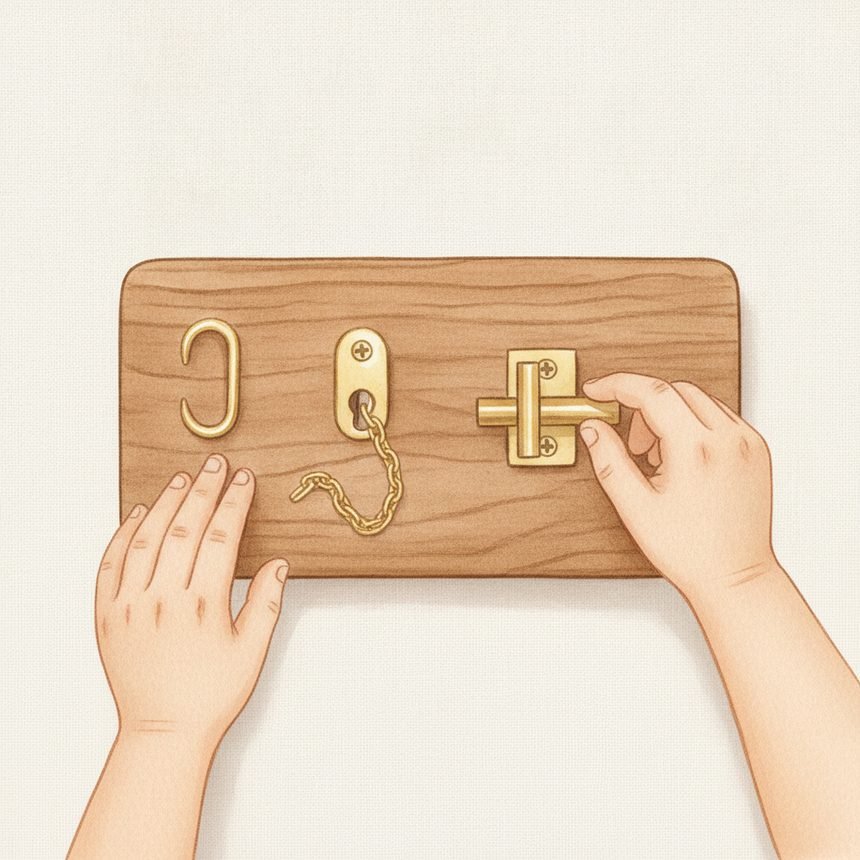
Locks and Latches
A slide bolt, a hook, a chain, a padlock: every closure in the house, gathered on one board to explore.
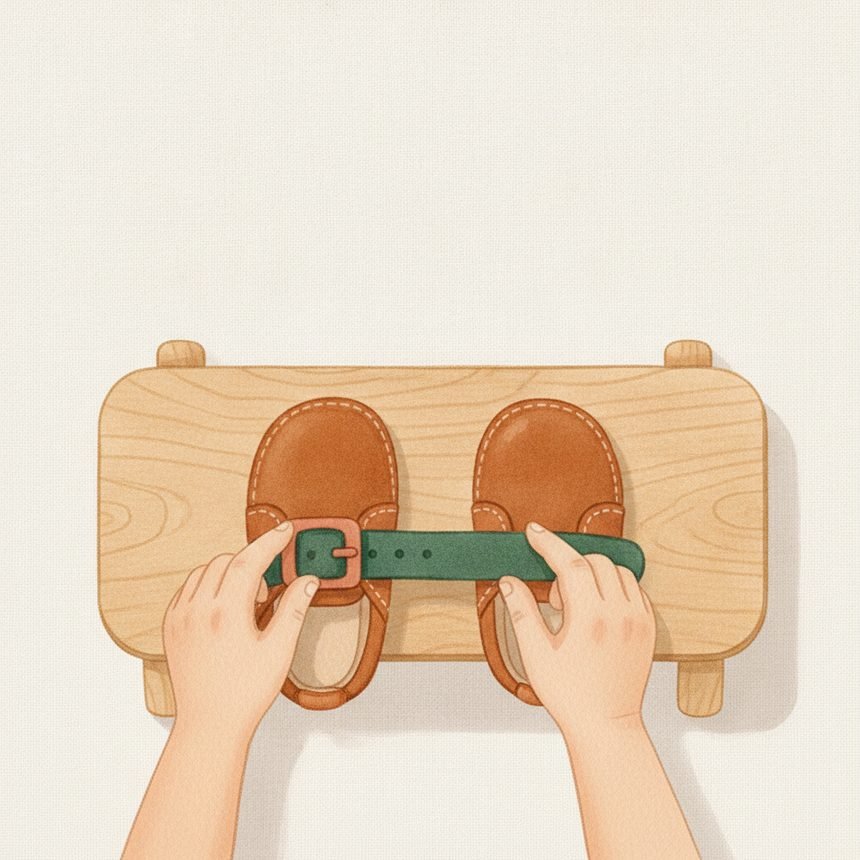
Putting On Shoes
Sit down, aim, push the heel, fasten: heading out the door under their own power.
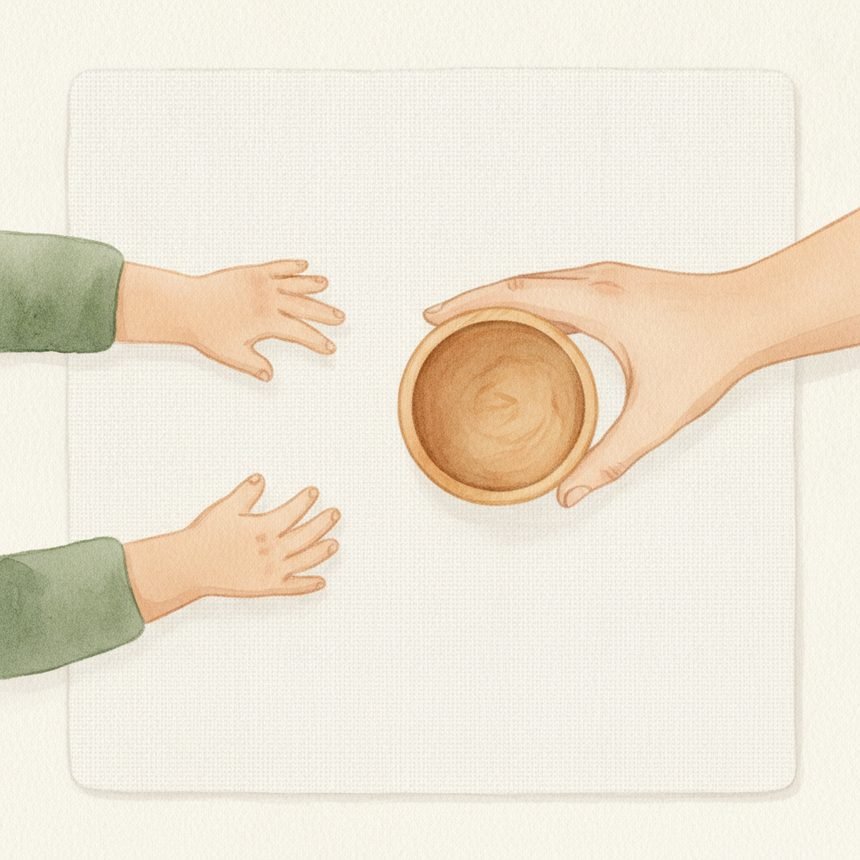
Grace and Courtesy
Greeting, thanking, asking, in a two-person role-play: courtesy gets rehearsed before it gets lived.
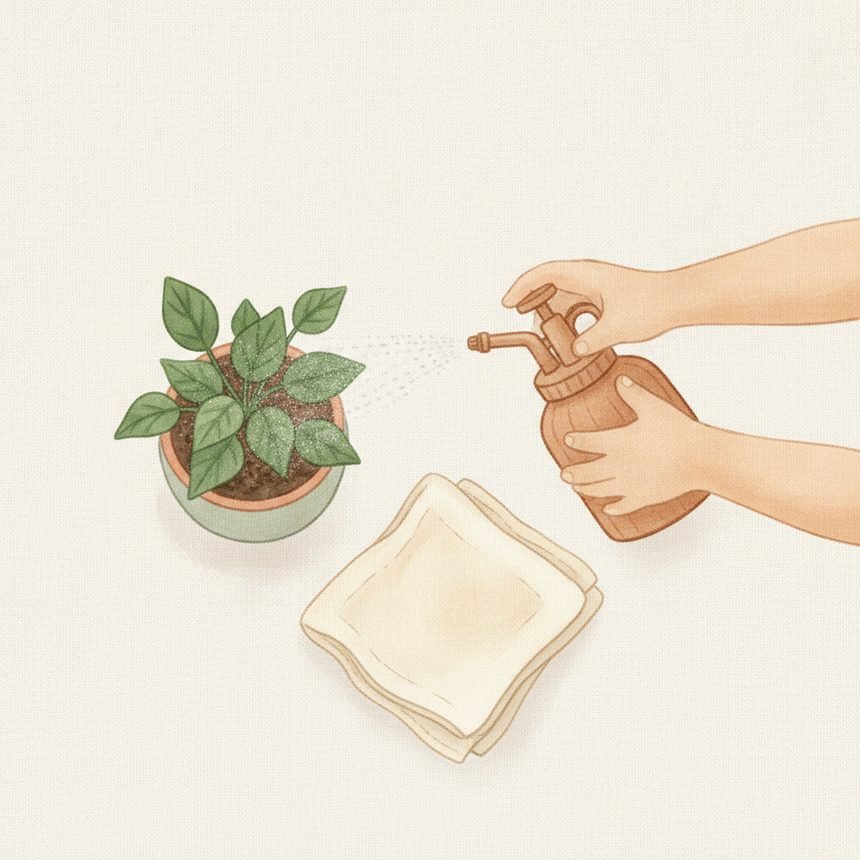
The Spray Bottle
Squeezing a spray bottle trigger to mist the plants: a hand building strength for writing.
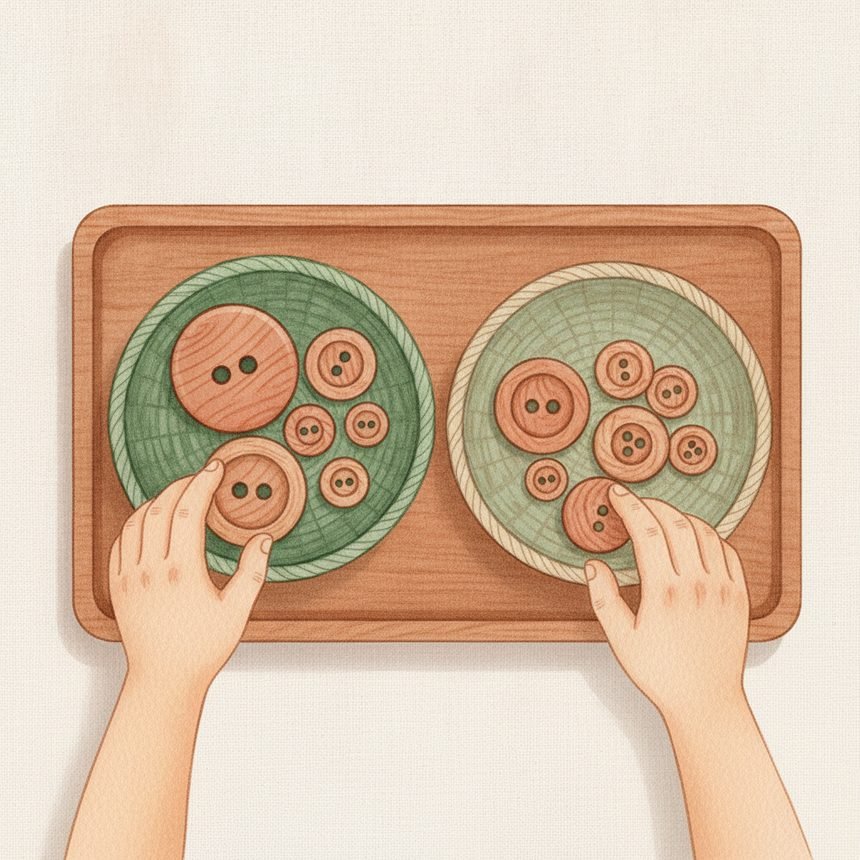
Big and Small
Two baskets, a pile of objects, one question: is it big or small?
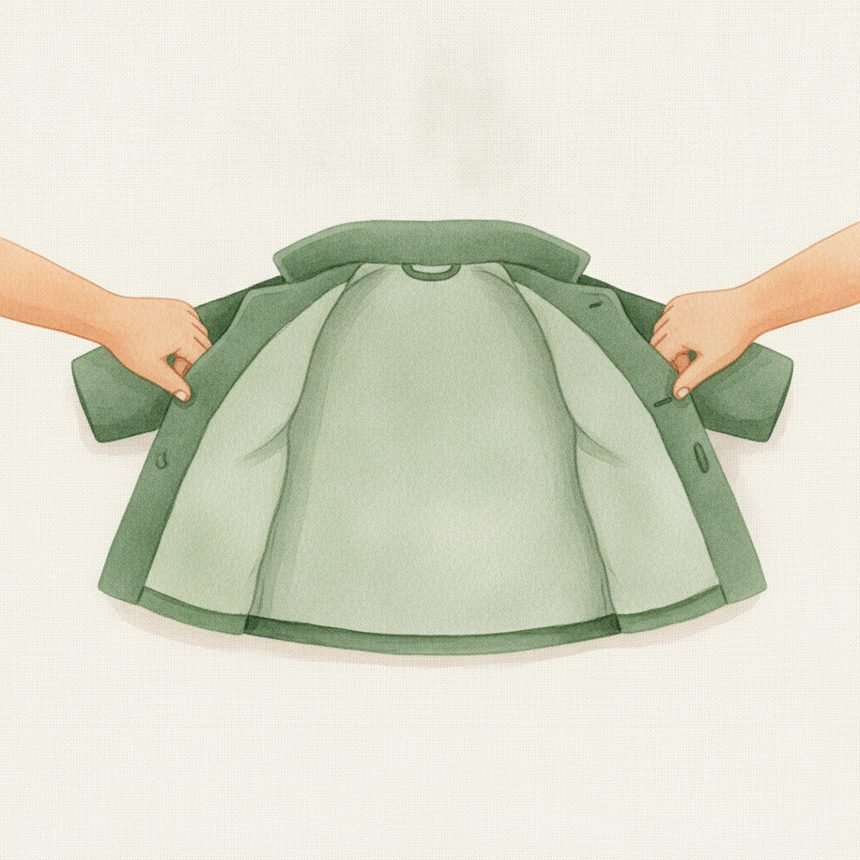
Putting On a Coat
The coat laid inside-out on the floor, arms in the sleeves, and flip, it comes right over the head.
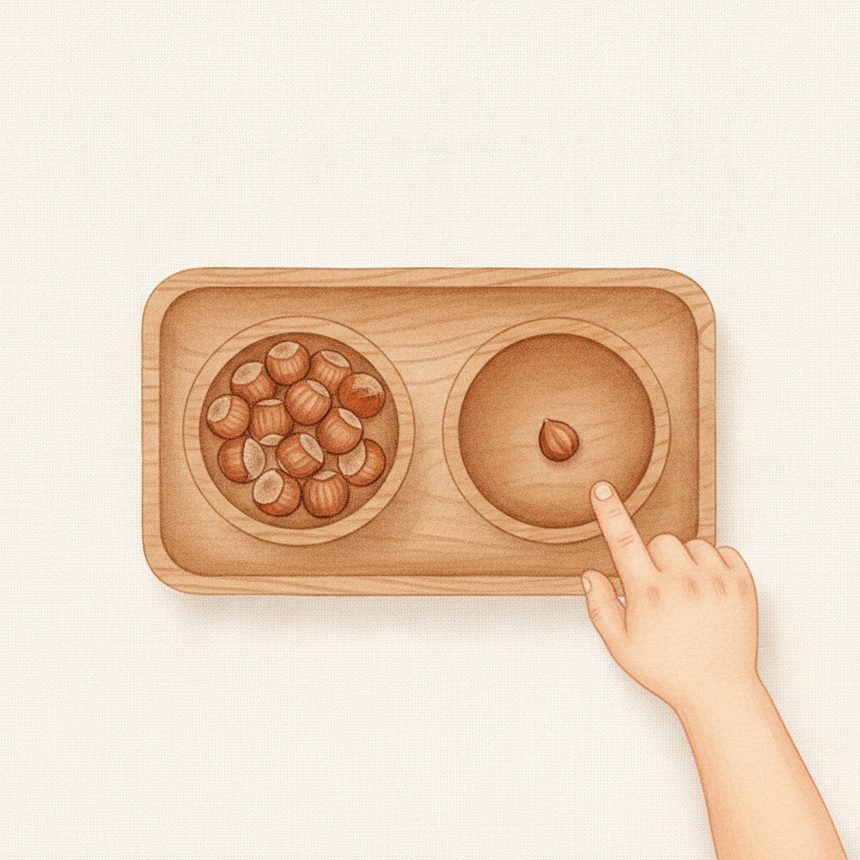
Many and One
A full bowl, a bowl with just one acorn: the very first idea of quantity.
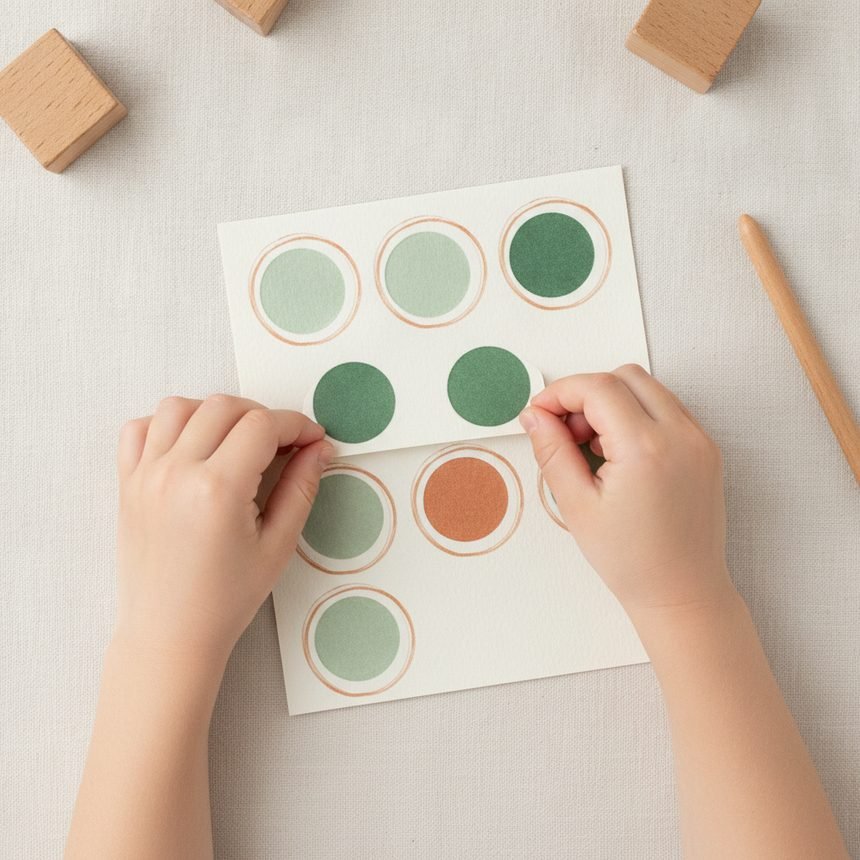
Sticker Play
Peeling a sticker off with the tips of your fingers and sticking it on a drawn circle: the pincer grip takes shape.
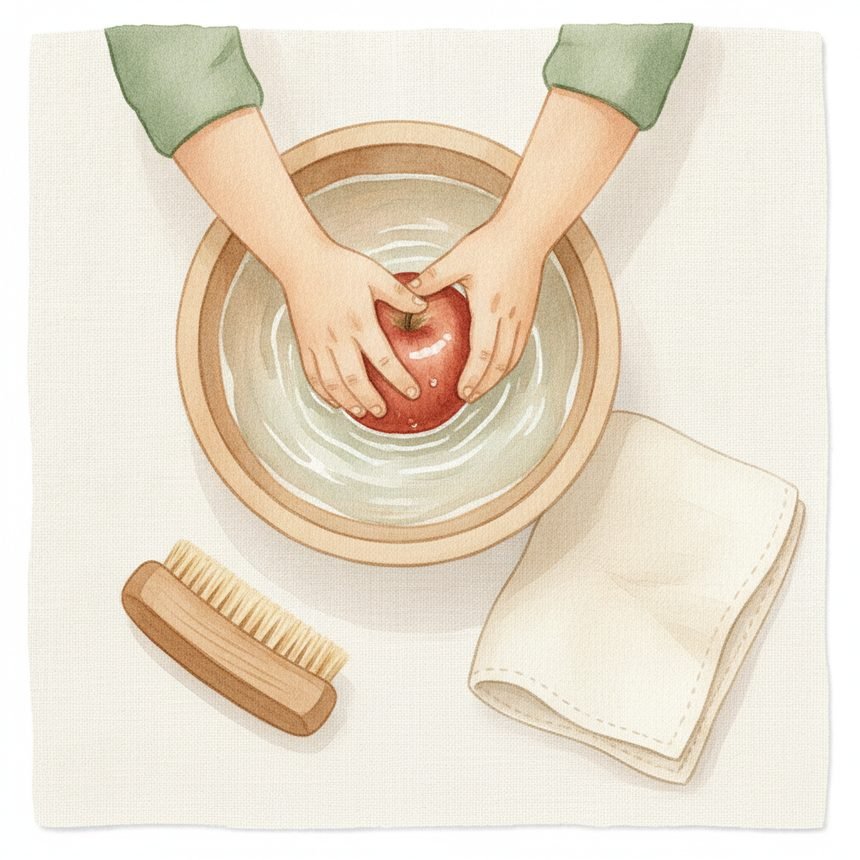
Washing Fruit
Scrubbing an apple under water, drying it, setting it in the bowl: preparing something for others.
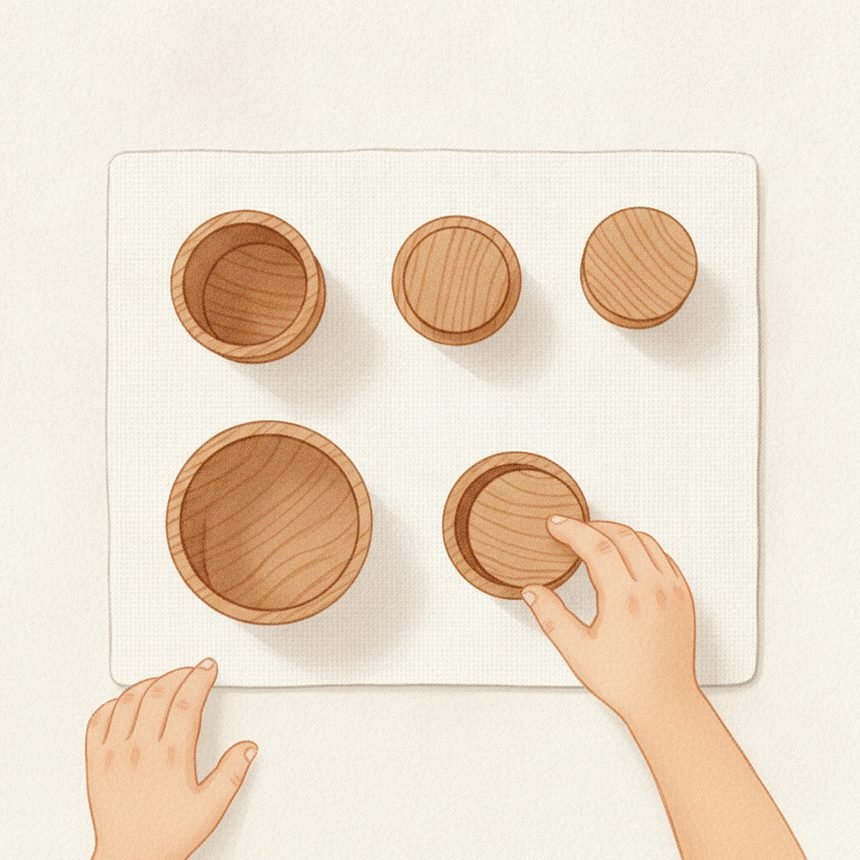
Matching Lids
Five boxes, five lids all mixed up: each one only fits its own.
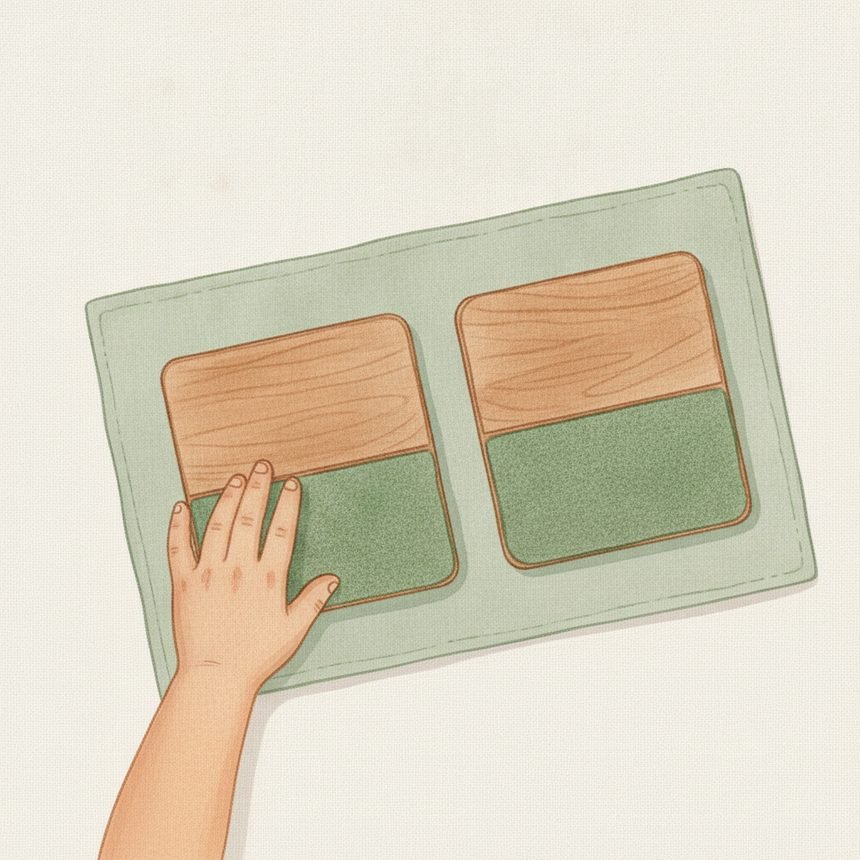
Soft and Rough
Two boards to stroke with fingertips: touch learns to compare.
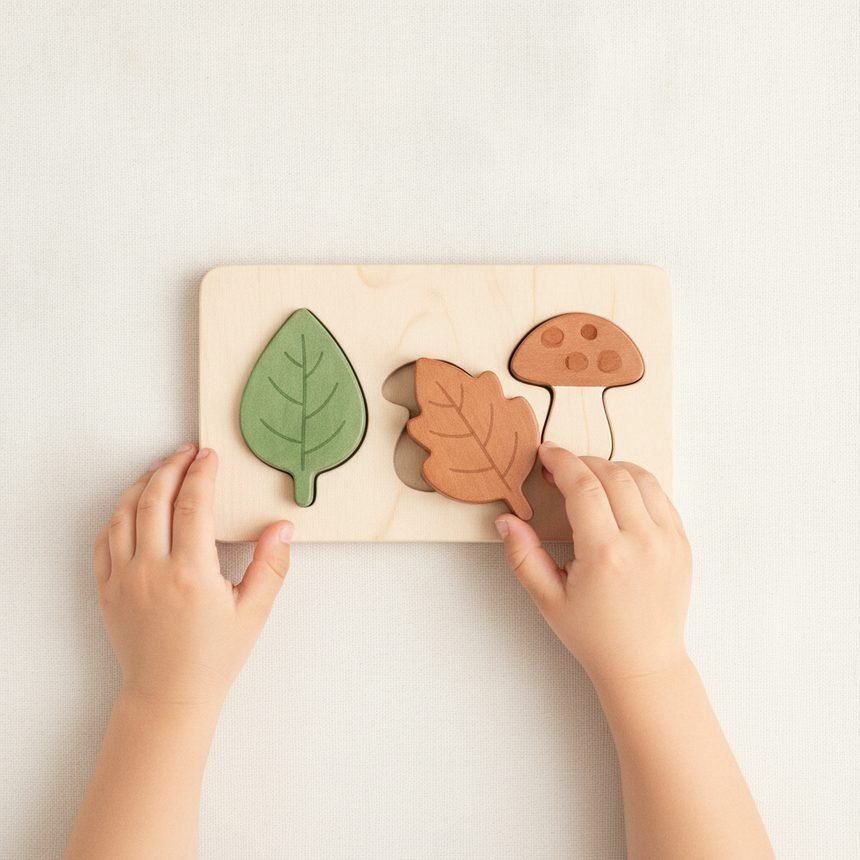
The Three-Piece Puzzle
Three shapes to fit back in their wells: turn, aim, set down.
Learning Colors
Red, blue, yellow: three tablets, three words, and the three-period lesson.