
Practical life activities
Pouring, wiping, folding, buttoning, watering: everyday tasks are the first Montessori activities, and the most loved. Your child finds a real purpose, a visible result, and the pride of doing alone what they see you do.
37 Practical Life activities, sorted by age. Each activity lists the materials to gather before you begin at home.
See what your child can do before choosing a set
Browse 37 practical life activity previews, sorted from 12 months to 8 years. Each preview shows the materials and first two steps. A one-time purchase unlocks one age group in one language: 25 or 32 complete printable activity sheets, the combined booklet, and seven printable material PDFs.
One-time payment. No subscription. No physical shipment.
The 4 areas of practical life
Every practical life activity sheet in this collection belongs to one of these four areas. Before all four come the preliminary exercises a toddler starts with, transferring and pouring, which build the sense of order and the steady hand that everything else rests on. Some Montessori guides count food preparation as a separate, fifth area, since it introduces knives, heat, and real recipes rather than water and dry pouring.
Reference for families: American Montessori Society, The Ultimate Guide to Incorporating Practical Life at Home.
Care of self
Dressing, washing, eating, grooming: the child learns to take care of their own body, at their own pace, with materials sized for small hands. Every sheet stops at the point where your child can carry on independently, because confidence comes from finishing alone, not from being helped to the end.
Care of the environment
Watering a plant, wiping a table, sweeping up crumbs, washing the dishes they just ate from: the child learns that a home is cared for, not just lived in, and that a mess gets fixed by whoever can fix it. Cleaning is not a chore tacked on at the end here, it is the activity itself, and the water spilled on the floor is part of it.
Grace and courtesy
Greeting someone, saying please and thank you, waiting for a turn, offering help: courtesy is practiced on purpose, outside the real situation, never corrected on the spot in front of a stranger. We cover it in our language activities, since courtesy is first a matter of words.
Control of movement
Walking a taped line without stepping off, carrying a full tray or a chair without a sound, transferring dry beans one spoonful at a time without dropping any: the whole body learns balance, coordination, and purposeful movement.
For 12 to 18 months

Self-Feeding with a Spoon
A heavy bowl, thick oatmeal, and a spoon that finally makes it to its target.

Taking Off Socks
The very first dressing skill works backward: we take off before we put on.

Reaching an Arm into a Sleeve
Getting dressed together is already getting dressed: they reach, you hold the sleeve.

Putting a Toy in the Basket
One object, one basket, one spot: cleanup starts with just a single thing.

Wiping Their Face with a Washcloth
A warm washcloth, a mirror at their height, and the first care they give themselves.

Throwing Trash Away
Carrying a scrap of paper to the trash can and dropping it in: one complete little job.
For 18 to 24 months
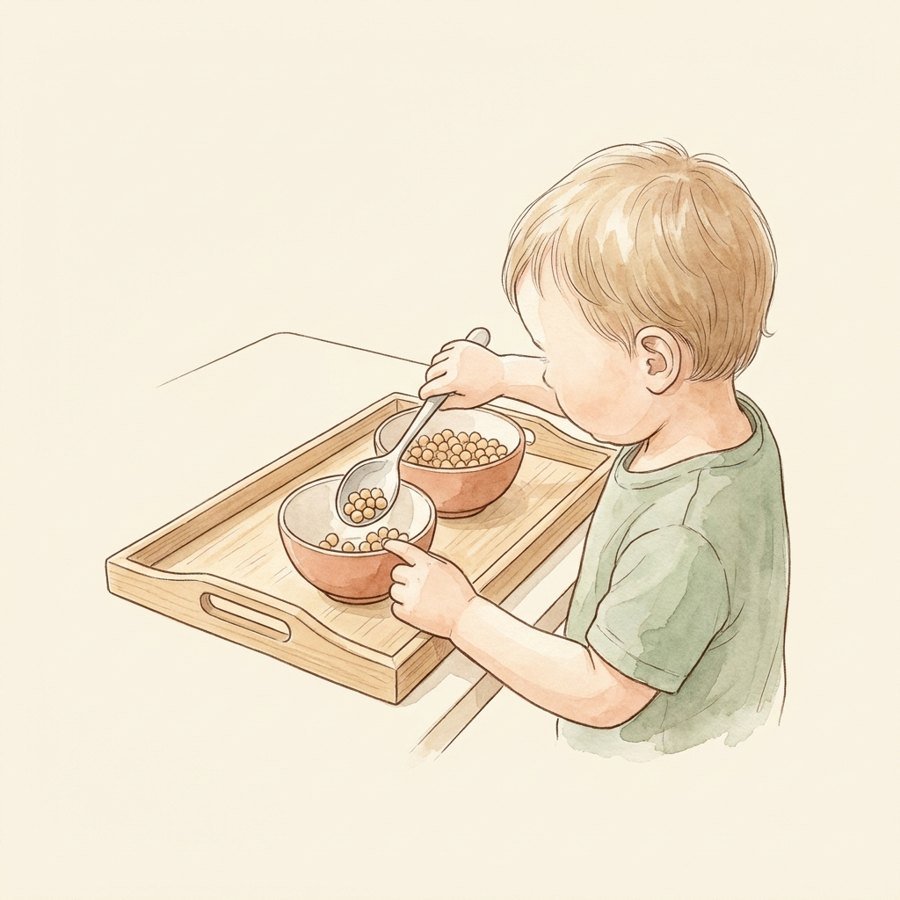
Spoon Transfer
Two bowls, a spoon, and dried chickpeas: the first big independence project.
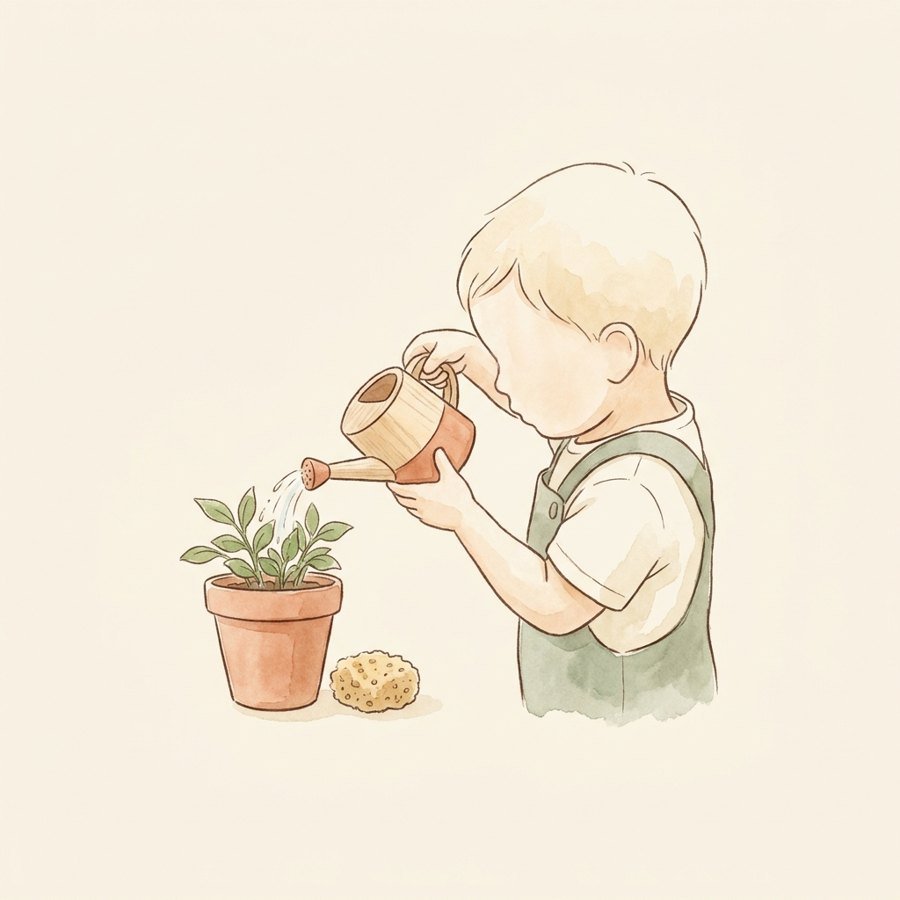
Watering a Plant
A real responsibility, well within reach of an 18-month-old.
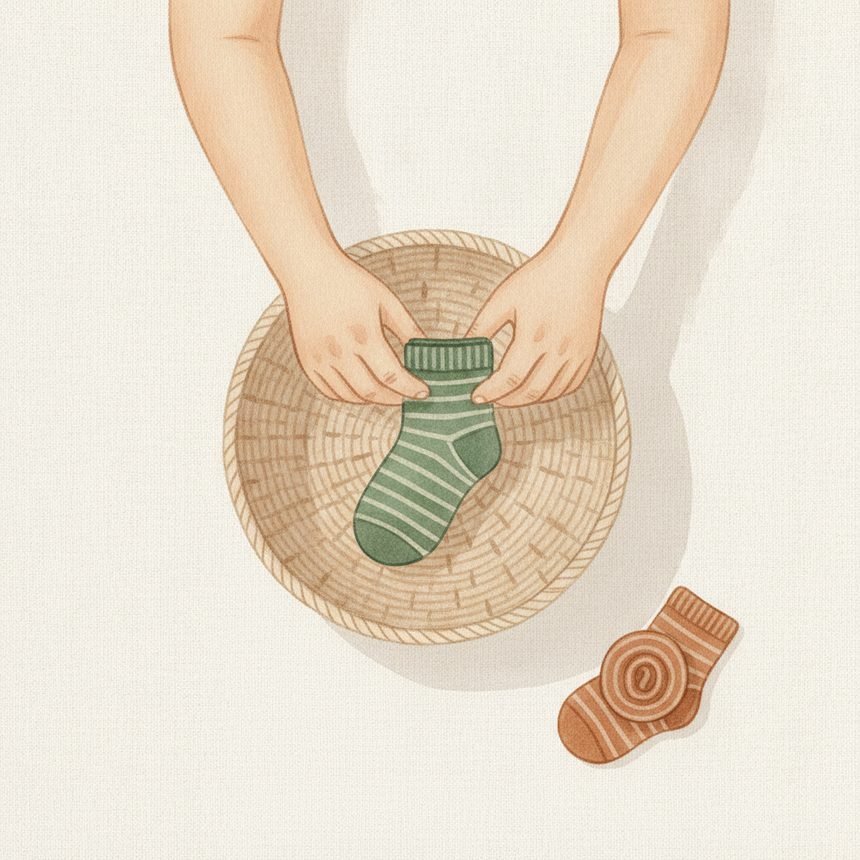
The Laundry Basket
Socks in the basket, every evening: the first real responsibility, at kid height.
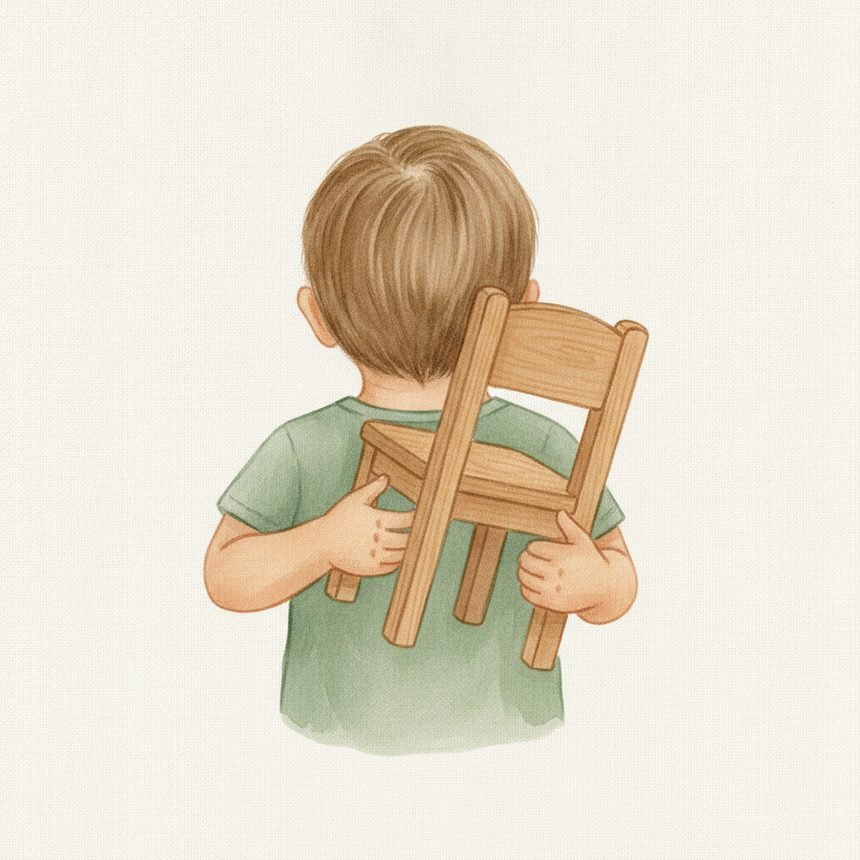
Carrying a Chair
Carrying a small chair with both hands and setting it down without a sound: the whole body learns control.
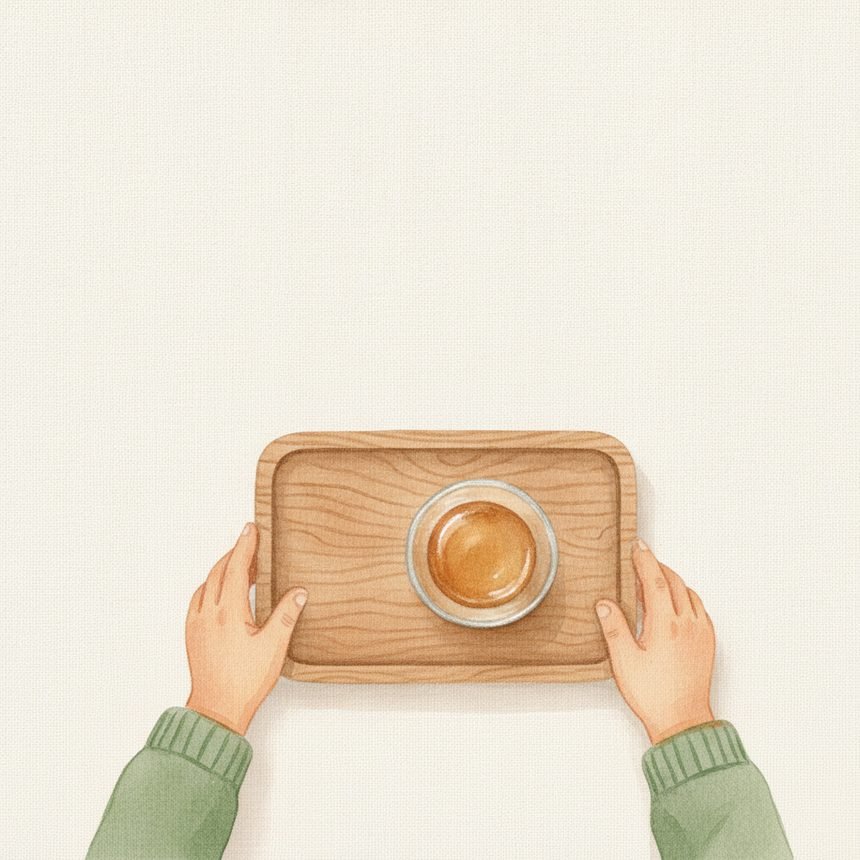
Carrying a Tray
A tray in both hands, a short trip, and a cup that must not spill: the signature movement of independence.
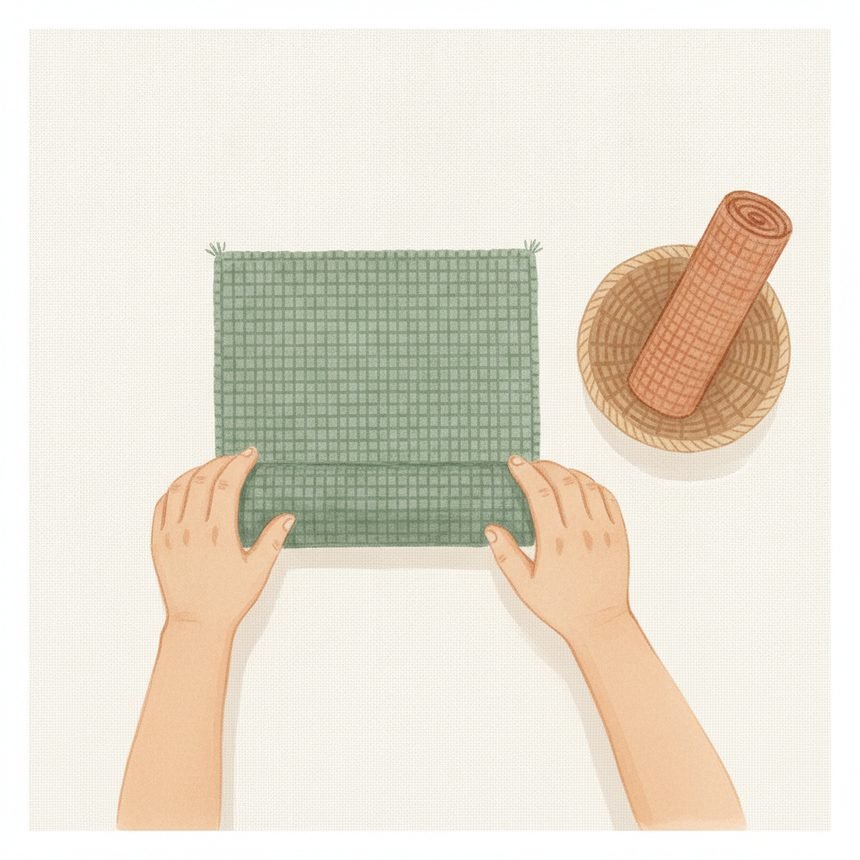
Rolling Out a Work Mat
Rolling out a small mat, working on it, then rolling it back up and putting it away: the frame for everything else.
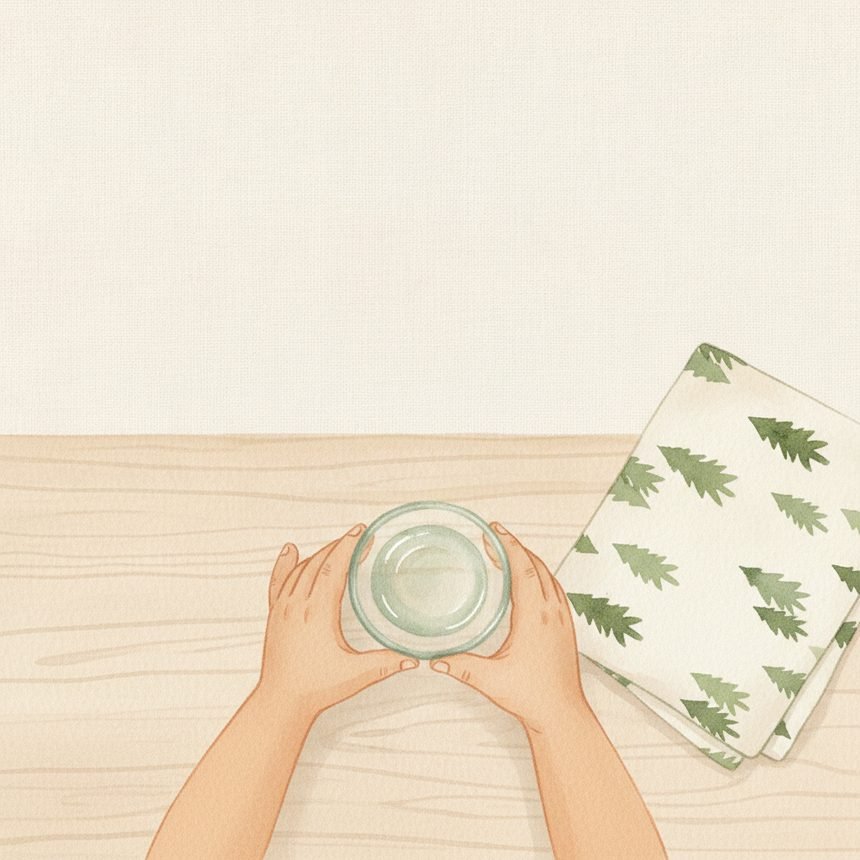
Drinking From an Open Cup
A real little cup, filled just at the bottom, and the pride of drinking like the big kids.
For 2 to 3 years
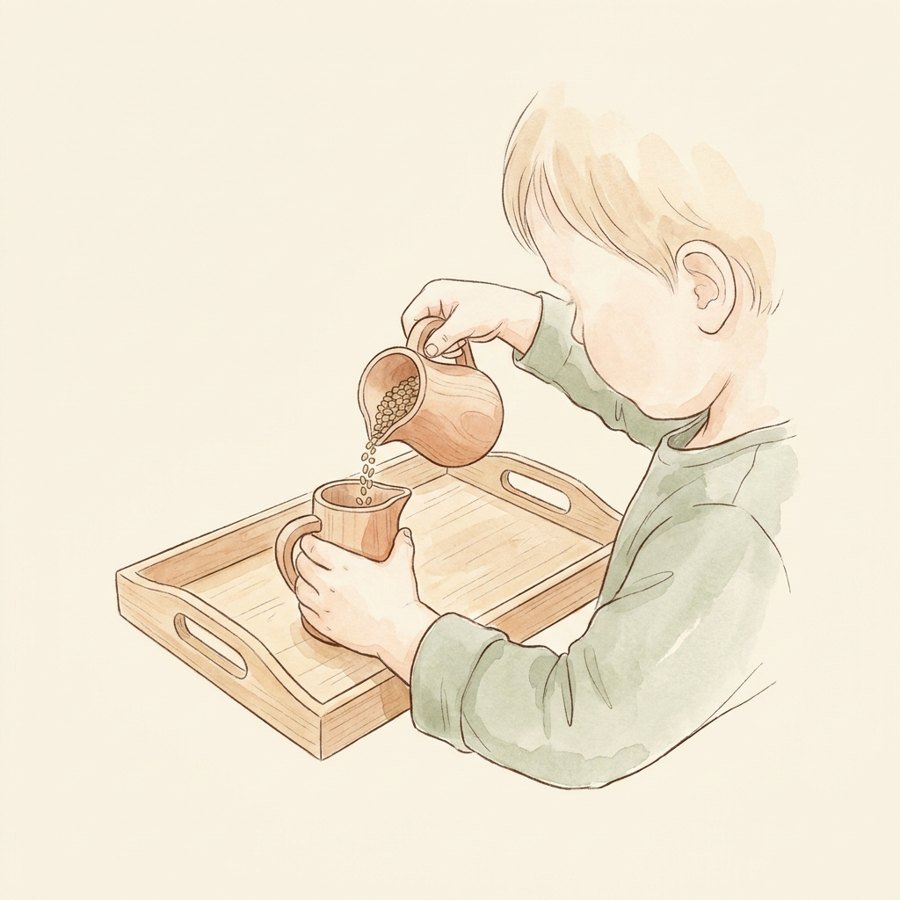
Pouring Dry Ingredients
Two small pitchers, dry lentils and a tray. A hands-on activity for ages 2 to 3.
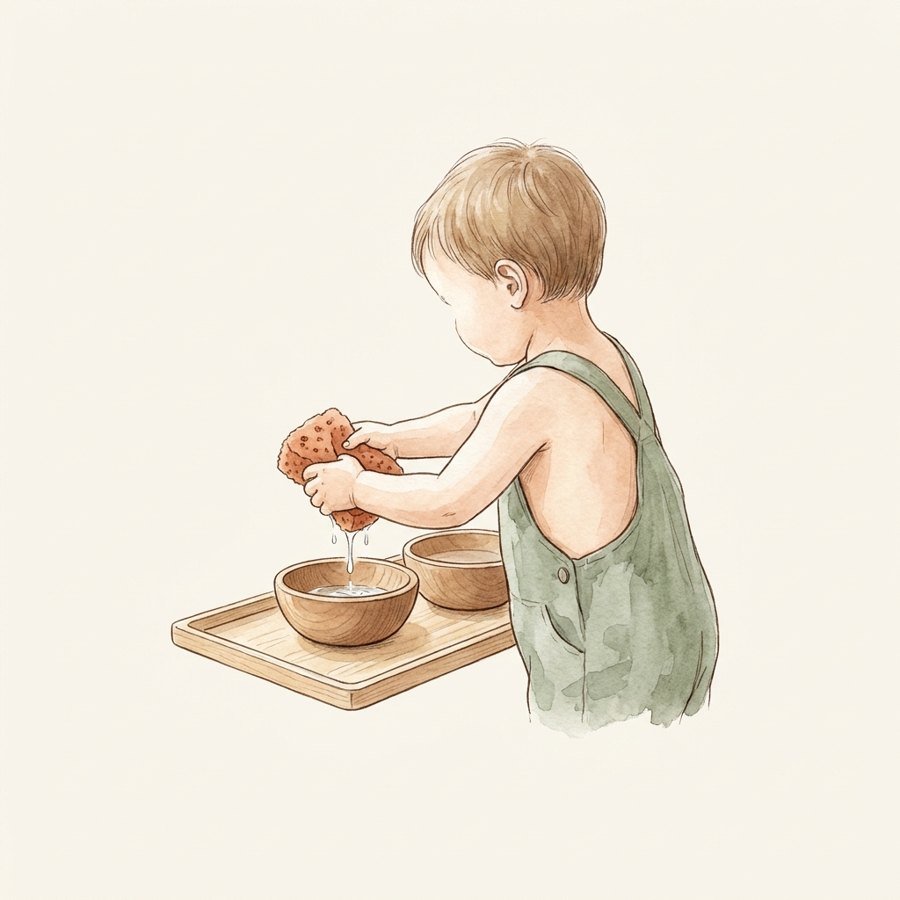
Sponge Squeezing
Moving water from one bowl to another by squeezing a sponge. Simple, and a little wet.
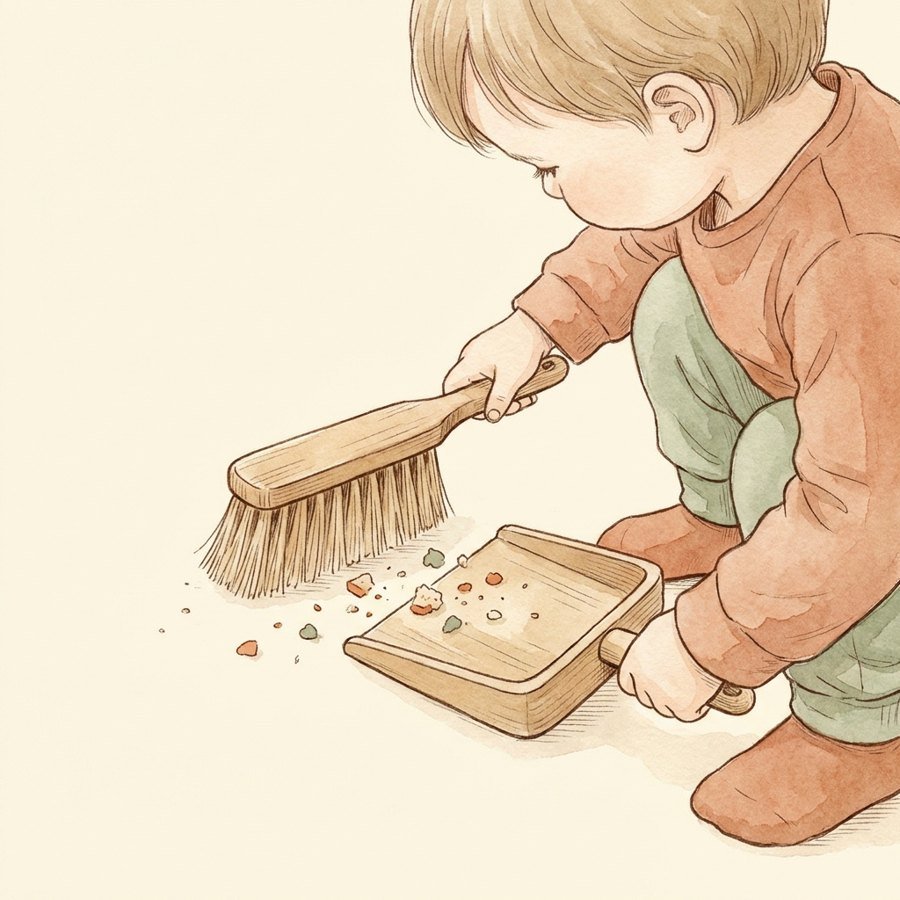
Sweeping Crumbs
A small broom, a dustpan, and the pride of fixing your own spill.
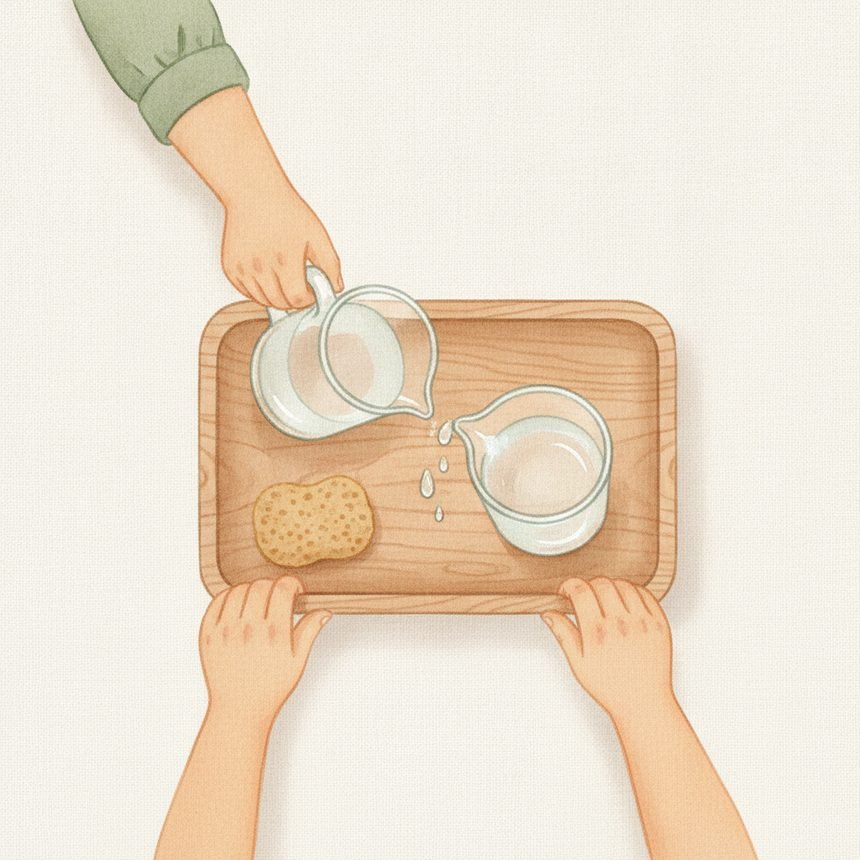
Pouring Water
Two small pitchers, a little water, and the motion that makes a child proud: pouring without spilling over.
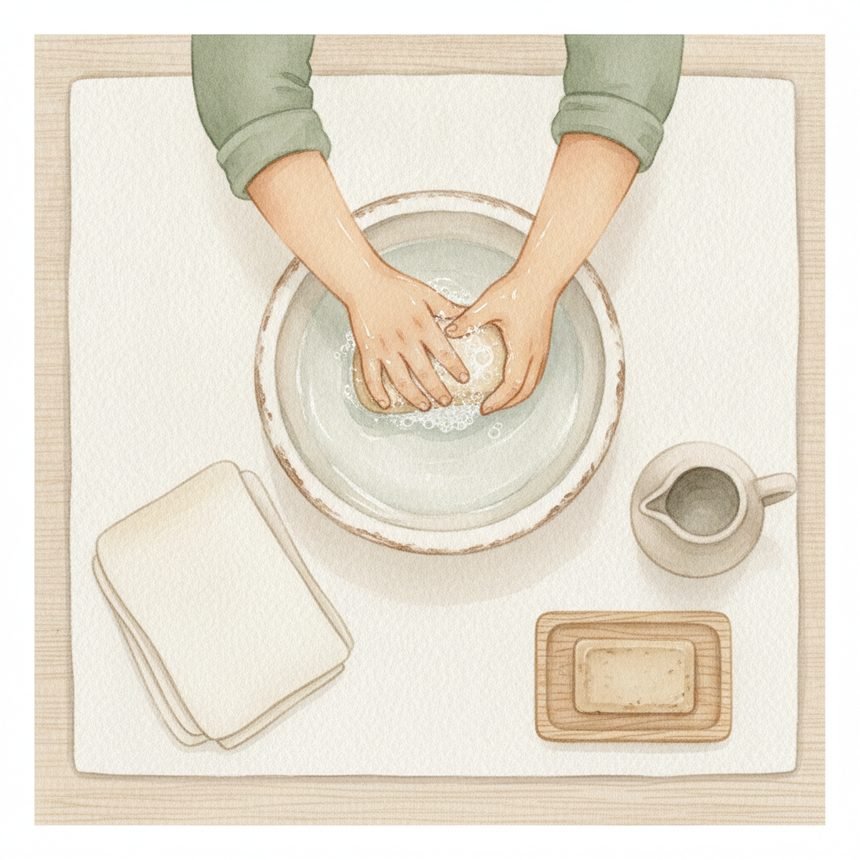
Washing Hands
A whole ritual with a basin, soap, and a towel: the first big, complete cycle your child carries out start to finish.
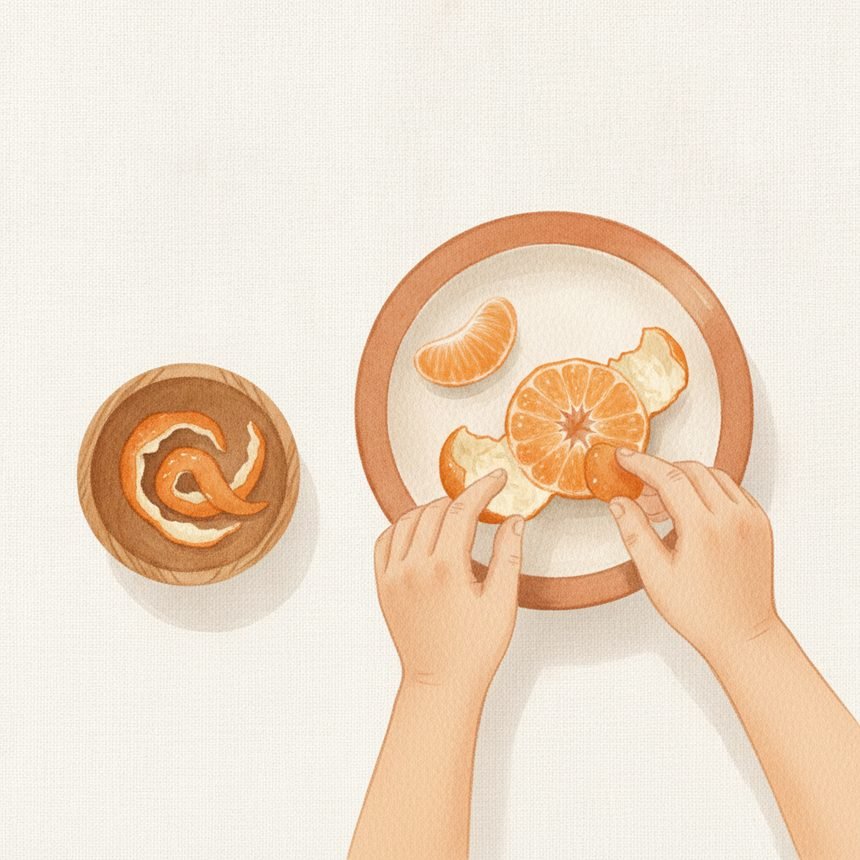
Peeling a Clementine
Piercing, pulling, separating the segments, and eating what you made yourself: practical life that tastes good.
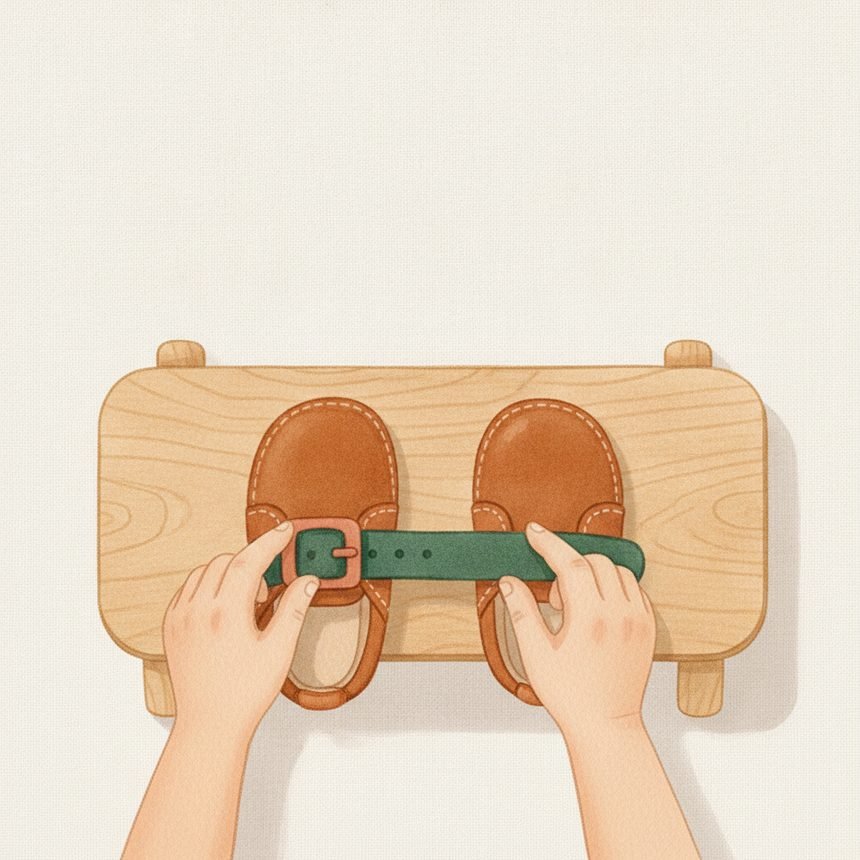
Putting On Shoes
Sit down, aim, push the heel, fasten: heading out the door under their own power.
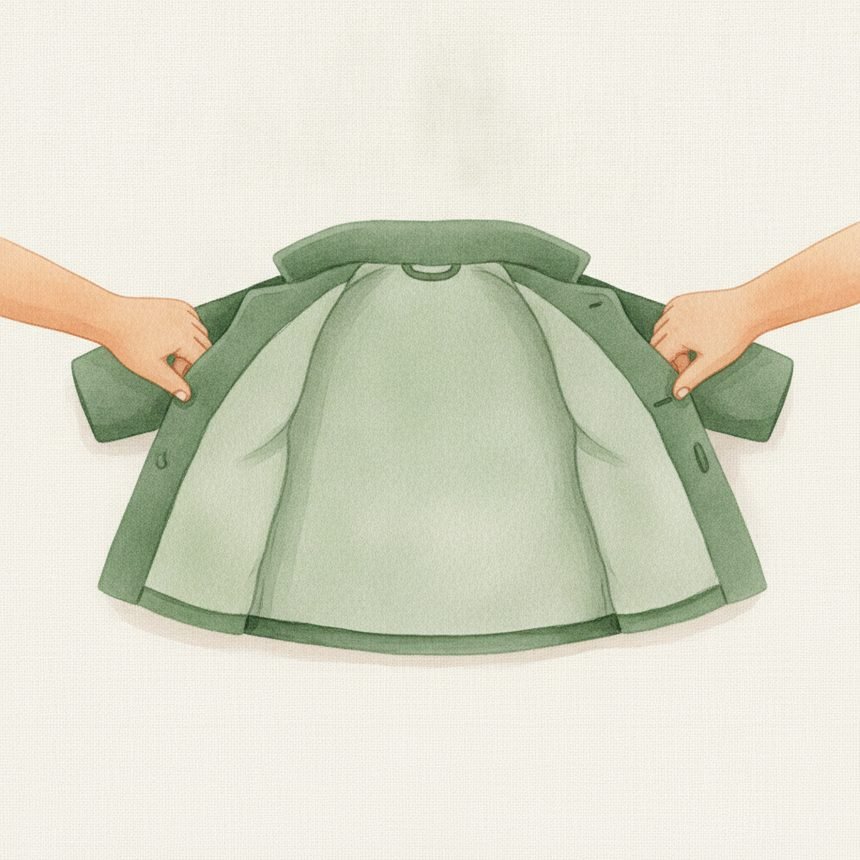
Putting On a Coat
The coat laid open on the floor, lining facing up, arms in the sleeves, and flip, it comes right over the head.
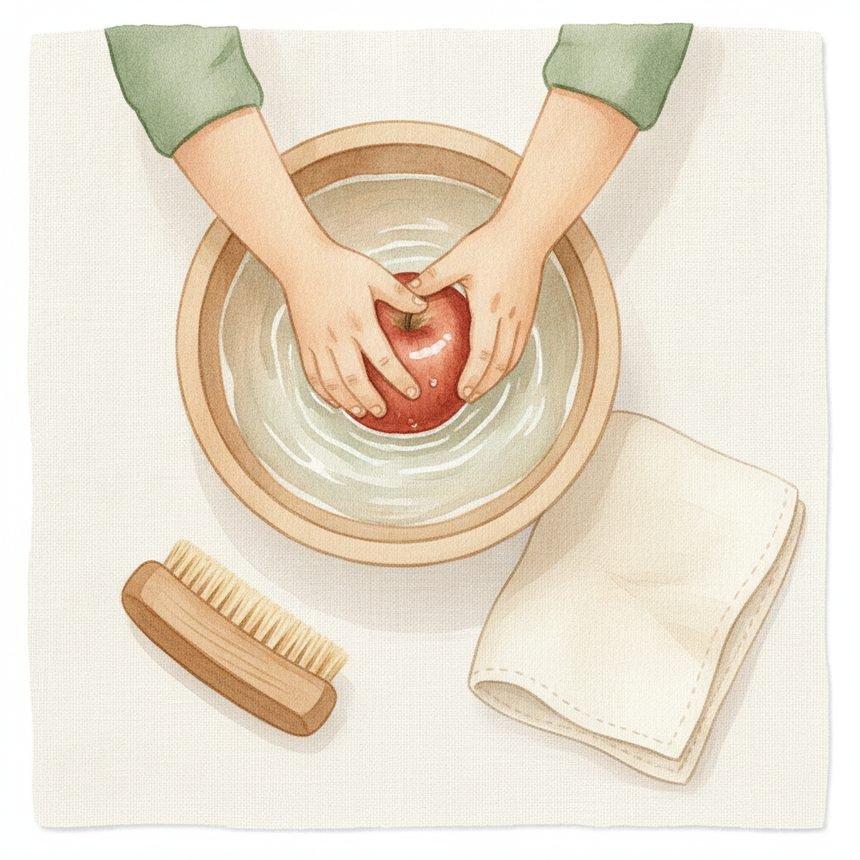
Washing Fruit
Scrubbing an apple under water, drying it, setting it in the bowl: preparing something for others.
For 3 to 4 years
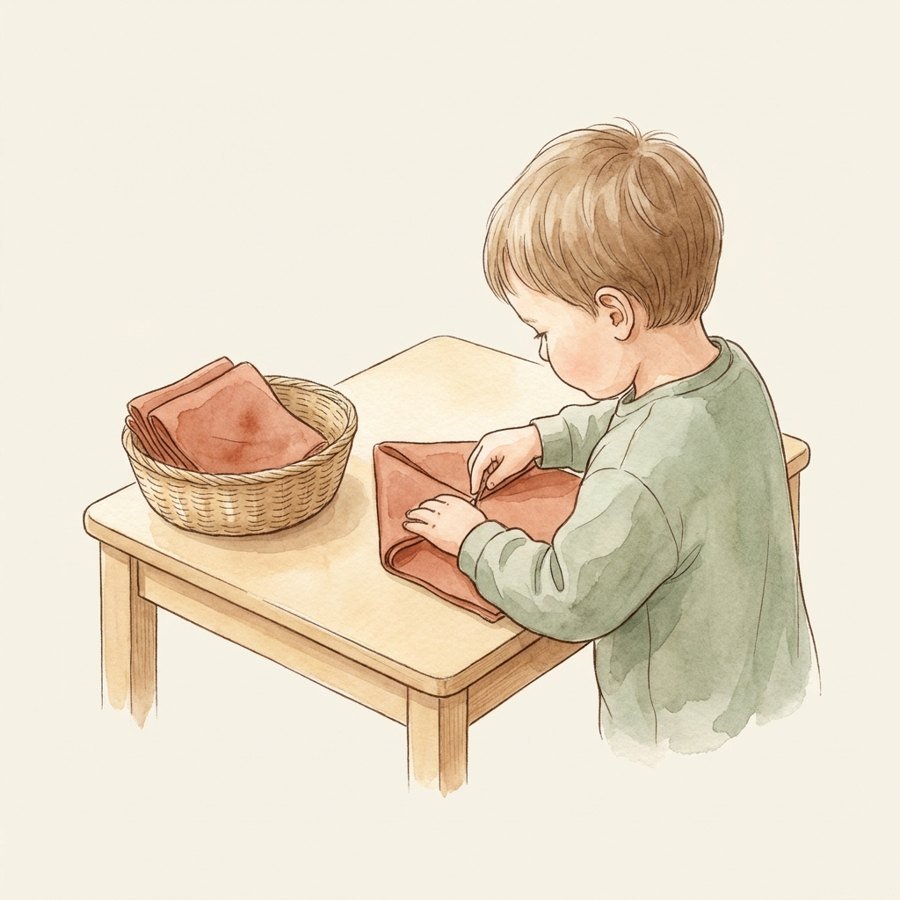
Folding Napkins
Matching corner to corner, then two more. Geometry that smells like fresh laundry.
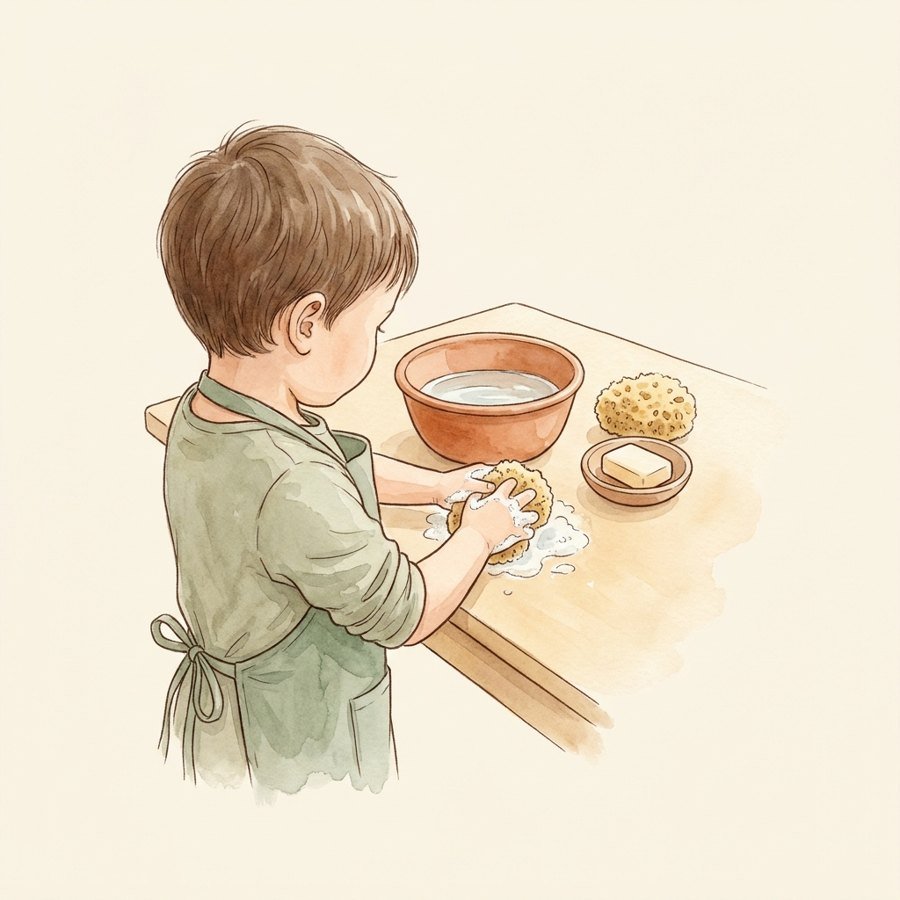
Washing a Table
A real household chore, start to finish, cleanup included. Children love it because it's useful.
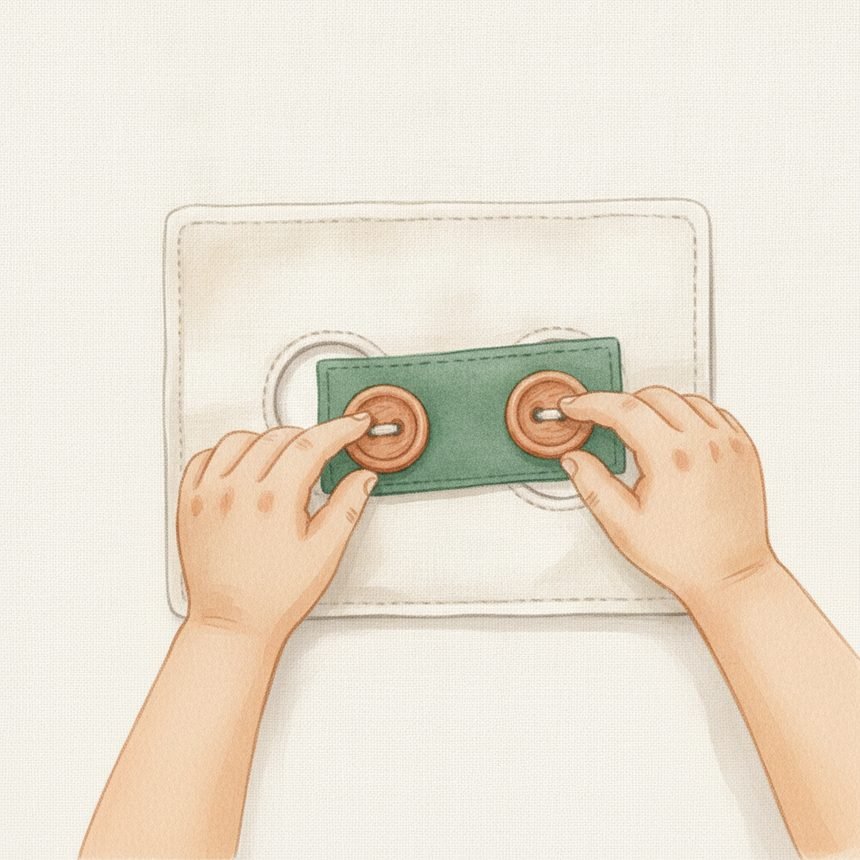
Buttoning and Unbuttoning
A strip of fabric with big buttons, and the patient motion that leads to dressing solo.
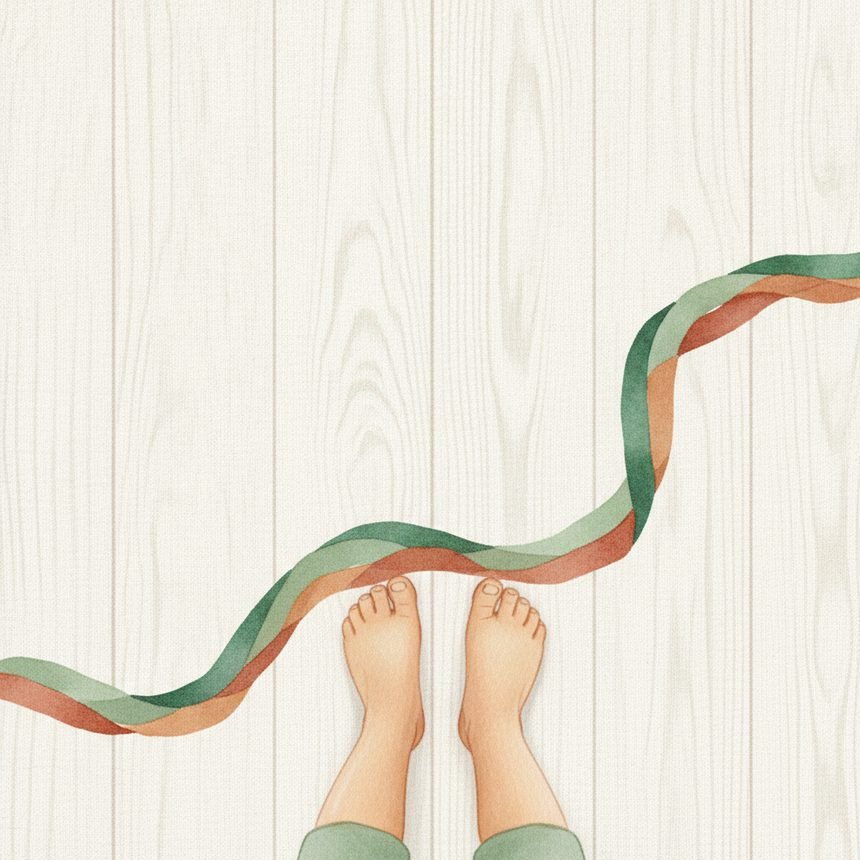
Walking the Line
A line on the floor, and the whole body learning balance and calm, one step at a time.
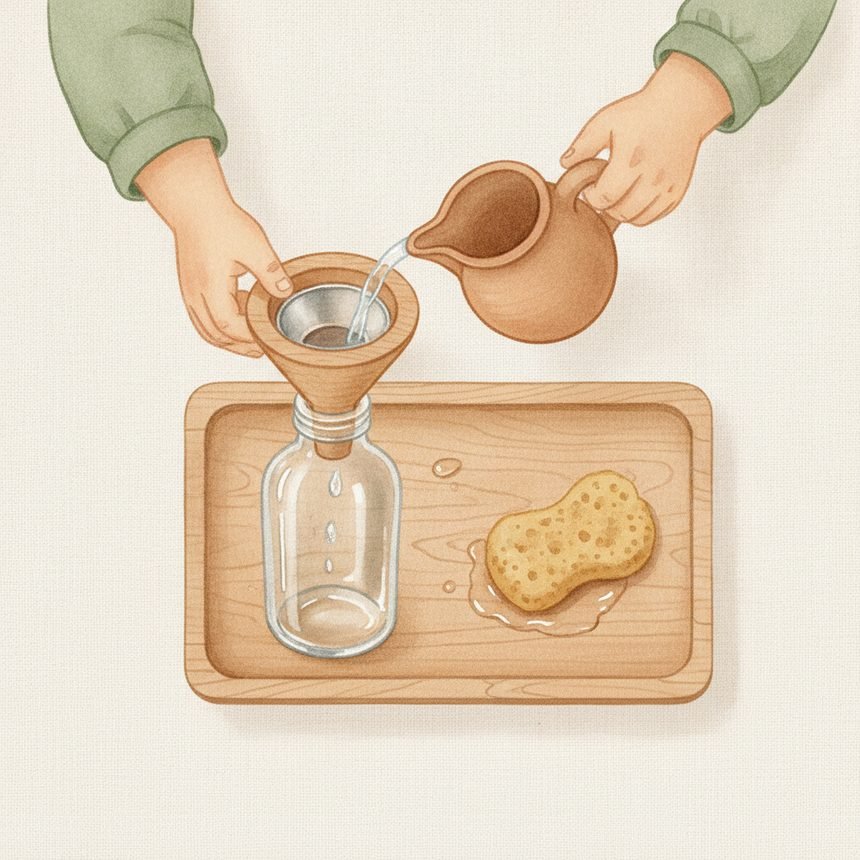
Pouring with a Funnel
A funnel, a narrow-necked bottle, and water that only makes it through if the hand stays steady.
For 4 to 6 years
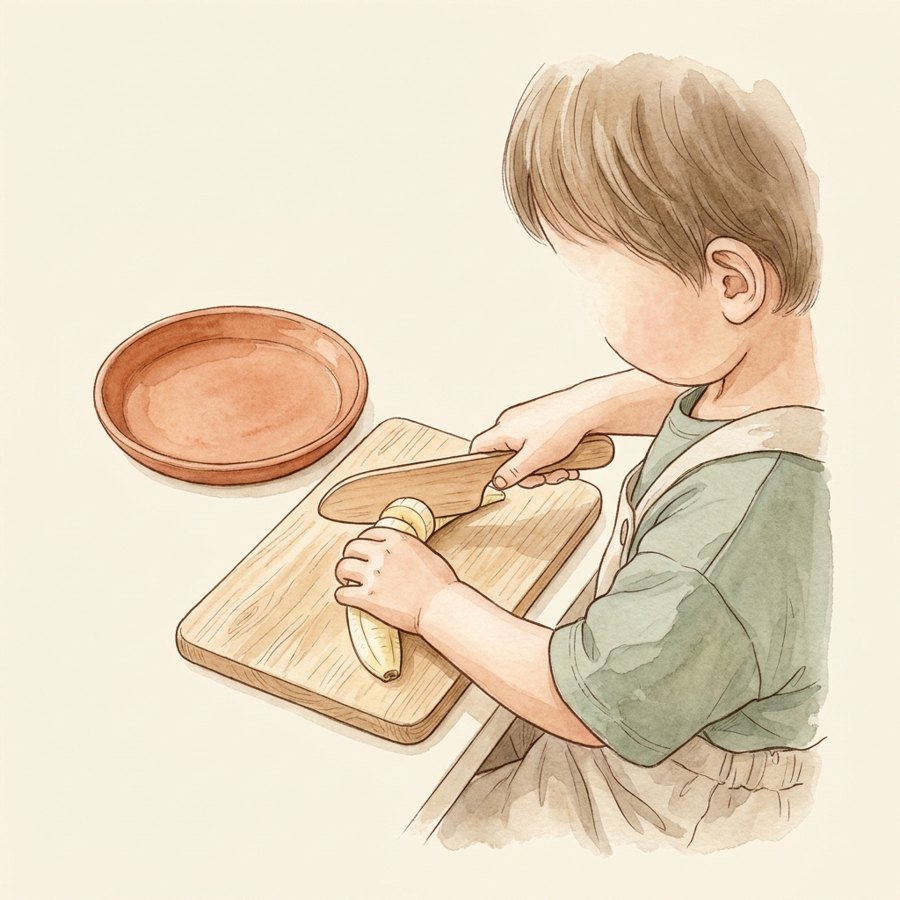
Preparing a Snack
Peel, slice, plate, serve. A real snack made start to finish by a five-year-old.
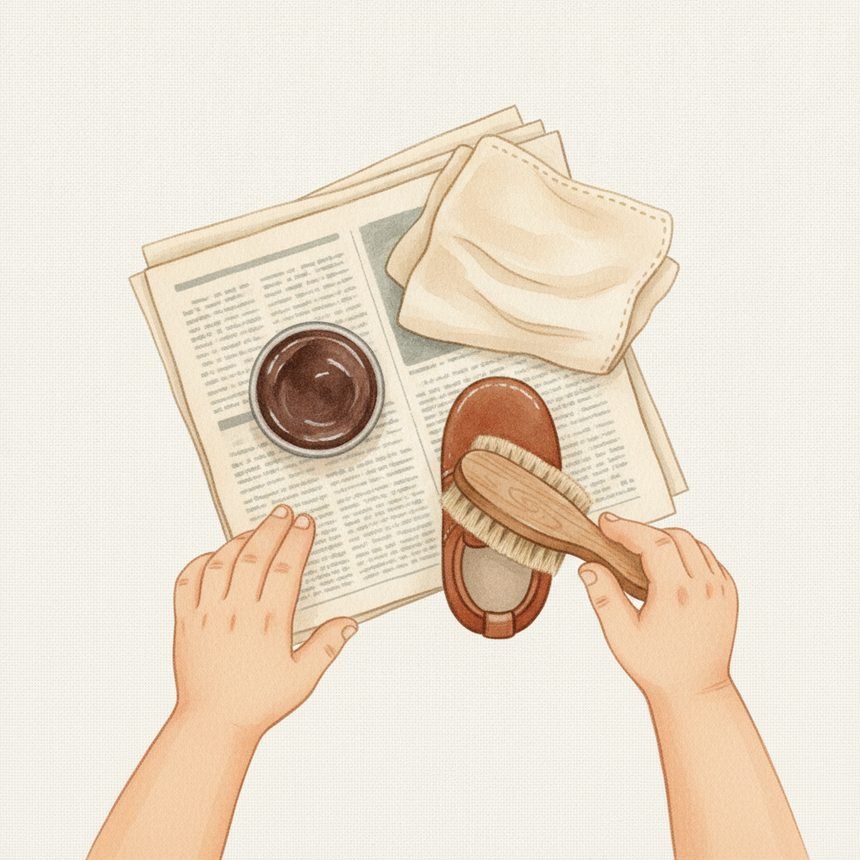
Polishing Shoes
Brushing, polishing, buffing your own shoes until they shine: the great cycle of caring for objects.
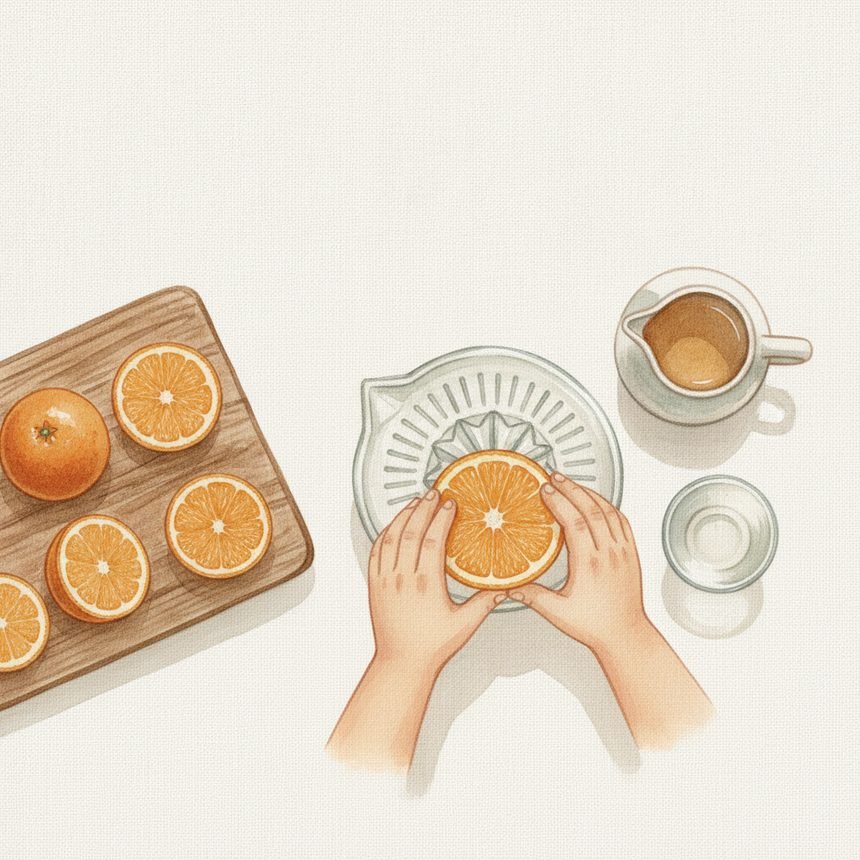
Squeezing Orange Juice
Cut, press, pour, serve: real juice made start to finish, and given to someone.
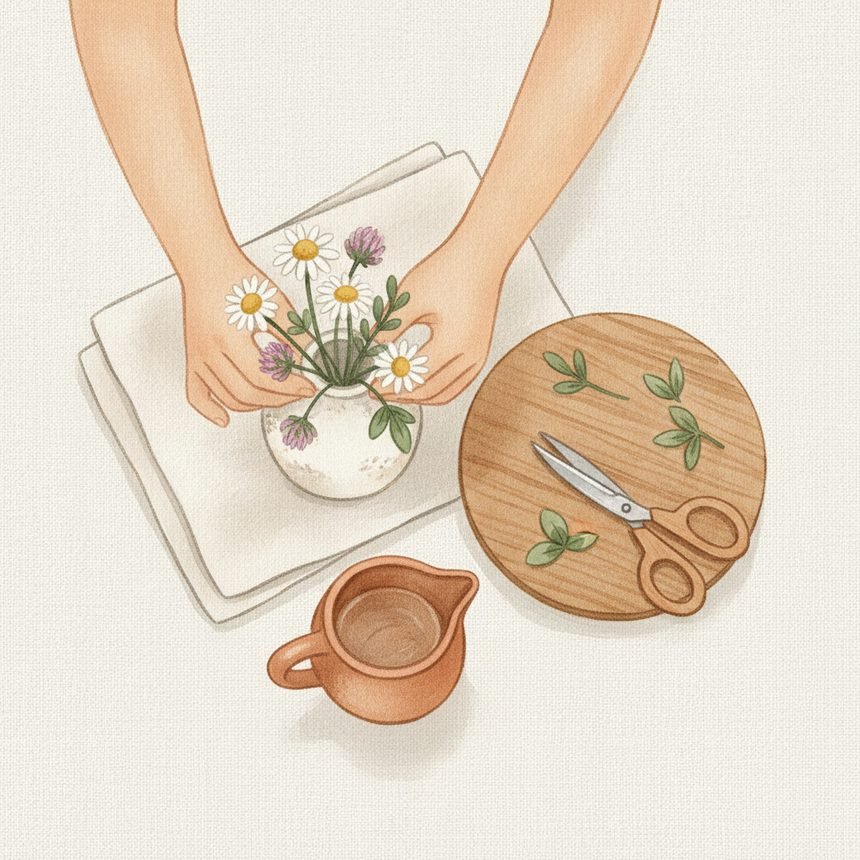
Arranging Flowers
Cutting the stems, filling the vase, arranging the flowers, and setting the bouquet on the family table.
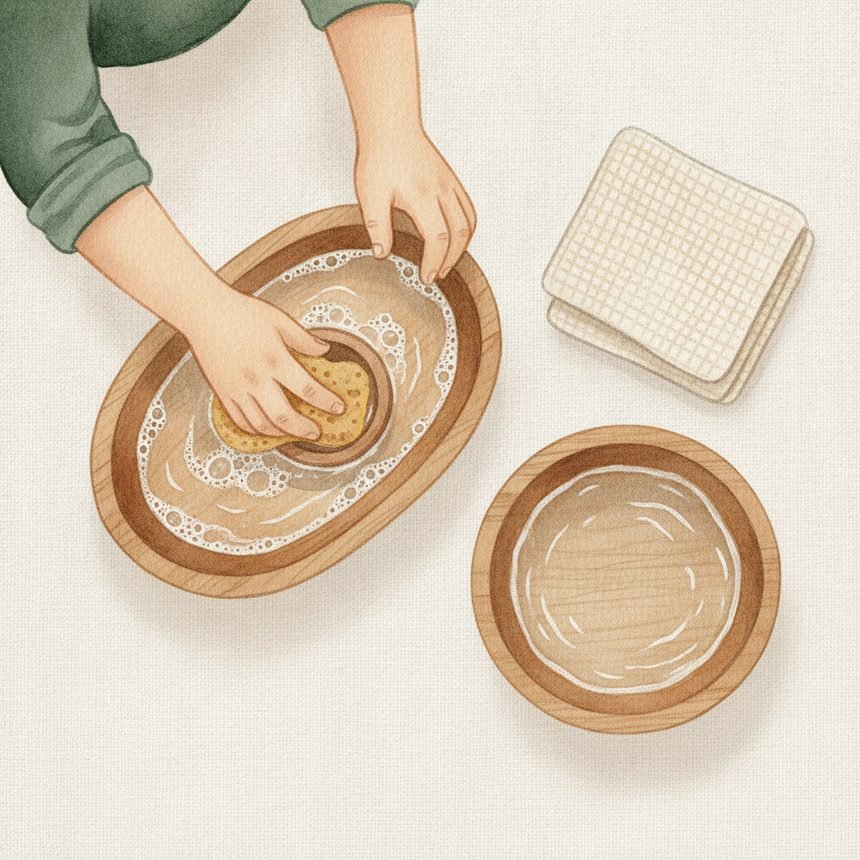
Washing a Bowl
Two basins, a sponge, and their own bowl turning clean again between their hands.
For 6 to 8 years

Following an Illustrated Recipe
A recipe on display, numbered steps, and a cake whose every step they followed.

Sewing On a Button
A needle, four holes, and a repair that will hold for years.

Getting Tomorrow's Things Ready
A calm moment at night: your child lays out clothes and bag for the next day.

Making Their Bed
The first thing done well in the day, and it's entirely theirs.

Repotting a Plant
A plant that's outgrown its pot, a bigger one, and roots finally seen in the open.
Printable materials for these activities
Questions about practical life activities
What is the purpose of practical life activities in Montessori?
To build independence, concentration, and coordination through real tasks. The goal is not the clean table or the watered plant, it is what your child builds while doing it: a steady hand, a sense of order, the pride of being useful. That is why the activities use real tools at child height, a small pitcher for pouring water, a small broom for sweeping crumbs, a sponge for washing a table.
What are Montessori practical life activities for toddlers (12 months to 3 years)?
From 12 to 18 months: self-feeding with a spoon, putting a toy in the basket, throwing trash away, taking off socks. From 18 months to 2 years: carrying a tray, spoon transfer, watering a plant, the laundry basket, drinking from an open cup. Around 2 to 3 years: pouring dry ingredients then water, squeezing a sponge, sweeping crumbs, washing hands, putting on a coat.
What are Montessori practical life activities for preschoolers (3 to 6 years)?
From 3 to 4 years: folding napkins, washing a table, buttoning and unbuttoning, pouring with a funnel, walking the line. From 4 to 6 years: preparing a snack, squeezing orange juice, arranging flowers, polishing shoes, washing a bowl. The tasks get longer and end in something real that someone else uses: a plate of fruit, a bouquet on the family table, a pair of shoes that shine.
Are there printable Montessori practical life activities in PDF?
Yes, but not worksheets: your child pours, wipes, and folds, and what you print is the sheet you follow, with the materials, the step-by-step presentation, and the variations by age. The 37 pages in this area show the materials, precautions, and first two steps of each activity; the complete sheets for an age group come together in that age group's set, ready to print after purchase.