
Watering a Plant
A real responsibility, well within reach of an 18-month-old.
Watering a Plant: a Montessori activity for a child aged 18 to 24 months. Area: Practical Life. Time: 5 min.
Part of the 18 to 24 months set: booklet and printable materials included, as a one-time purchase.
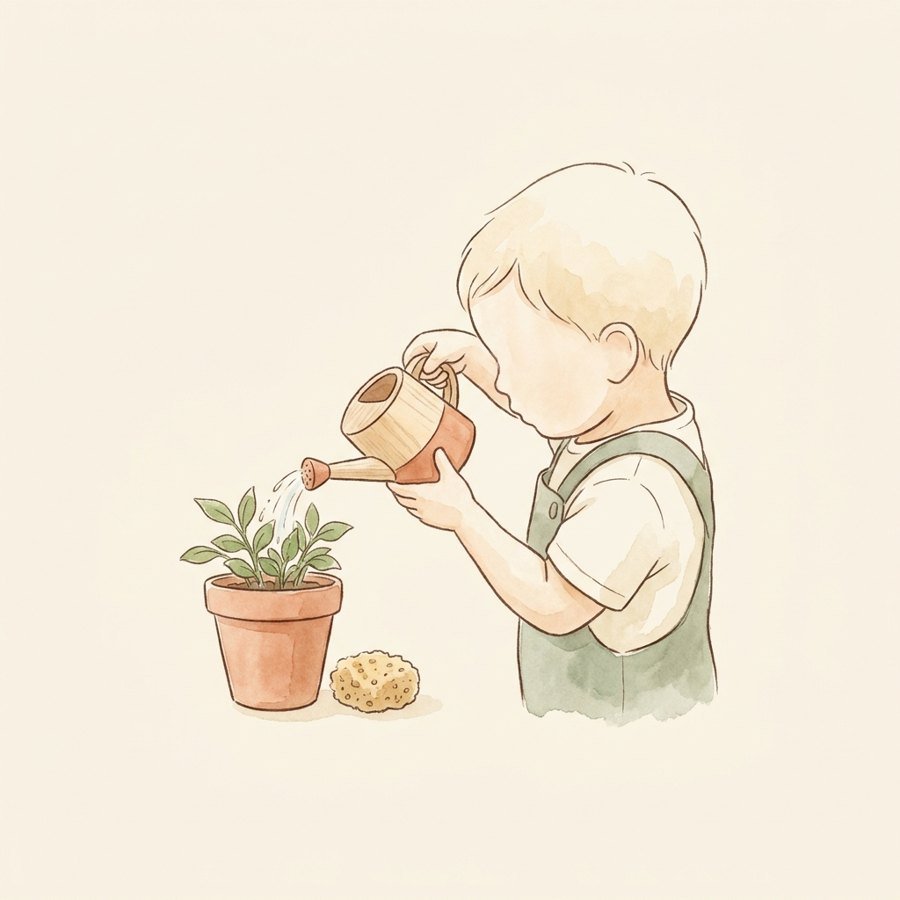
What the activity builds
Care for something living, and discover that a repeated motion has an effect over time.
The materials
- A very small watering can or a half-cup pitcher
- A sturdy, nontoxic plant at their height
- A dish towel set nearby
How to do it, step by step
- Fill the watering can halfway together.
- Show how to pour slowly at the base of the plant, not on the leaves.
- Step 3, in the printable sheet
- Step 4, in the printable sheet
The parent's role
Turn it into a standing date: the same plant, the same day each week. Consistency does more for independence than a perfect pour. Look at the soil together before watering: if it is still damp, the plant does not need water that day, and you simply observe.
Safety
Check that the plant is nontoxic. In particular, keep dieffenbachia, ficus, philodendron, and poinsettia out of reach. Wipe the floor right away: wet tile is slippery.
You remain the sole judge of what is right for your child. These activities are offered for educational and recreational purposes: they do not replace medical advice or the guidance of an early childhood professional.
Ways to adapt the activity
The rest of the activity (2 illustrated steps) and 3 ways to adapt it to your child are in the printable sheet.
Part of the 18 to 24 months set: booklet and printable materials included, as a one-time purchase.
Get the "Spoon Transfer" activity sheet by email
A complete printable PDF activity sheet for ages 18 to 24 months: materials, steps, your role, and safety notes.
Request received. Open the email from Semilou and click "Download the activity sheet (PDF)." Nothing after a few minutes? Check your spam folder.
Up next
More activities for a child aged 18 to 24 months.
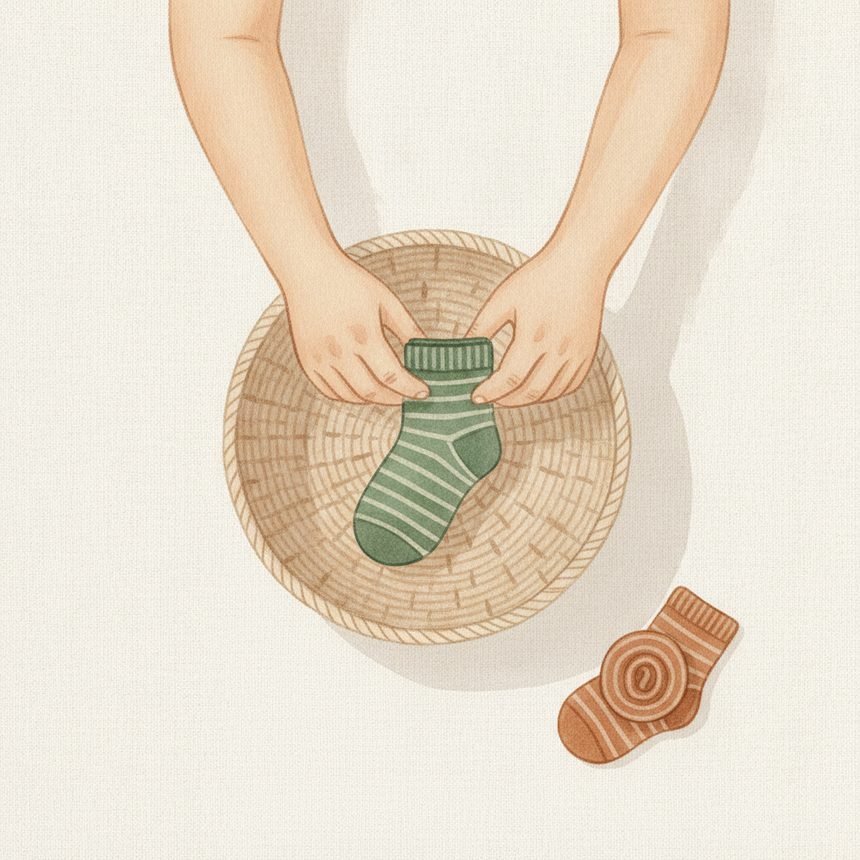
The Laundry Basket
Socks in the basket, every evening: the first real responsibility, at kid height.
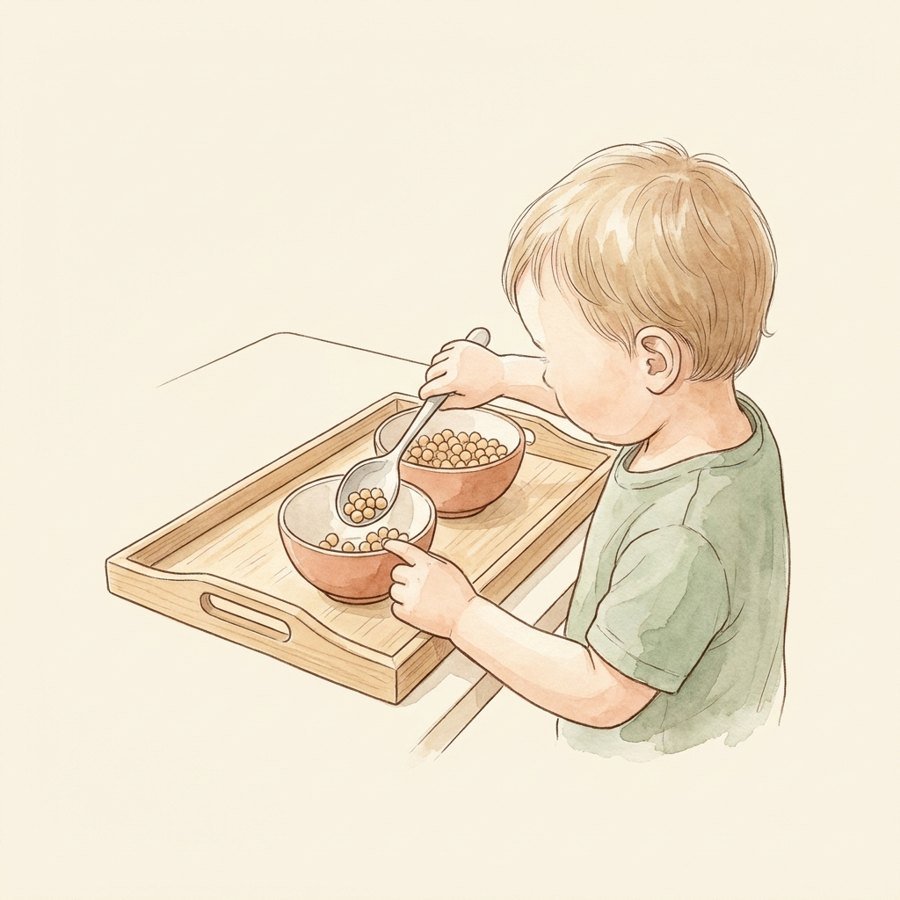
Spoon Transfer
Two bowls, a spoon, and dried chickpeas: the first big independence project.
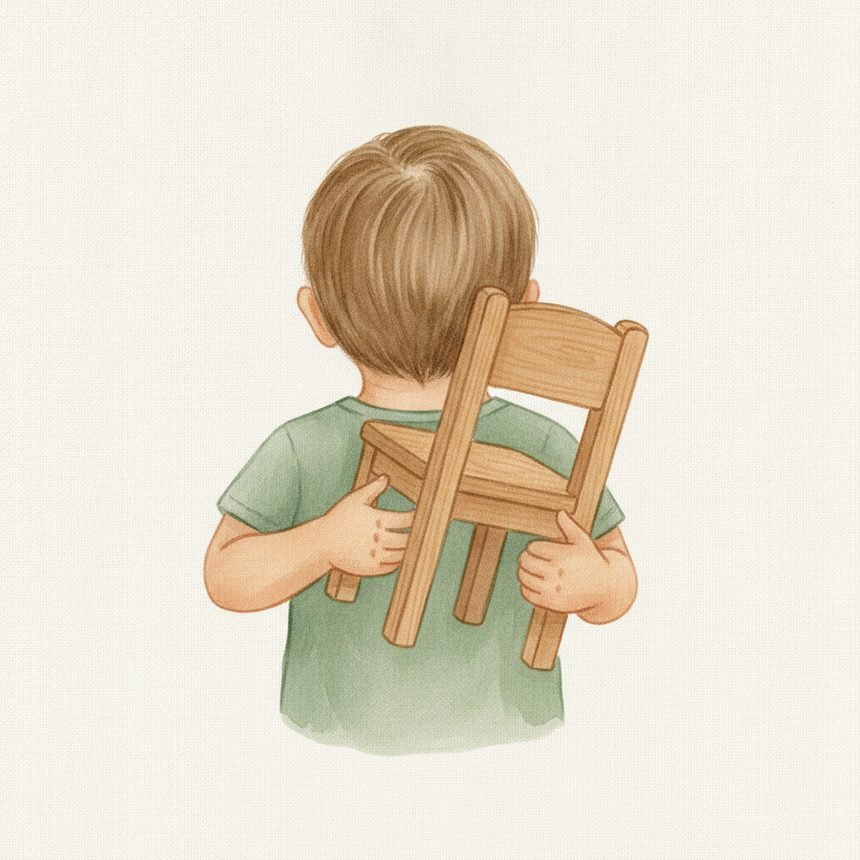
Carrying a Chair
Carrying a small chair with both hands and setting it down without a sound: the whole body learns control.
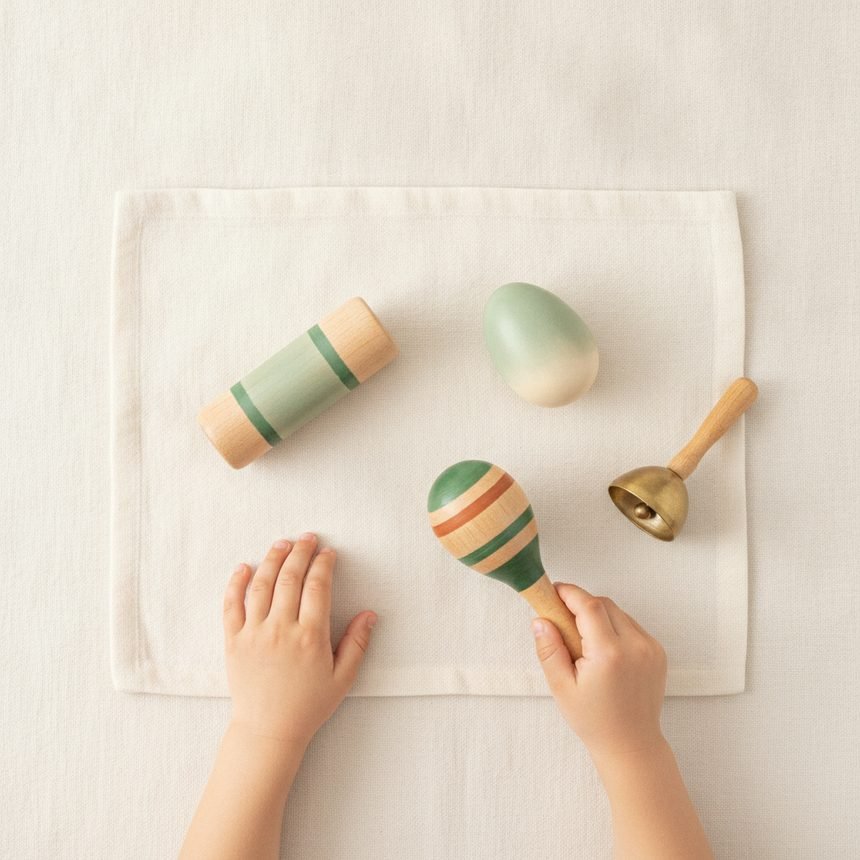
Shaking Instruments
A bell, maracas, a small tambourine: discovering that a motion makes a sound.
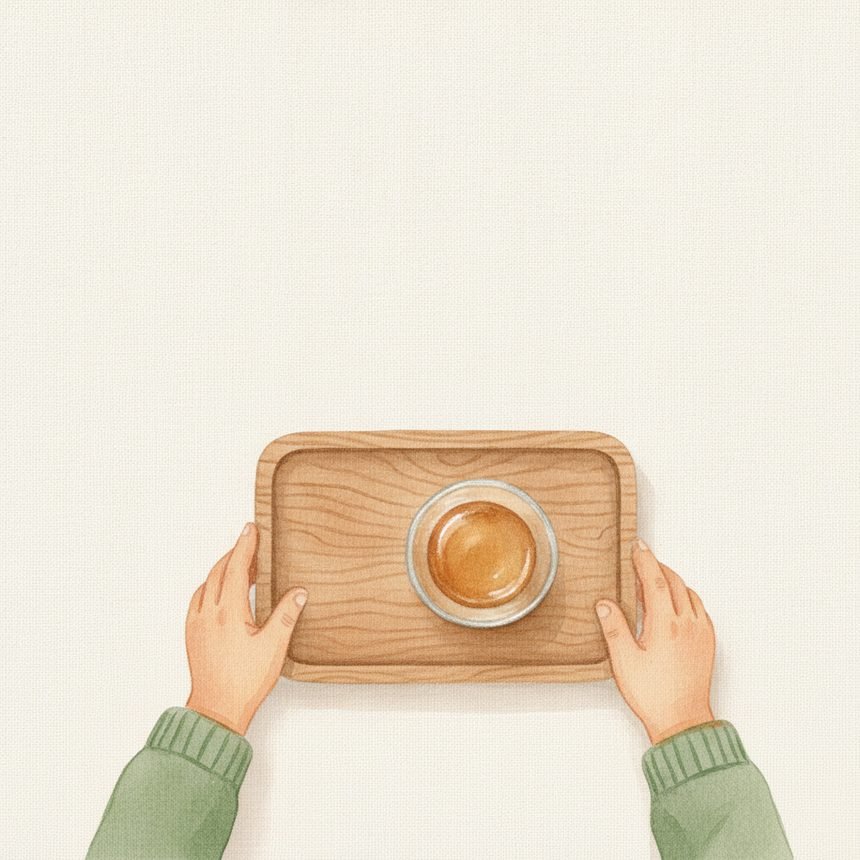
Carrying a Tray
A tray in both hands, a short trip, and a cup that must not spill: the signature movement of independence.
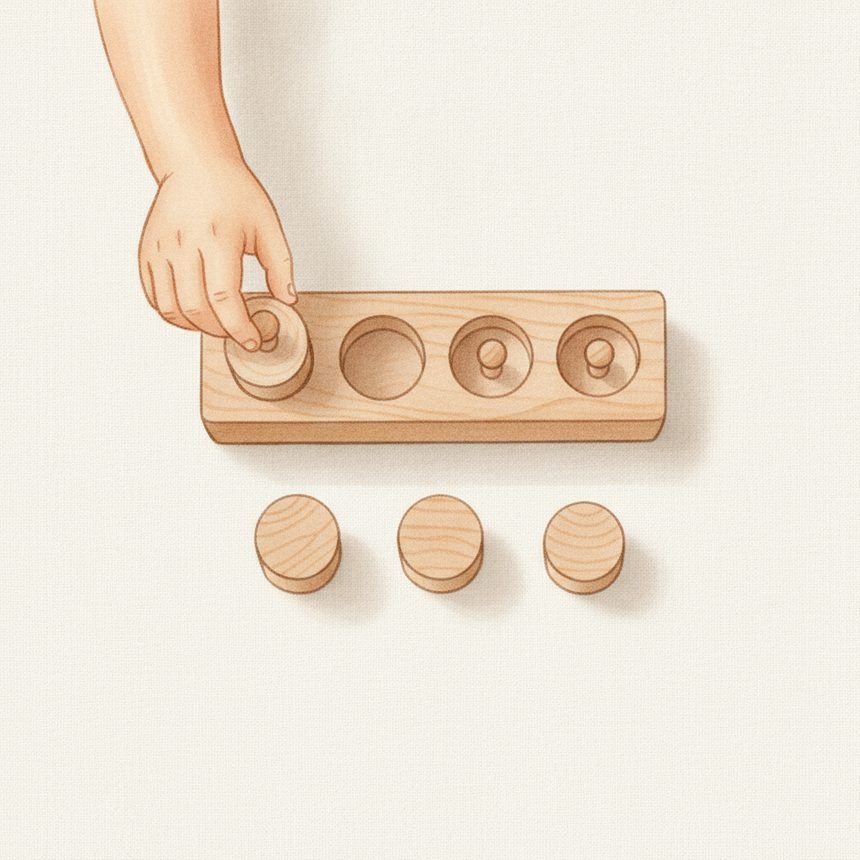
Knobbed Cylinders
Cylinders of different sizes, each one with its own place in the block.