
Language activities
Naming the world, hearing sounds, playing with rhymes, then building first words: language grows with real objects and the three-period lesson, never with worksheets to fill in.
29 Language activities, sorted by age. Each activity lists the materials to gather before you begin at home.
Turn these previews into a complete age-group set
Browse 29 language activity previews, sorted from 12 months to 8 years. Each preview shows the materials and first two steps. A one-time purchase unlocks one age group in one language: 25 or 32 complete printable activity sheets, the combined booklet, and seven printable material PDFs.
One-time payment. No subscription. No physical shipment.
For 12 to 18 months

Narrating Bath Time
Bath time becomes a vocabulary lesson, as long as you name what you're doing.

Naming What You See Through the Window
Nothing to prepare: the world goes by outside the glass, waiting to be named.

The Family Faces Album
Real photos of the people they love, in an album they can open themselves.

Peekaboo with a Scarf
A face disappears, a face comes back: the game that proves what leaves can return.
For 18 to 24 months
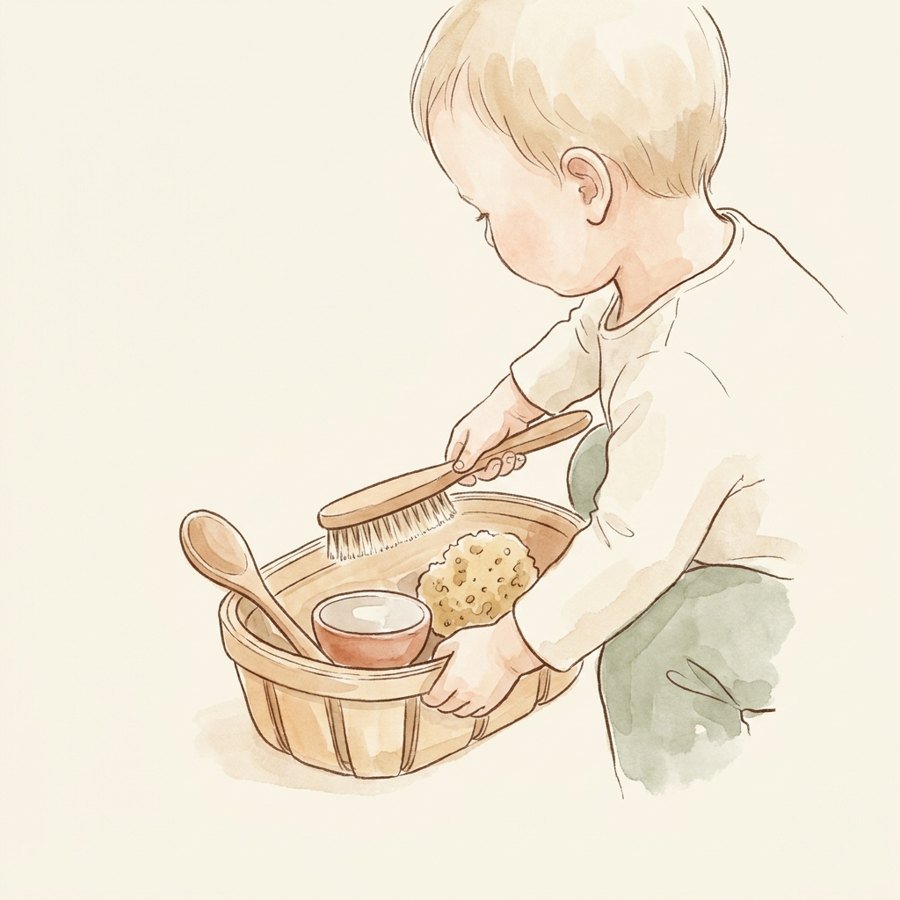
The Real Objects Basket
Five household objects in a basket, each with a name to learn.
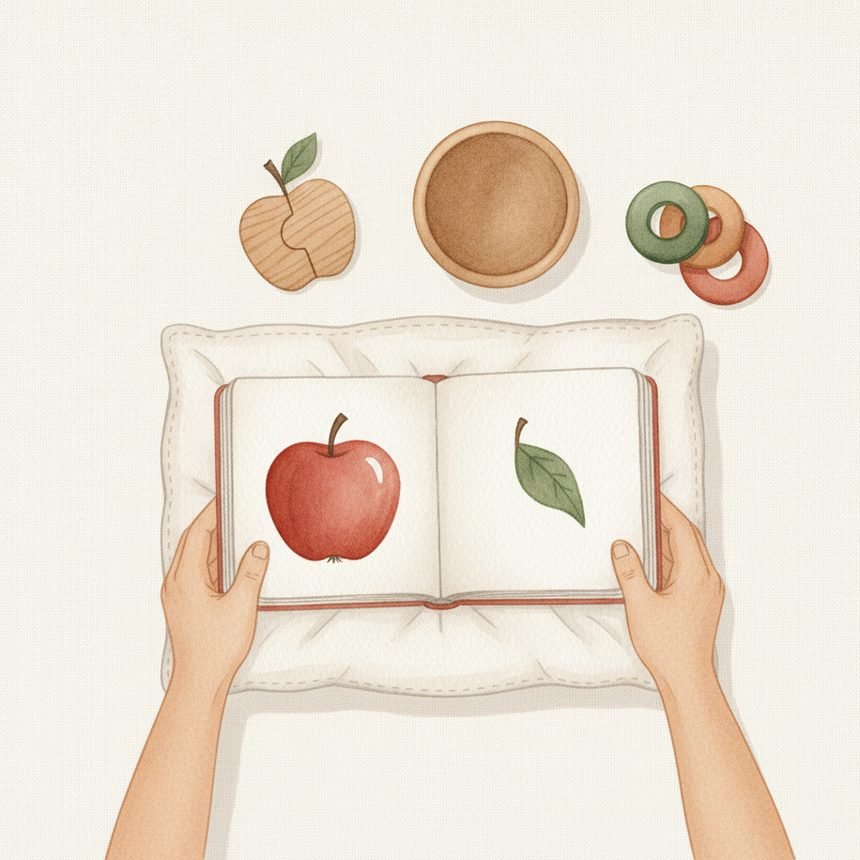
Real Picture Books
A book of real photographs and a shared moment on your lap: a chance to learn new words.
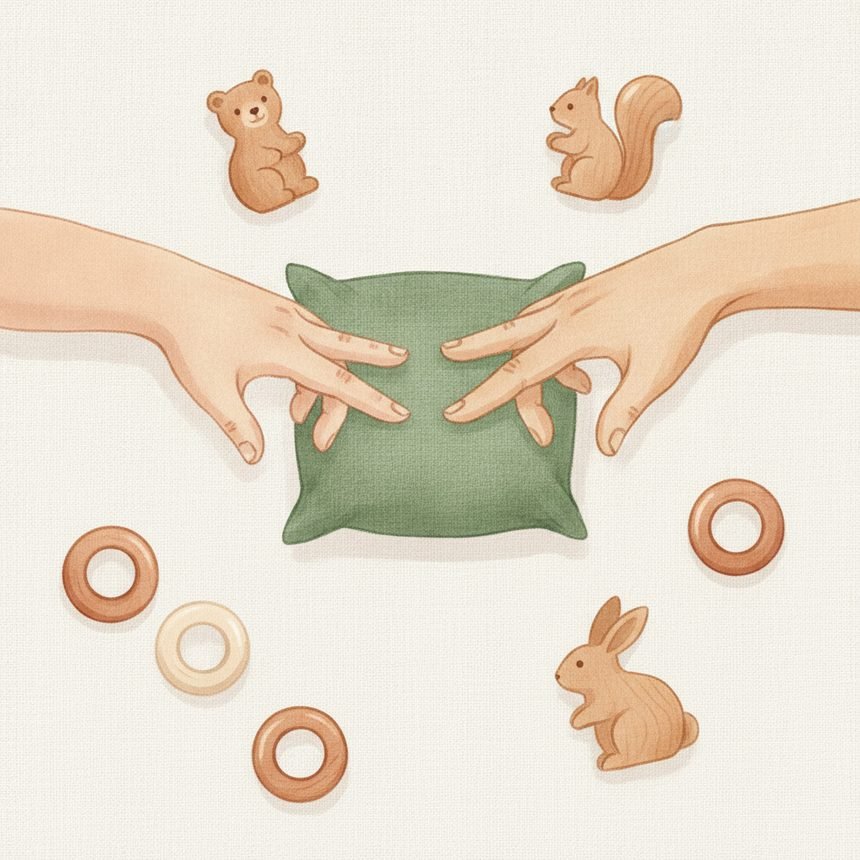
Action Songs
The same songs, the same motions, every day: music that plants the words.
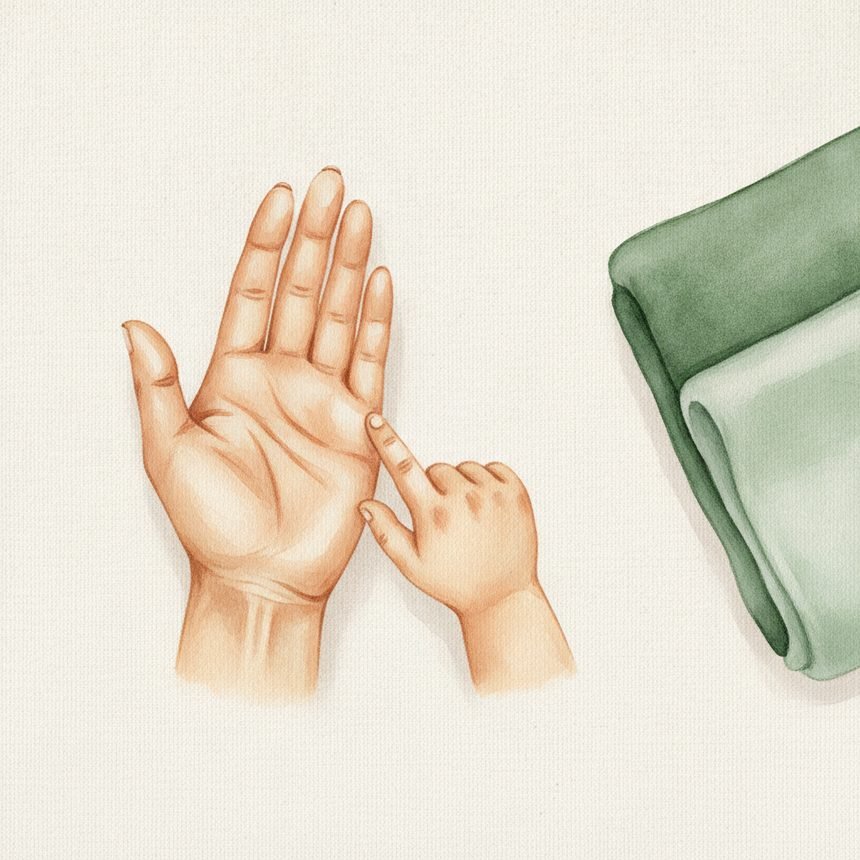
Naming Body Parts
Where's your nose, where's your elbow: the words for the body arrive through the pointing finger.
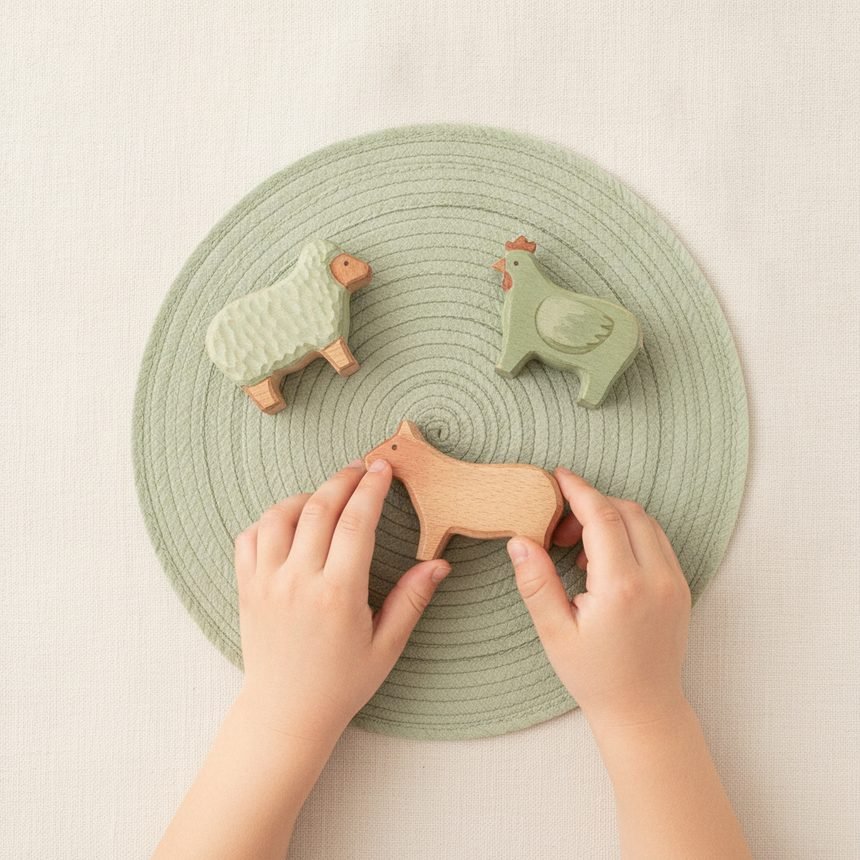
Animal Sounds
The cow says moo, the cat says meow: first words often start right here.
For 2 to 3 years
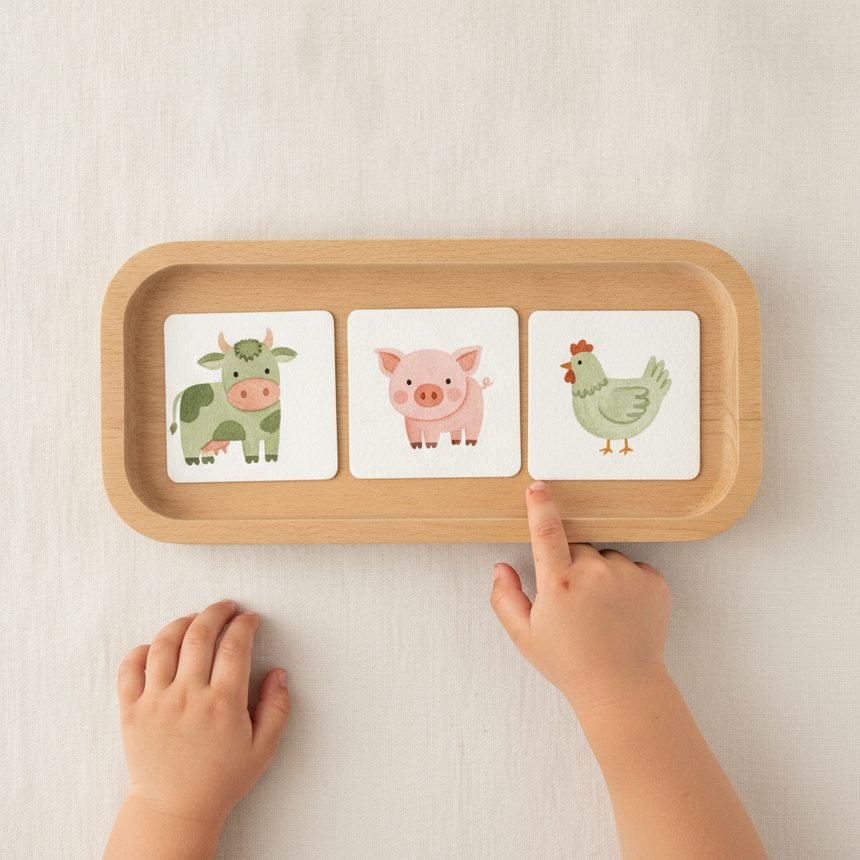
Naming Pictures
A handful of animal or object cards, and the three-period lesson for meeting new words and coming back to them.
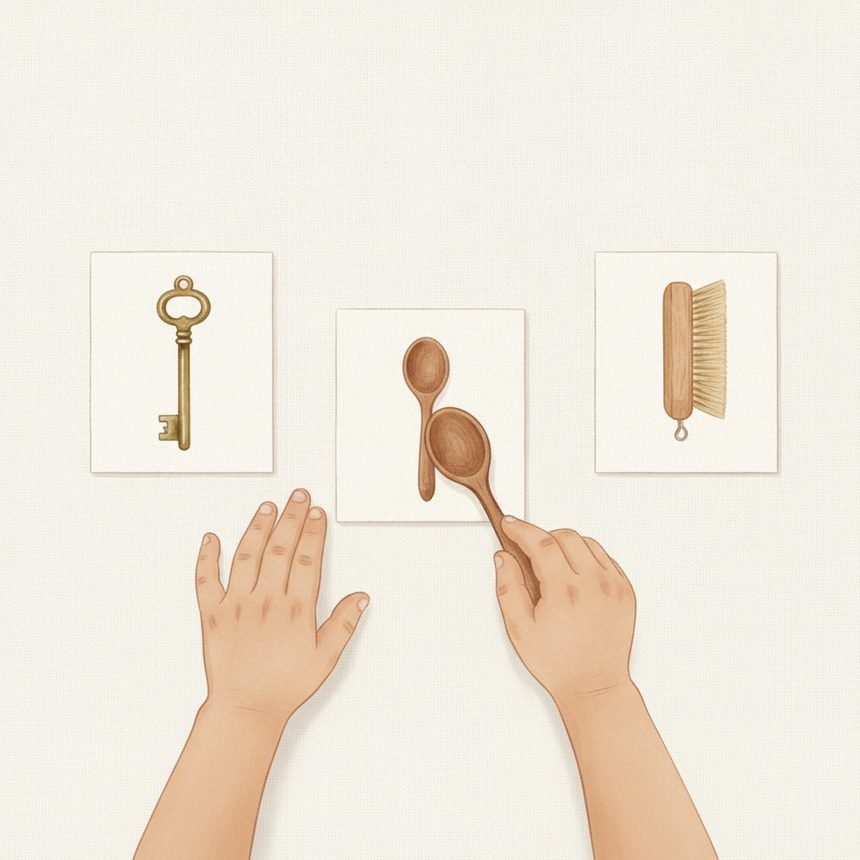
Object and Picture Matching
Setting the real spoon on the photo of a spoon: the bridge between the world and its images.
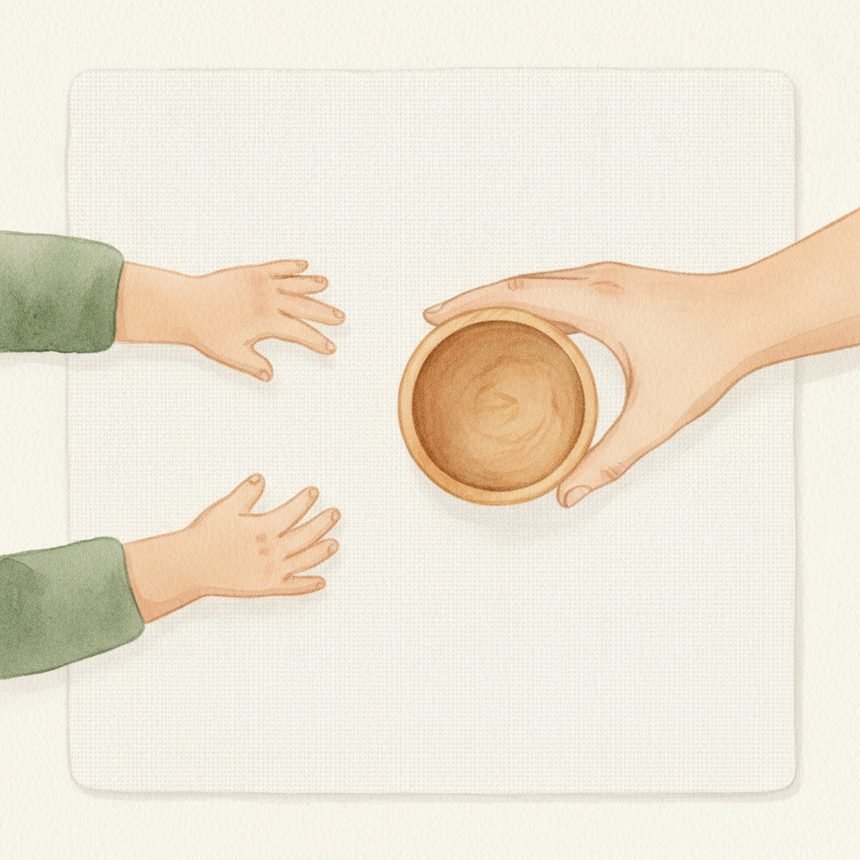
Grace and Courtesy
Greeting, thanking, asking, in a two-person role-play: courtesy gets rehearsed before it gets lived.
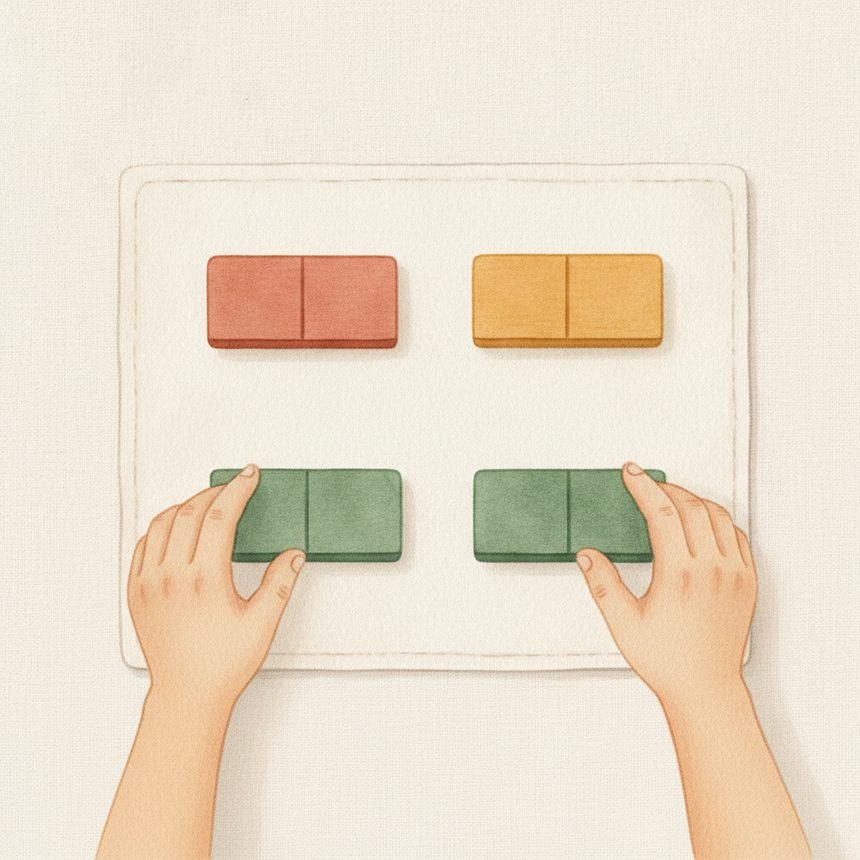
Learning Colors
Red, blue, yellow: three tablets, three words, and the three-period lesson.
For 3 to 4 years
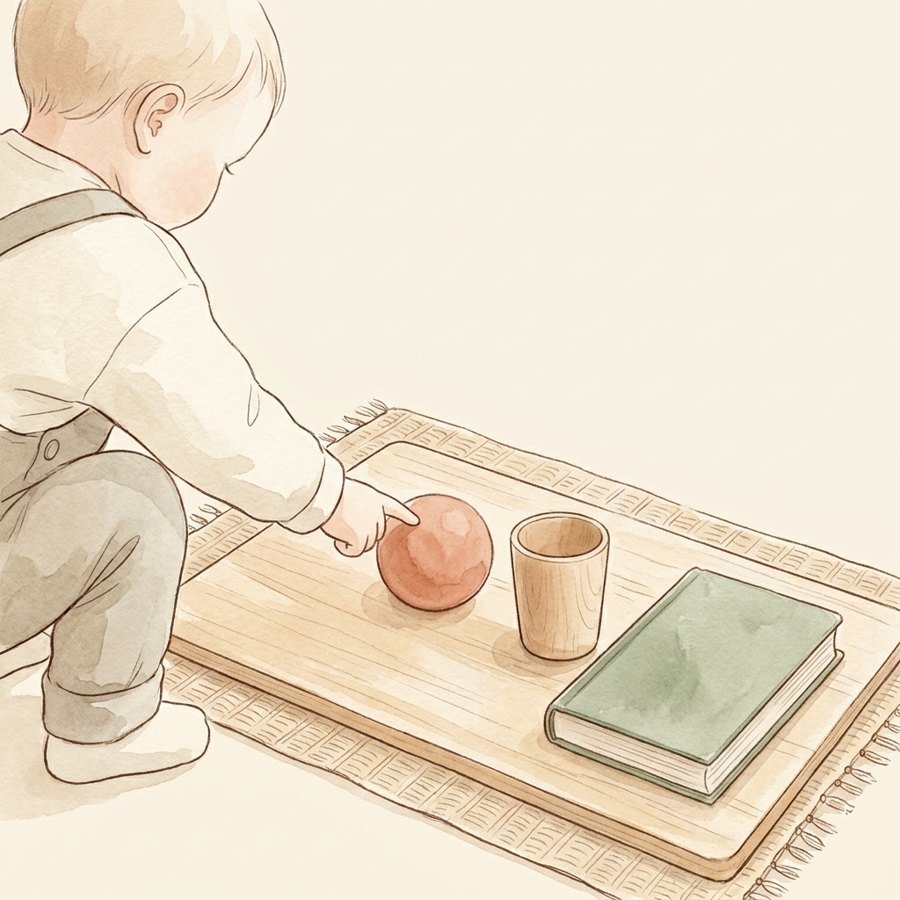
Beginning Sounds
"I see something that starts with mmm..." A listening game for spotting the first sound of a word.
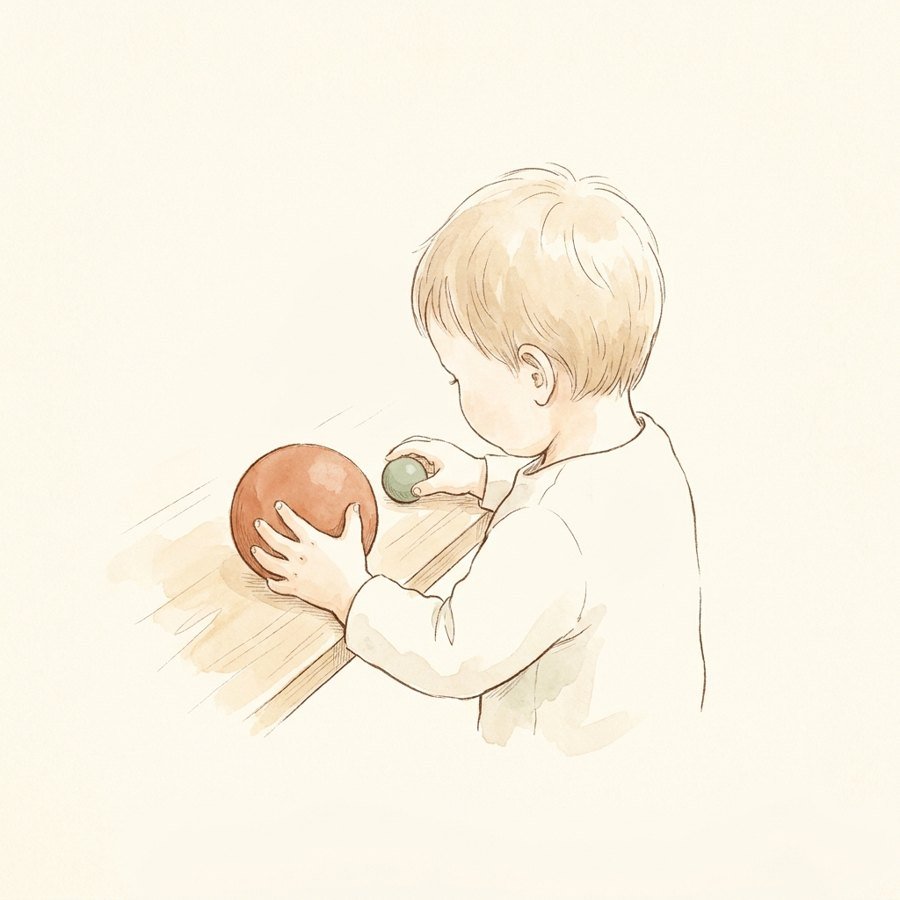
Opposites
Heavy and light, rough and soft: words the hands understand before the mouth can say them.
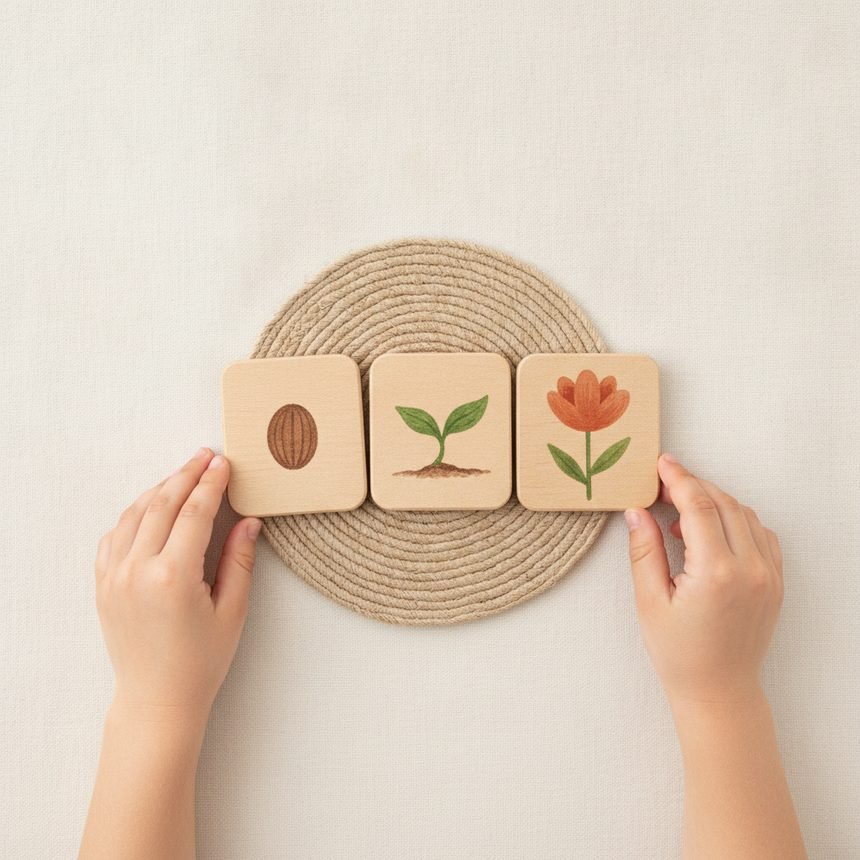
Sequencing Pictures
Three pictures from the same story to put in order, then tell: the story starts to take shape.
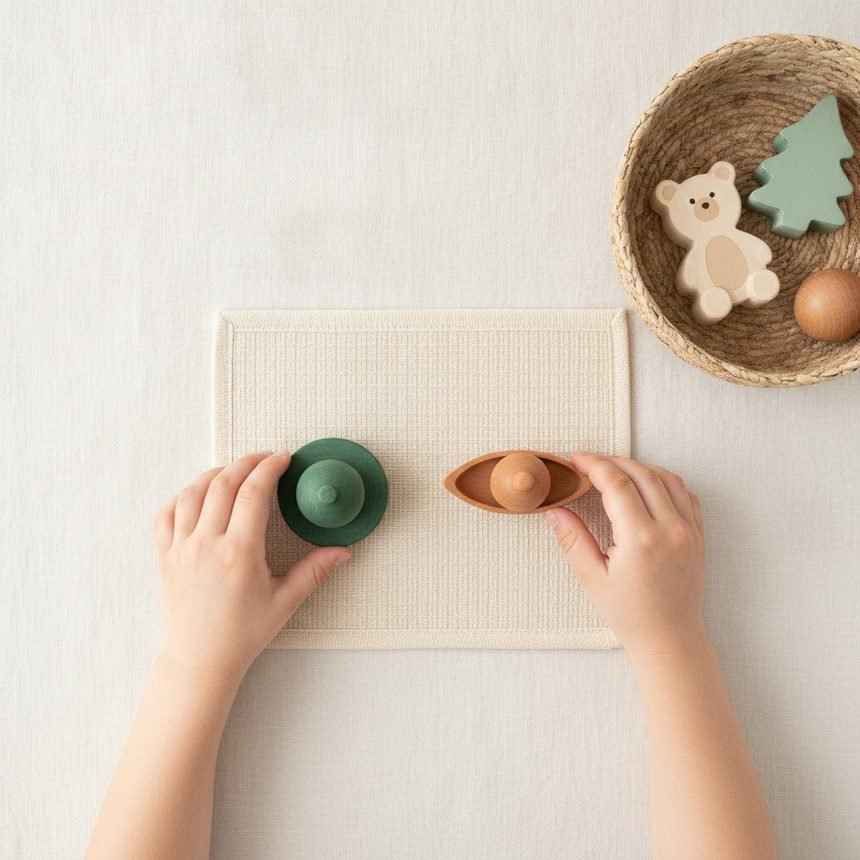
The Rhyming Game
Cat and hat sound the same at the end: the ear getting ready to read before a book is even opened.
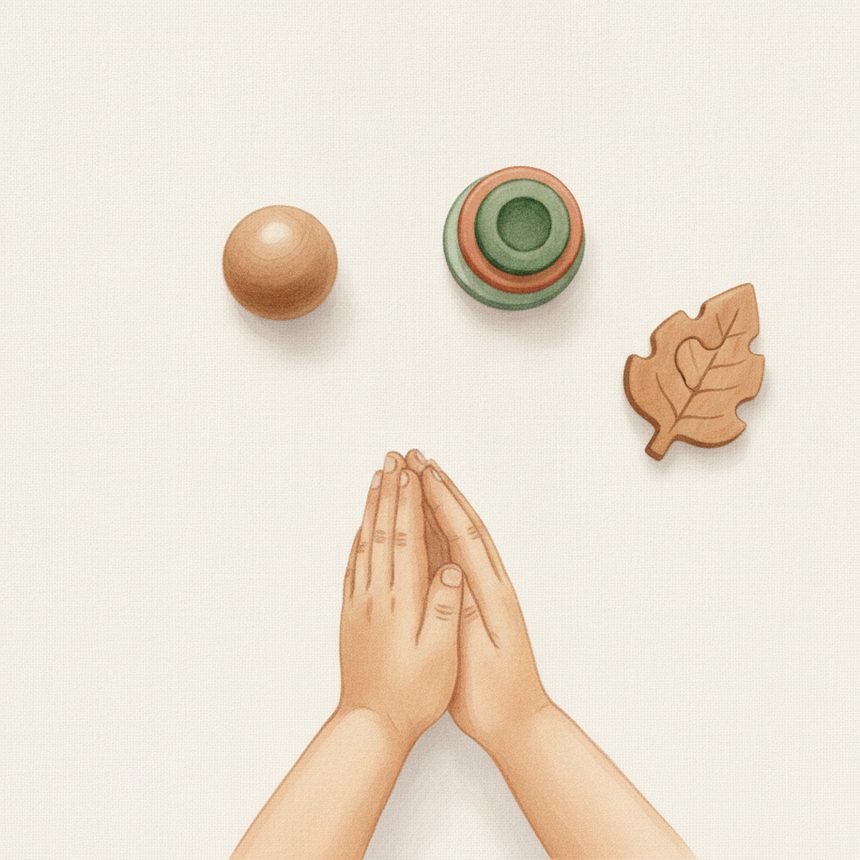
Clapping Syllables
A word, a few claps: your child hears that words are made of pieces.
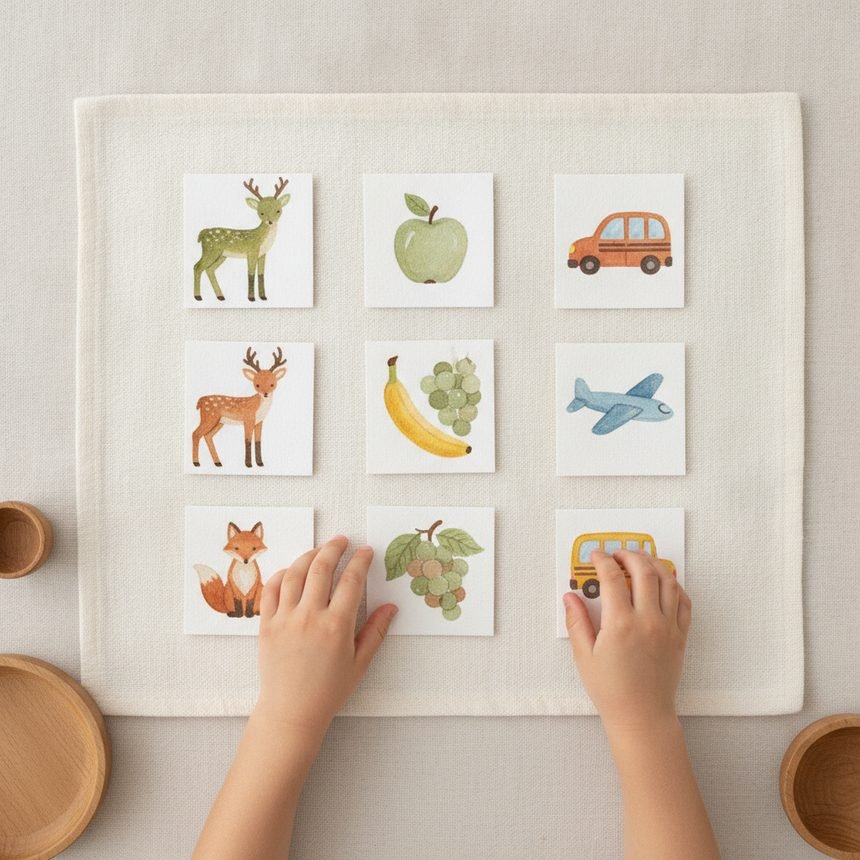
Sorting Pictures into Categories
Animals on one side, fruit on the other: vocabulary finds its own drawers.
For 4 to 6 years
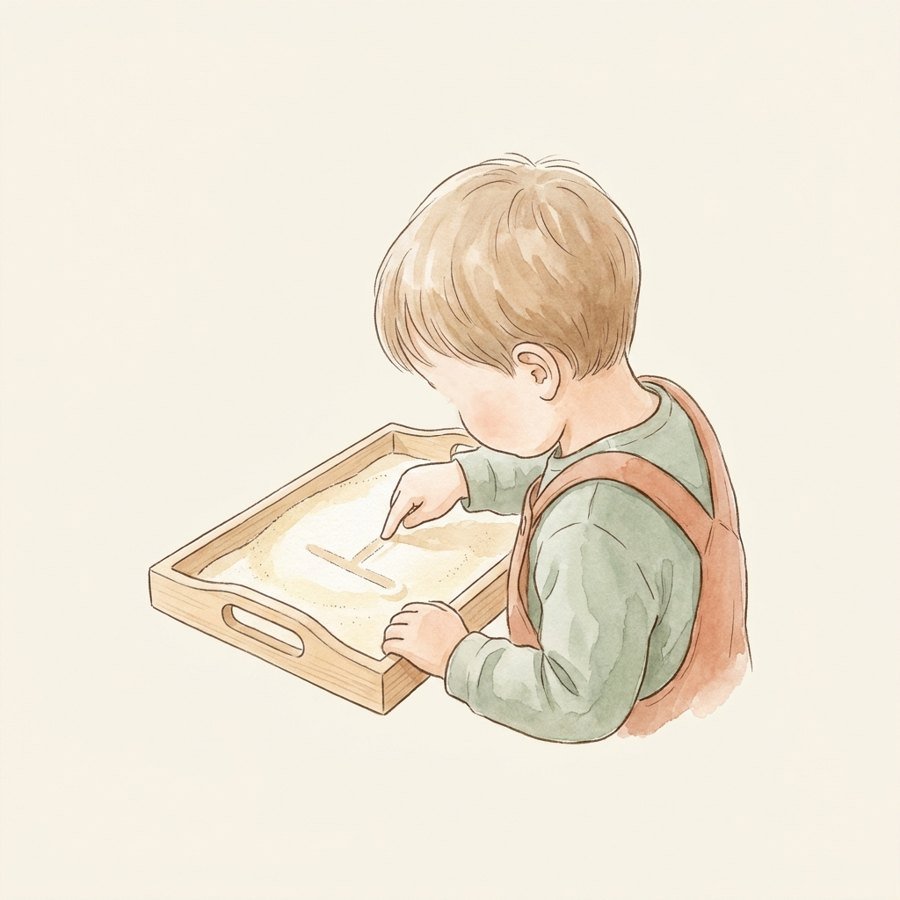
Name Writing in a Rice Tray
A tray of rice, one finger, and a name you can erase with a swipe to start again.
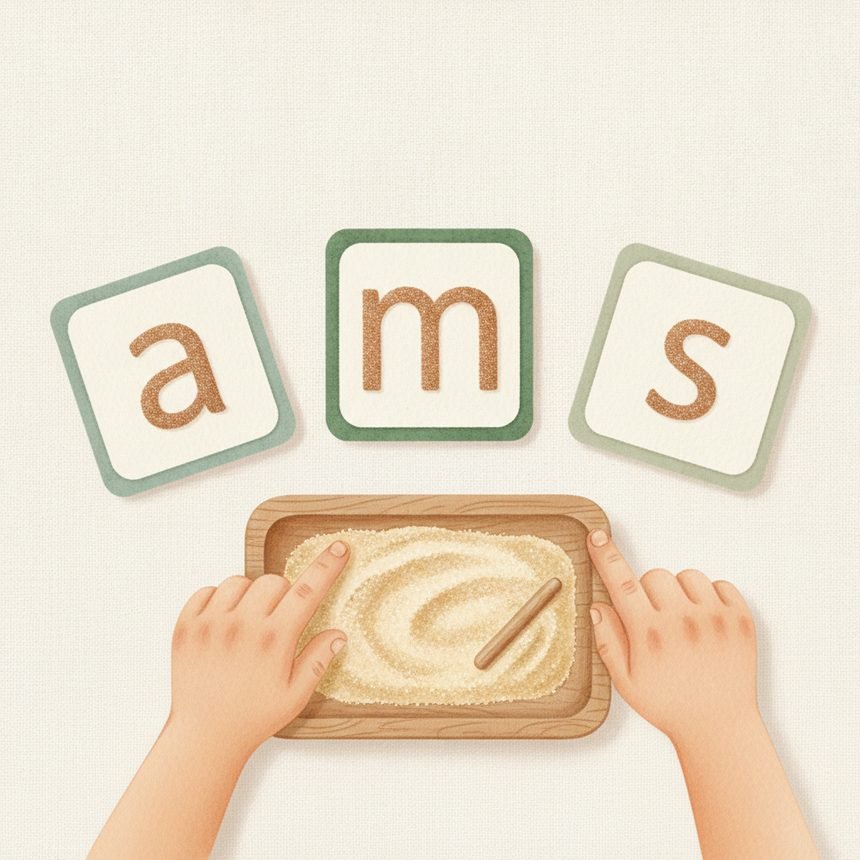
Sandpaper Letters
Letters to trace with fingertips, saying their sound: the hand learns to write before the crayon does.
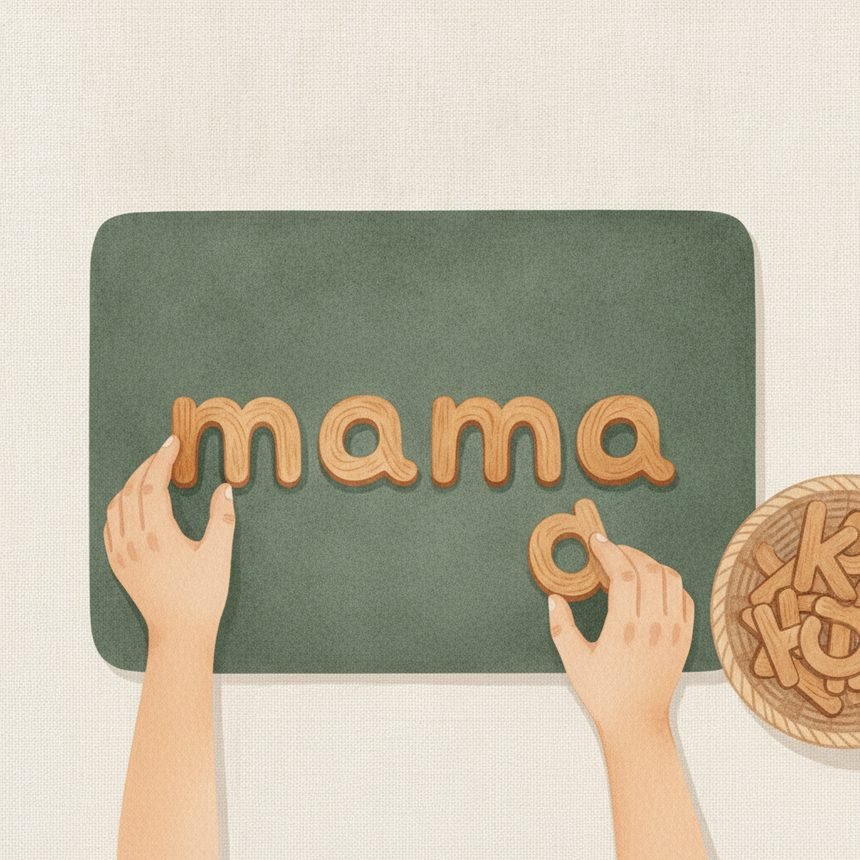
First Words with the Movable Alphabet
Spelling out "mom" with letters you place, long before a crayon is in hand: writing with the movable alphabet.
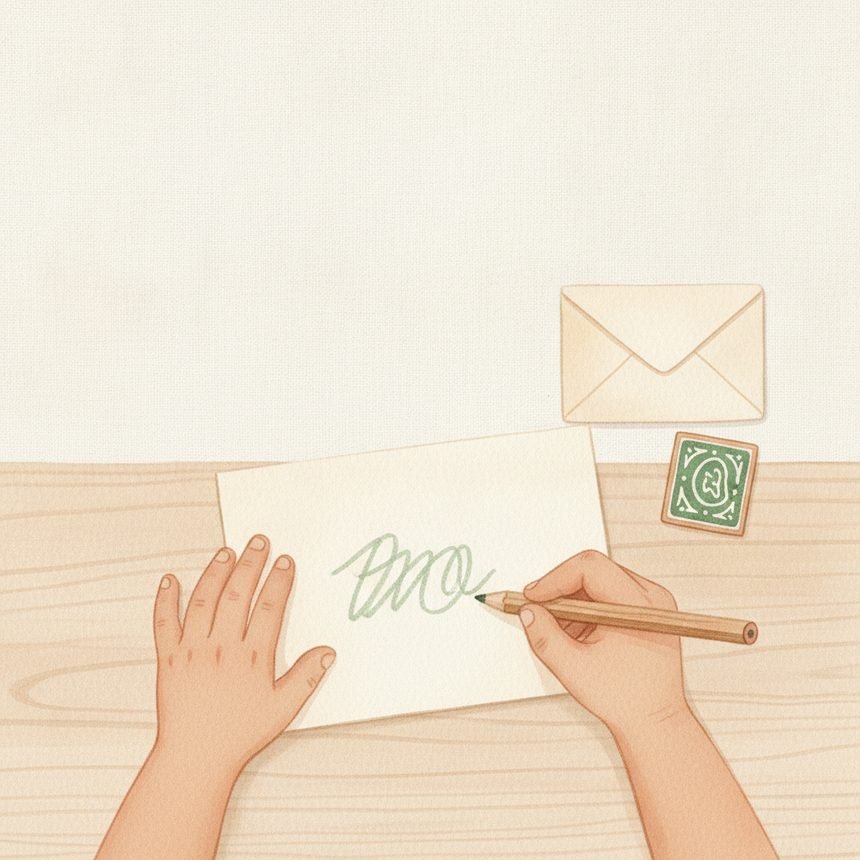
Writing a Real Letter
Writing to someone who will write back: writing finally serves a purpose.
For 6 to 8 years

The Word-Object Box
A label, an object: reading finally does something real.

Action Cards: Read, Then Do
They read "jump three times," and they jump: reading turns visibly useful.

The Noun and the Article
A big black triangle for the noun, a small blue one for the article: grammar you can touch.

The Verb in Action
Act out a few actions to discover the verbs that name them.

Writing an Instruction Sheet
They explain in writing something they know how to do, and someone else has to follow it.

Labeling Objects Around the House
The house turns into a life-size picture book, written in their own hand.
Printable materials for these activities
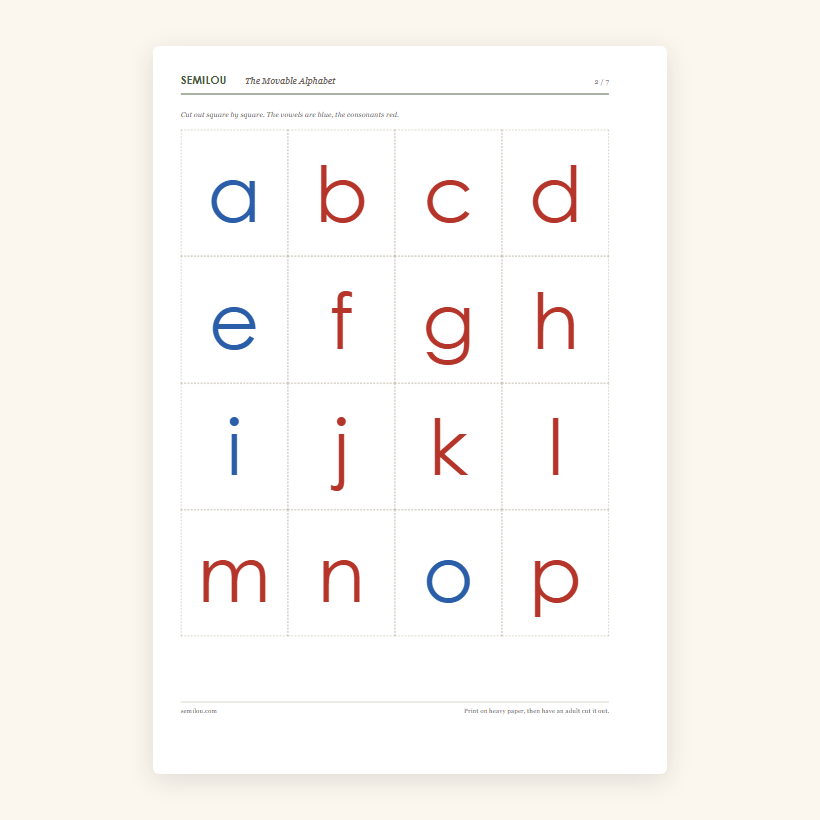
The Printable Movable Alphabet
The letters to cut out that your child moves to spell a word, long before they can write it with a pencil.
See contents and preview →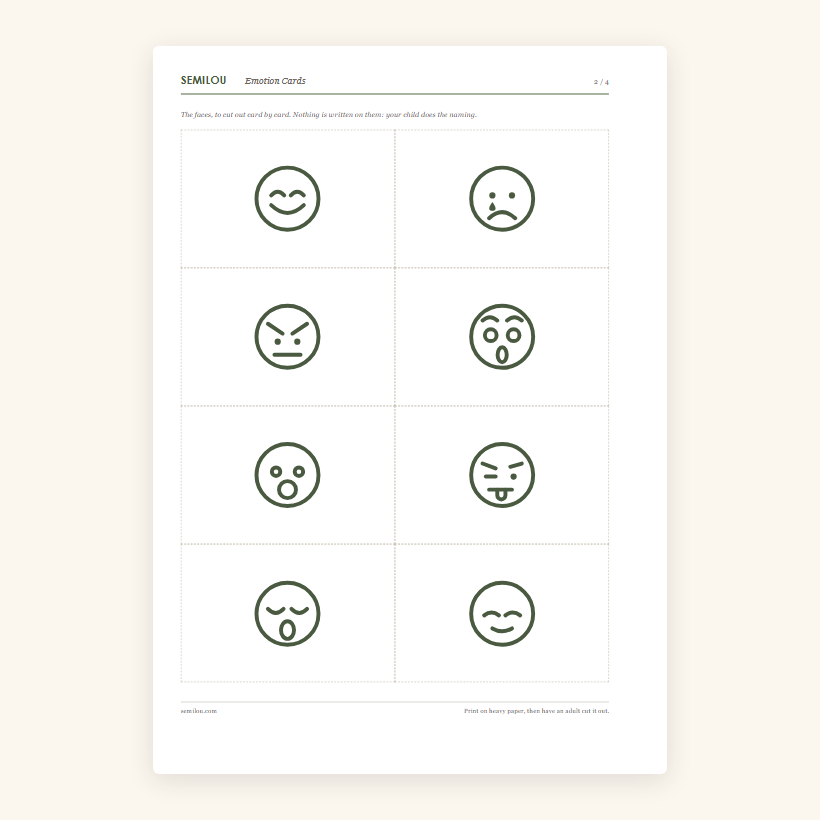
Printable Emotion Cards
Eight faces and eight words to cut out, so your child can name what they feel before they can explain it.
See contents and preview →Questions about language activities
What are Montessori language activities?
They build vocabulary, sounds, and first words with real objects, long before a pencil. On the sheets: the Real Objects Basket, Naming Pictures with the three-period lesson, Beginning Sounds (an I spy game played with sounds, not letter names), the Rhyming Game, Clapping Syllables, Sandpaper Letters, and First Words with the Movable Alphabet. Nothing is filled in on a page.
What are Montessori language activities for toddlers (1 to 3 years)?
From 12 to 18 months: narrating bath time, naming what you see through the window, the Family Faces Album, peekaboo with a scarf. From 18 months to 2 years: the Real Objects Basket with one exact word per object, Real Picture Books, Action Songs, Naming Body Parts, Animal Sounds. From 2 to 3 years: Naming Pictures, Object and Picture Matching, Learning Colors. Speak slowly, clearly, and without quizzing.
How does Montessori teach reading?
Through the ear first, then the hand, and the book last. From 3 to 4 years your child plays Beginning Sounds, the Rhyming Game, and Clapping Syllables. From 4 to 6 years, Sandpaper Letters have them trace each letter while saying its sound, and the Movable Alphabet lets them spell out “mom” before they can hold a crayon: writing comes before reading. At 6 to 8, Action Cards: Read, Then Do show what reading is for.
Are there printable Montessori language activities in PDF?
Yes, but not worksheets: your child names, listens, and builds words, and what you print is the sheet you follow, with the materials, the words to present, and the variations by age. The 29 pages in this area show the materials, precautions, and first two steps of each activity; the complete sheets for an age group come together in that age group's set, ready to print after purchase.