
Action Songs
The same songs, the same motions, every day: music that plants the words.
Action Songs is a Montessori activity for a child aged 18 to 24 months. Area: Language. Time: 5-10 min.
What the activity builds
Feed language through rhythm, rhyme, and repetition: action songs break words into sung syllables, and the motions give meaning a body. It's the ear getting ready, long before the letters.
The materials
- Two or three action songs that YOU enjoy: "Itsy Bitsy Spider," "Wheels on the Bus," "Where Is Thumbkin"
- The same ones for weeks on end: repetition is the whole point
- No screen and no speaker needed: your voice and your hands are enough
How to do it, step by step
- Sit facing them, at their level, and start the song with the motions, without prompting them.
- Sing slowly, articulating clearly, the motions well defined.
- Do it again: by the second time, their hands are already tracing the motions.
- Leave gaps: pause right before the last word of a line, and wait. One day, the word will come from them.
- Two or three songs, no more, and stop while it's still fun.
The parent's role
Show once, then step back. Your real voice, even off-key, beats any recording, it adapts to them, slows down when they drift, waits when they want to do the motion. The gap before the last word isn't a test: if the word doesn't come, sing it yourself with a smile, it will come another time.
Safety
No risk at all. The only pitfall would be turning it into a performance to recite for others: an action song is a shared game, not a show.
You remain the sole judge of what is right for your child. These activities are offered for educational and recreational purposes: they do not replace medical advice or the guidance of an early childhood professional.
Ways to adapt the activity
- Easier: one very short song, with big, broad motions.
- Harder: sing softer and softer, down to a whisper, motions only by the end.
- Extension: around age 3, clap out the syllables of the song.
Up next
More activities for a 18 to 24 months child.
Spoon Transfer
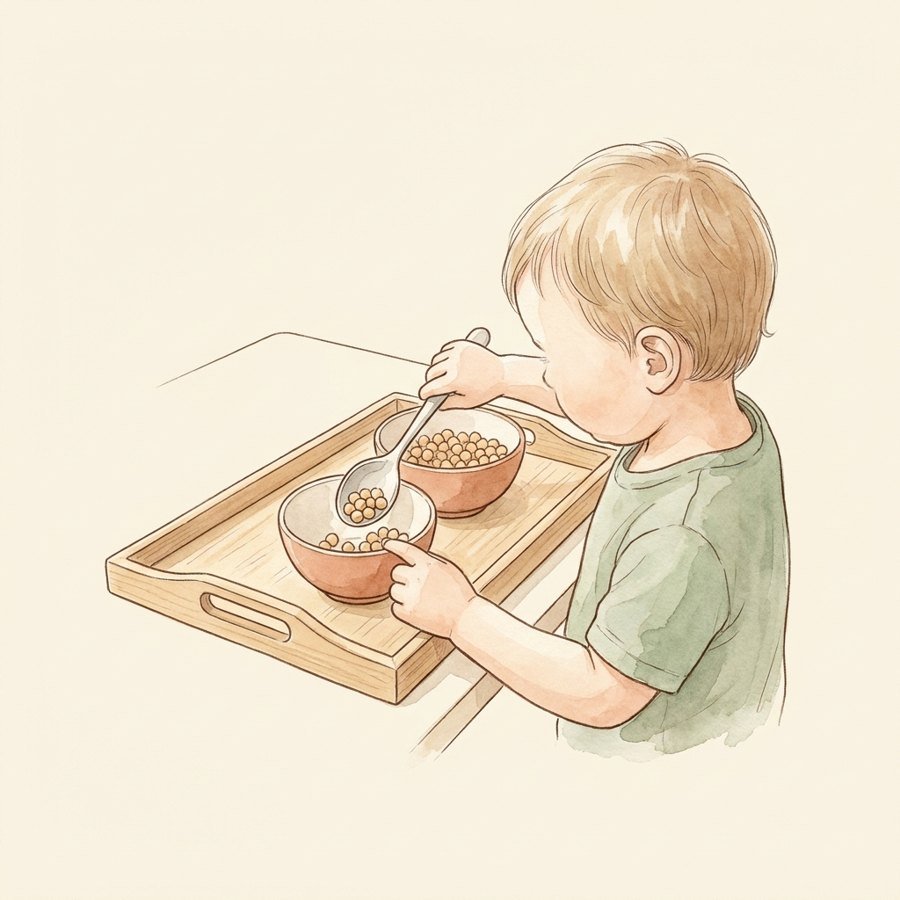
Two bowls, a spoon, and dried chickpeas: the first big independence project.
Clothespins on a Basket
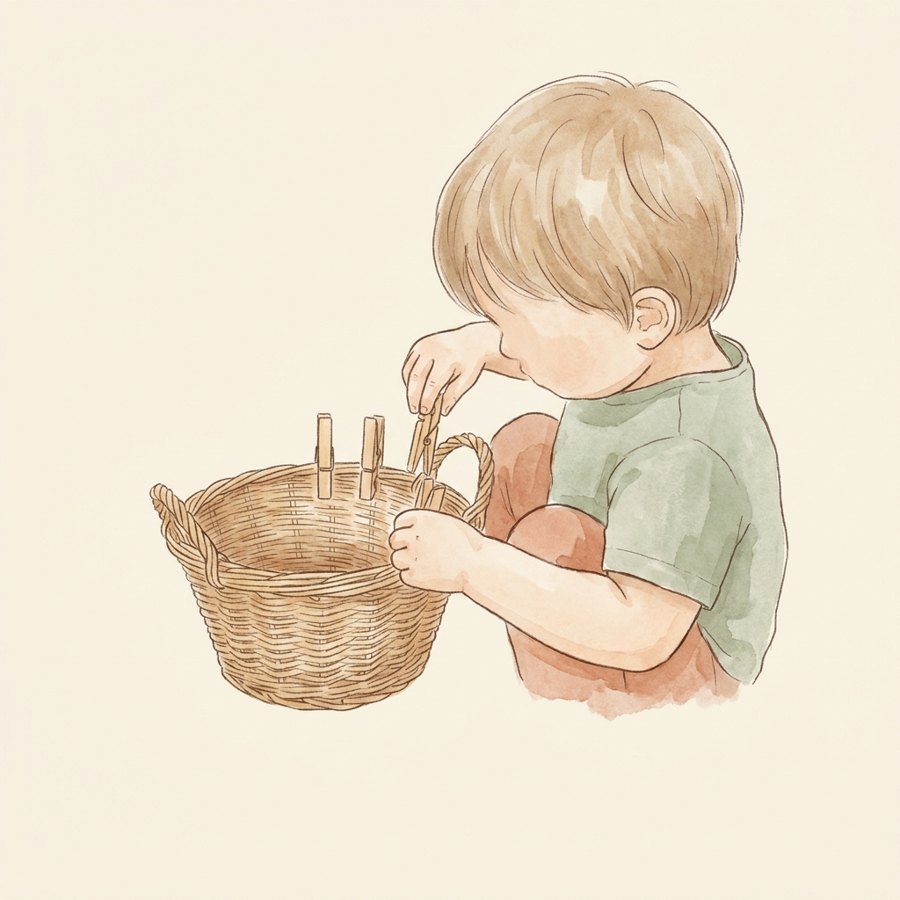
Pinch, clip, unclip: three fingers building the grip they will use to hold a pencil.
The Mystery Bag
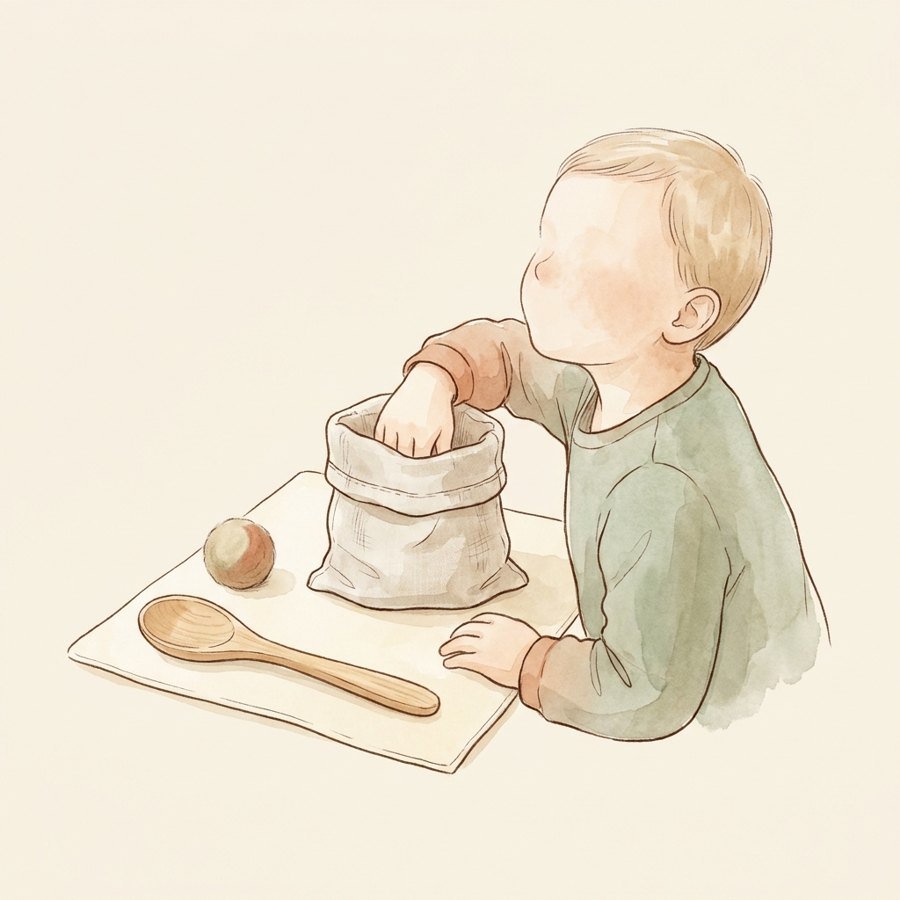
Recognizing an object by touch alone, without seeing it. A small magic trick for the hands.
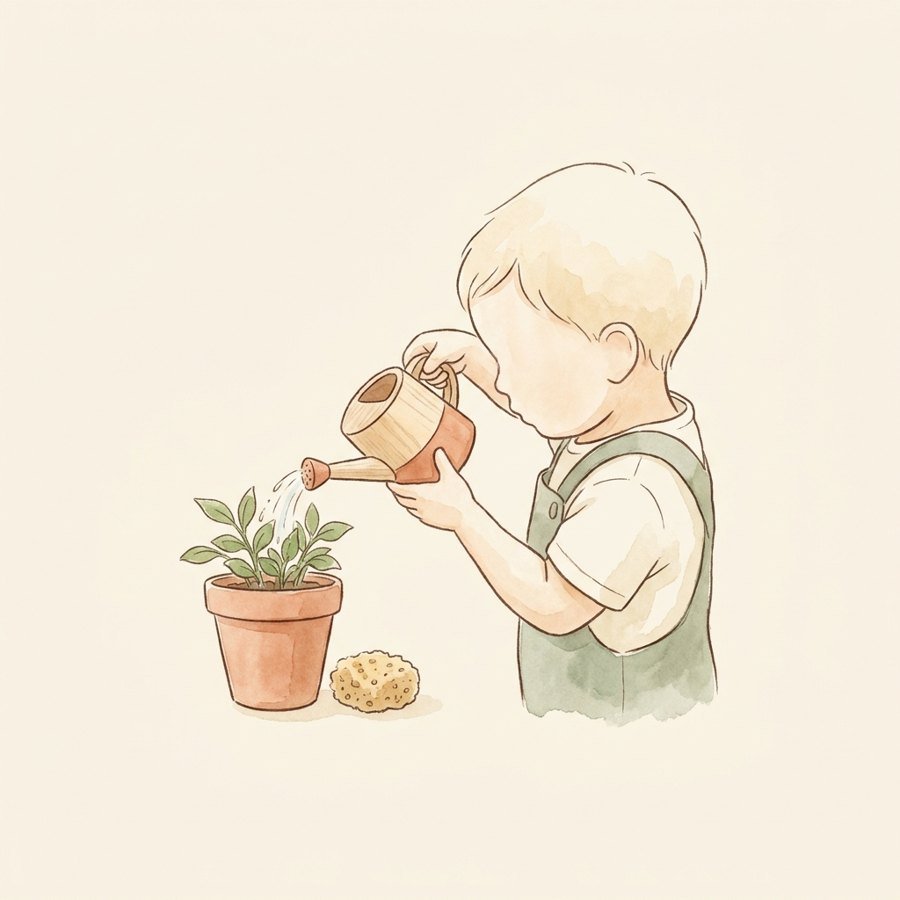
Watering a Plant
A real responsibility, well within reach of an 18-month-old.
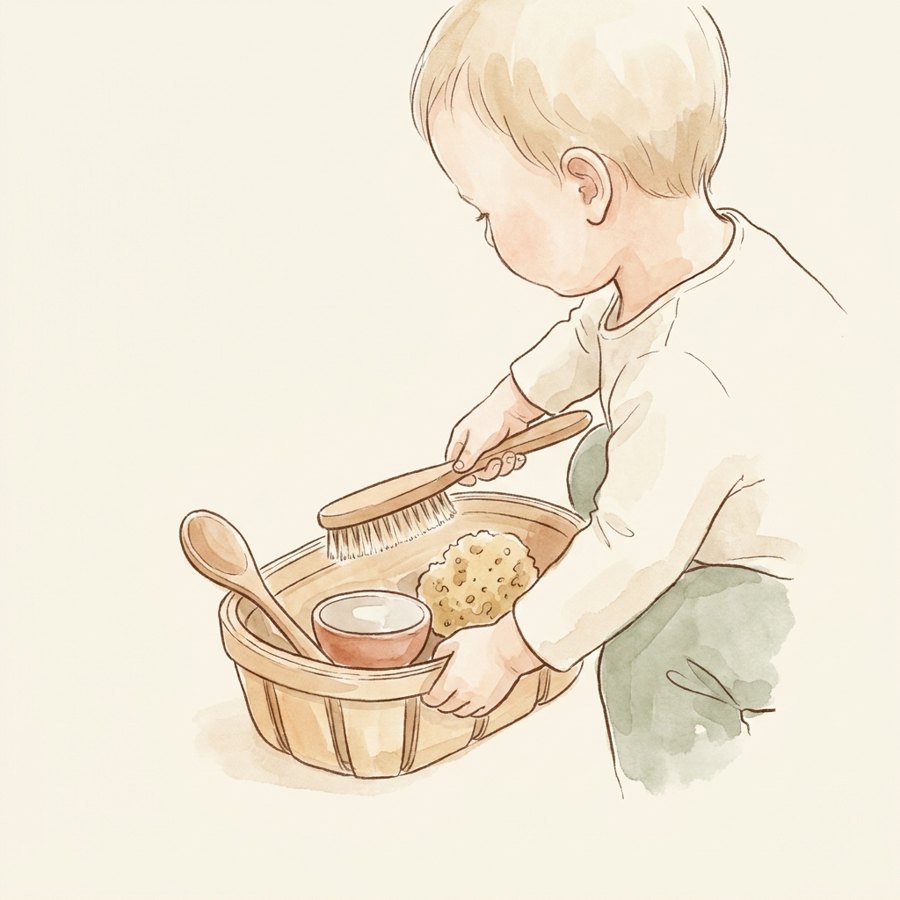
The Real Objects Basket
Five household objects in a basket, and one exact word set on each.
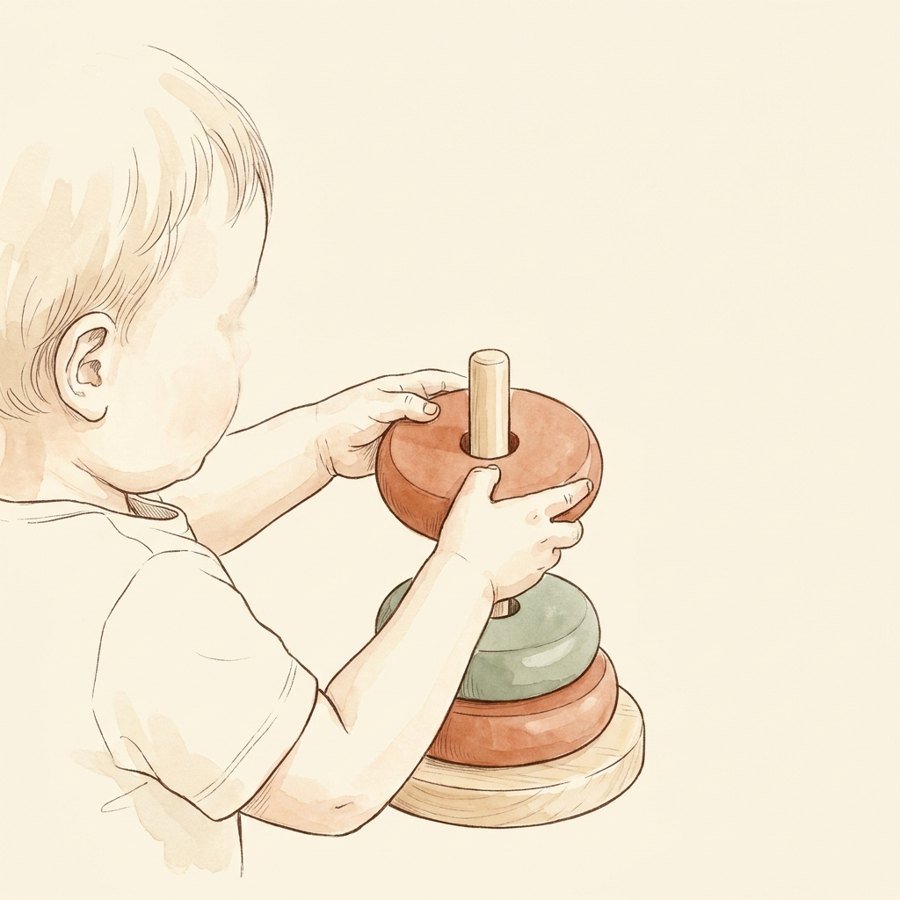
Ring Stacking
Aim, slide, let go: the first precision movement, with a satisfying sound at the end.
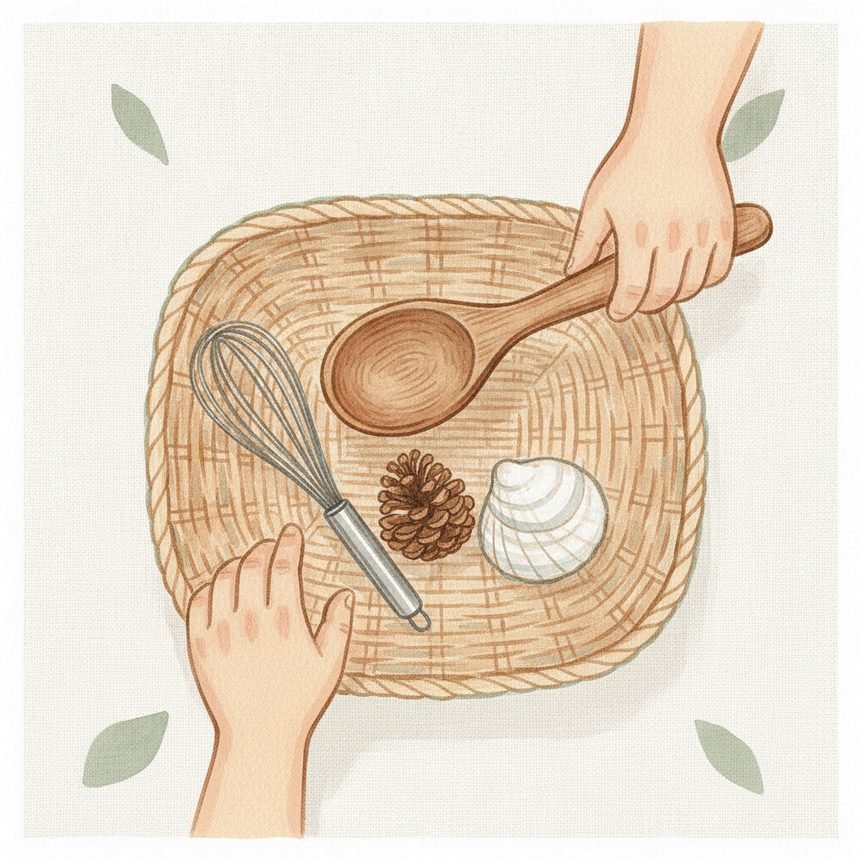
The Treasure Basket
A basket of real objects to freely explore with hands and mouth: the first sensory discovery.
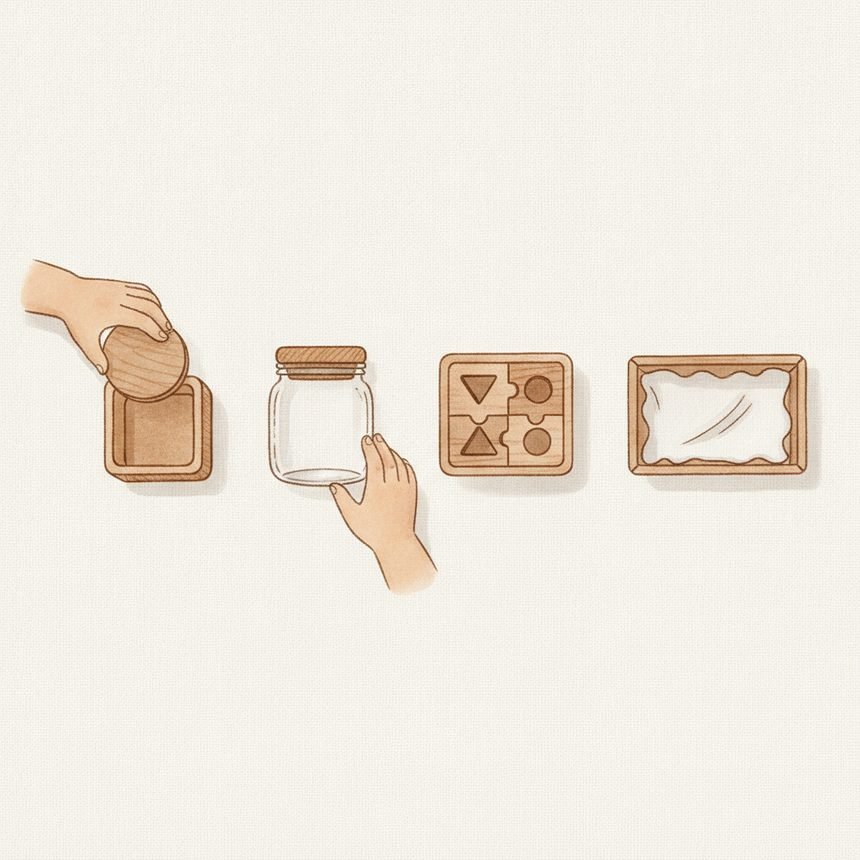
Opening and Closing Containers
Containers of every kind, to open and close again: each lid asks for a different move.
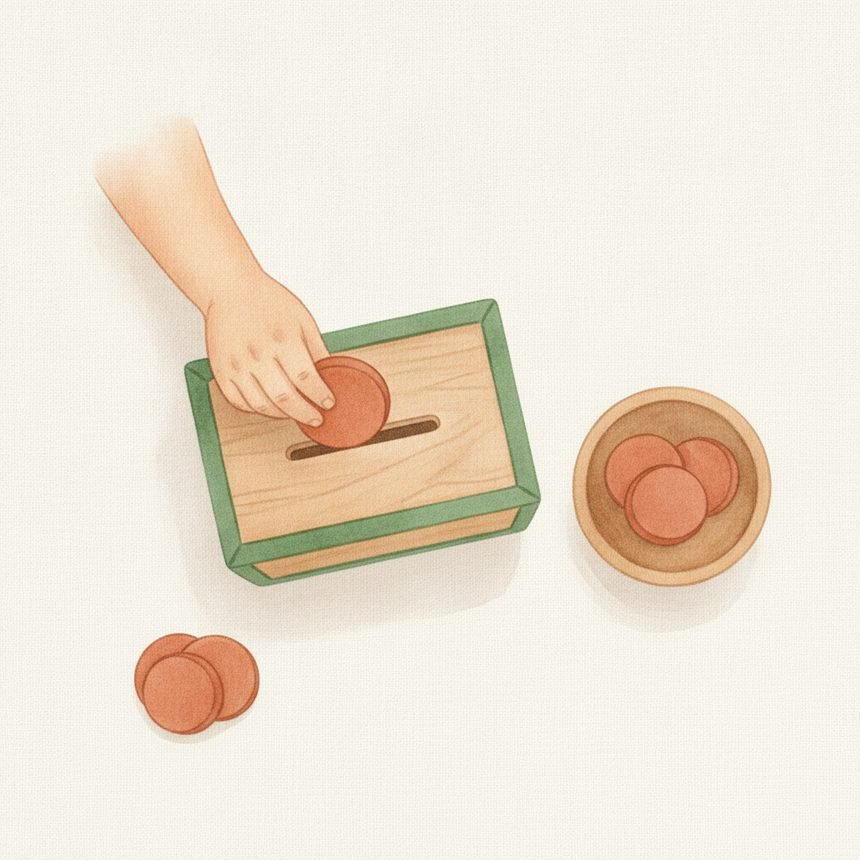
The Coin Box
Sliding big coins through a slot, then opening the box back up to find them: a classic that never fails to captivate.
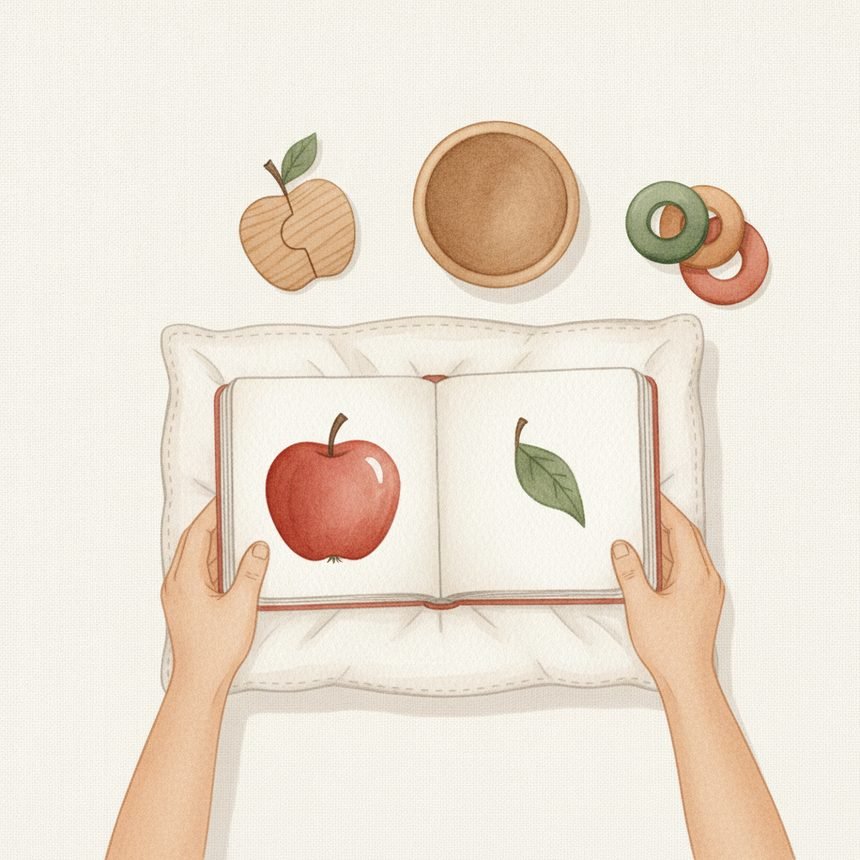
Real Picture Books
A book of real photographs, an adult fully present: words arrive through the lap.
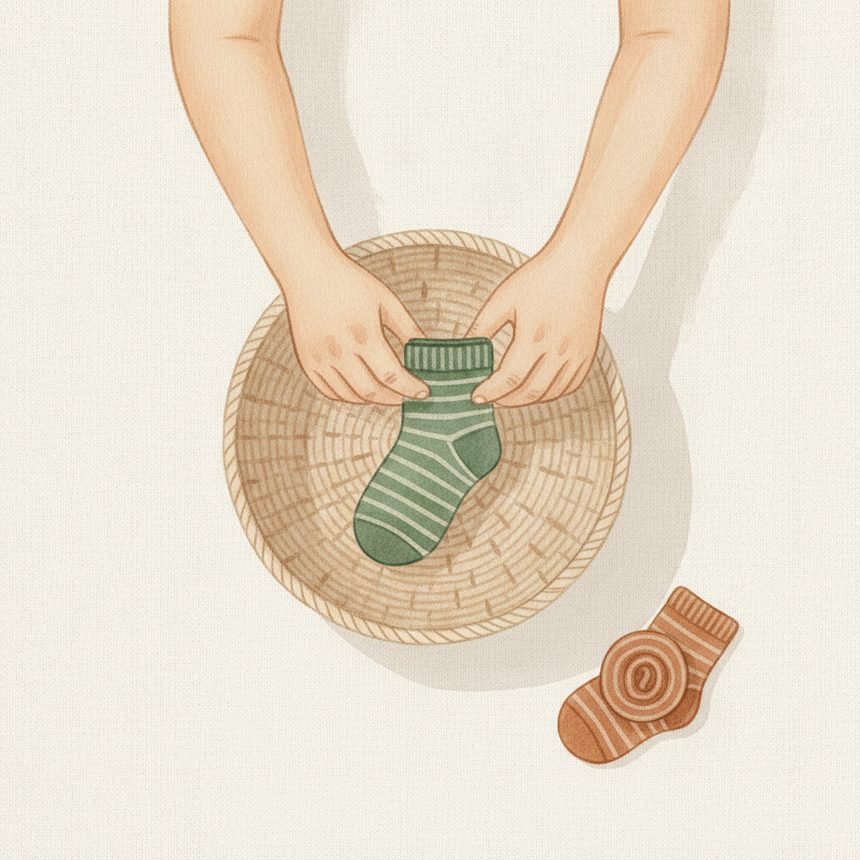
The Laundry Basket
Socks in the basket, every evening: the first real responsibility, at kid height.
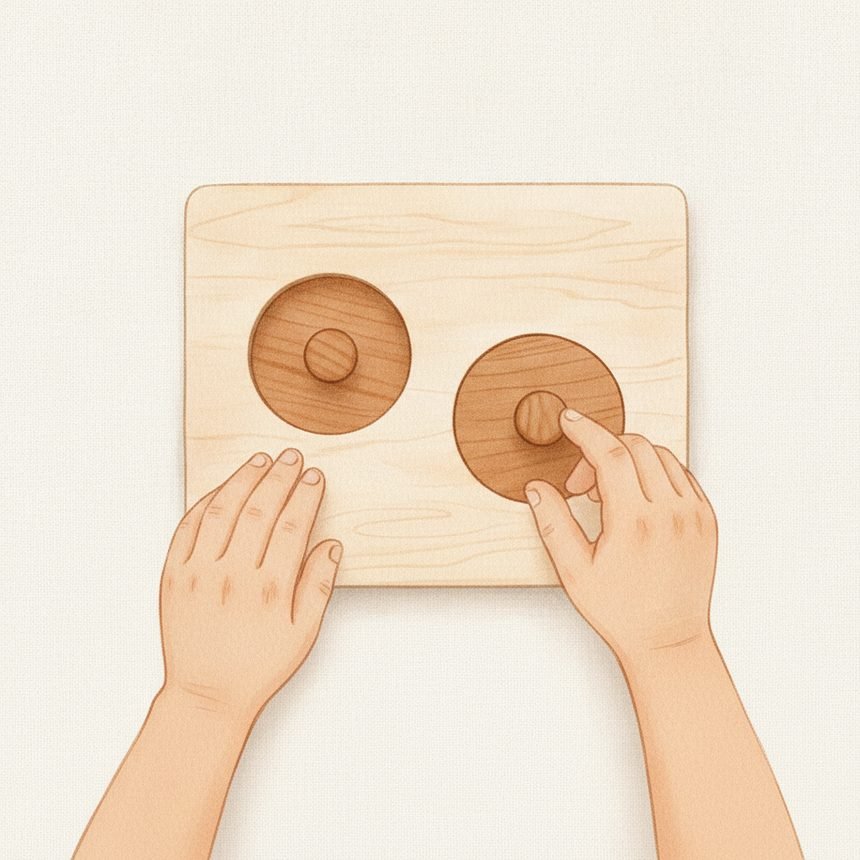
The First Shape Puzzle
A one-piece round puzzle with a big fat knob: the circle fits, or it doesn't.
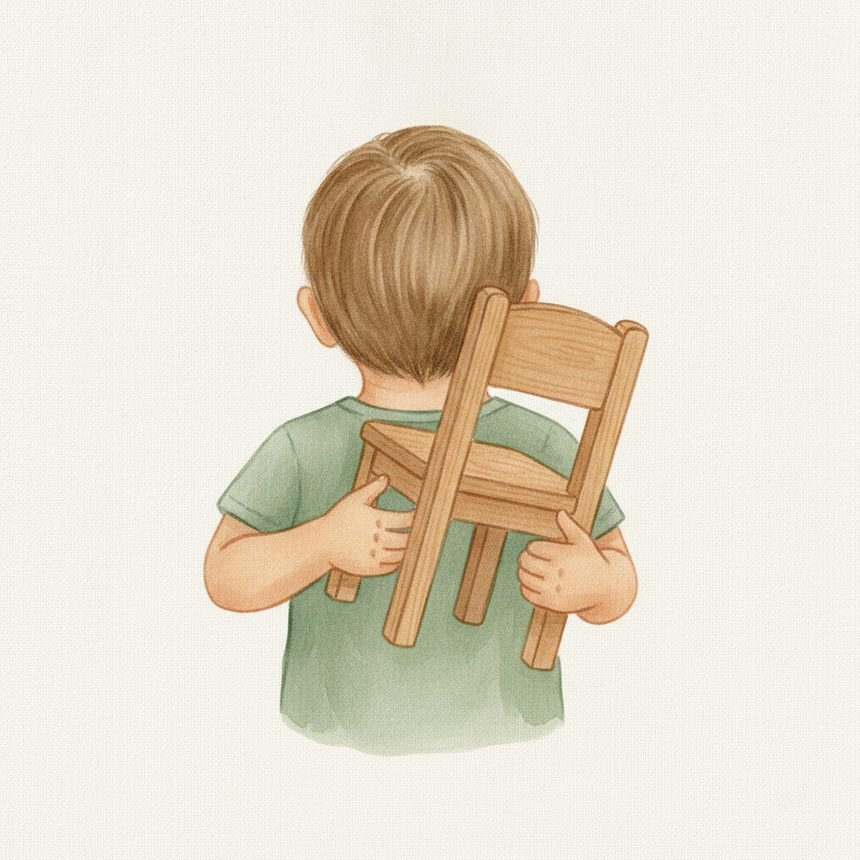
Carrying a Chair
Carrying a small chair with both hands and setting it down without a sound: the whole body learns control.
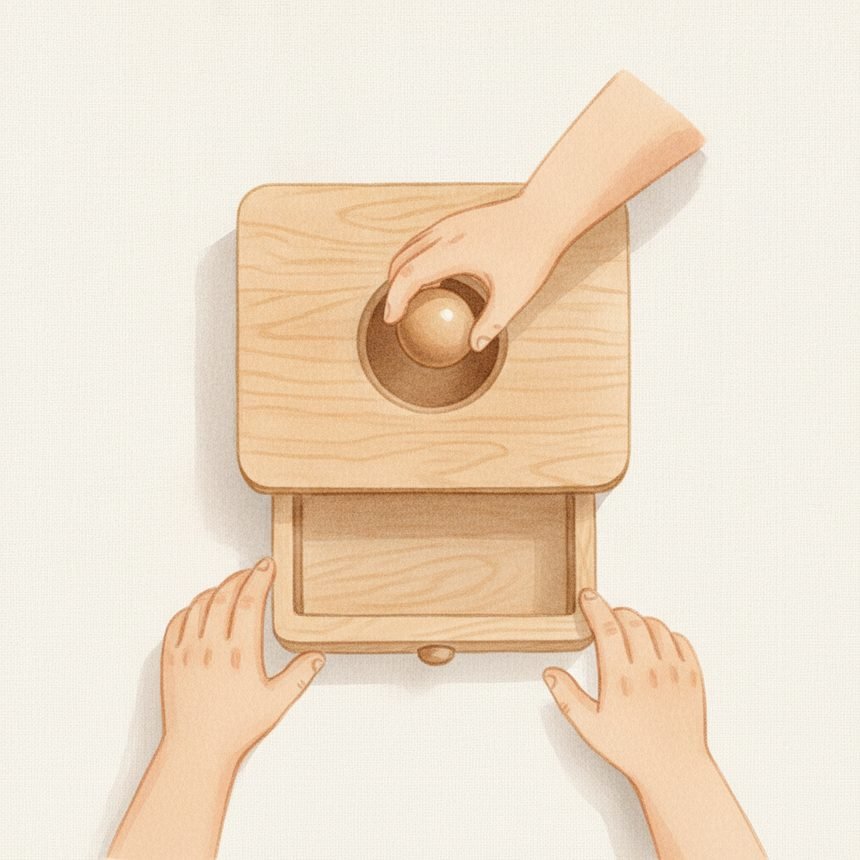
The Object Permanence Box
The ball disappears into the hole, then reappears in the drawer: the great mystery of objects that come back.
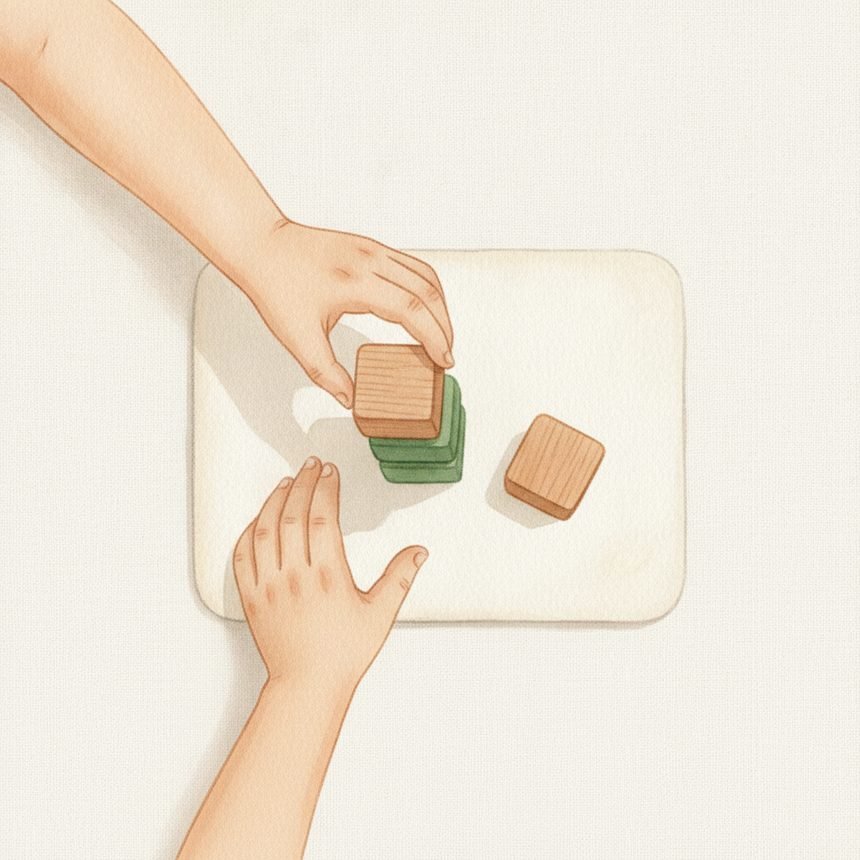
Stacking Blocks
Setting one block on another, letting go without knocking it over: the hand learns gentleness.
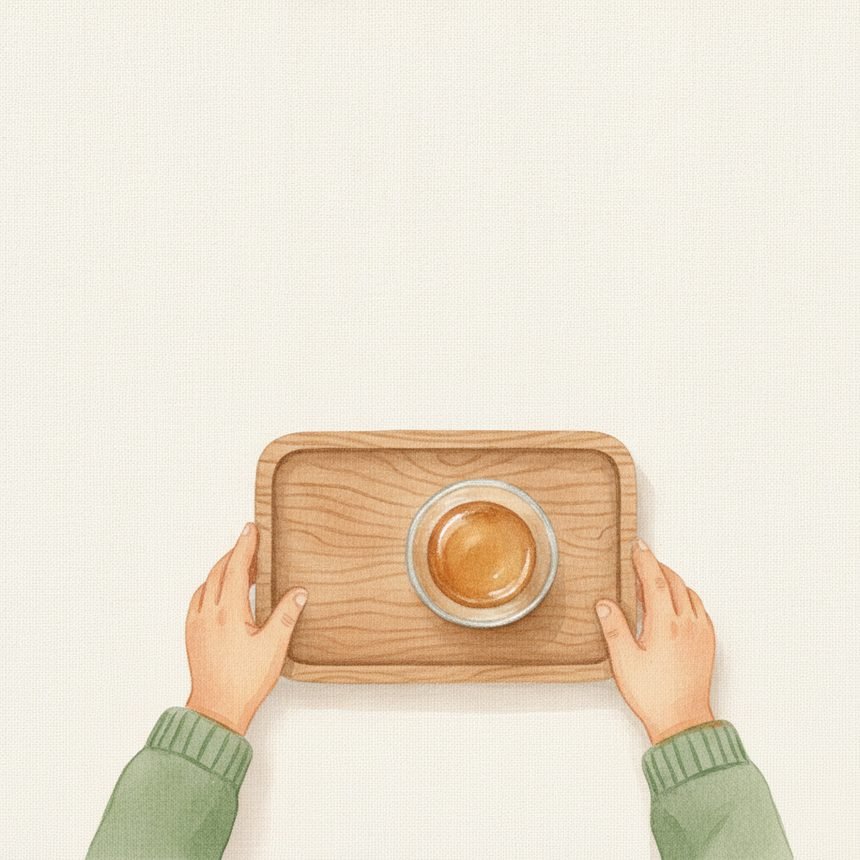
Carrying a Tray
A tray in both hands, a short trip, and a cup that must not spill: the signature movement of independence.
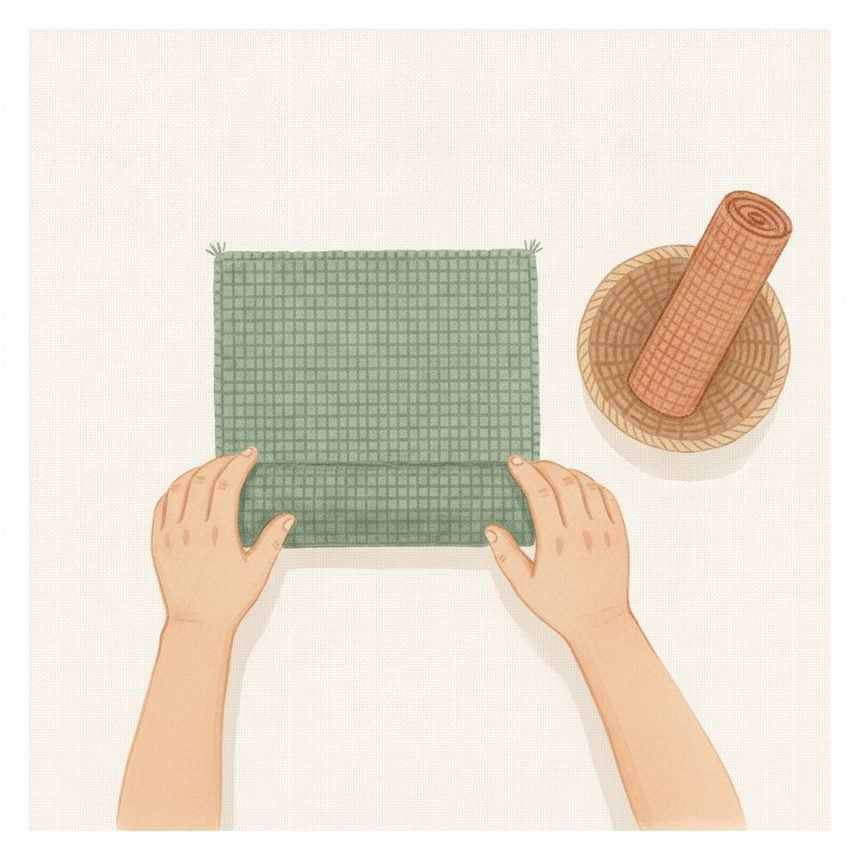
Rolling Out a Work Mat
Rolling out a small mat, working on it, then rolling it back up and putting it away: the frame for everything else.
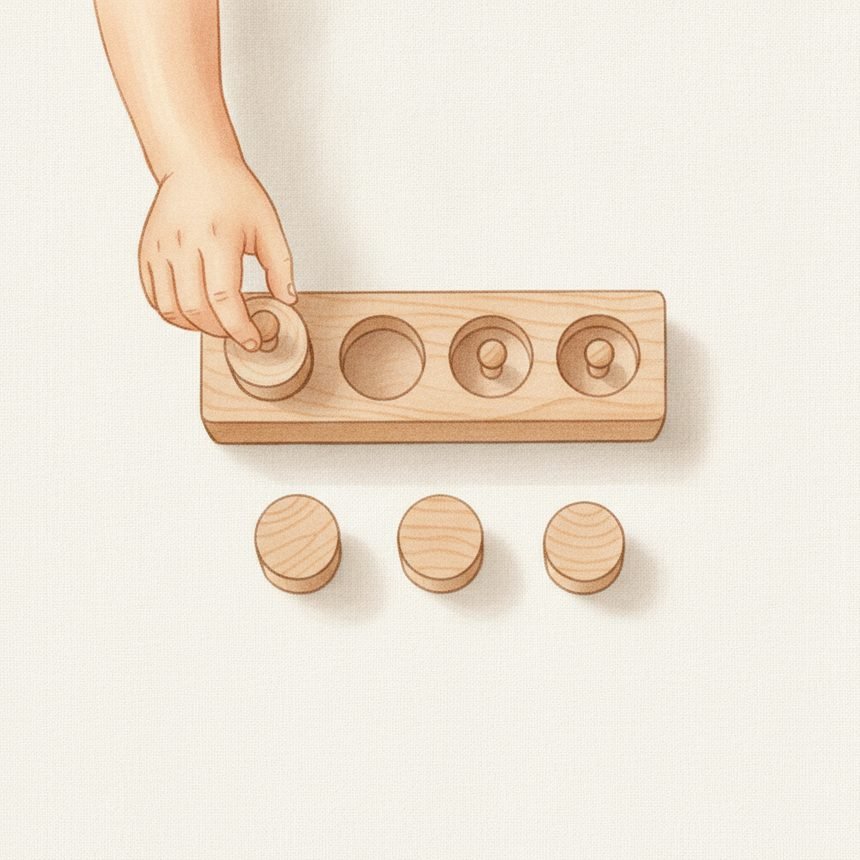
Knobbed Cylinders
Cylinders of different sizes, only one hole that fits each one: the wood doesn't lie.
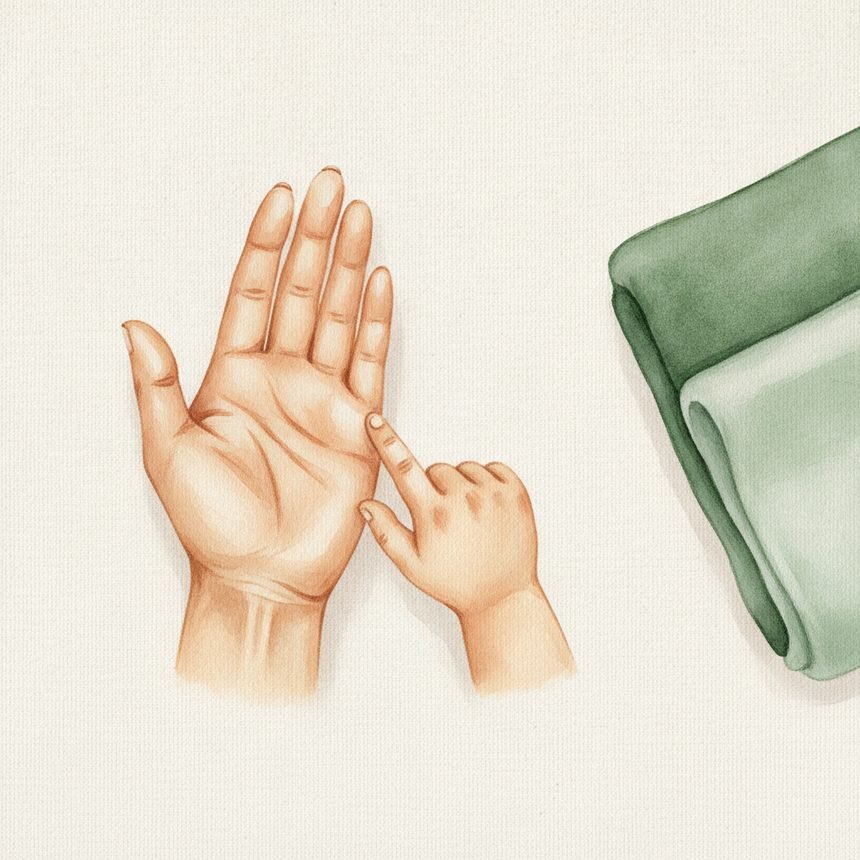
Naming Body Parts
Where's your nose, where's your elbow: the words for the body arrive through the pointing finger.
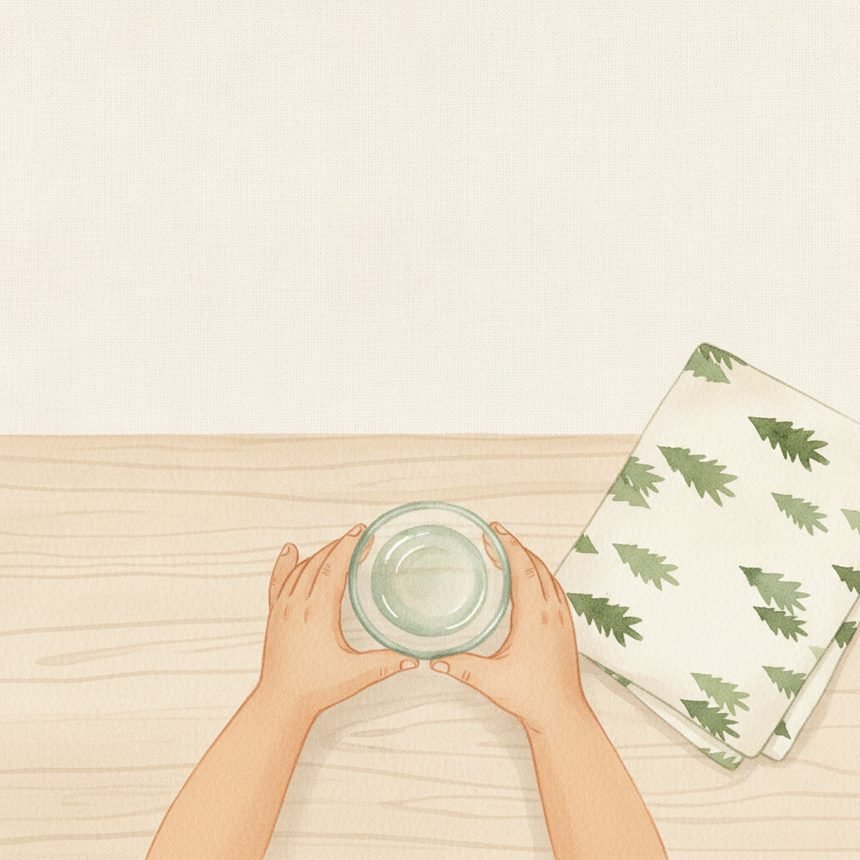
Drinking From an Open Cup
A real little glass, filled just at the bottom, and the pride of drinking like the big kids.
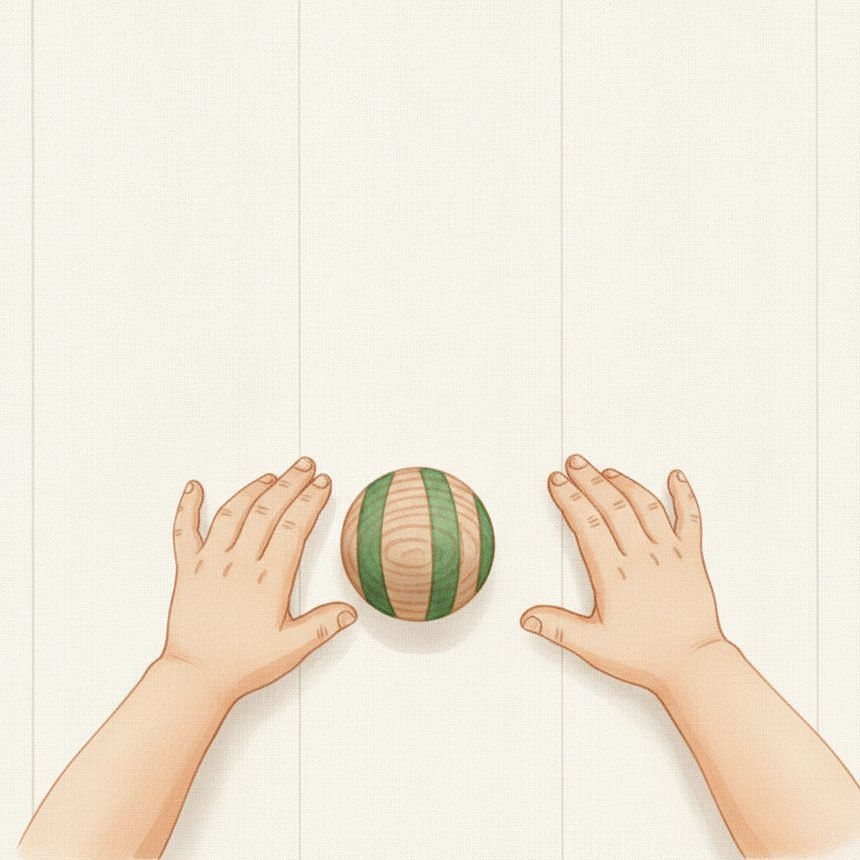
Rolling a Ball
A ball that leaves, rolls, and comes back: the first back-and-forth with another person, no words needed.
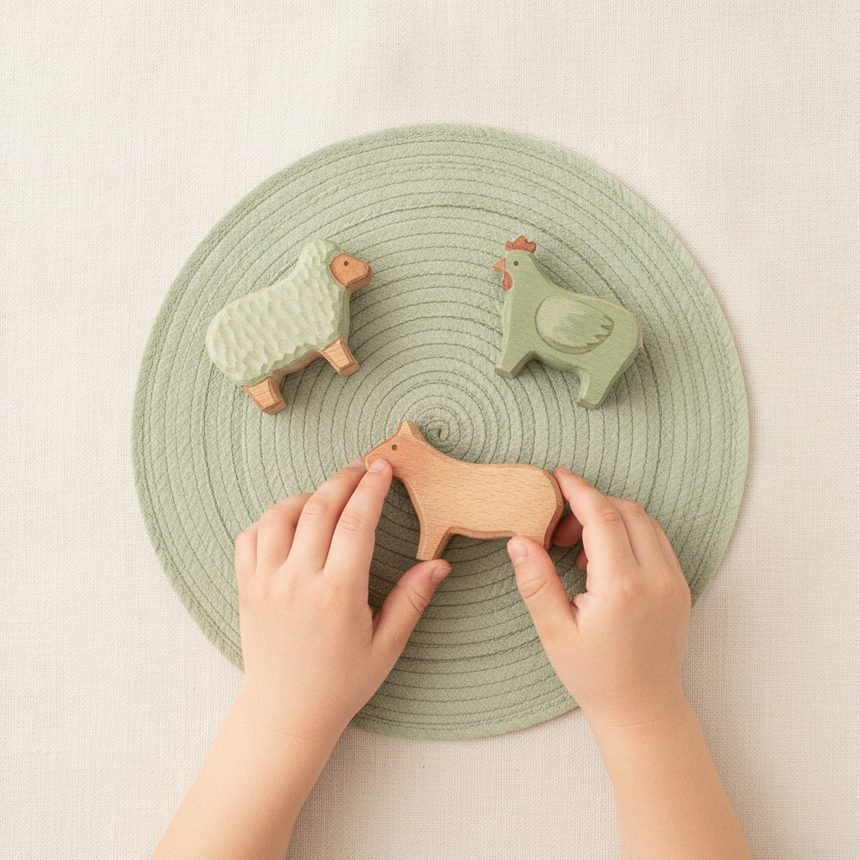
Animal Sounds
The cow says moo, the cat says meow: first words often start right here.
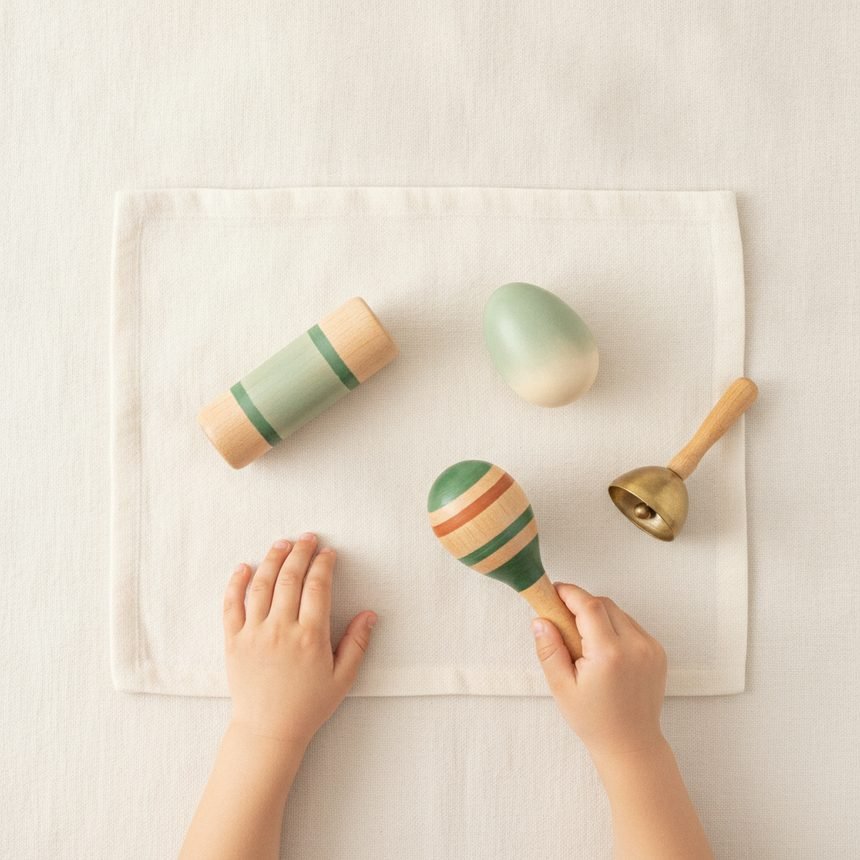
Shaking Instruments
A bell, maracas, a small tambourine: discovering that a motion makes a sound.
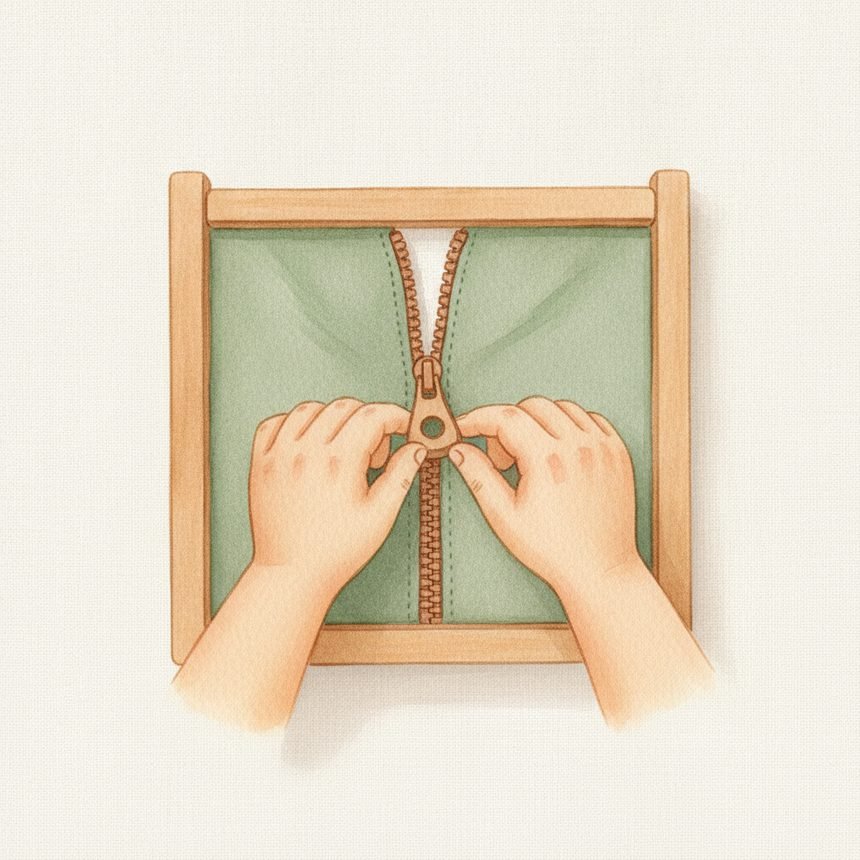
Zipper Practice
Pinching the zipper pull and tugging in one clean motion: a movement that opens coats and pencil cases.