
Counting with Counters
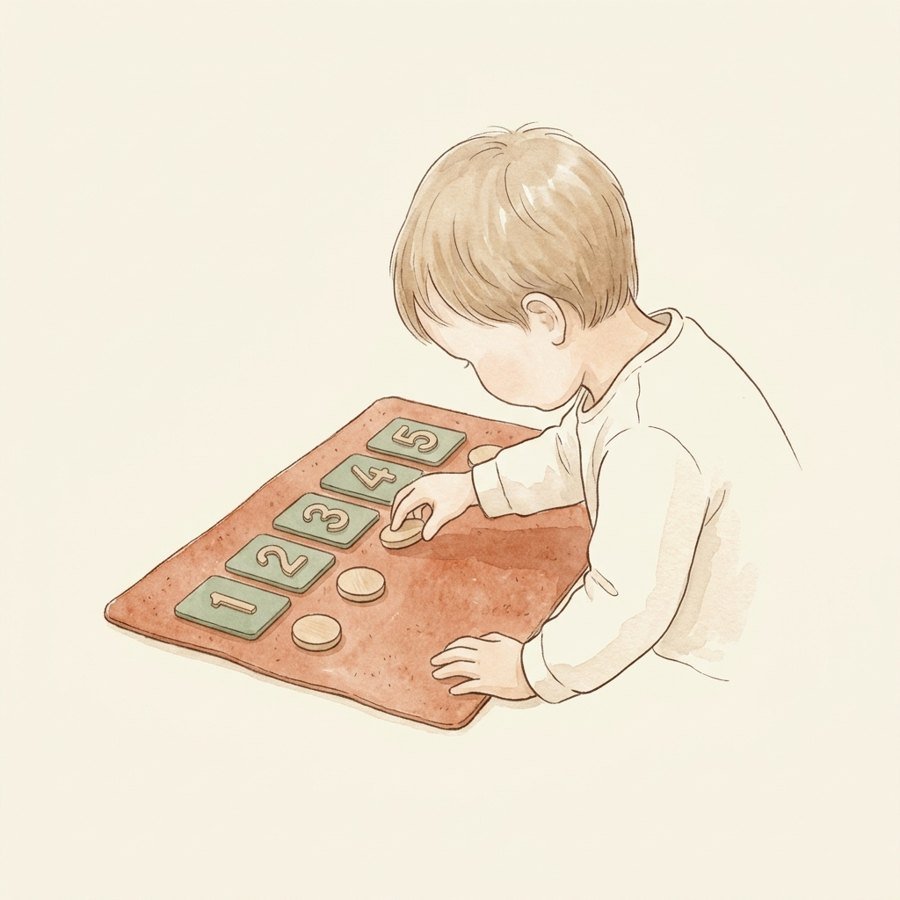
Place a counter, say a number. A number becomes something you can touch.
Counting with Counters: a Montessori activity for a child aged 4 to 6 years. Area: Early Math. Time: 20 min.
Part of the 4 to 6 years set: booklet and printable materials included, as a one-time purchase.
What the activity builds
Match each spoken number to a single object moved, and discover even and odd quantities by seeing them.
The materials
- Fifty-five identical counters (buttons, game chips, chestnuts), enough to build every set from 1 to 10
- Cards or slips of paper showing the numerals 1 through 10
- A mat or a tablecloth
How to do it, step by step
- Line up the cards from 1 to 10 on the mat.
- Under card 1, place one counter, saying "one."
- Step 3, in the printable sheet
- Step 4, in the printable sheet
- Step 5, in the printable sheet
The parent's role
One counter moved for one word spoken: that correspondence is what matters, far more than reciting the count up to thirty. Show once, then step back.
Safety
If a younger child is in the room: counters too big to fit through a toilet paper tube, and direct supervision.
You remain the sole judge of what is right for your child. These activities are offered for educational and recreational purposes: they do not replace medical advice or the guidance of an early childhood professional.
Ways to adapt the activity
The rest of the activity (3 illustrated steps) and 3 ways to adapt it to your child are in the printable sheet.
Part of the 4 to 6 years set: booklet and printable materials included, as a one-time purchase.
Get the "Name Writing in a Rice Tray" activity sheet by email
A complete printable PDF activity sheet for ages 4 to 6: materials, steps, your role, and safety notes.
Request received. Open the email from Semilou and click "Download the activity sheet (PDF)." Nothing after a few minutes? Check your spam folder.
Up next
More activities for a child aged 4 to 6 years.
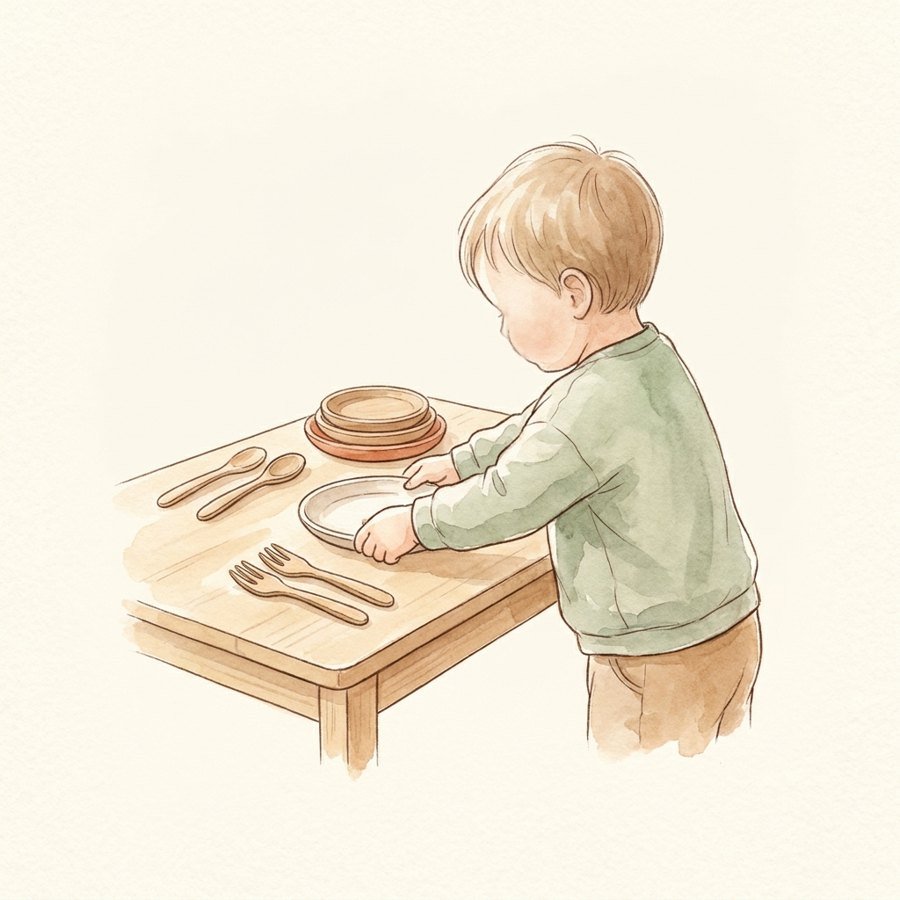
Setting the Table by Counting
Four plates, four cups, four forks: real counting, because it's put to real use.
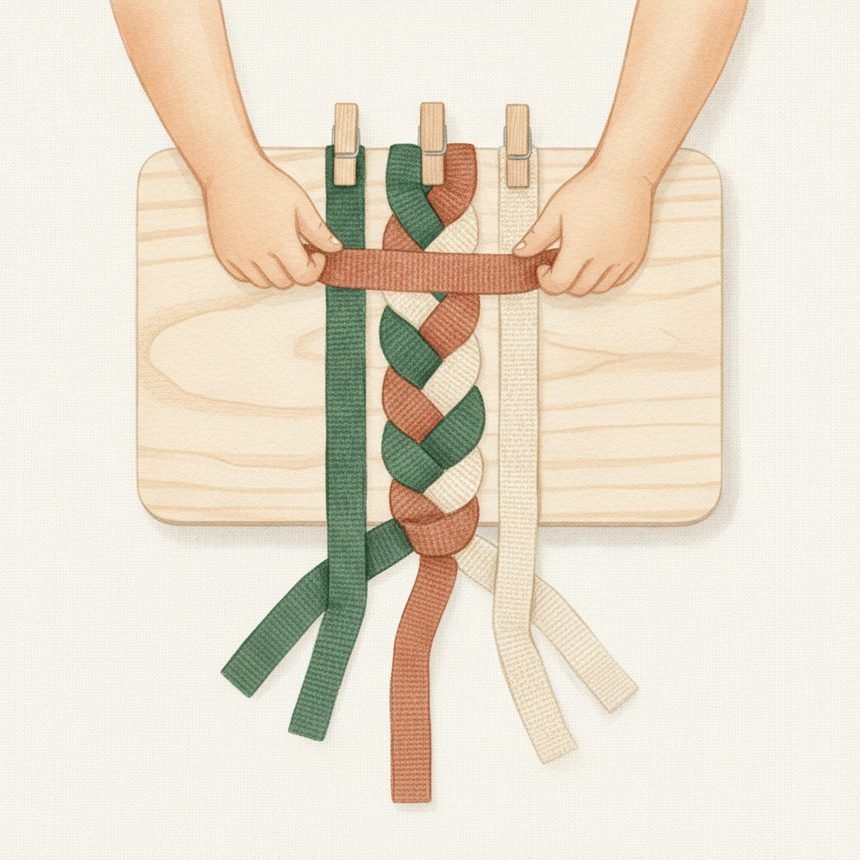
Three-Strand Braiding
Three ribbons crossing over one another, always in the same order.
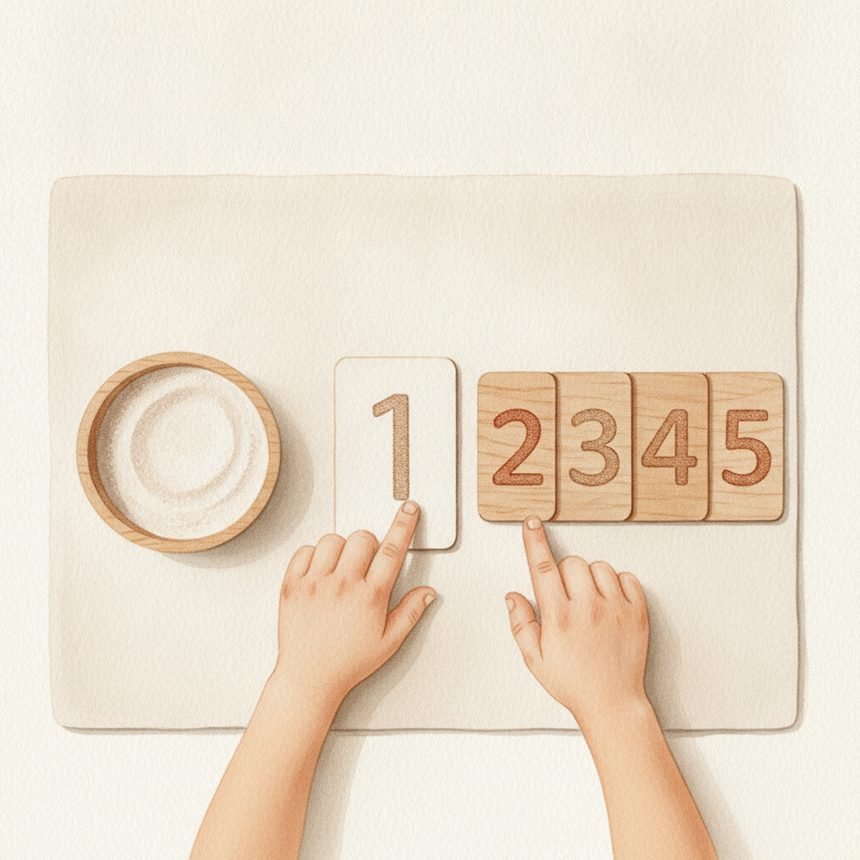
Sandpaper Numbers
Numerals to trace with a finger, in writing order, so the hand knows them before it draws them.

Tying and Untying Knots
Two ribbons, a simple knot, then a loop: fingers learn what shoelaces will one day demand.
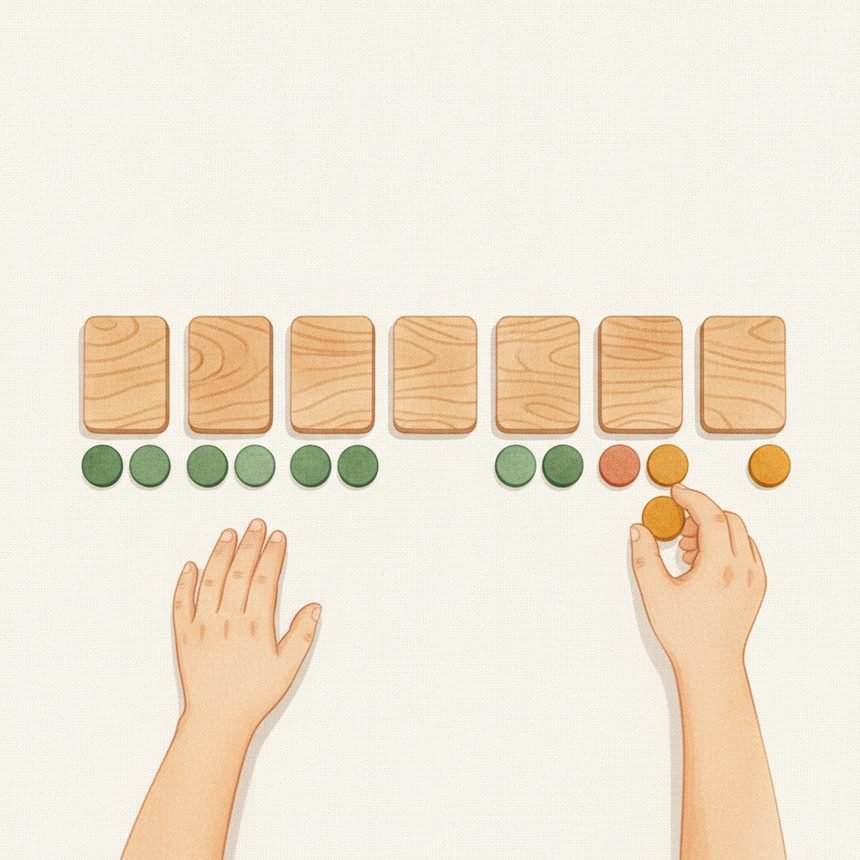
Odd and Even
Lining counters up two by two under each numeral: numbers give up their secret.
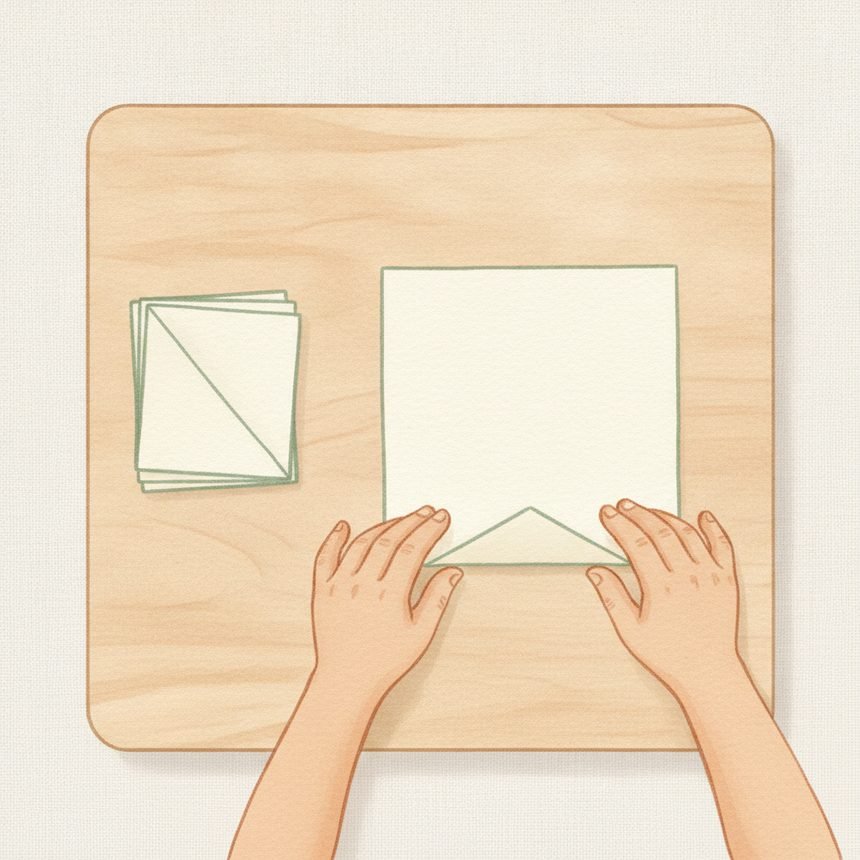
Folding Paper on the Line
Bringing corner to corner, pressing the crease with a steady finger: the precision that prepares geometry.