
Odd and Even
Lining counters up two by two under each numeral: numbers give up their secret.
Odd and Even is a Montessori activity for a child aged 4 to 6 years. Area: Early Math. Time: 15-20 min.
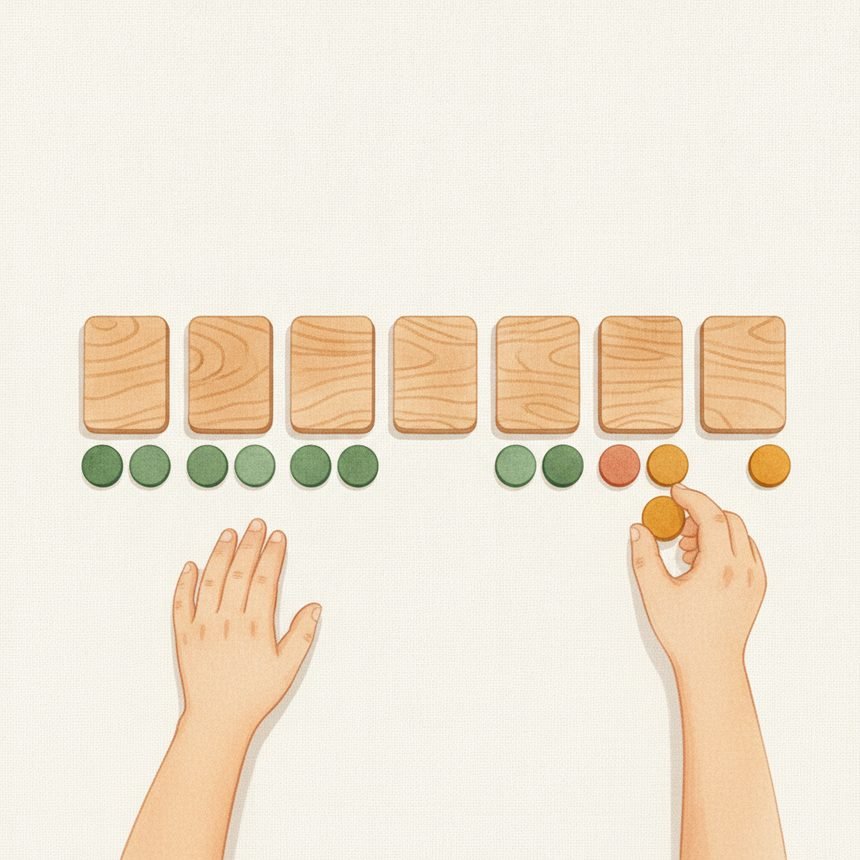
What the activity builds
Discover the even or odd structure of numbers by arranging counters TWO BY TWO: under some numerals, every counter has a neighbor; under others, one is left standing alone at the bottom. The concept is SEEN before it's named.
The materials
- Cards with the numerals 1 through 10, the ones your child already knows from the sandpaper numbers and counting
- Fifty-five identical counters, buttons or flat pebbles: exactly enough to go from 1 to 10
- A large mat, since the finished row takes up space
How to do it, step by step
- Line up the numerals 1 through 10 at the top of the mat, in order, together.
- Under the 1, place one counter. Under the 2, two counters side by side, as a pair. Under the 3, a pair and one counter alone below, in the middle.
- Keep going together: counters always pair up two by two, and the leftover counter, when there is one, sits alone at the bottom.
- At the end, look at the row: under every other numeral, one small lonely counter sticks out at the bottom.
- Run a finger between the pairs: under 4 the finger reaches all the way down, under 5 it bumps into the lone counter. The words come now: even, odd.
The parent's role
Let the discovery happen through the image: the alternating lonely counters, one numeral out of every two, is one of the first mathematical patterns your child will SEE with their own eyes. Don't define "even" ahead of time: lay it out first, look second, name last. The counter count is exact, fifty-five: if some are missing or extra, one row is off somewhere, and you go find which one together. Show once, then step back.
Safety
Counters too large for the mouth if a younger sibling is nearby. This is a big-mat, on-the-floor, quiet activity.
You remain the sole judge of what is right for your child. These activities are offered for educational and recreational purposes: they do not replace medical advice or the guidance of an early childhood professional.
Ways to adapt the activity
- Easier: the numerals 1 through 5 only, fifteen counters.
- Harder: guessing BEFORE placing the counters whether a number will have a lone one.
- Next step: finding odd and even in everyday life: socks, forks, hands.
Up next
More activities for a 4 to 6 years child.
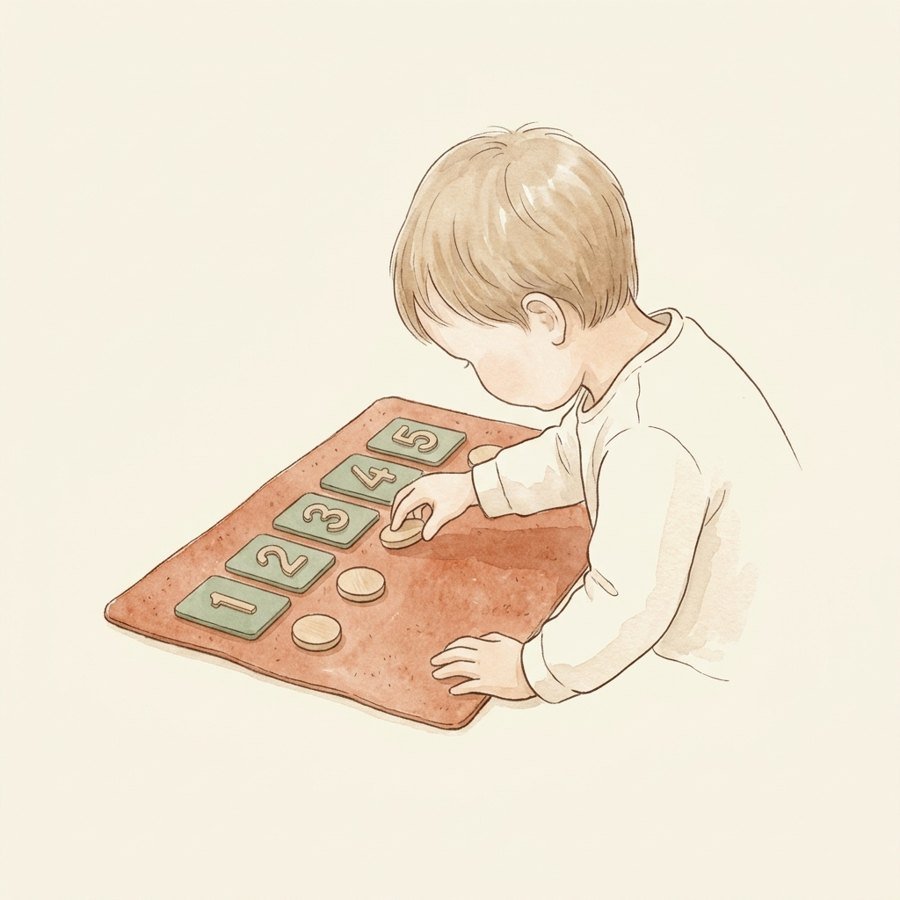
Counting with Counters
Place a counter, say a number. Number becomes something you can touch.
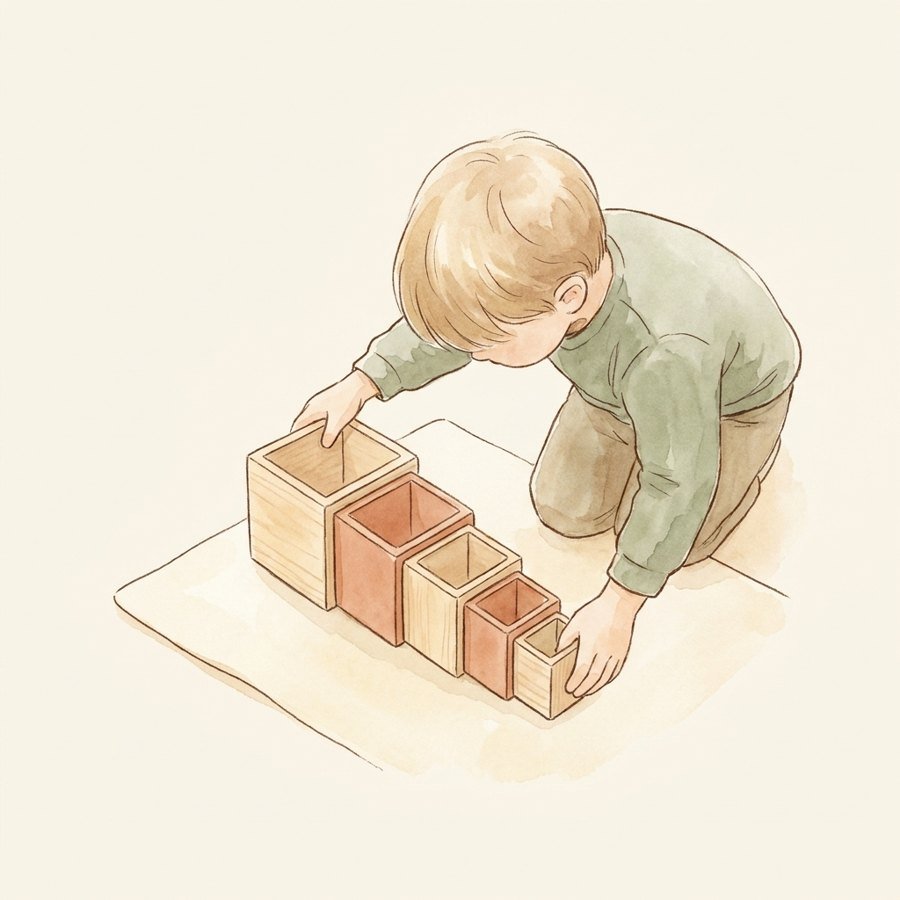
Biggest to Smallest
Arranging five objects by size, with no ruler and no measuring: just the eye and the hand.
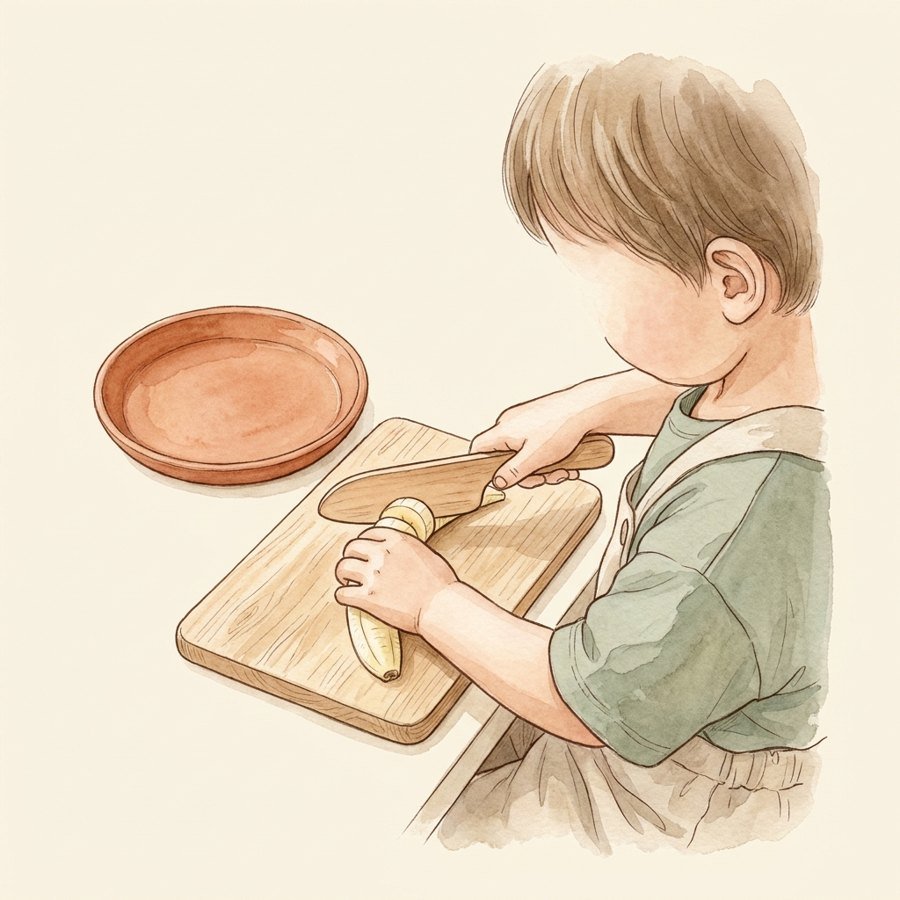
Preparing a Snack
Peel, slice, plate, serve. A real snack made start to finish by a five-year-old.
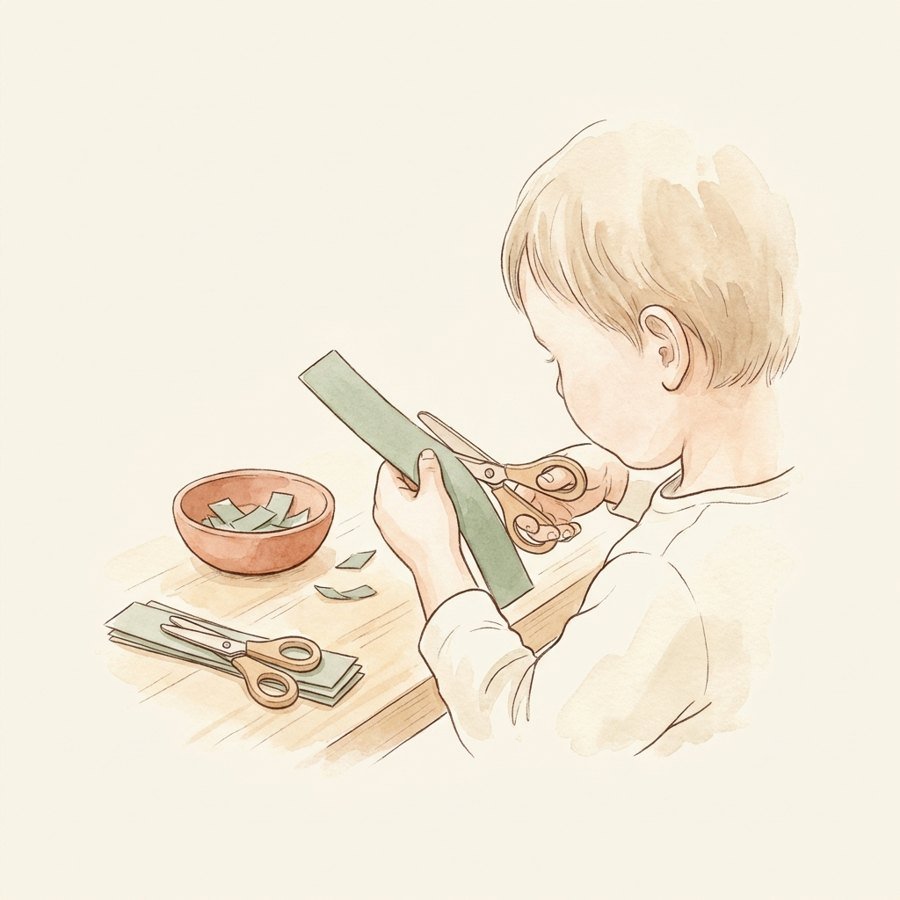
Cutting Paper Strips
Open, close, advance. Scissors get tamed in just a few sessions.
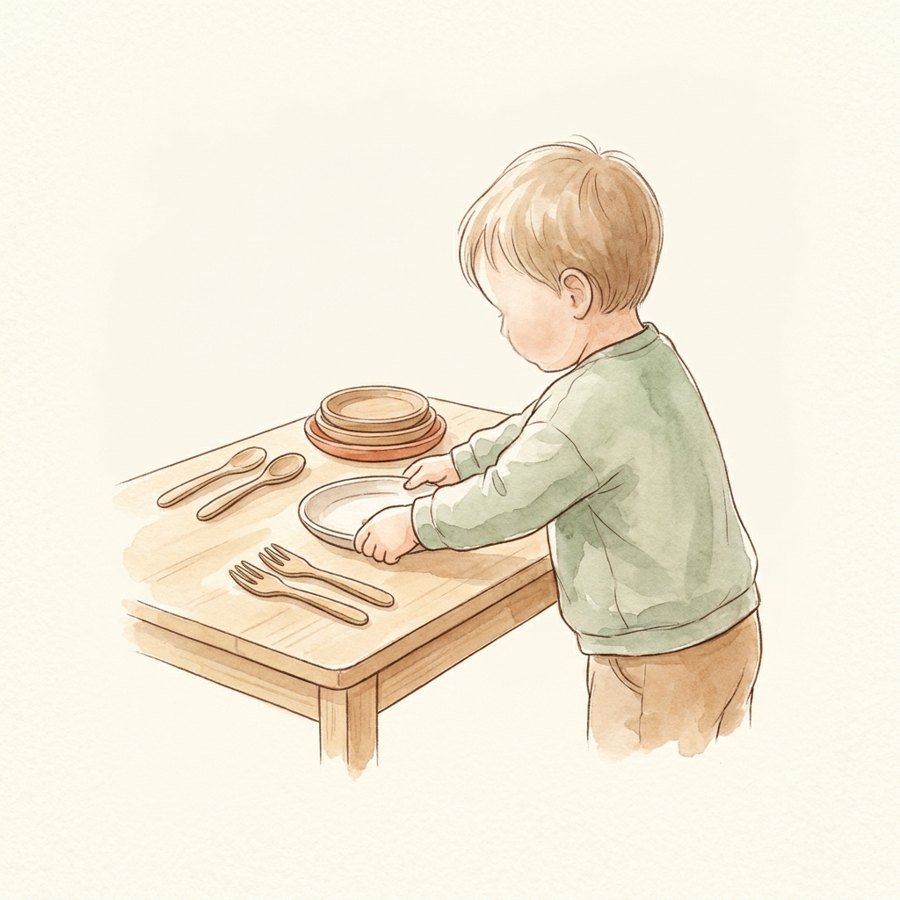
Setting the Table by Counting
Four plates, four cups, four forks: real counting, because it's put to real use.
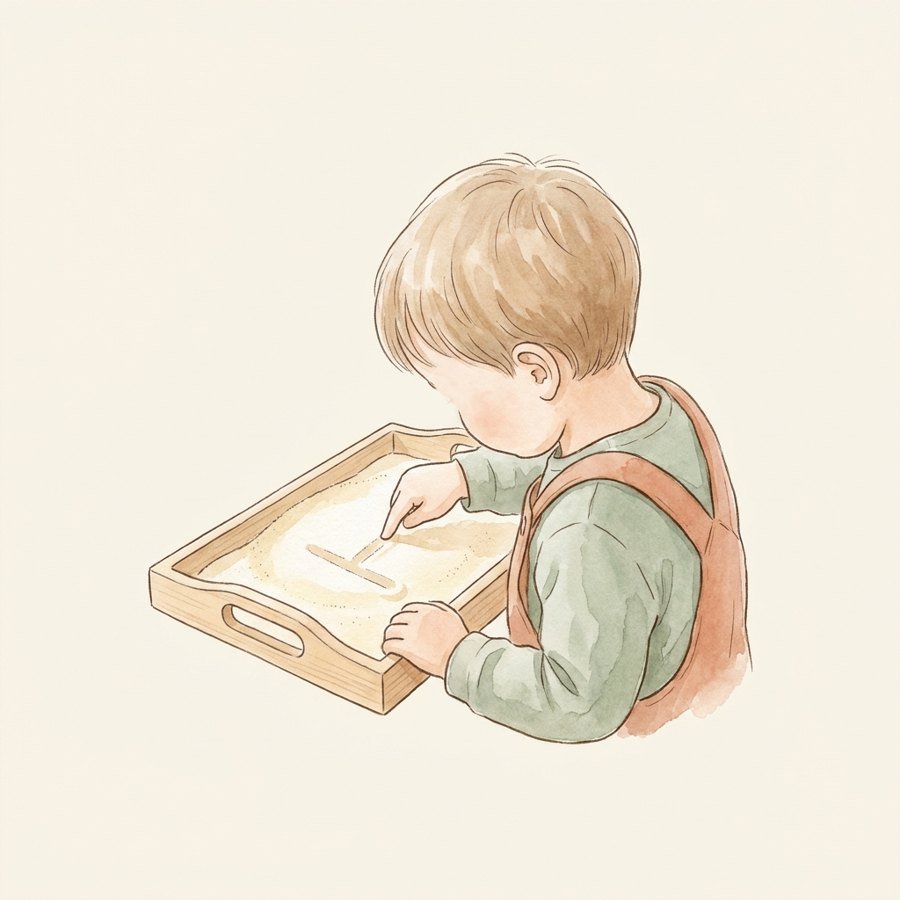
Name Writing in a Rice Tray
A tray of rice, one finger, and a name you can erase with a swipe to start again.
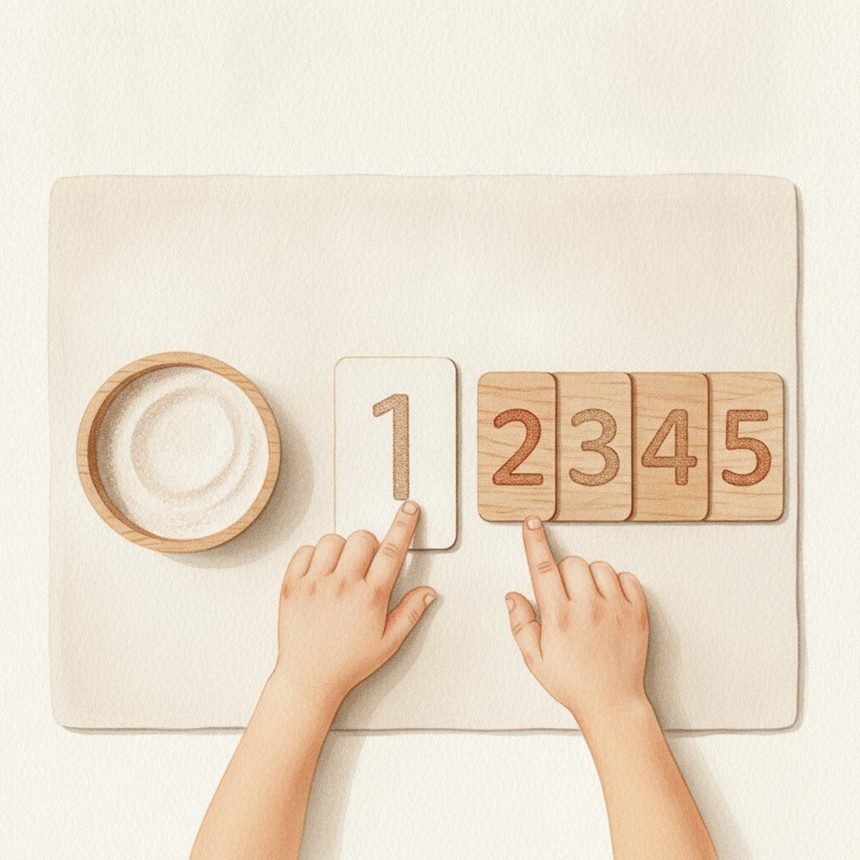
Sandpaper Numbers
Numerals to trace with a finger, in writing order, so the hand knows them before it draws them.
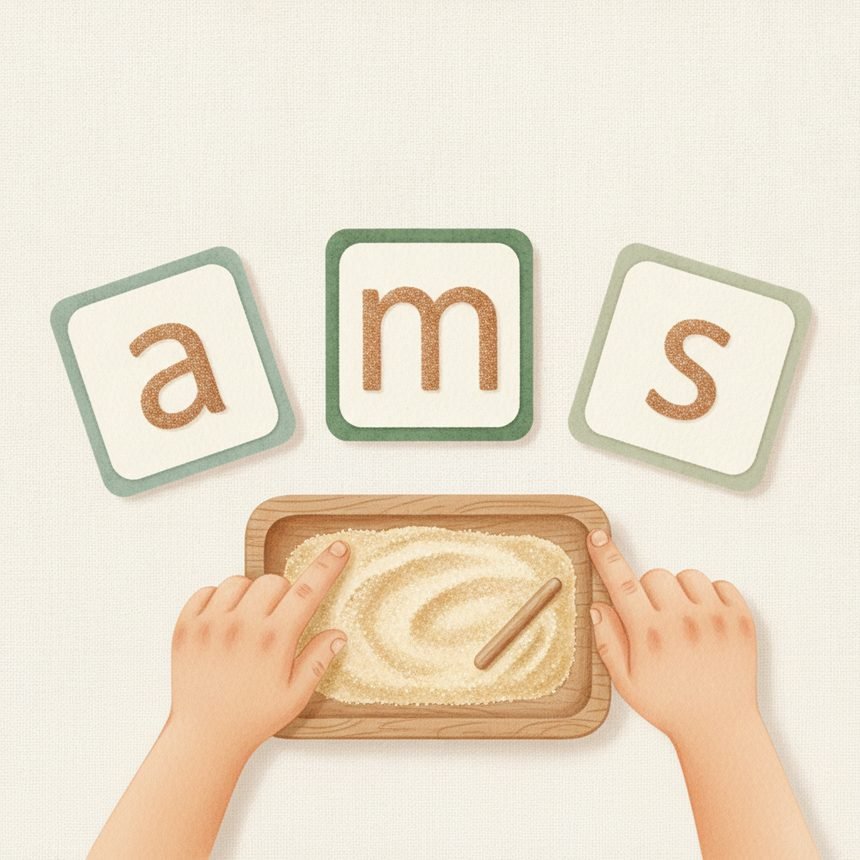
Sandpaper Letters
Letters to trace with fingertips, saying their sound: the hand learns to write before the crayon does.
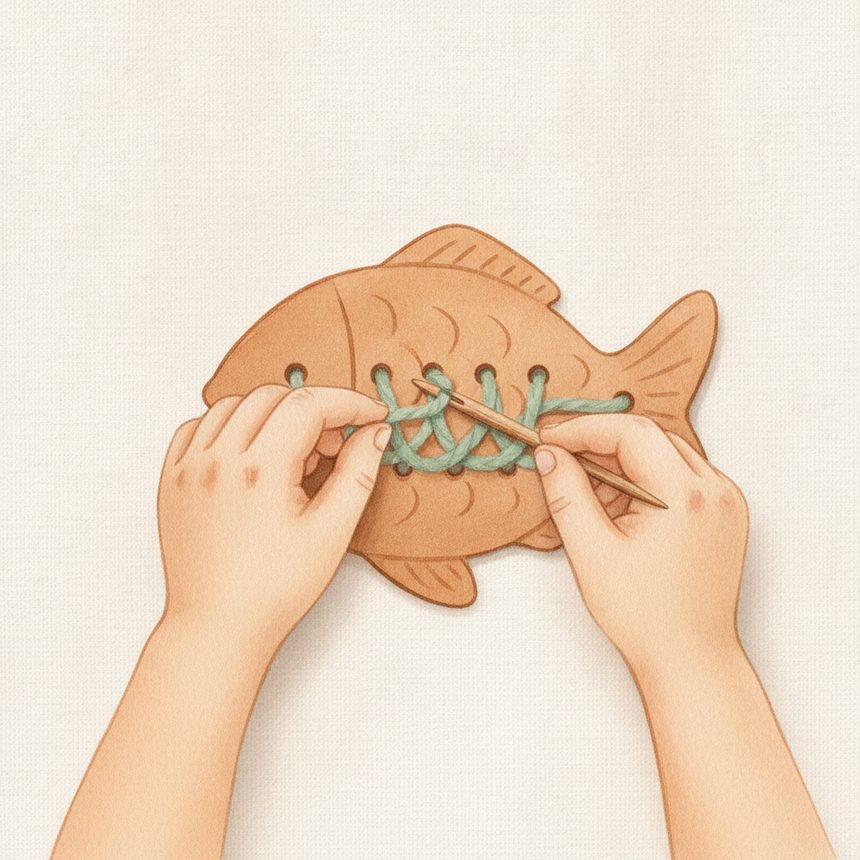
Sewing Cards
A round-tipped needle, yarn, a punched card: over, under, over, and the pride of having sewn.
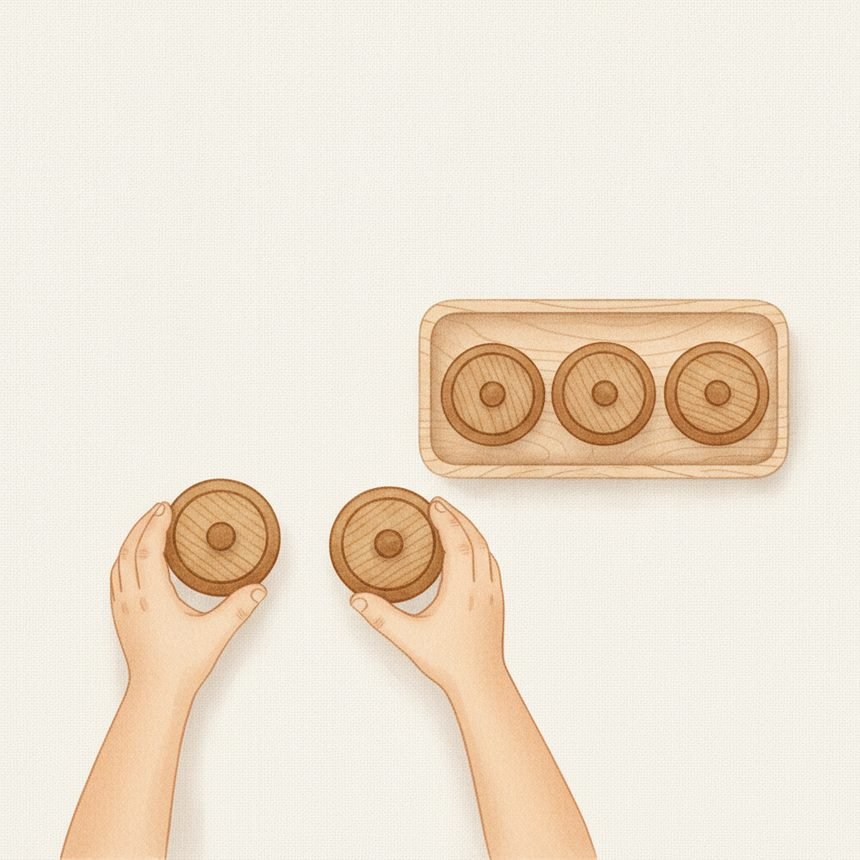
Light and Heavy
Identical jars, different contents: hands weigh better than eyes.
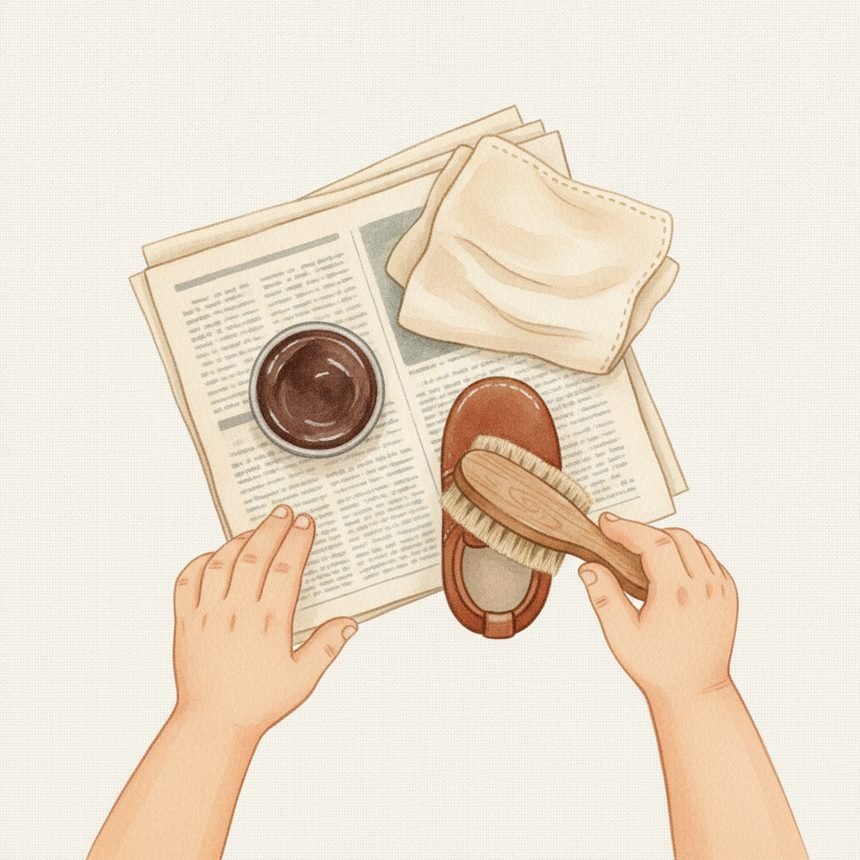
Polishing Shoes
Brushing, polishing, buffing your own shoes until they shine: the great cycle of caring for objects.
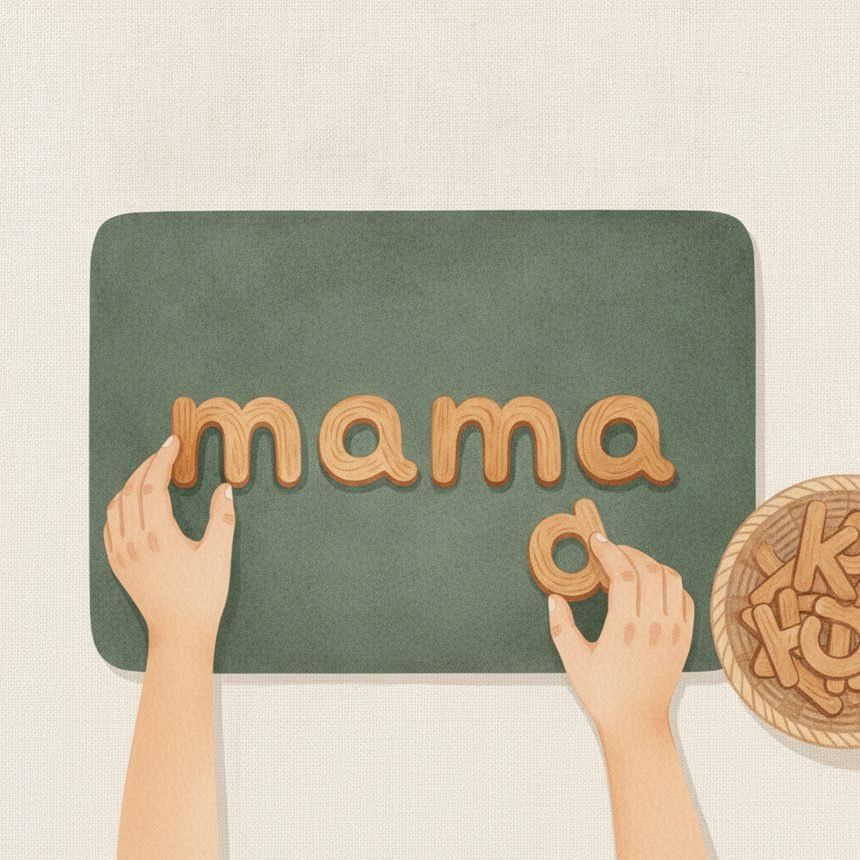
First Words with the Movable Alphabet
Spelling out "mom" with letters you place, long before you can hold a crayon: the magic of the movable alphabet.
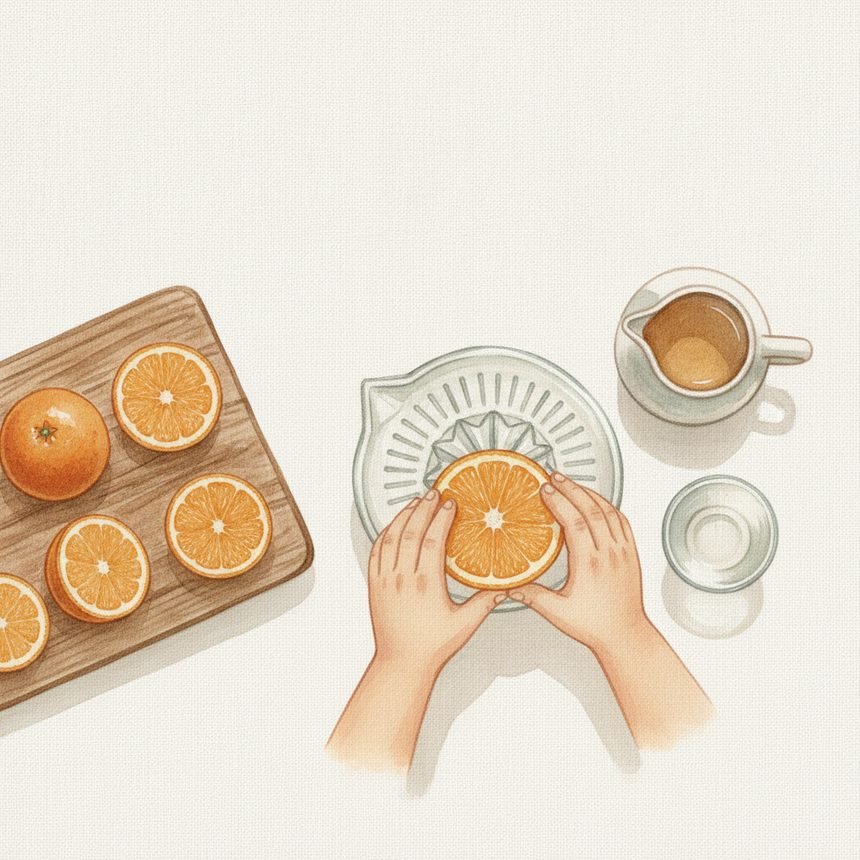
Squeezing Orange Juice
Cut, press, pour, serve: real juice made start to finish, and given to someone.
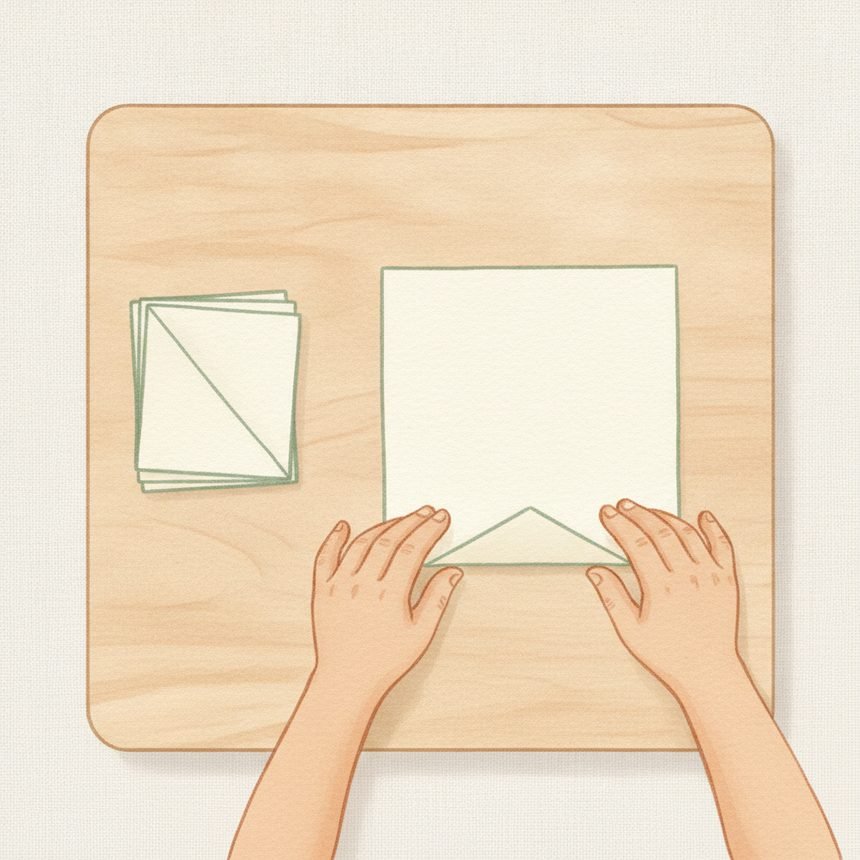
Folding Paper on the Line
Bringing corner to corner, pressing the crease with a steady finger: the precision that prepares geometry.
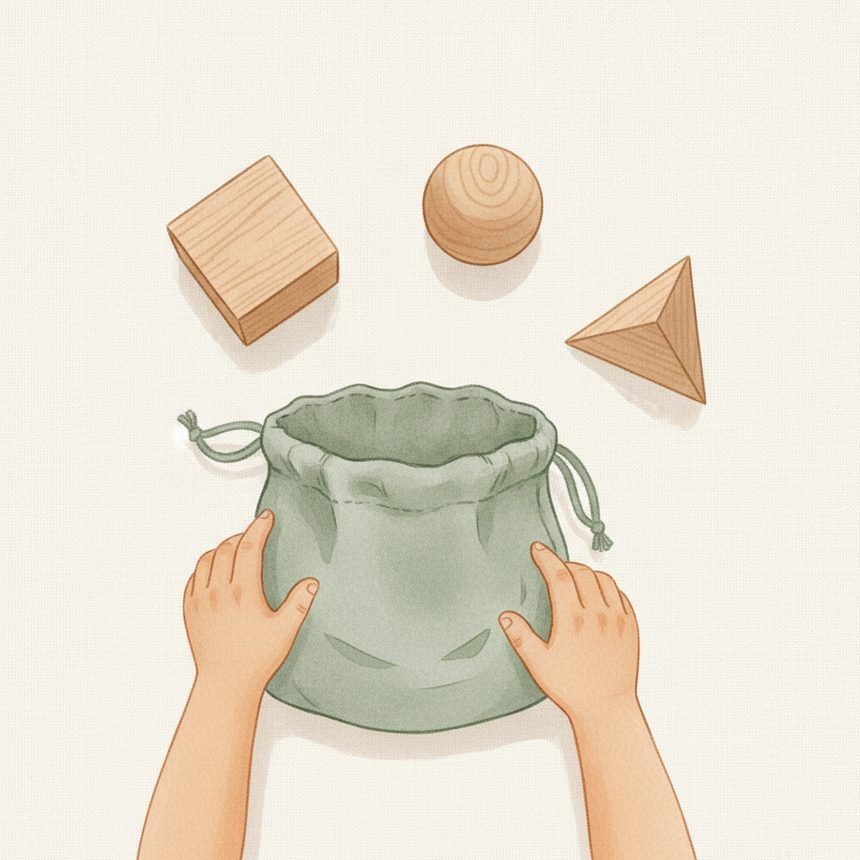
The Mystery Shape Bag
Recognizing a cube, a ball, a pyramid, just by feeling them at the bottom of a bag.
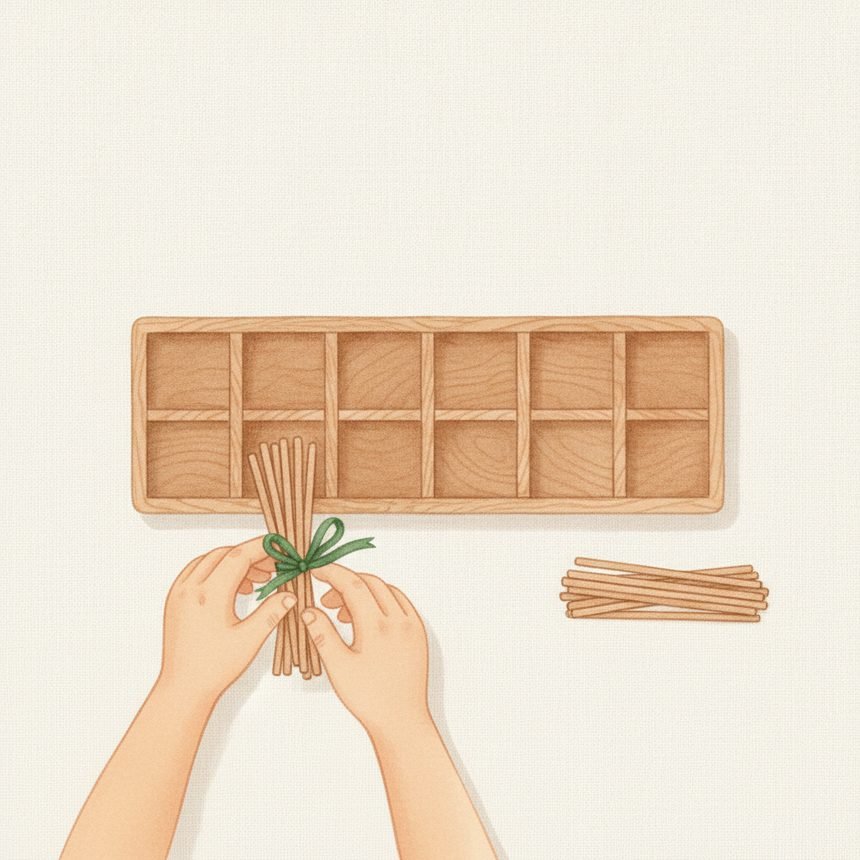
Spindle Boxes and Zero
Sticks to sort from 0 to 9 into the right compartments, and the discovery that zero means nothing.
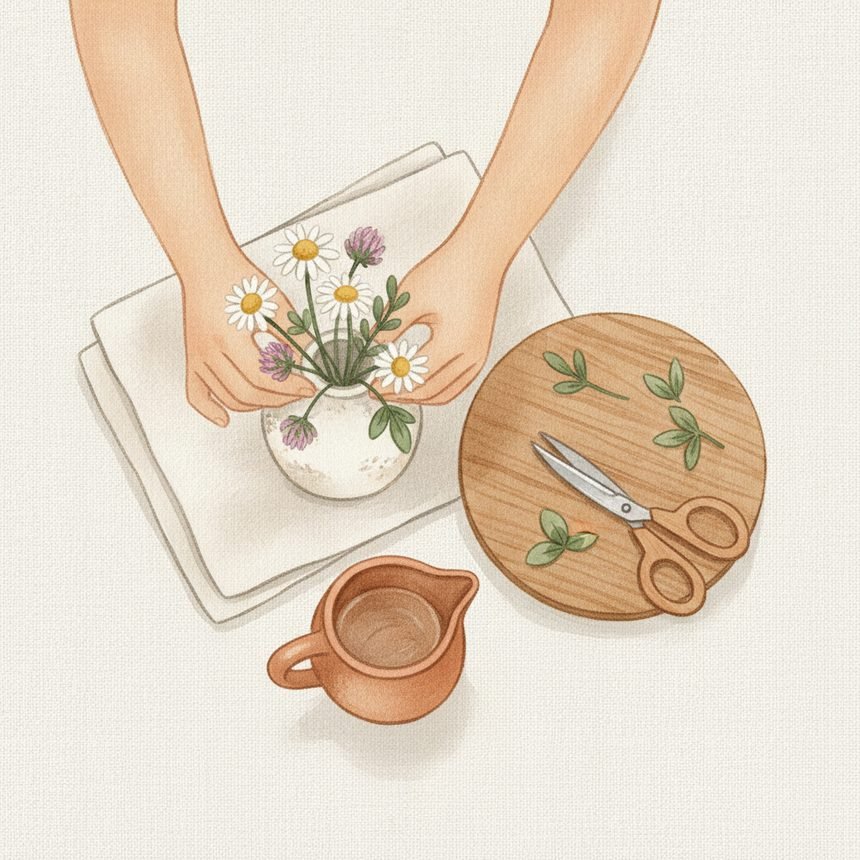
Arranging Flowers
Cutting the stems, filling the vase, arranging the flowers, and setting the bouquet on the family table.
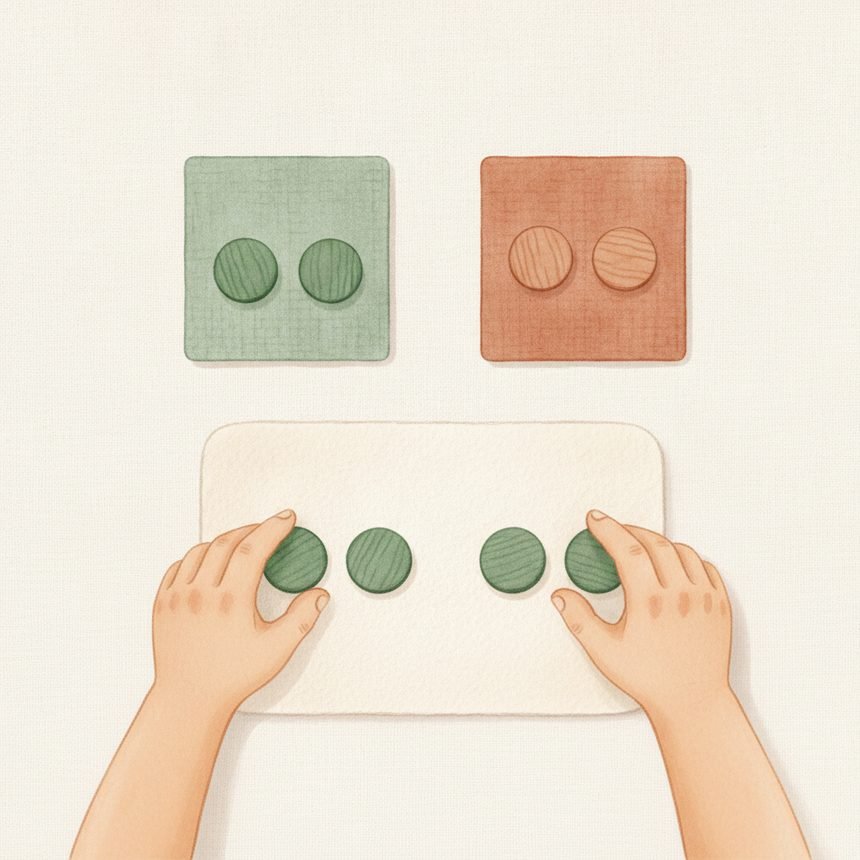
Addition with Counters
Three counters and two counters brought together: the first addition, seen and done with your own hands.
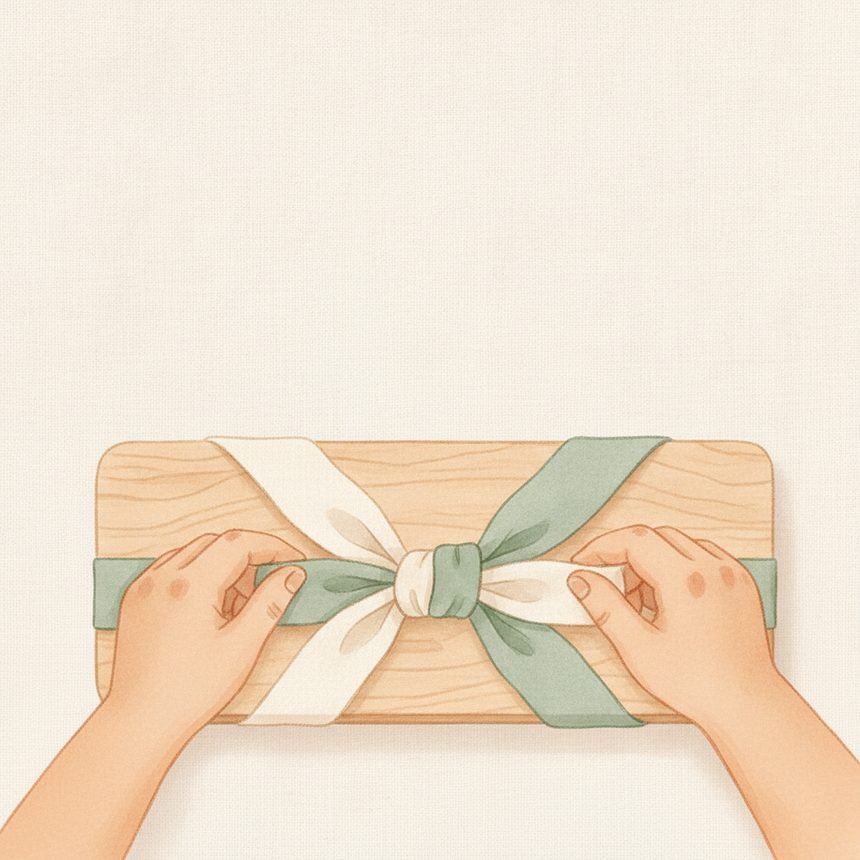
Tying and Untying Knots
Two ribbons, a simple knot, then a loop: fingers learn what shoelaces will one day demand.
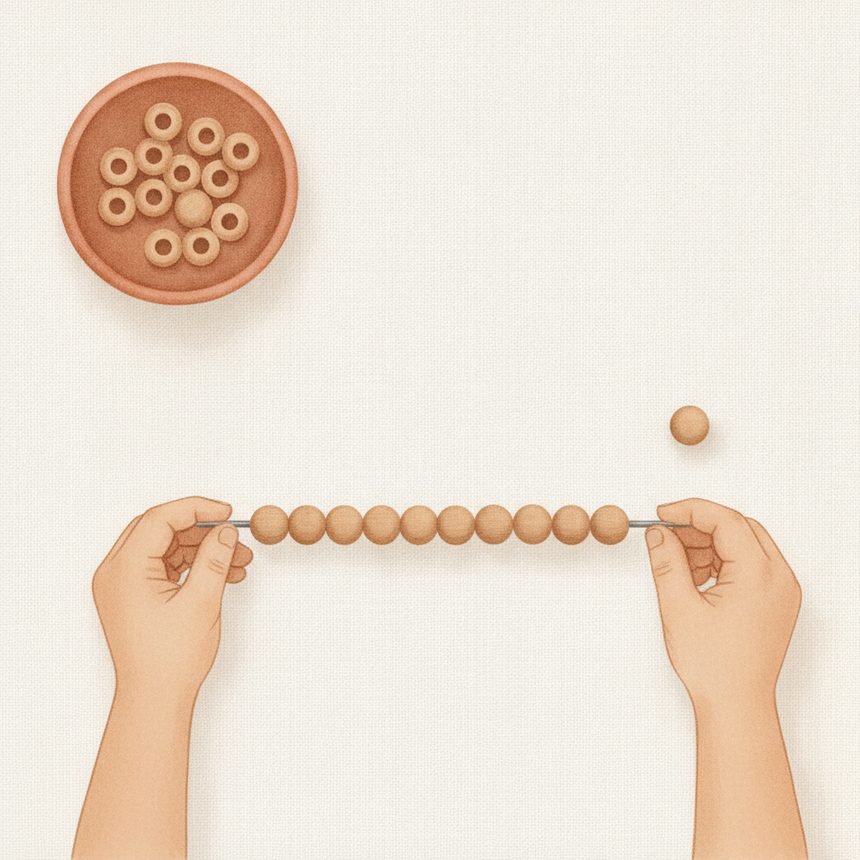
Discovering Tens
Ten beads strung on a wire become a single object: that's what ten really is.
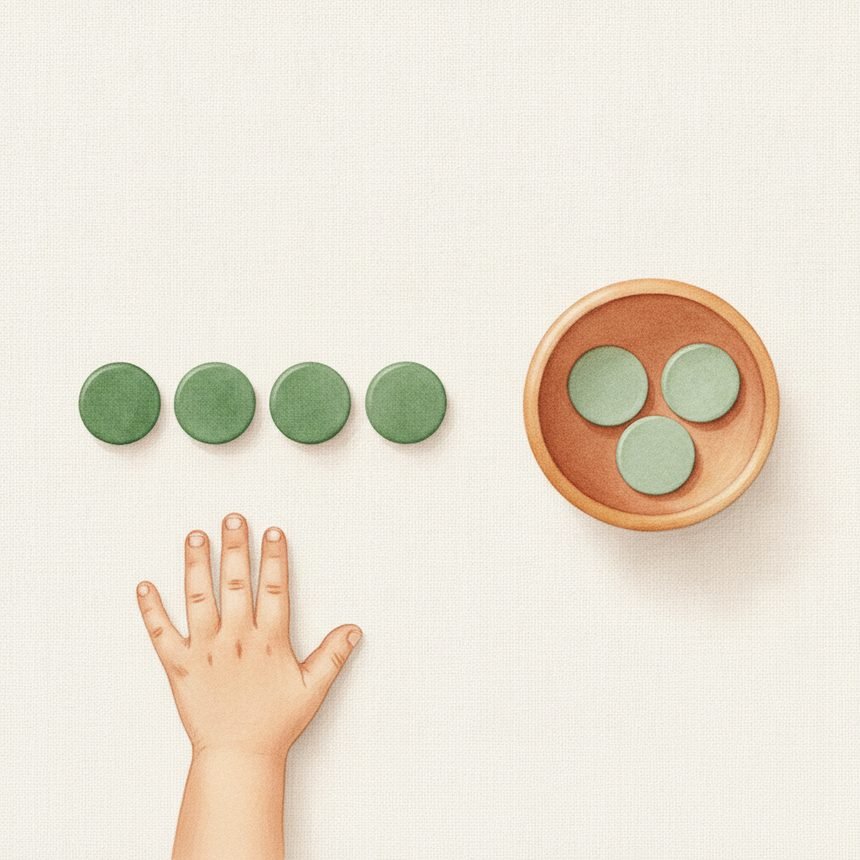
Subtraction with Counters
Take counters away and look at what's left: subtraction becomes a motion.
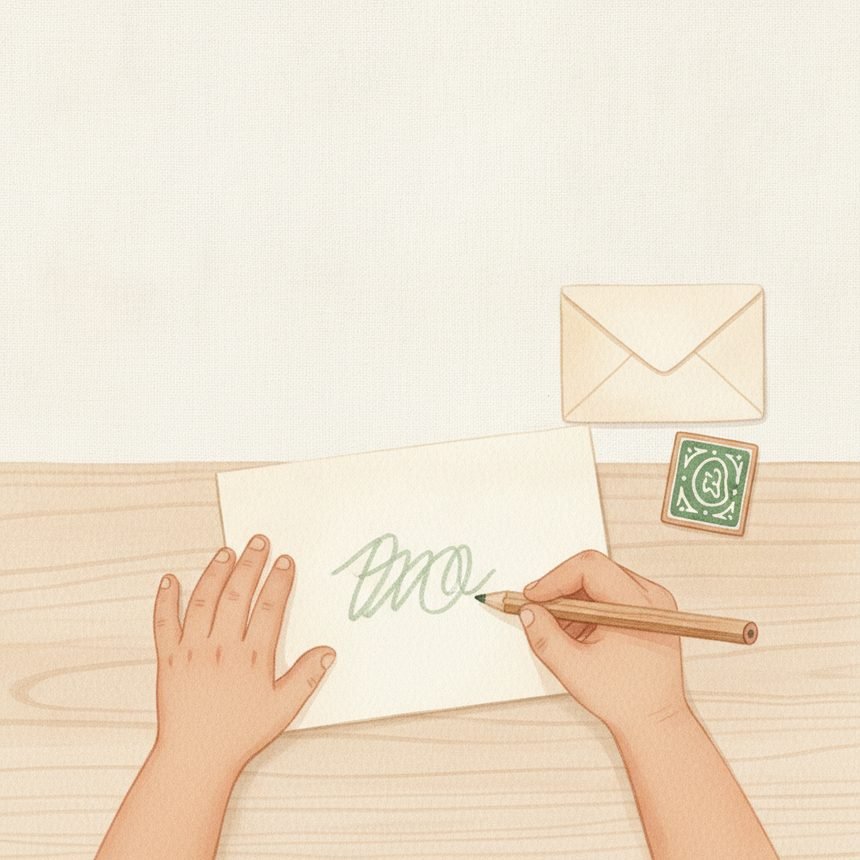
Writing a Real Letter
Writing to someone who will write back: writing finally serves a purpose.
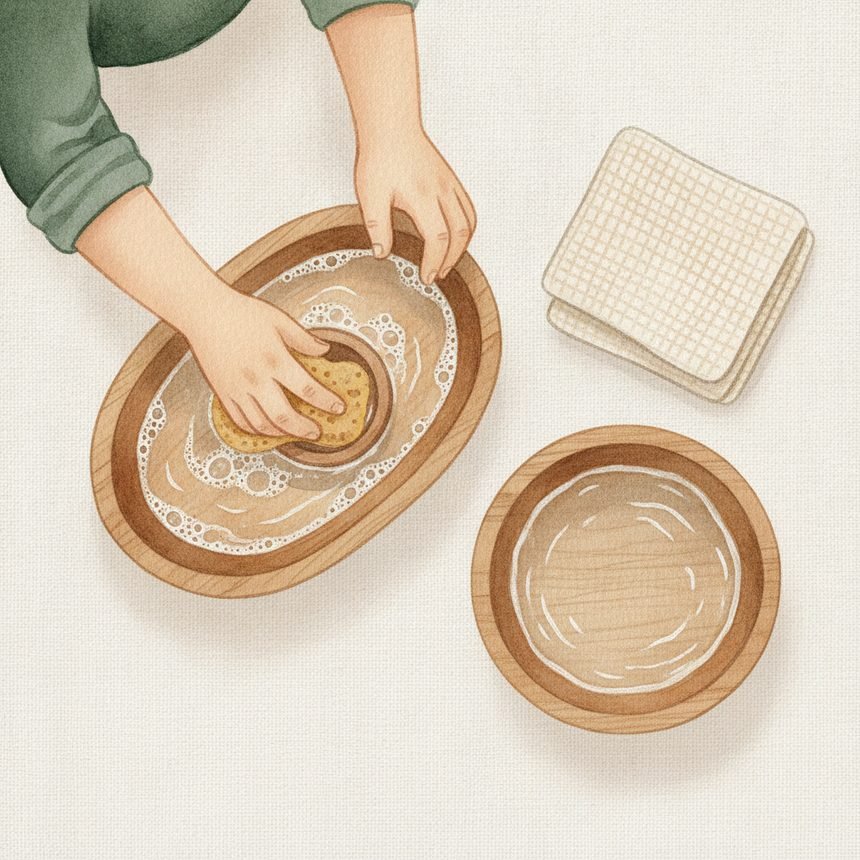
Washing a Bowl
Two basins, a sponge, and their own bowl turning clean again between their hands.
Three-Strand Braiding
Three ribbons crossing over one another, always in the same order.