
The Shape Sorting Box
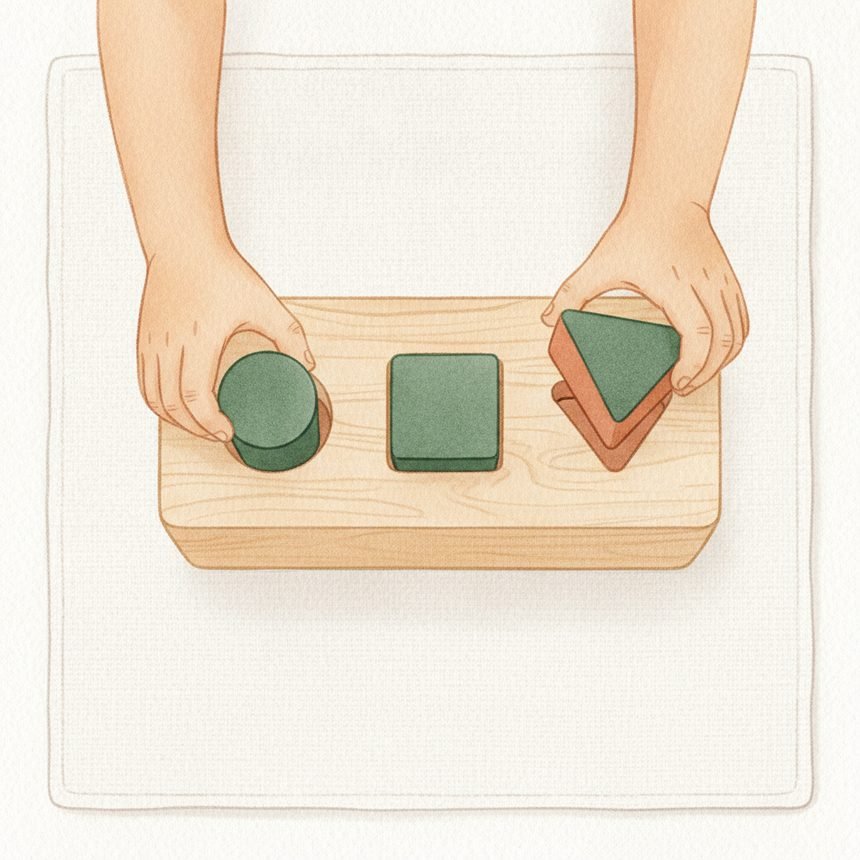
A circle, a square, a triangle, and three slots: each shape fits only its own.
The Shape Sorting Box is a Montessori activity for a child aged 2 to 3 years. Area: Sensorial. Time: 10-15 min.
What the activity builds
Recognize a shape by sight and by touch, with the purest self-correction there is: a wrong shape won't go in, and your child feels it right away.
The materials
- A wooden shape sorting box with three differently shaped slots
- The three matching solids: a cylinder, a cube, a triangular prism
- A small mat or tray to set everything on
How to do it, step by step
- Set the box in the center, the three shapes piled beside it.
- Pick up a shape, turn it slowly between your fingers while tracing its sides with your eyes, find its slot, and slide it in.
- Do a second one the same way, without commenting, then move your hands back.
- Let them try a shape on the wrong slot: it won't go in, they pull it back out, they try another.
- When the box is full, show them how to open it and start over.
The parent's role
Show once, then step back, and never say 'no, not that one.' The box says it for you: the shape refuses to go in, and that refusal is the teacher, not your voice. Your only job is to leave room for trial and error.
Safety
Shapes big enough not to be swallowed, with sanded edges. Stay close as long as your child still mouths objects, and put the box away up high afterward.
You remain the sole judge of what is right for your child. These activities are offered for educational and recreational purposes: they do not replace medical advice or the guidance of an early childhood professional.
Ways to adapt the activity
- Easier: start with the cylinder alone, the most forgiving shape since it fits any way it's turned.
- Harder: eyes closed, find the slot using touch alone.
- Extension: hunting the house for something round, something square, something triangular.
Up next
More activities for a 2 to 3 years child.
Pouring Dry Ingredients
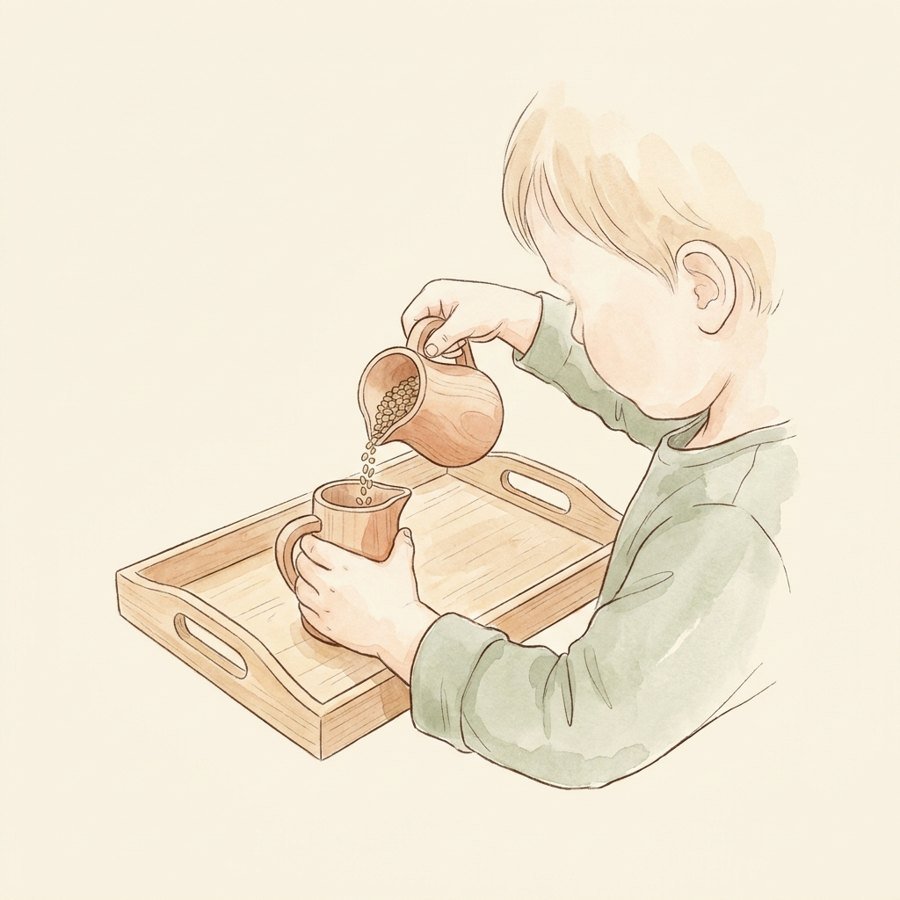
The signature activity: two pitchers, dry beans, and a motion your child will repeat a hundred times.
Sponge Squeezing
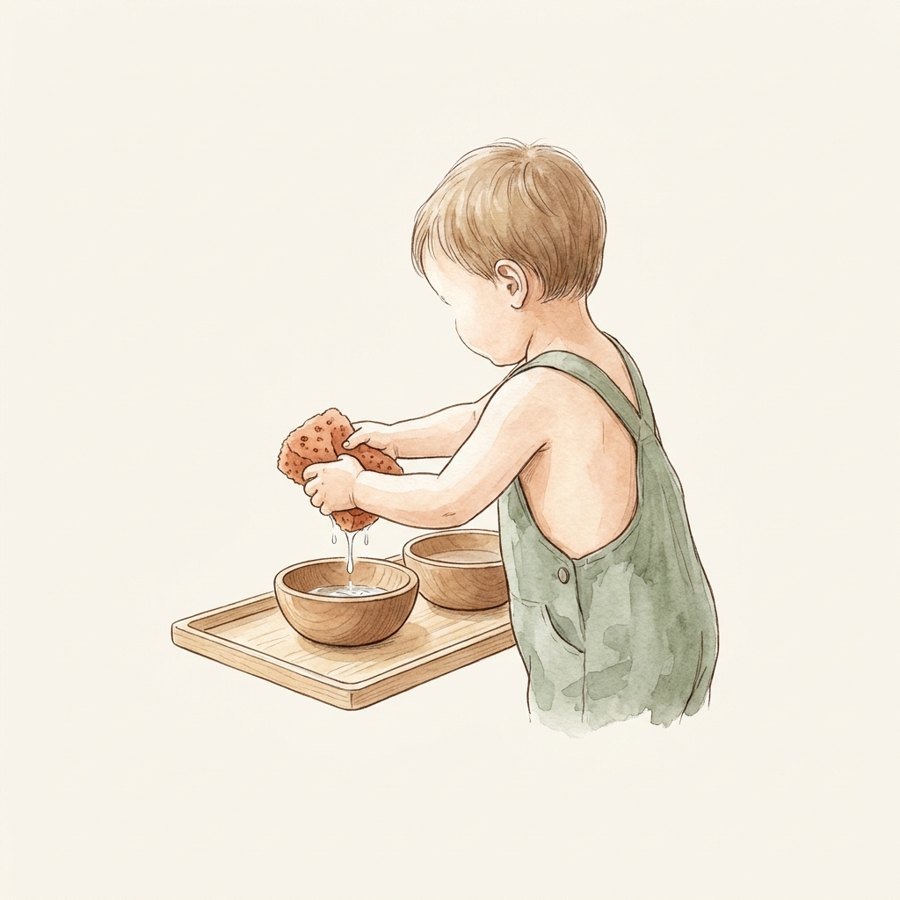
Moving water from one bowl to another by squeezing a sponge. Simple, wet, irresistible.
Color Sorting
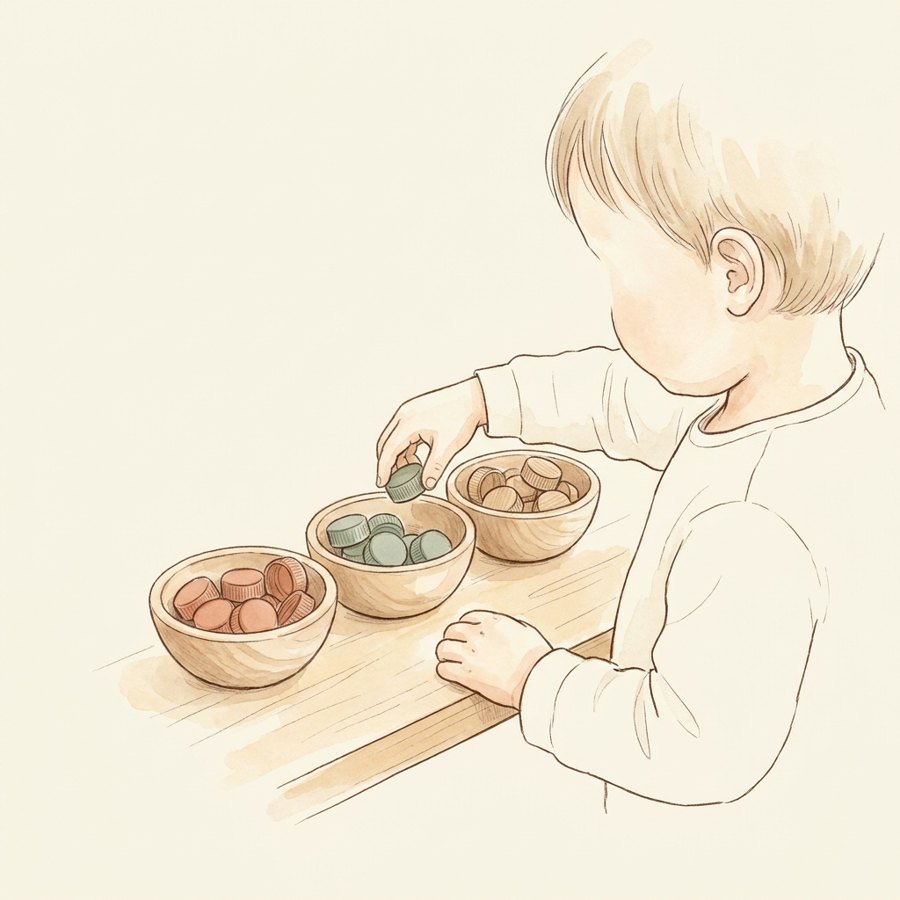
Each bottle cap finds its family. The first real sorting work.
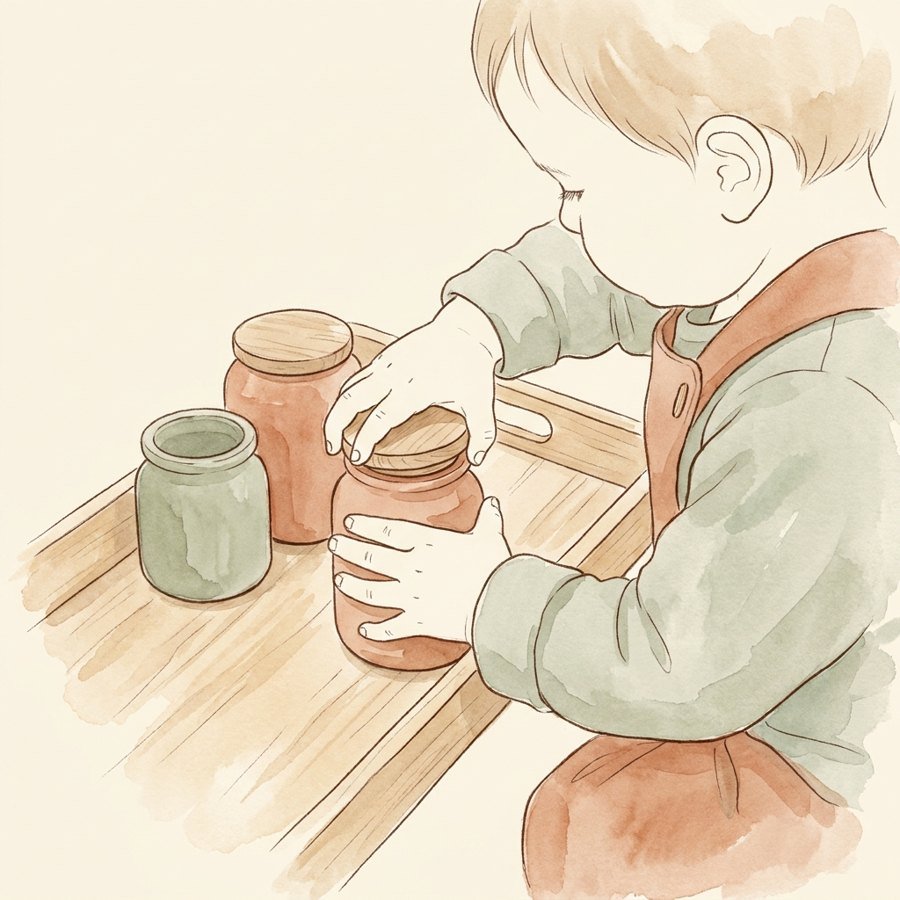
Screwing and Unscrewing
Three jars, three lids, and a wrist rotation to master.
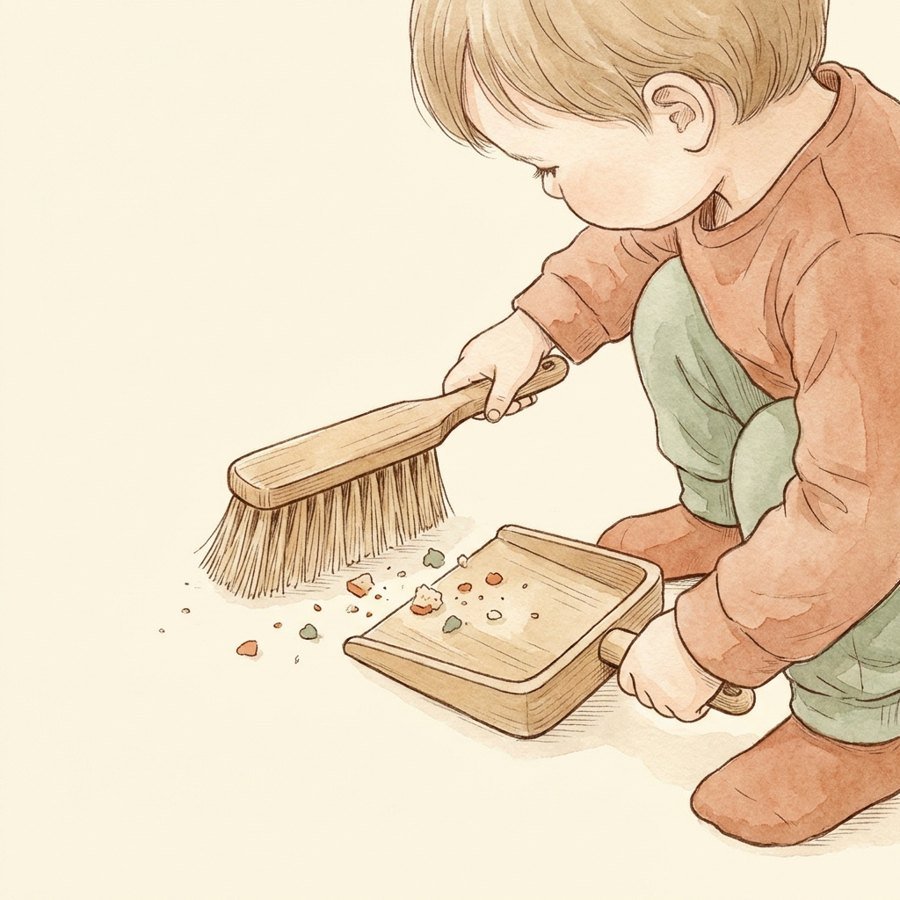
Sweeping Crumbs
A small broom, a dustpan, and the pride of fixing your own spill.
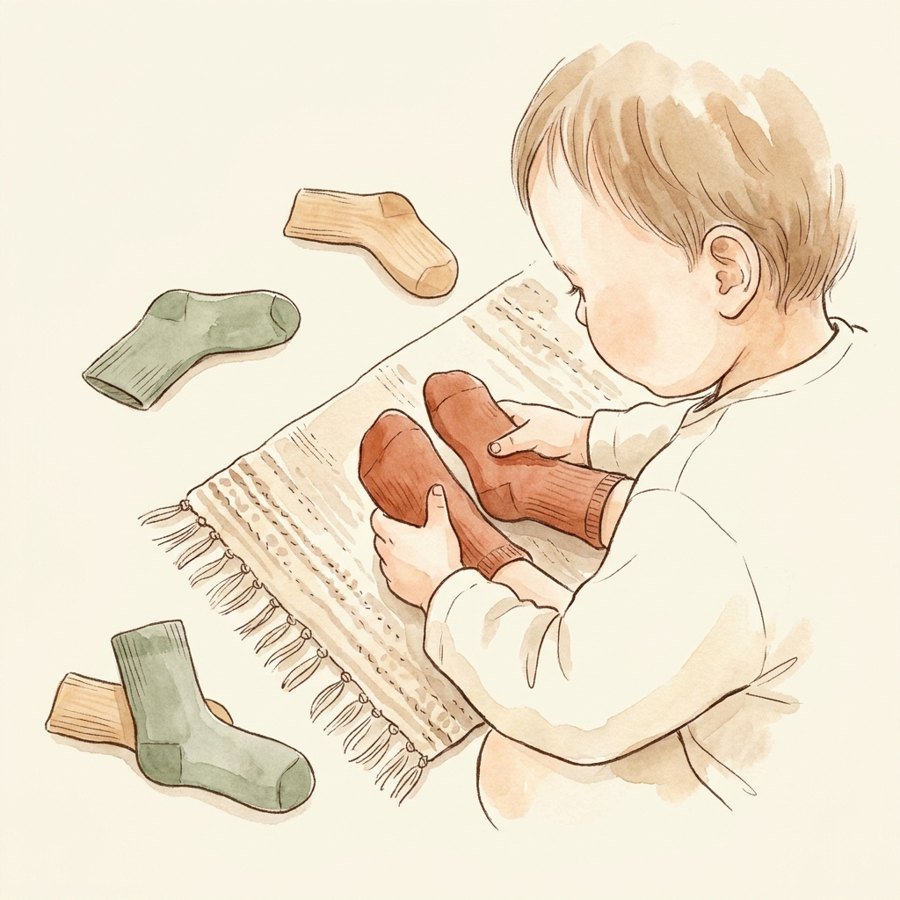
Matching Socks
The laundry basket becomes an observation game, and you get sorted laundry out of it.
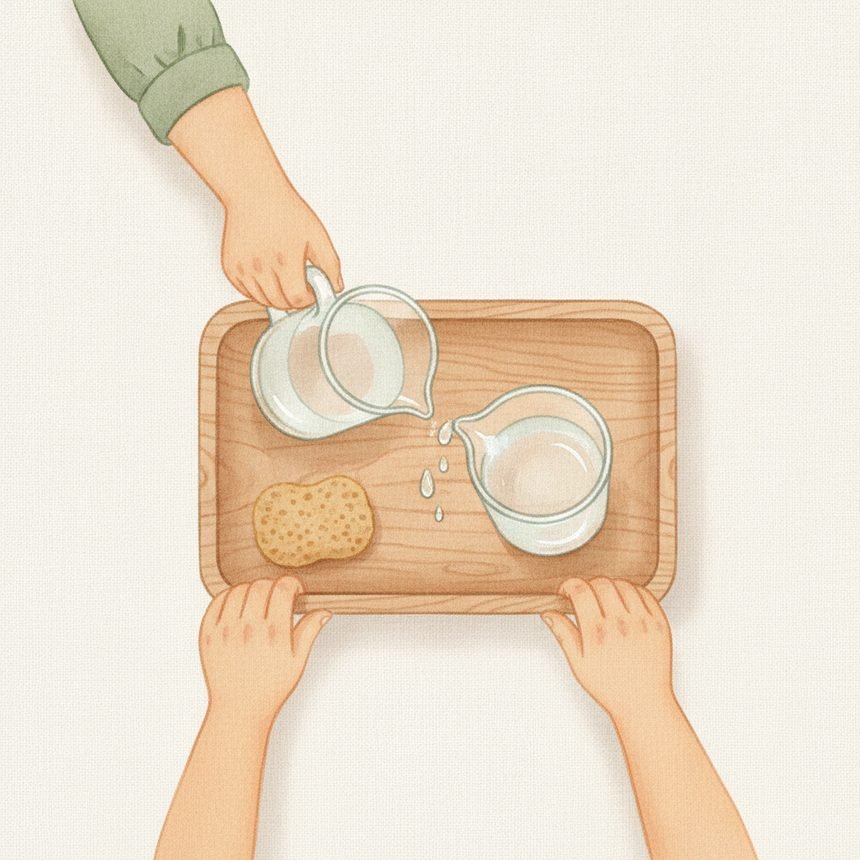
Pouring Water
Two small pitchers, a little water, and the motion that makes a child proud: pouring without spilling over.
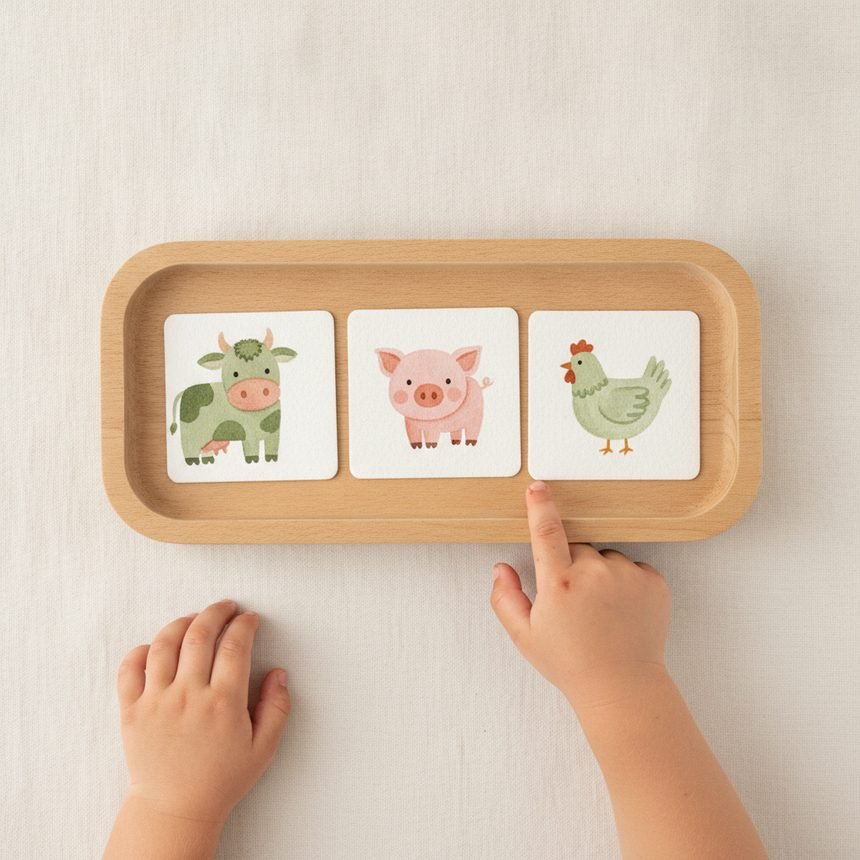
Naming Pictures
A handful of animal or object cards, and the three-period lesson that makes words stick for good.
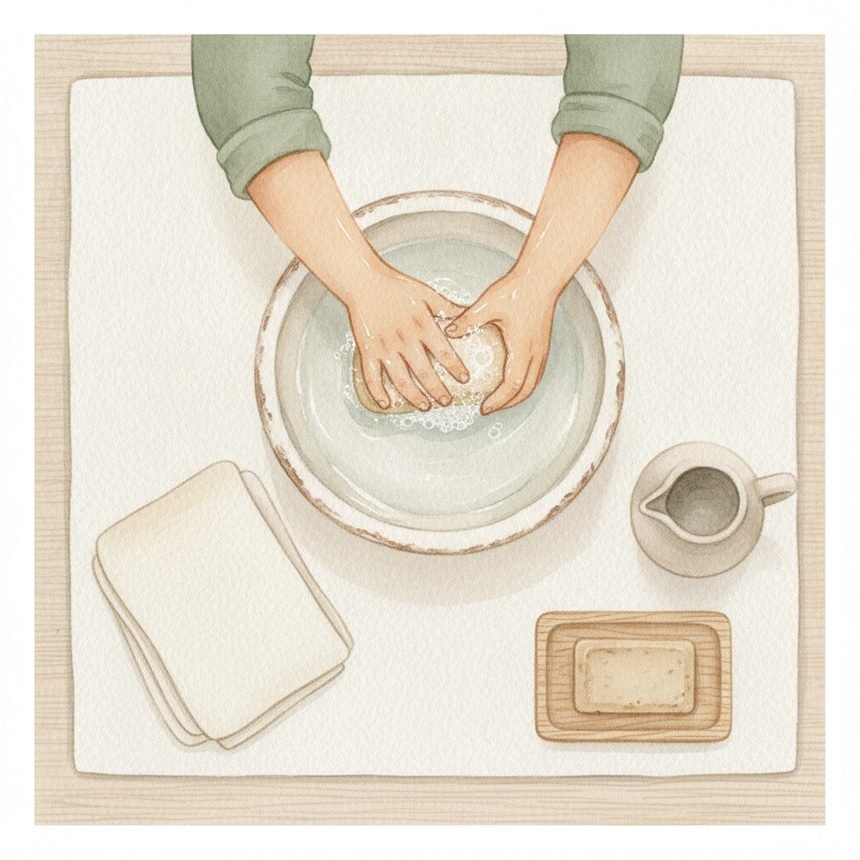
Washing Hands
A whole ritual with a basin, soap, and a towel: the first big, complete cycle your child carries out start to finish.
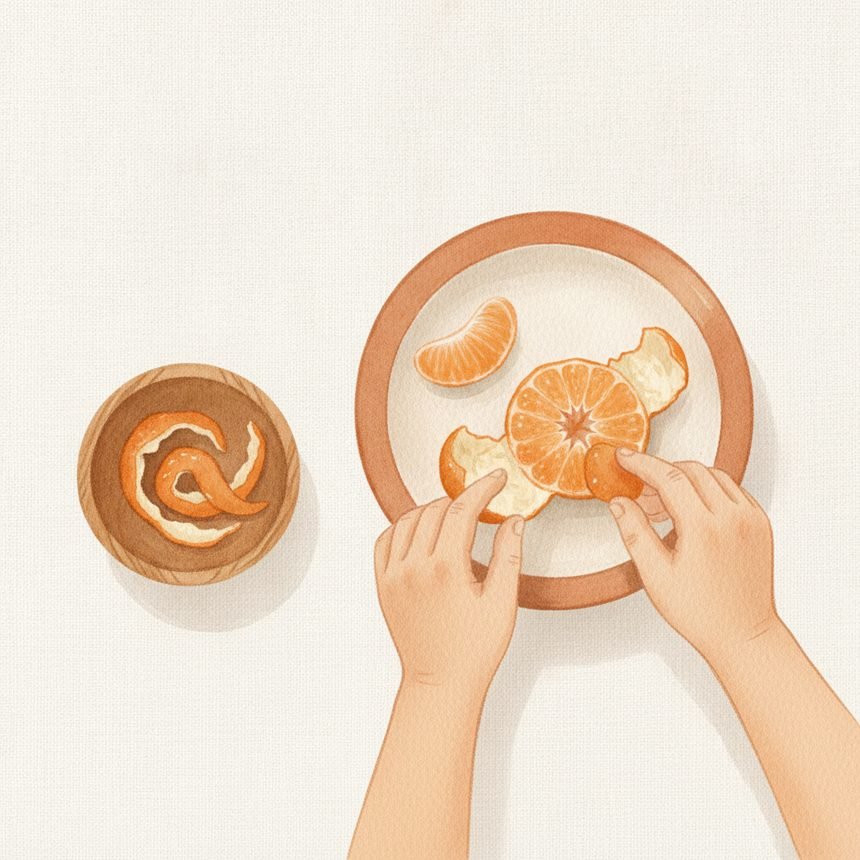
Peeling a Clementine
Piercing, pulling, separating the segments, and eating what you made yourself: practical life that tastes good.
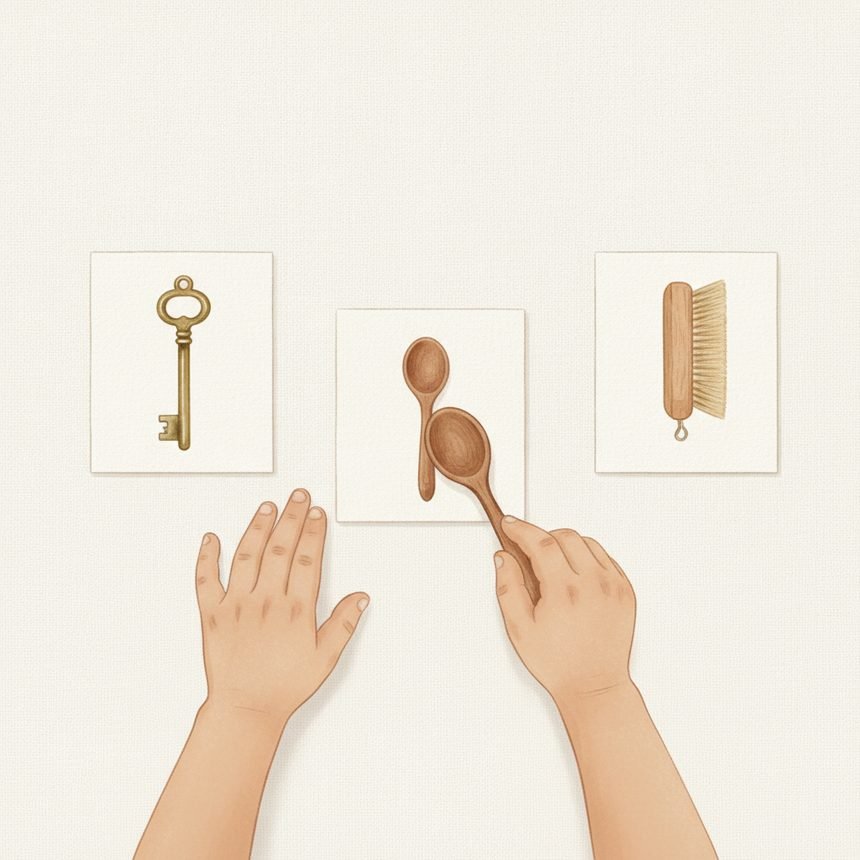
Object and Picture Matching
Setting the real spoon on the photo of a spoon: the bridge between the world and its images.
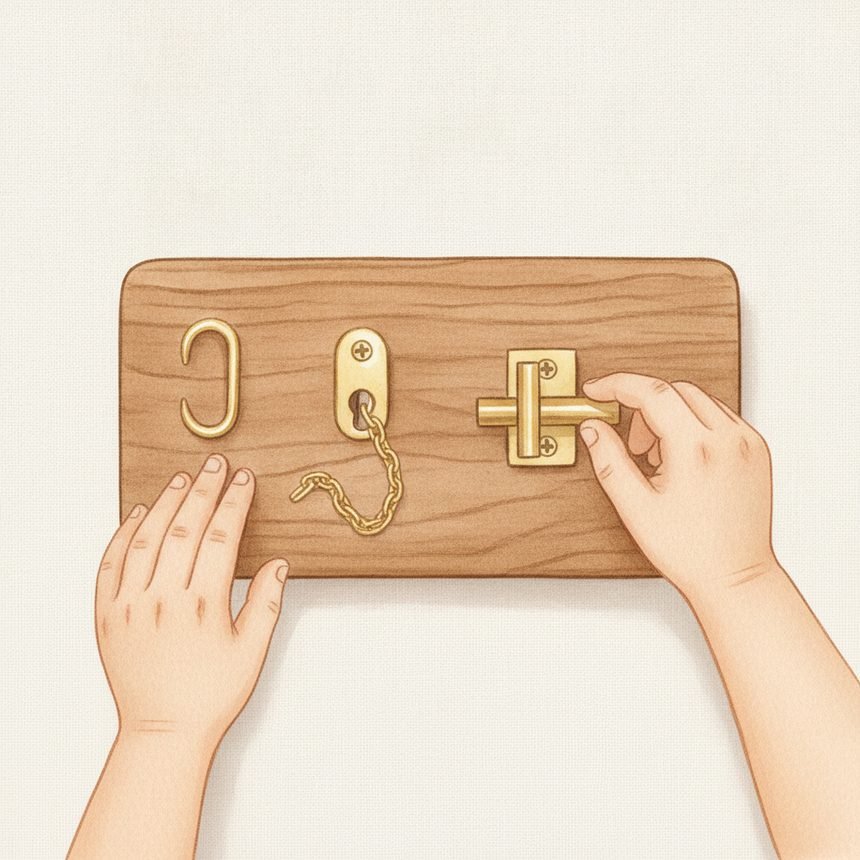
Locks and Latches
A slide bolt, a hook, a chain, a padlock: every closure in the house, gathered on one board to explore.
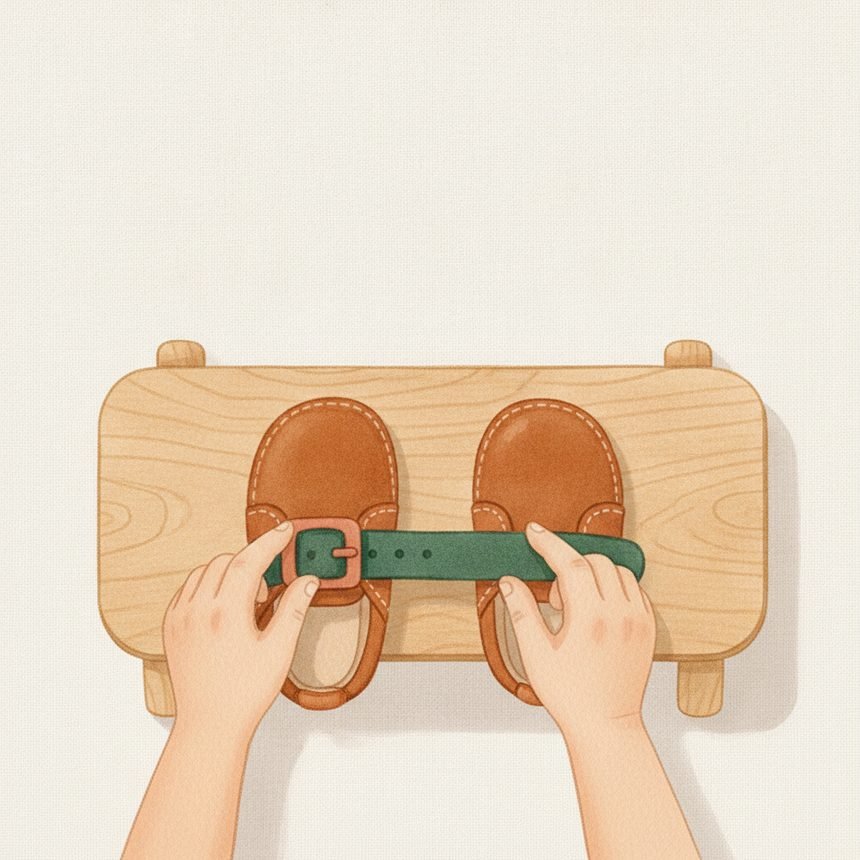
Putting On Shoes
Sit down, aim, push the heel, fasten: heading out the door under their own power.
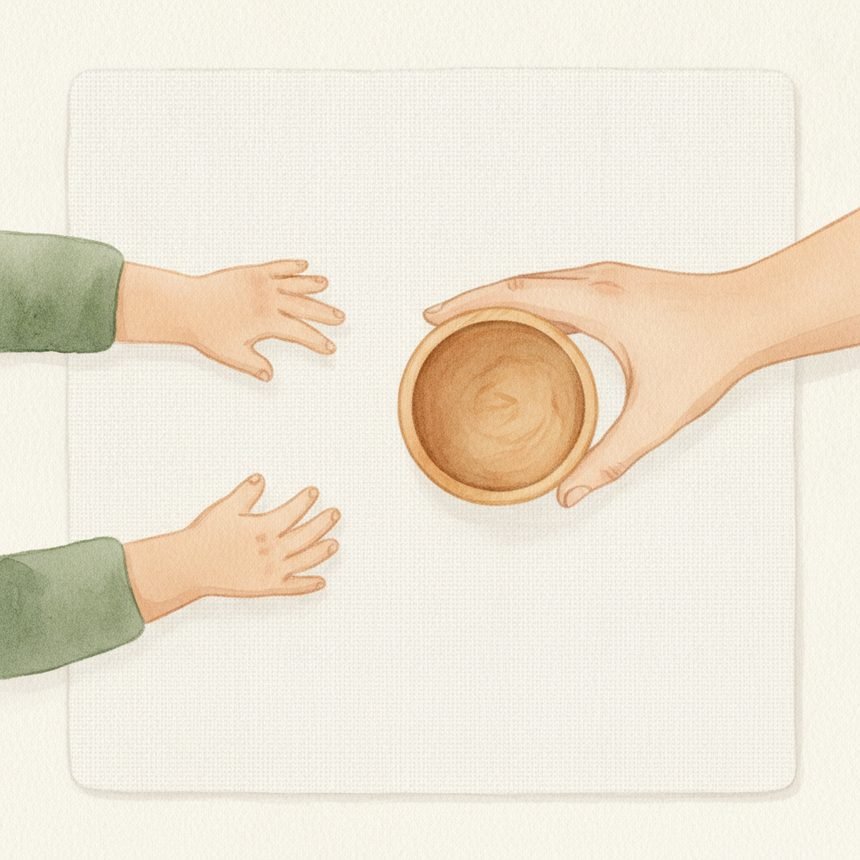
Grace and Courtesy
Greeting, thanking, asking, in a two-person role-play: courtesy gets rehearsed before it gets lived.
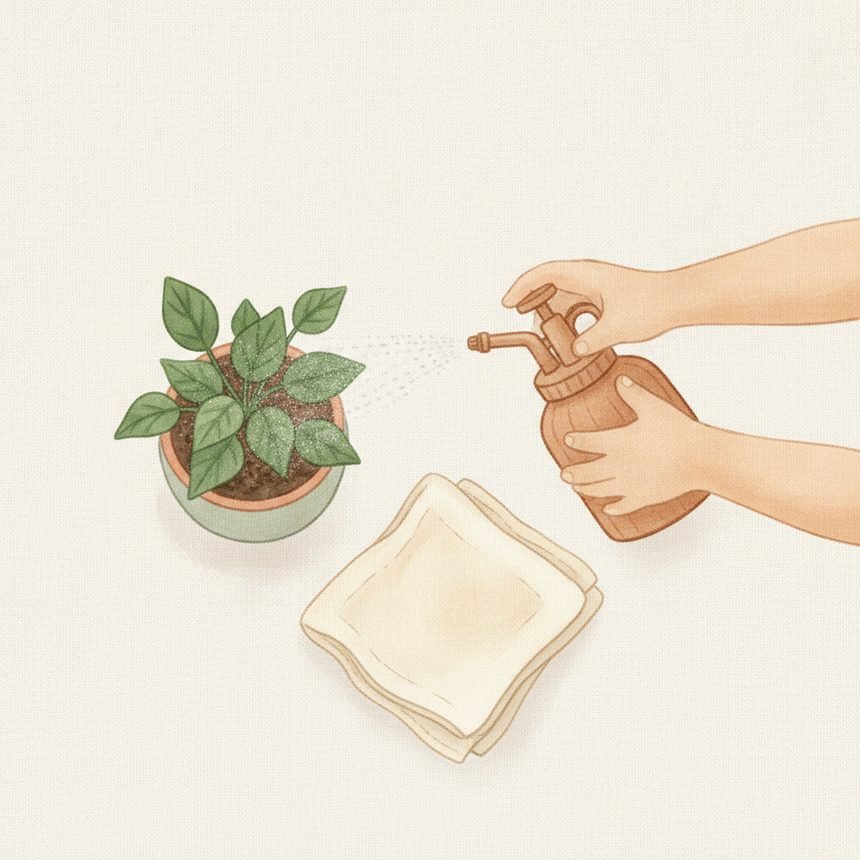
The Spray Bottle
Squeezing a spray bottle trigger to mist the plants: a hand building strength for writing.
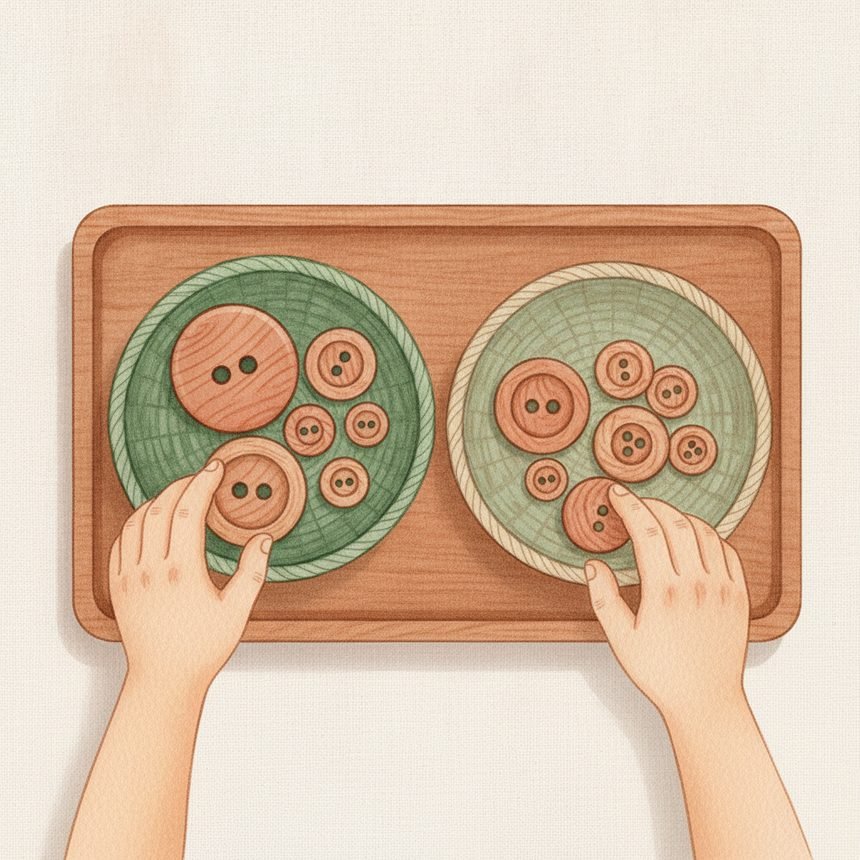
Big and Small
Two baskets, a pile of objects, one question: is it big or small?
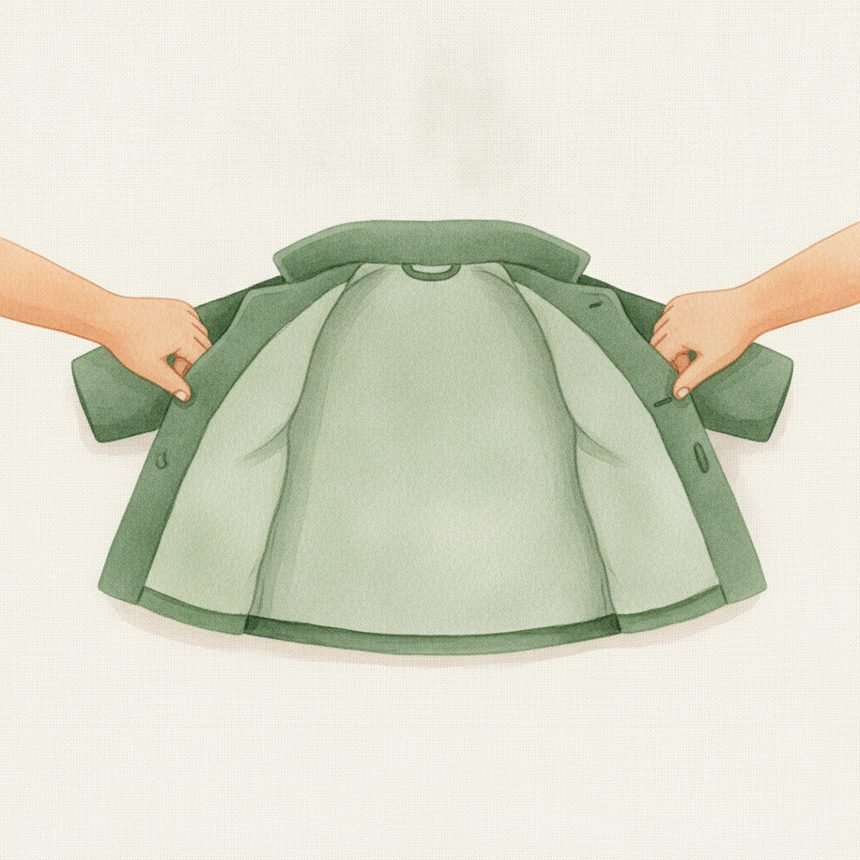
Putting On a Coat
The coat laid inside-out on the floor, arms in the sleeves, and flip, it comes right over the head.
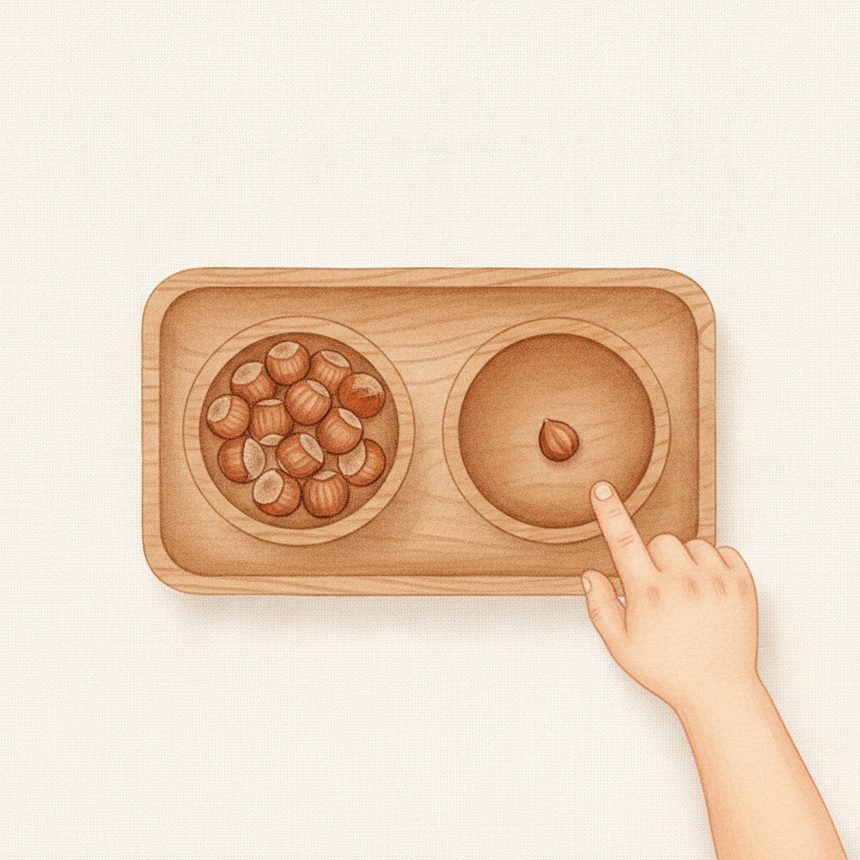
Many and One
A full bowl, a bowl with just one acorn: the very first idea of quantity.
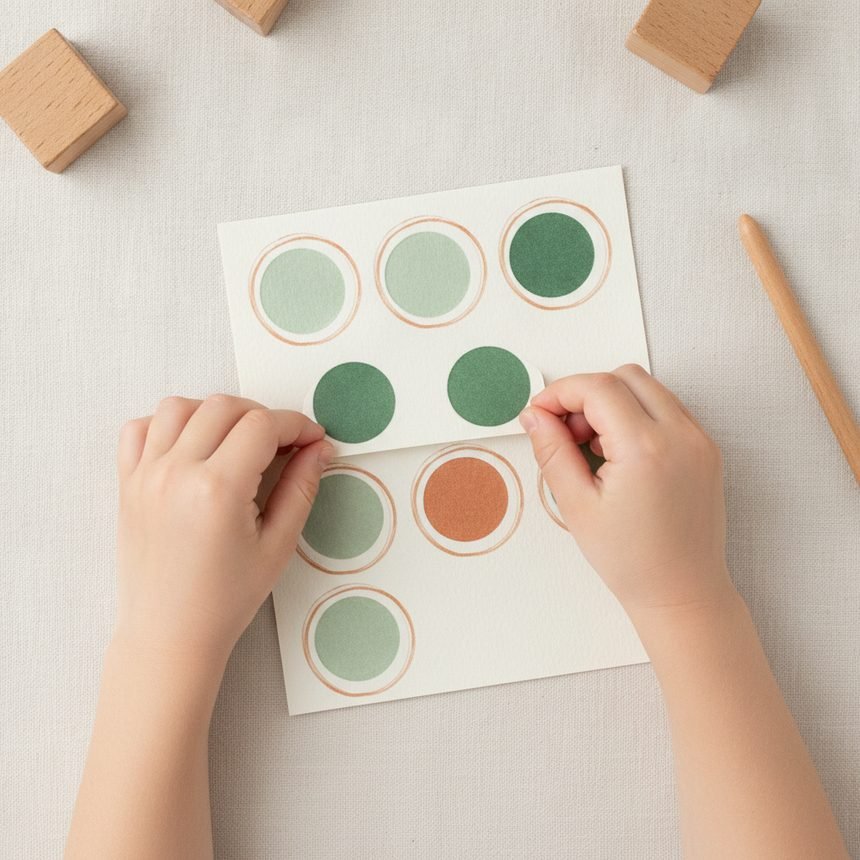
Sticker Play
Peeling a sticker off with the tips of your fingers and sticking it on a drawn circle: the pincer grip takes shape.
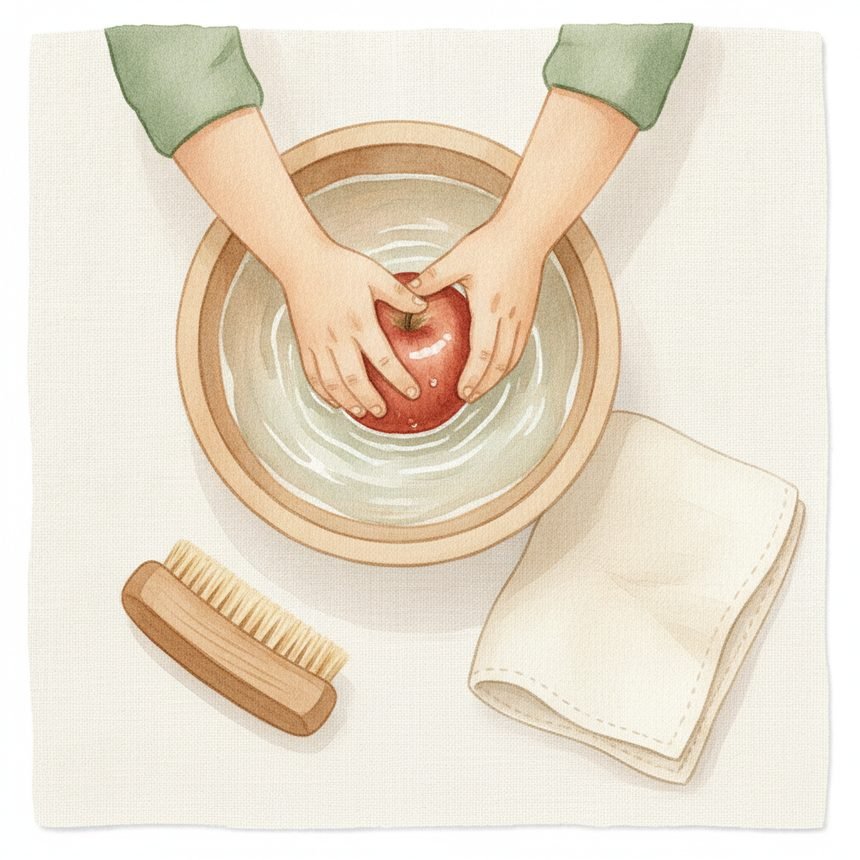
Washing Fruit
Scrubbing an apple under water, drying it, setting it in the bowl: preparing something for others.
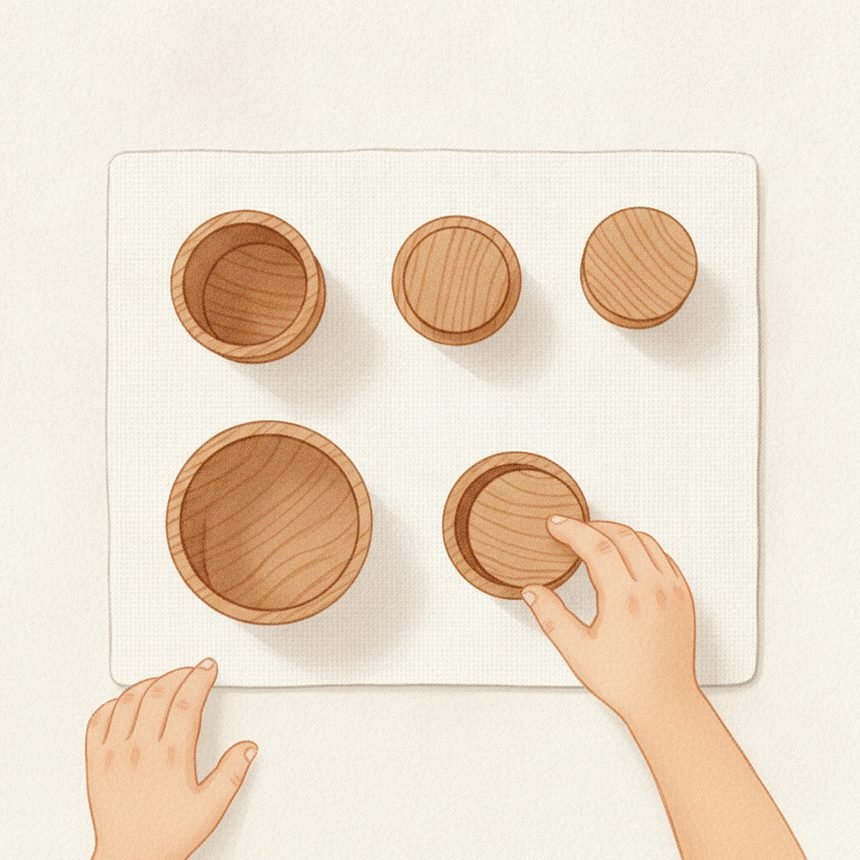
Matching Lids
Five boxes, five lids all mixed up: each one only fits its own.
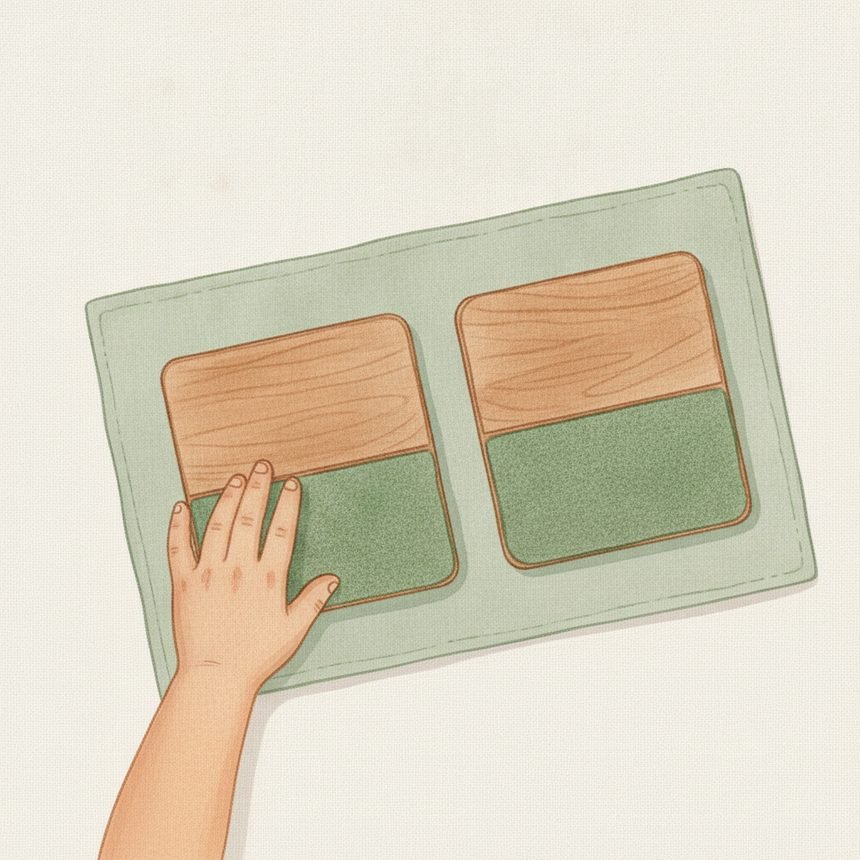
Soft and Rough
Two boards to stroke with fingertips: touch learns to compare.
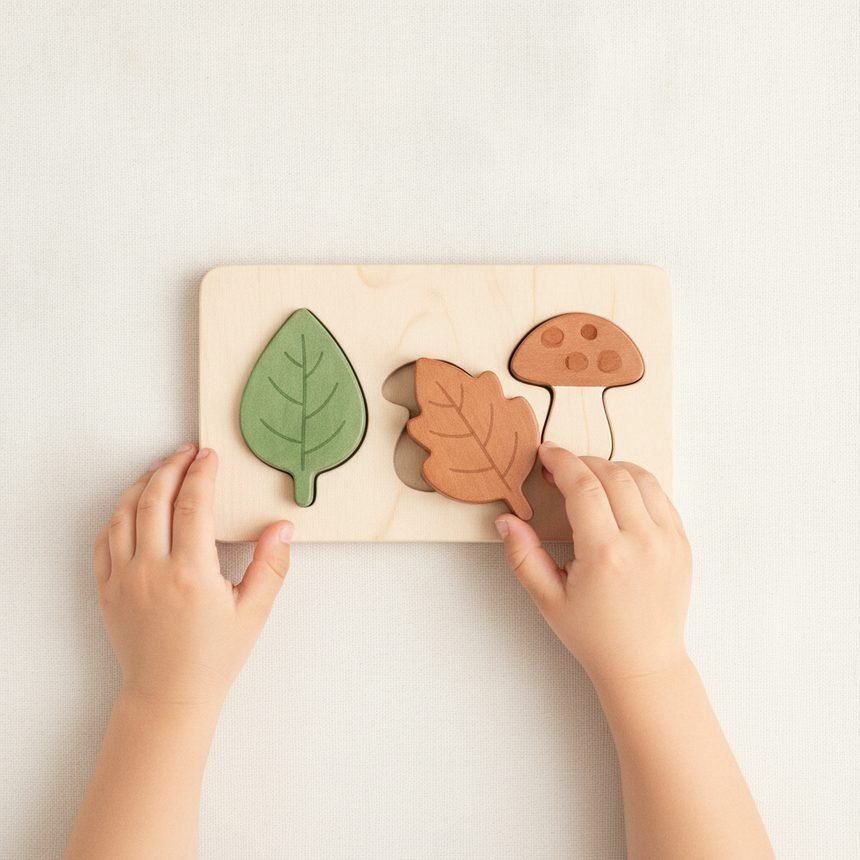
The Three-Piece Puzzle
Three shapes to fit back in their wells: turn, aim, set down.
Learning Colors
Red, blue, yellow: three tablets, three words, and the three-period lesson.