
Sound Boxes
Sealed boxes that whisper or rattle: finding the matching pairs by ear alone.
Sound Boxes is a Montessori activity for a child aged 3 to 4 years. Area: Sensorial. Time: 15 min.
What the activity builds
Isolate listening and refine sound discrimination, with pairs of identical boxes to find by ear alone. The control of error waits until the end: open them, and the contents tell the truth.
The materials
- Six to eight small identical opaque containers: plastic eggs or small spice jars work well
- Fill them TWO BY TWO with the same material: rice, large dried beans, sand, a coin, cotton balls (the silent pair!)
- A small sticker on the bottom of one box in each pair, for your own reference and your child's
How to do it, step by step
- Set three boxes in front of your child, including one matching pair.
- Shake one near your ear, slowly, eyes half closed. Set it back down.
- Shake the others one by one, and bring together the two that sound alike.
- Open them or turn them over: same contents, same sticker, that was the pair.
- Offer your child the game, then add pairs over the following days, up to six or eight boxes.
The parent's role
Shaking near the ear and half-closing your eyes isn't playacting: it's showing how to isolate a sense. Never rule with, "no, listen harder": the stickers under the boxes settle it without you. The silent pair, cotton against cotton, is the hardest and the funniest. Show once, then step back.
Safety
Securely closed boxes, taped shut if needed: rice and beans have no business in a mouth or a nose. Check the seal before every session.
You remain the sole judge of what is right for your child. These activities are offered for educational and recreational purposes: they do not replace medical advice or the guidance of an early childhood professional.
Ways to adapt the activity
- Easier: two very contrasting pairs, rice against a big coin.
- Harder: rice against sand, close-sounding pairs, or sorting from softest to loudest.
- Next step: blindfolded, recognizing the sounds of the house: the door, water, a spoon.
Up next
More activities for a 3 to 4 years child.
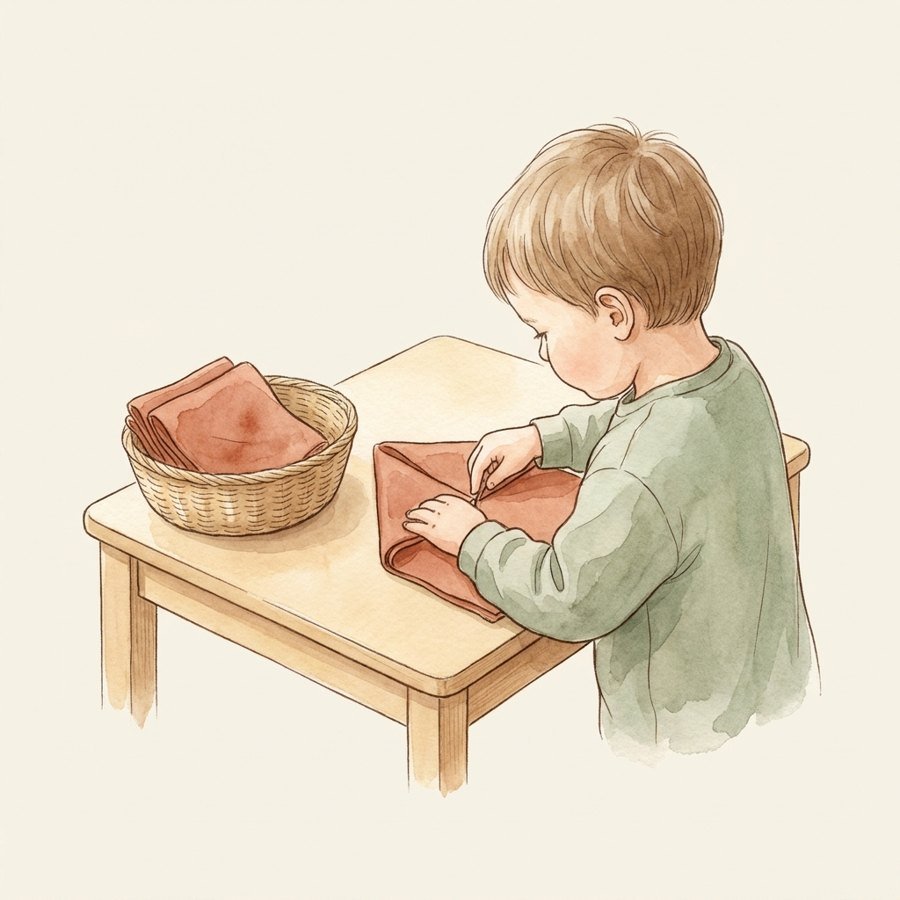
Folding Napkins
Matching corner to corner, then two more. Geometry that smells like fresh laundry.
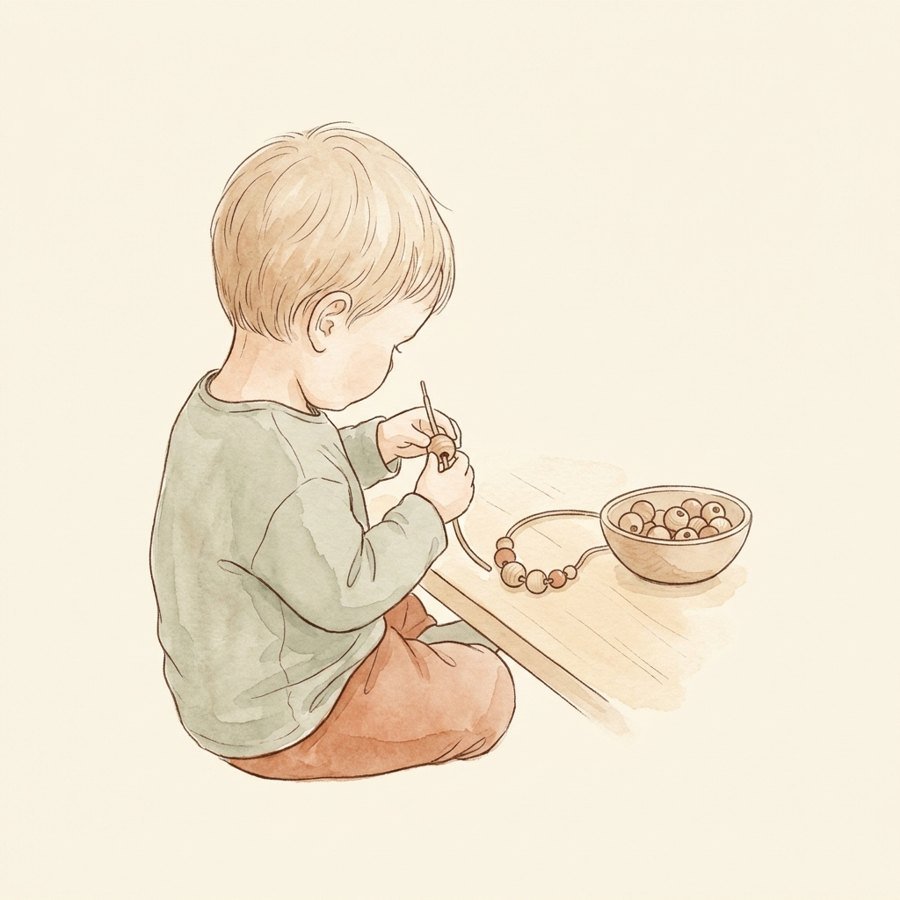
Stringing Beads
Aiming a shoelace at a hole a few millimeters wide. Guaranteed concentration.
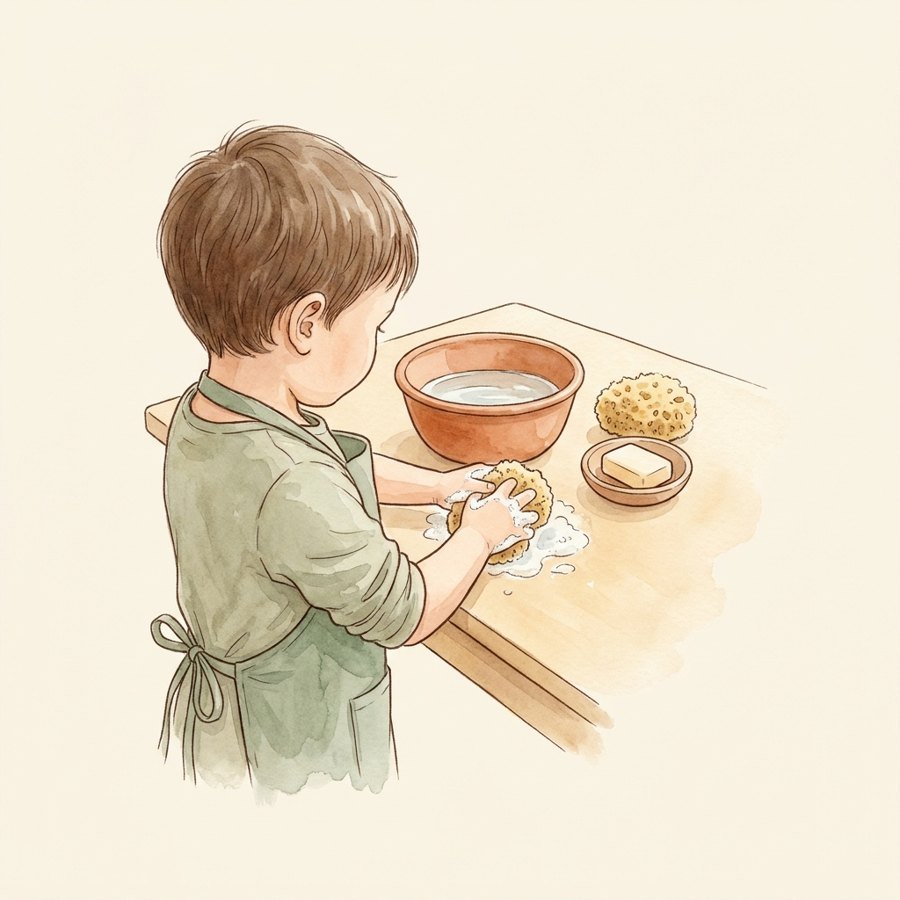
Washing a Table
A real household chore, start to finish, cleanup included. Children love it because it's useful.
Beginning Sounds
"I see something that starts with mmm..." The very first step toward reading.
Tong Transfer
A pair of tongs, an empty compartment to fill, and three fingers working in silence.
Opposites
Heavy and light, rough and soft: words the hands understand before the mouth can say them.
Buttoning and Unbuttoning
A strip of fabric with big buttons, and the patient motion that leads to dressing solo.
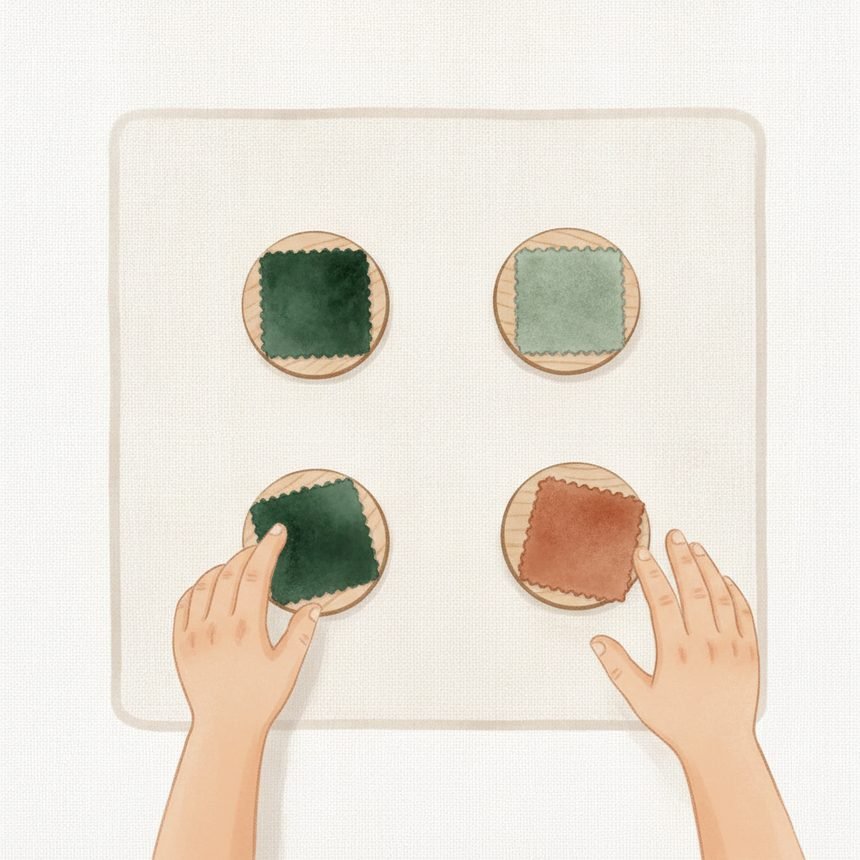
Matching Textures
Pairs of fabric found by touch alone, eyes closed: the sense of touch getting sharper.
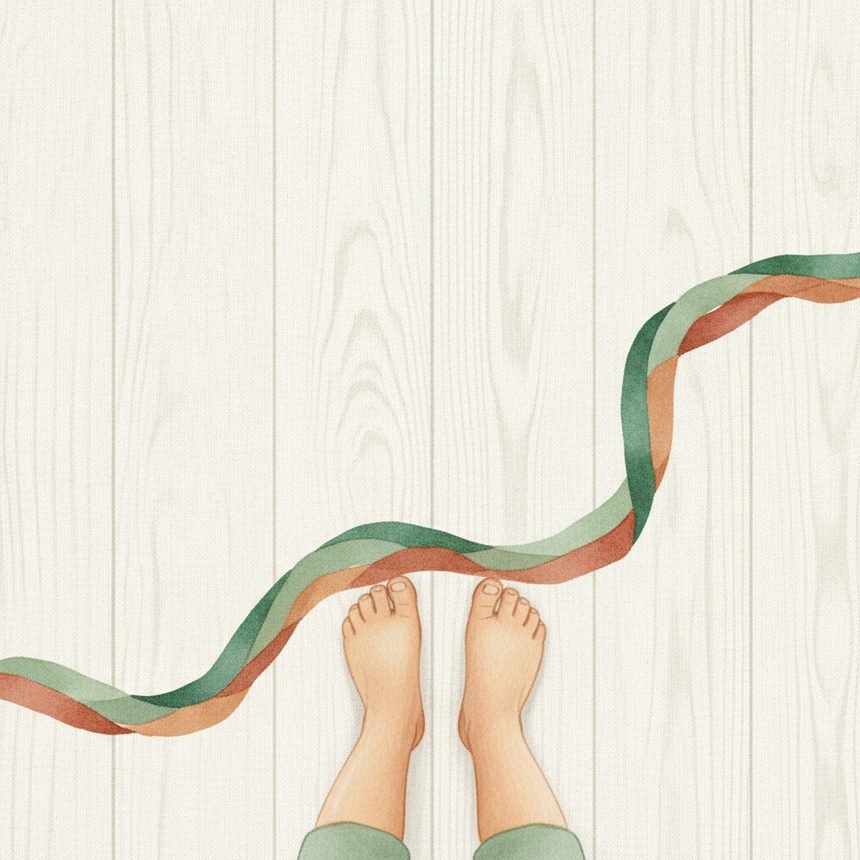
Walking the Line
A ribbon on the floor, and the whole body learning balance and calm, one step at a time.
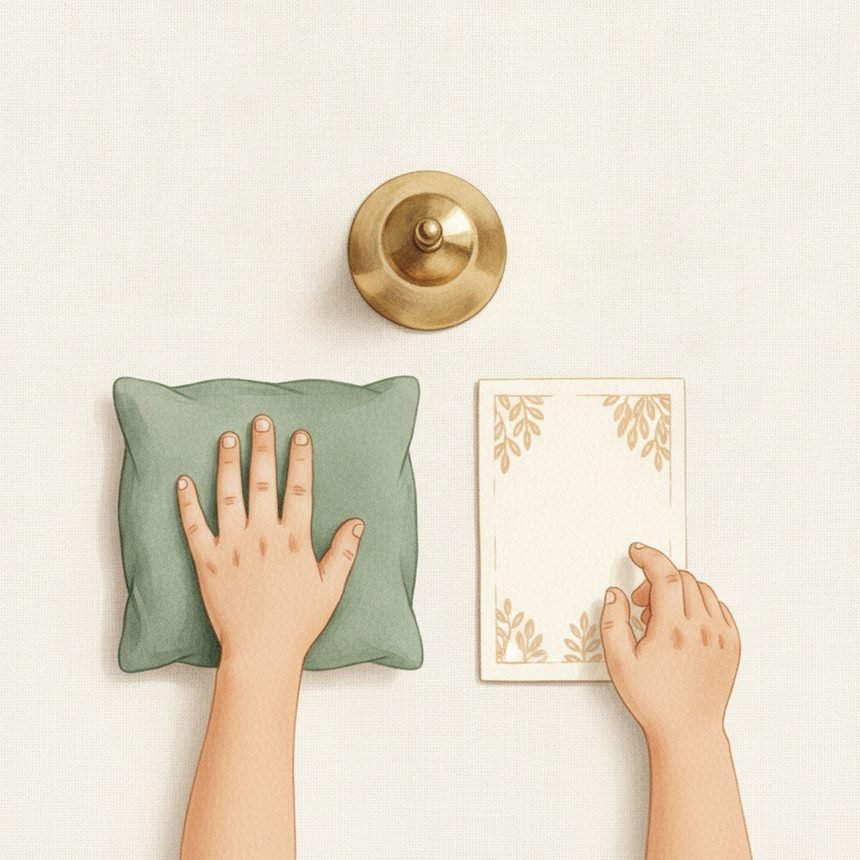
The Silence Game
Making silence together, listening to it, then hearing your own name whispered: the calmest game there is.
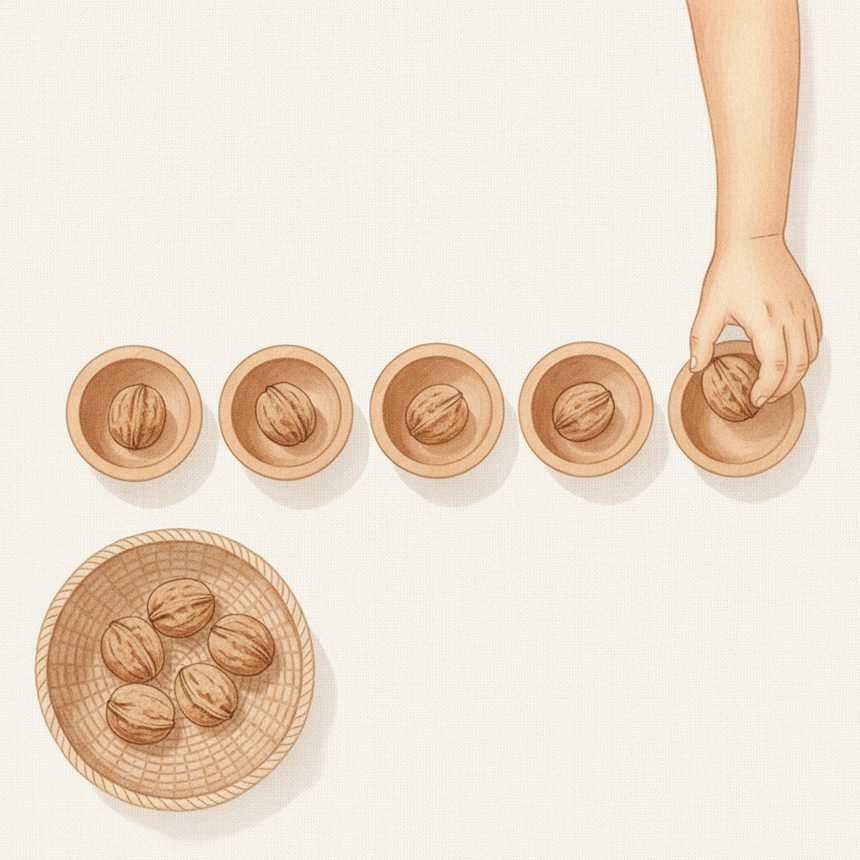
One for Each
One walnut per bowl, not two, not zero: one-to-one correspondence, the foundation of all math.
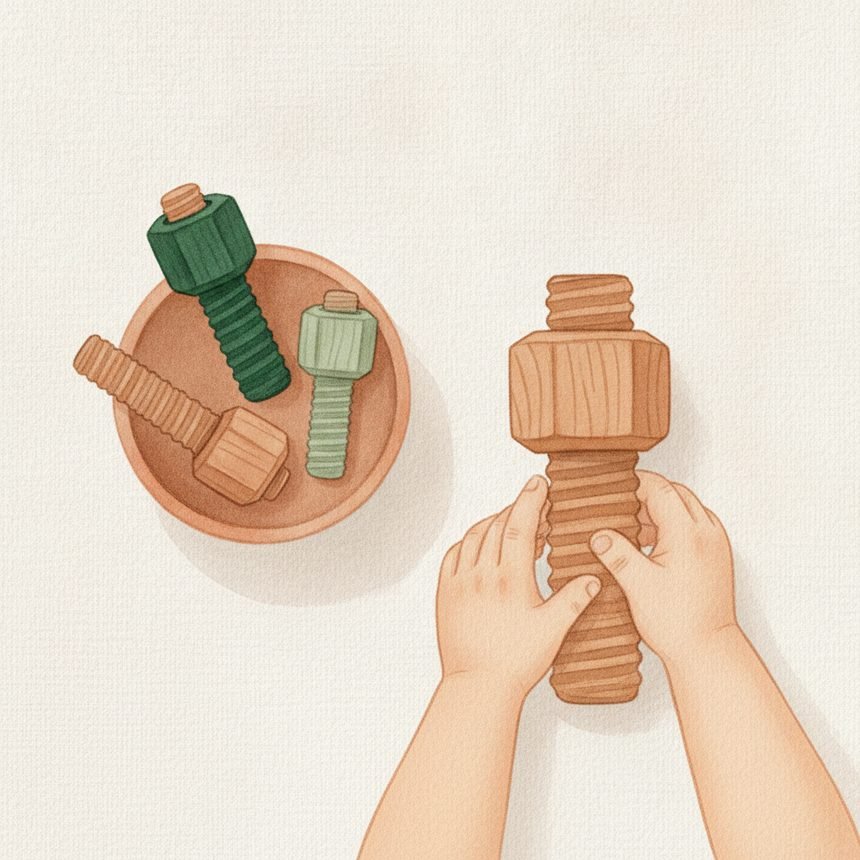
Nuts and Bolts
Real bolts, real nuts, and sizes that must never be mixed up: a workshop at your child's fingertips.
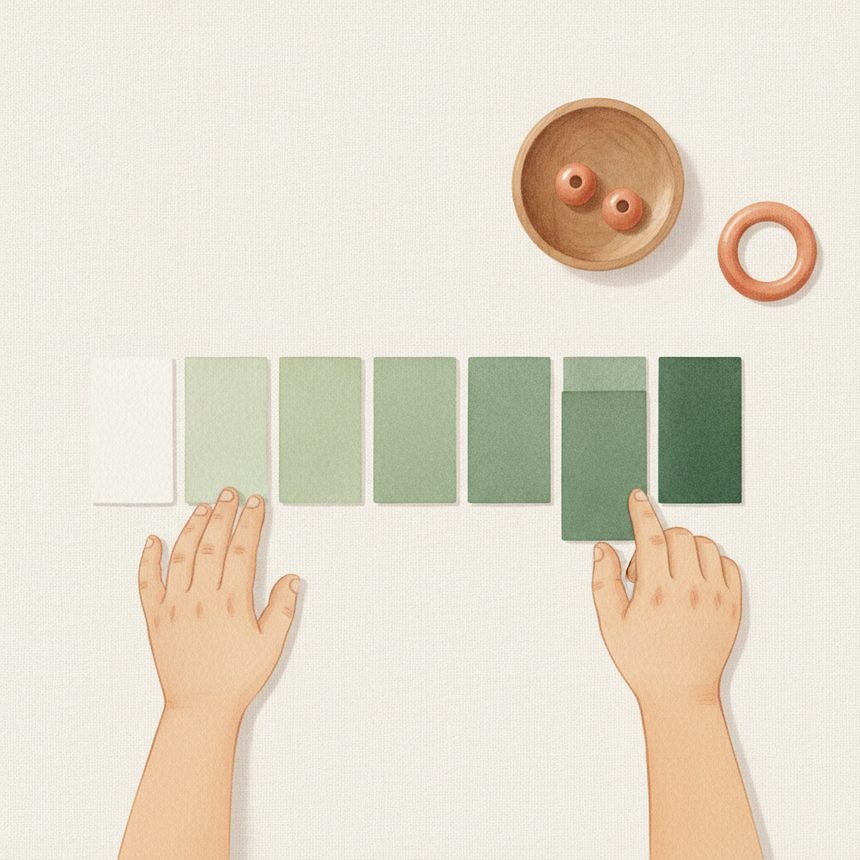
Light to Dark
Seven shades of a single color to put back in order: the eye learning to see finely.
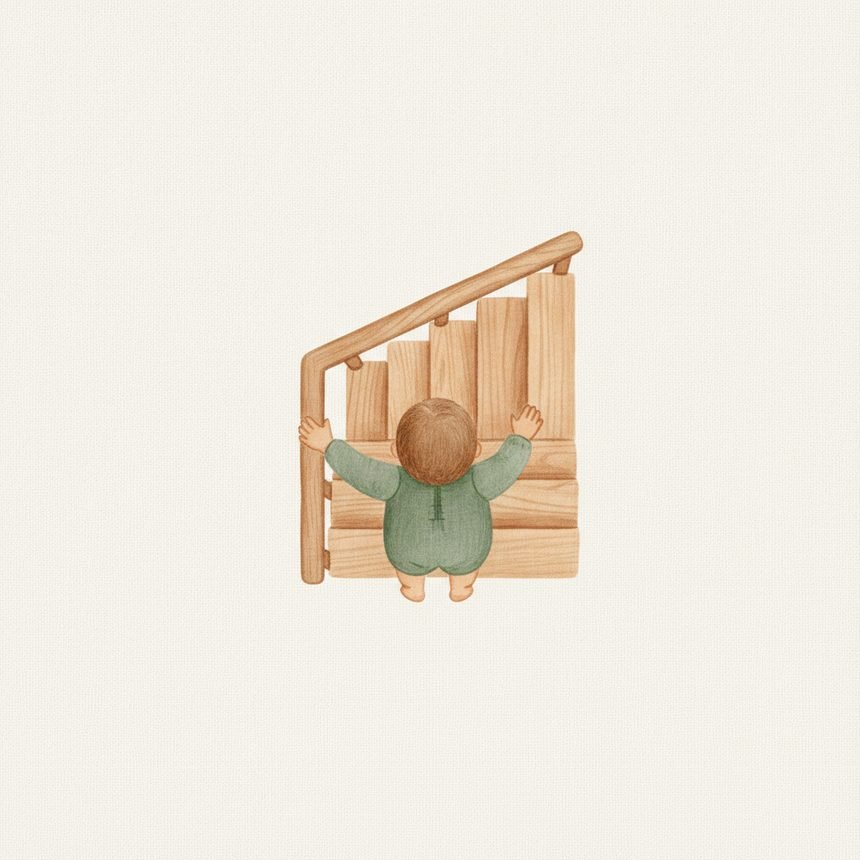
Counting the Stairs
One number per step, one word per stride: the number sequence enters the body.
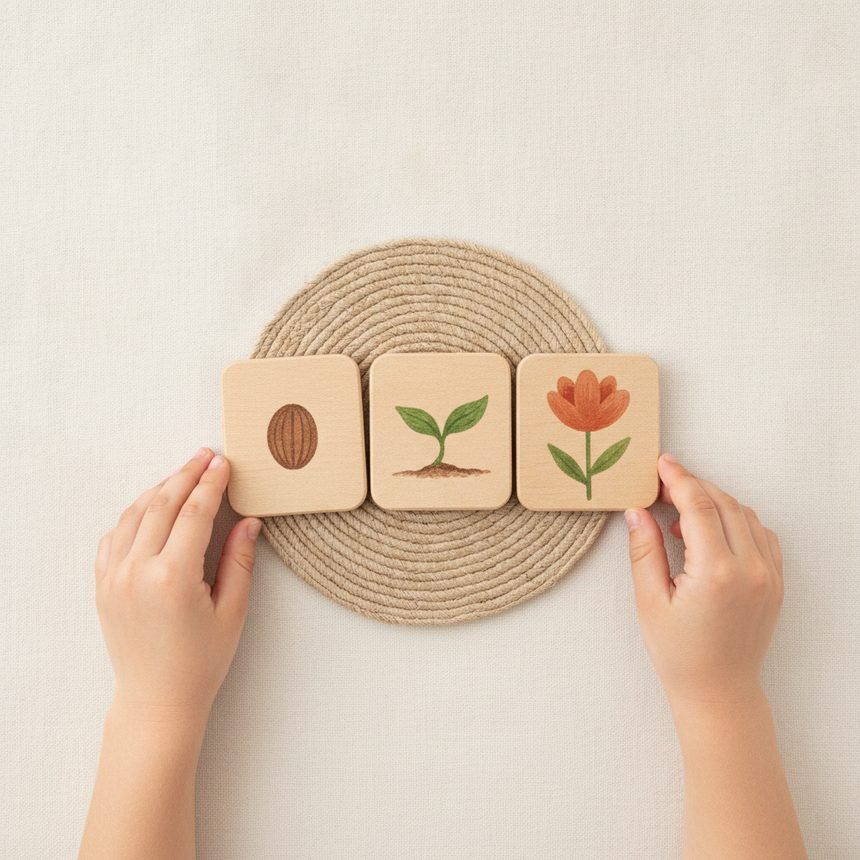
Sequencing Pictures
Three pictures from the same story to put in order, then tell: the story starts to take shape.
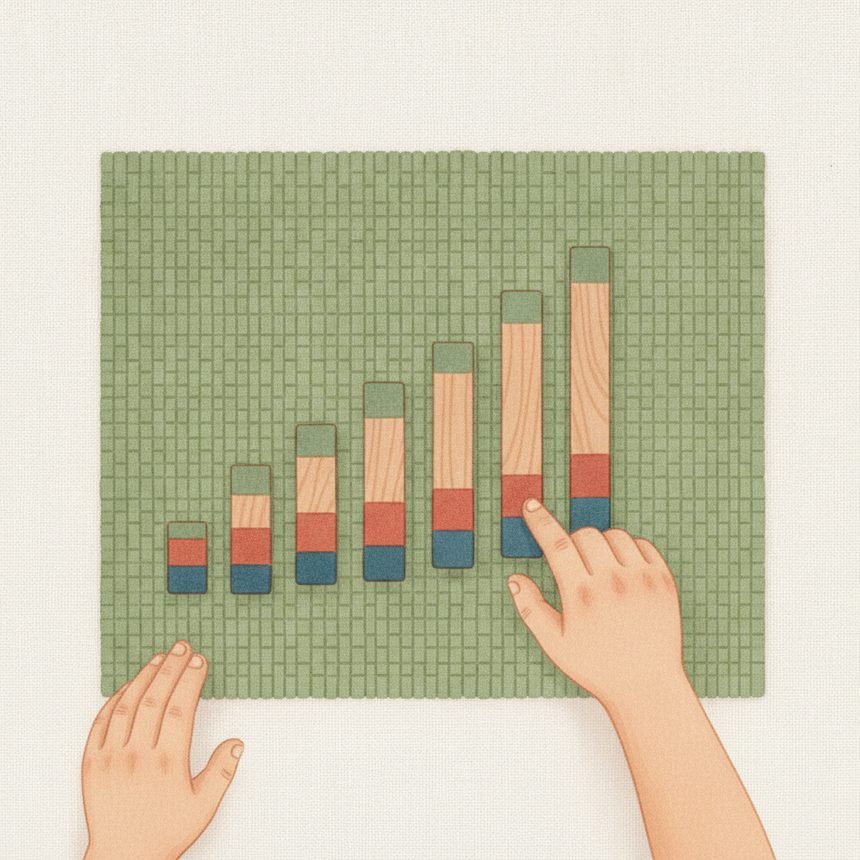
Number Rods
Rods of growing length: quantity becomes something you can see and weigh in your hands.
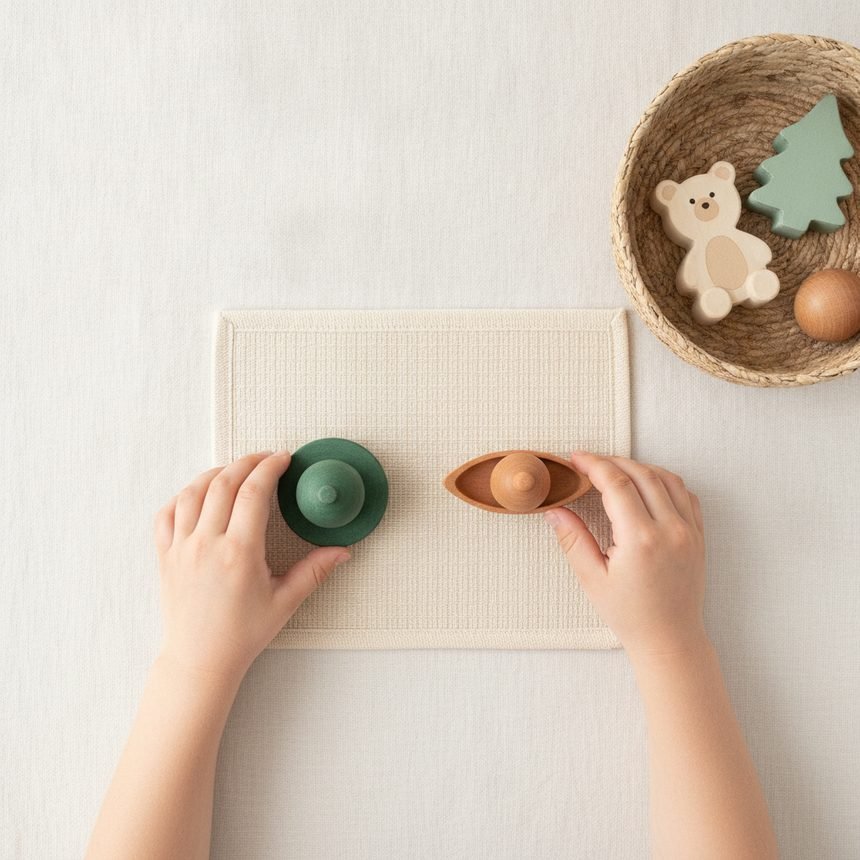
The Rhyming Game
Cat and hat sound the same at the end: the ear getting ready to read before a book is even opened.
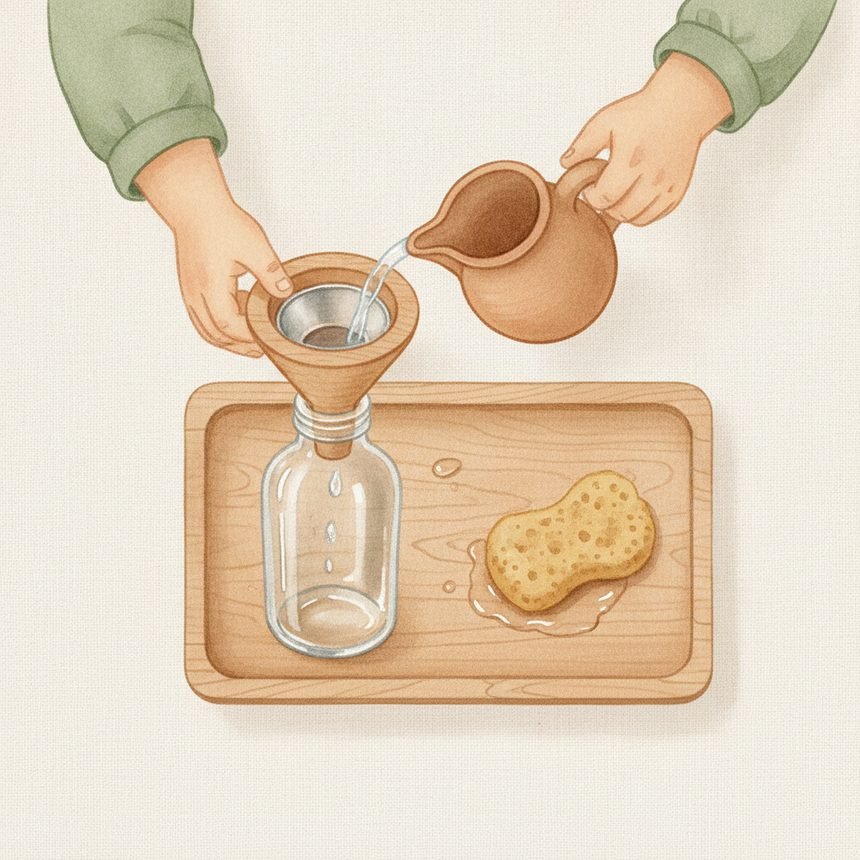
Pouring with a Funnel
A funnel, a narrow-necked bottle, and water that only makes it through if the hand stays steady.
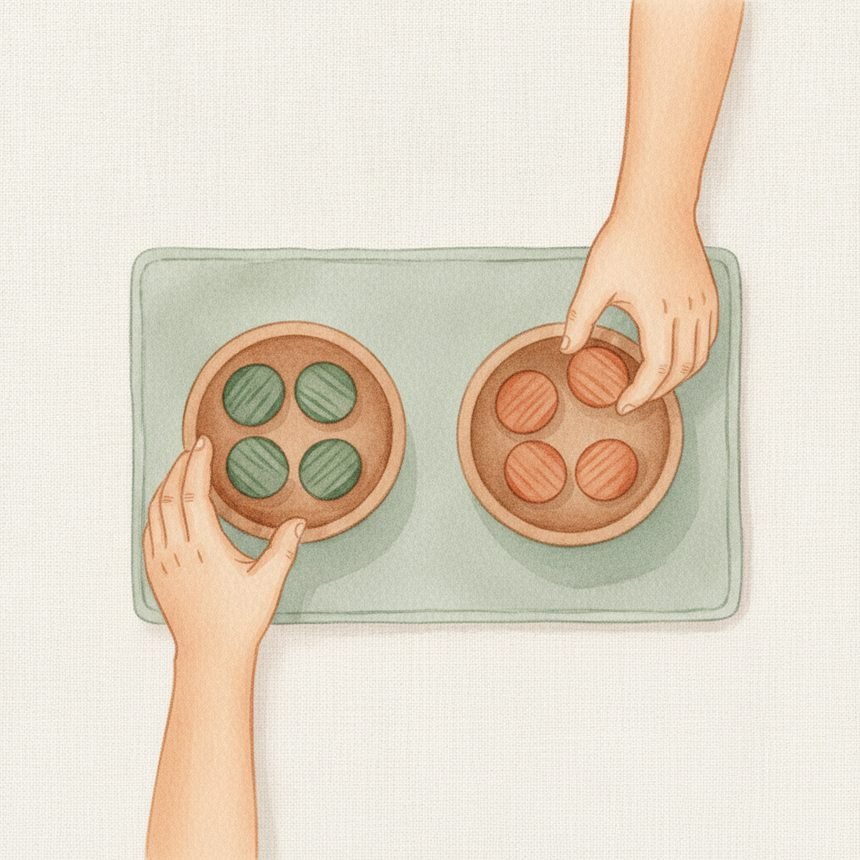
How Many Are There?
Counting real little collections by moving each object: one word, one motion, never more.
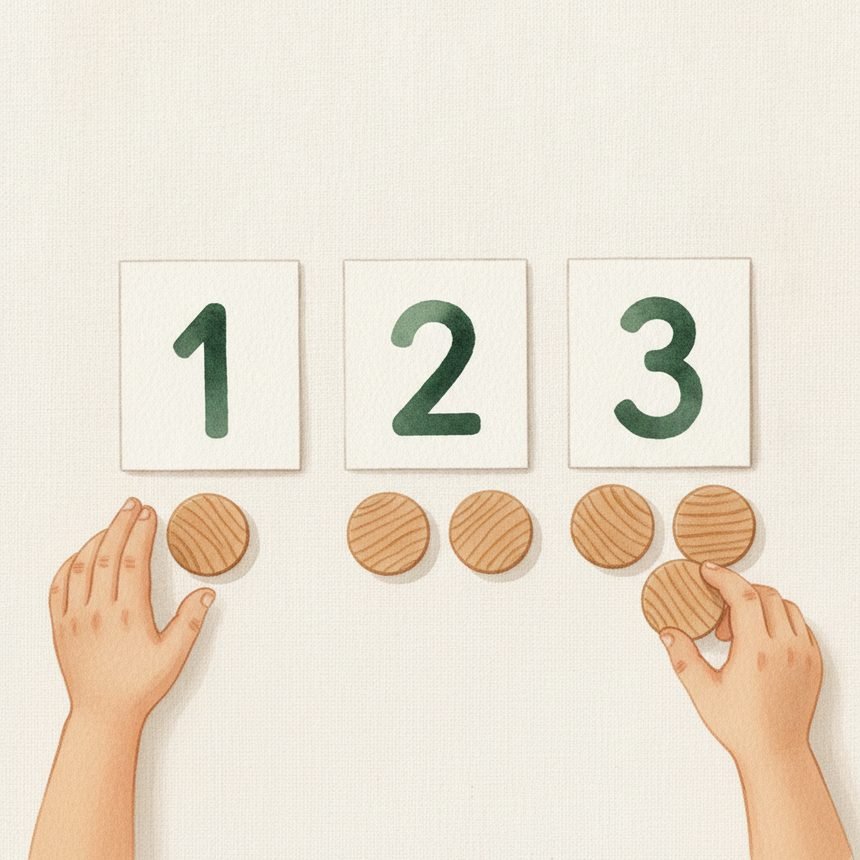
Matching Number and Quantity
The written numeral finally meets the quantity it stands for, counter by counter.
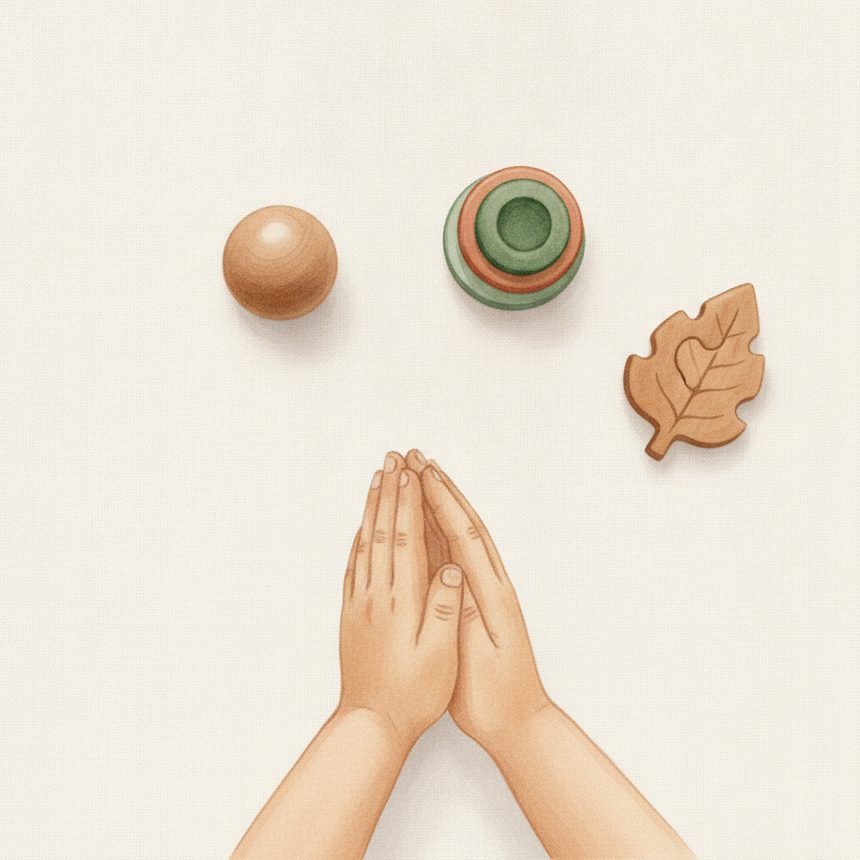
Clapping Syllables
A word, a few claps: your child hears that words are made of pieces.
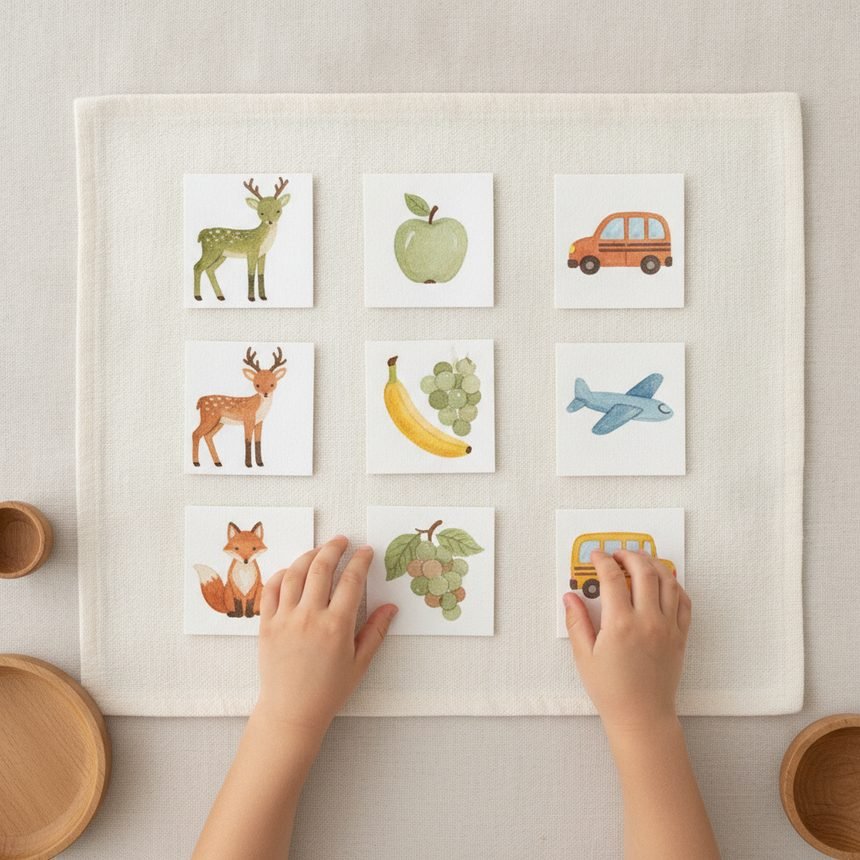
Sorting Pictures into Categories
Animals on one side, fruit on the other: vocabulary finds its own drawers.
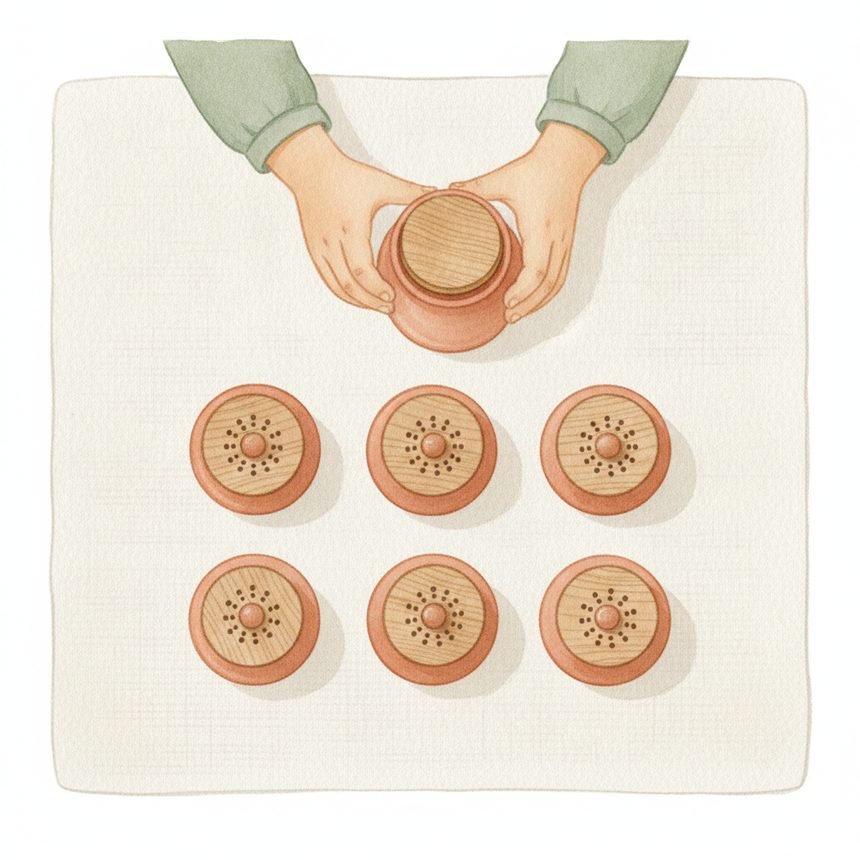
Smelling and Matching
Two rows of small jars, and a sense we almost never train: smell.
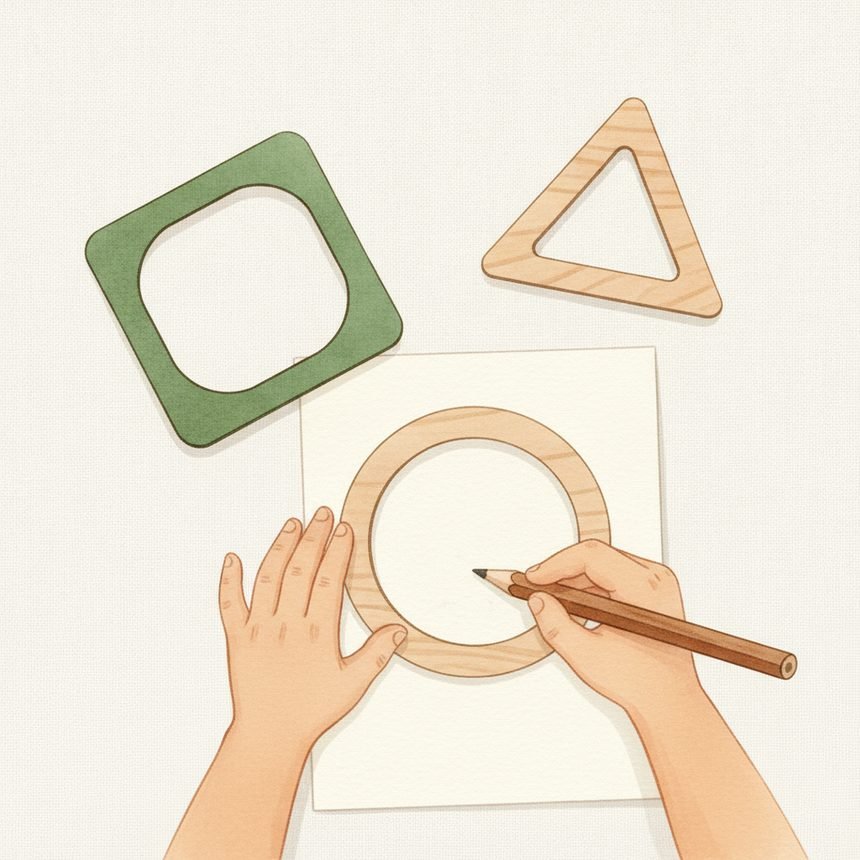
Tracing Shapes with Stencils
The crayon follows the edge of the shape: the hand learns where to stop.