Montessori Activities for 2 to 3 Year Olds
This is the age of "I do it myself." Your child has little patience for being helped, and starts chaining several movements together in the right order. Practical life activities become their favorite place to play.
What the $29 set for ages 2 to 3 includes
Digital PDFs. One age group, one language. No subscription and no physical shipment.
Semilou offers 32 printable Montessori activities for ages 2 to 3, in the following areas: practical life, sensorial, fine motor, language, early math, science and nature.
Recommended time for this age: 10 to 15 minutes.
What the $29 set for ages 2 to 3 includes
Browse all 32 Montessori activity previews for ages 2 to 3. Each preview shows the materials, safety guidance, and the first two steps. A one-time $29 purchase unlocks this age group in English: 32 complete printable activity sheets, the combined booklet, and seven printable material PDFs.
Digital PDFs. One age group, one language. No subscription and no physical shipment.
32 activities for 2 to 3 years
Each activity sheet lists the materials you will need.
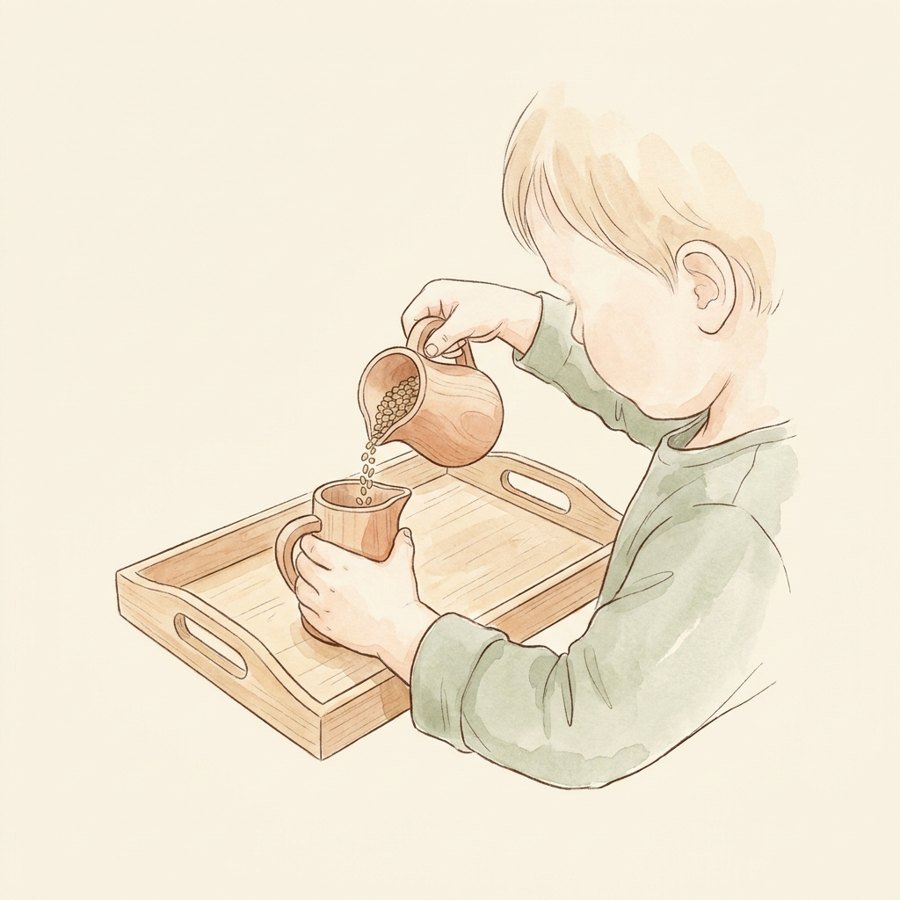
Pouring Dry Ingredients
Two small pitchers, dry lentils and a tray. A hands-on activity for ages 2 to 3.
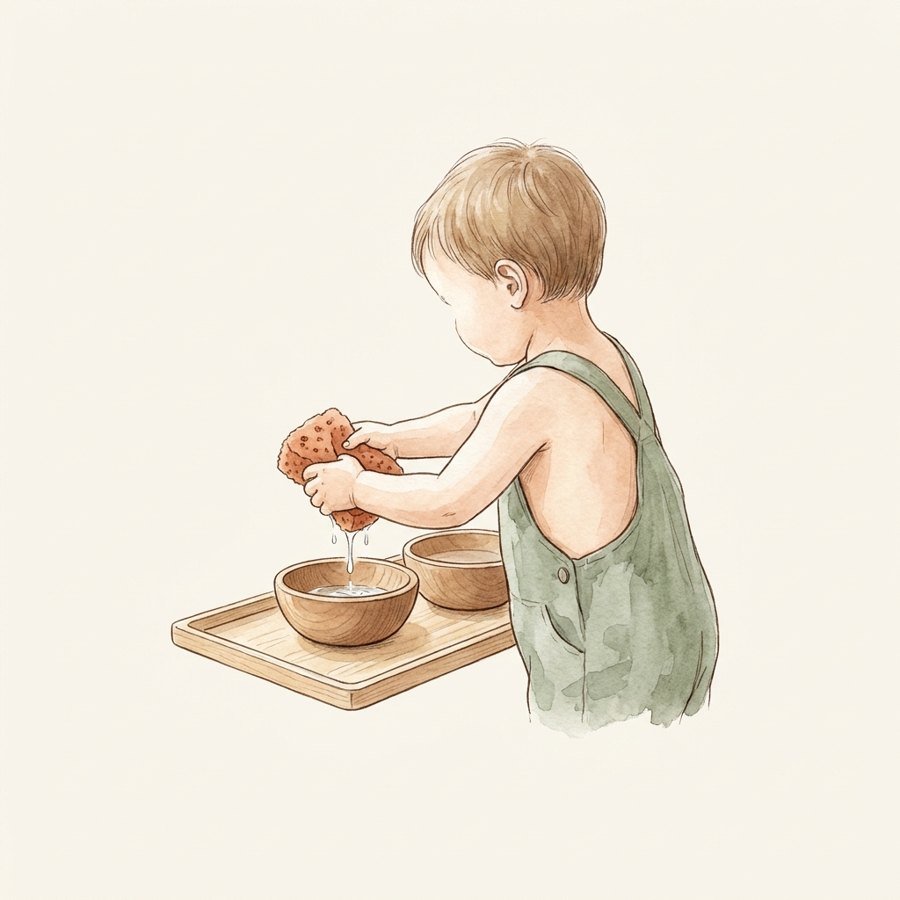
Sponge Squeezing
Moving water from one bowl to another by squeezing a sponge. Simple, and a little wet.
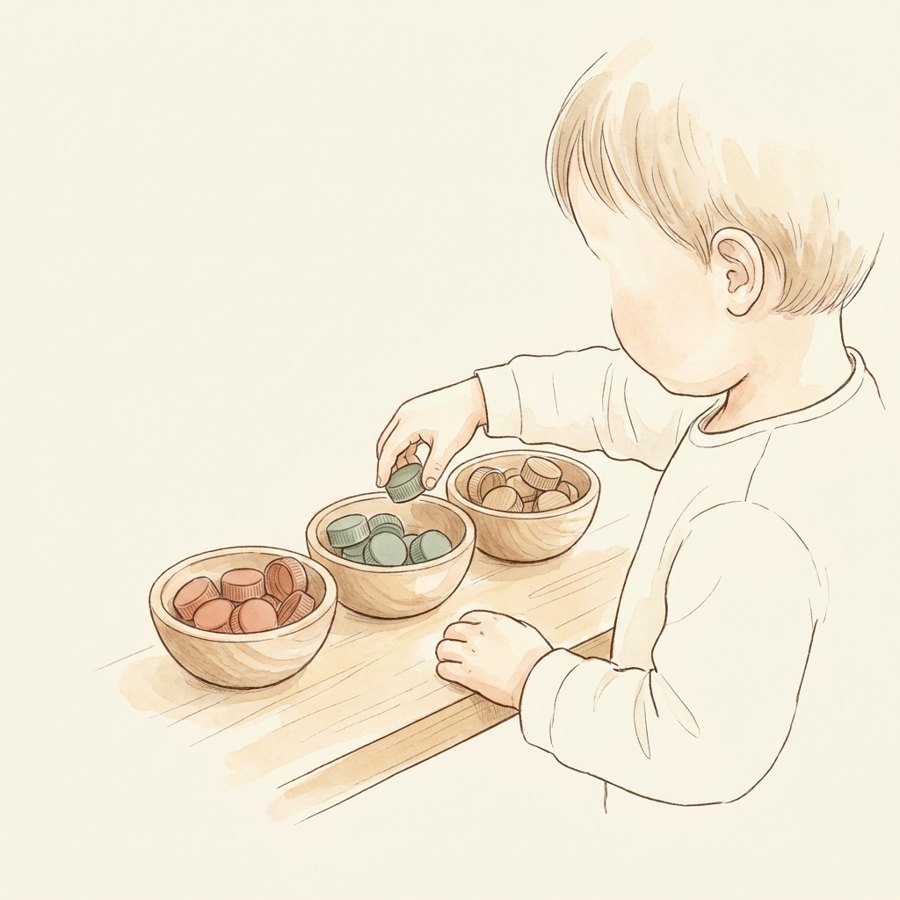
Color Sorting
Each object finds its family. The first real sorting work.
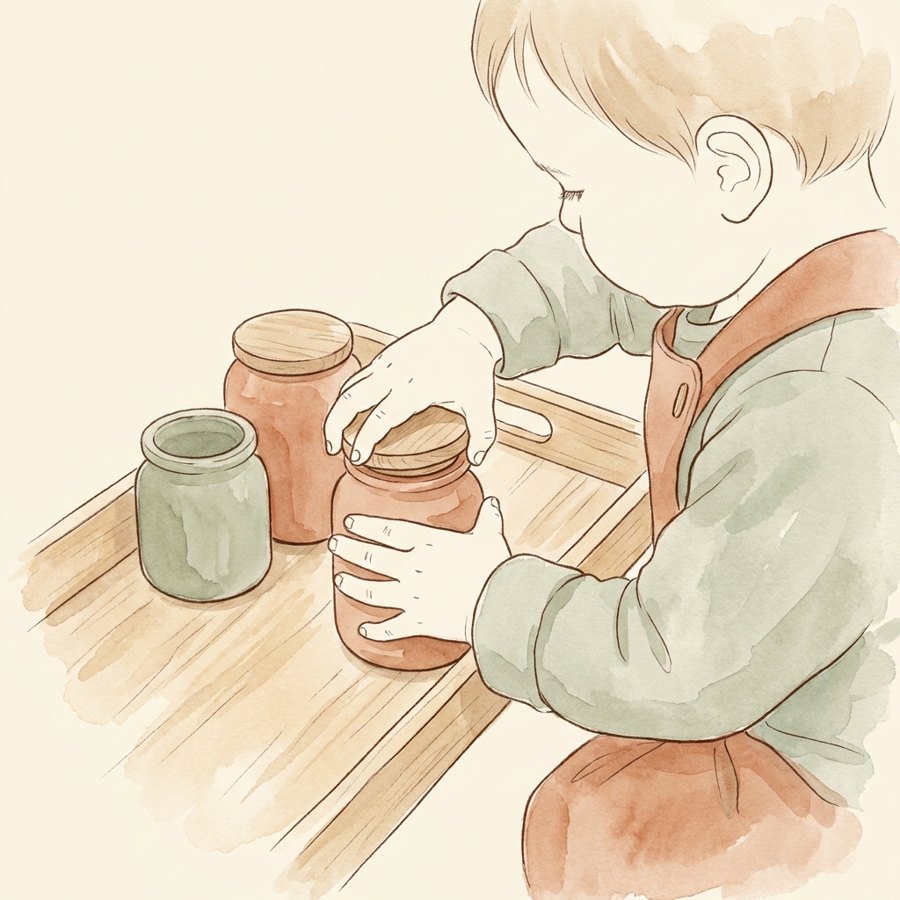
Screwing and Unscrewing
Three jars, three lids, and a wrist rotation to master.
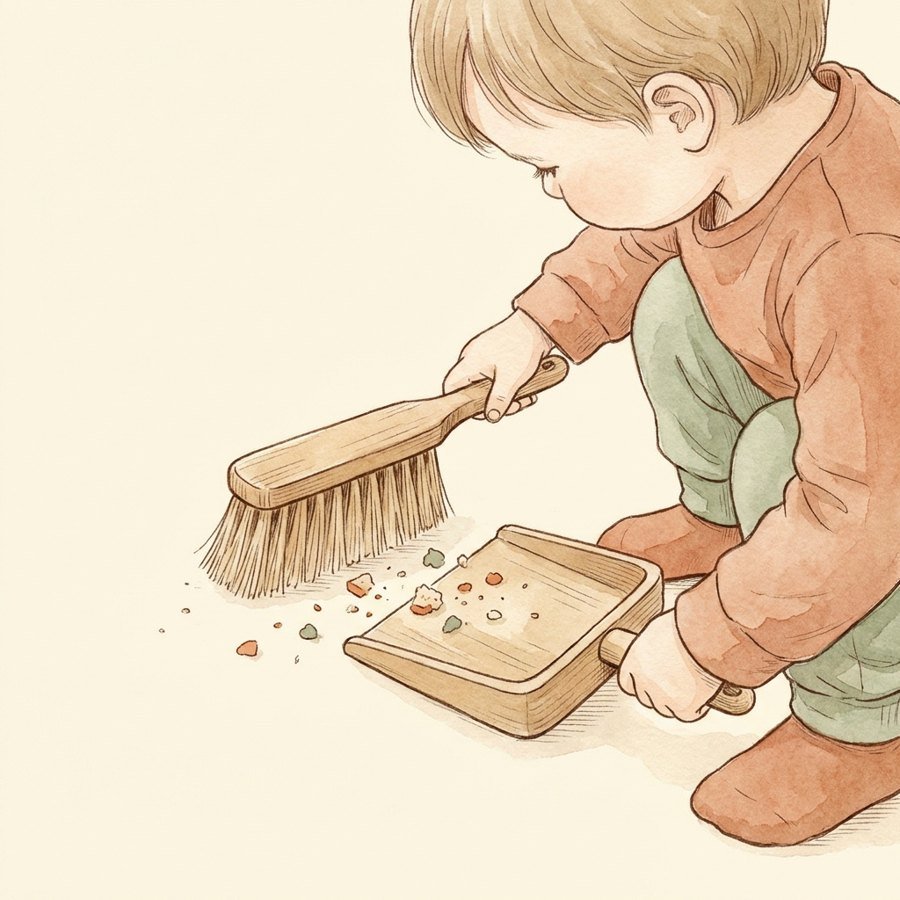
Sweeping Crumbs
A small broom, a dustpan, and the pride of fixing your own spill.
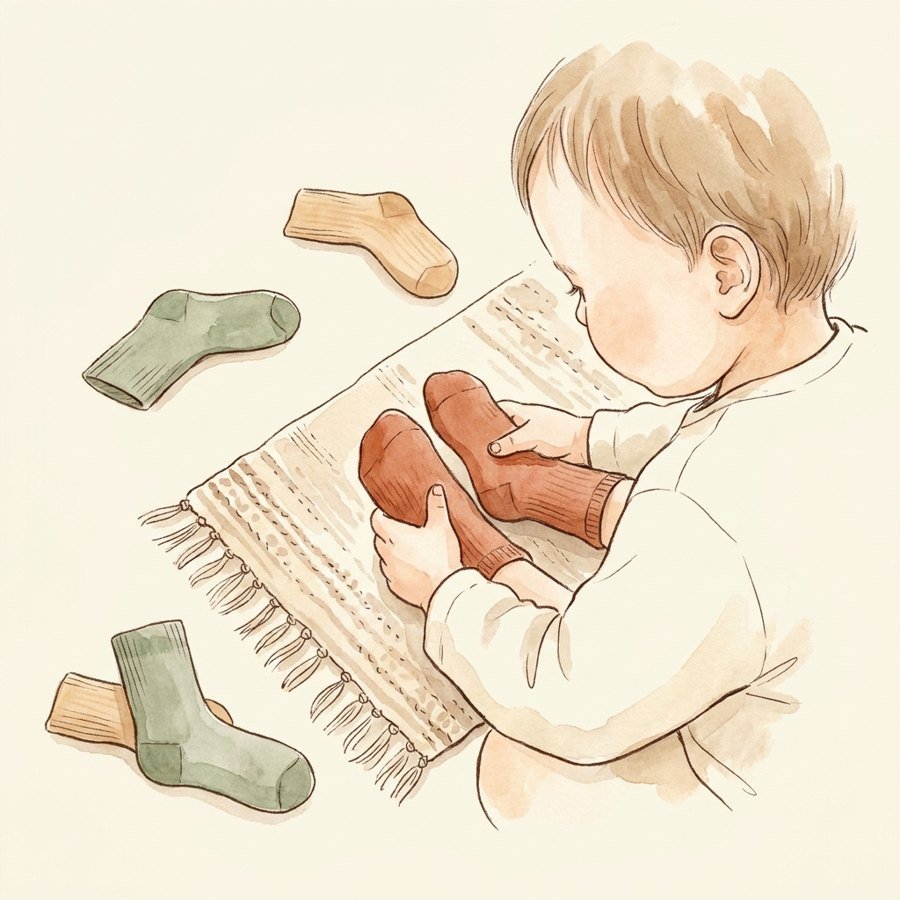
Matching Socks
The laundry basket becomes an observation game, and you get sorted laundry out of it.
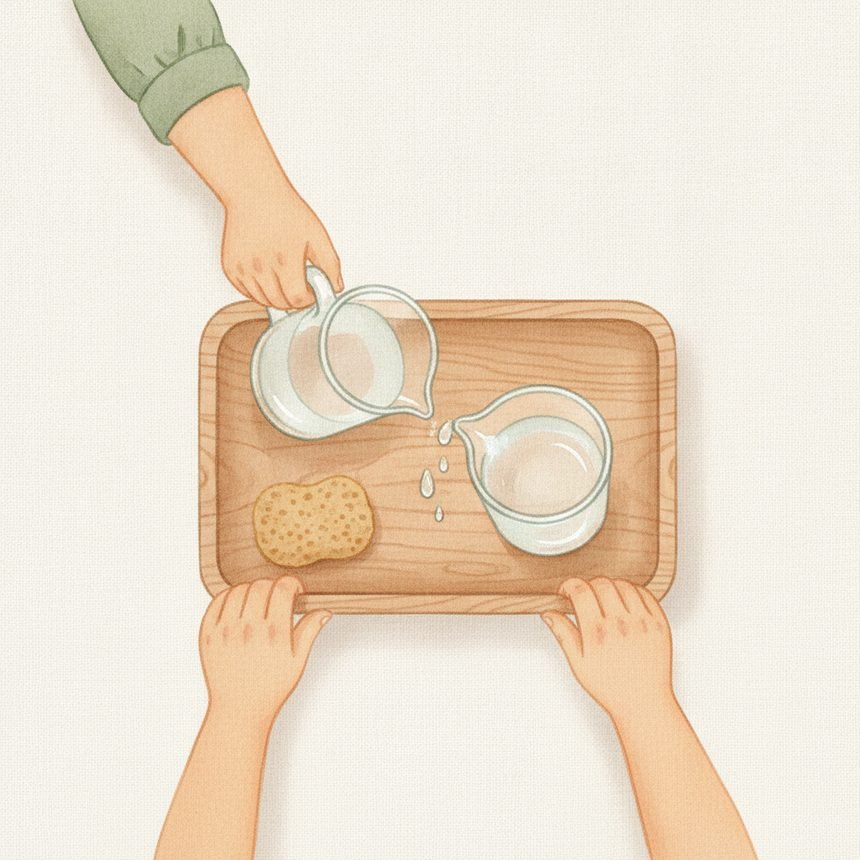
Pouring Water
Two small pitchers, a little water, and the motion that makes a child proud: pouring without spilling over.
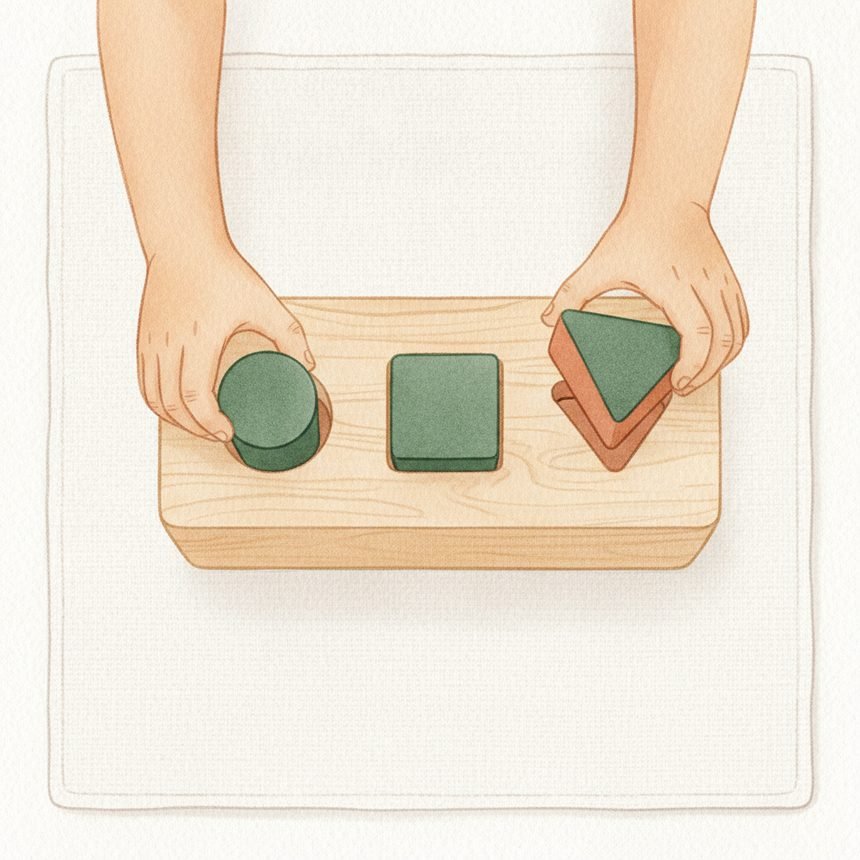
The Shape Sorting Box
A circle, a square, a triangle, and three slots: each shape fits only its own.
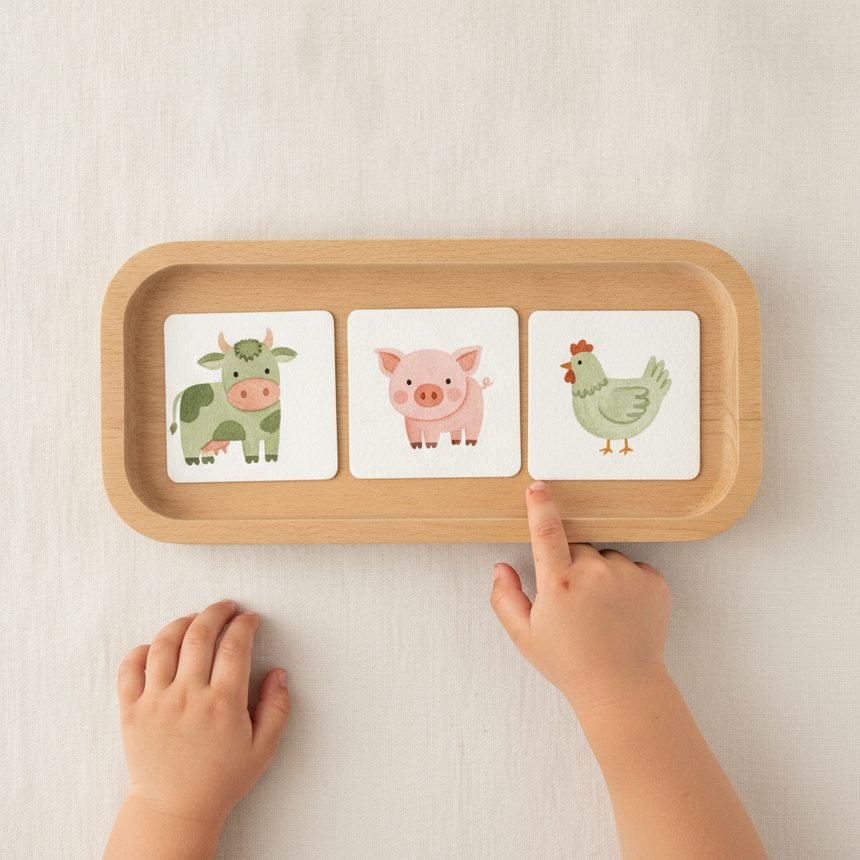
Naming Pictures
A handful of animal or object cards, and the three-period lesson for meeting new words and coming back to them.
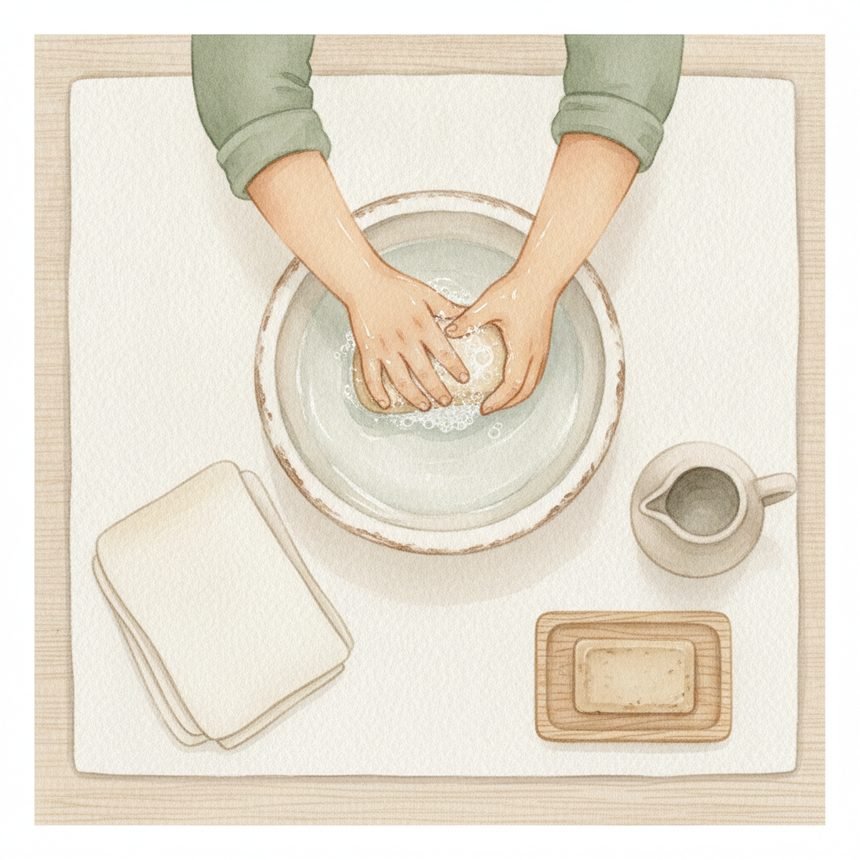
Washing Hands
A whole ritual with a basin, soap, and a towel: the first big, complete cycle your child carries out start to finish.
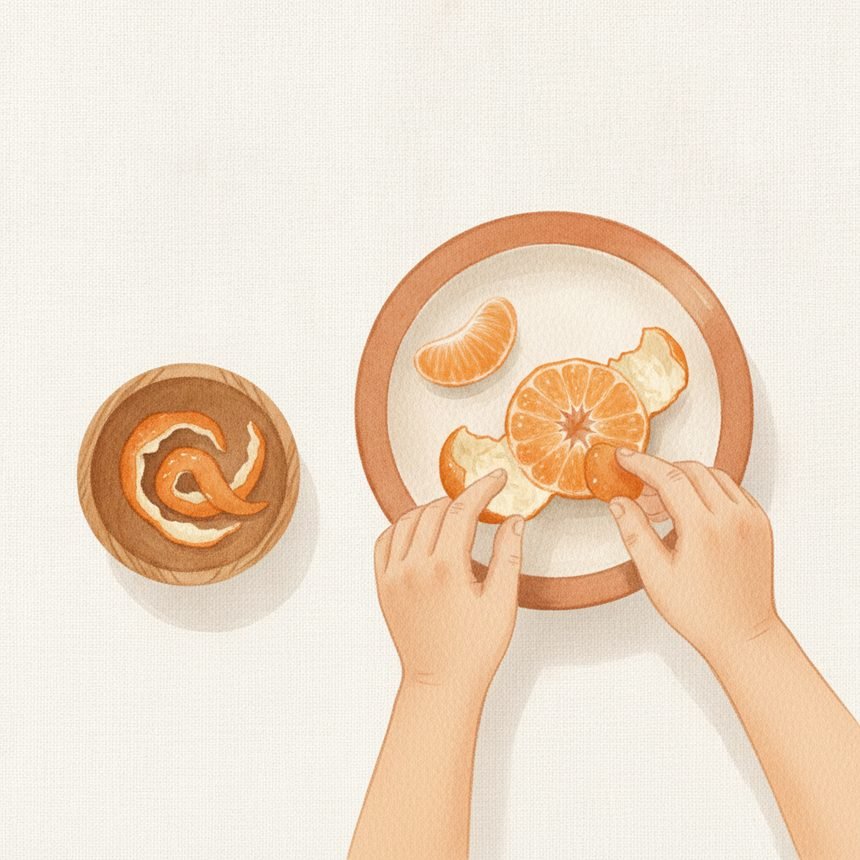
Peeling a Clementine
Piercing, pulling, separating the segments, and eating what you made yourself: practical life that tastes good.
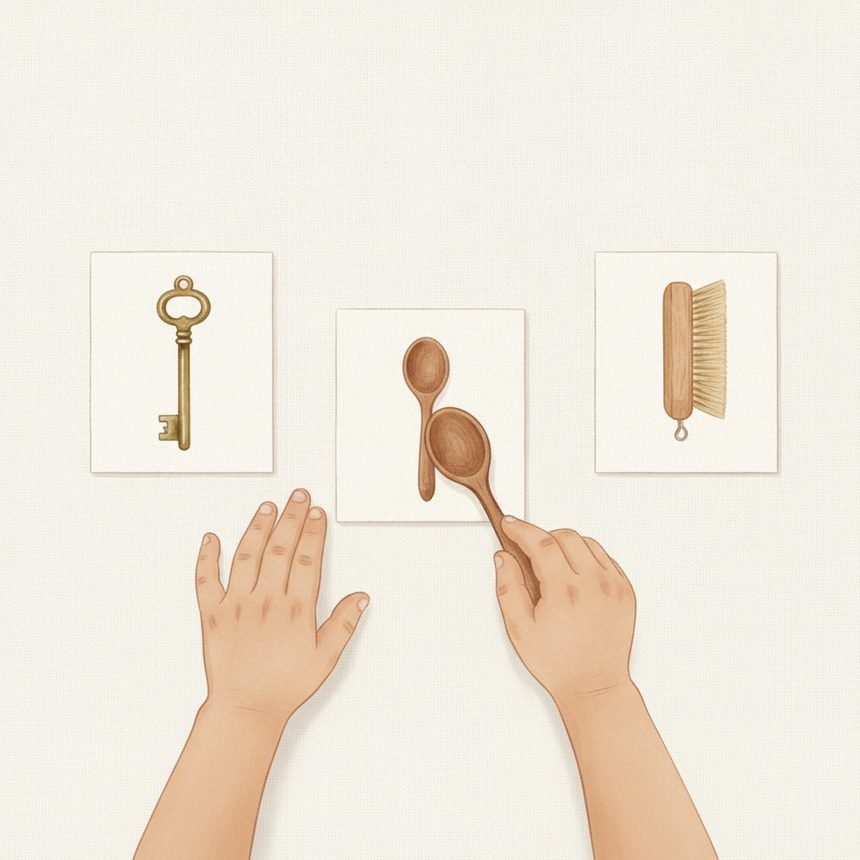
Object and Picture Matching
Setting the real spoon on the photo of a spoon: the bridge between the world and its images.
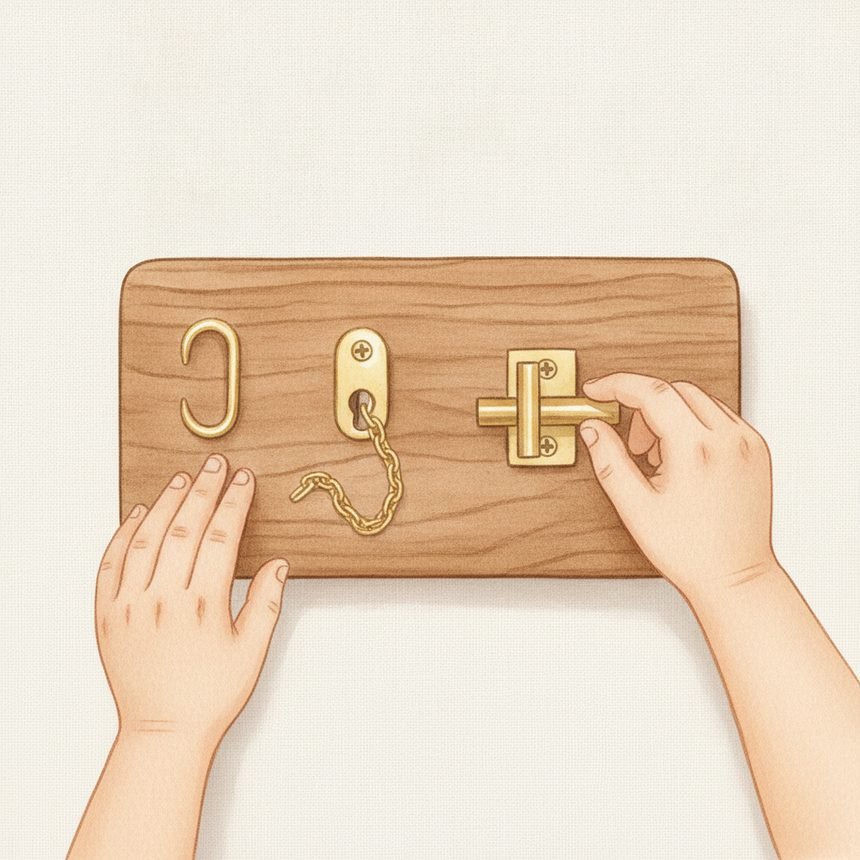
Locks and Latches
A slide bolt, a hook, a chain, a padlock: every closure in the house, gathered on one board to explore.
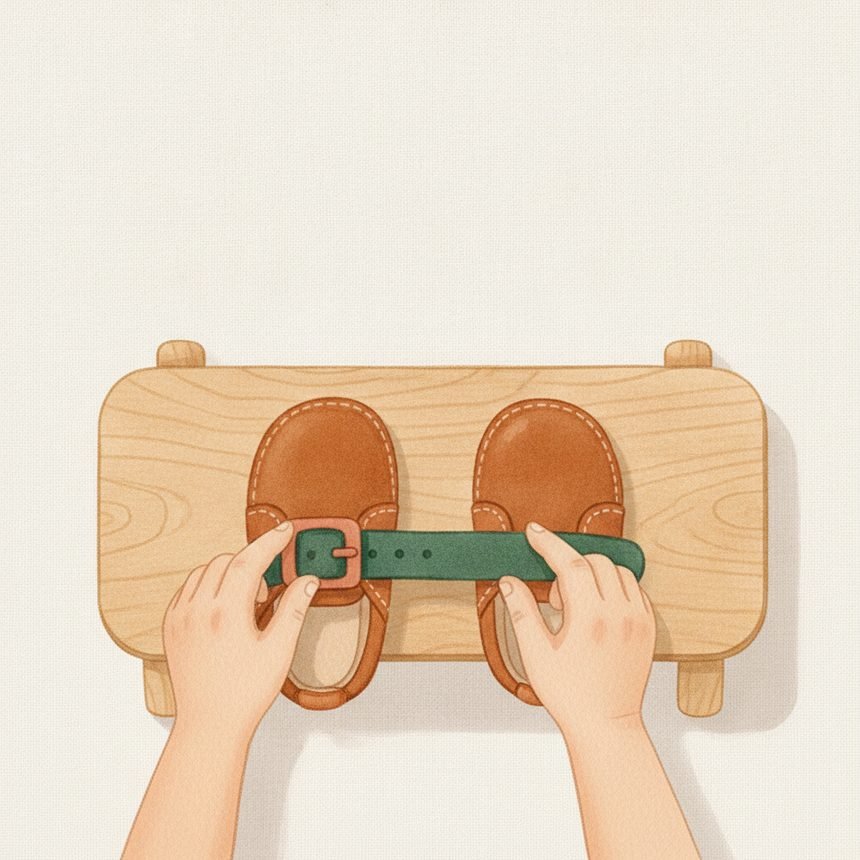
Putting On Shoes
Sit down, aim, push the heel, fasten: heading out the door under their own power.
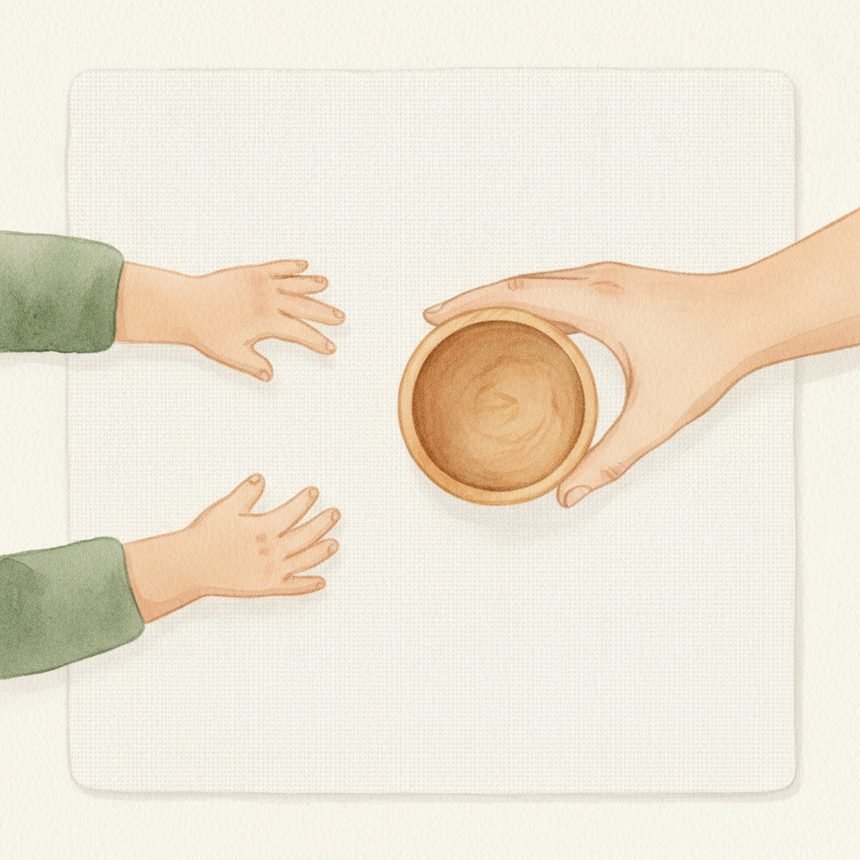
Grace and Courtesy
Greeting, thanking, asking, in a two-person role-play: courtesy gets rehearsed before it gets lived.
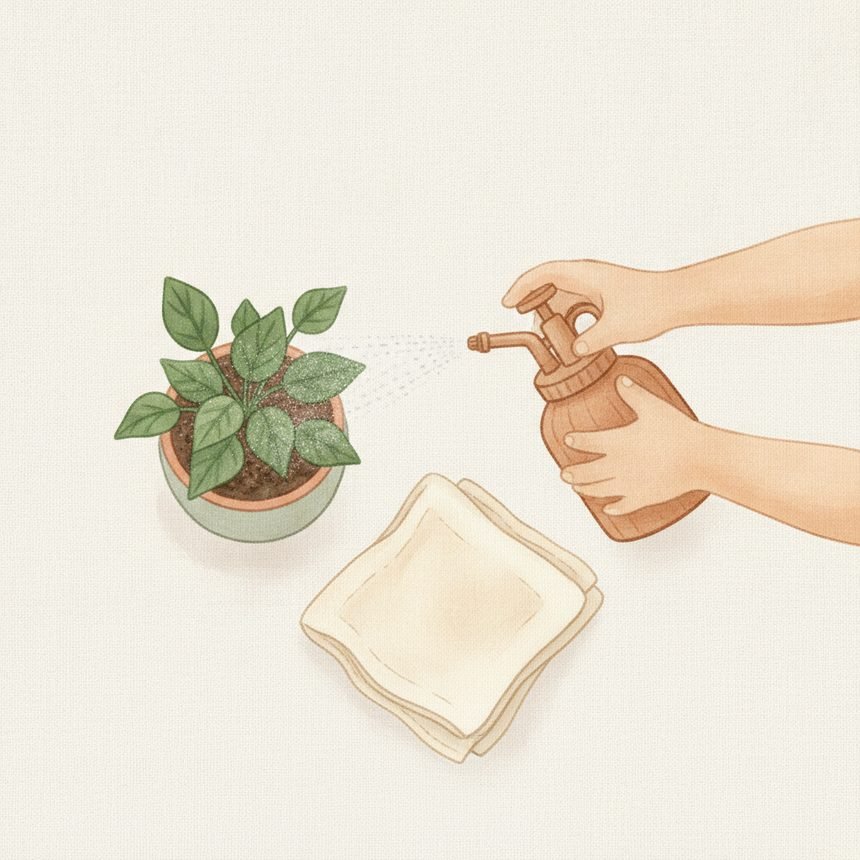
The Spray Bottle
Squeezing a spray bottle trigger to mist the plants: a hand building strength for writing.
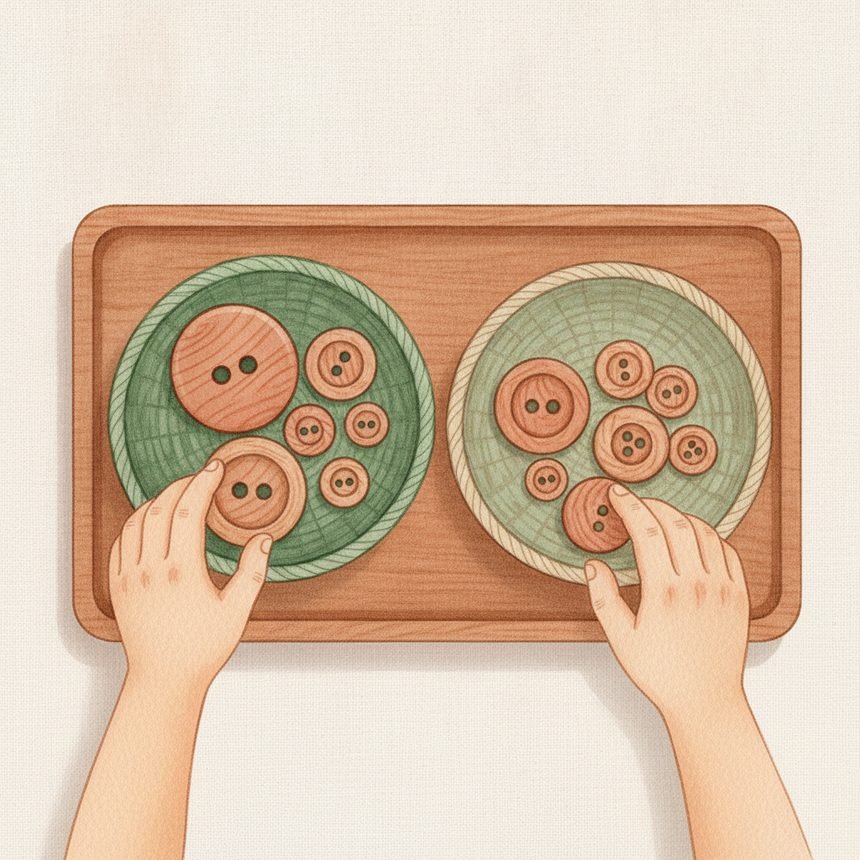
Big and Small
Two baskets, a pile of objects, one question: is it big or small?
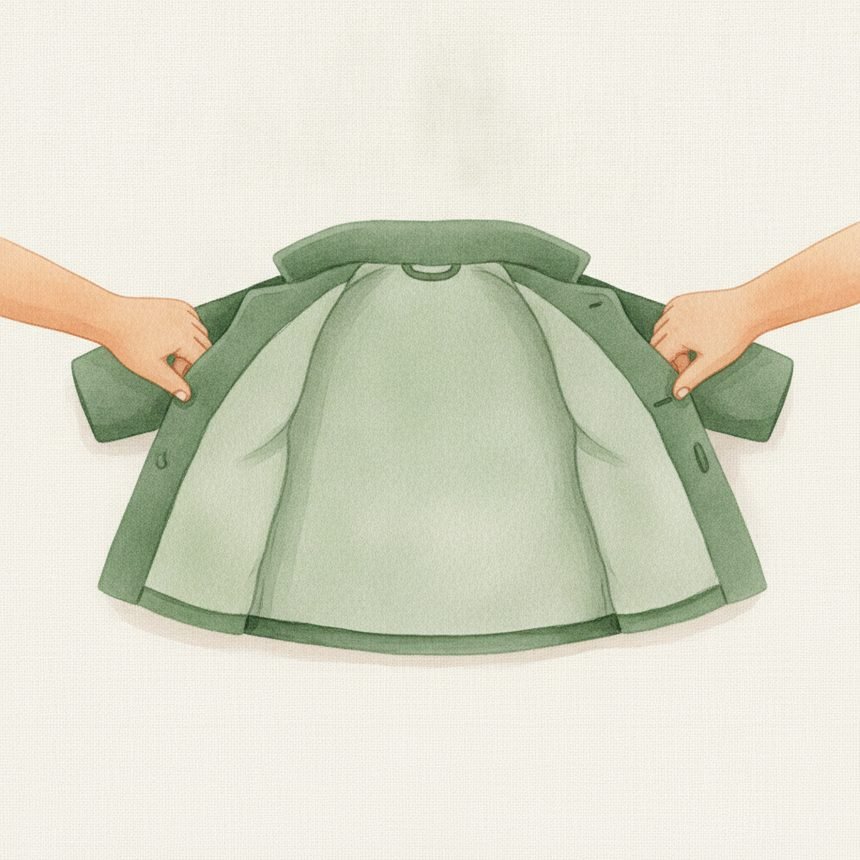
Putting On a Coat
The coat laid open on the floor, lining facing up, arms in the sleeves, and flip, it comes right over the head.
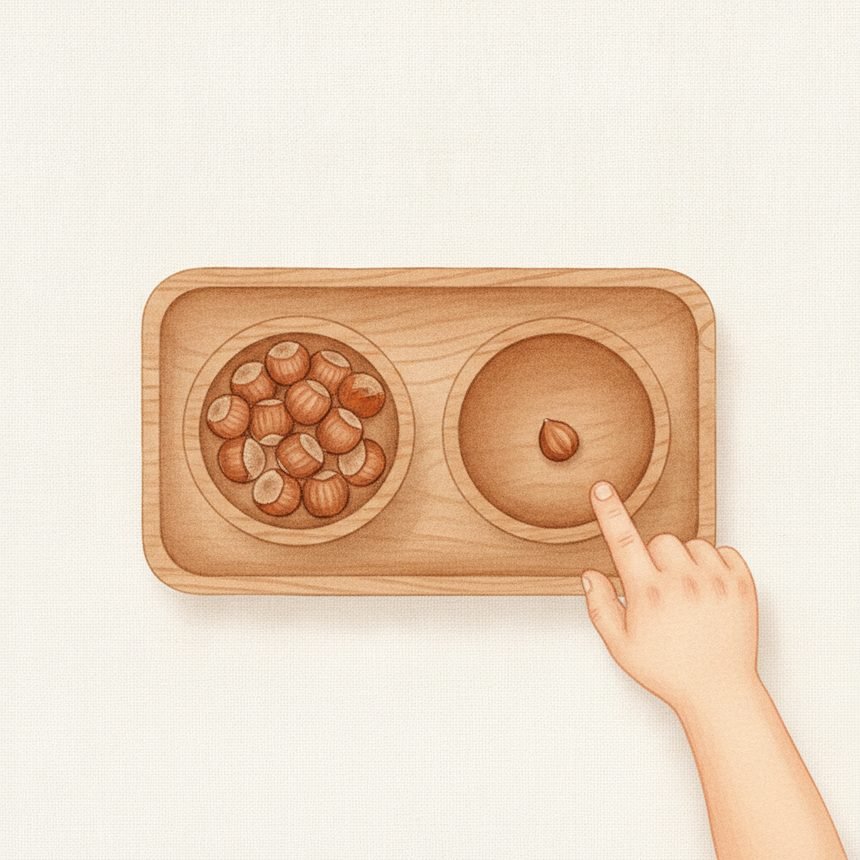
Many and One
A full bowl, a bowl with just one pom-pom: the very first idea of quantity.
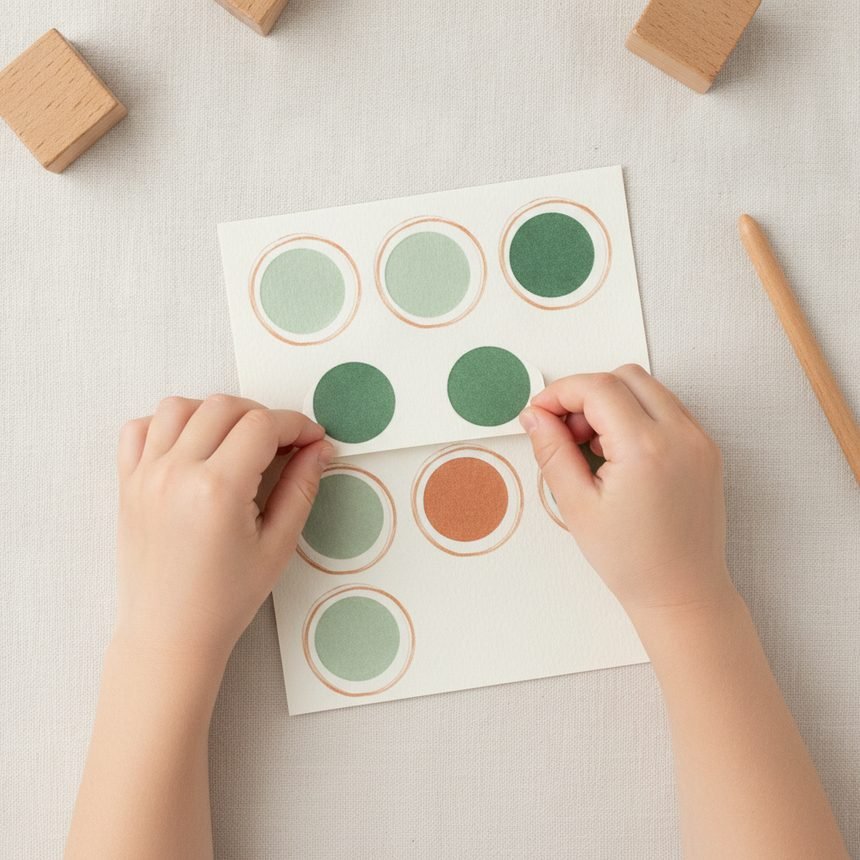
Sticker Play
Peeling a sticker off with the tips of your fingers and sticking it on a drawn circle: the pincer grip takes shape.
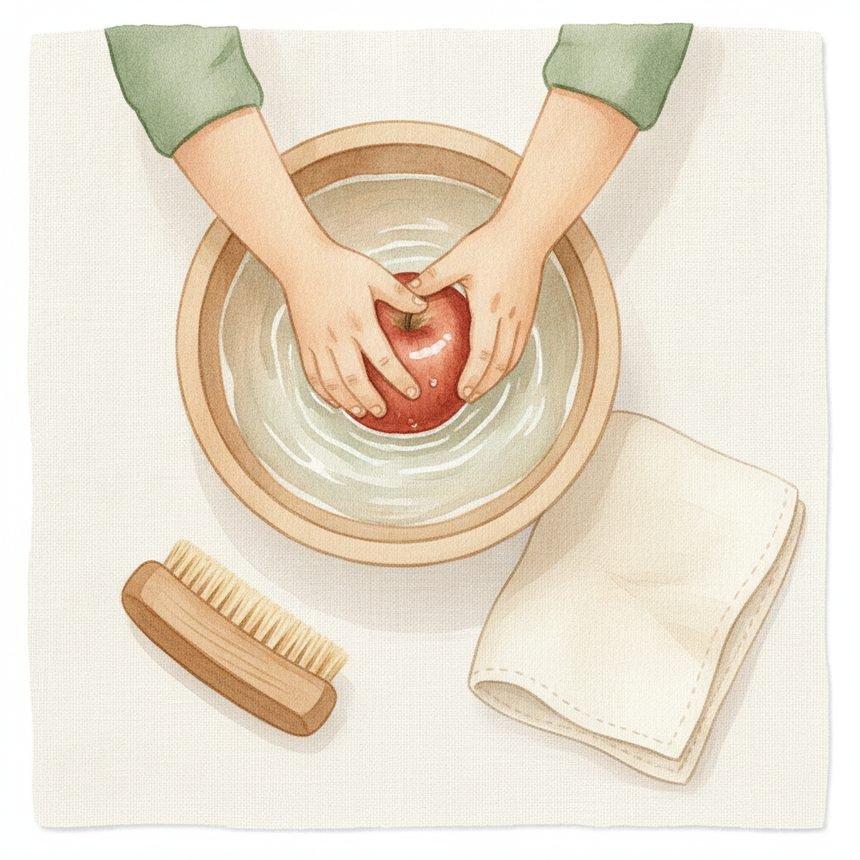
Washing Fruit
Scrubbing an apple under water, drying it, setting it in the bowl: preparing something for others.
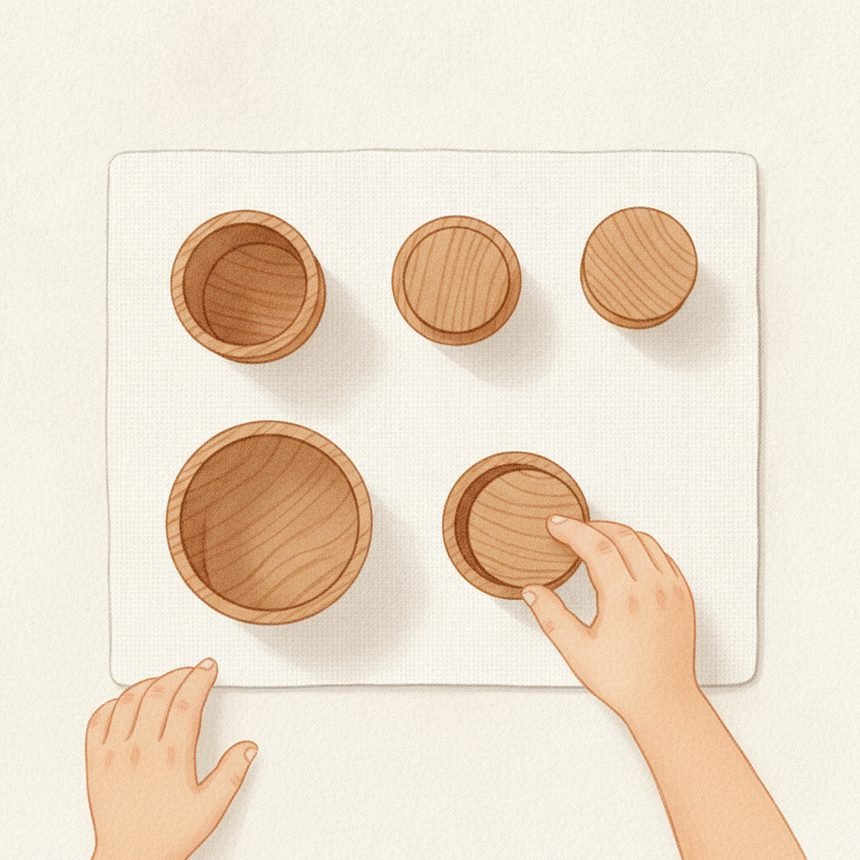
Matching Lids
Five boxes, five lids all mixed up: each one only fits its own.
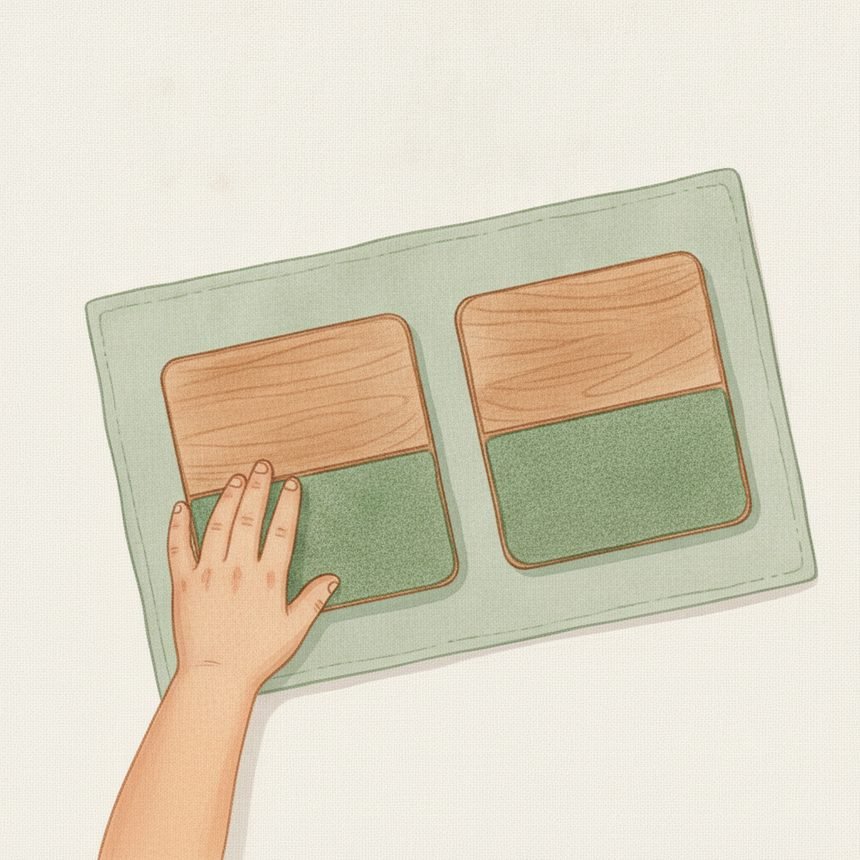
Smooth and Rough
Two boards to stroke with fingertips, one smooth and one rough: touch learns to compare smoothness and roughness.
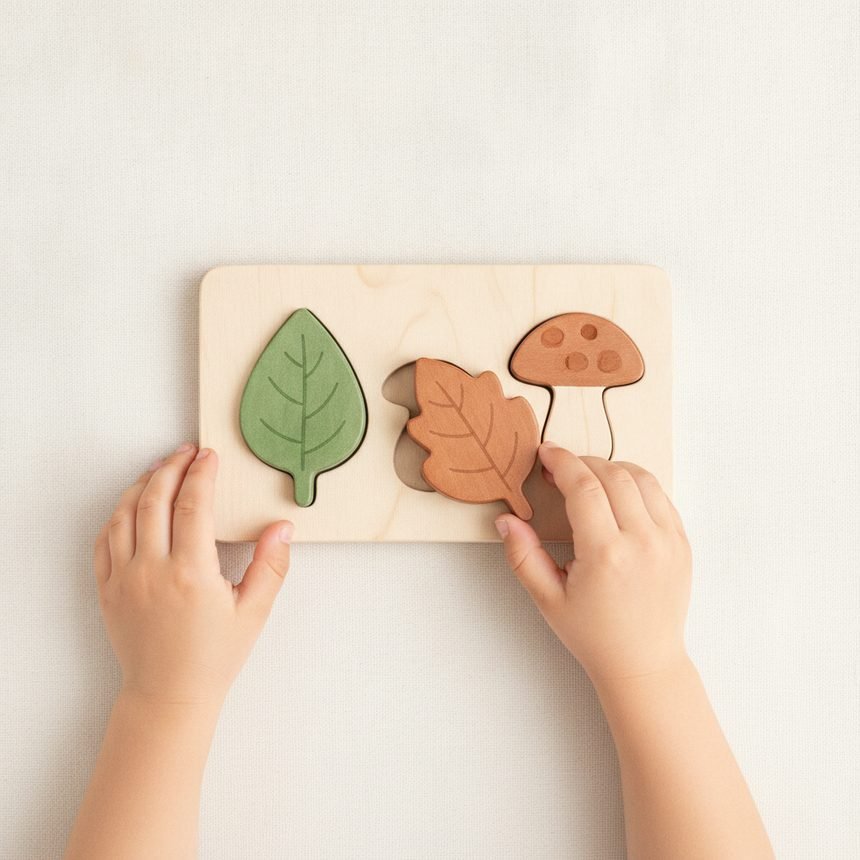
The Three-Piece Puzzle
Three shapes to fit back in their wells: turn, aim, set down.
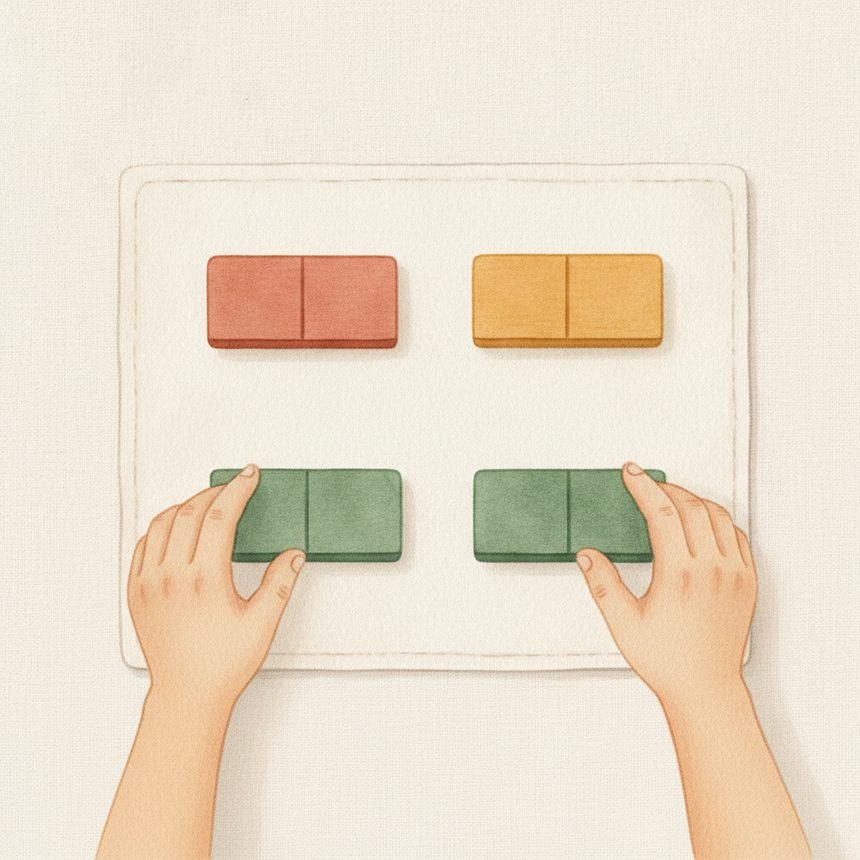
Learning Colors
Red, blue, yellow: three tablets, three words, and the three-period lesson.

Sink or Float
A basin, a few household objects, and the first real science question: what will happen?

Watching Ice Melt
One ice cube by the window, another near gentle heat: which one will disappear first?

Animals and Their Babies
The cow and the calf, the hen and the chick: every big animal finds its baby.

Sorting Natural and Man-Made
Compare natural and manufactured objects: a stone comes from nonliving nature, while a leaf and wood come from living things.

Prints in Salt Dough
A shell, a leaf, a key: each object leaves its own mark, and you match it back.

Visiting Your Own Tree
One tree, chosen by them, that you come back to touch through every season.

Discovering Air by Blowing
You can't see it, you can't touch it, and yet it makes the feather move.
Get the "Pouring Dry Ingredients" activity sheet by email
A complete printable PDF activity sheet for ages 2 to 3: materials, steps, your role, and safety notes.
Request received. Open the email from Semilou and click "Download the activity sheet (PDF)." Nothing after a few minutes? Check your spam folder.
What your child is developing between 2 and 3 years
At this age, your child coordinates both hands, sorts, matches, and fits pieces together. Simple puzzles, shape-sorting boxes, and sensory activities help them organize what their senses take in: size, color, texture, sound.
Their attention span grows longer, often ten to fifteen minutes on an activity they chose themselves. The parent's role comes in three steps: set out the materials, show once in silence, then stay quiet. Independence is built in that silence.
In American preschools, this age sits at the start of the toddler or early preschool classroom. Nothing here follows a curriculum: these activities happen at home, at your child's own pace, and they build the independent skills that help in class, like putting on shoes or putting away what they took out.
Reference for observation, modeling, and real-life skills at home: American Montessori Society, Montessori at Home.
How to present an activity at this age
The rule is always the same, no matter the age: show once, slowly, without talking, then let the child do it their own way. Words during the demonstration pull their eyes away from your hands. And the activity always ends with putting the materials away, which counts as much as the rest.
If your child refuses, or does the same activity ten times in a row, that is all fine: repetition is what drives this age. Bring the activity sheet back out a few days later, or move on to the next age group once the motion feels secure.
Questions about 2-year-olds
What activities can 2-3 year olds do?
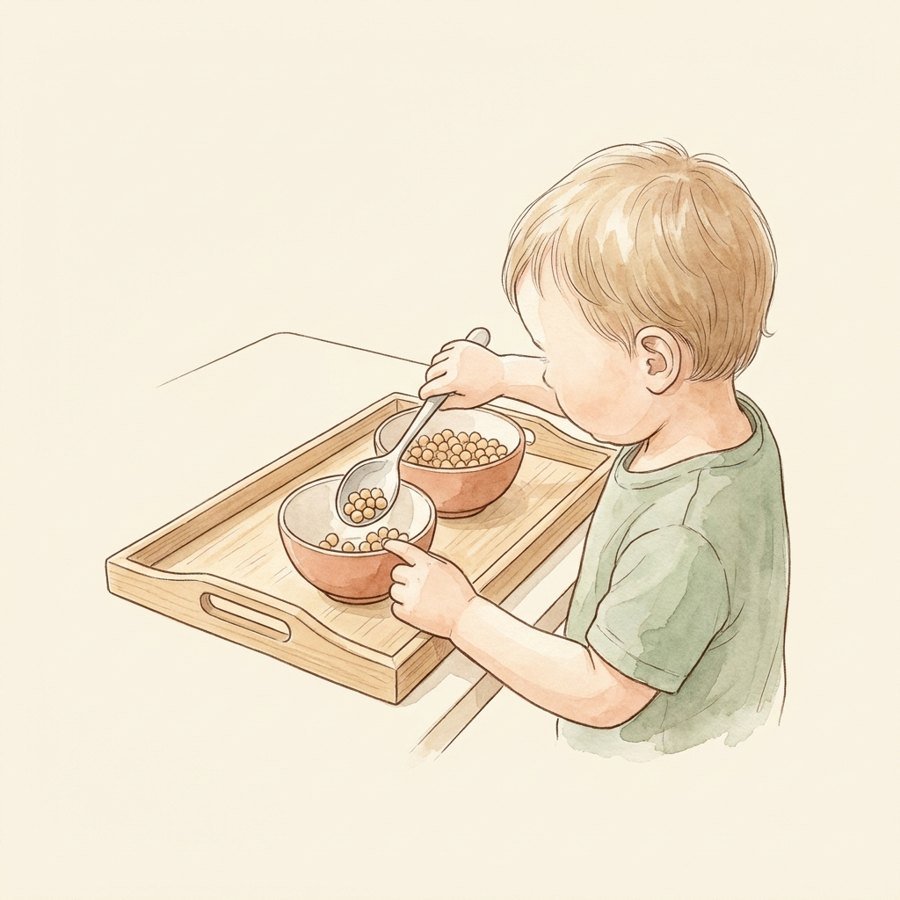
The ones they watch you do, at their size: pouring dry beans between two small pitchers, with you sitting close by, squeezing a sponge to move water from bowl to bowl, sweeping crumbs, washing hands at a basin, peeling a clementine, matching socks from the laundry. At two, a child does not want to pretend. He wants the real job, and he wants to do it again tomorrow.
Is Montessori good for toddlers?
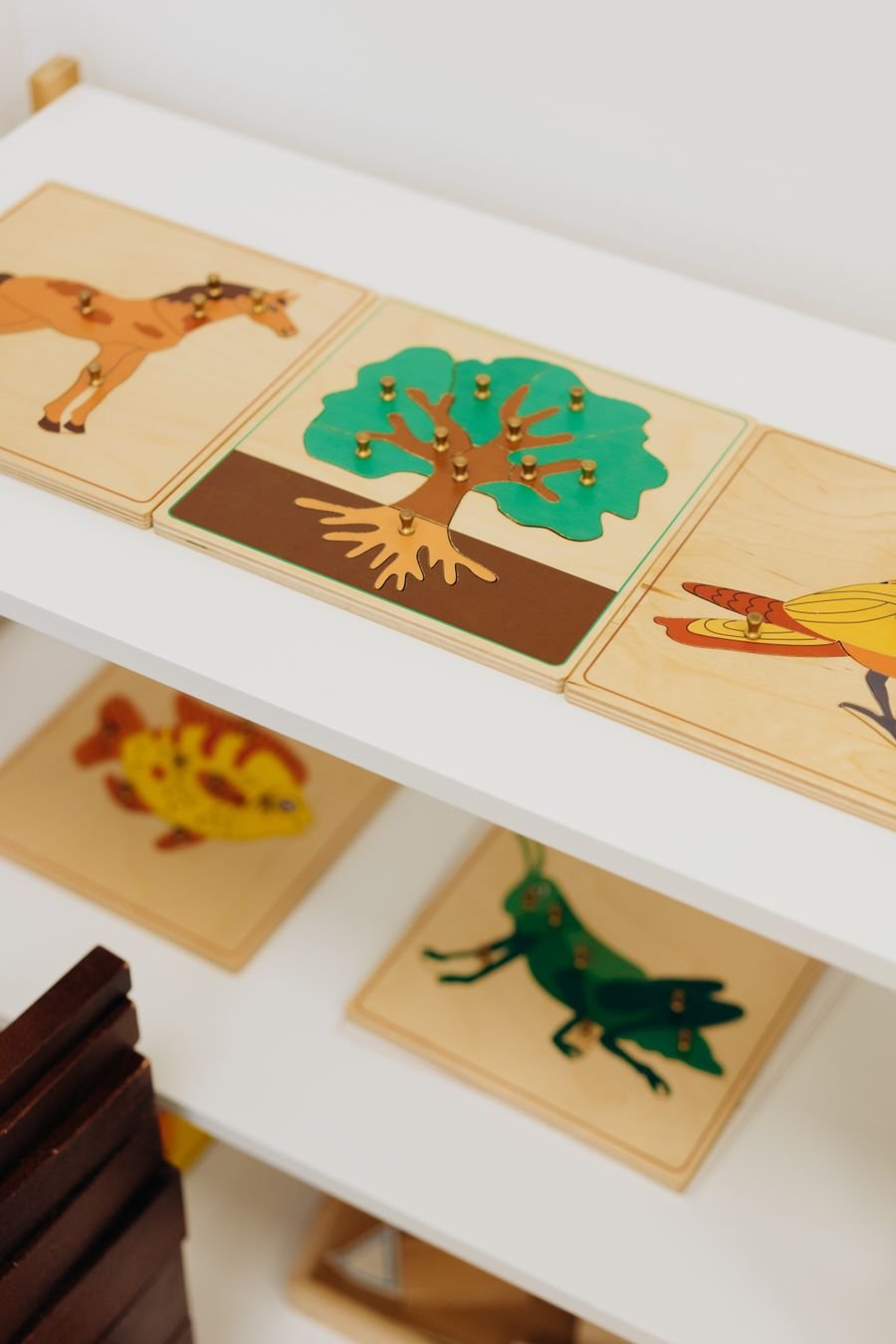
At home it looks like ordinary chores cut down to a toddler's size. He screws lids onto jars, sprays the plants, drops shapes into a sorting box, works a slide bolt and a latch, fits a three-piece puzzle. Each activity has one difficulty and a result he can check by himself. Try one or two and watch whether he asks to do it again.
What are some good indoor Montessori activities for 2-year-olds?
Rainy-day ones: a basin of water and ten household objects to test sink or float, an ice cube melting on a plate, clothespins sorted by color, with you close by, five boxes with their lids mixed up, a spray bottle to mist the plants. Check the materials list for each one before setting out the tray and towel. Show it once without talking, then let him take over.
Can I get Montessori activities for 2-year-olds as a PDF?
A two-year-old does not fill in a page. He handles real objects, and what gets printed is the sheet you follow: the household materials to gather, the gesture to show, the steps in pictures, and the safety notes. Each of our 32 activities for this age group fits on one illustrated Letter-size page. The pages on this site show the materials, the safety notes, and the first two steps. The complete sheets are included in the paid pack for this age group.
Printable materials for these activities
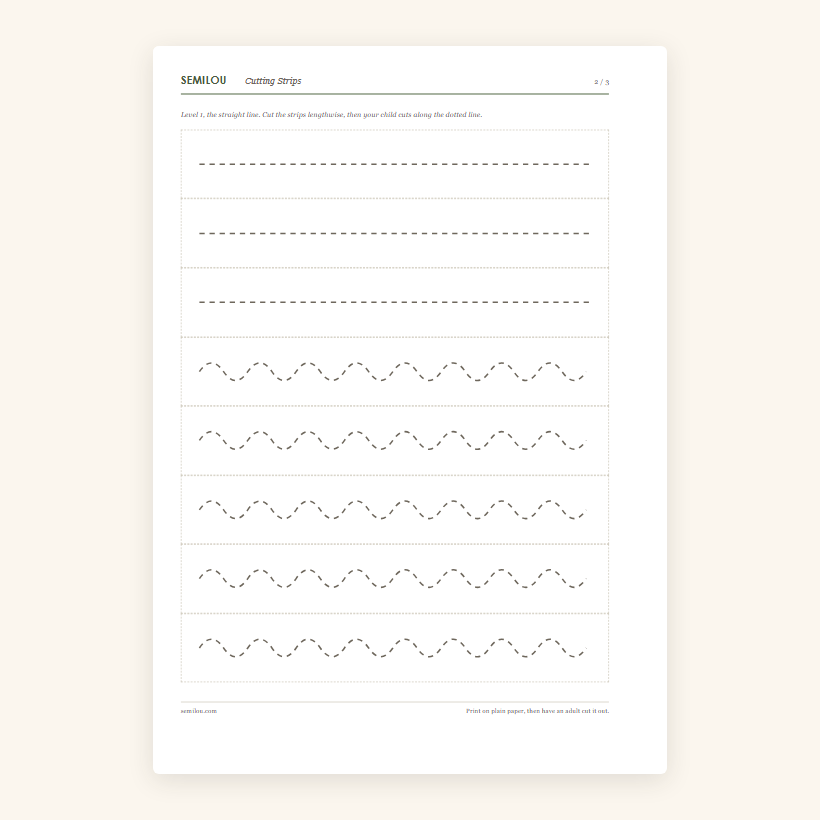
The Cutting Strips
Sixteen strips ordered from a straight line to a corner, to learn to use scissors without ever needing to finish a picture.
See contents and preview →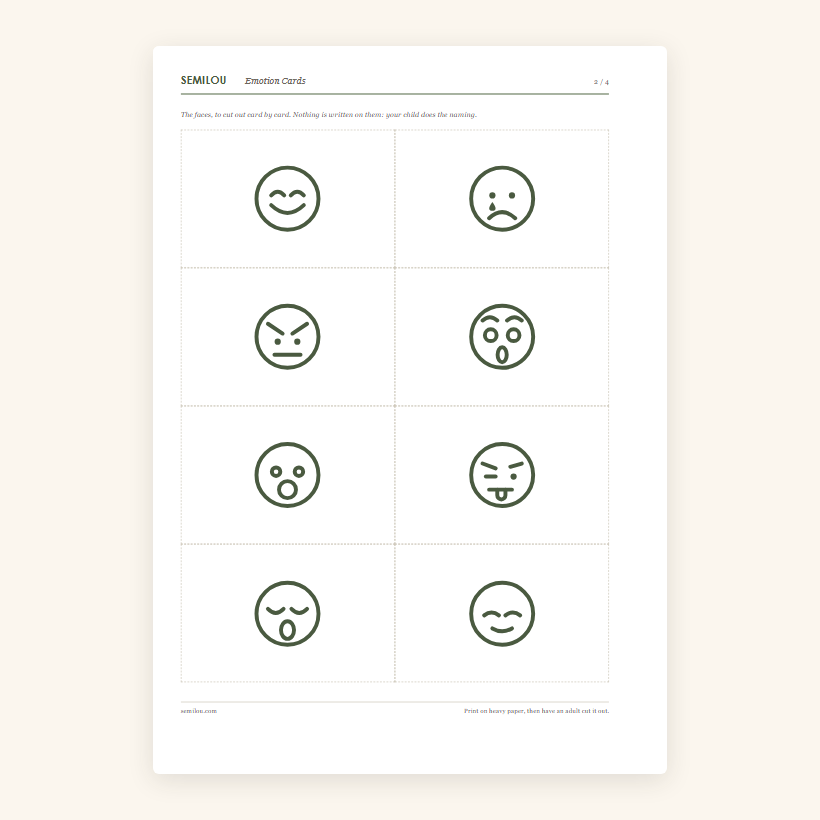
Printable Emotion Cards
Eight faces and eight words to cut out, so your child can name what they feel before they can explain it.
See contents and preview →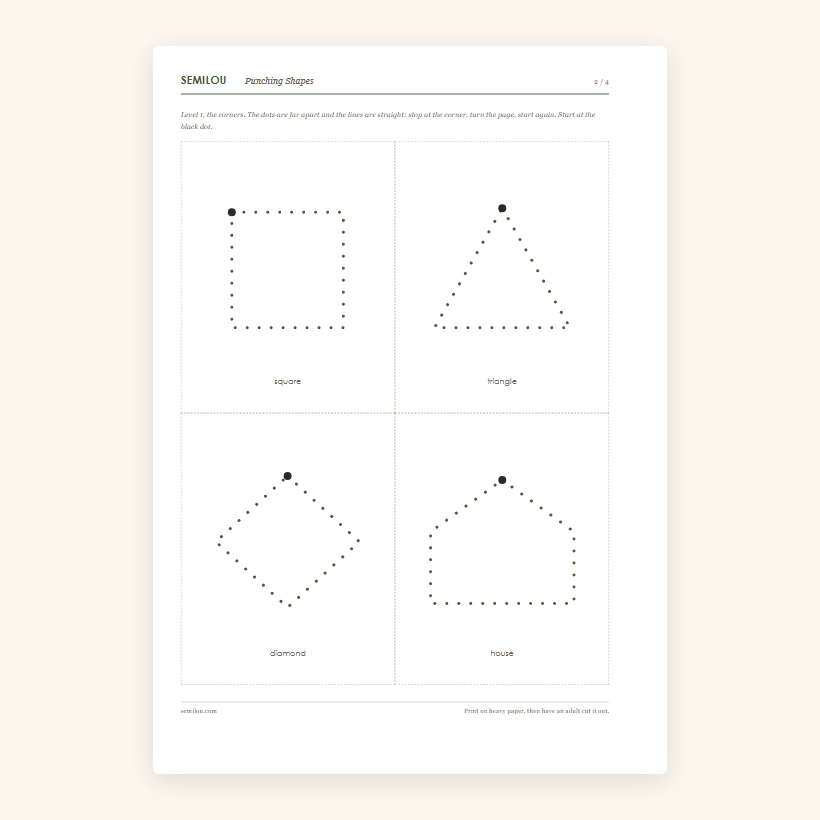
Pin-Punching Shapes
Twelve outlines made of dots: your child punches each dot with a pin tool, then frees the shape, with an adult's help if needed.
See contents and preview →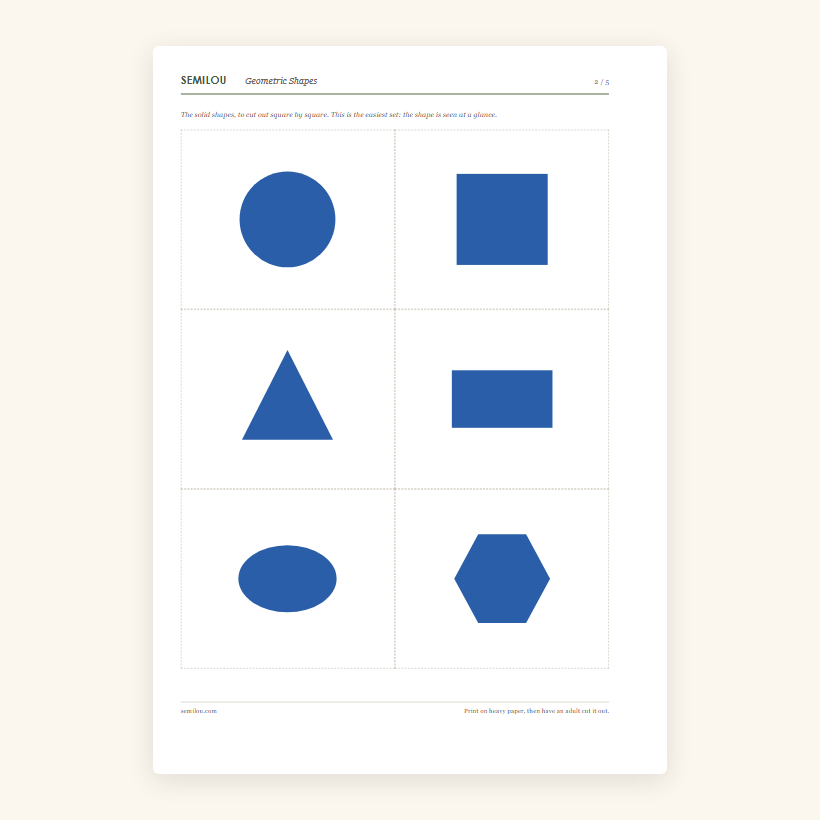
The Geometric Shapes
Six figures in three sets, from the solid shape to the plain outline: your child matches, sorts, then names them.
See contents and preview →