Montessori Activities for 4 to 6 Year Olds
Your child wants to understand how the world works, count for real, write their name, get their own snack ready. Activities grow longer and take on a real project: prepare, do, put away.
What the $29 set for ages 4 to 6 includes
Digital PDFs. One age group, one language. No subscription and no physical shipment.
Semilou offers 32 printable Montessori activities for ages 4 to 6, in the following areas: practical life, sensorial, fine motor, language, early math, science and nature.
Recommended time for this age: 20 to 30 minutes.
What the $29 set for ages 4 to 6 includes
Browse all 32 Montessori activity previews for ages 4 to 6. Each preview shows the materials, safety guidance, and the first two steps. A one-time $29 purchase unlocks this age group in English: 32 complete printable activity sheets, the combined booklet, and seven printable material PDFs.
Digital PDFs. One age group, one language. No subscription and no physical shipment.
32 activities for 4 to 6 years
Each activity sheet lists the materials you will need.
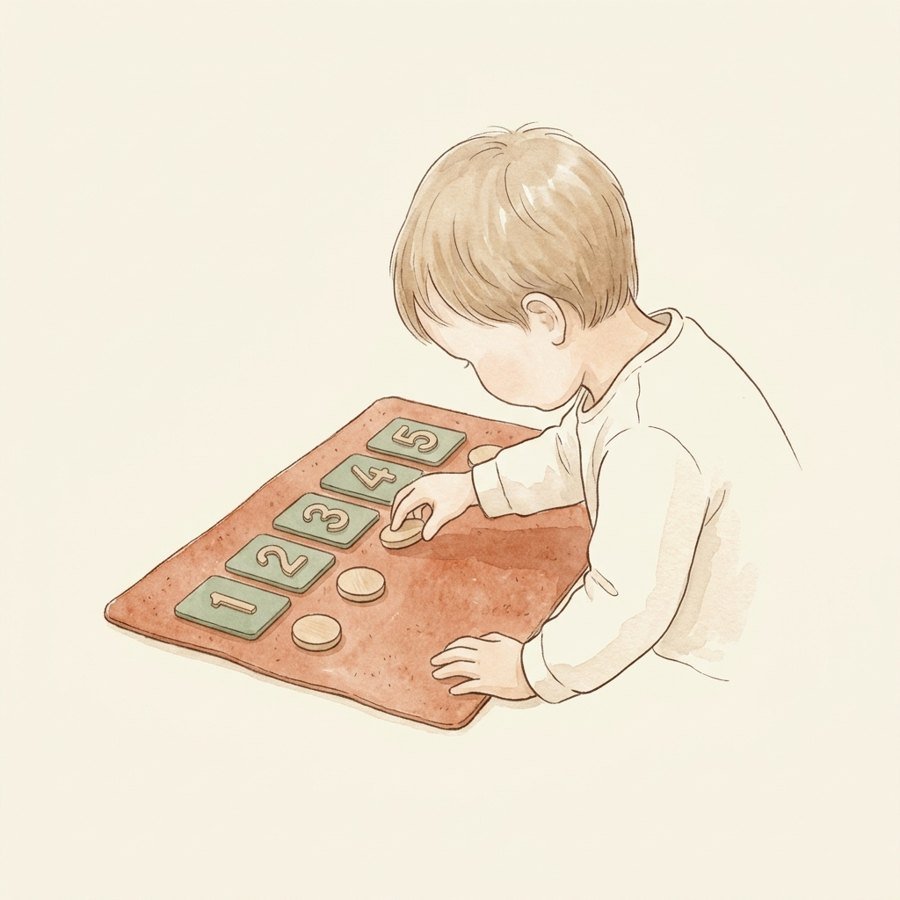
Counting with Counters
Place a counter, say a number. A number becomes something you can touch.
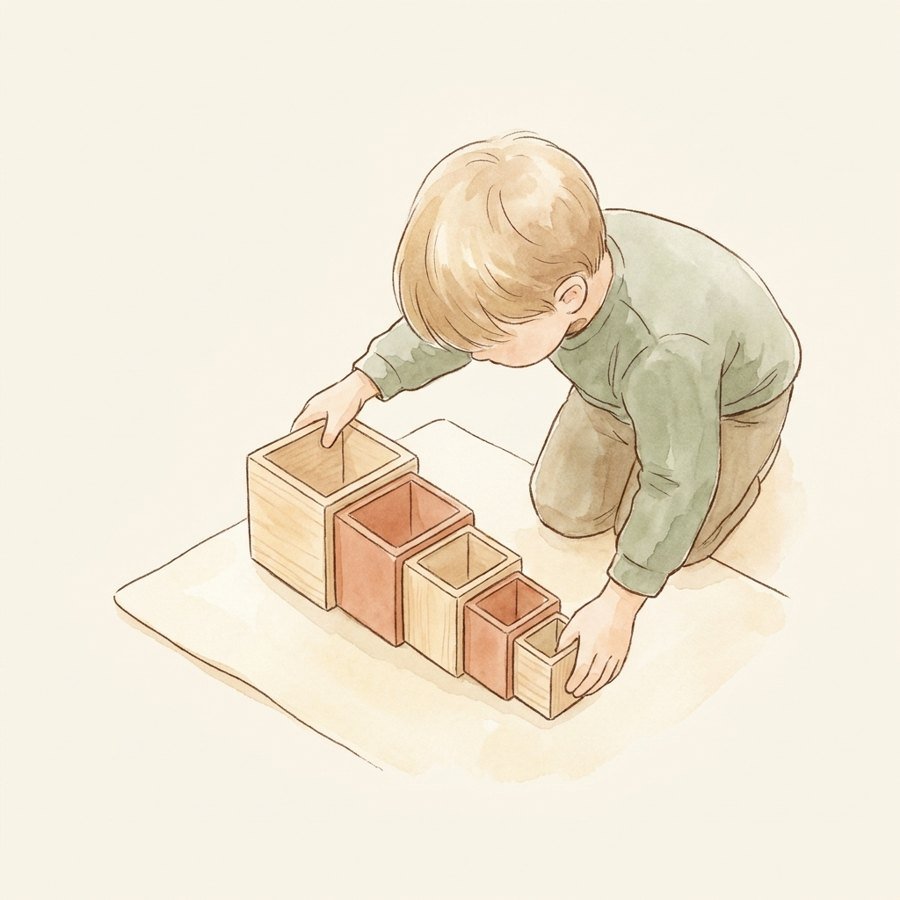
Biggest to Smallest
Arranging five objects by size, with no ruler and no measuring: just the eye and the hand.
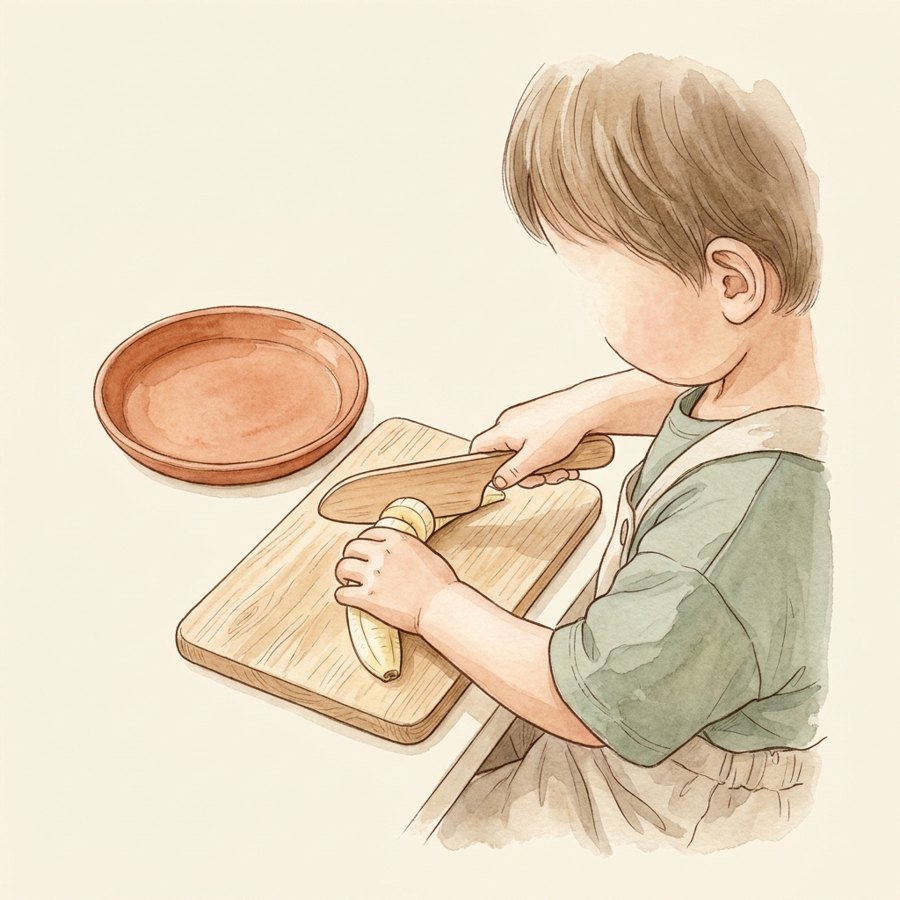
Preparing a Snack
Peel, slice, plate, serve. A real snack made start to finish by a five-year-old.
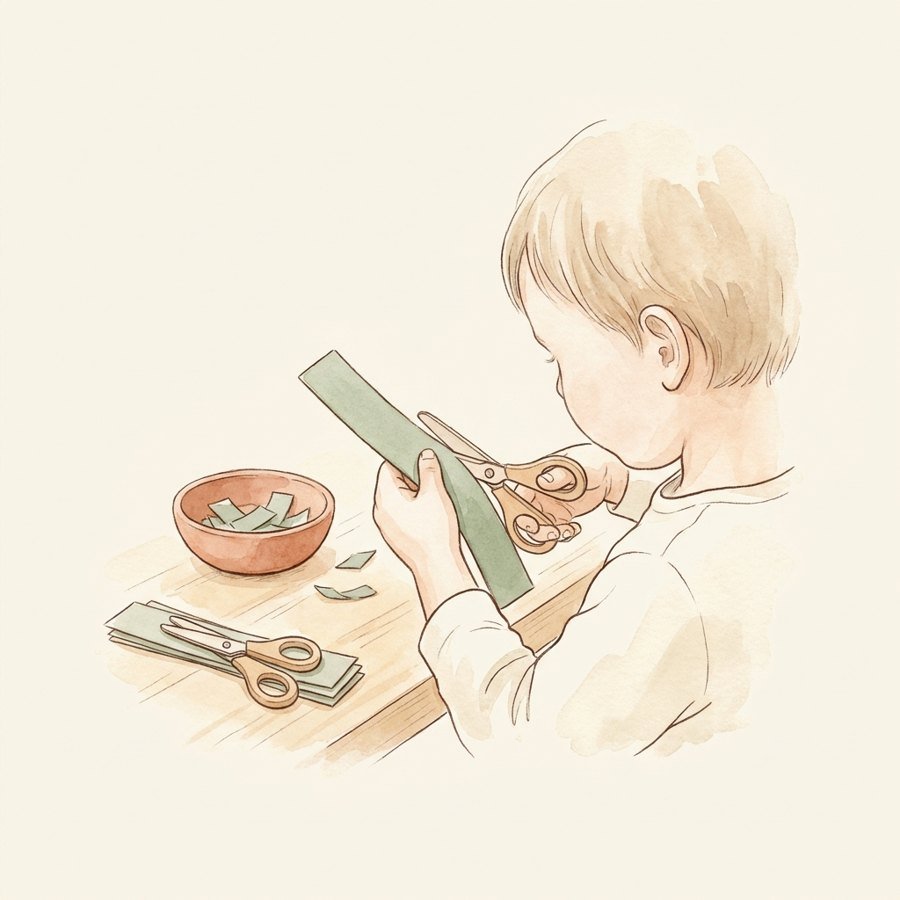
Cutting Paper Strips
Open, close, advance. Scissor skills are practiced session after session, at your child's own pace.
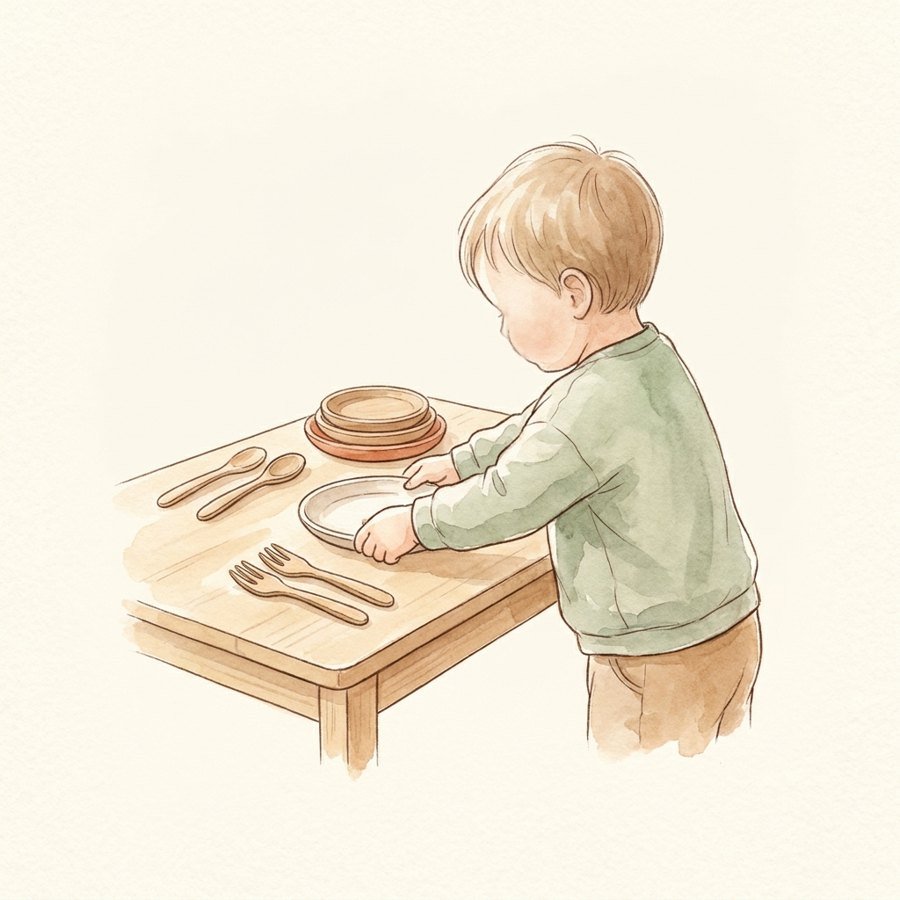
Setting the Table by Counting
Four plates, four cups, four forks: real counting, because it's put to real use.
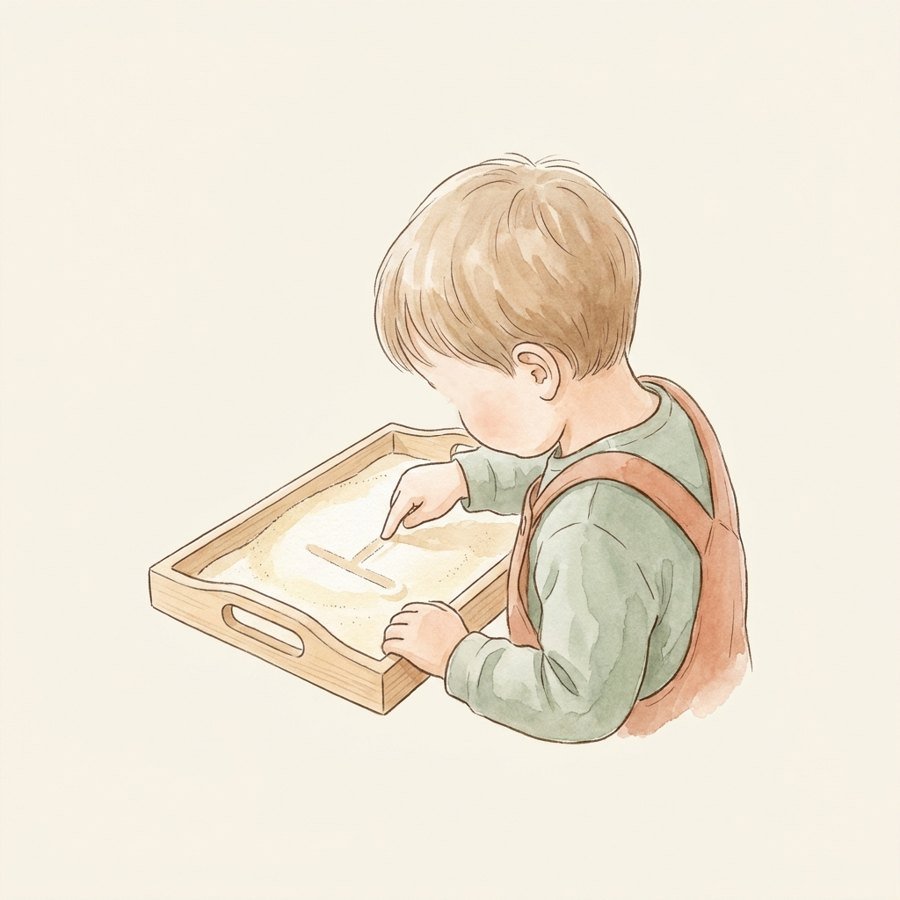
Name Writing in a Rice Tray
A tray of rice, one finger, and a name you can erase with a swipe to start again.
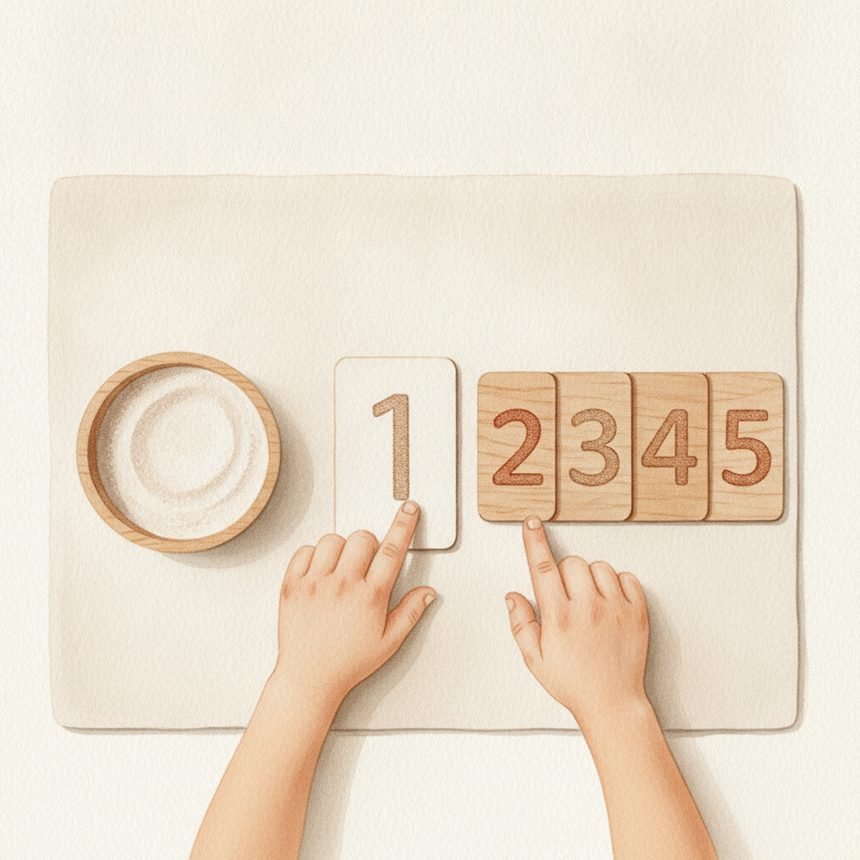
Sandpaper Numbers
Numerals to trace with a finger, in writing order, so the hand knows them before it draws them.
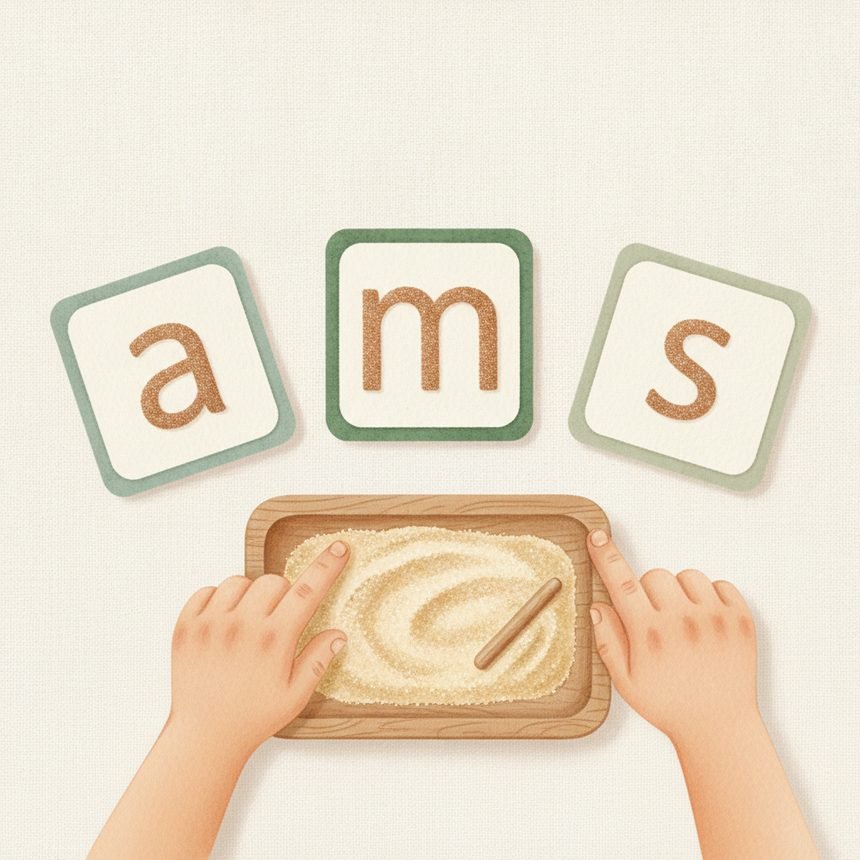
Sandpaper Letters
Letters to trace with fingertips, saying their sound: the hand learns to write before the crayon does.
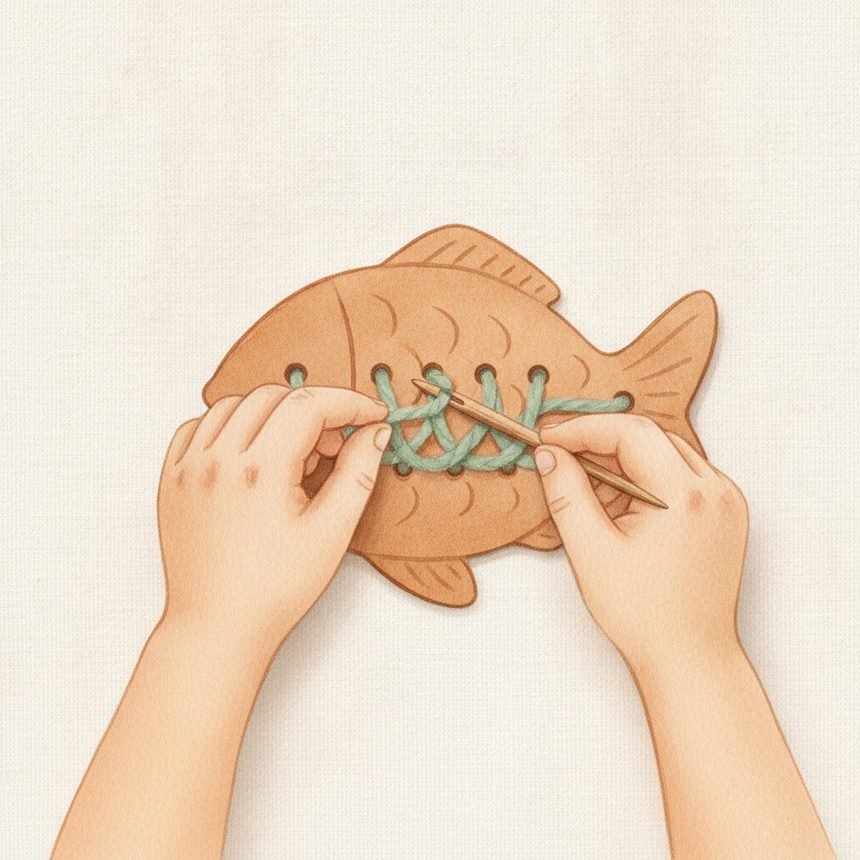
Sewing Cards
A round-tipped needle, yarn, a punched card: over, under, over, and the pride of having sewn.
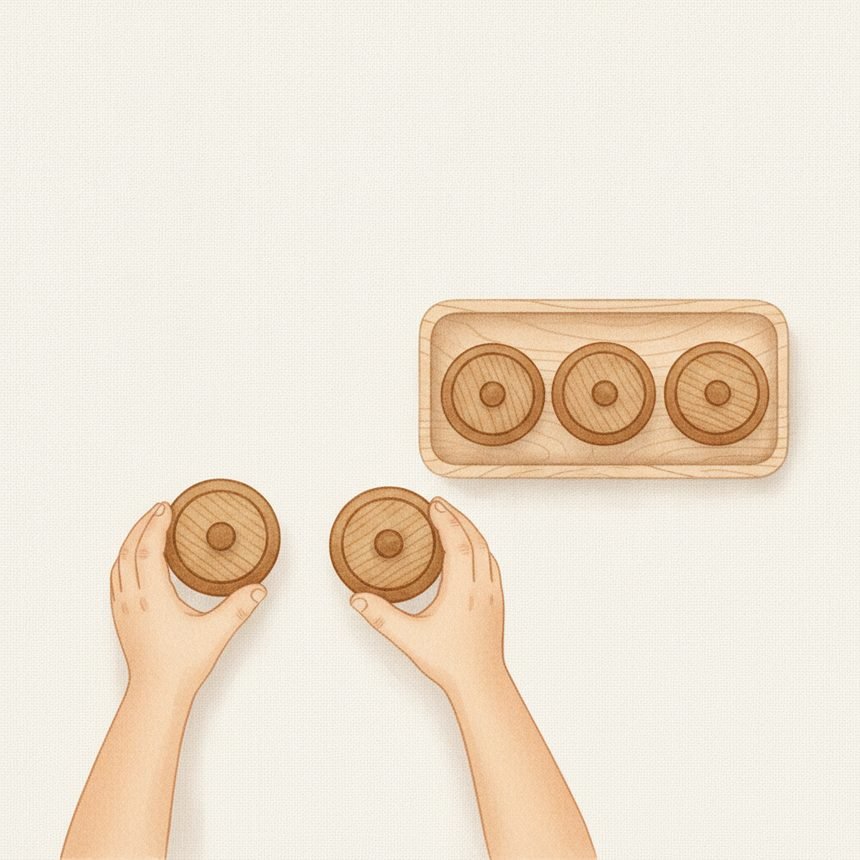
Light and Heavy
Identical jars, different contents: hands weigh better than eyes.
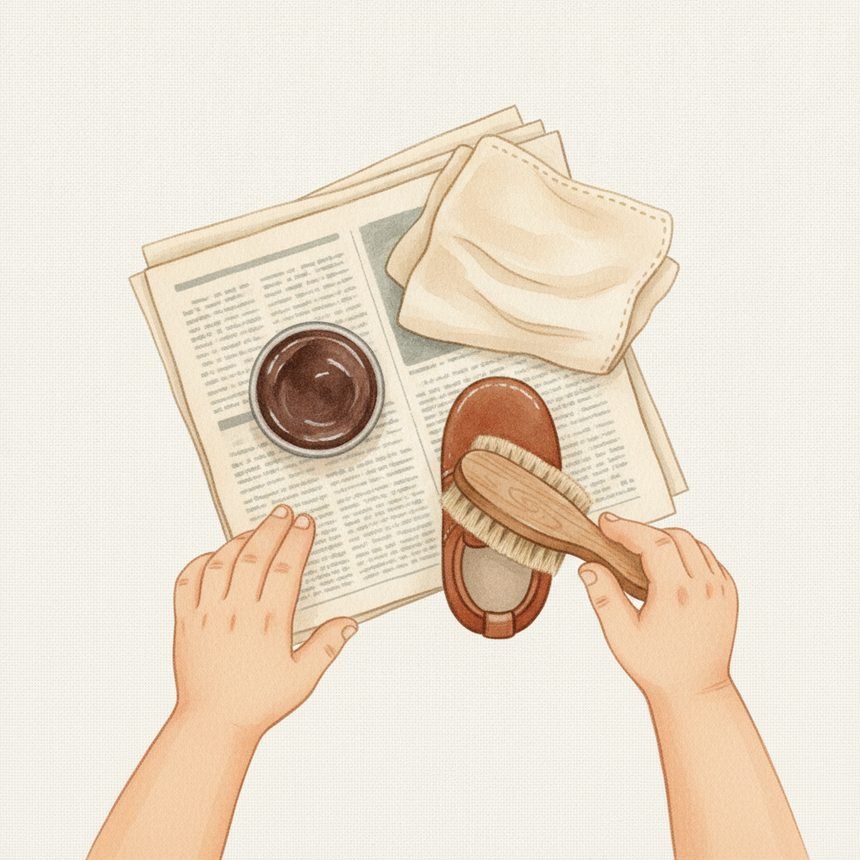
Polishing Shoes
Brushing, polishing, buffing your own shoes until they shine: the great cycle of caring for objects.
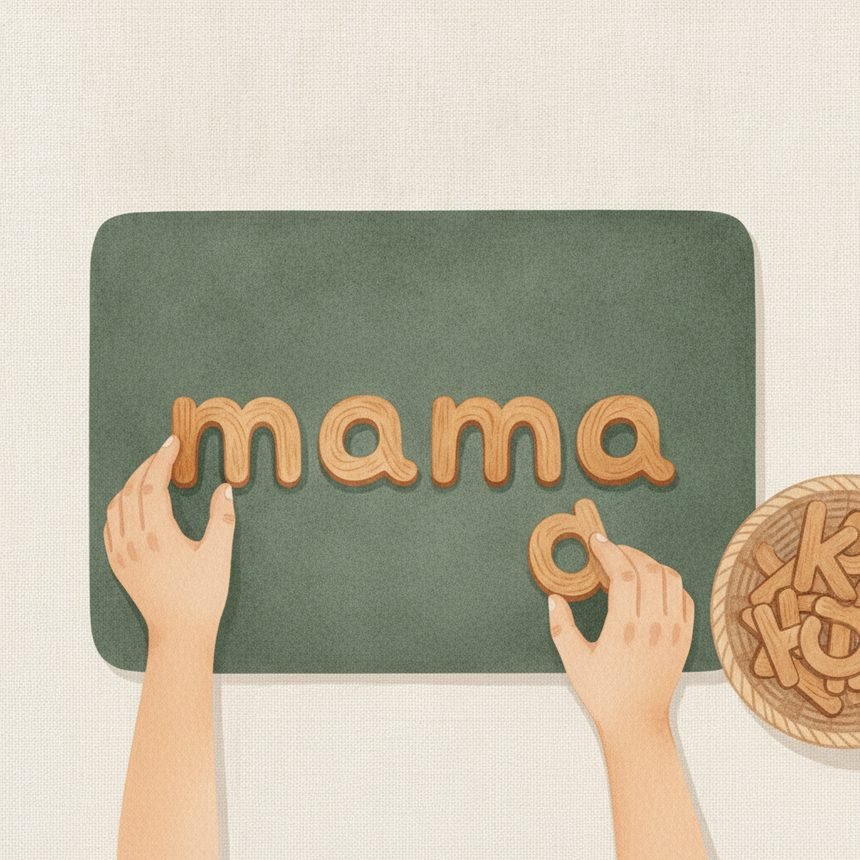
First Words with the Movable Alphabet
Spelling out "mom" with letters you place, long before a crayon is in hand: writing with the movable alphabet.
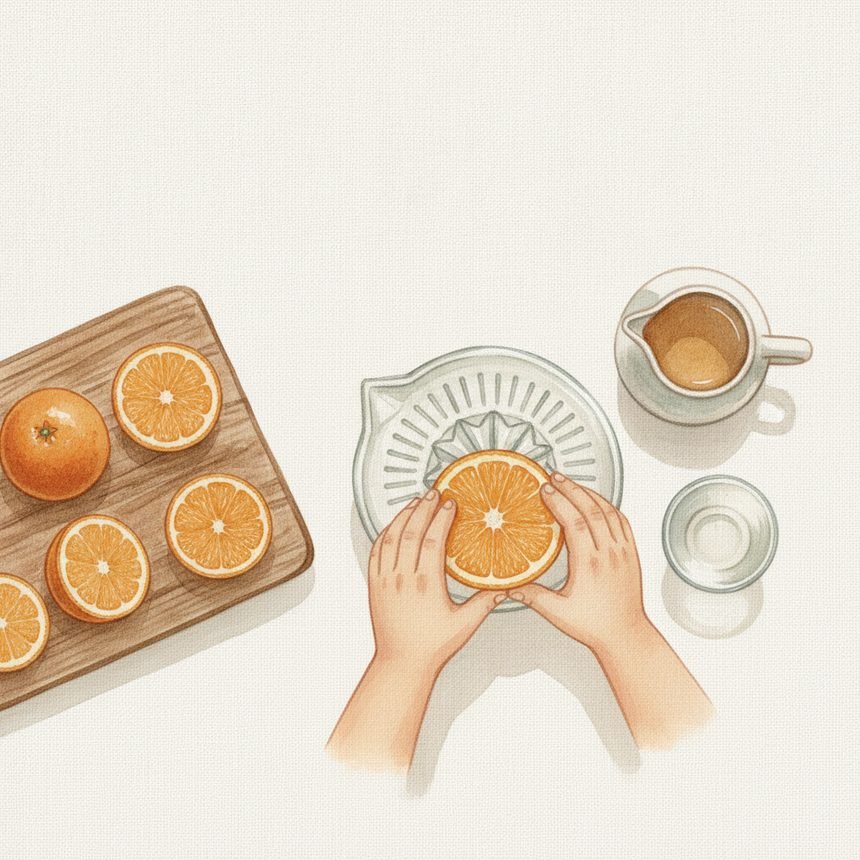
Squeezing Orange Juice
Cut, press, pour, serve: real juice made start to finish, and given to someone.
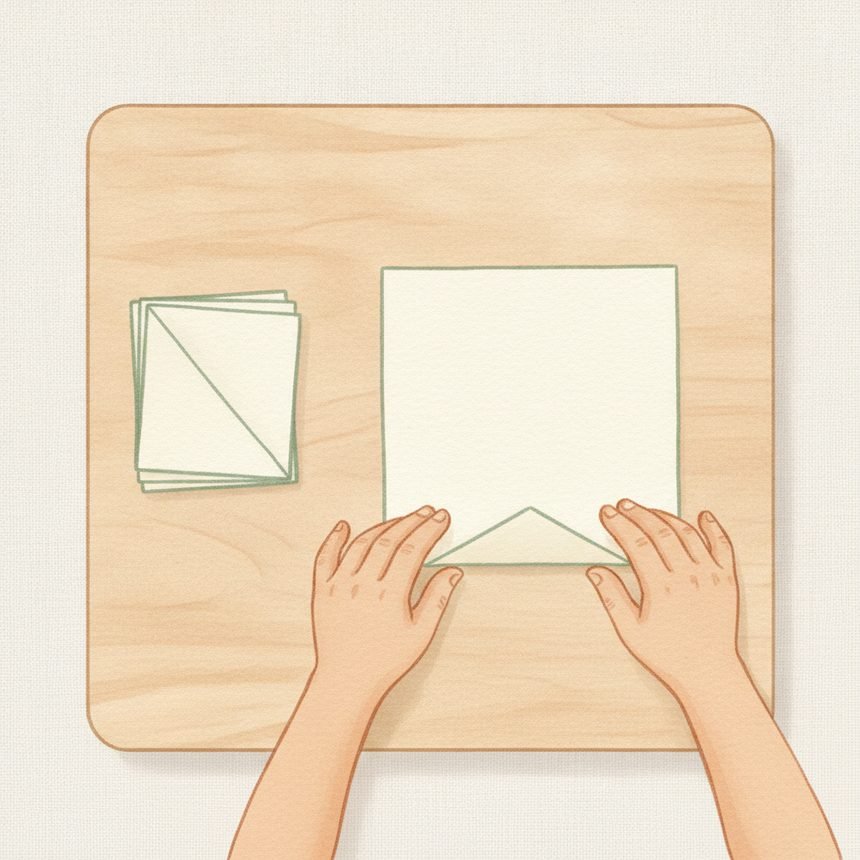
Folding Paper on the Line
Bringing corner to corner, pressing the crease with a steady finger: the precision that prepares geometry.
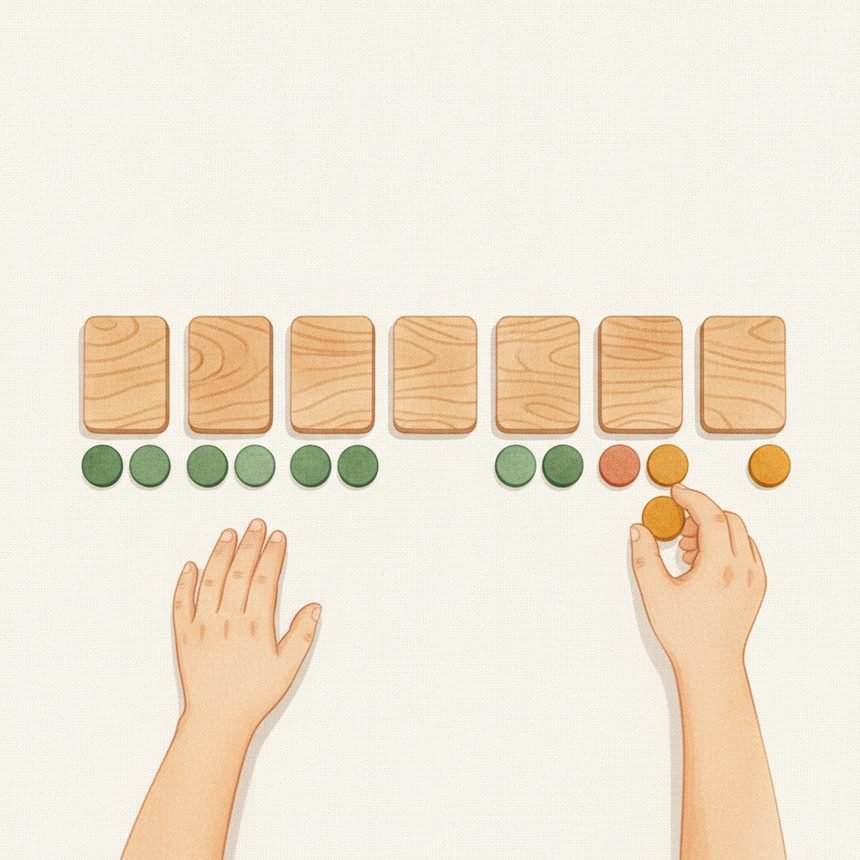
Odd and Even
Lining counters up two by two under each numeral: numbers give up their secret.
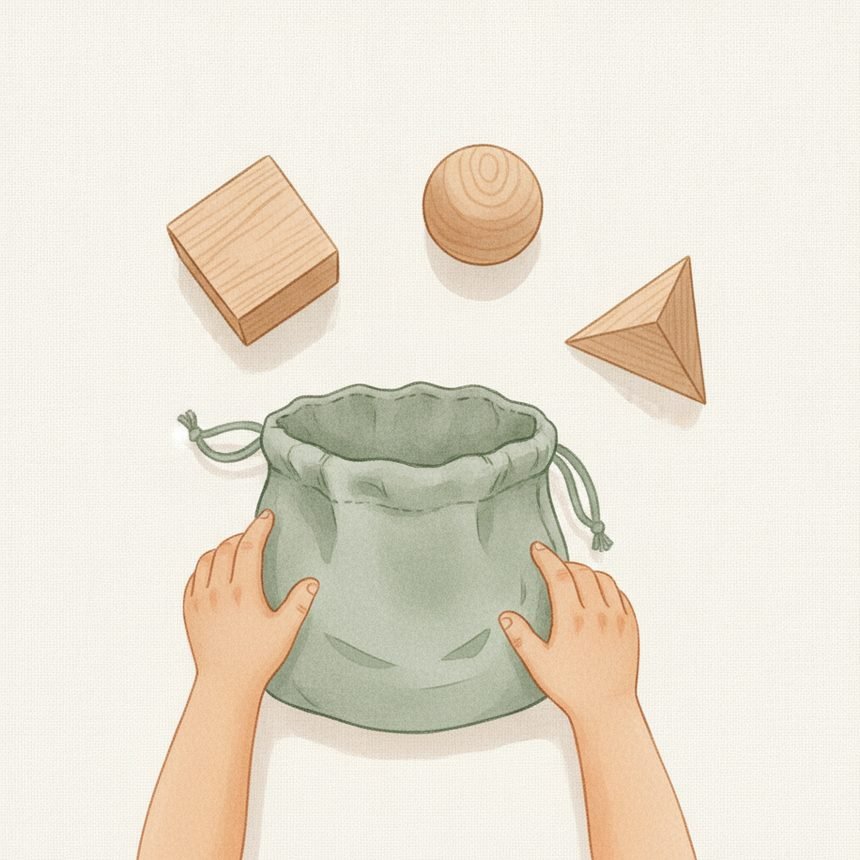
The Mystery Shape Bag
Recognizing a cube, a ball, a pyramid, just by feeling them at the bottom of a bag.
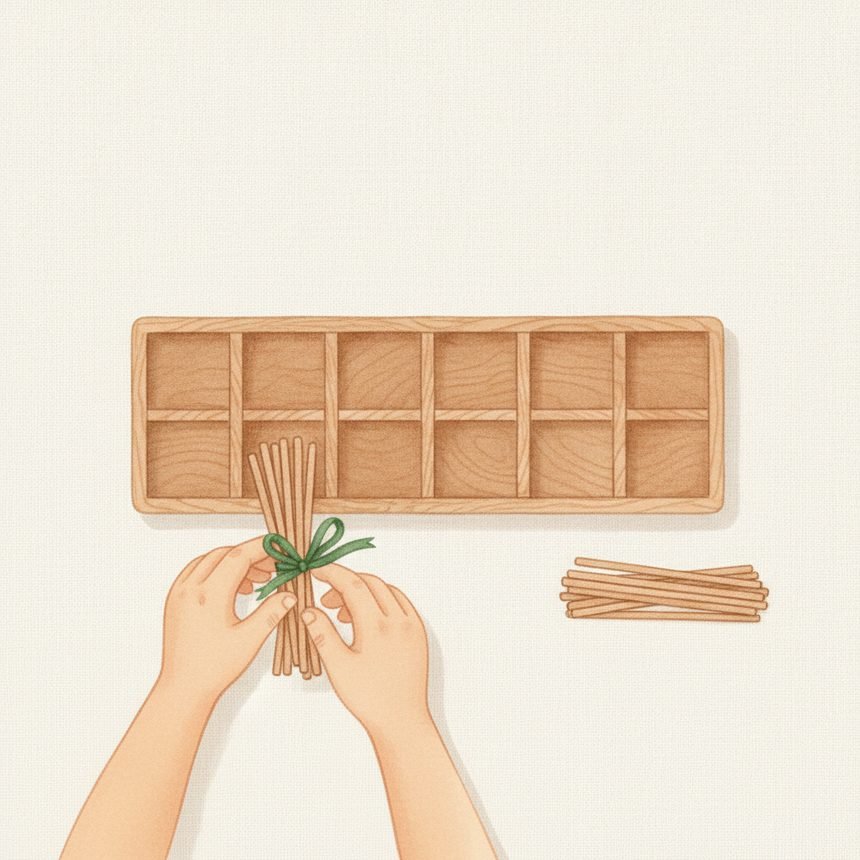
Spindle Boxes and Zero
Sticks to sort from 0 to 9 into the right compartments, and the discovery that zero means nothing.
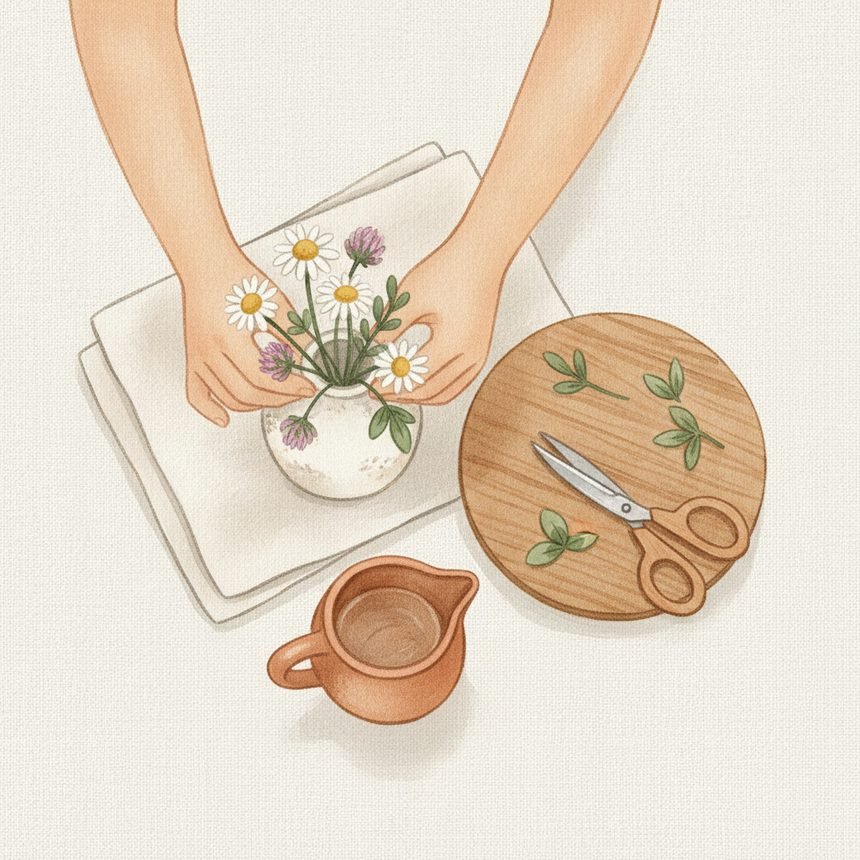
Arranging Flowers
Cutting the stems, filling the vase, arranging the flowers, and setting the bouquet on the family table.
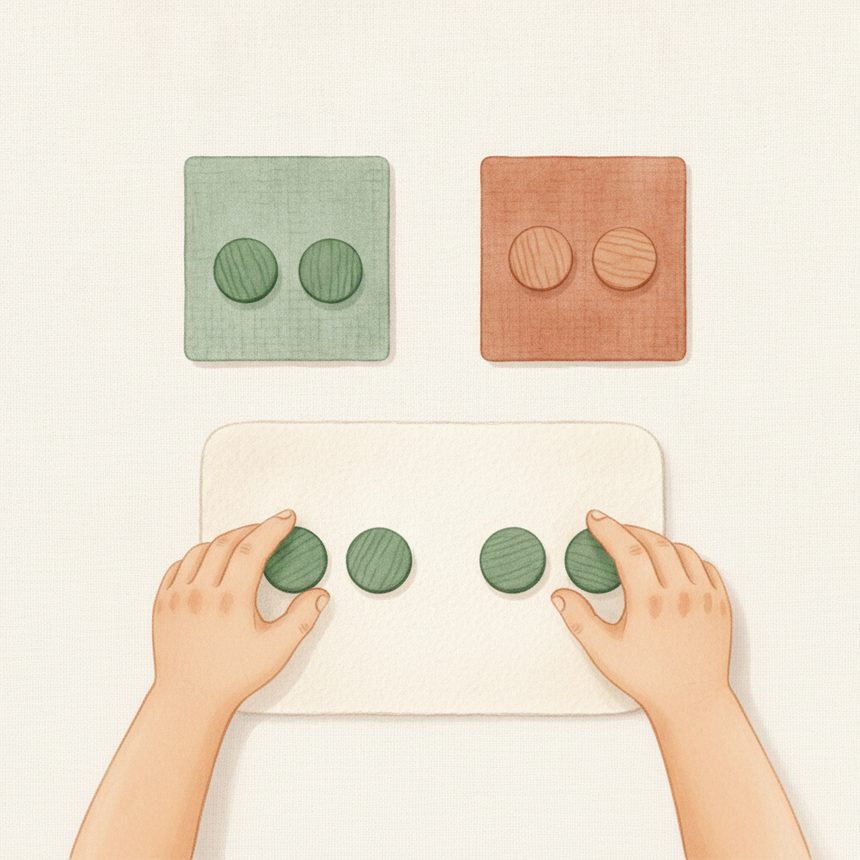
Addition with Counters
Three counters and two counters brought together: the first addition, seen and done with your own hands.
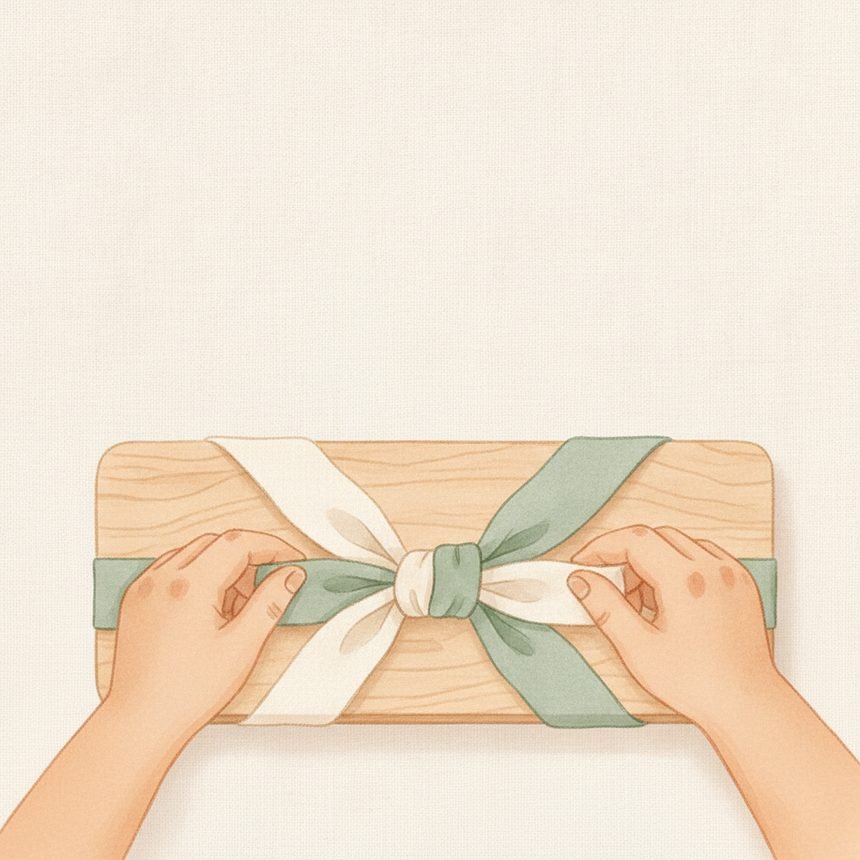
Tying and Untying Knots
Two ribbons, a simple knot, then a loop: fingers learn what shoelaces will one day demand.
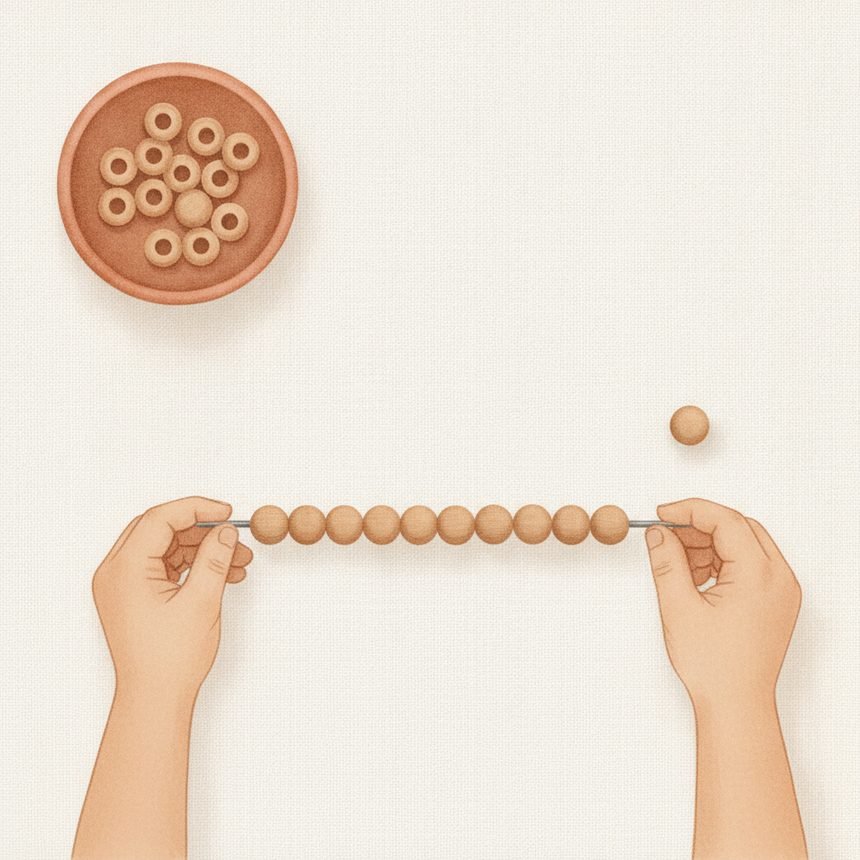
Discovering Tens
Ten beads strung on a wire become a single object: that's what ten really is.
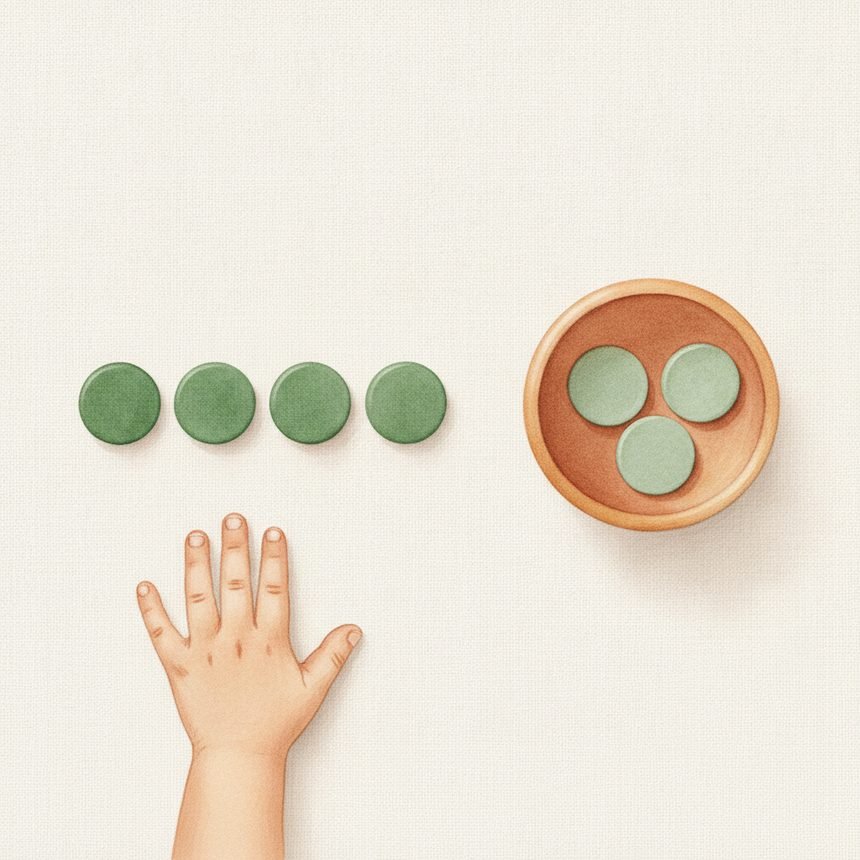
Subtraction with Counters
Take counters away and look at what's left: subtraction becomes a motion.
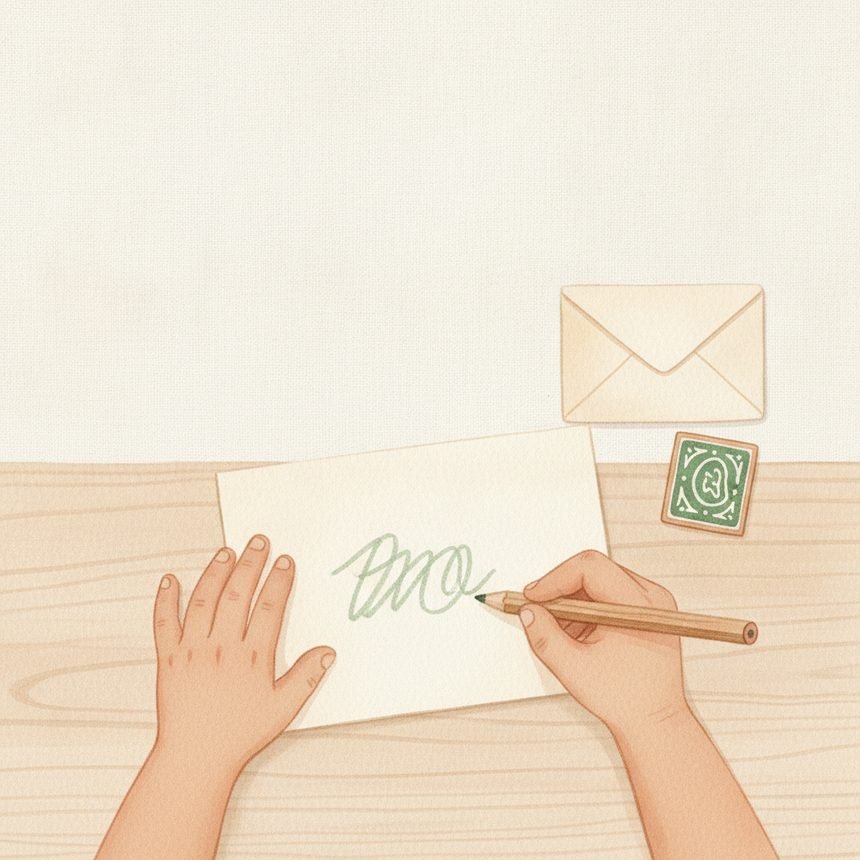
Writing a Real Letter
Writing to someone who will write back: writing finally serves a purpose.
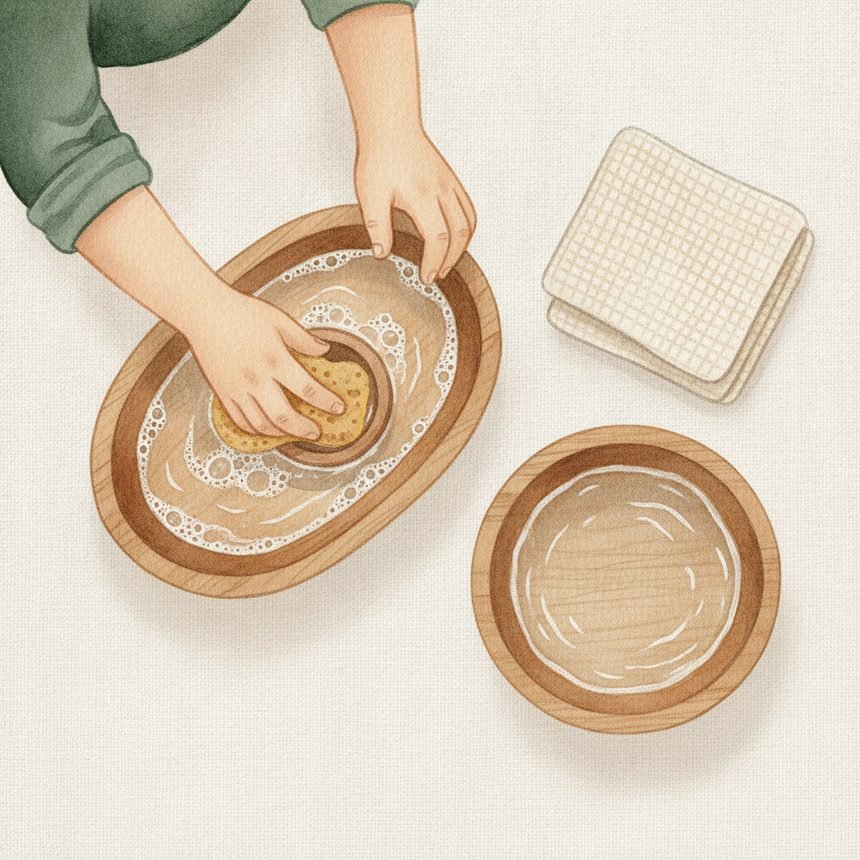
Washing a Bowl
Two basins, a sponge, and their own bowl turning clean again between their hands.
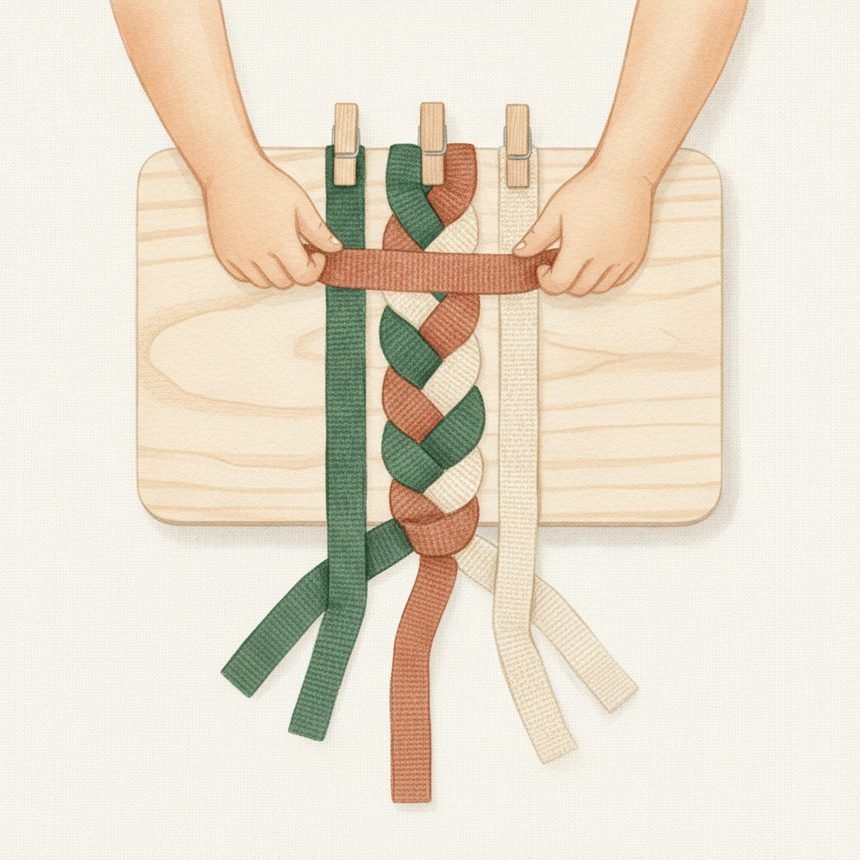
Three-Strand Braiding
Three ribbons crossing over one another, always in the same order.

The Baking Soda Volcano
Baking soda, vinegar, and the mountain starts overflowing with foam.

Island and Lake in a Dish
Land in the middle of water, water in the middle of land: two dishes, two words for the world.

The Continents Puzzle
Seven colored shapes to set back on the map: the whole world fits on the table.

Where Does This Fruit Come From
The banana, the orange, the apple: each one traveled, and you can trace it on a map.

Listening to Your Heart
A funnel, a tube, and a steady sound they'd never noticed before.

Day and Night with an Orange
A flashlight, a spinning orange, a sticker: and they see why night falls.

Tracking Your Shadow in the Sun
Often long in the morning and shorter around solar noon: see how the shadow changes over the course of a day.
Get the "Name Writing in a Rice Tray" activity sheet by email
A complete printable PDF activity sheet for ages 4 to 6: materials, steps, your role, and safety notes.
Request received. Open the email from Semilou and click "Download the activity sheet (PDF)." Nothing after a few minutes? Check your spam folder.
What your child is developing between 4 and 6 years
Your child connects what they touch to what they understand. Sandpaper numbers, number rods, and counters give quantities a concrete form: they count with their hands before they count in their head.
This is also the age when they carry a task from start to finish: squeezing orange juice, polishing a shoe, writing their name. Growing attention shows up right there, in their ability to finish what they started, cleanup included.
In American preschools, this age spans pre-K and kindergarten. The activity sheets are done at home and follow your child's pace rather than a curriculum: an activity gets repeated for as long as they enjoy it.
Reference for observation, modeling, and real-life skills at home: American Montessori Society, Montessori at Home.
How to present an activity at this age
The rule is always the same, no matter the age: show once, slowly, without talking, then let the child do it their own way. Words during the demonstration pull their eyes away from your hands. And the activity always ends with putting the materials away, which counts as much as the rest.
If your child refuses, or does the same activity ten times in a row, that is all fine: repetition is what drives this age. Bring the activity sheet back out a few days later, or move on to the next age group once the motion feels secure.
Questions about 4- and 5-year-olds
What activities are suitable for a 4 year old?
Activities with several steps that end in something real: preparing a snack by peeling, slicing, and plating; setting the table by counting out plates, cups, and forks; cutting paper strips with scissors; sewing a punched card with a round-tipped needle; writing his name with a finger in a tray of rice. He can wait, repeat, and finish, so give him the whole task.
What are some Montessori activities for 5-year-olds?
Hands-on ideas include tracing sandpaper letters while saying the sound, spelling a first word with a movable alphabet, tracing sandpaper numerals, adding and subtracting with counters, sorting odd and even, stringing ten beads to see what ten is. Alongside, practical jobs that grow: squeezing orange juice, polishing shoes, arranging flowers.
What are some indoor and outdoor Montessori activities for 4-year-olds?
Indoors: a baking soda and vinegar volcano, an island and a lake built in two dishes, day and night with a flashlight and a spinning orange, the continents puzzle, listening to a heartbeat through a funnel and a tube. Outdoors: track your shadow, long in the morning and shorter around solar noon. Set up the tray, show it slowly, and let him take it from there.
Are there Montessori activities for 4-year-olds as a PDF?
Not tracing pages to fill in: sheets you follow to present a Montessori activity with household materials. Each of our 32 activities for this age group fits on one illustrated Letter-size page, with the steps in pictures, your role, and the safety notes. The pages on this site show the materials, the safety notes, and the first two steps. The complete sheets are included in the paid pack for this age group.
Printable materials for these activities
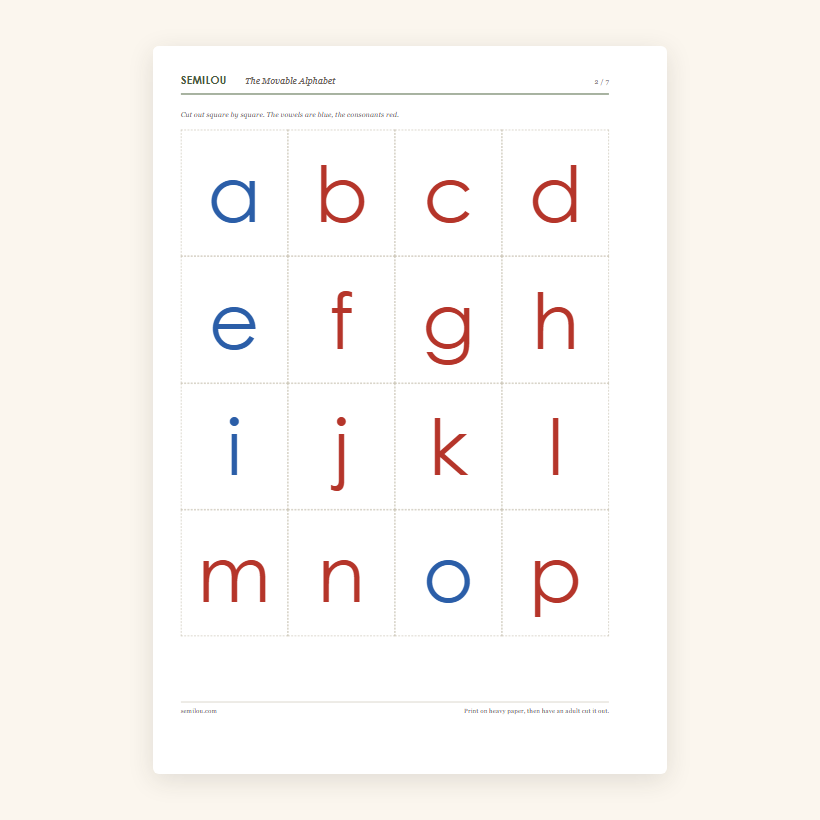
The Printable Movable Alphabet
The letters to cut out that your child moves to spell a word, long before they can write it with a pencil.
See contents and preview →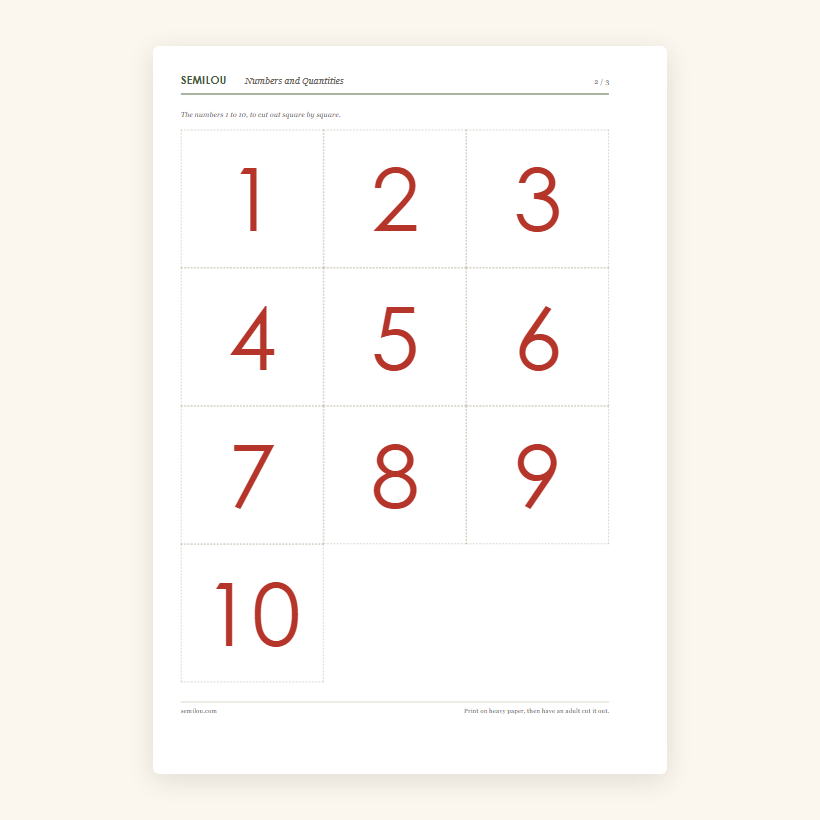
Printable Numbers and Quantities
Ten numbers on one side, ten quantities on the other, to be matched. The dots come in pairs, so odd and even are easy to see.
See contents and preview →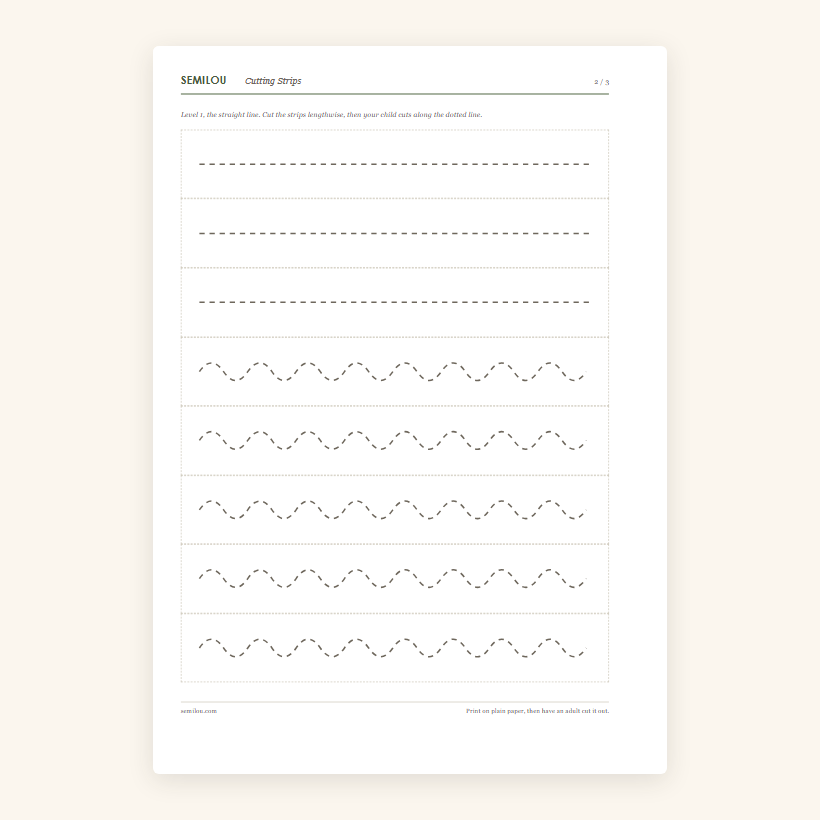
The Cutting Strips
Sixteen strips ordered from a straight line to a corner, to learn to use scissors without ever needing to finish a picture.
See contents and preview →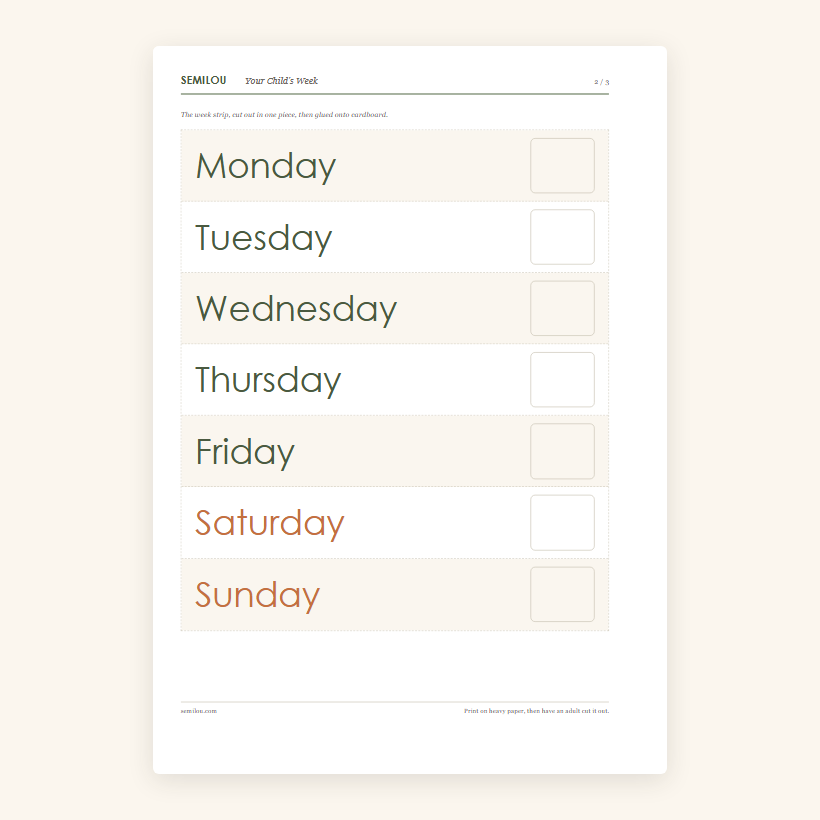
Your Child's Weekly Planner
The seven-day strip and everyday pictures, to answer "when is it?" with something other than words.
See contents and preview →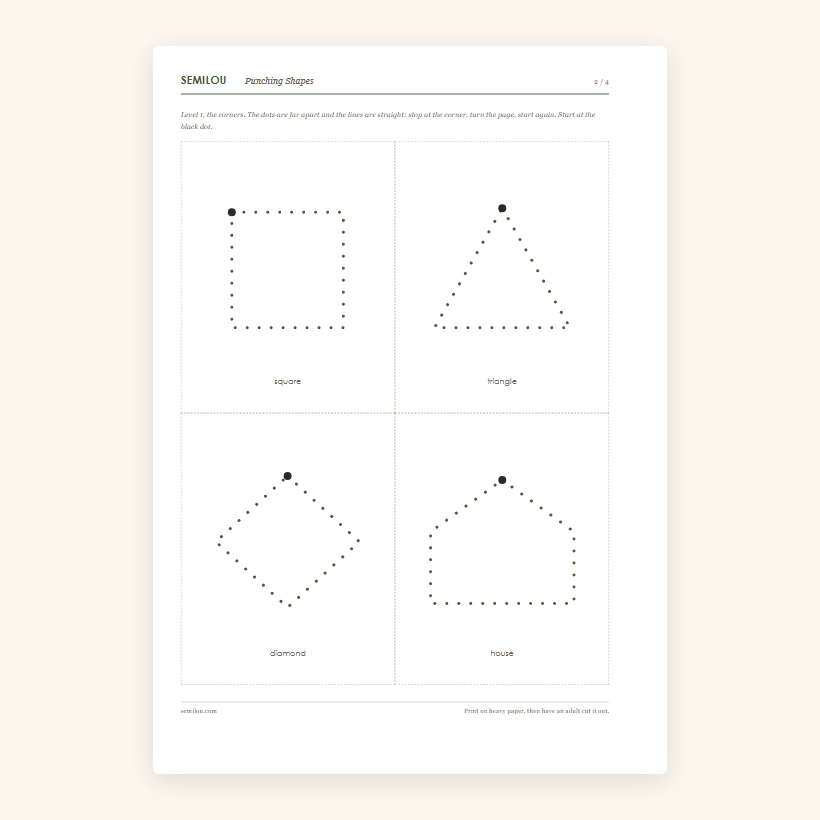
Pin-Punching Shapes
Twelve outlines made of dots: your child punches each dot with a pin tool, then frees the shape, with an adult's help if needed.
See contents and preview →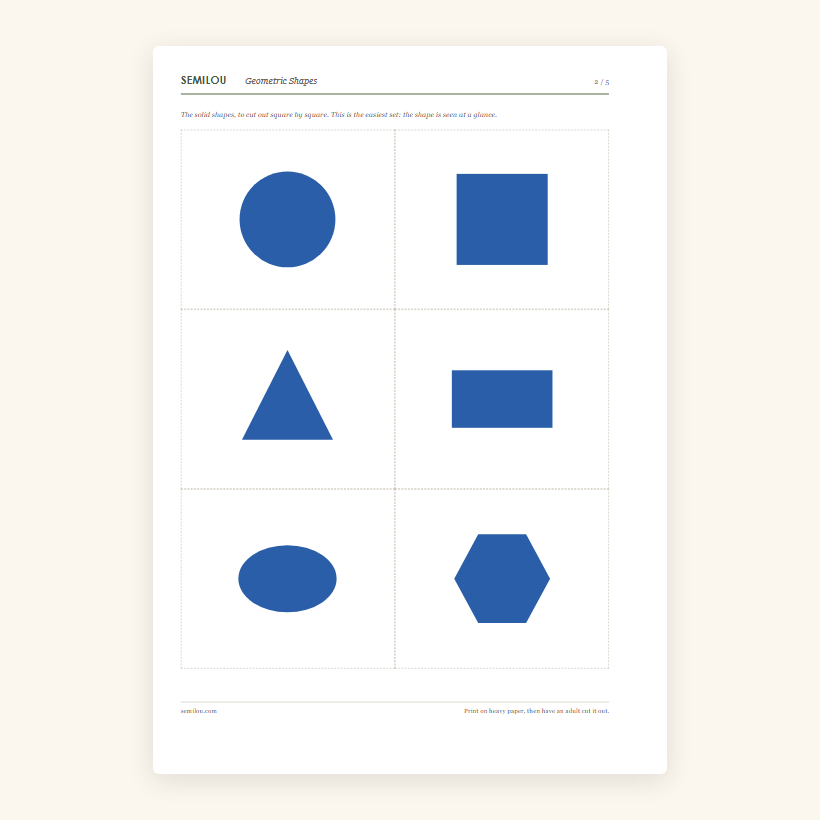
The Geometric Shapes
Six figures in three sets, from the solid shape to the plain outline: your child matches, sorts, then names them.
See contents and preview →