
Early math activities
Counting with the hands before counting in the head: counters, stairs, spindles, a ten you can hold. A number is first a quantity your child touches; the numeral comes after.
22 Early Math activities, sorted by age. Each activity lists the materials to gather before you begin at home.
Turn these previews into a complete age-group set
Browse 22 early math activity previews, sorted from 12 months to 8 years. Each preview shows the materials and first two steps. A one-time $29 purchase unlocks one age group in one language: 25 or 32 complete printable activity sheets, the combined booklet, and seven printable material PDFs.
One-time payment. No subscription. No physical shipment.


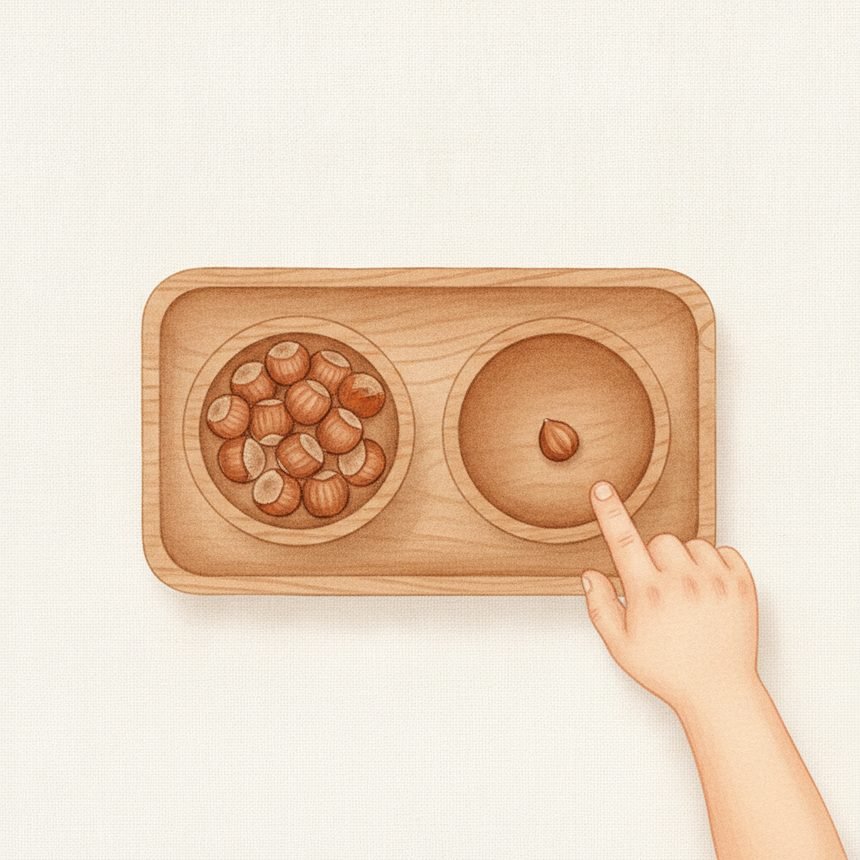
For 3 to 4 years
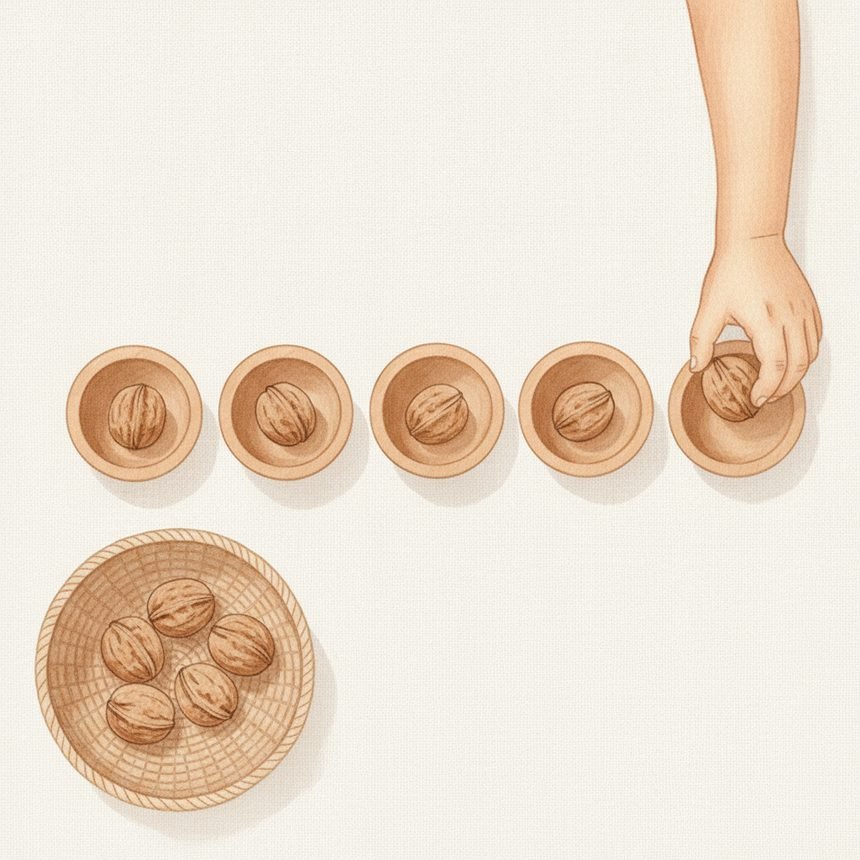
One for Each
One walnut per bowl, not two, not zero: a first experience of one-to-one correspondence.
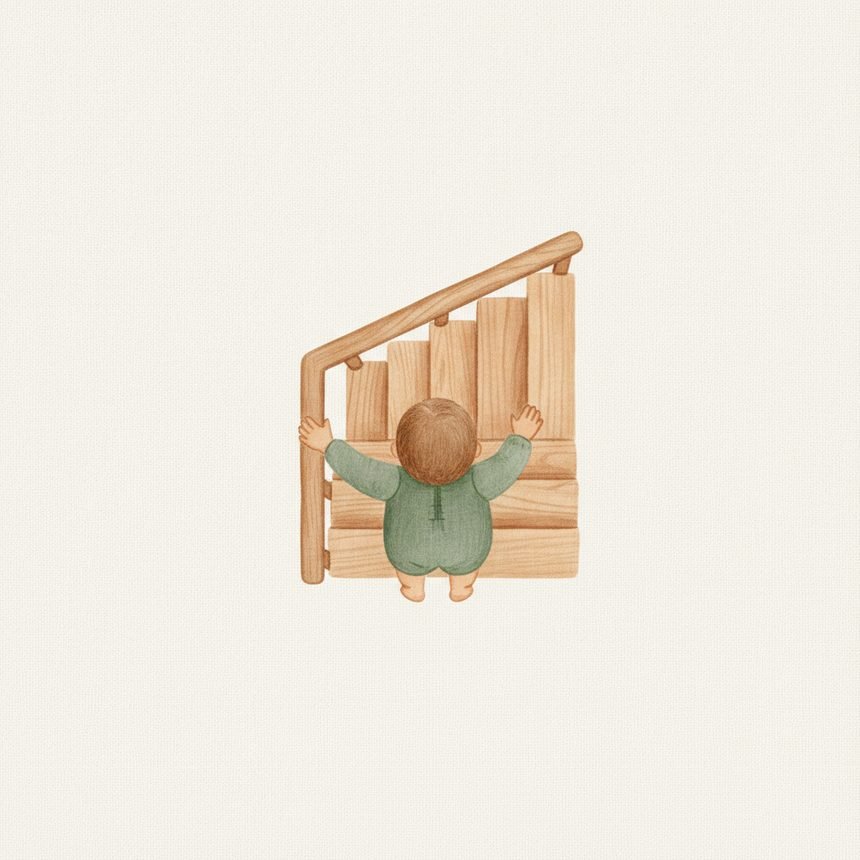
Counting the Stairs
One number per step, one word per stride: the number sequence enters the body.
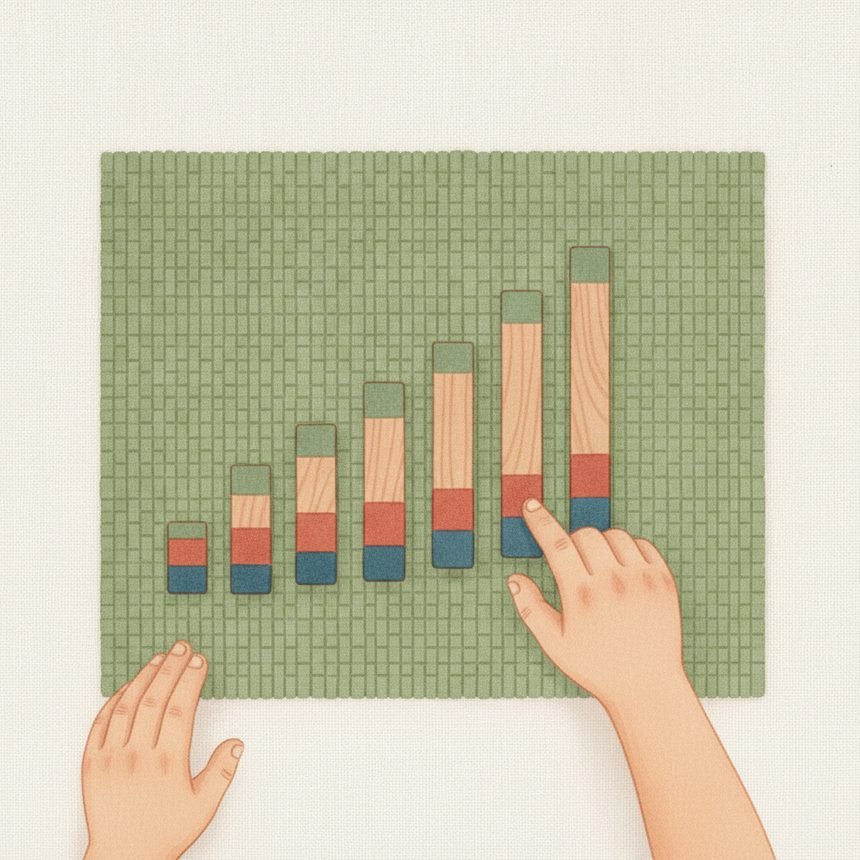
Number Rods
Rods of growing length: quantity becomes something you can see and weigh in your hands.
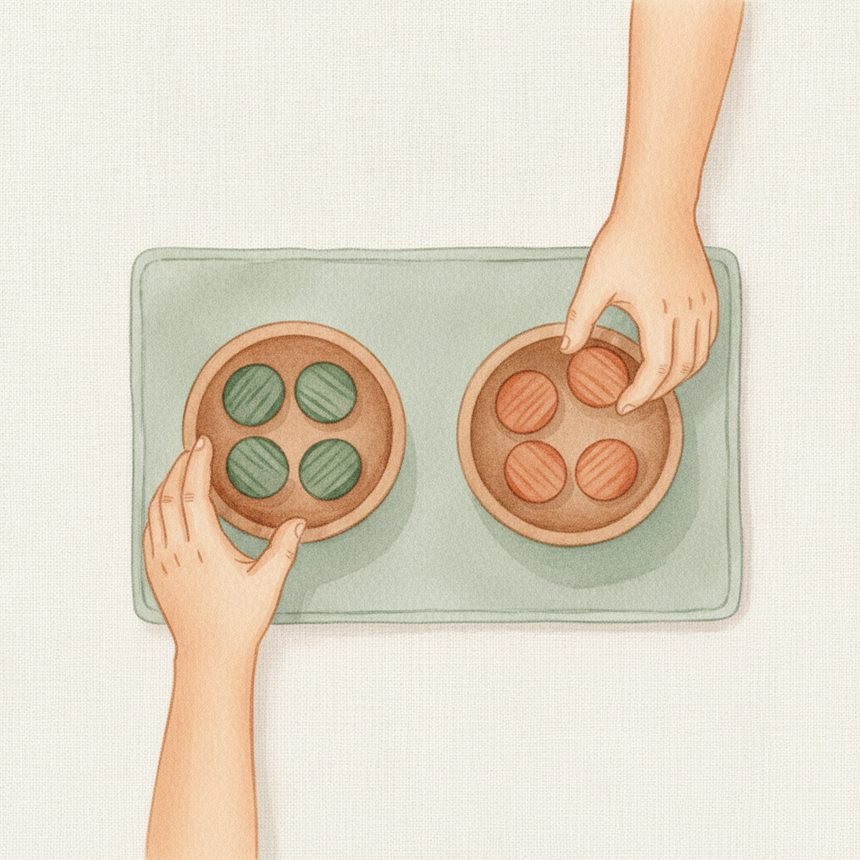
How Many Are There?
Counting real little collections by moving each object: one word, one motion, never more.
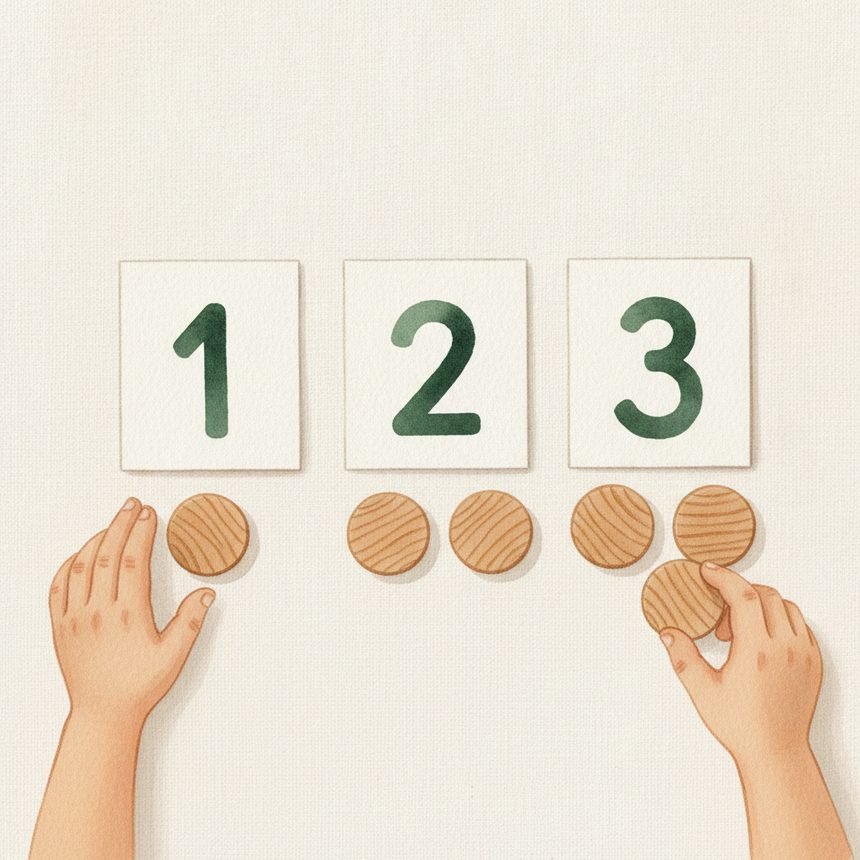
Matching Number and Quantity
The written numeral finally meets the quantity it stands for, counter by counter.
For 4 to 6 years
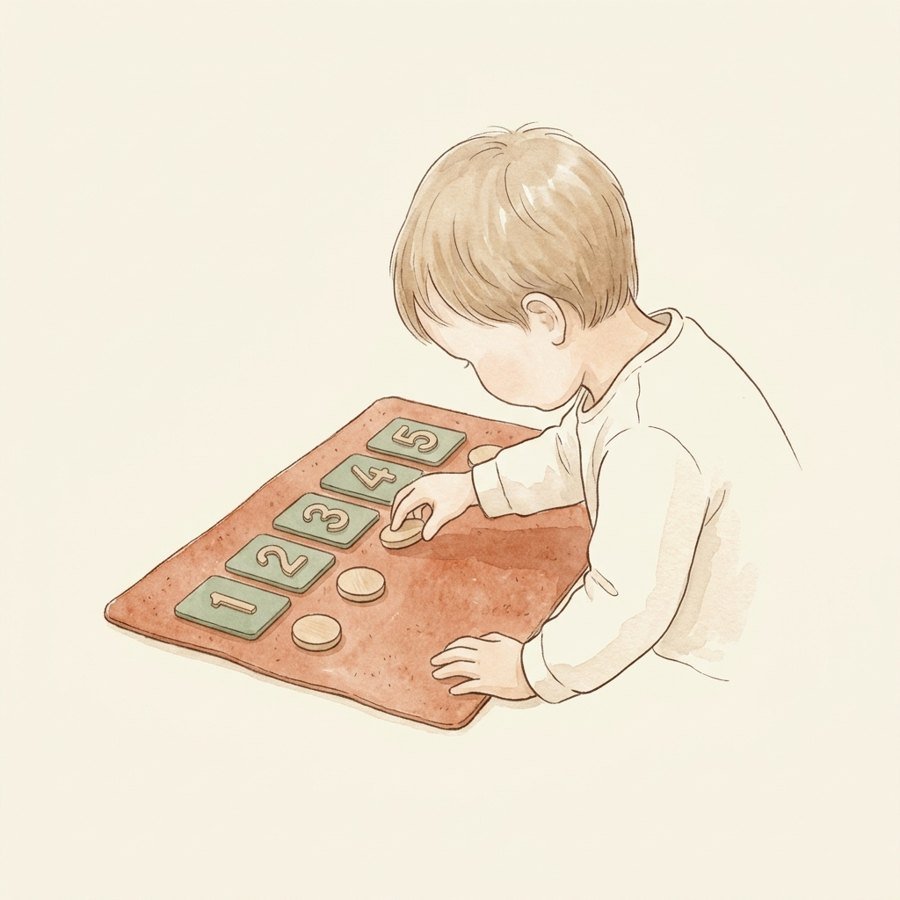
Counting with Counters
Place a counter, say a number. A number becomes something you can touch.
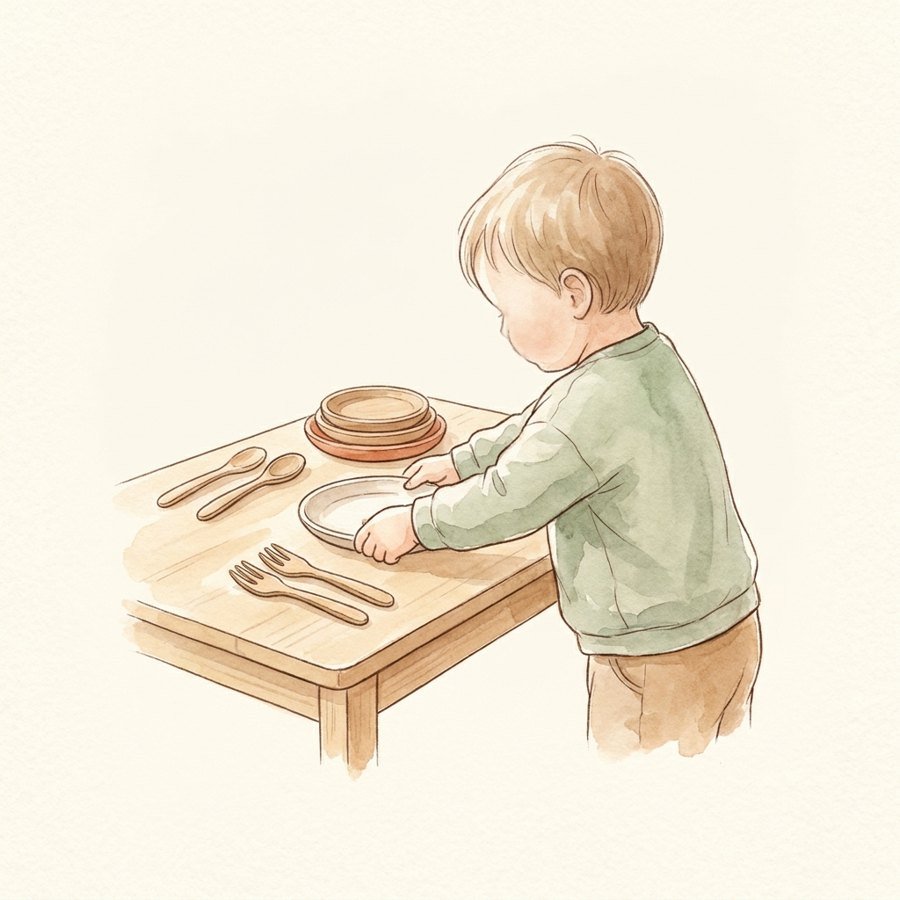
Setting the Table by Counting
Four plates, four cups, four forks: real counting, because it's put to real use.
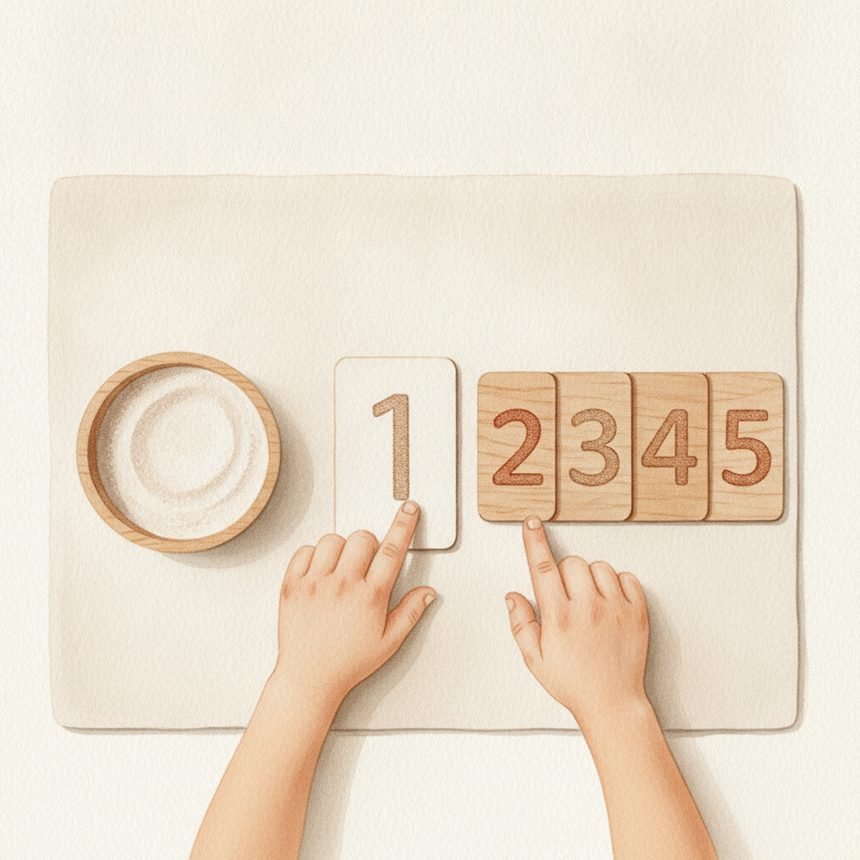
Sandpaper Numbers
Numerals to trace with a finger, in writing order, so the hand knows them before it draws them.
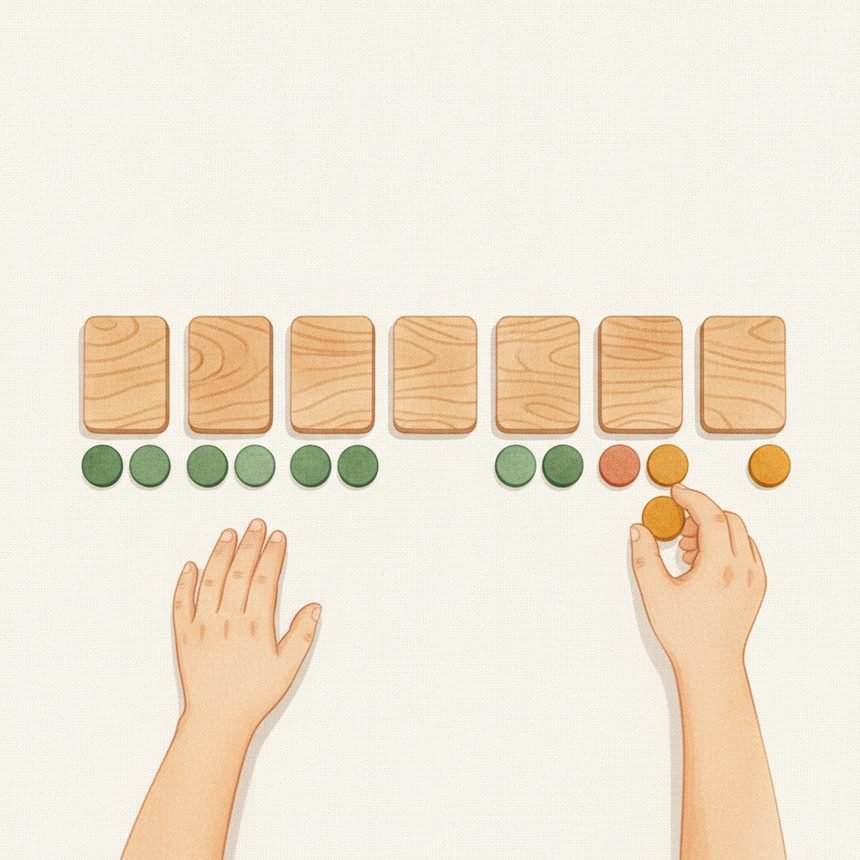
Odd and Even
Lining counters up two by two under each numeral: numbers give up their secret.
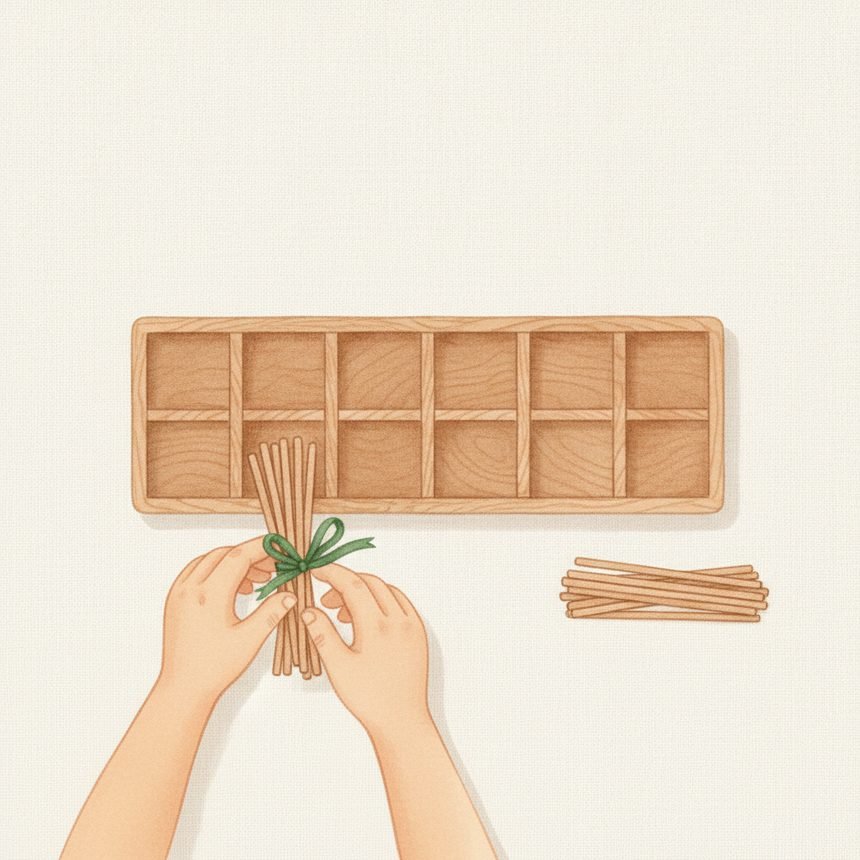
Spindle Boxes and Zero
Sticks to sort from 0 to 9 into the right compartments, and the discovery that zero means nothing.
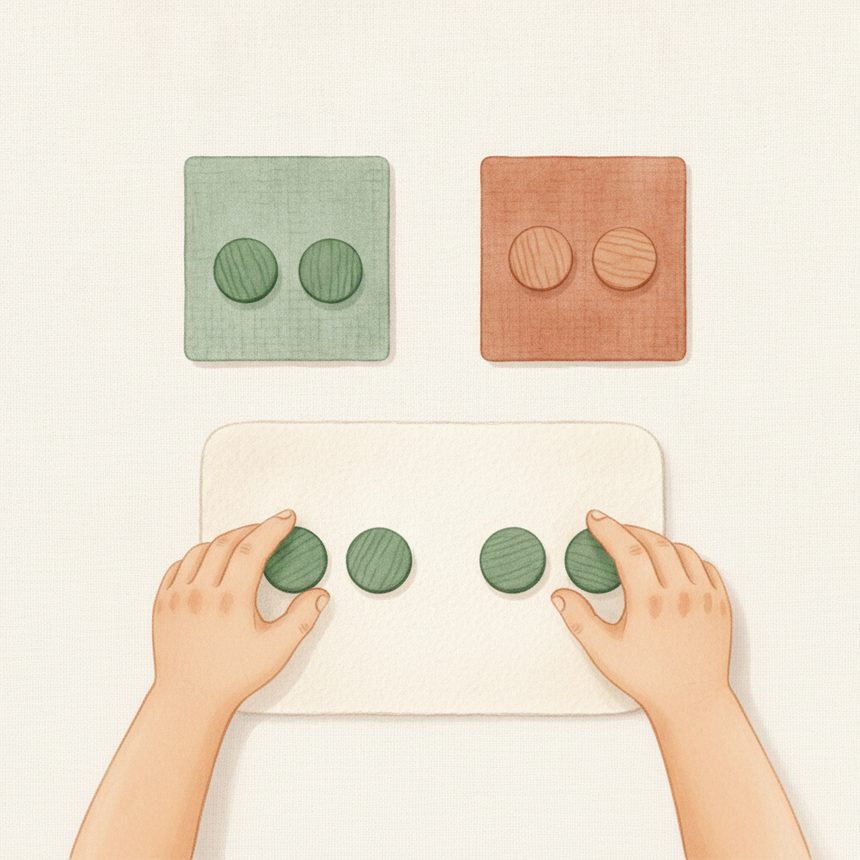
Addition with Counters
Three counters and two counters brought together: the first addition, seen and done with your own hands.
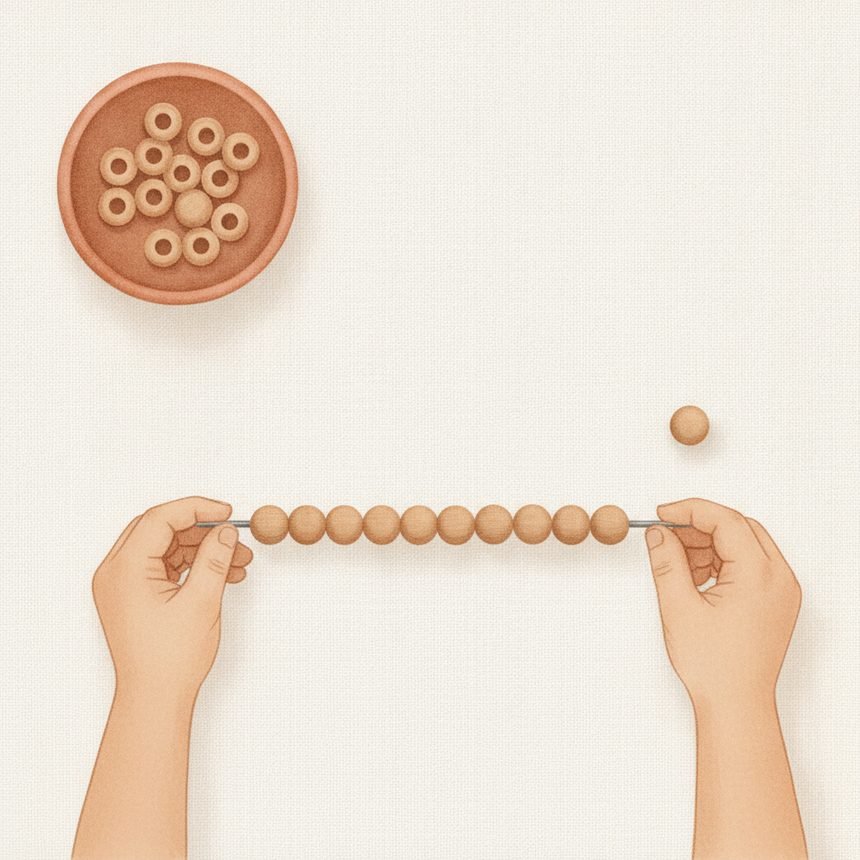
Discovering Tens
Ten beads strung on a wire become a single object: that's what ten really is.
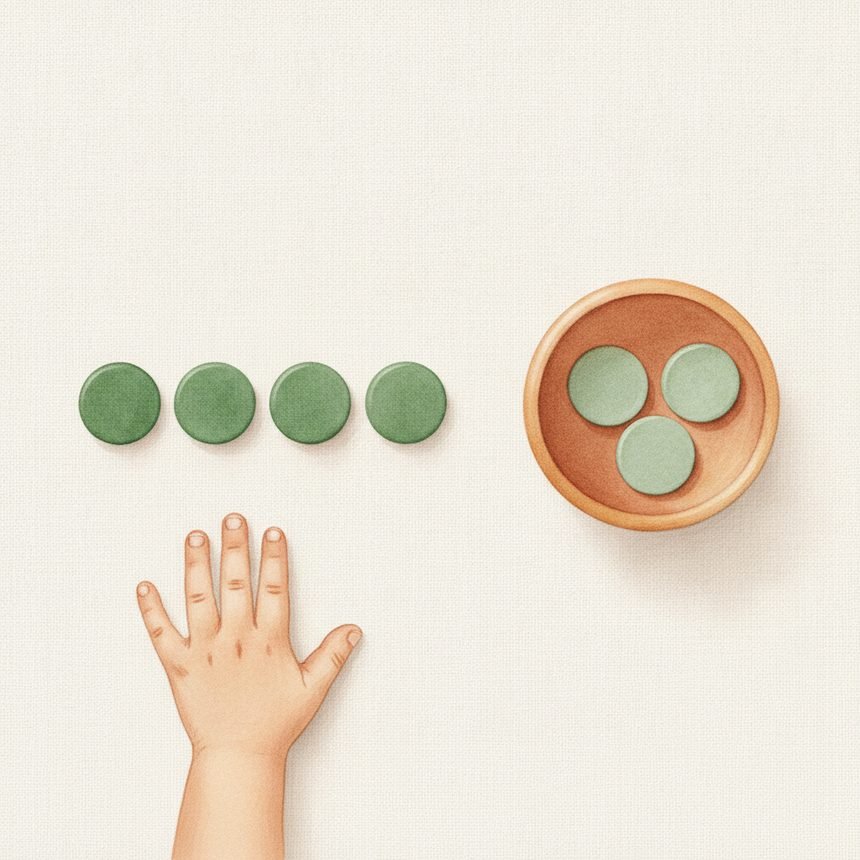
Subtraction with Counters
Take counters away and look at what's left: subtraction becomes a motion.
For 6 to 8 years

The Bank: Units, Tens, Hundreds
Ten pieces of pasta make a bag, ten bags make a box: place value you can hold.

Multiplying with Beans
Four rows of three: multiplication turns into a rectangle you can actually see.

Sharing Equally
Twelve crackers, four plates, and a fairness you can check with your own eyes.

Pizza Fractions
A pizza cut in half, then in quarters: a half stops being a word and becomes a slice.

Measuring the House with a Tape Measure
Guess first, measure second, and find out by how much you were off.

Playing Store with Real Coins
Real coins, real prices, and change to give back: addition turns useful.
Printable materials for these activities
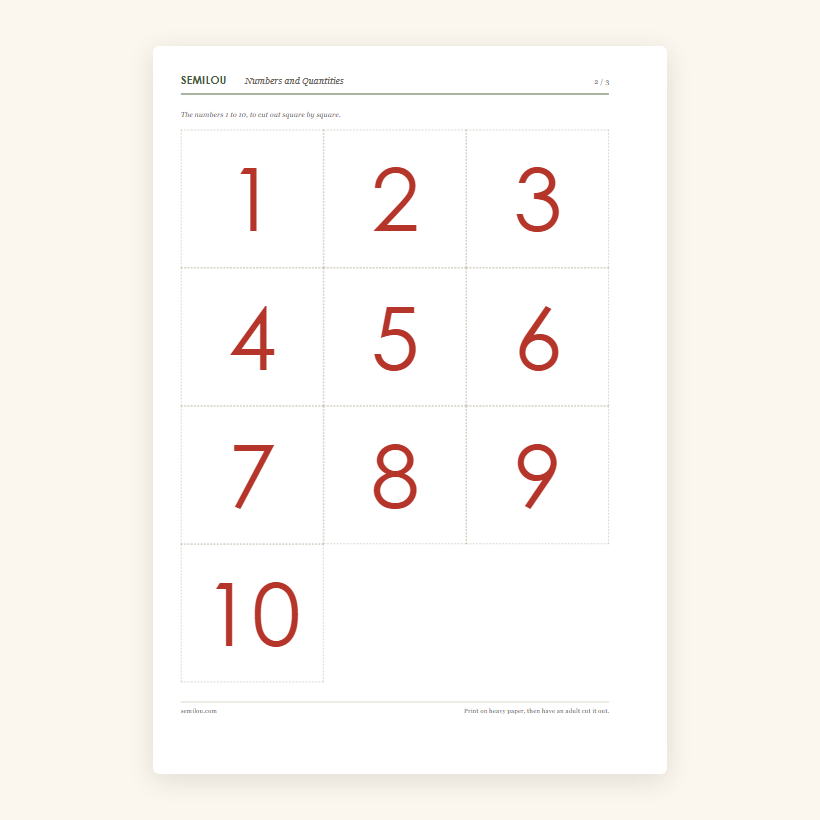
Printable Numbers and Quantities
Ten numbers on one side, ten quantities on the other, to be matched. The dots come in pairs, so odd and even are easy to see.
See contents and preview →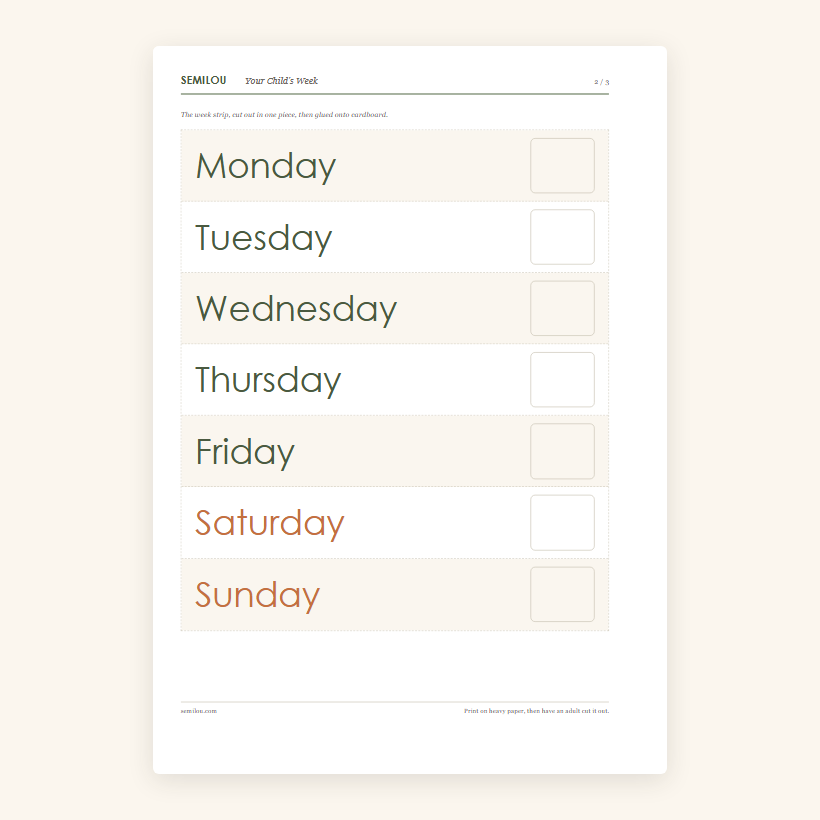
Your Child's Weekly Planner
The seven-day strip and everyday pictures, to answer "when is it?" with something other than words.
See contents and preview →Questions about early math activities
How do you teach math the Montessori way?
Quantity first, symbol second. From 2 to 3 years: Many and One, a full bowl against a bowl with a single pom-pom. From 3 to 4 years: One for Each, Counting the Stairs, How Many Are There?, Number Rods, then Matching Number and Quantity, where the written numeral meets what it stands for. From 4 to 6 years: Sandpaper Numbers, Spindle Boxes and Zero, Discovering Tens. Your child holds every quantity before writing a digit.
How can you make Montessori math materials at home?
Almost everything comes from your own drawers. Walnuts or acorns for One for Each, counters or buttons for Counting with Counters and Addition with Counters, strips of growing length for Number Rods, sandpaper numerals to trace with a finger, sticks sorted into a divided box for Spindle Boxes and Zero, ten beads on a wire for Discovering Tens, pasta in bags for The Bank. Each sheet lists the exact materials.
What are fun math activities for preschoolers and 5 to 6 year olds?
Math turns into a game when it has a purpose. From 4 to 6 years: Setting the Table by Counting, Odd and Even with counters lined up two by two, Addition with Counters, Subtraction with Counters. From 6 to 8 years: Playing Store with Real Coins, Sharing Equally (twelve crackers, four plates), Pizza Fractions, Multiplying with Beans, Measuring the House with a Tape Measure.
Are there printable Montessori math activities in PDF?
Yes, without a single sum to fill in: your child counts, sorts, and shares real objects, and what you print is the sheet you follow, with the materials, the step-by-step presentation, and the variations by age. The 22 pages in this area show the materials, precautions, and first two steps of each activity; the complete sheets for an age group come together in that age group's set, ready to print after purchase.