Montessori Activities for 18 to 24 Month Olds
At this age, your child wants to do everything you do, with their own hands. Activities are short, very concrete, and happily repeated ten times in a row. That's normal, and it's actually the whole point. You're looking for a movement done well, not a perfect result.
What the $29 set for ages 18 to 24 months includes
Get the set for ages 18 to 24 months
Digital PDFs. One age group, one language. No subscription and no physical shipment.
Semilou offers 32 printable Montessori activities for ages 18 to 24 months, in the following areas: practical life, sensorial, fine motor, language, early math, science and nature.
Recommended time for this age: 5 to 10 minutes, often repeated.
What the $29 set for ages 18 to 24 months includes
Browse all 32 Montessori activity previews for ages 18 to 24 months. Each preview shows the materials, safety guidance, and the first two steps. A one-time $29 purchase unlocks this age group in English: 32 complete printable activity sheets, the combined booklet, and seven printable material PDFs.
Digital PDFs. One age group, one language. No subscription and no physical shipment.
32 activities for 18 to 24 months
Each activity sheet lists the materials you will need.
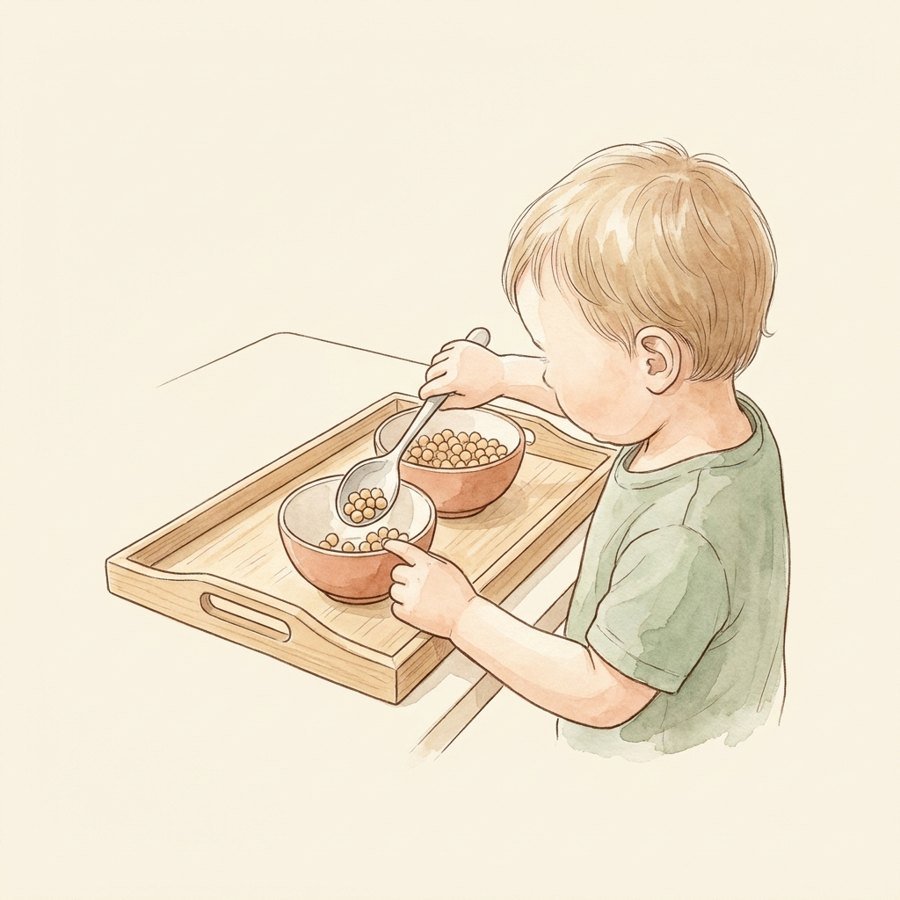
Spoon Transfer
Two bowls, a spoon, and dried chickpeas: the first big independence project.
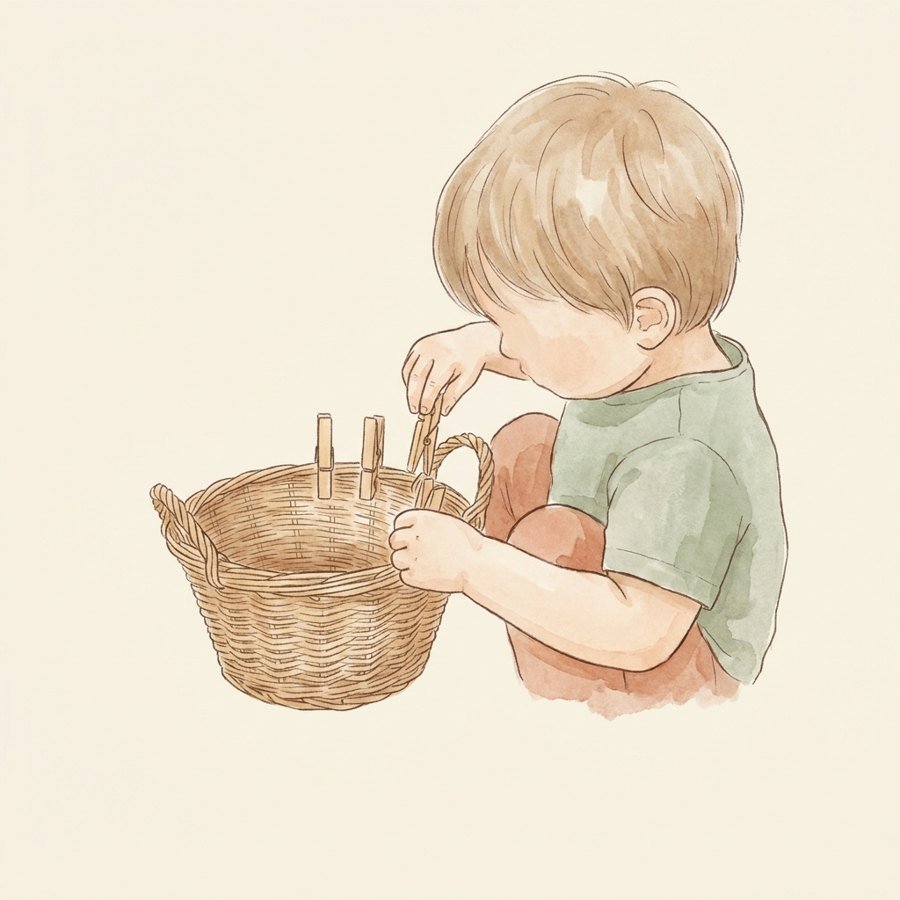
Clothespins on a Basket
Pinch, clip, unclip: three fingers building the grip they will use to hold a pencil.
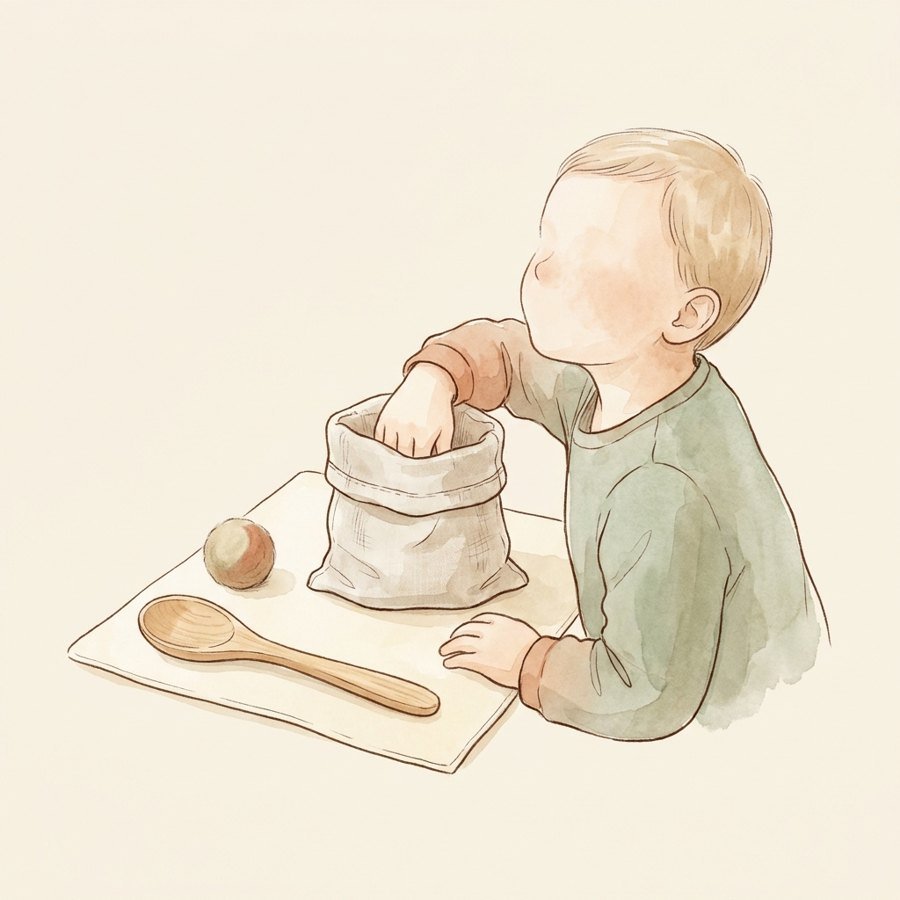
The Mystery Bag
Recognizing an object by touch alone, without seeing it. A small magic trick for the hands.
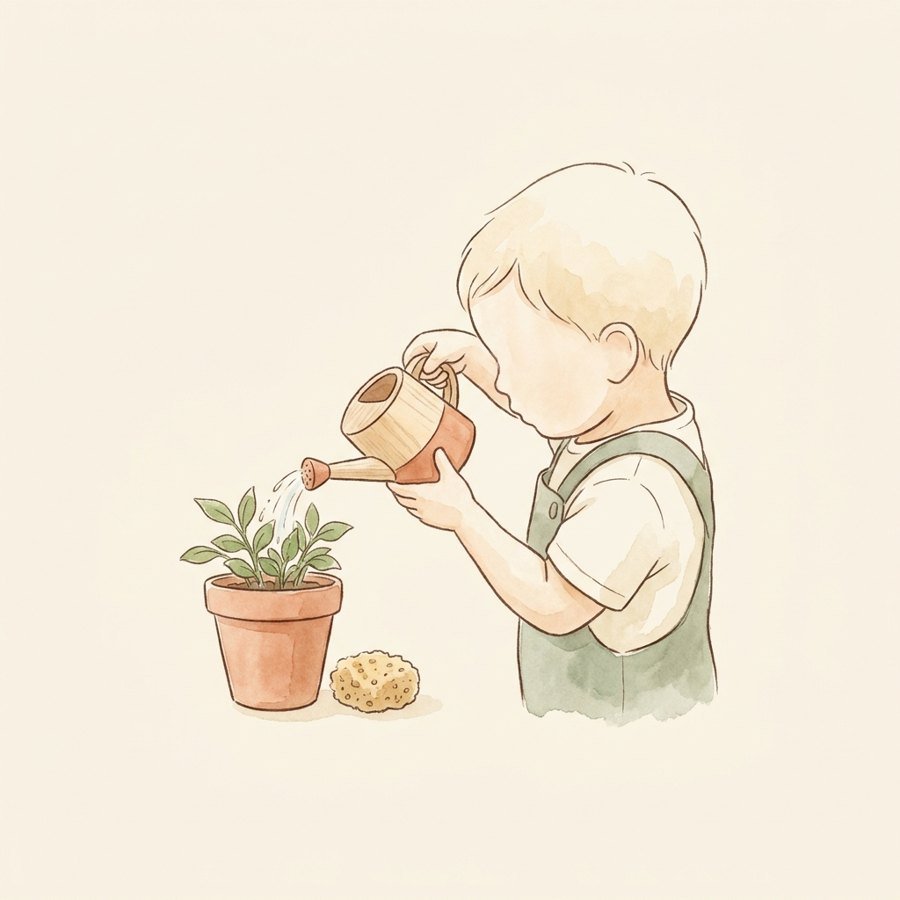
Watering a Plant
A real responsibility, well within reach of an 18-month-old.
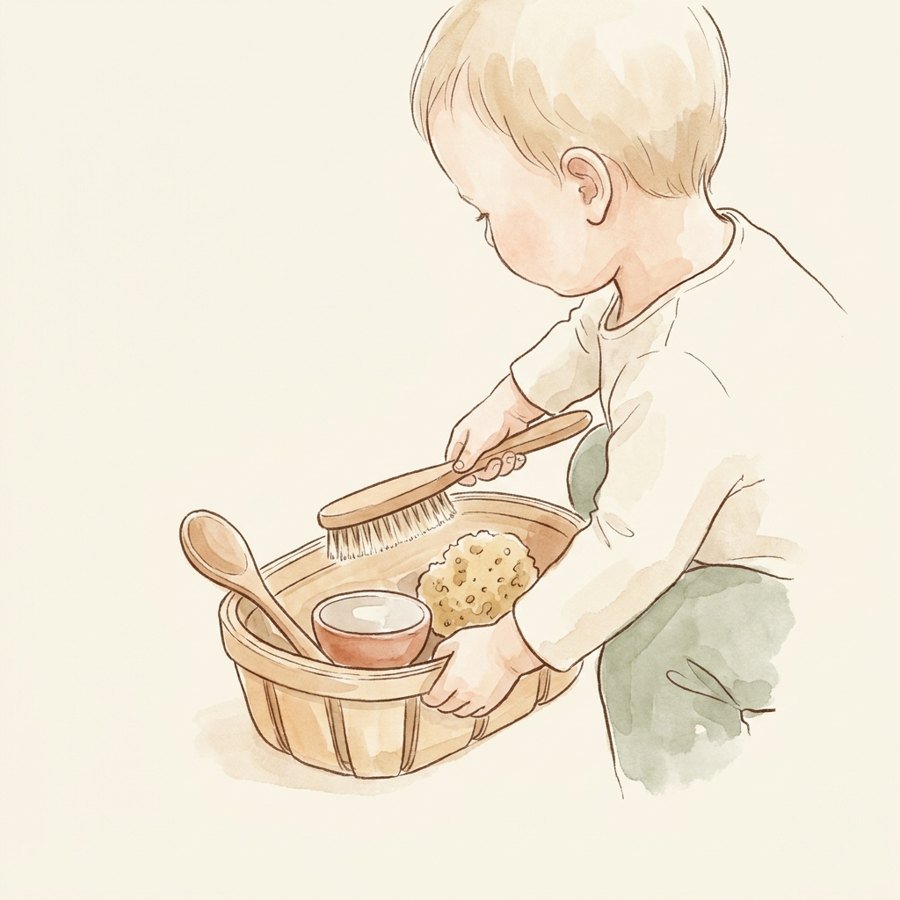
The Real Objects Basket
Five household objects in a basket, each with a name to learn.
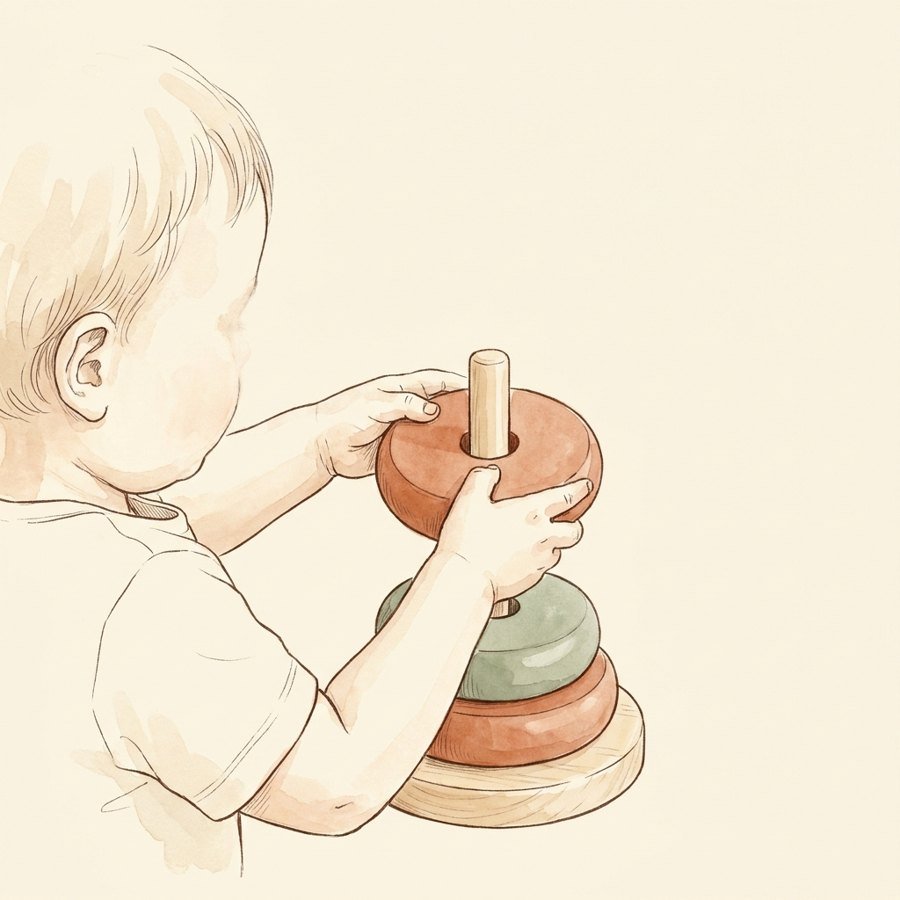
Ring Stacking
Aim, slide, let go: the first precision movement, with a satisfying sound at the end.
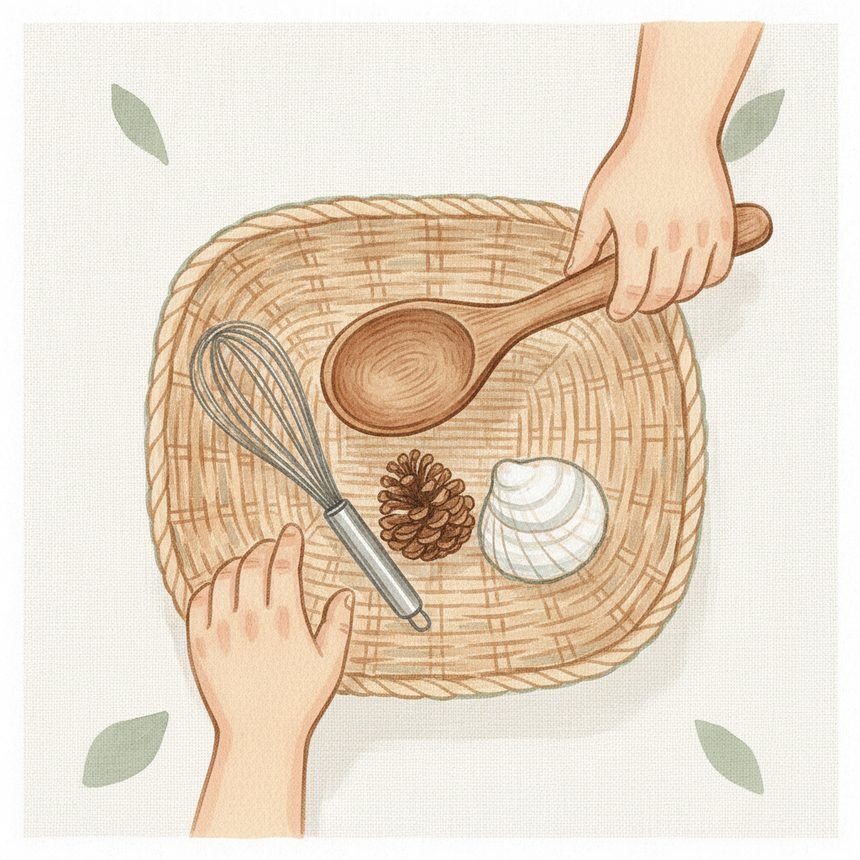
The Treasure Basket
A basket of real objects to freely explore with the hands: the first sensory discovery.
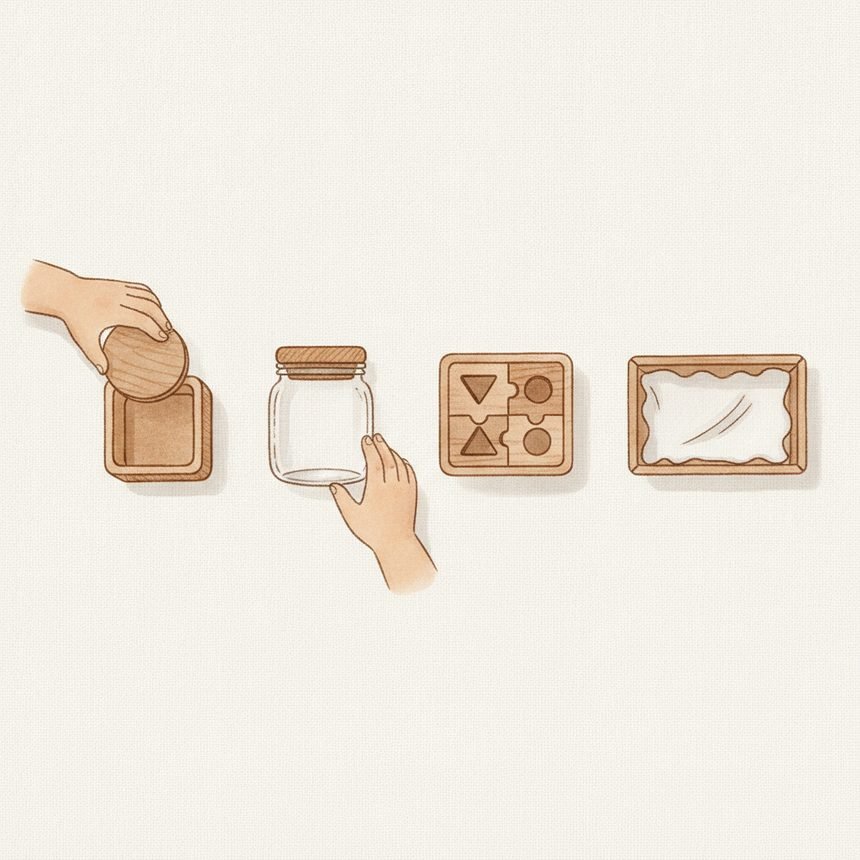
Opening and Closing Containers
Containers of every kind, to open and close again: each lid asks for a different move.
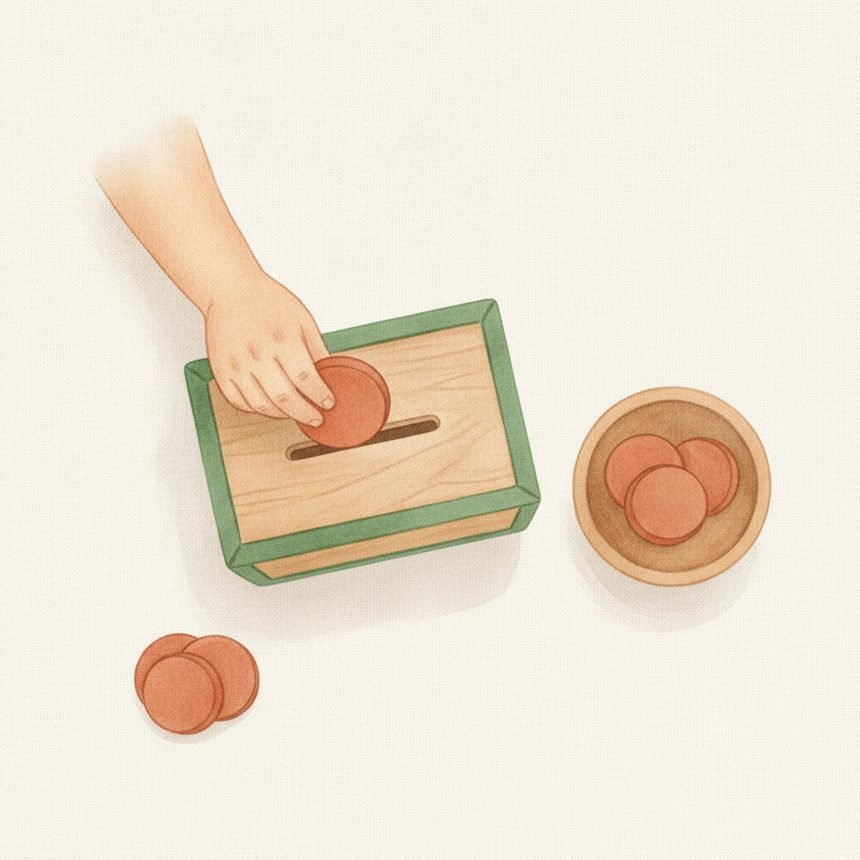
The Coin Box
Sliding big coins through a slot, then opening the box back up to find them: a classic children return to again and again.

Real Picture Books
A book of real photographs and a shared moment on your lap: a chance to learn new words.
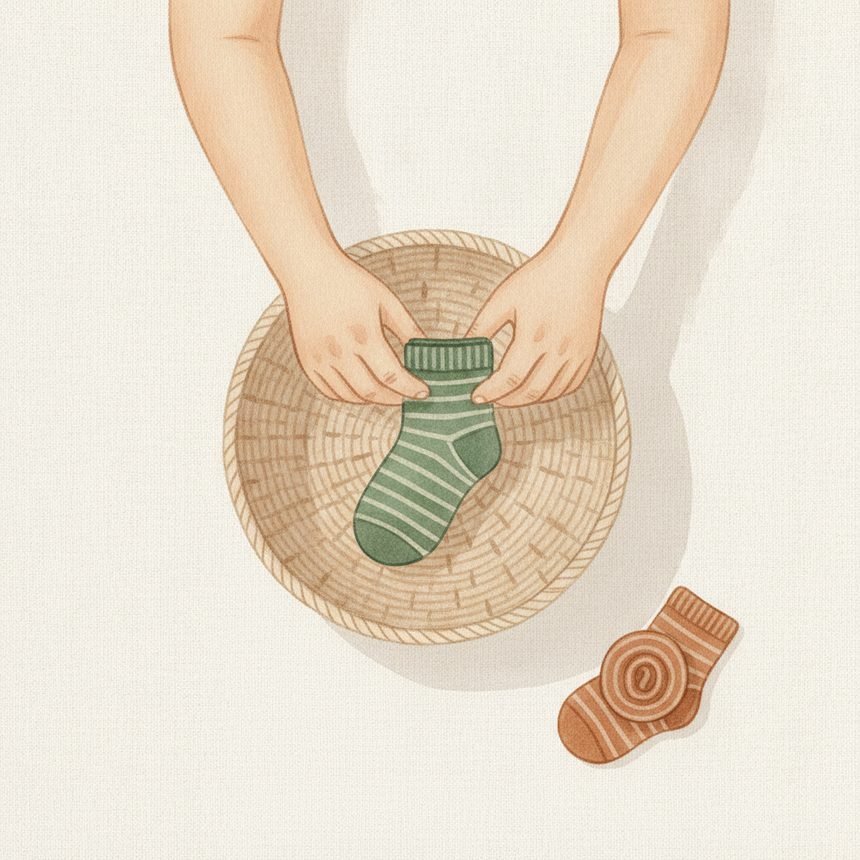
The Laundry Basket
Socks in the basket, every evening: the first real responsibility, at kid height.
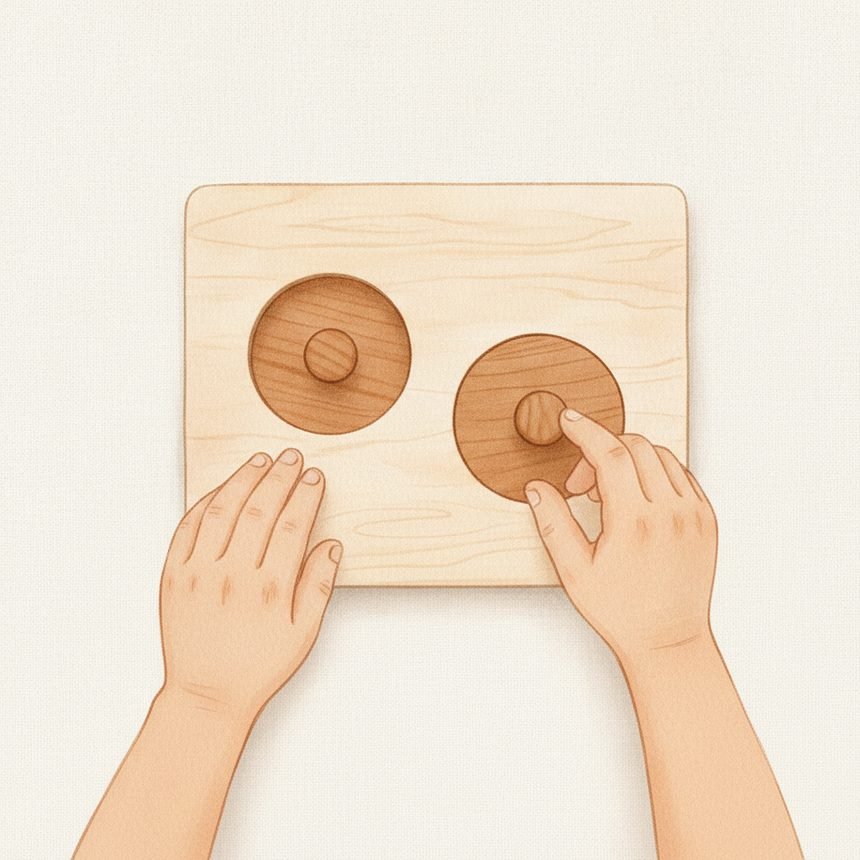
The First Shape Puzzle
A one-piece round puzzle with a big fat knob: the circle fits, or it doesn't.
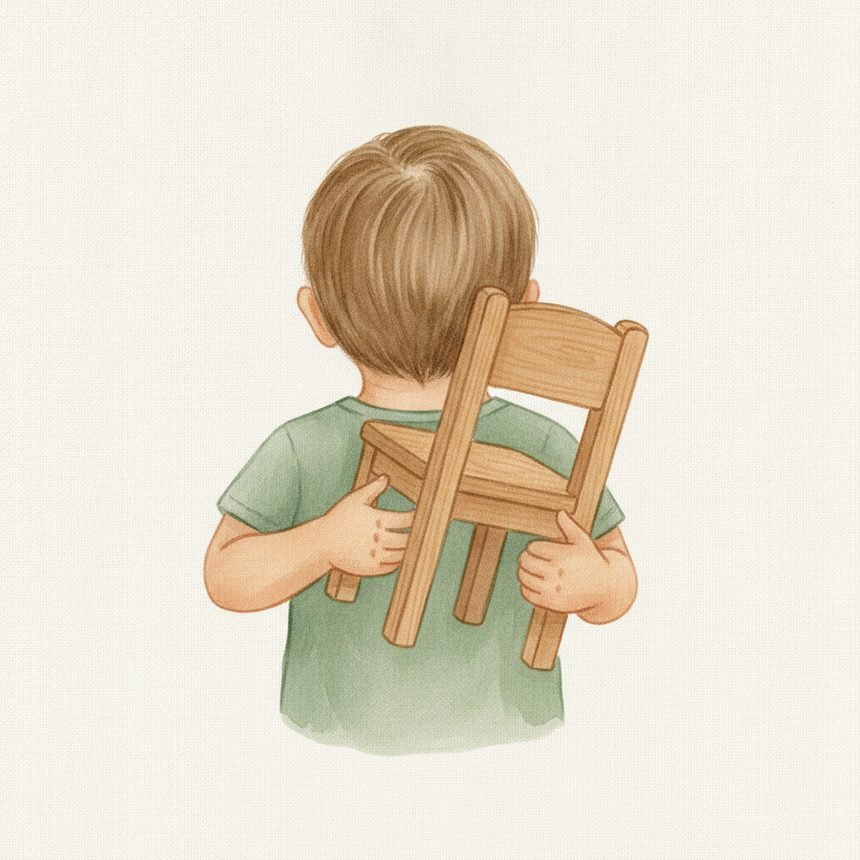
Carrying a Chair
Carrying a small chair with both hands and setting it down without a sound: the whole body learns control.
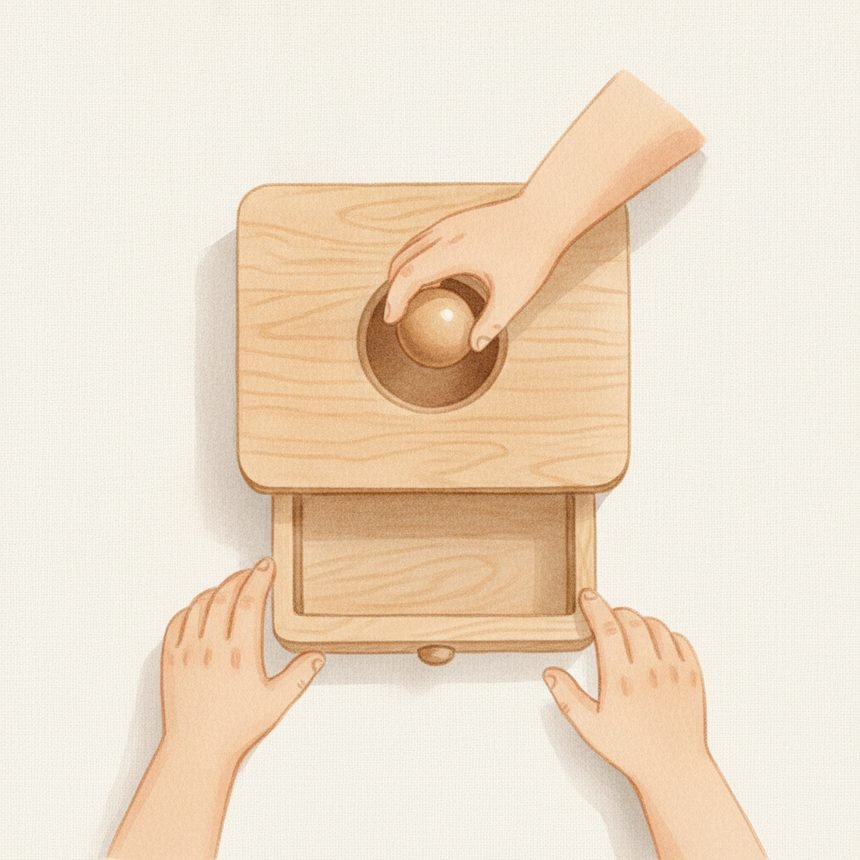
The Object Permanence Box
The ball disappears into the hole, then reappears in the drawer: the great mystery of objects that come back.
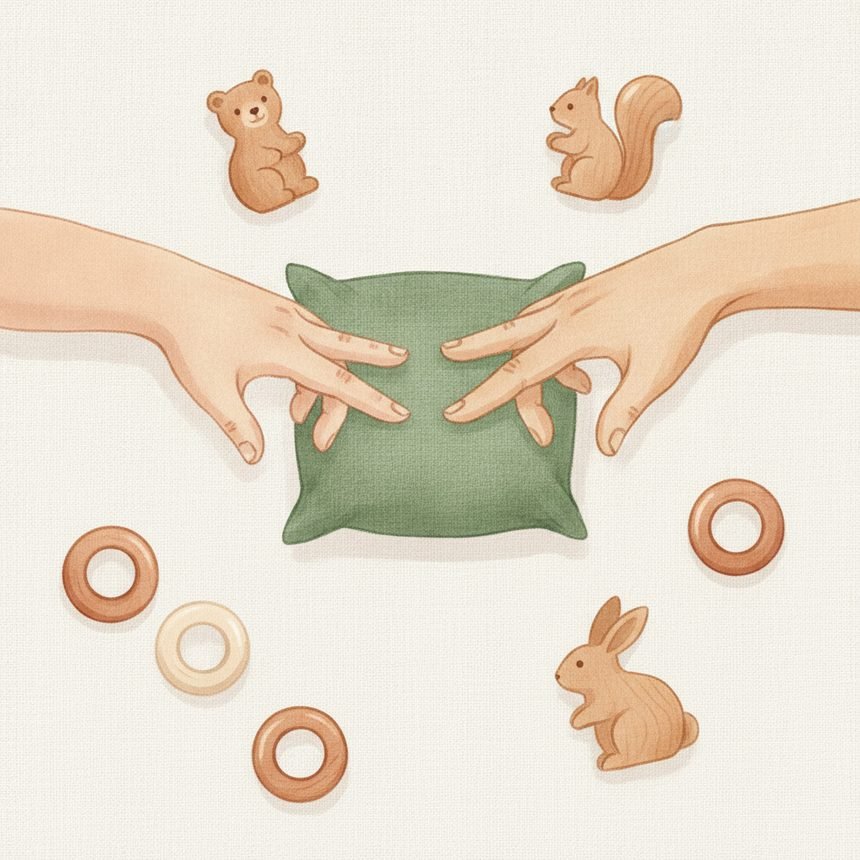
Action Songs
The same songs, the same motions, every day: music that plants the words.
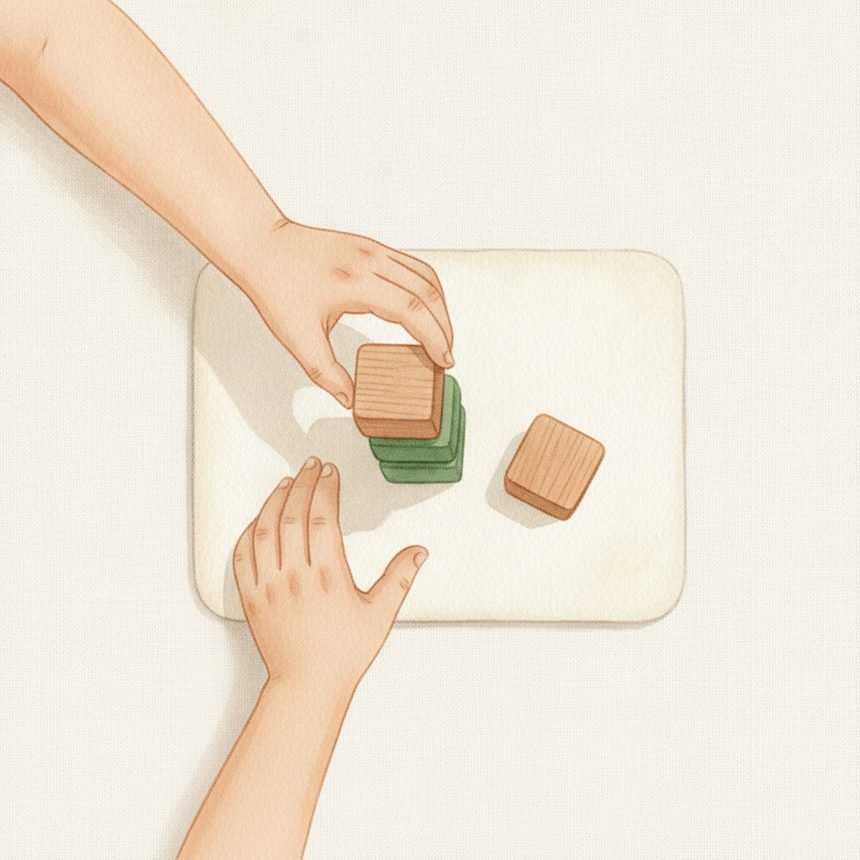
Stacking Blocks
Setting one block on another, letting go without knocking it over: the hand learns gentleness.
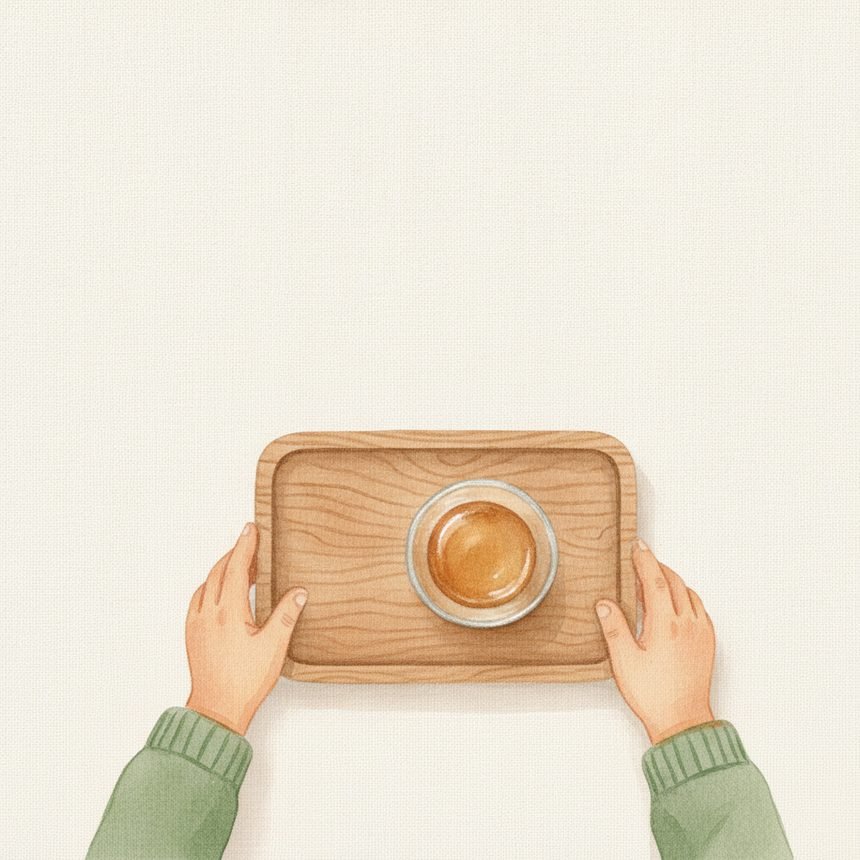
Carrying a Tray
A tray in both hands, a short trip, and a cup that must not spill: the signature movement of independence.
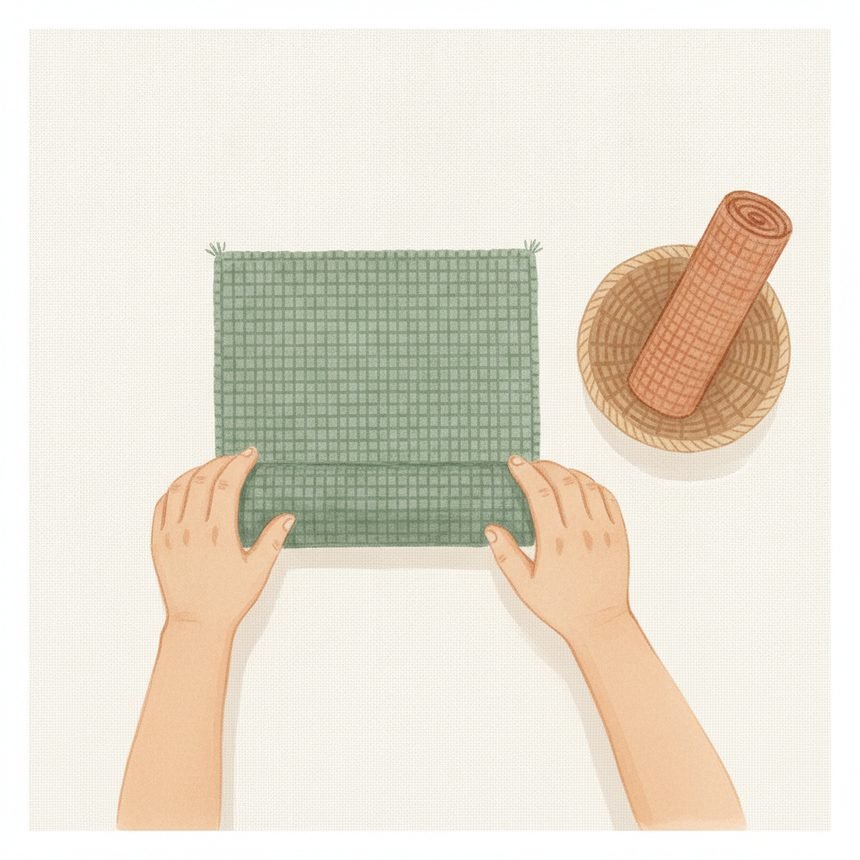
Rolling Out a Work Mat
Rolling out a small mat, working on it, then rolling it back up and putting it away: the frame for everything else.
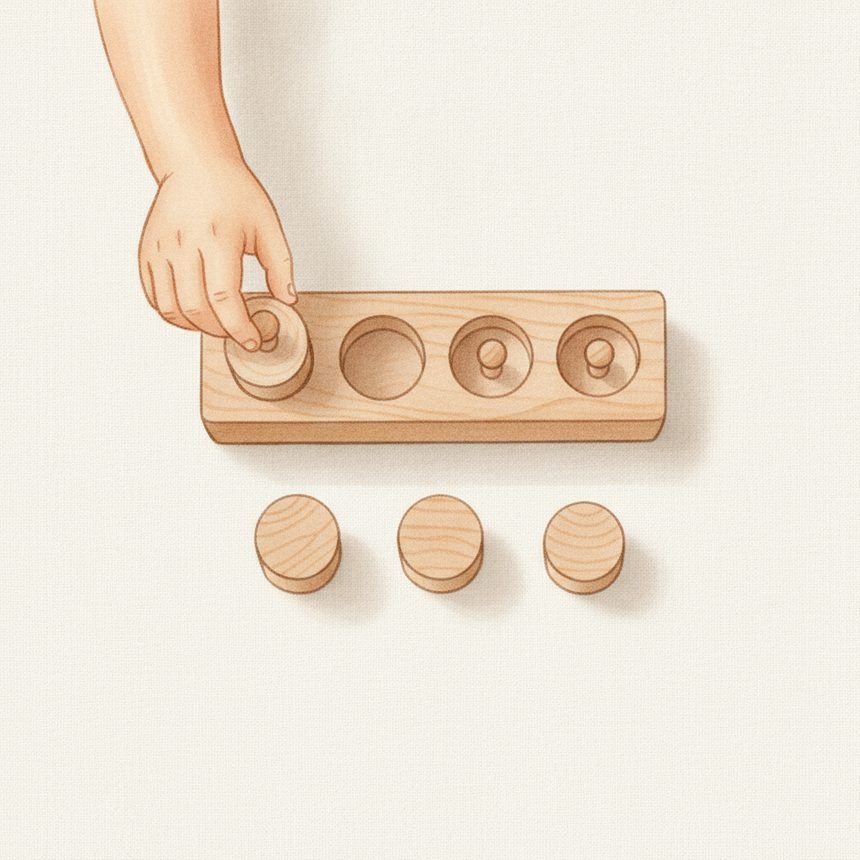
Knobbed Cylinders
Cylinders of different sizes, each one with its own place in the block.
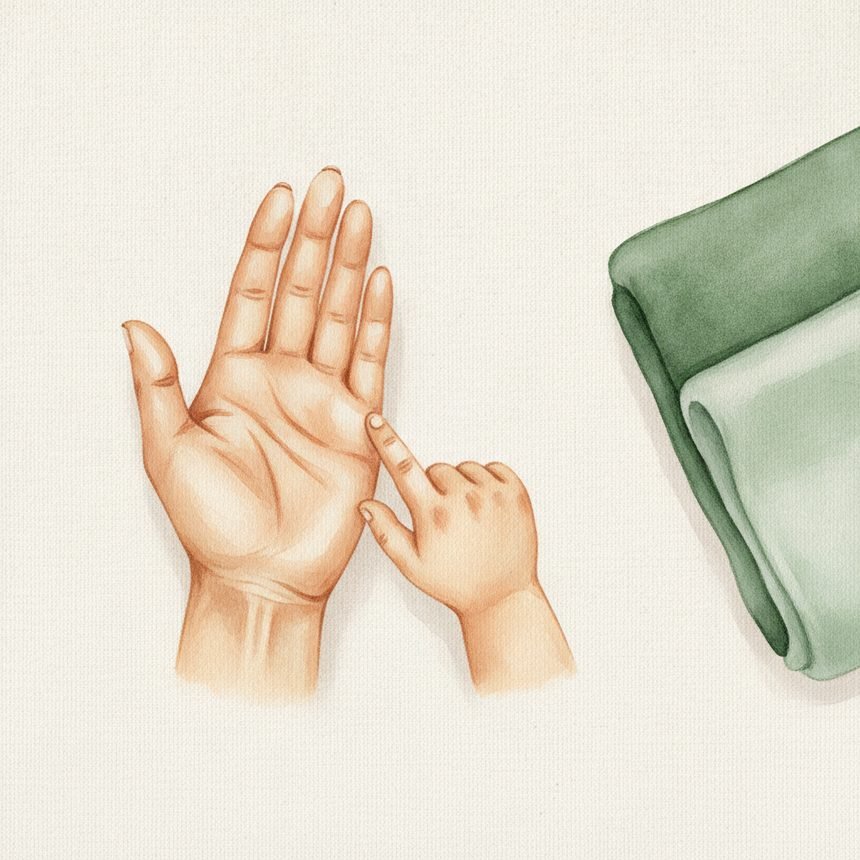
Naming Body Parts
Where's your nose, where's your elbow: the words for the body arrive through the pointing finger.
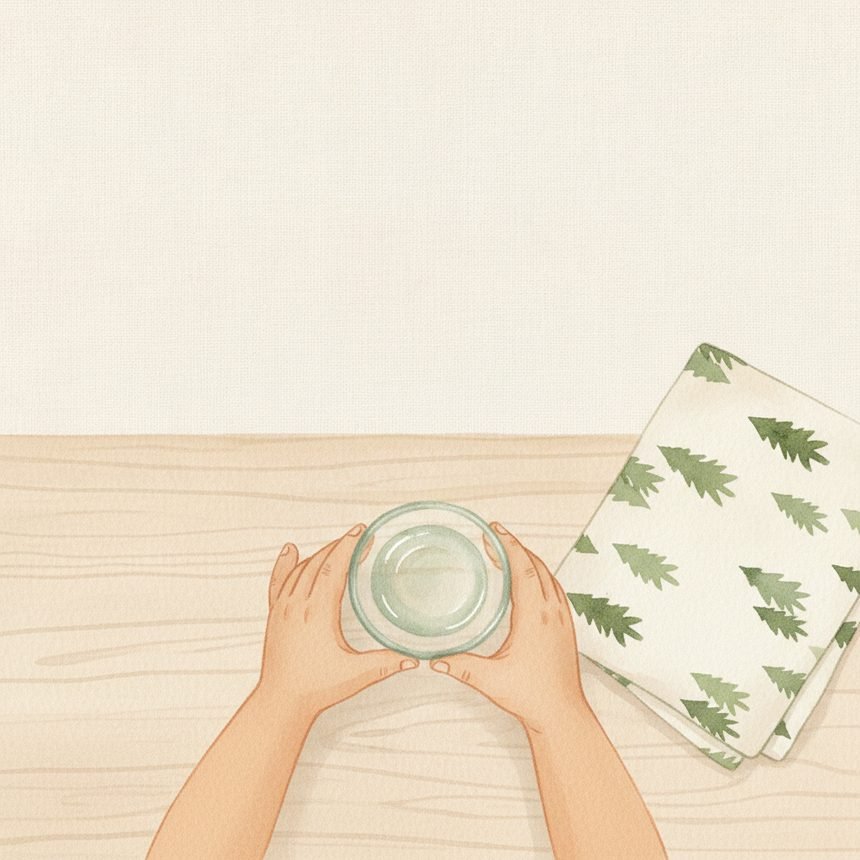
Drinking From an Open Cup
A real little cup, filled just at the bottom, and the pride of drinking like the big kids.
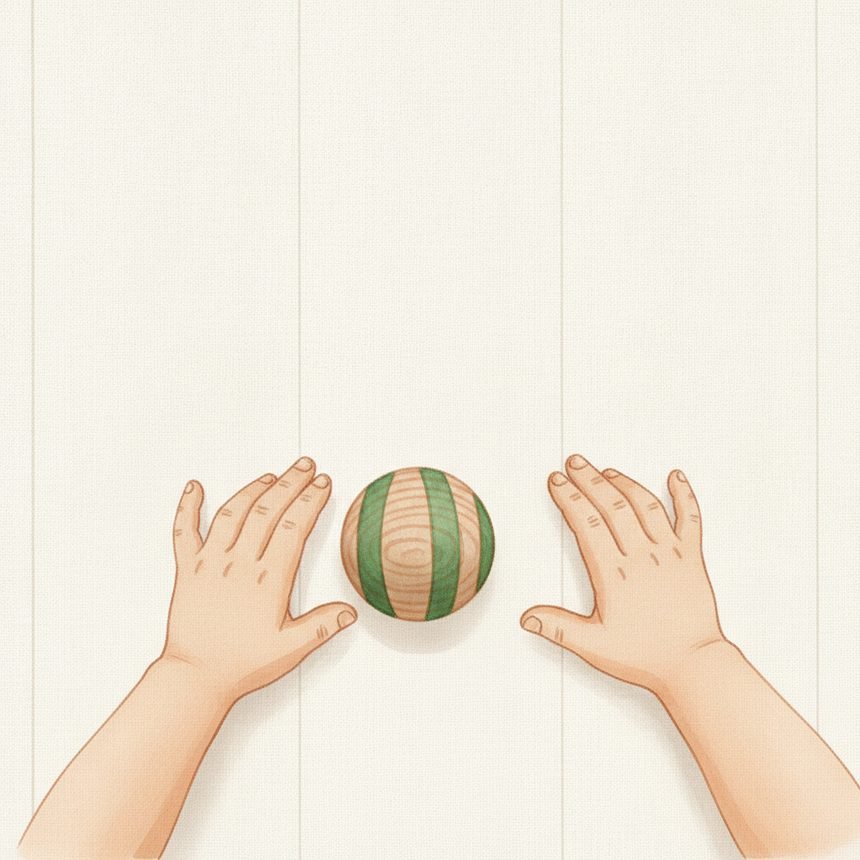
Rolling a Ball
A ball that leaves, rolls, and comes back: the first back-and-forth with another person, no words needed.
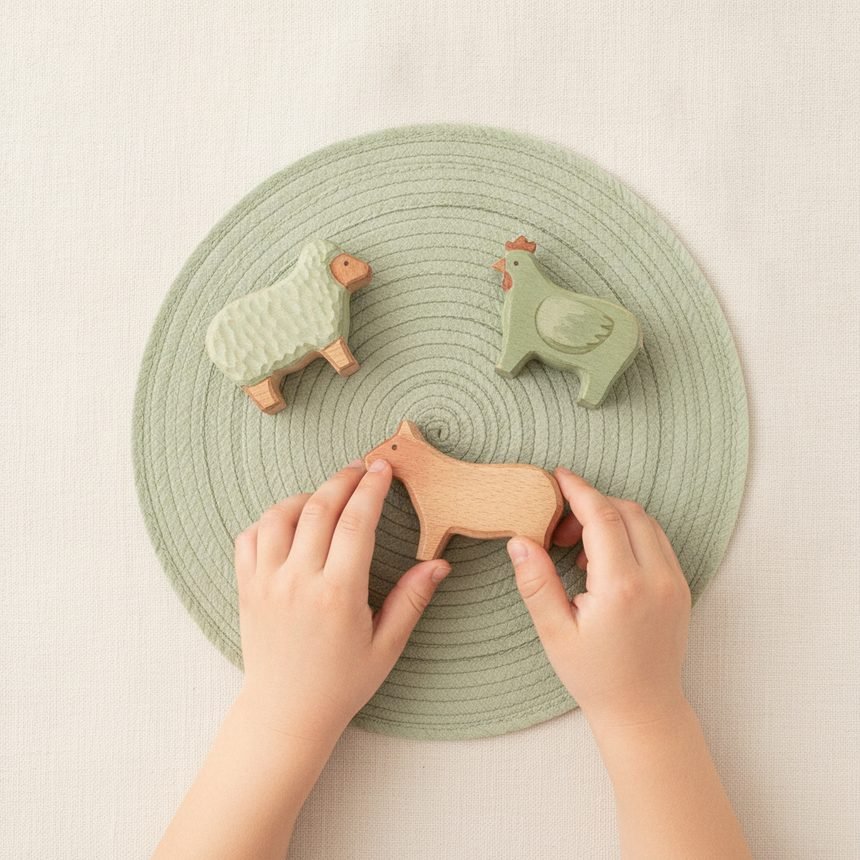
Animal Sounds
The cow says moo, the cat says meow: first words often start right here.
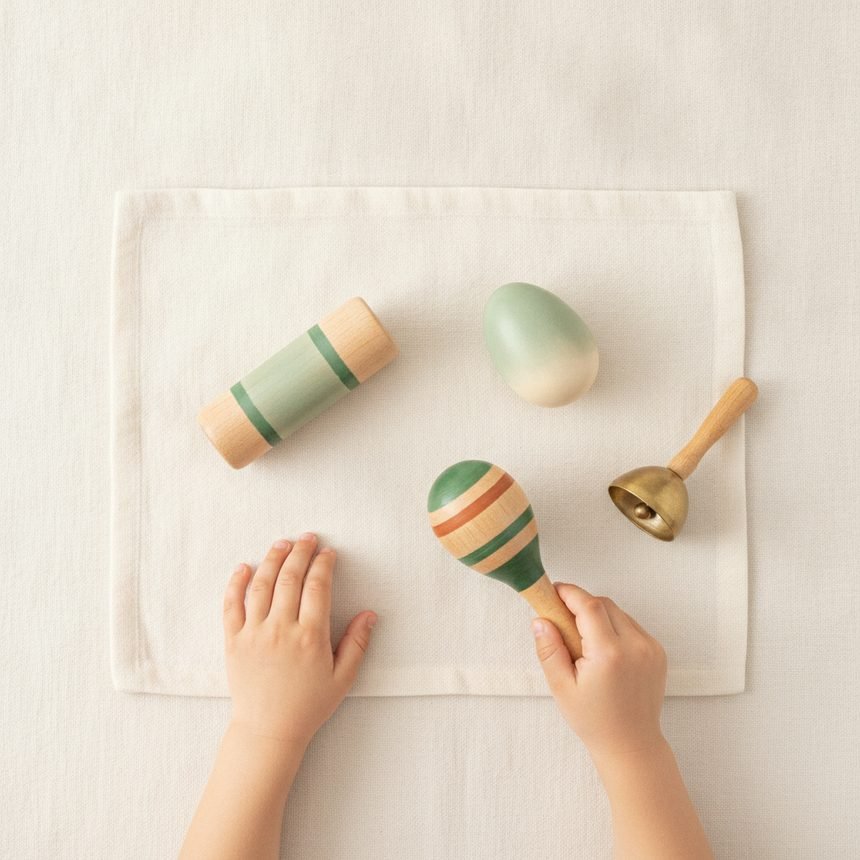
Shaking Instruments
A bell, maracas, a small tambourine: discovering that a motion makes a sound.
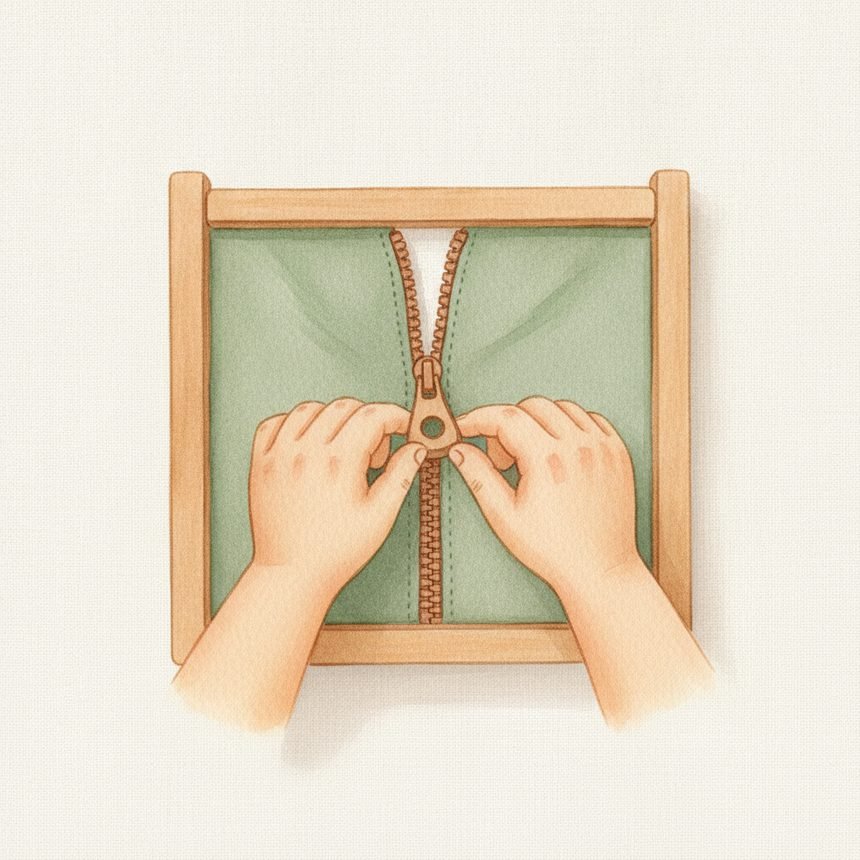
Zipper Practice
Pinching the zipper pull and tugging in one clean motion: a movement that opens coats and pencil cases.

The Nature Basket
A pinecone, a piece of bark, a smooth stone: the outdoors comes inside and gets a name.

Touching Water, Sand, and Dirt
Three bins, three textures, ten fingers: the first science lesson happens through the skin.

Listening to Outdoor Sounds
An open window, two minutes of quiet, and the world starts talking.

Smelling Fresh Herbs
Crushed mint between two fingers: a scent to discover with the fingertips.

Walking Barefoot on Three Surfaces
Grass, sand, tile: bare feet discover the ground isn't the same everywhere.

Watching the Rain Fall
A rainy day, a window, and water tracing paths as it runs down.

Feeding the Birds
Seeds in a feeder, then the wait, which is already the best part.
Get the "Spoon Transfer" activity sheet by email
A complete printable PDF activity sheet for ages 18 to 24 months: materials, steps, your role, and safety notes.
Request received. Open the email from Semilou and click "Download the activity sheet (PDF)." Nothing after a few minutes? Check your spam folder.
What your child is developing between 18 months and 2 years
They walk, they grasp, they carry. At this age, development happens through the hands and the legs: carrying something heavy, pouring, opening, closing, filling. Every repeated motion builds coordination and confidence.
Their attention span is short, just a few minutes, and that is completely normal. The Montessori approach does not try to stretch it by force: it offers simple materials, one difficulty at a time, and lets the child start over as many times as they want. Repetition is what makes the motion stick.
Reference for observation, modeling, and real-life skills at home: American Montessori Society, Montessori at Home.
How to present an activity at this age
The rule is always the same, no matter the age: show once, slowly, without talking, then let the child do it their own way. Words during the demonstration pull their eyes away from your hands. And the activity always ends with putting the materials away, which counts as much as the rest.
If your child refuses, or does the same activity ten times in a row, that is all fine: repetition is what drives this age. Bring the activity sheet back out a few days later, or move on to the next age group once the motion feels secure.
Questions about 18 to 24 months
What are some activities I can teach my 18-month-old?
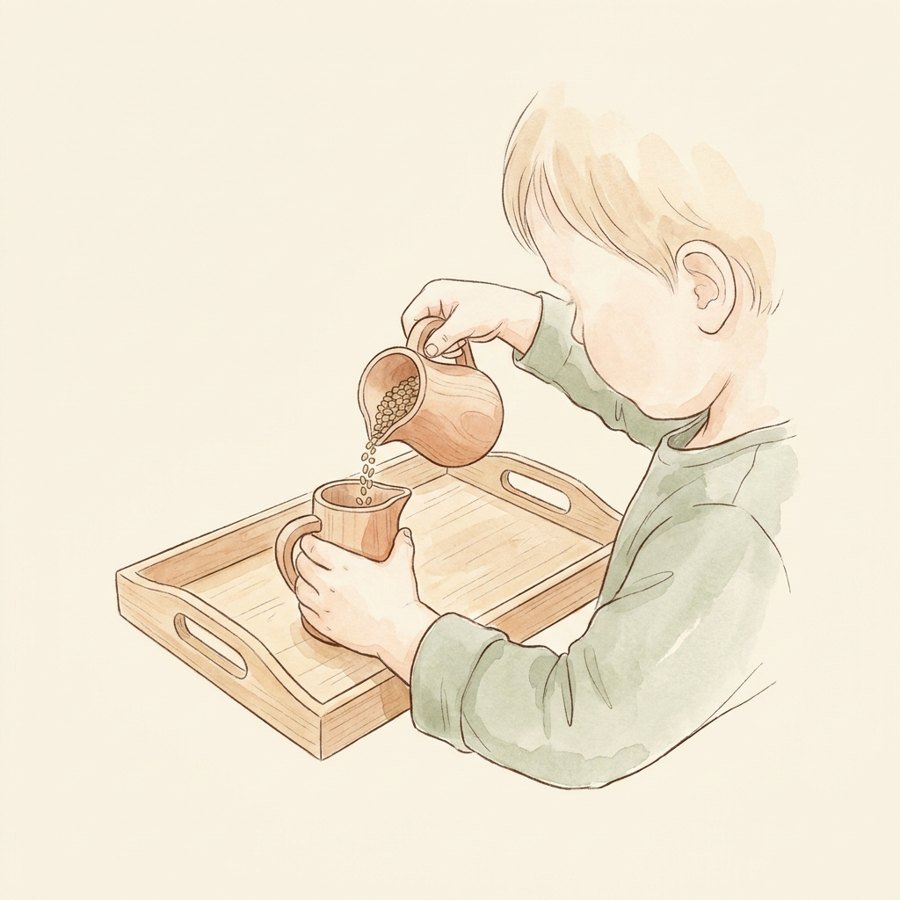
The ones he already watches you do: carrying a small tray, pouring dry ingredients from one small pitcher to another while you sit close by, wiping a spill with a sponge, putting laundry in the basket, opening and closing boxes, feeding the birds. At this age the hands and the legs lead, and repetition is the whole point.
What are some Montessori activities for toddlers?
Anything with one single difficulty, real objects, and a visible result: a treasure basket of household items to explore, rings on a post, a posting box with large wooden discs, dry pouring, shape sorting. Nothing electronic, nothing that does the work for him, and a tray small enough that he carries it himself.
What are the best Montessori toys for an 18-month-old?
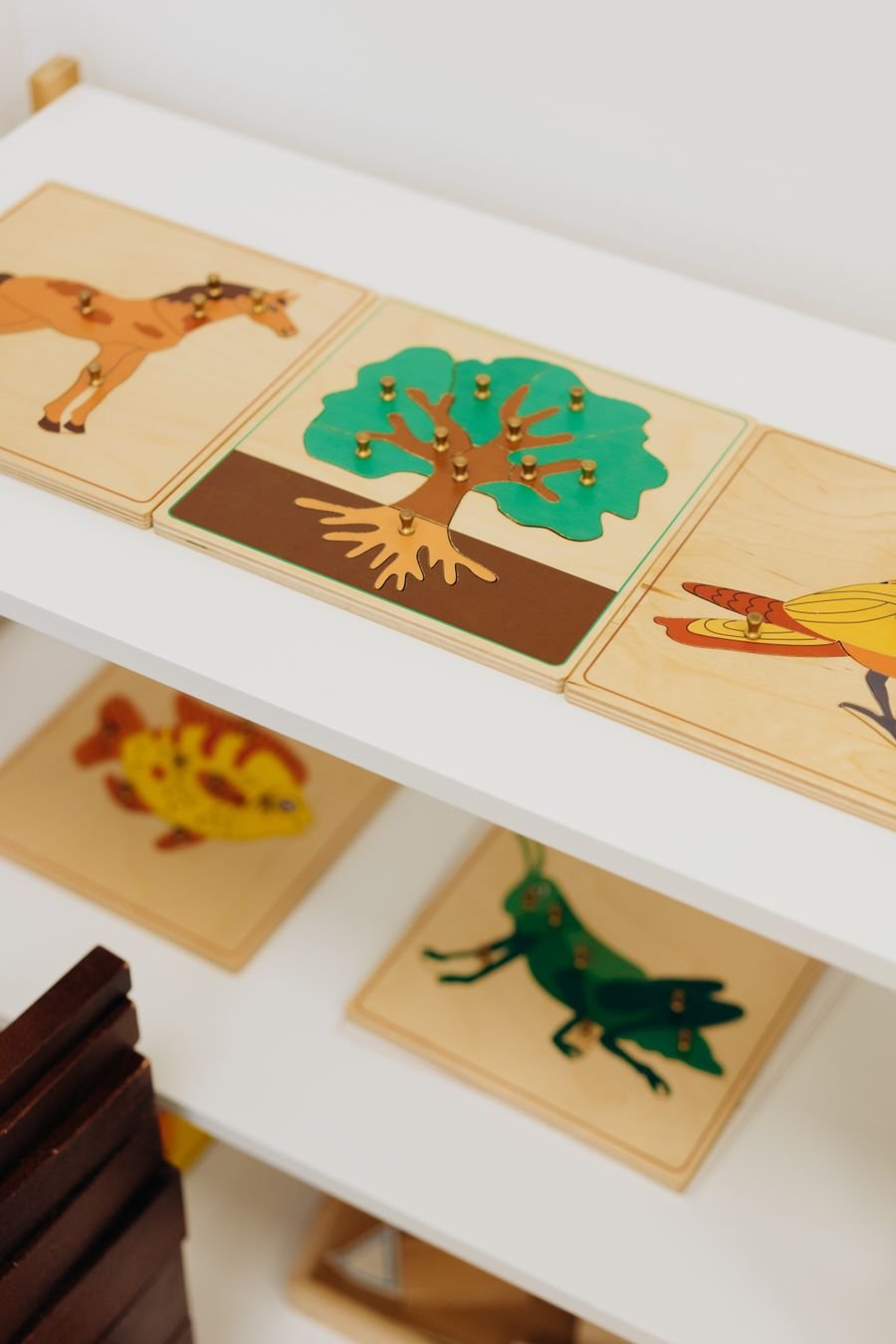
Montessori is not really a category of toys, and no brand owns the word. What matters is what the object leaves the child to do: wooden rings, a posting box, nesting cups, a low basket he can reach alone. Most activities use familiar household objects. Some call for specific materials, such as knobbed cylinders; check each activity's materials list before you begin.
Are there printable Montessori activities for an 18-month-old, like a PDF?
An 18-month-old does not fill in a page. He handles real objects, and what gets printed is the sheet you follow: the household materials to gather, the gesture to show, the steps in pictures, and the safety notes. Each of our 32 activities for this age group fits on one illustrated Letter-size page. The pages on this site show the materials, the safety notes, and the first two steps. The complete sheets are included in the paid pack for this age group.
Printable materials for these activities
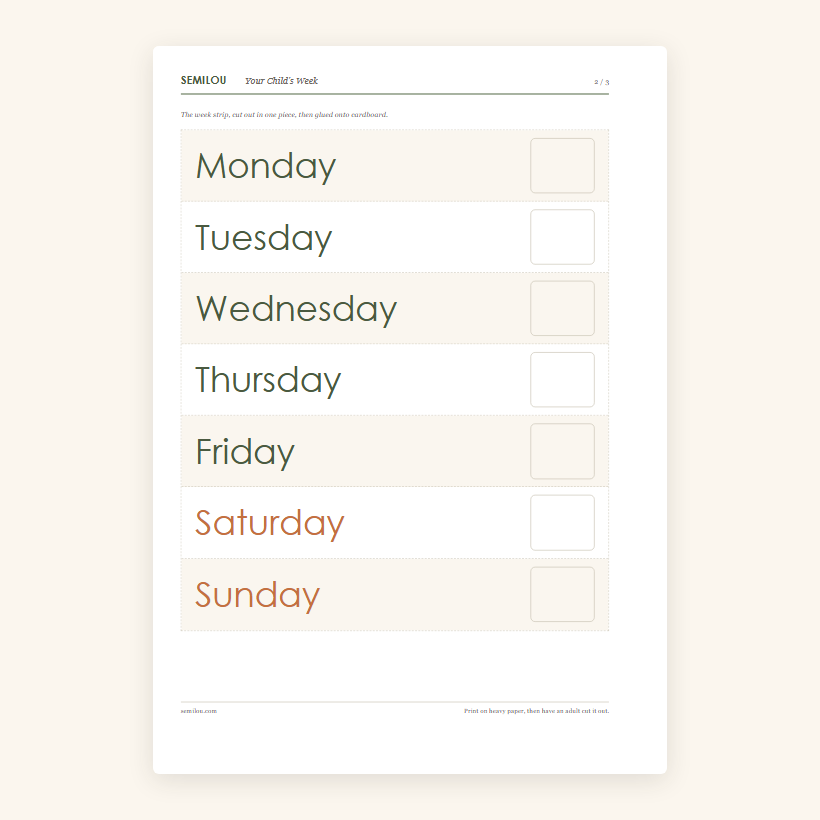
Your Child's Weekly Planner
The seven-day strip and everyday pictures, to answer "when is it?" with something other than words.
See contents and preview →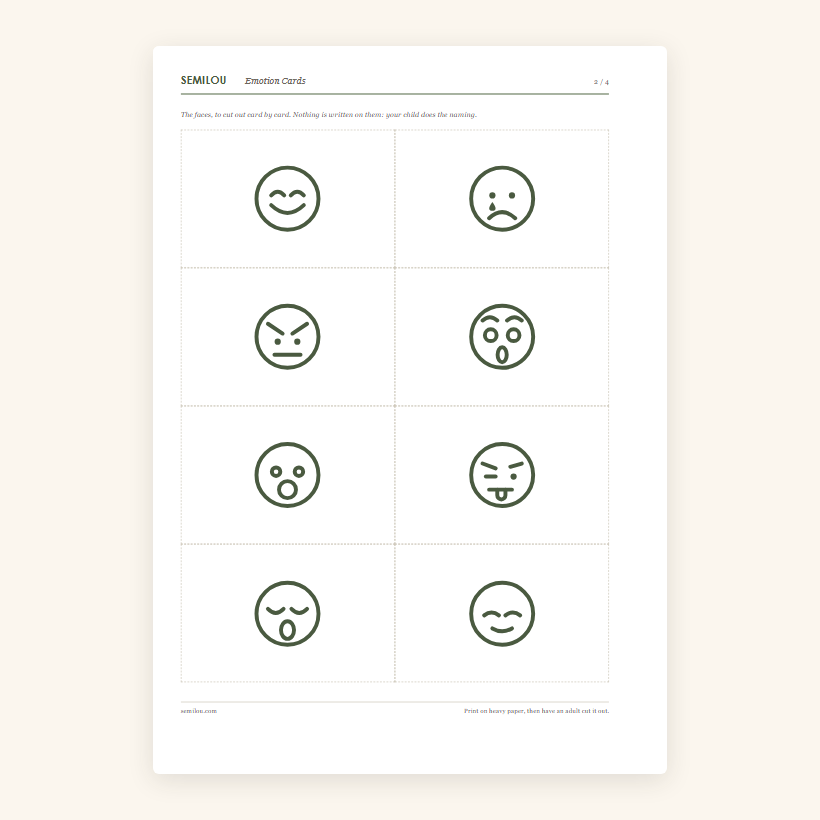
Printable Emotion Cards
Eight faces and eight words to cut out, so your child can name what they feel before they can explain it.
See contents and preview →