
Sensorial activities
Refining touch, sight, hearing, and smell: your child sorts, matches, compares, recognizes. Each activity isolates one quality (color, texture, weight) so the hand and the eye learn to name it.
27 Sensorial activities, sorted by age. Each activity lists the materials to gather before you begin at home.
Turn these previews into a complete age-group set
Browse 27 sensorial activity previews, sorted from 12 months to 8 years. Each preview shows the materials and first two steps. A one-time $29 purchase unlocks one age group in one language: 25 or 32 complete printable activity sheets, the combined booklet, and seven printable material PDFs.
One-time payment. No subscription. No physical shipment.
For 12 to 18 months

The Floor Mirror
A low mirror, and a child who spends long minutes discovering that the face is their own.

The Sensory Bottle
Water, glitter, a glued-on cap: the world slows down inside a bottle.

The Fabric Basket
Silk, wool, velvet: the hand learns to tell them apart before words do.

Cold or Warm
Two washcloths, two temperatures, and a sensation that finally gets a name.

Banging on Pots and Pans
A wooden spoon, three pots, and the very first kitchen orchestra.
For 18 to 24 months
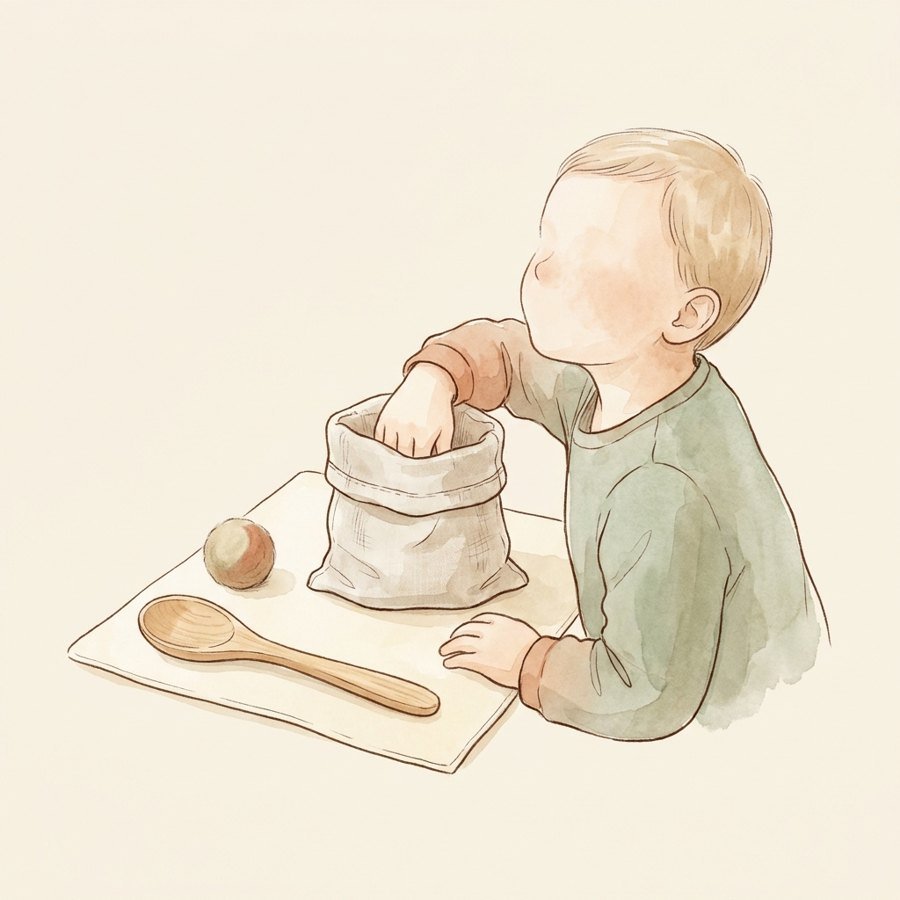
The Mystery Bag
Recognizing an object by touch alone, without seeing it. A small magic trick for the hands.
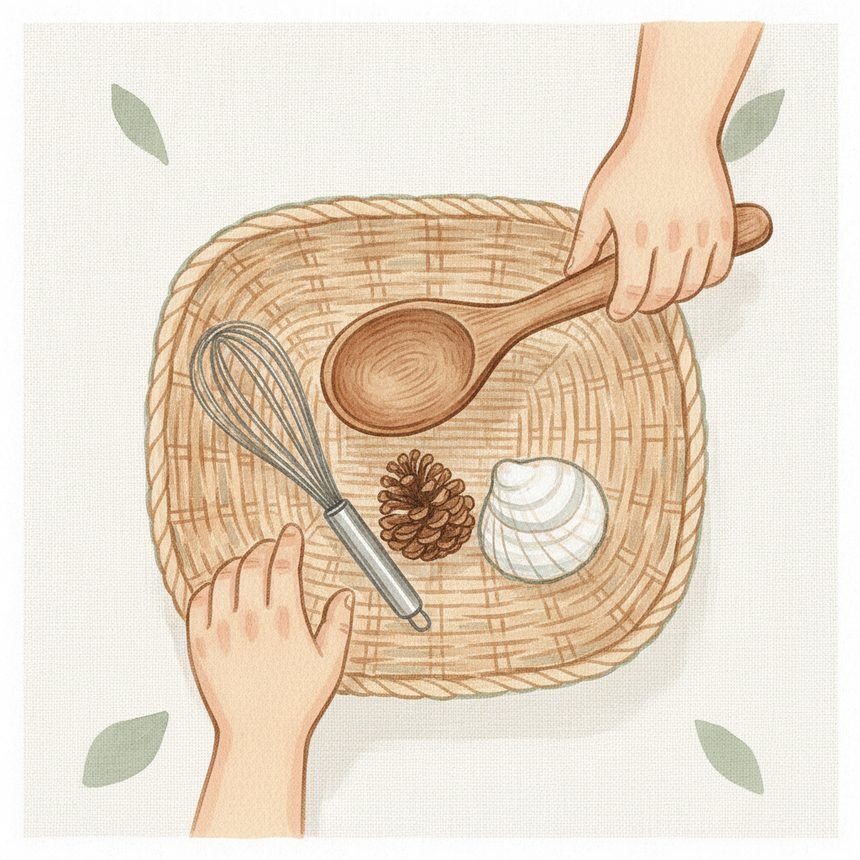
The Treasure Basket
A basket of real objects to freely explore with the hands: the first sensory discovery.
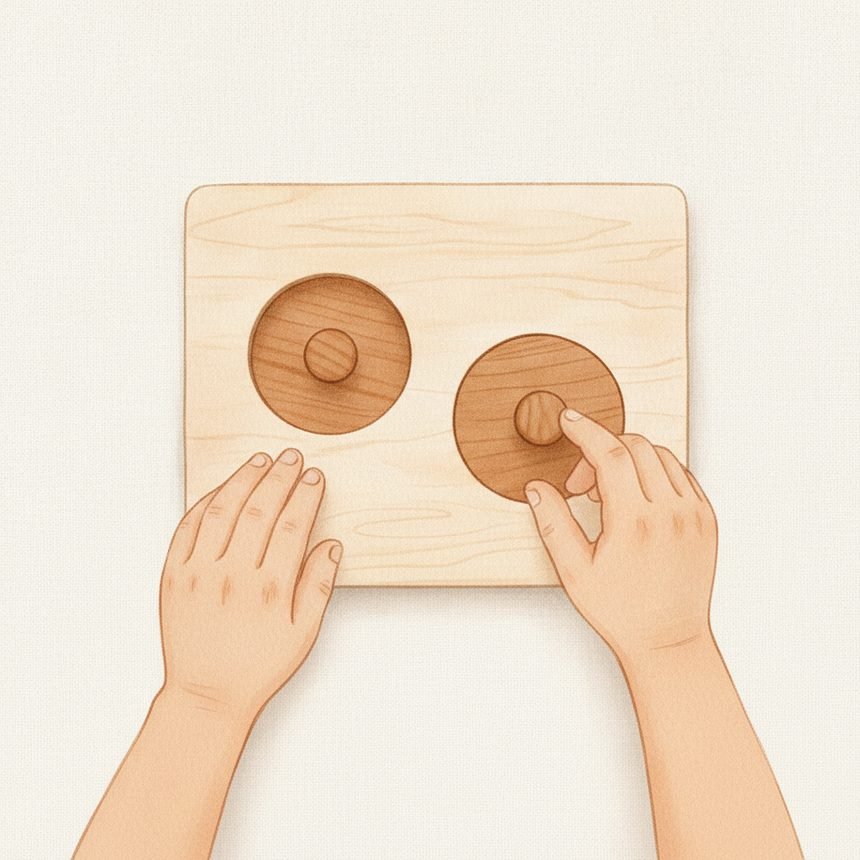
The First Shape Puzzle
A one-piece round puzzle with a big fat knob: the circle fits, or it doesn't.
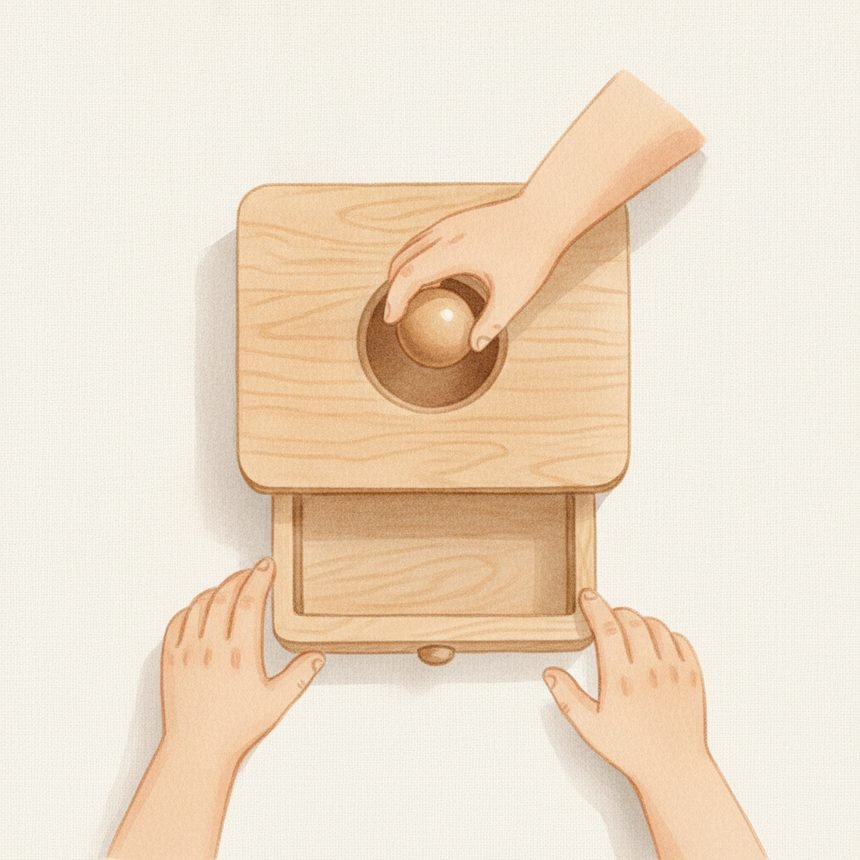
The Object Permanence Box
The ball disappears into the hole, then reappears in the drawer: the great mystery of objects that come back.
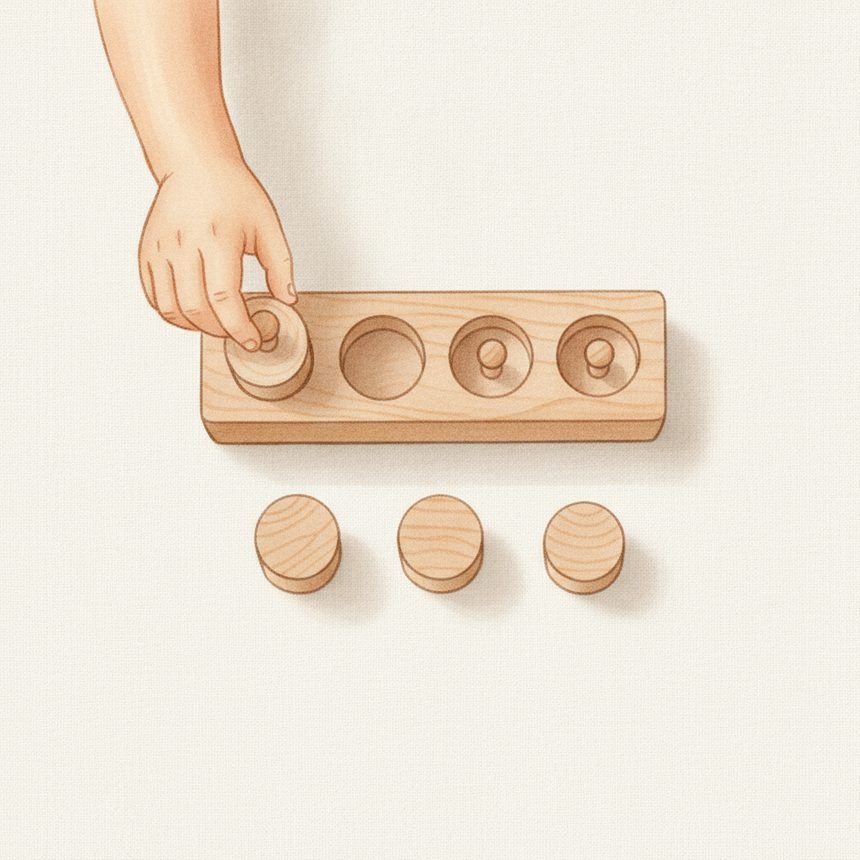
Knobbed Cylinders
Cylinders of different sizes, each one with its own place in the block.
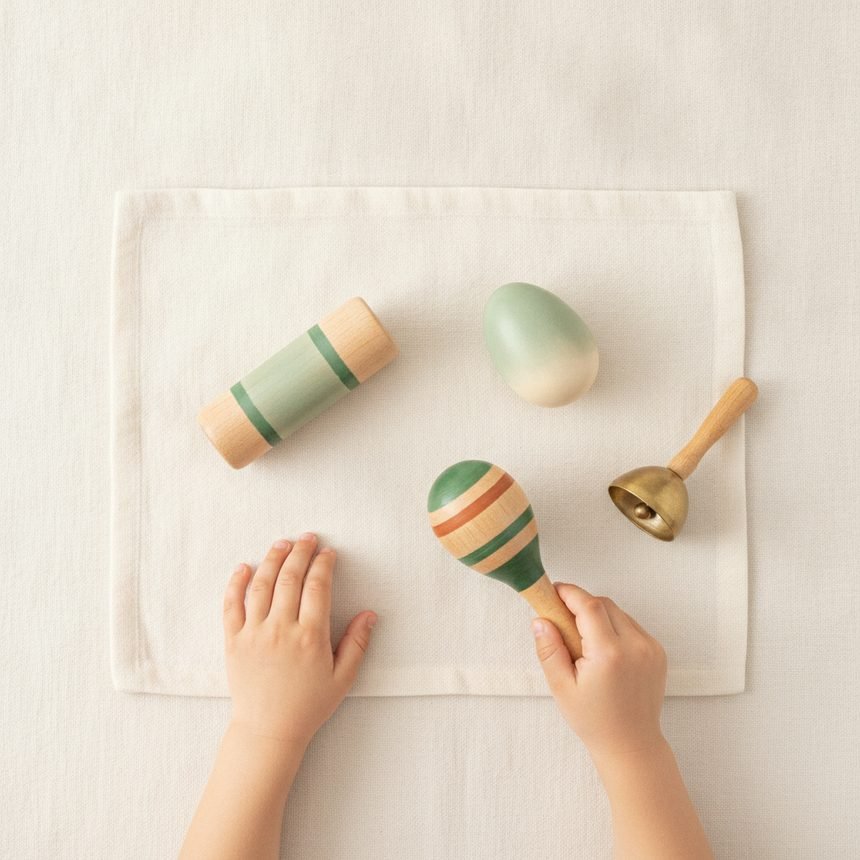
Shaking Instruments
A bell, maracas, a small tambourine: discovering that a motion makes a sound.
For 2 to 3 years
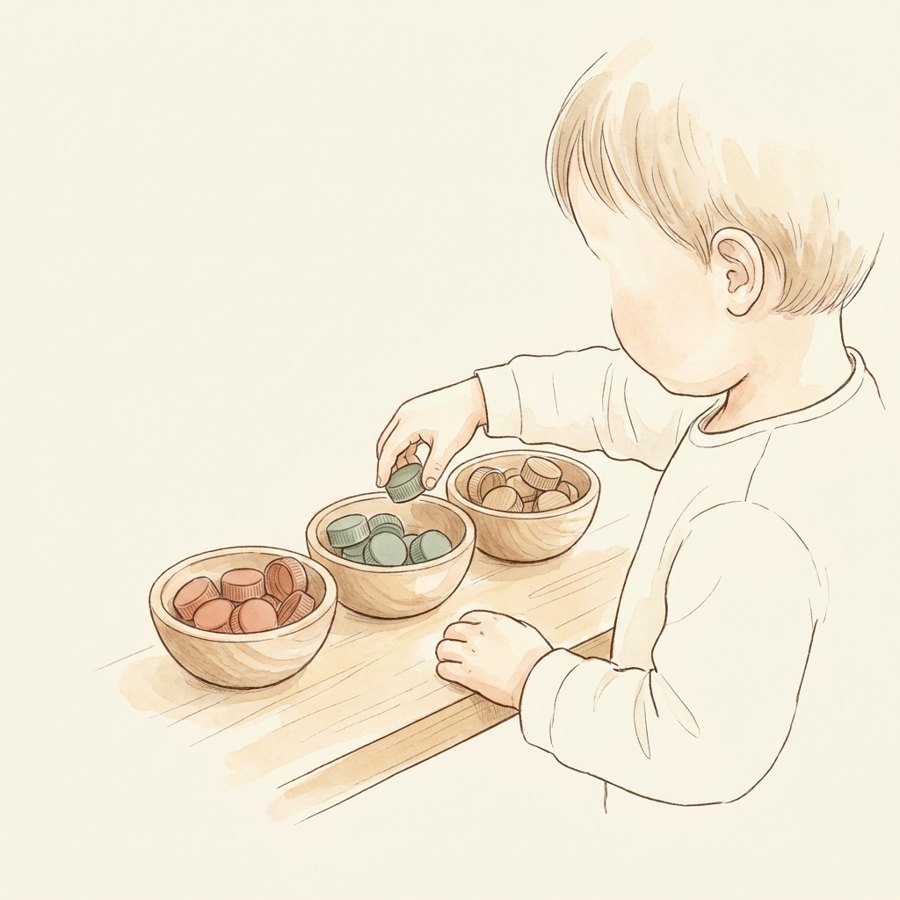
Color Sorting
Each object finds its family. The first real sorting work.
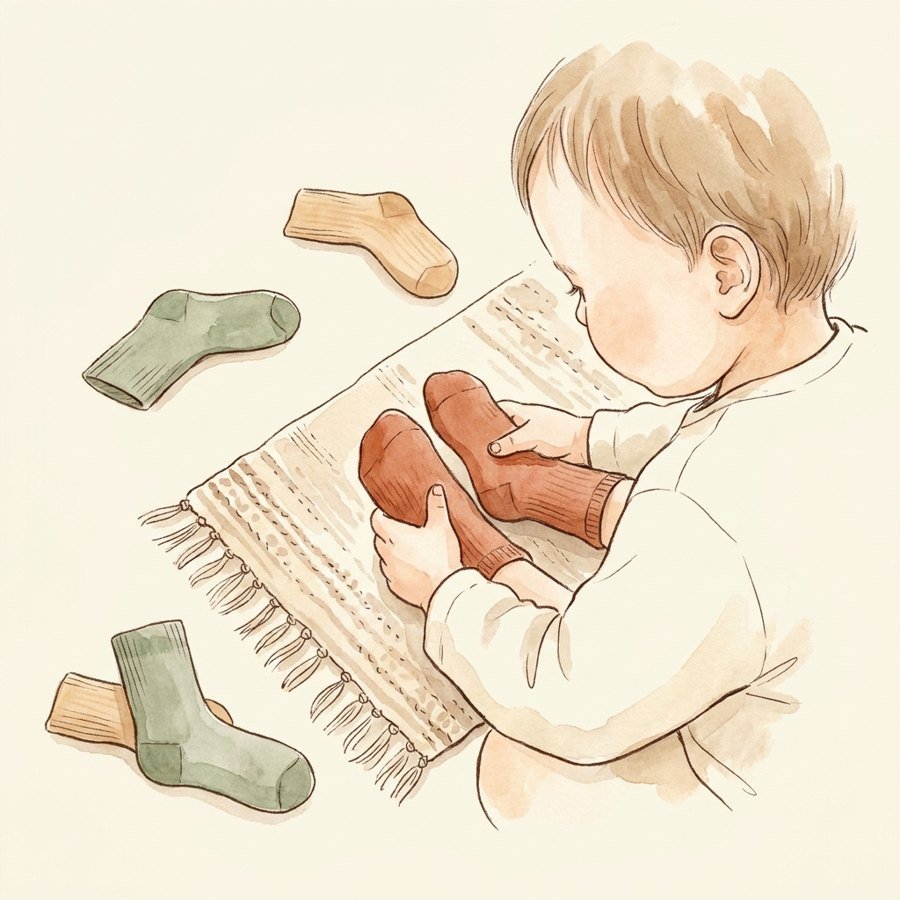
Matching Socks
The laundry basket becomes an observation game, and you get sorted laundry out of it.
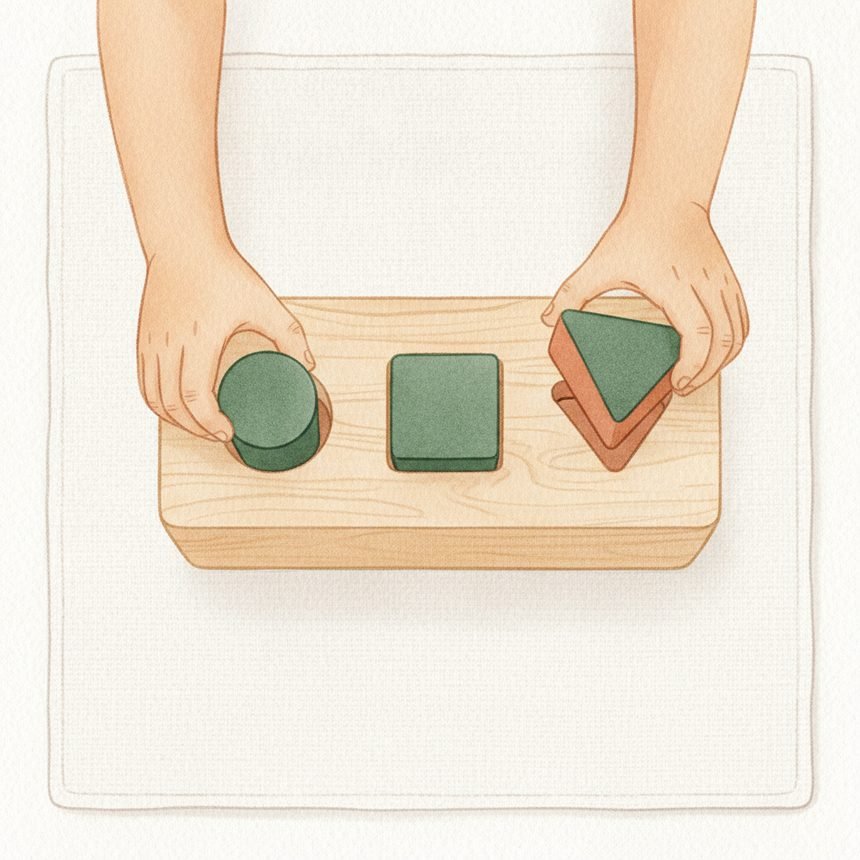
The Shape Sorting Box
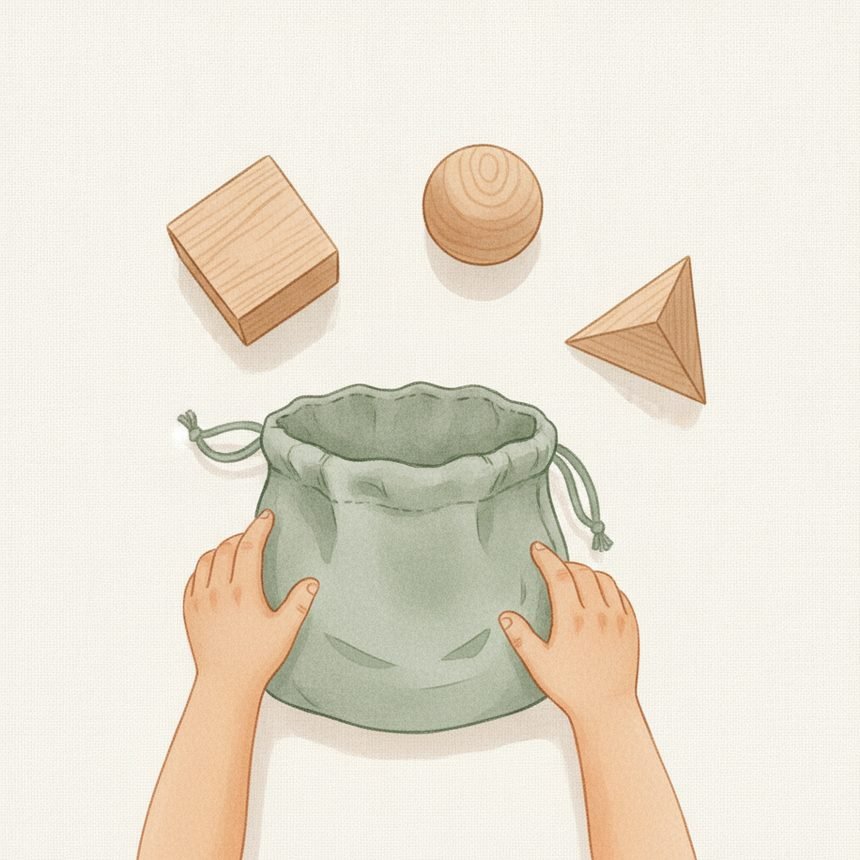
A circle, a square, a triangle, and three slots: each shape fits only its own.
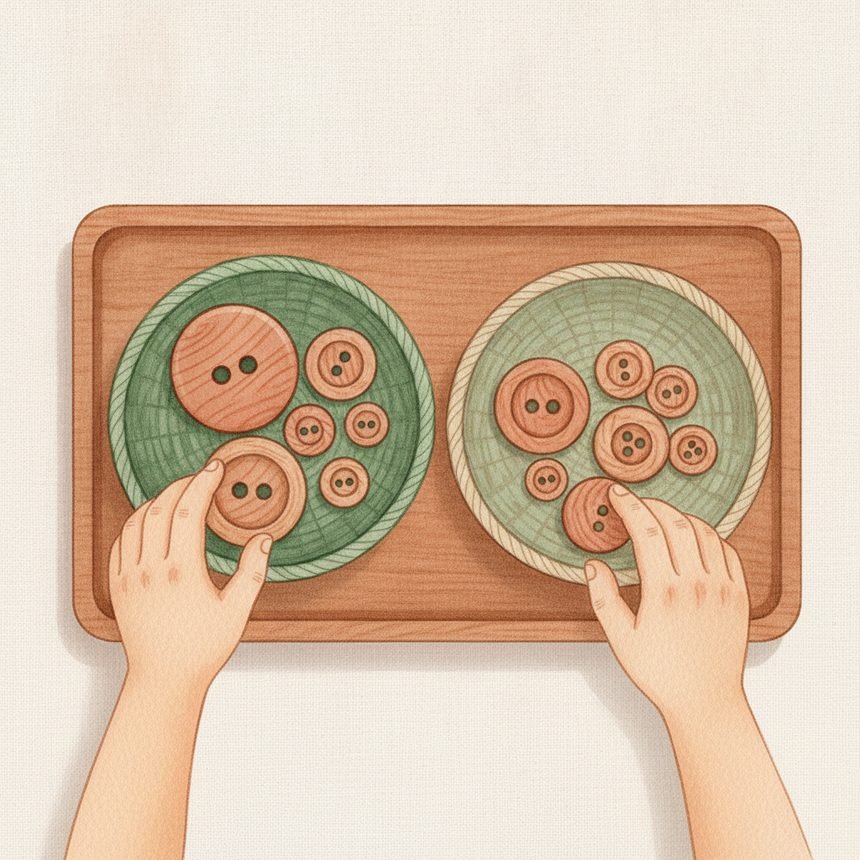
Big and Small
Two baskets, a pile of objects, one question: is it big or small?
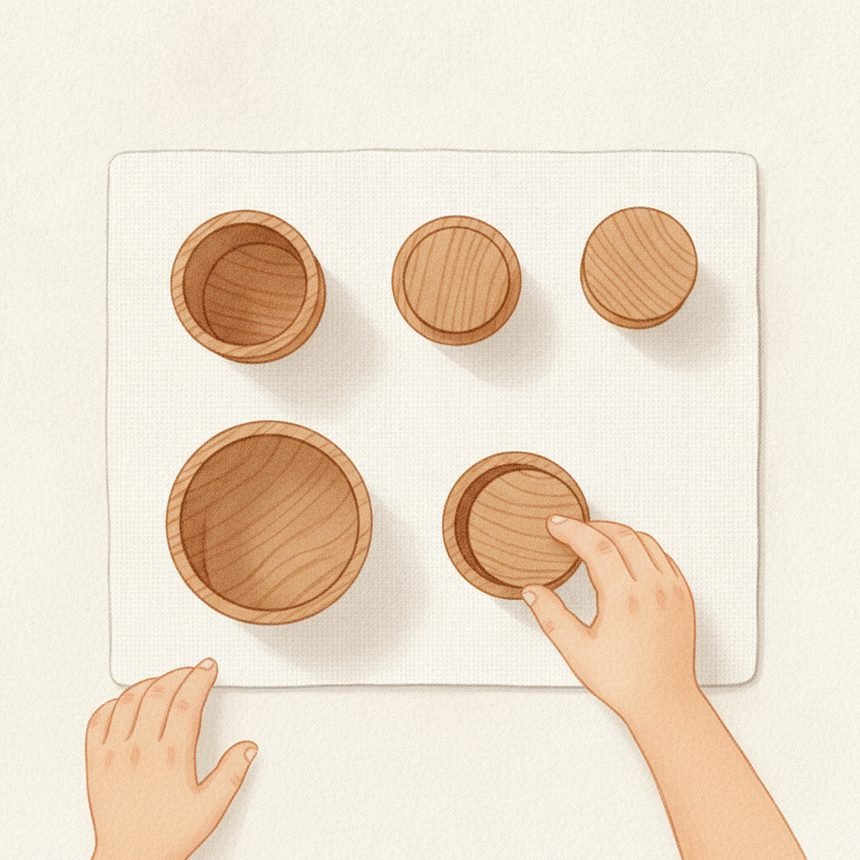
Matching Lids
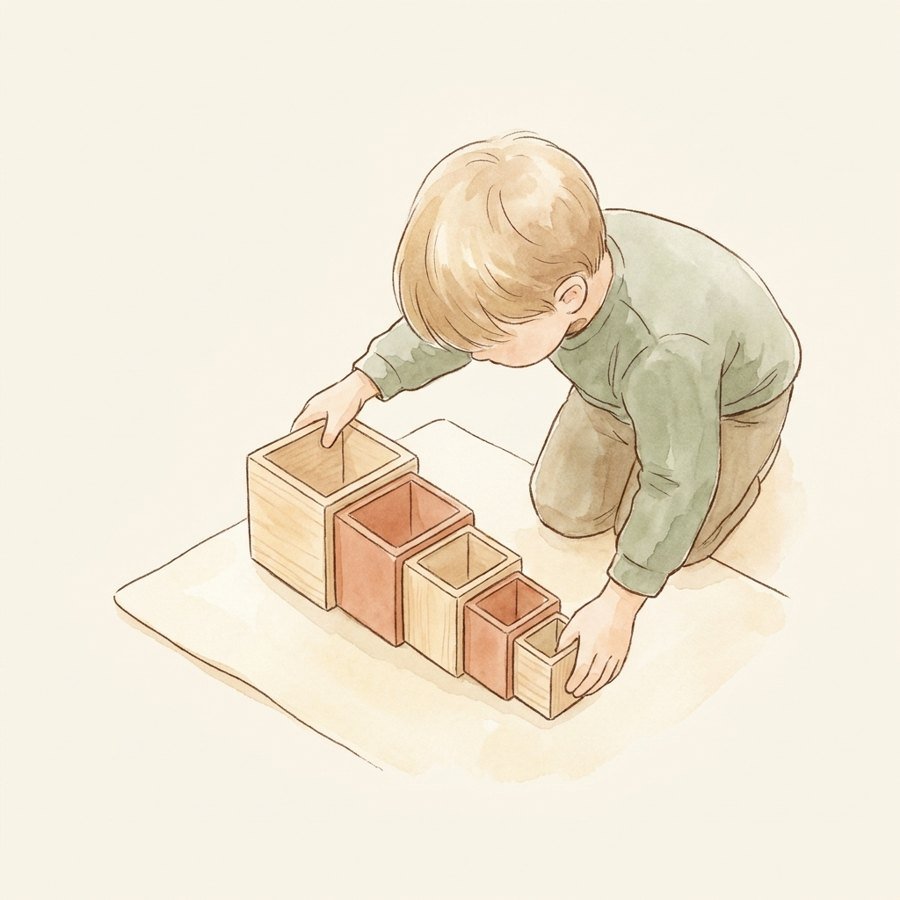
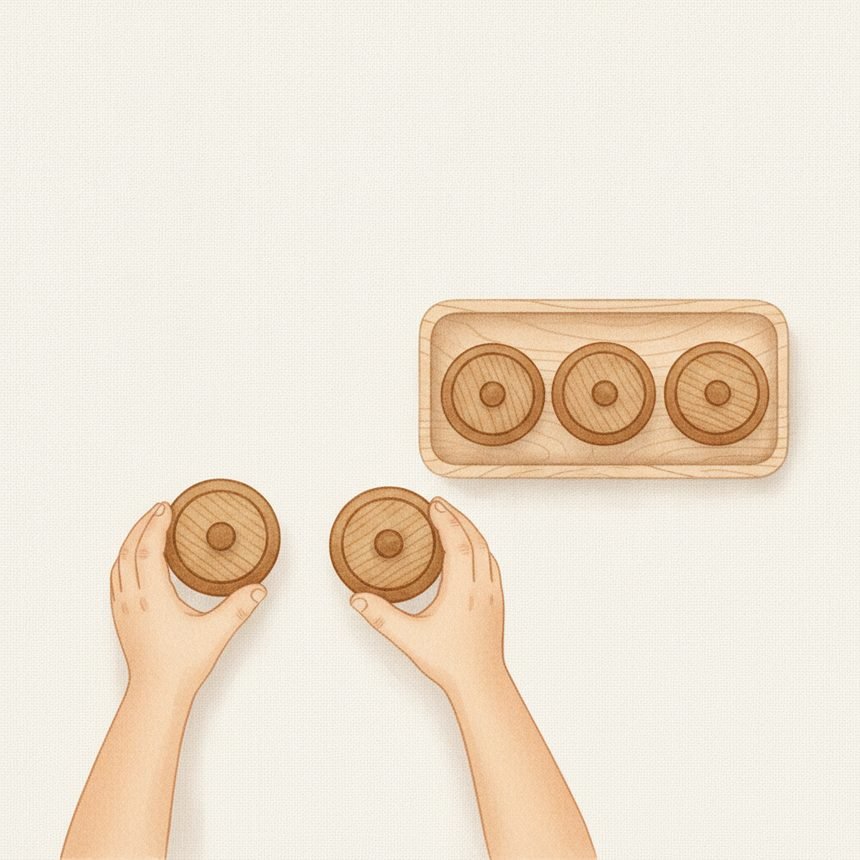
Five boxes, five lids all mixed up: each one only fits its own.
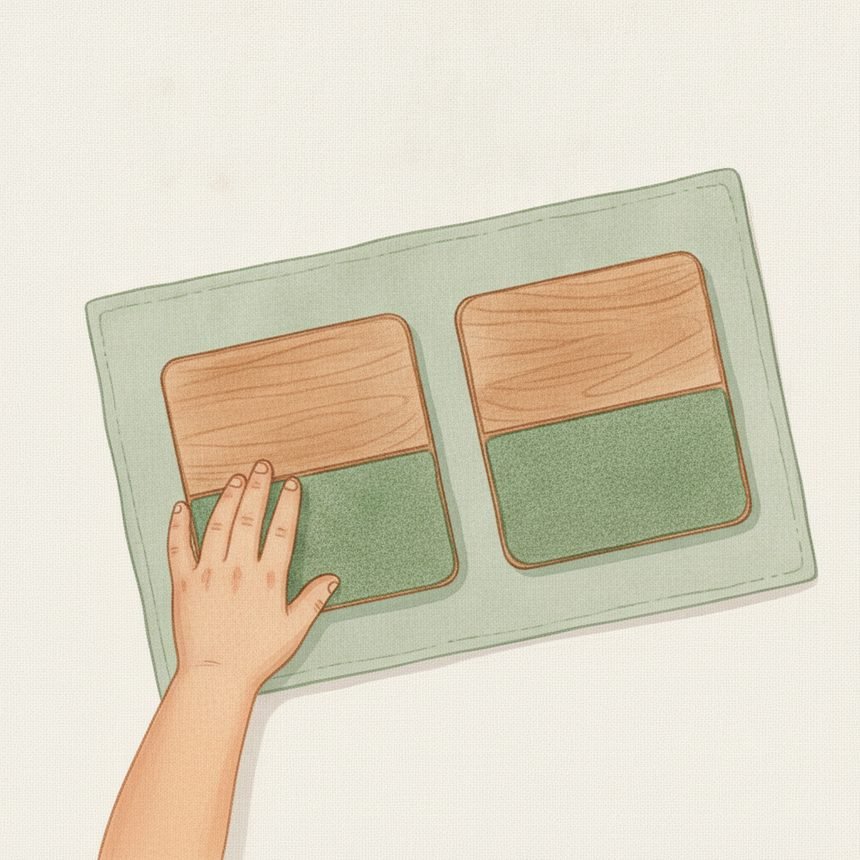
Smooth and Rough
Two boards to stroke with fingertips, one smooth and one rough: touch learns to compare smoothness and roughness.
For 3 to 4 years
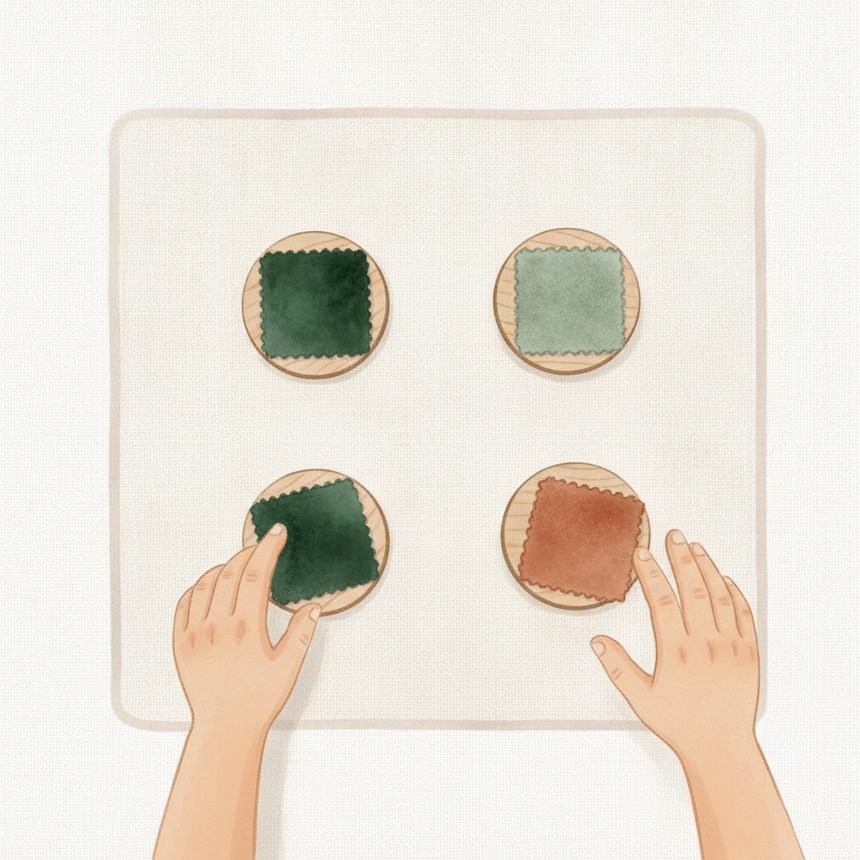
Matching Textures
Pairs of fabric found by touch alone, eyes closed: the sense of touch getting sharper.
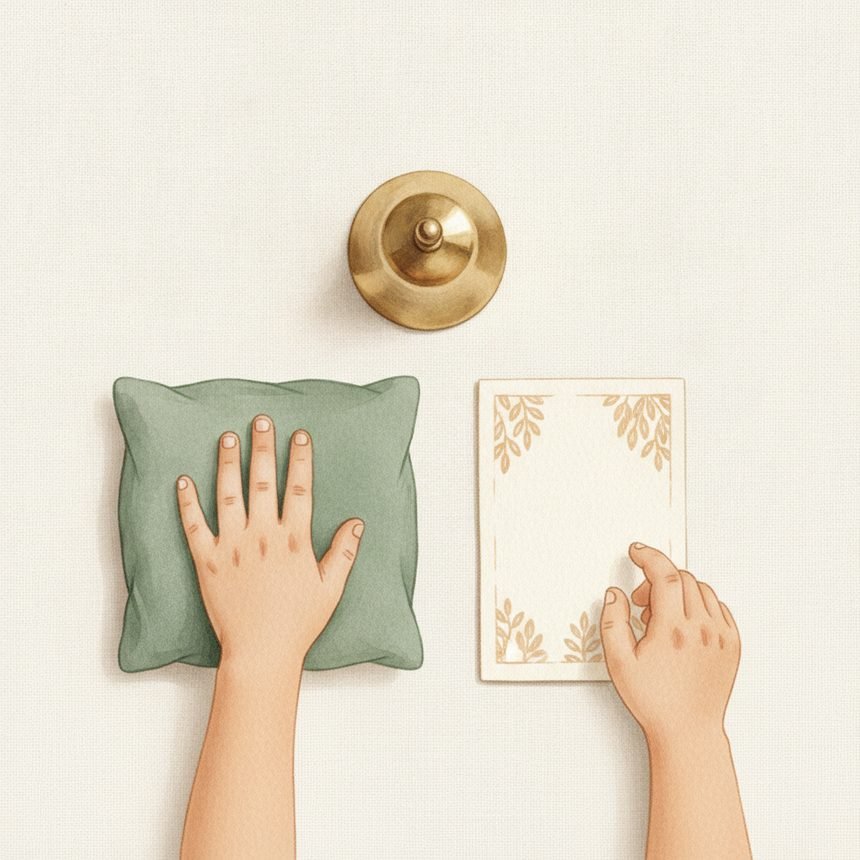
The Silence Game
Making silence together, listening to it, then hearing your own name whispered: the calmest game there is.
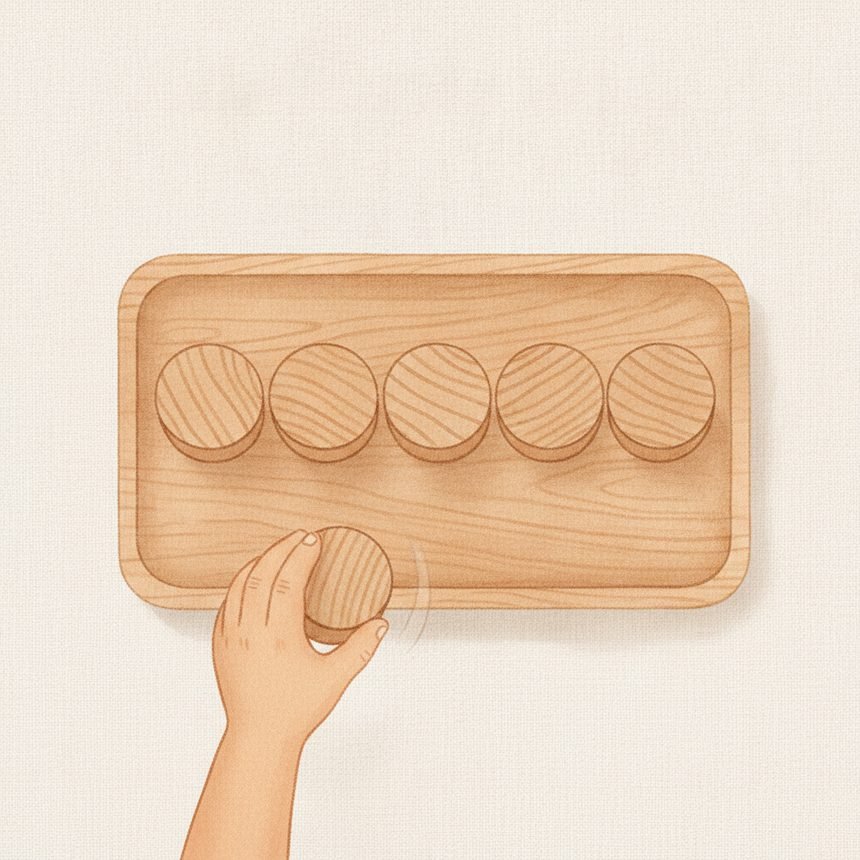
Sound Boxes
Sealed boxes that whisper or rattle: finding the matching pairs by ear alone.
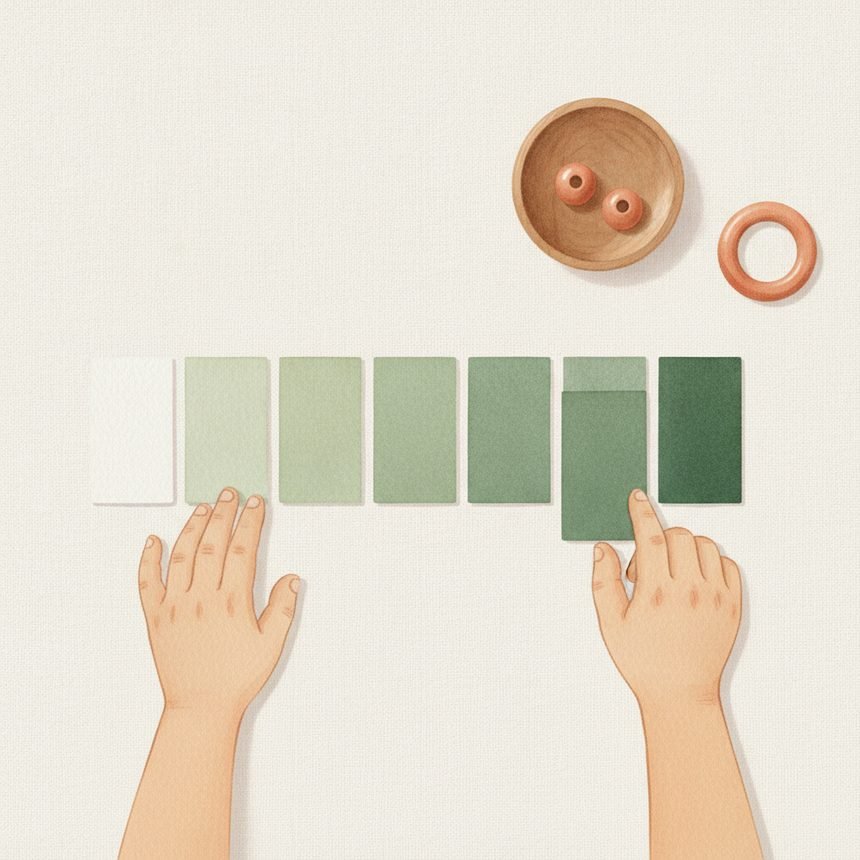
Light to Dark
Five to seven shades of a single color to put back in order: the eye learning to see finely.
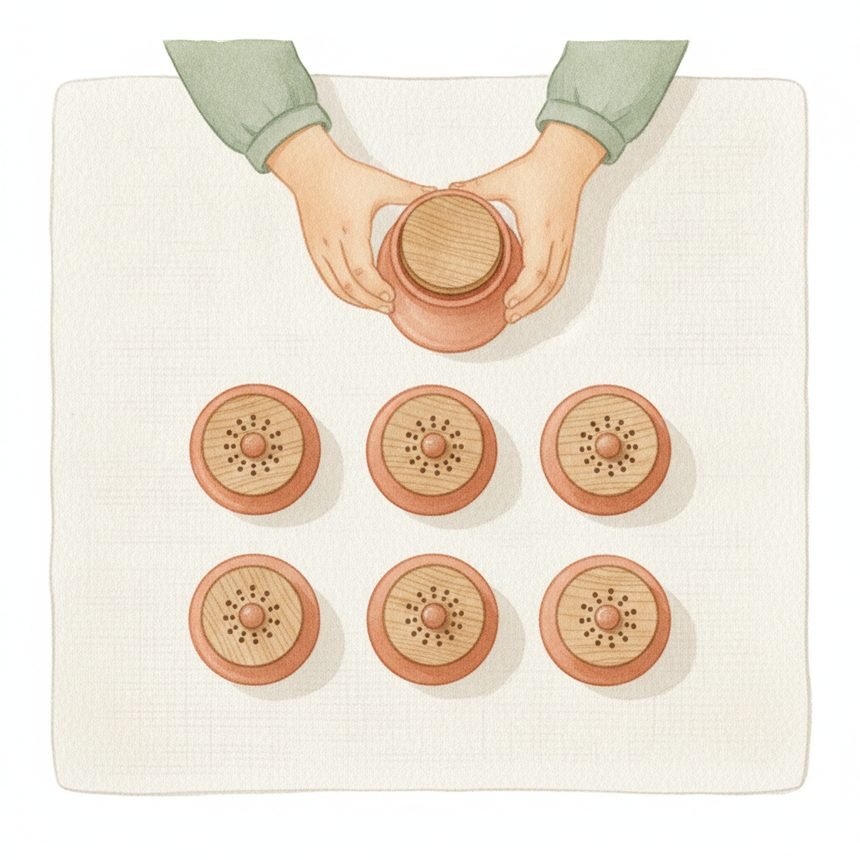
Smelling and Matching
Two rows of small jars, and a sense we almost never train: smell.
For 4 to 6 years


Questions about sensory activities
What are the nine senses in Montessori?
Sensory work counts nine: the visual, tactile, auditory, olfactory, and gustatory senses, then the baric sense (weight), the thermic sense (temperature), the stereognostic sense (recognizing an object by touch alone), and the chromatic sense (color). Several have their own activity here: Cold or Warm, The Mystery Bag, Sound Boxes, Smelling and Matching, Light and Heavy, Light to Dark.
What are Montessori sensory activities for toddlers?
Toddlers learn with hands and mouth. From 12 to 18 months: The Sensory Bottle, The Fabric Basket, Cold or Warm, banging on pots and pans. From 18 months to 2 years: The Treasure Basket, The Mystery Bag, Shaking Instruments, Knobbed Cylinders. Each one is a real object and a single quality to notice, and the knobbed cylinders correct themselves: only one hole fits each cylinder.
What are Montessori sensory activities for 3 year olds?
At 3 to 4 years your child can work with eyes closed: Matching Textures pairs fabrics by touch, Sound Boxes pairs sealed boxes by ear, Smelling and Matching pairs small jars by smell, Light to Dark puts seven shades back in order. The Silence Game ends the session: you make silence together, listen to it, then hear your name whispered. Weight and hidden shapes come at 4 to 6 years.
Are there printable Montessori sensory activities in PDF?
Yes, but not worksheets: your child feels, listens, and compares, and what you print is the sheet you follow, with the materials, the step-by-step presentation, and the variations by age. The 27 pages in this area show the materials, precautions, and first two steps of each activity; the complete sheets for an age group come together in that age group's set, ready to print after purchase.