
Fine motor activities
Pinching, threading, screwing, measuring, cutting: every precise movement prepares the hand for writing, without ever telling your child. The materials come from your kitchen, and the control of error is built into the object.
30 Fine Motor activities, sorted by age. Each activity lists the materials to gather before you begin at home.
Turn these previews into a complete age-group set
Browse 30 fine motor activity previews, sorted from 12 months to 8 years. Each preview shows the materials and first two steps. A one-time $29 purchase unlocks one age group in one language: 25 or 32 complete printable activity sheets, the combined booklet, and seven printable material PDFs.
One-time payment. No subscription. No physical shipment.
For 12 to 18 months

Pulling Scarves from a Box
Pull one untied scarf at a time out of a tissue box: one scarf, one motion, one result.

Dropping Balls into a Basket
Grabbing is easy, letting go at the right moment is its own whole skill to learn.

Nesting Cups
Three cups, three sizes: the smallest always ends up inside the biggest.

Turning Board Book Pages
A book is an object before it's a story, and a page turns with just two fingers.

The Ball Tube
The ball goes in at the top, disappears, and comes out below: pure mechanical magic.

Opening and Closing a Drawer
A low drawer, just for them, always holding the same thing inside.
For 18 to 24 months
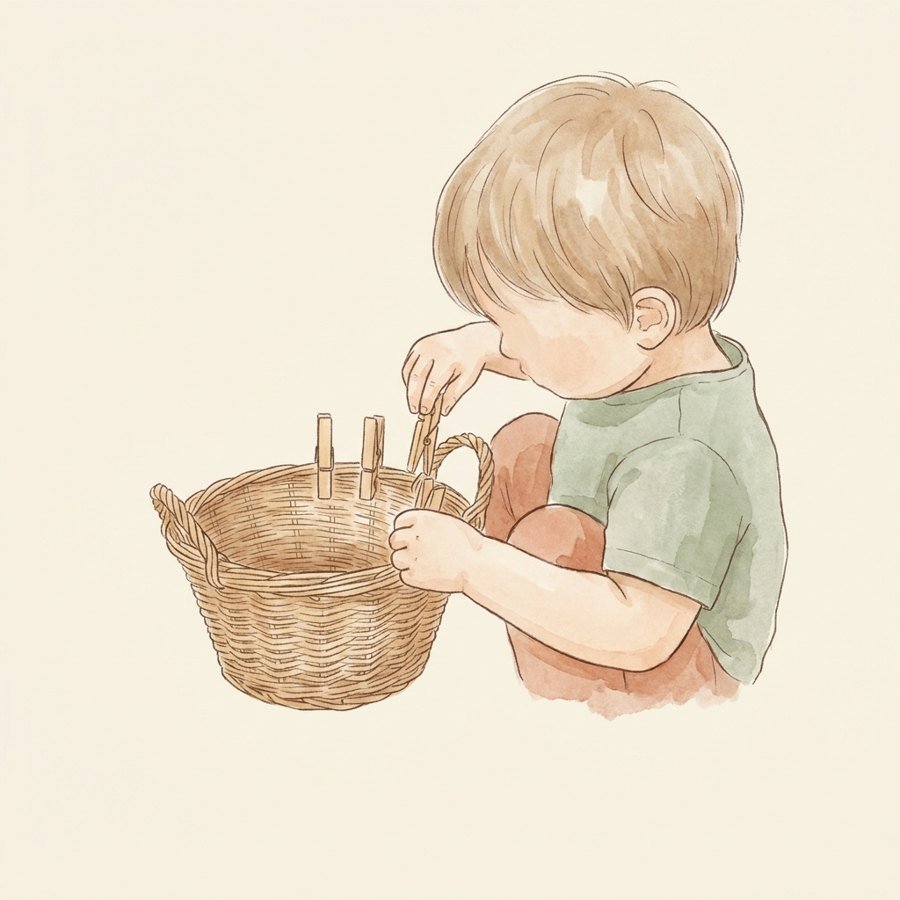
Clothespins on a Basket
Pinch, clip, unclip: three fingers building the grip they will use to hold a pencil.
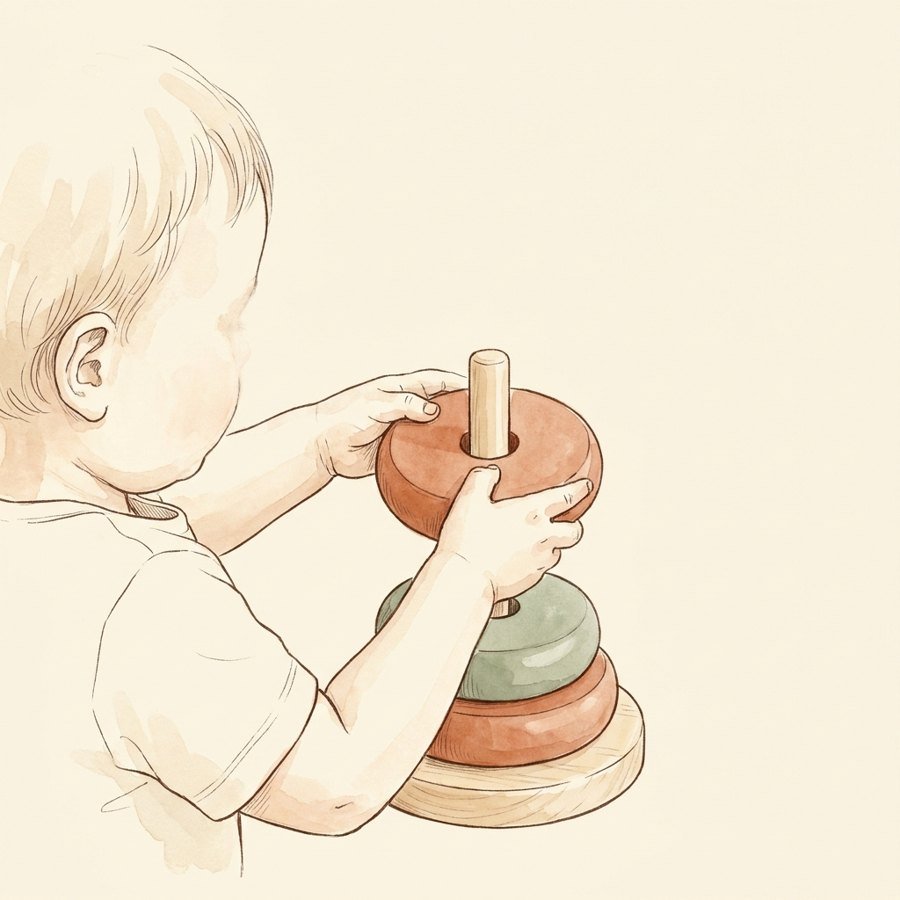
Ring Stacking
Aim, slide, let go: the first precision movement, with a satisfying sound at the end.
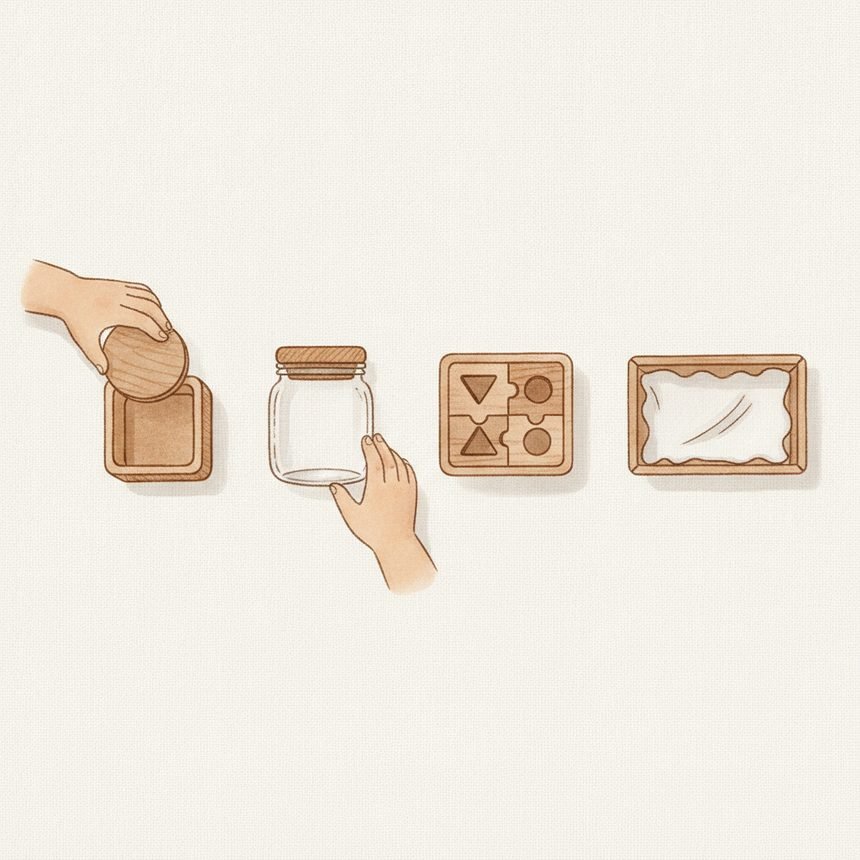
Opening and Closing Containers
Containers of every kind, to open and close again: each lid asks for a different move.
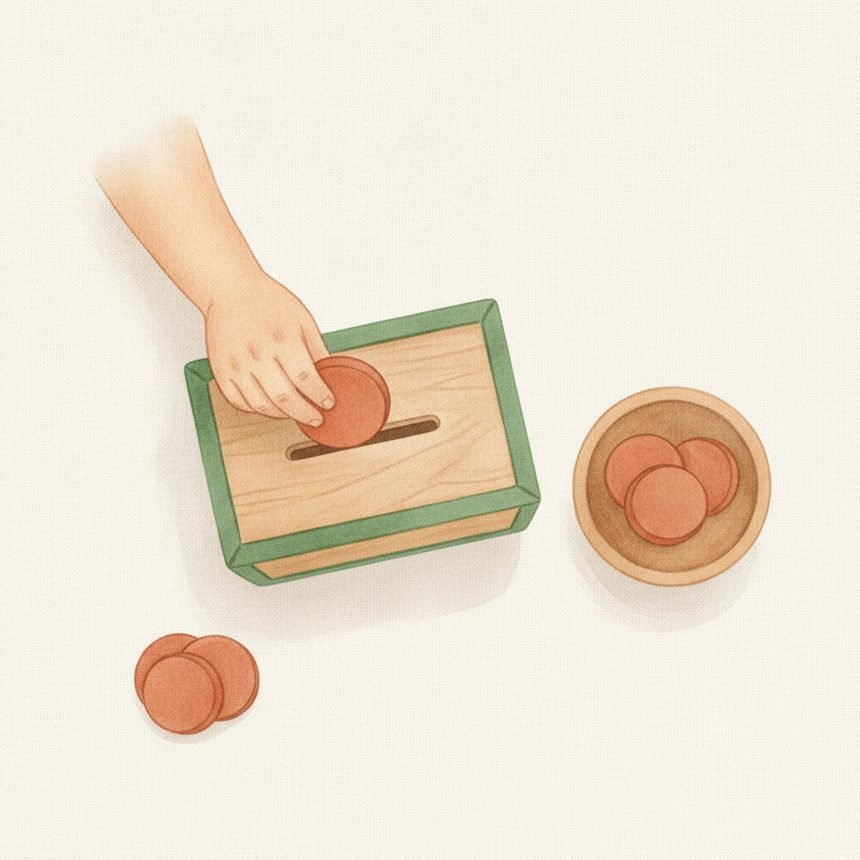
The Coin Box
Sliding big coins through a slot, then opening the box back up to find them: a classic children return to again and again.
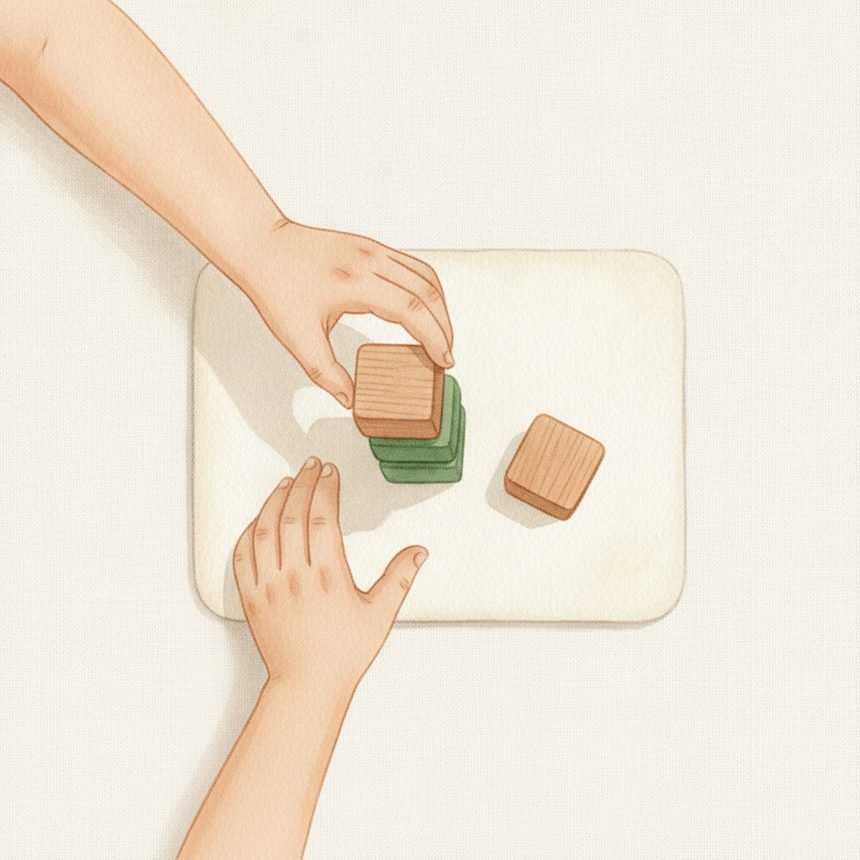
Stacking Blocks
Setting one block on another, letting go without knocking it over: the hand learns gentleness.
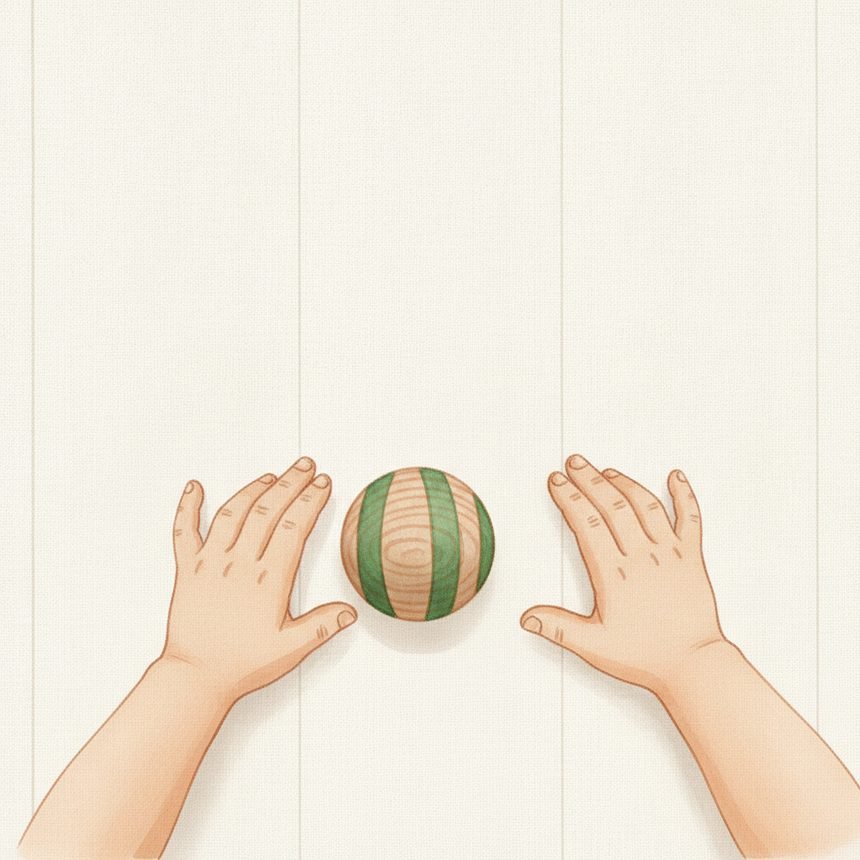
Rolling a Ball
A ball that leaves, rolls, and comes back: the first back-and-forth with another person, no words needed.
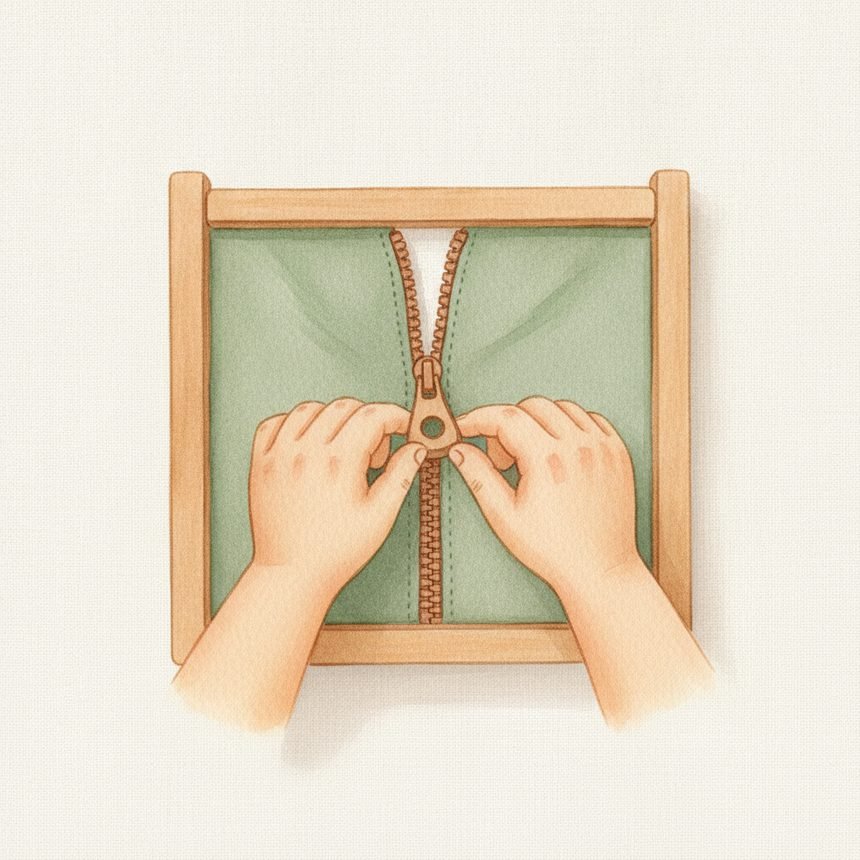
Zipper Practice
Pinching the zipper pull and tugging in one clean motion: a movement that opens coats and pencil cases.
For 2 to 3 years
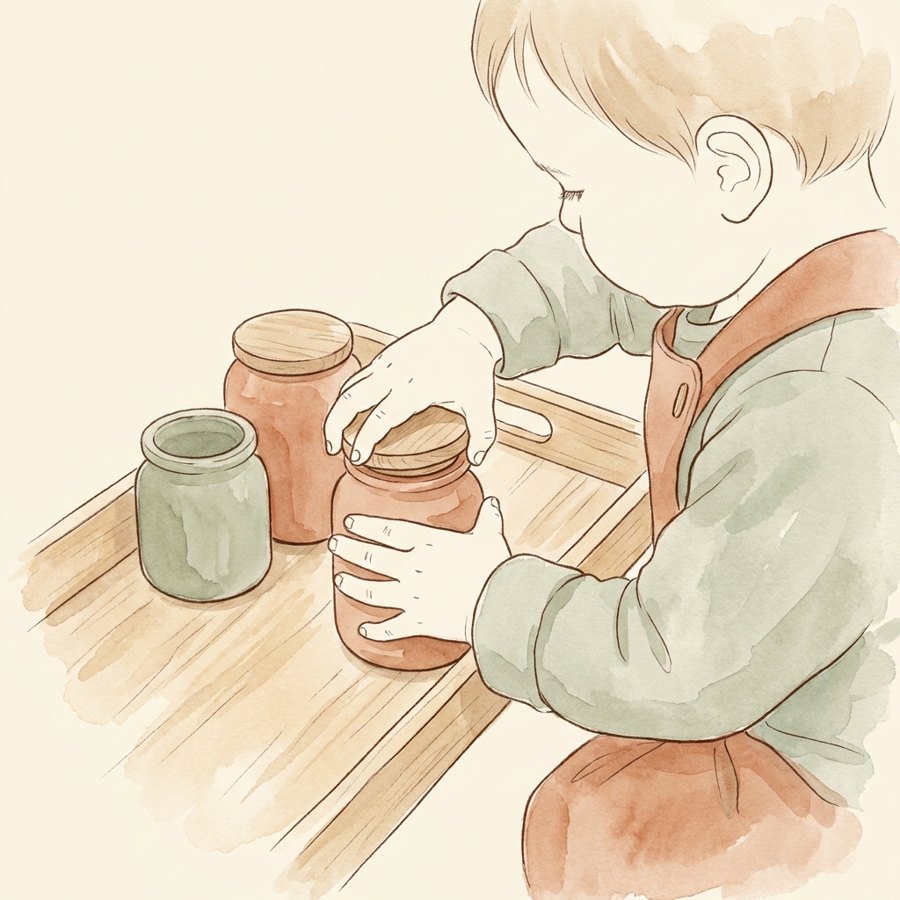
Screwing and Unscrewing
Three jars, three lids, and a wrist rotation to master.
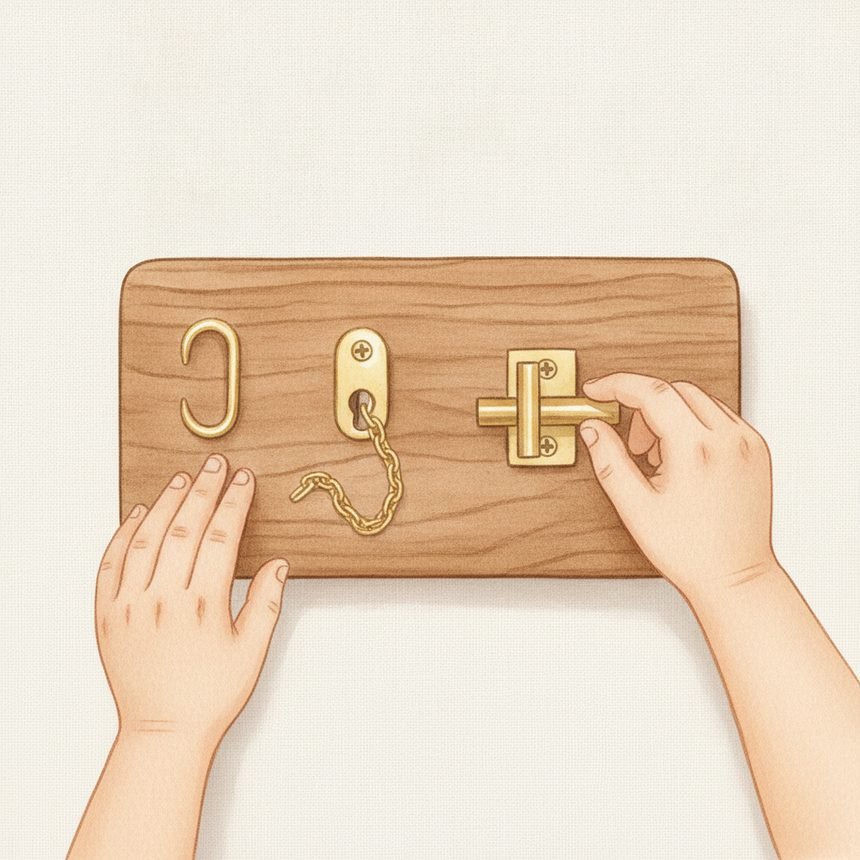
Locks and Latches
A slide bolt, a hook, a chain, a padlock: every closure in the house, gathered on one board to explore.
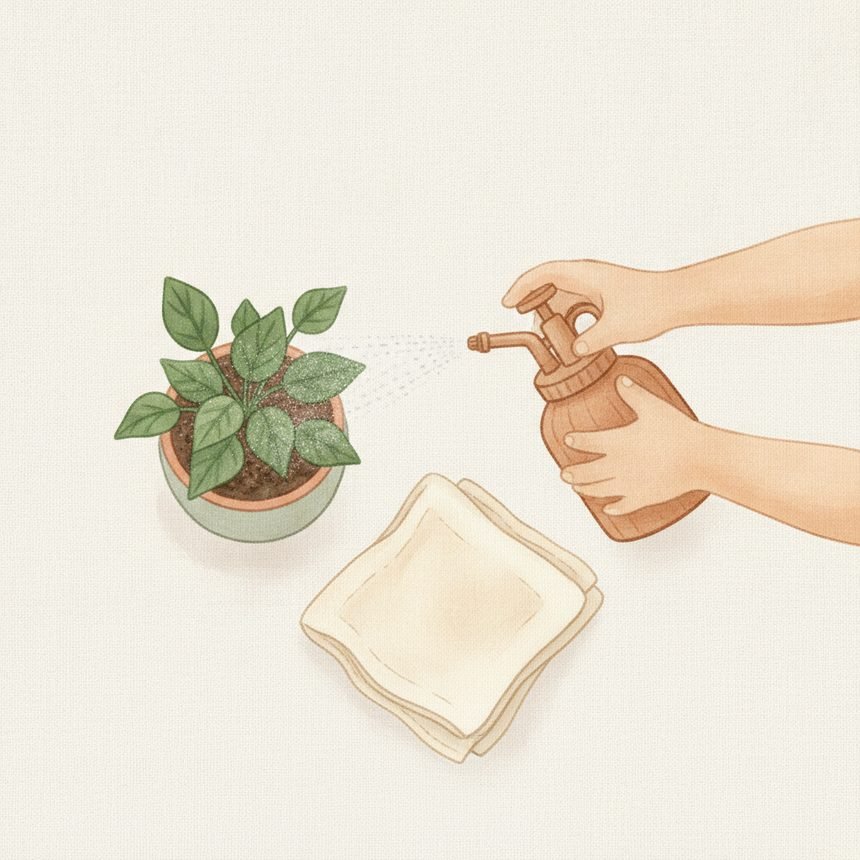
The Spray Bottle
Squeezing a spray bottle trigger to mist the plants: a hand building strength for writing.
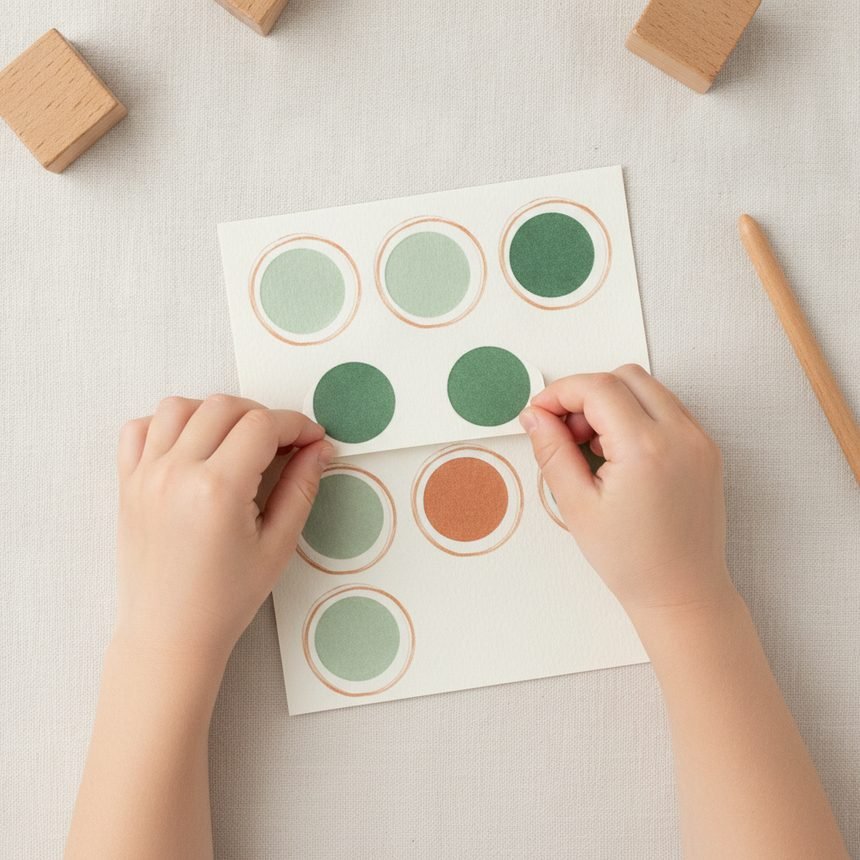
Sticker Play
Peeling a sticker off with the tips of your fingers and sticking it on a drawn circle: the pincer grip takes shape.
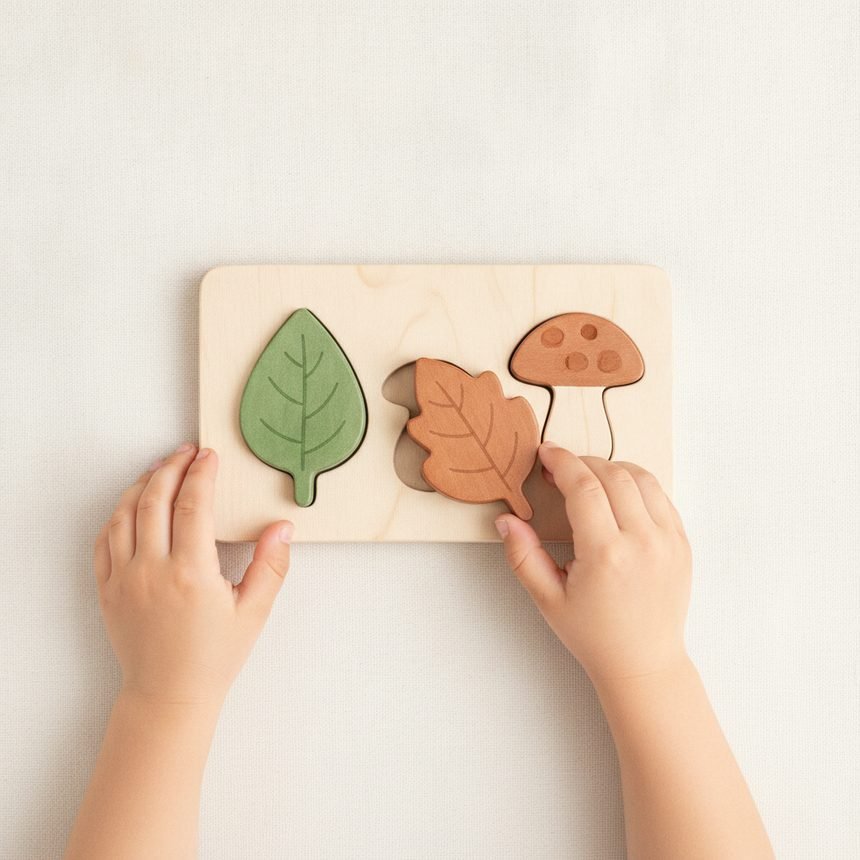
The Three-Piece Puzzle
Three shapes to fit back in their wells: turn, aim, set down.
For 3 to 4 years
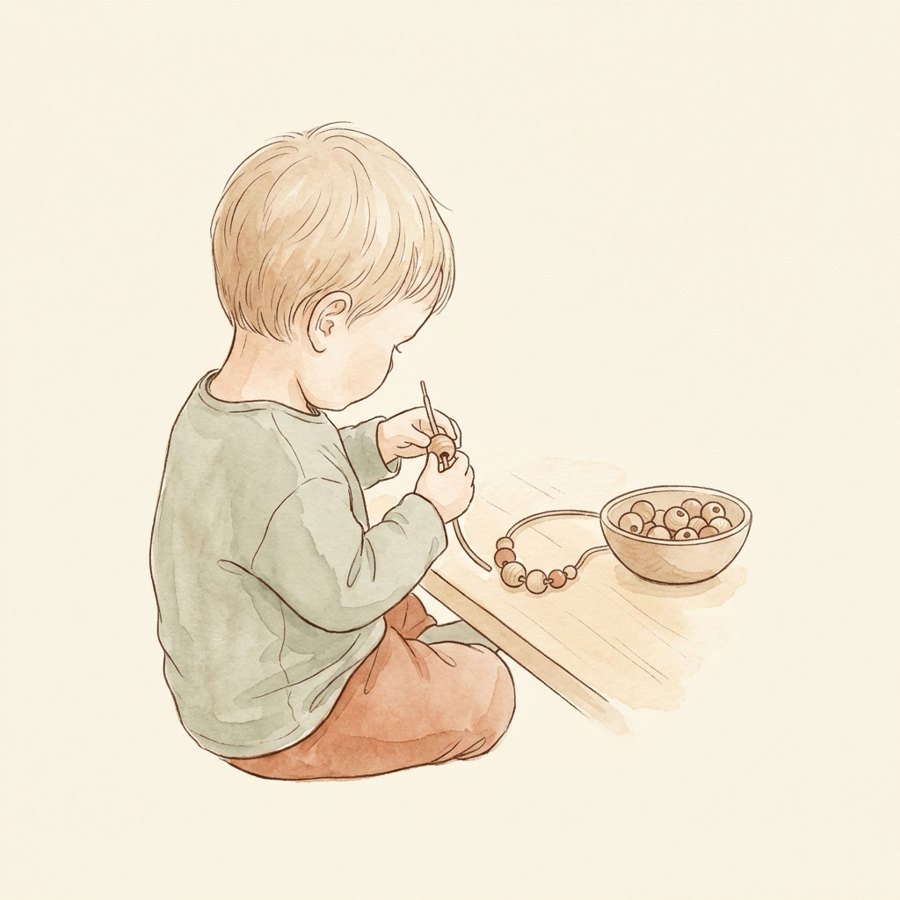
Stringing Beads
Aiming a shoelace at a hole a few millimeters wide. It takes steady attention.
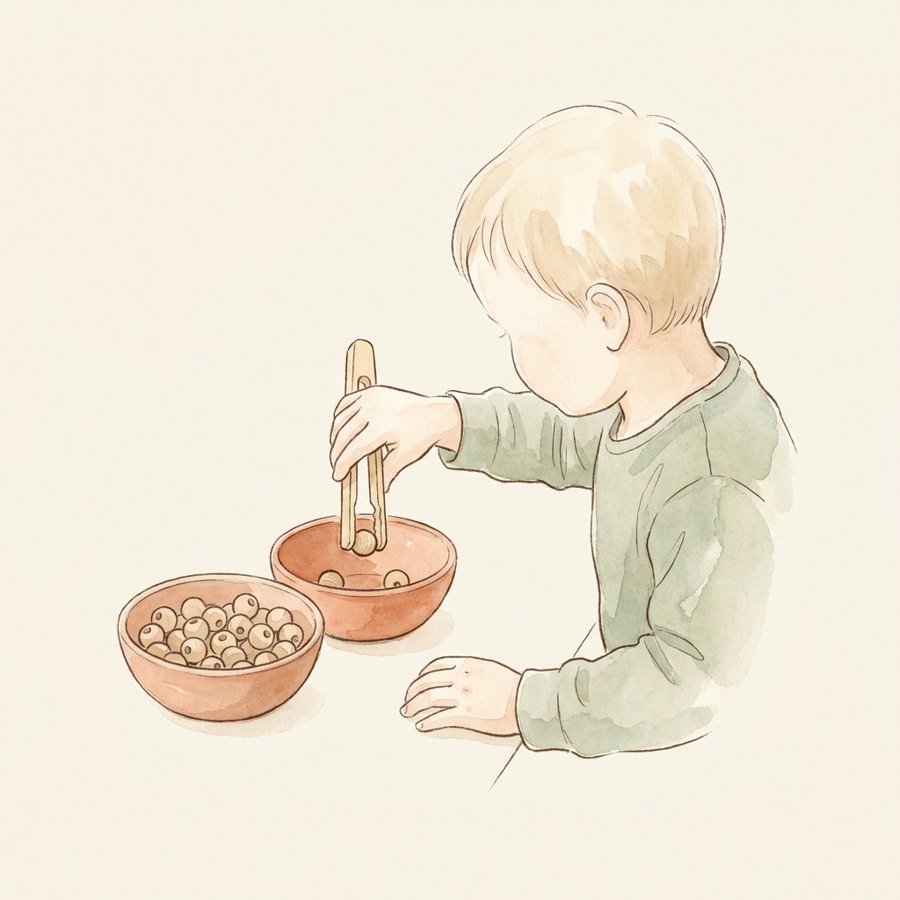
Tong Transfer
A pair of tongs, an empty compartment to fill, and three fingers working in silence.
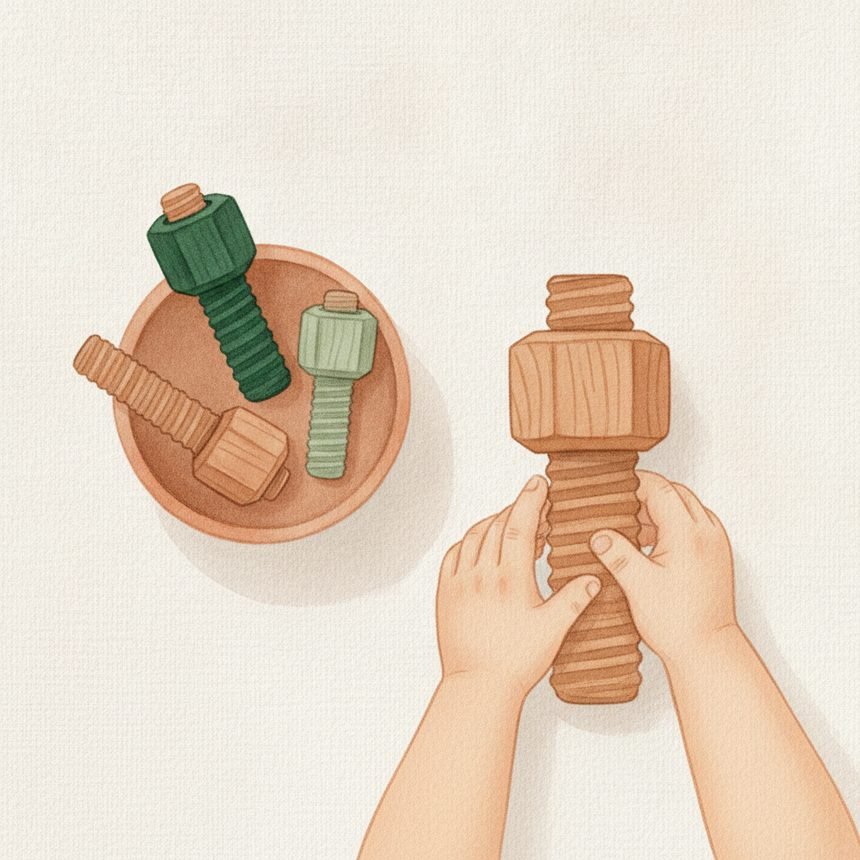
Nuts and Bolts
Real bolts, real nuts, and sizes to match one by one: a workshop at your child's fingertips.
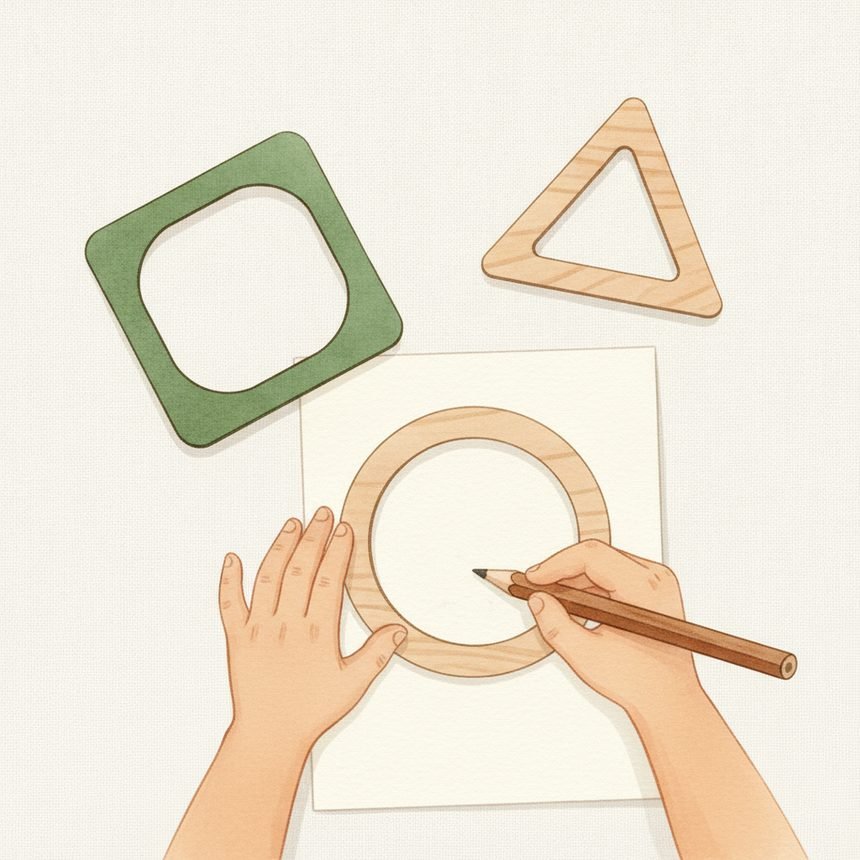
Tracing Shapes with Stencils
The crayon follows the edge of the shape: the hand learns where to stop.
For 4 to 6 years
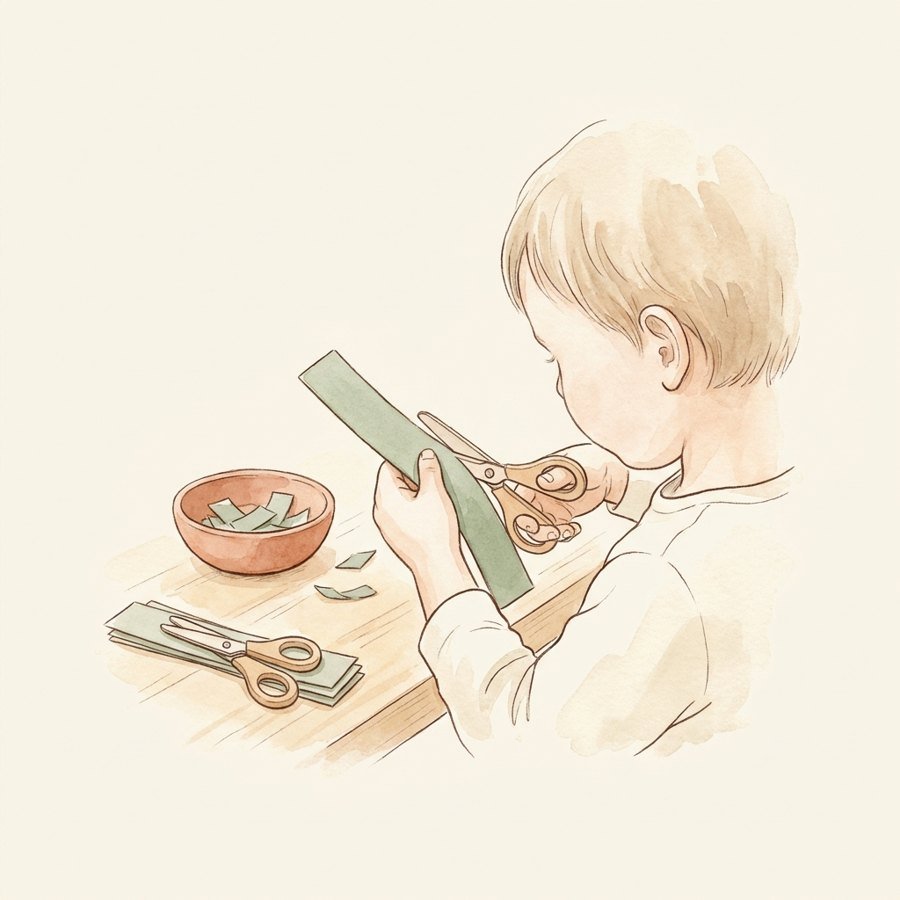
Cutting Paper Strips
Open, close, advance. Scissor skills are practiced session after session, at your child's own pace.
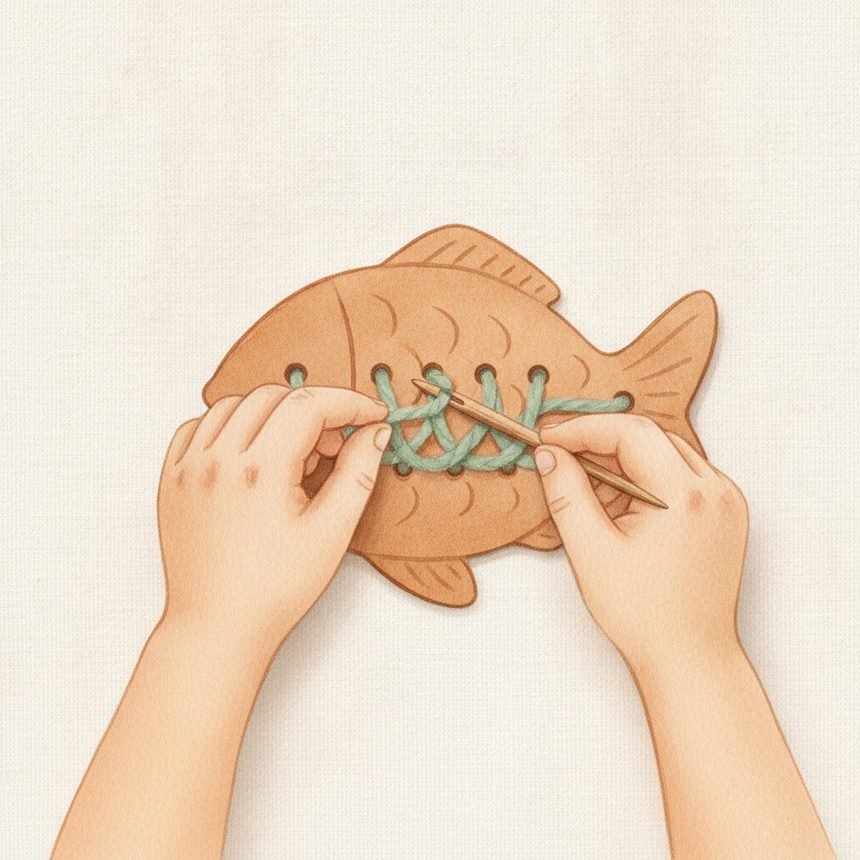
Sewing Cards
A round-tipped needle, yarn, a punched card: over, under, over, and the pride of having sewn.
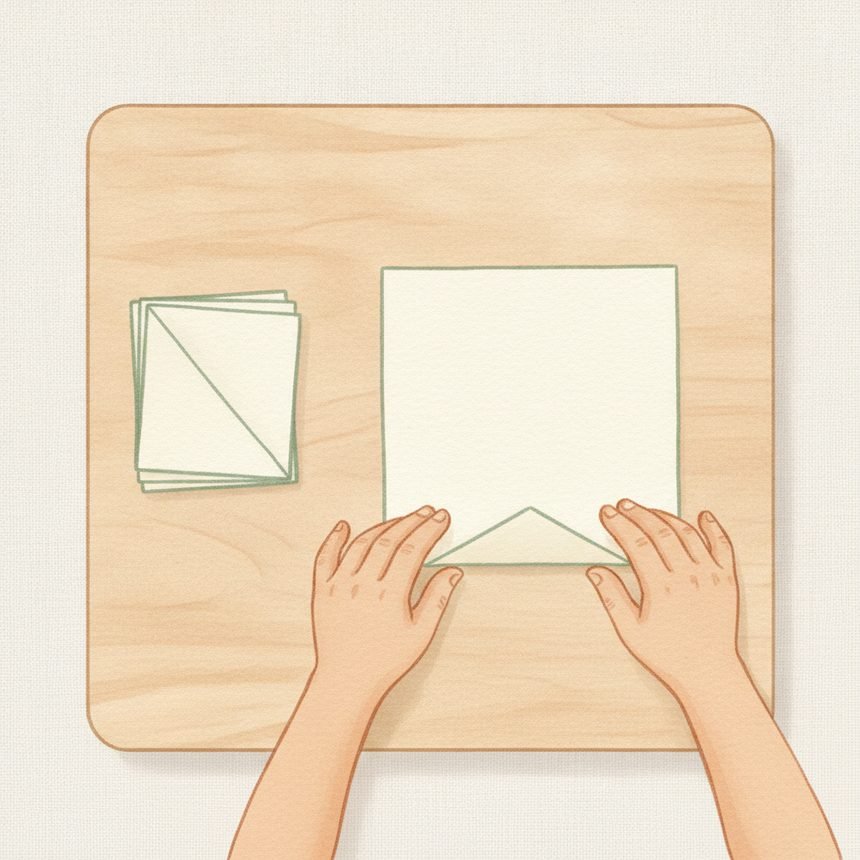
Folding Paper on the Line
Bringing corner to corner, pressing the crease with a steady finger: the precision that prepares geometry.
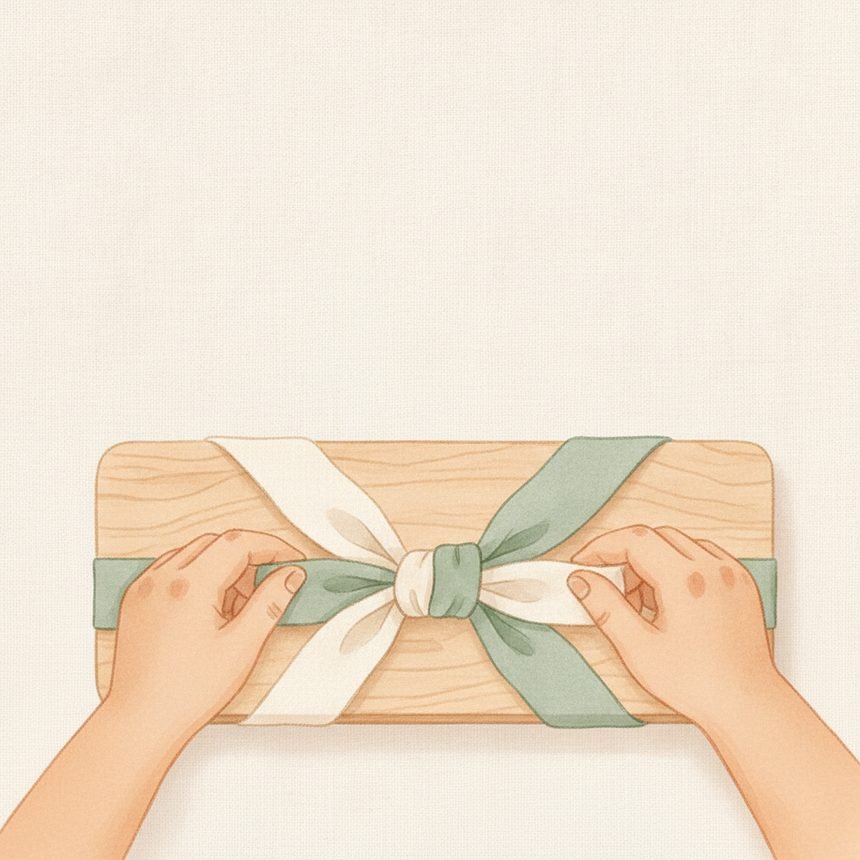
Tying and Untying Knots
Two ribbons, a simple knot, then a loop: fingers learn what shoelaces will one day demand.
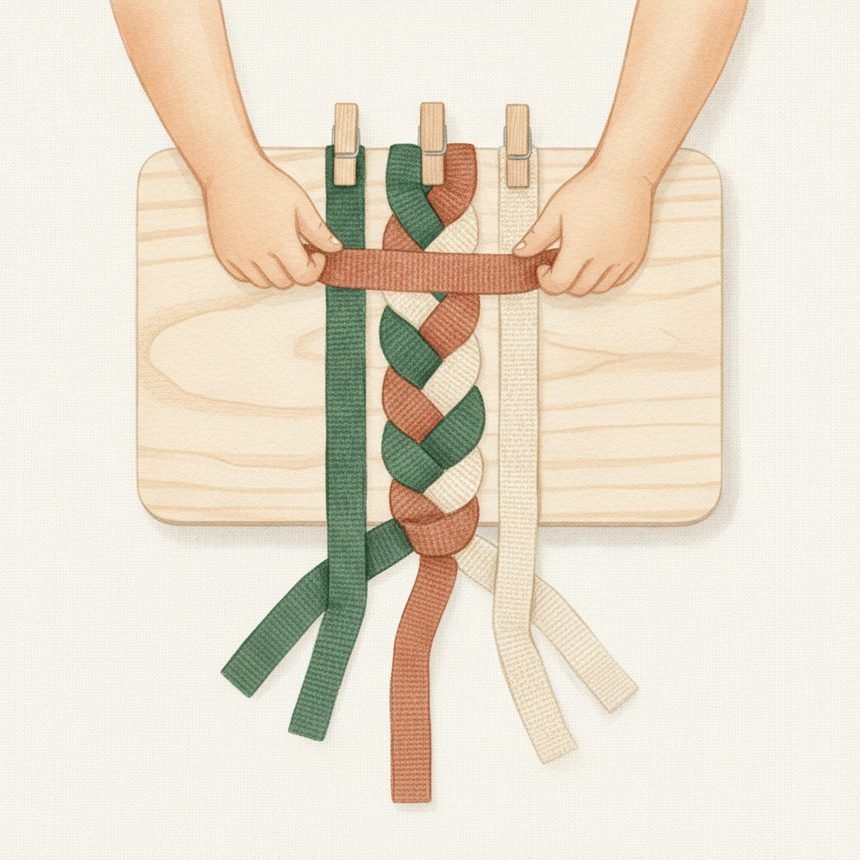
Three-Strand Braiding
Three ribbons crossing over one another, always in the same order.
For 6 to 8 years


Printable materials for these activities
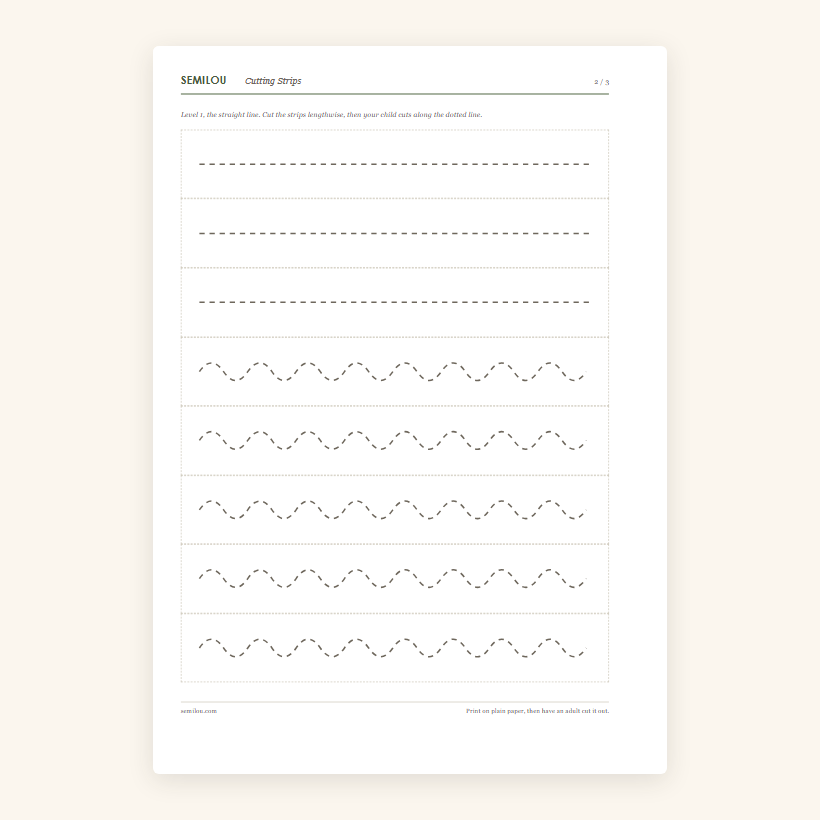
The Cutting Strips
Sixteen strips ordered from a straight line to a corner, to learn to use scissors without ever needing to finish a picture.
See contents and preview →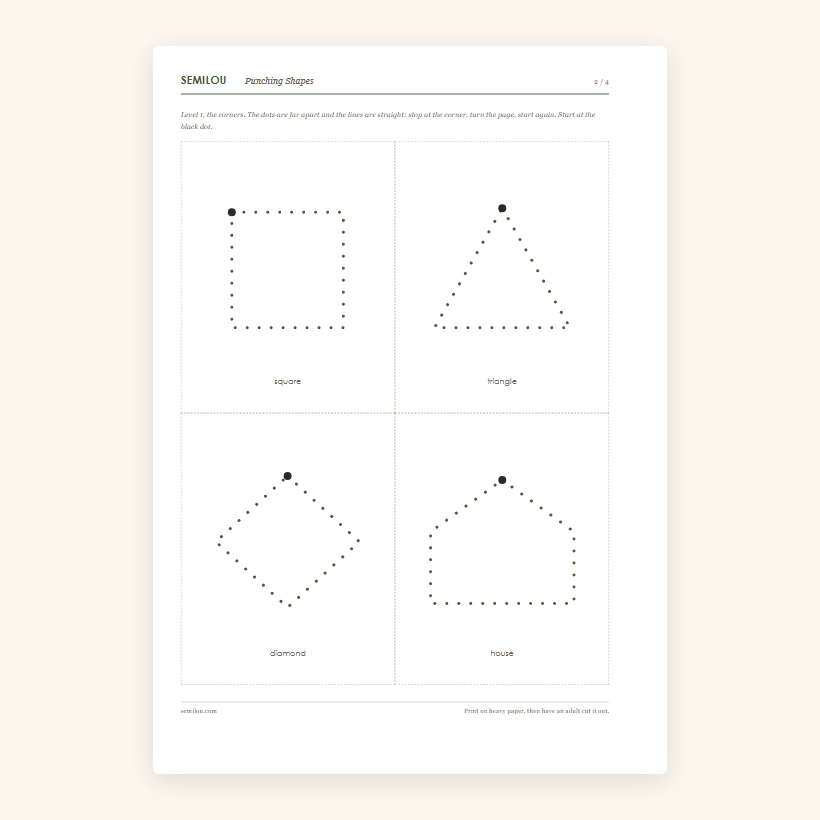
Pin-Punching Shapes
Twelve outlines made of dots: your child punches each dot with a pin tool, then frees the shape, with an adult's help if needed.
See contents and preview →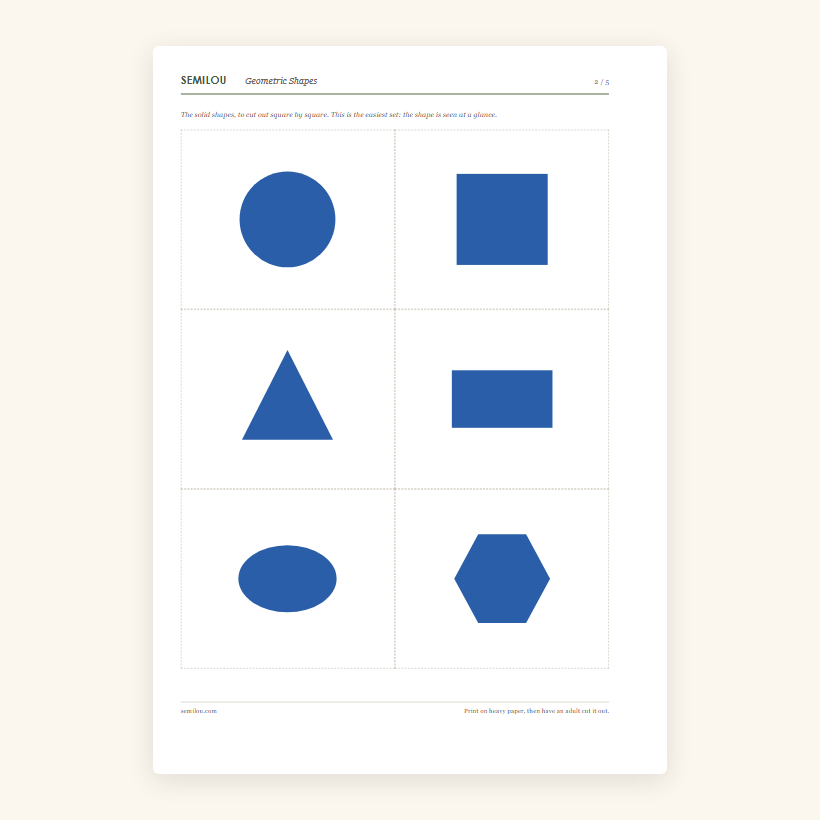
The Geometric Shapes
Six figures in three sets, from the solid shape to the plain outline: your child matches, sorts, then names them.
See contents and preview →Questions about fine motor activities
What are fine motor activities, with examples?
They are small, precise hand movements that strengthen the fingers: pinching, clipping, screwing, threading, picking up with tongs, cutting, sewing. On the sheets: Clothespins on a Basket, Screwing and Unscrewing, Stringing Beads, Tong Transfer, Cutting Paper Strips, Sewing Cards, Tying and Untying Knots. Each one isolates a single movement, and the object shows the error: the lid screws on, or it does not.
What are fine motor activities for 1 to 2 year olds?
From 12 to 18 months: dropping balls into a basket, nesting cups, pulling scarves from a box, turning board book pages, the ball tube. From 18 months to 2 years: Clothespins on a Basket, Ring Stacking, the Coin Box, Opening and Closing Containers, Stacking Blocks, Zipper Practice. Keep each session short, let your child repeat as often as they like, and stay close: small pieces belong in watched hands.
How to improve fine motor skills in a 4 year old?
Offer tasks that call for three fingers and a steady wrist, and let your child repeat them. At 4, mix both groups: from 3 to 4 years, Stringing Beads, Tong Transfer, Nuts and Bolts, Tracing Shapes with Stencils; from 4 to 6 years, Cutting Paper Strips, Sewing Cards, Tying and Untying Knots, Folding Paper on the Line, Three-Strand Braiding. Two or three short sessions a week work better than one long one.
Are there printable fine motor activities in PDF?
Yes, but not worksheets: your child pinches, screws, and threads, and what you print is the sheet you follow, with the materials, the step-by-step presentation, and the variations by age. The 30 pages in this area show the materials, precautions, and first two steps of each activity; the complete sheets for an age group come together in that age group's set, ready to print after purchase.