
Printable Emotion Cards
Eight faces and eight words to cut out, so your child can name what they feel before they can explain it.
Included with an Age Group · $29
Choose your child's age
These printable materials are included when you buy an age group, in the purchased language. Complete PDFs are available only after purchase.
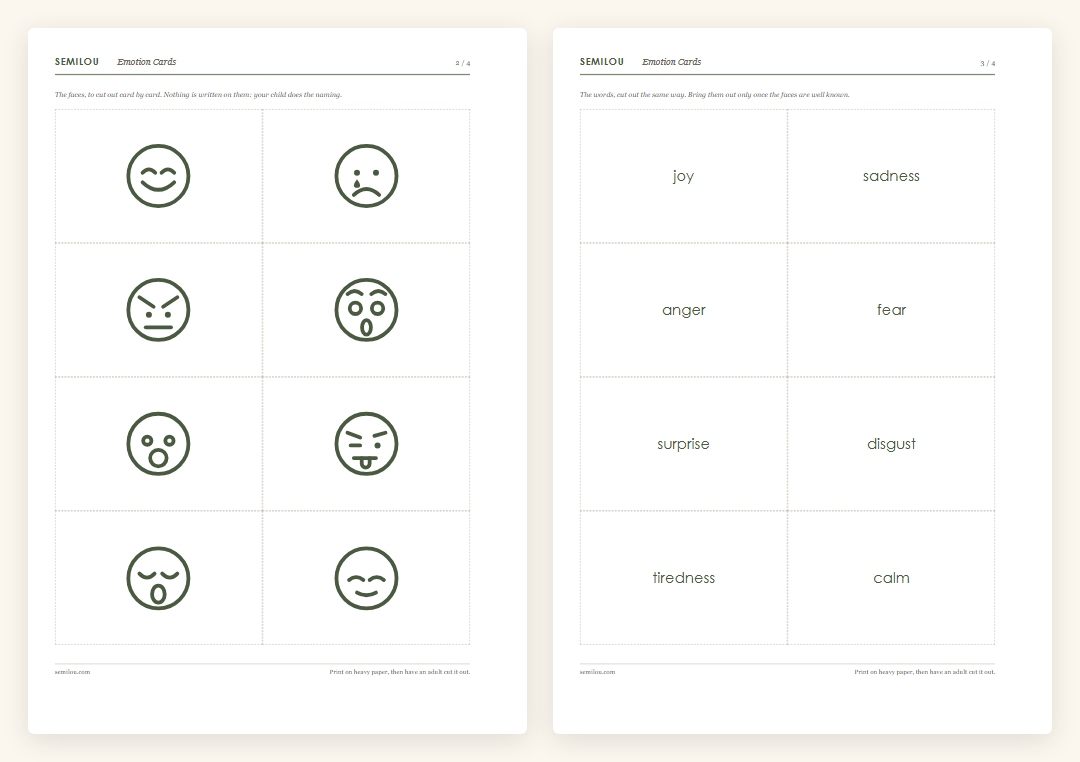
What's in the download
- Eight faces drawn in simple lines: joy, sadness, anger, fear, surprise, disgust, tiredness, and calm.
- The eight words written in Century Gothic, a round, simple letterform.
- The eight control cards, face and word together: this is how your child checks their own work.
- Faces that are deliberately geometric, with no age, gender, or skin tone: every child can see themselves in them.
Why this material
A three-year-old feels everything, very strongly, and often has only one word to say so. Naming an emotion does not make it disappear, but it stops being a nameless storm: it becomes something you can point to, and so something you can talk about. These cards are presented in three steps, like all Montessori nomenclature material, and the control of error is in the card, never in your voice.
Activities that use it
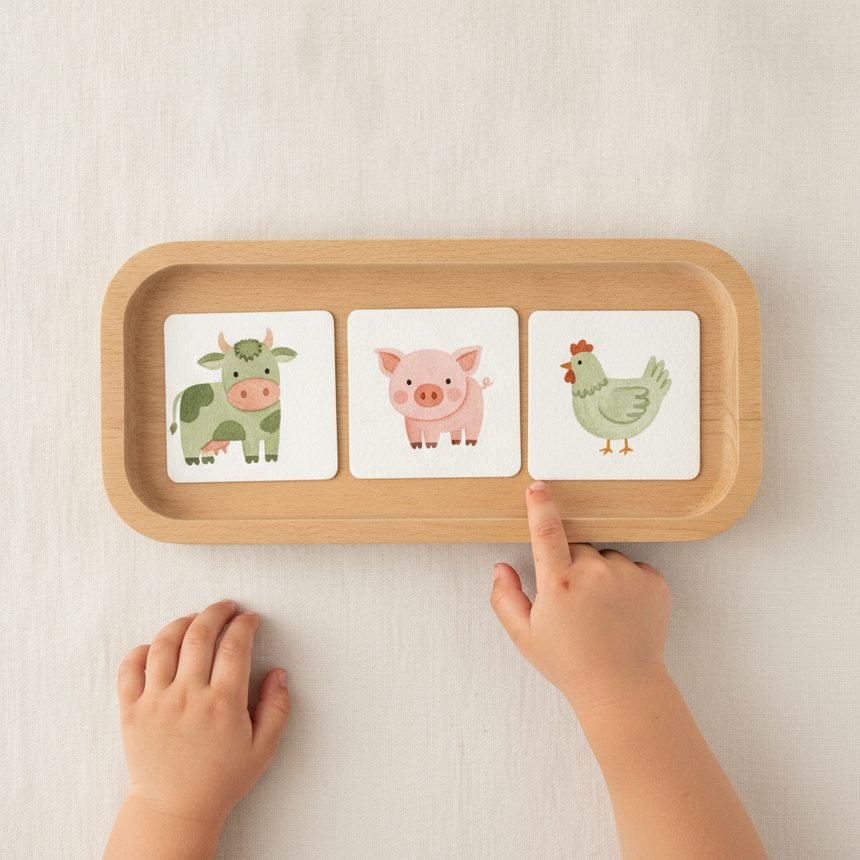
Naming Pictures
A handful of animal or object cards, and the three-period lesson for meeting new words and coming back to them.
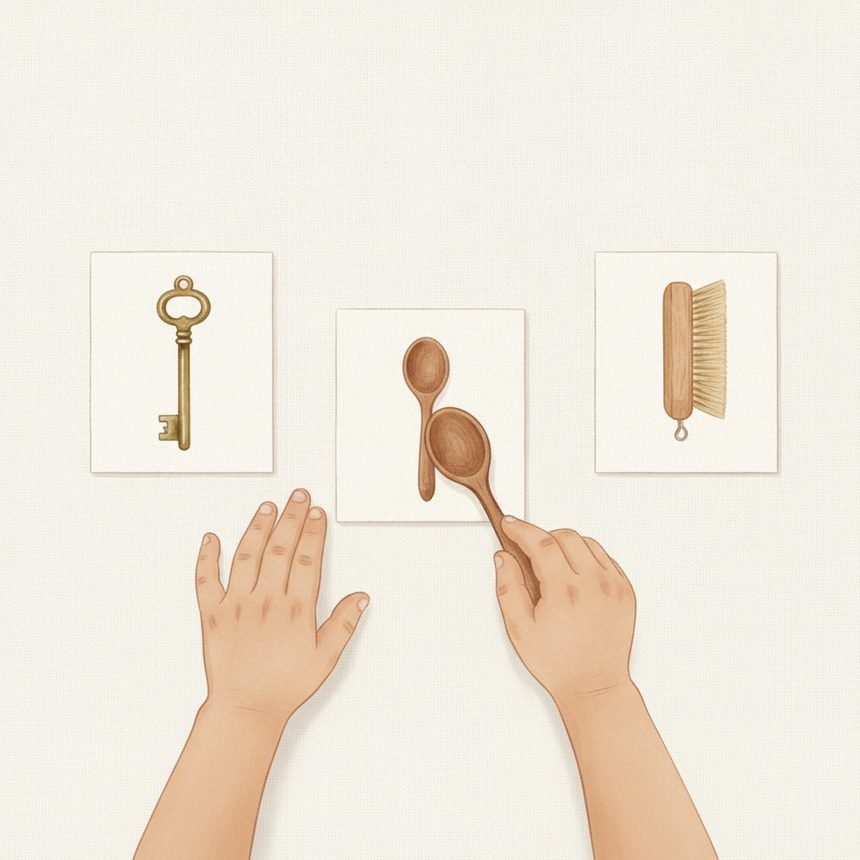
Object and Picture Matching
Setting the real spoon on the photo of a spoon: the bridge between the world and its images.
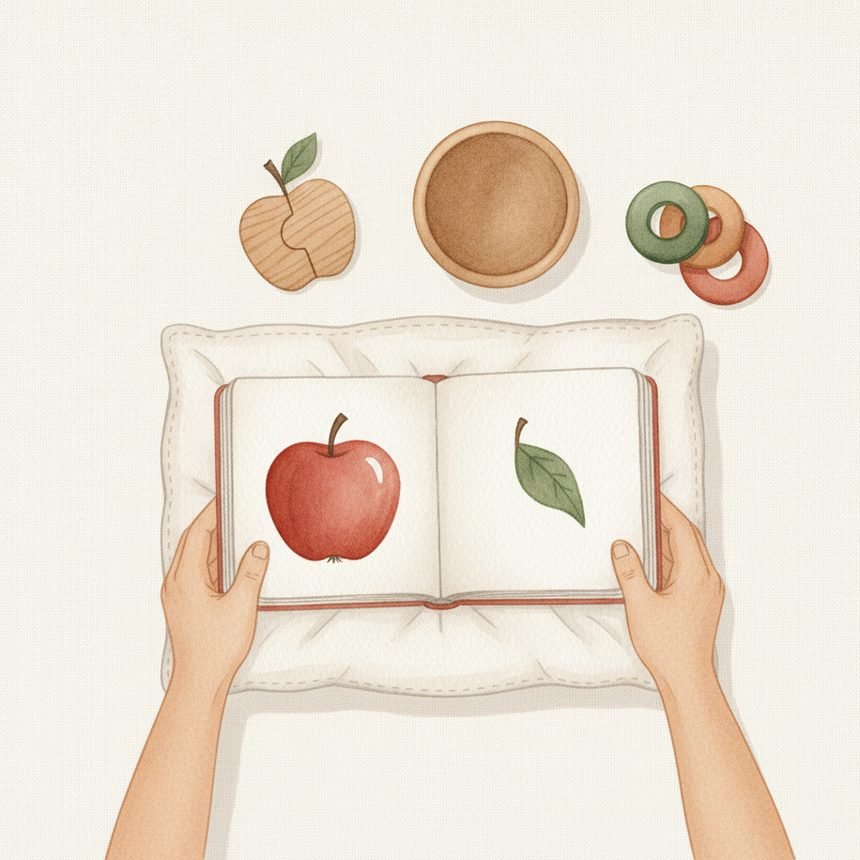
Real Picture Books
A book of real photographs and a shared moment on your lap: a chance to learn new words.
Emotion cards, answered
What feelings should a preschooler learn to name?
Start with a short list of clear, distinct feelings. Researchers list six that people recognize across cultures: joy, sadness, anger, fear, surprise, and disgust. These cards add two more: tiredness, which explains so many evenings, and calm, because your child also needs a word for what is going well. Eight faces are enough for a child of 3 to 6 to name what they feel, and more nuance can come later.
How do you use emotion cards with a child?
In three steps, as with all Montessori nomenclature material. Name two or three faces as you point: "joy", "anger". Then ask: "Show me anger." Finally, point to a face and your child names it. The eight control cards, face and word together, let your child check alone, so the control of error is in the card, never in your voice. Naming Pictures, from age 2, practices the same three steps with animals or objects first.
What games can you play with printable emotion cards?
Memory game: print the faces twice and find the two that say the same thing. Charades: your child draws a card and makes the face while you guess. Mirror: your child looks at the card, then at their own face. Evening round: each person sets down the card for their day, without comment. The faces are deliberately geometric, with no age, gender, or skin tone, so every child can see themselves in them.
Are these printable emotion cards available as a PDF?
Yes: these printable feelings cards come with the pack for the age bracket you buy, among the 7 printable PDFs, in the language of the pack. The four pages print on card stock; cut out the eight faces, the eight words, and the eight control cards, then keep them in an envelope or a small box. The materials aren't sold separately: you buy the set for one age group, with the activity sheets you follow to present each activity to your child.